
三痹湯 · Sān Bì Tāng
San Bi Tang
A classical formula for wind-cold-damp bi with Qi-blood deficiency, joint pain and numbness.
View formula profile →Why This Formula?
Traditionally selected for wind-cold-damp bi with Qi-blood deficiency, rather than heavier essence deficiency, pure channel blockage, or blood-stasis bi.
Traditionally selected for wind-cold-damp bi with Qi-blood deficiency, rather than heavier essence deficiency, pure channel blockage, or blood-stasis bi.
Overview
What Is San Bi Tang?
1. Ancient Classics Inheritance
San Bi Tang (三痹汤), or Three Painful Obstruction Decoction, is a classical formula from Chen Ziming’s Fu Ren Da Quan Liang Fang (Complete Effective Prescriptions for Women). It belongs to the category of formulas that dispel Wind-Cold-Damp, tonify Qi and Blood, and strengthen the Liver and Kidney.
This formula addresses the “three Bi”—Wind, Cold, and Damp—lodged in the channels together with Qi and Blood deficiency and weakness of the sinews and bones. Typical signs include chronic joint and limb pain with stiffness or spasm of the hands and feet, lower back and knee weakness, numbness, aversion to cold and damp, a pale tongue, and a thin weak pulse.
Combining Du Huo, Qin Jiao, Fang Feng, and Xi Xin to expel Wind-Cold-Damp from the channels, Huang Qi and Ren Shen to tonify Qi and firm the exterior, Dang Gui, Chuan Xiong, Bai Shao, and Sheng Di to nourish and invigorate Blood, Du Zhong, Xu Duan, and Niu Xi to tonify the Liver and Kidney and strengthen sinews and bones, Rou Gui to warm the channels, Fu Ling and Gan Cao to support the Spleen and harmonize, San Bi Tang treats both the lingering pathogens and the deficiency that allows chronic Bi to persist.

2. Rheumatoid Arthritis Support
Rheumatoid arthritis is an autoimmune condition characterized by painful, swollen, and sometimes deformed joints.
- The TCM View: This condition is often seen as a deep blockage of wind, cold, and dampness in the meridians, usually paired with long-term exhaustion of the body's qi, blood, liver, and kidneys.
- How It Helps: Because San Bi Tang is great at boosting energy while clearing out these blockages, practitioners often use it as a foundational treatment.
- Customization: If a patient's pain gets much worse in cold weather, a practitioner might increase the dose of warming herbs like Du Huo and Fang Feng. If the patient is extremely fatigued, they might add more Huang Qi and Dang Gui.
3. Osteoarthritis Management
Osteoarthritis involves the wear and tear of joint cartilage and gets more common as we age.
- The TCM View: Aging naturally leads to a decline in liver and kidney essence, making the joints more vulnerable to the cold and dampness of the environment.
- How It Helps: The formula’s ability to nourish the liver and kidneys while clearing out dampness makes it very helpful for easing the aching, swelling, and stiffness of osteoarthritis.
- Customization: For patients with severe lower back and knee weakness, practitioners might heavily rely on Shu Di Huang and Bai Shao. If the joints are very swollen and heavy, they might add fluid-draining herbs like Fu Ling (Poria) and Yi Yi Ren (Coix Seed).

4. Frozen Shoulder Relief
Frozen shoulder involves unexplained, restrictive pain and stiffness around the shoulder joint.
- The TCM View: This is typically viewed as a localized blockage in the shoulder caused by weak qi and blood combined with an invasion of cold and wind.
- How It Helps: San Bi Tang helps to bring fresh, nourishing blood to the shoulder area while pushing out the cold that is freezing up the joint.
- Customization: If the pain shoots down the arm or causes numbness, practitioners might add herbs that open the upper body's meridians, like Sang Zhi (Mulberry Twig) and Gui Zhi (Cassia Twig).
How It Works
Herb Composition (Sovereign / Minister / Assistant / Envoy)
1. King Herb: Huang Qi
Huang Qi (Astragalus Root) serves as the crucial "King" herb in this formula. It is slightly warm and sweet, primarily functioning to boost the body's qi (vital energy) and strengthen the spleen and lungs. By reinforcing the digestive system, it helps the body properly process fluids and dampness, thereby boosting overall resistance. In Traditional Chinese Medicine (TCM), it is said that "when qi moves, blood moves." By tonifying qi, Huang Qi improves blood circulation, which helps relieve joint pain and numbness caused by poor blood flow.
2. Minister Herbs: Du Huo, Fang Feng, Qin Jiao
These three herbs act as "Ministers," supporting the King herb by directly tackling the external elements causing the discomfort.
- Du Huo (Pubescent Angelica Root) is highly effective at dispelling wind and dampness, especially targeting lower back and knee pain.
- Fang Feng (Saposhnikovia Root) gently releases external wind and helps relieve muscle spasms and stiffness.
- Qin Jiao (Largeleaf Gentian Root) clears wind-dampness and soothes inflamed joints. Together, they work synergistically with Huang Qi to drive out the trapped wind, cold, and dampness, clearing the pathways and relieving pain.
3. Assistant Herbs: Dang Gui, Chuan Xiong, Bai Shao, Shu Di Huang
These four herbs form the famous classic combination known as Si Wu Tang (Four-Substance Decoction). In San Bi Tang (Three-Bi Decoction), they act as "Assistants."
- Dang Gui (Dong Quai) and Shu Di Huang (Prepared Rehmannia Root) deeply nourish the blood and support the liver and kidneys.
- Chuan Xiong (Szechuan Lovage Rhizome) and Bai Shao (White Peony Root) promote healthy blood circulation and soothe pain. While the other herbs focus on clearing out dampness and cold, this group ensures that the body's blood supply is replenished. They help lubricate the joints and ease the discomfort that stems from poor circulation.

4. Guide Herbs: Ren Shen, Gan Cao, Fu Ling
The "Guide" herbs coordinate the entire formula, ensuring all ingredients work together safely and harmoniously.
- Ren Shen (Ginseng) provides a powerful boost to the body's foundational energy, reinforcing the immune system.
- Fu Ling (Poria) supports the digestive system and helps gently drain excess fluid and dampness from the body.
- Gan Cao (Licorice Root) acts as a natural harmonizer. It balances the properties of all the other herbs, preventing them from clashing and making the formula gentle on the stomach.
Symptoms Traditionally Associated
Clinical Presentation in TCM
1. Pathomechanism Analysis (The Root Cause)
In TCM, joint issues like "Bi syndrome" occur when the body's foundational energy is weak, leaving its defenses lowered. This allows environmental factors like wind, cold, and dampness to invade.
- When these external factors get trapped in the body's meridians (energy channels), they block the normal flow of qi and blood.
- This blockage leads directly to pain, swelling, and numbness. San Bi Tang recognizes that a deficiency in qi and blood is the underlying root cause. When the body lacks nourishment, the liver and kidneys weaken, leaving the tendons and bones vulnerable to these external blockages.
2. Core Effects
This formula is designed with a comprehensive, dual-action approach:
- Nourishing the Root: It uses herbs like Huang Qi and Ren Shen to rebuild the body's energy and blood supply.
- Clearing the Branch (Symptoms): It uses herbs like Du Huo and Fang Feng to clear out the trapped wind and dampness. By simultaneously strengthening the body's core and clearing the physical blockages, it restores smooth circulation, opens up the meridians, and effectively relieves joint discomfort.

3. Clinical Indications
San Bi Tang is primarily used for individuals experiencing joint pain due to a combination of weak qi/blood and trapped wind, cold, and dampness.
- Common Symptoms: Joint pain, swelling, stiffness, or a "wandering" pain that moves around. The pain typically feels worse in cold weather and better with warmth.
- Accompanying Signs: Because it targets underlying weakness, patients might also experience a pale complexion, chronic fatigue, shortness of breath, palpitations, or easily breaking a sweat.
- Modern Context: Practitioners often consider this formula for chronic joint concerns—such as osteoarthritis or frozen shoulder—particularly when the patient has a long history of the condition and an overall weak or easily fatigued constitution.
Formula Analysis
The Mechanism in Classical Theory
1. Balancing Qi and Blood Support with Pathogen Removal
San Bi Tang is brilliantly designed to tackle joint issues from two different angles.
- Building the Foundation: It uses qi-boosting herbs like Huang Qi (Astragalus Root), Ren Shen (Ginseng), and Gan Cao (Licorice Root) alongside blood-nourishing herbs like Dang Gui (Dong Quai), Chuan Xiong (Szechuan Lovage Rhizome), Bai Shao (White Peony Root), and Shu Di Huang (Prepared Rehmannia Root). In Traditional Chinese Medicine (TCM), having strong qi and blood is like having a robust internal shield against illnesses.
- Clearing the Blockages: At the same time, it uses herbs like Du Huo (Pubescent Angelica Root), Fang Feng (Saposhnikovia Root), and Qin Jiao (Largeleaf Gentian Root) to directly target and sweep out the wind, cold, and dampness trapped in the joints. By combining these approaches, the formula treats both the root cause (weakness) and the surface symptoms (pain), offering a comprehensive approach to joint health.
2. Treating the Liver and Kidneys Together
In TCM theory, the liver is in charge of your tendons, and the kidneys govern your bones. Chronic joint pain naturally wears down both over time.
- This formula includes herbs like Shu Di Huang and Bai Shao specifically to deeply nourish the liver and kidneys.
- By strengthening these two vital systems, the formula helps to fortify your tendons and bones, easing stiffness and helping to prevent the joint discomfort from recurring or getting worse.

3. The Synergistic Magic of the Herbs
The true power of this formula comes from how the herbs interact and boost each other’s effects.
- For example, Huang Qi builds up the body's defensive energy, while Fang Feng opens the pores to let the trapped wind out. Together, they clear out the bad stuff without draining your energy.
- The four blood-nourishing herbs work perfectly as a team: they build new blood without making it thick or sluggish, and they get the blood moving without causing strain.
- Meanwhile, the wind-clearing herbs team up to become a powerful force for easing cold, aching pain. This carefully orchestrated teamwork makes the formula highly effective.
How This Formula Compares
Clinical Comparison Table
| Compare | San Bi Tang | Du Huo Ji Sheng Tang | Juan Bi Tang | Shen Tong Zhu Yu Tang |
|---|---|---|---|---|
| Primary Function | Dispel wind-damp, tonify Qi and blood, ease bi pain | Dispel wind-damp, stop bi pain, tonify Liver and Kidney, nourish Qi and blood | Dispel wind-damp, move Qi and blood, stop bi pain | Invigorate Blood, move Qi, dispel wind-damp, stop pain |
| Formula Category | Wind-Damp Dispelling Formulas | Wind-Damp Dispelling Formulas | Wind-Damp Dispelling Formulas | Blood-Invigorating Formulas |
| Typical TCM Pattern | Dampness | Dampness | Dampness | Blood Stasis |
| Main Conditions | Joint Discomfort, Low Back Pain, Numbness in Limbs | Low Back Pain, Joint Discomfort, Numbness in Limbs | Joint Discomfort, Muscular Stiffness, Shoulder Discomfort | Joint Discomfort, Muscular Stiffness, Low Back Pain, Numbness in Limbs, Neck Pain |
| Main Herbs | Pubescent Angelica Root · Asarum / Wild Ginger · Saposhnikovia Root · Large-Leaf Gentian Root · Cinnamon Twig · Ginseng Root · Poria / Hoelen · Chinese Angelica Root · White Peony Root · Chuanxiong Rhizome · Licorice Root · Raw Rehmannia Root · Eucommia Bark · Achyranthes Root · Astragalus Root | Pubescent Angelica Root · Taxillus / Mulberry Mistletoe · Eucommia Bark · Achyranthes Root · Asarum / Wild Ginger · Large-Leaf Gentian Root · Poria / Hoelen · Cinnamon Bark · Saposhnikovia Root · Chuanxiong Rhizome · Ginseng Root · Licorice Root · Chinese Angelica Root · White Peony Root · Prepared Rehmannia Root | Notopterygium Root · Pubescent Angelica Root · Cinnamon Twig · Mulberry Twig · Chinese Angelica Root · Chuanxiong Rhizome · Frankincense · Aucklandia / Costus Root | Large-Leaf Gentian Root · Chuanxiong Rhizome · Peach Kernel · Safflower · Licorice Root · Notopterygium Root · Myrrh · Chinese Angelica Root · Flying Squirrel Feces · Cyperus Rhizome · Achyranthes Root · Earthworm |
| Classical Source | Classical TCM formulary | Classical TCM formulary | Classical TCM formulary | Yi Lin Gai Cuo (Wang Qingren, Qing dynasty, 1830) |
How to tell them apart
San Bi Tang, Du Huo Ji Sheng Tang, Juan Bi Tang and Shen Tong Zhu Yu Tang treat bi syndrome. Du Huo Ji Sheng Tang adds more Liver-Kidney tonification; Juan Bi Tang dispels wind-damp and unblocks channels; Shen Tong Zhu Yu Tang invigorates blood for stasis bi. San Bi Tang dispels wind-cold-damp and tonifies Qi-blood for bi with deficiency.
Clinical Modifications
Clinical Modifications for San Bi Tang
In clinical practice, practitioners rarely use a one-size-fits-all approach. San Bi Tang is often customized based on what the patient needs most:
1. For Severe Pain
- If the joint pain is intensely sharp, practitioners might add powerful pain-relieving and cold-dispelling herbs like Zhi Chuan Wu (Prepared Aconite Root), Zhi Cao Wu (Prepared Wild Aconite Root), Quan Xie (Scorpion), or Wu Gong (Centipede).
- Important Safety Note: Herbs like Zhi Chuan Wu are highly potent and must be specially processed and strictly dosed by a professional to ensure safety, while insect-based herbs are traditional choices for deeply unblocking meridians to stop stubborn pain.
2. For Noticeable Joint Swelling
- When fluid buildup and swelling are the main complaints, herbs like Yi Yi Ren (Coix Seed), Cang Zhu (Atractylodes Rhizome), and Fang Ji (Stephania Root) are added.
- These ingredients excel at draining excess fluid and drying out dampness, helping the body naturally reduce joint puffiness.
3. For Wandering Pain (Severe Wind)
- If the pain moves from joint to joint—a classic sign of "wind" in Traditional Chinese Medicine (TCM)—herbs like Qiang Huo (Notopterygium Root) and Bai Zhi (Angelica Root) can be included.
- Qiang Huo is especially good for upper body pain, and together, they boost the formula's ability to chase out the wind pathogen.
4. For Cold-Aggravated Pain (Severe Cold)
- If the joints feel freezing and the pain spikes in cold weather, warming herbs like Xi Xin (Asarum Root) and Gui Zhi (Cassia Twig) are used.
- Gui Zhi acts like a gentle heater, warming the meridians and getting the blood flowing to melt away the cold.
5. For Heavy, Achy Joints (Severe Dampness)
- When patients feel physically heavy, have severely swollen joints, and a thick coating on their tongue, aromatic herbs like Huo Xiang (Patchouli) and Pei Lan (Eupatorium) are added.
- These herbs help "wake up" the digestive system and cut through the heavy, sluggish dampness.

6. For Severe Fatigue and Weakness
- If a patient looks pale, struggles with insomnia, and feels constantly exhausted (severe qi and blood deficiency), nourishing herbs like E Jiao (Donkey-Hide Gelatin) and Long Yan Rou (Longan Aril) are great additions.
- They provide a deep level of nourishment for the blood and calm the mind.
Modern Research
What the Science Suggests
1. Pharmacological Research
Modern science has shed light on how San Bi Tang works at a biological level:
- Immune Regulation: Herbs like Huang Qi (Astragalus Root) have been shown to boost the immune system and help control inflammation.
- Anti-inflammatory & Pain Relief: The "wind-damp" clearing herbs, such as Du Huo (Pubescent Angelica Root), Fang Feng (Saposhnikovia Root), and Qin Jiao (Largeleaf Gentian Root), naturally help reduce local swelling and ease pain.
- Improved Circulation: Blood-moving herbs like Dang Gui (Dong Quai) and Chuan Xiong (Szechuan Lovage Rhizome) improve blood flow, which helps the body clear out inflammatory markers and repair tissue damage faster.
2. Clinical Efficacy Validation
- Numerous clinical studies back up the traditional use of this formula for conditions like rheumatoid arthritis and osteoarthritis.
- Data shows it significantly improves joint mobility, reduces swelling, and enhances the overall quality of life.
- Many patients also report experiencing fewer side effects compared to some standard Western pain medications, making it a valuable complementary option.
3. Formulation Improvements
- To make taking herbal medicine easier, modern pharmaceutical technology has upgraded how San Bi Tang is delivered.
- Beyond the traditional brewed teas (decoctions) or modern concentrated granules, it is now being developed into easy-to-swallow capsules and tablets. This ensures better stability, precise dosing, and much higher patient compliance.

4. Exploration of Mechanisms
- Researchers are digging deeper into the cellular mechanisms, finding that the formula likely works by regulating cytokines and signaling pathways involved in the body's immune and inflammatory responses.
- There is also growing interest in how it affects the neuroendocrine system, suggesting that it might help balance hormones and neurotransmitters to improve the body's overall healing state. As research continues, the scientific foundation for this classic formula only grows stronger.
Safety
Safety Considerations
1. Dietary and Special-Population Precautions
While taking San Bi Tang, avoid raw or cold foods, greasy foods, and spicy or irritating items, as they may impair digestion, reduce absorption, or aggravate internal heat and symptoms.
Pregnant women should use it cautiously because some ingredients promote blood circulation and dispel wind-dampness. Elderly, frail, or those with weak digestion should take it only under medical supervision and monitor for discomfort.
2. Monitoring, Treatment Duration, and Discontinuation
Follow the prescribed dosage and treatment duration; do not stop or adjust the medicine without medical advice. Continue treatment as directed after symptoms improve to consolidate the effect and reduce recurrence.
Seek medical attention if pain or swelling worsens, new symptoms appear, or adverse reactions such as gastrointestinal discomfort or rash develop; stop taking it and inform a doctor if an allergic reaction is suspected.
Available Products
Where to Get It
 HJMEDICAL
Hoi Tin San Bi Tang (Three Painful-Obstruction Decoction) 5:1 Concentrated Granules
$29.10
HJMEDICAL
Hoi Tin San Bi Tang (Three Painful-Obstruction Decoction) 5:1 Concentrated Granules
$29.10
 HJMEDICAL
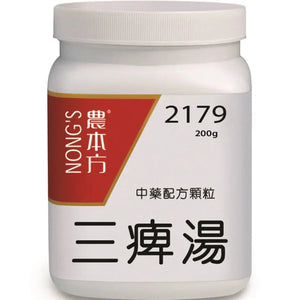
Nong's San Bi Tang (Three-Herb Painful Obstruction Decoction) 5:1 Concentrated Granules
$55.53
HJMEDICAL
Nong's San Bi Tang (Three-Herb Painful Obstruction Decoction) 5:1 Concentrated Granules
$55.53
 HJMEDICAL
Hoi Tin Du Huo Ji Sheng Tang (Angelica & Loranthus) 5:1 Concentrated Granules
$24.93
HJMEDICAL
Hoi Tin Du Huo Ji Sheng Tang (Angelica & Loranthus) 5:1 Concentrated Granules
$24.93
 HJMEDICAL
Nong's Du Huo Ji Sheng Tang (Angelica & Taxillus) 5:1 Concentrated Granules
$56.60
HJMEDICAL
Nong's Du Huo Ji Sheng Tang (Angelica & Taxillus) 5:1 Concentrated Granules
$56.60
 HJMEDICAL
Hoi Tin Juan Bi Tang (Remove Painful Obstruction Decoction) 5:1 Concentrated Granules
$24.93
HJMEDICAL
Hoi Tin Juan Bi Tang (Remove Painful Obstruction Decoction) 5:1 Concentrated Granules
$24.93
 HJMEDICAL
Nong's Juan Bi Tang (Remove Painful Obstruction Decoction) 5:1 Concentrated Granules
$44.83
HJMEDICAL
Nong's Juan Bi Tang (Remove Painful Obstruction Decoction) 5:1 Concentrated Granules
$44.83


FAQ
Questions About San Bi Tang
Q1: What are the actions of San Bi Tang?
Q2: Which modern diseases is San Bi Tang suited to?
Q3: Is San Bi Tang suitable for improving chronic joint pain that worsens in cold, damp weather?
Q4: Who should not take San Bi Tang?
Q5: Why treat the three pathogenic factors and the deficient root in one formula?
Q6: How does San Bi Tang differ from Du Huo Ji Sheng Tang or Juan Bi Tang?
Q7: What are the main ingredients of San Bi Tang?
Q8: Is San Bi Tang suitable for long-term use?
Q9: Can this formula help both the wandering or heavy joint pain and the accompanying fatigue?
Q10: What lifestyle advice supports the use of San Bi Tang?
FAQ
General Questions
How do I choose the right formula?
What are concentrated herbal granules?
How should I take these products?
Are concentrated herbal granules equivalent to traditional decoctions?
Are your products authentic?
Are HJMEDICAL products manufactured under GMP standards?
Do you ship internationally?
Can I take more than one formula at the same time?
Are these products suitable during pregnancy or breastfeeding?
Do these products replace medical treatment?
Medical Disclaimer
For general TCM education only — not medical advice. Consult a qualified TCM practitioner or licensed healthcare provider before use, especially if pregnant, nursing, on medication, or managing a chronic condition.
Not sure which formula is right for you?
Take the AI Assessment最新文章
-

Yang He Tang: Classic TCM Formula for Yin-Type Sores, Cold Abscesses & Deficiency Cold
Yang He Tang: Classic TCM Formula for Yin-Type Sores, Cold Abscesses & Deficiency Cold

-
Yang He Tang: Classic TCM Formula for Yin-Type Sores, Cold Abscesses & Deficiency Cold
Yang He Tang: Classic TCM Formula for Yin-Type Sores, Cold Abscesses & Deficiency Cold -

Juan Bi Tang: Classic TCM Formula for Wind-Damp Bi Syndrome, Joint Pain & Numbness
Juan Bi Tang: Classic TCM Formula for Wind-Damp Bi Syndrome, Joint Pain & Numbness -

Shi Xiao San: Classic TCM Formula for Blood Stasis, Menstrual Pain & Fixed Abdominal Pain
Shi Xiao San: Classic TCM Formula for Blood Stasis, Menstrual Pain & Fixed Abdominal Pain -

Zhi Bai Di Huang Wan: Classic TCM Formula for Yin Deficiency with Fire, Night Sweats & Hot Flashes
Zhi Bai Di Huang Wan: Classic TCM Formula for Yin Deficiency with Fire, Night Sweats & Hot Flashes -

Fang Ji Huang Qi Tang: Classic TCM Formula for Edema, Sweating & Wind-Damp
Fang Ji Huang Qi Tang: Classic TCM Formula for Edema, Sweating & Wind-Damp


