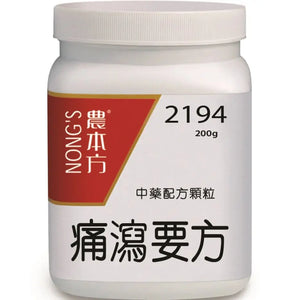
Q1: What are the actions of Tong Xie Yao Fang?
Tong Xie Yao Fang has the actions of tonifying the Spleen, softening the Liver, expelling Dampness, and stopping diarrhea. It is the classic formula for painful diarrhea caused by Liver constraint overacting on a deficient Spleen (Liver-Spleen disharmony).
Q2: Which modern diseases is Tong Xie Yao Fang suited to?
Modern TCM clinical practice commonly applies it to individuals whose pattern differentiation falls within Liver constraint and Spleen deficiency, including diarrhea-predominant irritable bowel syndrome (IBS-D), chronic or recurrent colitis and enteritis of this pattern, and stress- or emotion-triggered abdominal pain with diarrhea.
Q3: Is Tong Xie Yao Fang suitable for improving abdominal pain with diarrhea that is relieved after the bowel movement?
For presentations of intestinal rumbling, abdominal pain that accompanies or precedes diarrhea, pain that eases after defecation, recurrent episodes often triggered by stress or emotion, a thin white tongue coating, and a left guan pulse that is wiry while the right is moderate — in those whose pattern differentiation confirms Liver excess overacting on Spleen deficiency — TCM commonly applies Tong Xie Yao Fang as an adjunct. It cannot replace standard medical treatment.
Q4: Who should not take Tong Xie Yao Fang?
Those with Damp-Heat or Heat-toxin dysentery (burning anus, foul-smelling stools, blood or mucus, yellow greasy tongue coating), pure food stagnation diarrhea, or Kidney Yang deficiency dawn diarrhea without a clear Liver-Spleen pattern are generally not suitable. The formula is relatively warm and drying. Use should be assessed by a qualified TCM physician.
Q5: Why does this formula address both the Liver and the Spleen?
Classical theory states that pain is attributed to the Liver and diarrhea to the Spleen. When the Liver is constrained and overacts on a weak Spleen, the result is painful diarrhea. Bai Shao softens and restrains the Liver, Bai Zhu strengthens the Spleen and dries Dampness, Chen Pi regulates Qi, and Fang Feng disperses Liver constraint while assisting the Spleen — restoring harmony between the two organs.
Q6: Can Tong Xie Yao Fang help when diarrhea and abdominal pain are triggered by emotional stress?
Yes. Because the pattern is often precipitated or worsened by emotional upset that intensifies Liver constraint, the formula’s ability to soften the Liver and support the Spleen makes it particularly useful for stress-related or emotion-triggered painful diarrhea of this type.
Q7: What are the main ingredients of Tong Xie Yao Fang?
The classical four-herb formula consists of Bai Zhu (Atractylodes) to tonify the Spleen and dry Dampness; Bai Shao (White Peony) to soften the Liver, nourish Blood, and relieve spasm and pain; Chen Pi (Tangerine peel) to regulate Qi and dry Dampness; and Fang Feng to disperse Liver constraint, assist the Spleen, and help stop diarrhea. The herbs are often dry-fried in classical preparation.
Q8: Is Tong Xie Yao Fang suitable for long-term use?
It may be used for recurrent or chronic patterns of Liver-Spleen disharmony while symptoms are active. Because the formula is relatively mild, courses can be adjusted according to response. Once pain and diarrhea stabilize, the prescription is often reduced or combined with further Spleen-supporting measures under professional guidance.
Q9: How does Tong Xie Yao Fang differ from formulas that purely stop diarrhea or clear Heat?
Pure astringent antidiarrheal formulas address the symptom without correcting the Liver-Spleen imbalance. Heat-clearing dysentery formulas (such as Bai Tou Weng Tang) are for Heat-toxin patterns with burning, blood, and pus. Tong Xie Yao Fang specifically targets the wood-overacting-on-earth mechanism of painful diarrhea without significant Heat or toxicity.
Q10: What lifestyle advice supports the use of Tong Xie Yao Fang?
Managing emotional stress, eating regular moderate meals, avoiding cold, greasy, or irritating foods, and maintaining a calm daily rhythm help reduce Liver constraint and support Spleen function. Professional evaluation remains important for persistent or severe bowel symptoms.