Qi-Tonifying Formulas

香砂養胃湯 · Xiāng Shā Yǎng Wèi Tāng

Xiang Sha Yang Wei Tang

A classical digestive tonic for Spleen-Stomach deficiency with Qi stagnation, damp and poor appetite.

View formula profile →
Last reviewed August 2026
Formula CategoryQi-Tonifying Formulas
Primary PatternSpleen Qi Deficiency
Primary FunctionTonify Spleen, harmonize Stomach, move Qi, resolve damp
Primary Therapeutic PrincipleStrengthen Spleen-Stomach and move stagnant Qi with aromatic herbs
Main HerbsAucklandia / Costus Root · Amomum Fruit · Ginseng Root · White Atractylodes Rhizome · Poria / Hoelen · Tangerine Peel · Pinellia Rhizome · Agastache / Patchouli · Licorice Root
Classical SourceClassical TCM formulary

Why This Formula?

Traditionally selected for Spleen-Stomach deficiency with Qi stagnation and damp, rather than stronger Qi tonification with stagnation, pure damp turbidity, or middle-cold deficiency.

Traditionally selected for Spleen-Stomach deficiency with Qi stagnation and damp, rather than stronger Qi tonification with stagnation, pure damp turbidity, or middle-cold deficiency.

What Is Xiang Sha Yang Wei Tang?

1. Ancient Classics Inheritance

Xiang Sha Yang Wei Tang (香砂养胃汤), or Aucklandia and Amomum Decoction to Nourish the Stomach, is a classical Ming-dynasty formula commonly cited from Gong Tingxian’s Wan Bing Hui Chun (Return of Spring to Ten Thousand Diseases). It belongs to the category of formulas that strengthen the Spleen, nourish the Stomach, transform Dampness, and regulate Qi.

This formula addresses Spleen-Stomach deficiency with Damp turbidity and Qi stagnation, a pattern of weak digestion that feels full, cold, and stuck rather than simply empty. Typical signs include poor appetite, epigastric fullness or dull pain, nausea, belching, loose stools, fatigue, a pale tongue with white greasy coating, and a moderate weak or slippery pulse.

 Combining Ren Shen, Bai Zhu, and Fu Ling to tonify Qi and strengthen the Spleen, Mu Xiang and Sha Ren to move Qi and awaken the Stomach, Cang Zhu, Hou Po, Chen Pi, Xiang Fu, and Bai Dou Kou to dry Dampness, descend Qi, and relieve distention, and Gan Cao with Sheng Jiang and Da Zao to warm and harmonize the Middle, Xiang Sha Yang Wei Tang nourishes the Stomach while keeping the tonic herbs from becoming cloying.

Xiang Sha Yang Wei Tang

2. Chronic Gastritis

For patients dealing with chronic gastritis, Xiang Sha Yang Wei Tang (Aucklandia and Amomum Stomach-Nourishing Decoction) is a highly common traditional treatment.

  • Target Symptoms: Upper stomach pain, persistent bloating, loss of appetite, and a bland taste in the mouth.
  • How it Works: If the root cause is diagnosed as "deficiency-cold" with dampness and blocked qi, this formula helps warm the stomach, ease pain, and awaken the digestive system. This supportive environment can aid the natural repair of the gastric mucosa and improve overall digestion.

3. Gastric Ulcer

During the remission or recovery phases of a gastric ulcer, this formula is often used for gentle, long-term conditioning.

  • Target Symptoms: Epigastric pain, acid reflux, and frequent belching.
  • How it Works: By strengthening the spleen and stomach, it helps build the digestive tract's natural resistance. It can help soothe the stomach environment, potentially reducing the irritation caused by stomach acid and supporting the healing process of the ulcer.
Xiang Sha Yang Wei Tang

4. Dyspepsia (Indigestion)

For general, persistent indigestion, this formula is highly effective at getting the system back on track.

  • Target Symptoms: General abdominal bloating, poor appetite, nausea, and occasional vomiting.
  • How it Works: It warms the center of the body, regulates energy to promote digestion, and improves the stomach's ability to process and absorb nutrients, bringing relief from the daily discomforts of dyspepsia.

Herb Composition (Sovereign / Minister / Assistant / Envoy)

1. Monarch Herbs (Chief Herbs)

  • Mu Xiang (Aucklandia Root) Mu Xiang is known for promoting qi circulation to relieve pain and strengthening the spleen to aid digestion. In the Xiang Sha Yang Wei Tang formula, it enhances the digestive functions of the spleen and stomach, eliminating discomfort like bloating and pain caused by stagnant qi. Its fragrant nature helps guide the other herbs directly to the digestive tract.
  • Sha Ren (Amomum Fruit) Sha Ren excels at resolving dampness to promote digestion, warming the spleen to stop diarrhea, and regulating qi. It has a strong, aromatic quality that effectively "awakens" the spleen and harmonizes the stomach. It is particularly helpful for symptoms like loss of appetite, nausea, and vomiting caused by a cold and weak digestive system combined with dampness.

2. Ministerial Herbs (Deputy Herbs)

  • Bai Zhu (White Atractylodes Rhizome) Bai Zhu is a classic herb for invigorating the spleen and replenishing qi. It helps dry up excess dampness and promotes the body's natural fluid metabolism. For those experiencing water retention due to a weak digestive system, it plays a key role in gradually restoring normal stomach function.
  • Chen Pi (Tangerine Peel) Chen Pi gently regulates qi and invigorates the spleen while drying dampness and resolving phlegm. It effectively relieves digestive bloating and belching. It also helps clear up internal phlegm-dampness that builds up when the stomach isn't processing food properly.

3. Assistant Herbs (Assistant Herbs)

  • Fu Ling (Poria Mushroom) Fu Ling works by promoting fluid drainage and percolating dampness out of the body through urination. This reduces the workload on the digestive system. It also calms the mind and works closely with Bai Zhu to strengthen the spleen.
  • Ban Xia (Pinellia Rhizome) Ban Xia is highly effective at drying dampness and resolving phlegm. It also suppresses vomiting and counteracts "adverse qi" (when stomach energy moves up instead of down). This helps relieve nausea and restores the natural downward flow of digestion.
  • Xiang Fu (Cyperus Rhizome) Xiang Fu soothes the liver and regulates qi. In Traditional Chinese Medicine, emotional stress can tighten the liver, which in turn impairs the stomach. Xiang Fu smooths out this liver tension, indirectly supporting the digestive process.
Xiang Sha Yang Wei Tang

4. Messenger Herbs (Envoy Herbs)

  • Gan Cao (Licorice Root) Gan Cao acts as the harmonizer of the formula. It invigorates the spleen, replenishes qi, and blends the properties of all the other herbs together so they work safely and synergistically as a unified team.

Clinical Presentation in TCM

1. Pathogenesis

The formula Xiang Sha Yang Wei Tang primarily targets three core issues: spleen and stomach deficiency-cold, dampness obstruction, and qi stagnation.

  • The spleen and stomach are considered the foundation of health. When their "yang" (warming, active energy) is insufficient, internal cold develops, weakening digestion and leading to fluid buildup (dampness).
  • Additionally, factors like emotional stress or a poor diet can cause the body's energy to stall (qi stagnation), which further burdens the digestive system.

2. Efficacy

  • Warming the Middle and Harmonizing the Stomach: Through the combined power of herbs like Mu Xiang, Sha Ren, and Bai Zhu, the formula warms the digestive tract, clears out the cold, and restores normal absorption.
  • Promoting Qi Circulation to Relieve Pain: Herbs like Mu Xiang and Xiang Fu get the digestive energy moving again, effectively eliminating abdominal bloating, tightness, and pain.
  • Resolving Dampness and Awakening the Spleen: Ingredients like Fu Ling and Ban Xia flush out excess fluids and dry up internal phlegm, allowing the spleen to "wake up" and function normally again.
Xiang Sha Yang Wei Tang

3. Indications

Xiang Sha Yang Wei Tang is traditionally used to address symptoms such as:

  • Epigastric (upper stomach) distension and pain
  • Feelings of fullness and discomfort after eating
  • Acid reflux or vomiting sour fluids
  • General loss of appetite

In modern clinical settings, it is frequently used to help manage conditions like chronic gastritis, gastric ulcers, and general indigestion (dyspepsia), provided the patient's pattern matches the traditional diagnosis of cold, dampness, and stagnant qi.

The Mechanism in Classical Theory

1. Regulating Spleen Deficiency Cold

In this formula, a team of herbs works together to warm the "yang" (active, warming energy) of the digestive system:

  • Mu Xiang (Aucklandia Root) and Sha Ren (Amomum Fruit) are excellent at promoting qi circulation and relieving pain. They help get stagnant energy moving again, which eases stomach cramps and supports the body's natural warming process.
  • Bai Zhu (White Atractylodes Rhizome) focuses on invigorating the spleen and boosting overall energy, providing a strong foundation for the digestive system to recover its warmth.
  • Chen Pi (Tangerine Peel) regulates energy and strengthens the spleen, making sure the digestive tract moves food smoothly, which is essential for overcoming internal coldness.

2. Resolving Dampness & Qi Stagnation

To tackle fluid buildup and blocked energy, the formula uses a complementary approach:

  • Fu Ling (Poria Mushroom) and Ban Xia (Pinellia Rhizome) work to drain excess dampness and resolve internal phlegm. They help clear out the sluggish fluids caused by a weak digestive system.
  • Xiang Fu (Cyperus Rhizome) specifically soothes the liver and regulates qi. In traditional medicine, stress and emotional upset can cause liver energy to stagnate, which directly harms the stomach. By calming the liver, Xiang Fu ensures the whole digestive process flows smoothly.
Xiang Sha Yang Wei Tang

3. Drug Synergistic Effect

The true magic of the formula lies in how the ingredients work together:

  • Gan Cao (Licorice Root) acts as the ultimate peacemaker. It harmonizes all the herbs, ensuring their properties blend smoothly for maximum therapeutic effect.
  • It also strengthens the spleen and boosts energy, working hand-in-hand with Bai Zhu. This means the formula doesn't just clear out dampness and cold; it actively rebuilds the body's foundational health and promotes the long-term recovery of the stomach.

Clinical Comparison Table

Compare Xiang Sha Yang Wei TangXiang Sha Liu Jun Zi TangPing Wei SanLi Zhong Tang
Primary Function Tonify Spleen, harmonize Stomach, move Qi, resolve dampTonify Spleen Qi, resolve phlegm-damp, move QiDry Damp, strengthen Spleen, move QiWarm Middle, tonify Spleen Yang
Formula Category Qi-Tonifying FormulasQi-Tonifying FormulasDampness-Draining FormulasYang-Tonifying Formulas
Typical TCM Pattern Spleen Qi DeficiencySpleen Qi DeficiencyDampnessYang Deficiency
Main Conditions Poor Appetite, Bloating, Stomach Discomfort, NauseaPoor Appetite, Bloating, Diarrhea, Stomach Discomfort, Indigestion, Spleen Qi DeficiencyBloating, Poor Appetite, Stomach Discomfort, Diarrhea, Damp ConstitutionAbdominal Pain, Diarrhea, Stomach Discomfort, Poor Appetite, Cold Limbs
Main Herbs Aucklandia / Costus Root · Amomum Fruit · Ginseng Root · White Atractylodes Rhizome · Poria / Hoelen · Tangerine Peel · Pinellia Rhizome · Agastache / Patchouli · Licorice RootGinseng Root · White Atractylodes Rhizome · Poria / Hoelen · Tangerine Peel · Pinellia Rhizome · Aucklandia / Costus Root · Amomum Fruit · Honey-fried LicoriceAtractylodes Rhizome · Magnolia Bark · Tangerine Peel · Fresh Ginger · Jujube / Chinese Date · Honey-fried LicoriceGinseng Root · Dried Ginger · White Atractylodes Rhizome · Honey-fried Licorice
Classical Source Classical TCM formularyGu Jin Ming Yi Fang Lun (citing Ke Yunbo, Qing dynasty, ~1675)Tai Ping Hui Min He Ji Ju Fang (Song dynasty)Shang Han Lun (Zhang Zhongjing, Eastern Han)

How to tell them apart

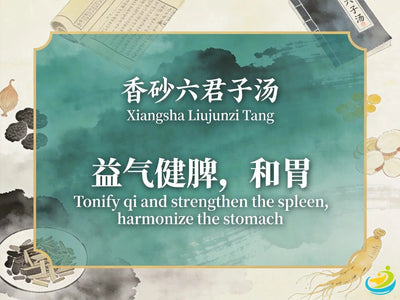
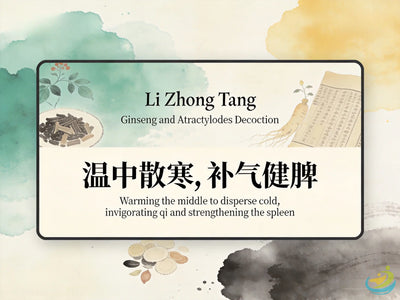
Xiang Sha Yang Wei Tang, Xiang Sha Liu Jun Zi Tang, Ping Wei San and Li Zhong Tang all harmonize the middle. Xiang Sha Liu Jun Zi Tang tonifies Qi with more Qi-moving for Spleen deficiency with stagnation; Ping Wei San dries damp and moves Qi for damp turbidity; Li Zhong Tang warms the middle for cold deficiency. Xiang Sha Yang Wei Tang strengthens Spleen-Stomach and moves Qi for deficiency with damp and poor appetite.

For educational reference only, based on traditional pattern differentiation — not a substitute for professional advice.

Clinical Modifications for Xiang Sha Yang Wei Tang

1. Severe Stomach Pain

When a patient experiences intense upper stomach pain, practitioners often add Yan Hu Suo (Corydalis Rhizome) and Chuan Lian Zi (Toosendan Fruit) to enhance the pain-relieving effects.

  • Yan Hu Suo is excellent at promoting blood circulation and unblocking qi to stop pain.
  • Chuan Lian Zi disperses stagnant liver energy and clears localized heat. Together, they form a powerful combination to soothe severe digestive cramps.

2. Obvious Acid Regurgitation

For patients struggling with severe acid reflux or heartburn, Hai Piao Xiao (Cuttlefish Bone) and Wa Leng Zi (Ark Shell) can be added.

  • Both of these natural ingredients act as natural antacids. They help neutralize excess stomach acid, reducing the burning sensation and protecting the stomach lining from further irritation.

3. Heavier Dampness

If the patient feels extremely sluggish, heavy, or has a thick tongue coating (signs of severe dampness), Huo Xiang (Patchouli) and Pei Lan (Eupatorium) are useful additions.

  • These herbs are highly aromatic, which helps "wake up" the digestive system and powerfully dispel heavy, stubborn dampness that is blocking normal digestion.
Xiang Sha Yang Wei Tang

4. Obvious Spleen-Stomach Qi Deficiency

When the patient is extremely fatigued and weak, indicating a severe lack of digestive energy (qi), Dang Shen (Codonopsis Root) and Huang Qi (Astragalus Root) are added.

  • These are classic, gentle energy-boosting herbs that significantly strengthen the spleen and stomach, improving the body's overall resistance and digestive power.

What the Science Suggests

1. Pharmacological Research

Modern science has shown that the ingredients in Xiang Sha Yang Wei Tang (Aucklandia and Amomum Stomach-Nourishing Decoction) have several beneficial biological effects on the gut:

  • Improving Motility: Qi-regulating herbs like Mu Xiang and Sha Ren help promote gastrointestinal movement, relieving that "food sitting in the stomach" feeling.
  • Boosting Digestion: Spleen-strengthening herbs like Bai Zhu and Fu Ling can help regulate the secretion of digestive juices and boost the activity of digestive enzymes.
  • Reducing Inflammation: Herbs that dry dampness, such as Ban Xia, have shown mild anti-inflammatory properties that help calm an irritated digestive tract.

2. Clinical Efficacy Verification

A large number of modern clinical studies confirm that Xiang Sha Yang Wei Tang is highly effective for its traditional uses:

  • Symptom Relief: It successfully relieves persistent bloating, fullness, upper stomach pain, nausea, and vomiting, significantly improving a patient's daily quality of life.
  • Chronic Conditions: For issues like chronic gastritis and gastric ulcers, it offers a safe, positive effect in managing symptoms and supporting the natural repair of the gastric mucosa (stomach lining).
Xiang Sha Yang Wei Tang

3. Dosage Form Improvement

With advances in modern manufacturing, Xiang Sha Yang Wei Tang is easier to take than ever before.

  • Modern Formats: While traditional brewed teas are still used, the formula is now widely available in modern, concentrated granules, capsules, and pills.
  • Convenience: These updated formats preserve the herbal efficacy while offering better stability, hiding the strong herbal taste, and making it much more convenient for modern, on-the-go patients.

Safety Considerations

1. Dietary and Emotional Precautions

While taking Xiangsha Yangwei Decoction, avoid raw or cold, greasy, and spicy foods, which may burden the spleen and stomach or affect the formula’s efficacy. Maintain a calm, positive mood, as emotional stress may impair spleen–stomach function and slow recovery.

2. Special Populations

Pregnant women should use Xiangsha Yangwei Decoction only under medical supervision. Children, older adults, and people with weak constitutions should have the dosage adjusted by a healthcare professional.

Questions About Xiang Sha Yang Wei Tang

Q1: What are the actions of Xiang Sha Yang Wei Tang?
Xiang Sha Yang Wei Tang has the actions of strengthening the Spleen, harmonizing the Stomach, regulating Qi, and transforming Dampness. It “nourishes the Stomach” when poor appetite, fullness, and stagnant food arise from a weak, Damp, Qi-stagnant Middle Jiao.
Q2: Which modern diseases is Xiang Sha Yang Wei Tang suited to?
Modern TCM clinical practice commonly applies it to individuals whose pattern differentiation falls within Spleen-Stomach disharmony with Dampness and Qi stagnation, including functional dyspepsia, chronic gastritis with fullness and belching, poor appetite after greasy meals, and irregular loose or sluggish stools of this pattern.
Q3: Is Xiang Sha Yang Wei Tang suitable for improving fullness, belching, and a poor appetite?
For presentations of epigastric or abdominal fullness, belching, reduced appetite, nausea, a greasy coating, and a wiry or slippery pulse — in those whose pattern differentiation confirms a weak Stomach encumbered by Dampness and stagnant Qi — TCM commonly applies Xiang Sha Yang Wei Tang as an adjunct. It cannot replace evaluation of ulcer, obstruction, or other digestive disease.
Q4: Who should not take Xiang Sha Yang Wei Tang?
Those with Stomach Yin deficiency dryness, blazing Stomach Fire, or Damp-Heat with a bitter taste and yellow greasy coating are generally not suitable. The formula is warm, aromatic, and drying. Use should be assessed by a qualified TCM physician.
Q5: Why use so many aromatic Qi-moving herbs together with Spleen-supporting herbs?
A weak Stomach that is also stagnant cannot be treated by tonics alone; tonics would sit and create more fullness. Sha Ren, Mu Xiang, Huo Xiang, and Bai Dou Kou aromatically awaken the Spleen and transform Dampness. Hou Po, Zhi Shi, Xiang Fu, and Chen Pi move stagnant Qi. Ban Xia descends rebellious Qi. Bai Zhu and Fu Ling support the Spleen so Dampness is less easily regenerated. The result is a Stomach that can receive food again.
Q6: How does Xiang Sha Yang Wei Tang differ from Xiang Sha Liu Jun Zi Tang or Ping Wei San?
Xiang Sha Liu Jun Zi Tang is built on Liu Jun Zi Tang and tonifies Qi more strongly when fatigue and loose stools dominate. Ping Wei San more purely dries Dampness and moves the Stomach when Damp turbidity is heavy and tonification is not yet needed. Xiang Sha Yang Wei Tang sits between them: more awakening and moving than a Qi tonic, more Spleen-supporting than plain Ping Wei San.
Q7: What are the main ingredients of Xiang Sha Yang Wei Tang?
Common compositions include Mu Xiang and Sha Ren to move Qi and awaken the Spleen; Bai Zhu and Fu Ling to strengthen the Spleen and leach Dampness; Chen Pi, Hou Po, Zhi Shi, and Xiang Fu to regulate Qi and reduce fullness; Huo Xiang and Bai Dou Kou to aromatically transform turbidity; Ban Xia to descend rebellious Qi; and Gan Cao, Sheng Jiang, and Da Zao to harmonize.
Q8: Is Xiang Sha Yang Wei Tang suitable for long-term use?
It may be used for a course of treatment in chronic Stomach disharmony under professional supervision. Because many herbs are aromatic and drying, prolonged use can consume Qi and Yin. Once fullness eases and appetite returns, the formula is often simplified toward a milder Spleen tonic.
Q9: Can this formula help both the weak appetite and the bloated feeling after a small meal?
Yes. That combination is the reason the formula is named “nourish the Stomach.” The Spleen-Stomach is too weak and Damp to transform food, so appetite falls; stagnant Qi then makes even a small meal sit and bloat. Awakening, moving, and gently supporting the Middle addresses both sides of the same pattern.
Q10: What lifestyle advice supports the use of Xiang Sha Yang Wei Tang?
Eating smaller warm cooked meals, reducing raw-cold, greasy, and hard-to-digest foods, chewing well, and not lying down immediately after eating all support the formula. Persistent vomiting, black stool, or progressive weight loss should be properly evaluated.

General Questions

How do I choose the right formula?
TCM formulas are traditionally selected according to individual pattern differentiation rather than by symptom alone. If you're not sure which formula fits your presentation, take our AI Assessment below for a personalized starting point, then confirm with a qualified TCM practitioner.
What are concentrated herbal granules?
Concentrated herbal granules are made by decocting raw herbs, then extracting and concentrating the resulting liquid into a fine granule or powder form. This preserves the same active compounds as a traditional decoction while making the herbs far easier to store, measure, and prepare.
How should I take these products?
Dissolve the recommended amount of granules in hot water, stir until fully dissolved, and drink while warm — following the dosage and frequency advised by your TCM practitioner or as stated on the product packaging.
Are concentrated herbal granules equivalent to traditional decoctions?
Concentrated granules are produced from the same herbs and processed to retain their active compounds, so they are traditionally regarded as a convenient alternative to decoctions rather than a different remedy. Some practitioners note subtle differences in strength or absorption between the two forms, so your TCM practitioner may adjust dosage accordingly.
Are your products authentic?
Yes. HJMEDICAL sources its concentrated granules exclusively from established, reputable manufacturers such as Nong's and Hoi Tin, both long-standing names in the TCM granules industry, with GMP compliance stated directly on their packaging.
Are HJMEDICAL products manufactured under GMP standards?
HJMEDICAL sources its concentrated granules from established, reputable manufacturers such as Nong's and Hoi Tin, both long-standing names in the TCM granules industry. GMP compliance for these products is stated directly on their packaging.
Do you ship internationally?
Yes — we ship worldwide! Every order goes out via Hong Kong Post, and your exact shipping cost and estimated delivery time for your address are calculated and shown right at checkout, so there are never any surprises. We also offer free shipping once your order reaches our free-shipping threshold, so it's easy to stock up on your favorite formulas and save.
Can I take more than one formula at the same time?
Some formulas are traditionally combined, while others overlap or counteract each other. We recommend checking with a qualified TCM practitioner before combining formulas, especially if you are already taking other medication.
Are these products suitable during pregnancy or breastfeeding?
Some TCM formulas are not suitable during pregnancy or breastfeeding. Please consult a qualified TCM practitioner or your doctor before use if you are pregnant, trying to conceive, or nursing.
Do these products replace medical treatment?
No. These products are traditional herbal supplements intended to support wellbeing according to TCM principles — they are not a replacement for professional medical diagnosis or treatment. Please consult a qualified TCM practitioner or licensed healthcare provider before starting, stopping, or combining any treatment, especially if you have a chronic condition.
Medical Disclaimer

For general TCM education only — not medical advice. Consult a qualified TCM practitioner or licensed healthcare provider before use, especially if pregnant, nursing, on medication, or managing a chronic condition.

Not sure which formula is right for you?

Take the AI Assessment

最新文章

Login

Forgot your password?

Don't have an account yet?
Create account

Xiang Sha Yang Wei Tang: Classic TCM Formula for Spleen-Stomach Deficiency, Bloating & Poor Digestion