Heat-Clearing Formulas

辛夷清肺汤 · Xīn Yí Qīng Fèi Tāng

Xin Yi Qing Fei Tang

A classical formula for nasal congestion and sinus-type obstruction from Lung heat, with yellow discharge, dry nose or mouth and heat signs, rather than pure wind-cold orifice blockage.

View formula profile →
Last reviewed August 2026
Formula CategoryHeat-Clearing Formulas
Primary PatternLung Heat
Primary FunctionClear Lung heat, open the nasal orifices
Primary Therapeutic PrincipleClear heat from the Lung and unblock nasal passages
Main HerbsMagnolia Flower · Scutellaria / Baikal Skullcap · Gypsum · Anemarrhena Rhizome · Ophiopogon Tuber · Angelica Dahurica Root · Cimicifuga Rhizome · Licorice Root · Loquat Leaf
Classical SourceWai Ke Zheng Zong (Chen Shigong, Ming dynasty)

Why This Formula?

Traditionally selected for heat-type nasal congestion with yellow discharge — orifice-opening plus Lung-heat clearing, rather than pure wind-cold orifice formulas.

Traditionally selected for heat-type nasal congestion with yellow discharge — orifice-opening plus Lung-heat clearing, rather than pure wind-cold orifice formulas.

What Is Xin Yi Qing Fei Tang?

1. Background of Origin

Xin Yi Qing Fei Tang (辛夷清肺汤), or Magnolia Flower Decoction to Clear the Lungs, is a classical Ming-dynasty formula from the Wai Ke Zheng Zong (Orthodox Manual of External Medicine). It belongs to the category of formulas that clear Lung Heat and open the nasal orifices.

This formula addresses Lung Heat that obstructs the nasal passages and impairs the Lung’s dispersing function. Typical signs include nasal congestion or obstruction, thick sticky yellow nasal discharge, reduced sense of smell, possible nasal polyps, a sensation of heat in the nasal cavity, thirst, cough with sticky yellow phlegm, a red tongue with yellow coating, and a rapid pulse.

Combining Xin Yi as the key herb to open the nasal orifices and disperse stagnation, with Shi Gao, Huang Qin, Zhi Mu, and Zhi Zi to strongly clear Lung Heat, Mai Men Dong and Bai He to nourish Yin and moisten dryness, Pi Pa Ye to clear Heat and descend Lung Qi, and Sheng Ma with Gan Cao to lift and harmonize, Xin Yi Qing Fei Tang effectively clears Heat from the Lungs, unblocks the nose, and restores comfortable breathing.

Xin Yi Qing Fei Tang

2. Treating Common Symptoms

In a clinical setting, Xin Yi Qing Fei Tang is highly valuable for people dealing with frustrating nasal issues.

  • Targeted Symptoms: It is a great choice if you are experiencing a stuffy nose, runny nose, itchy nose, or a reduced sense of smell, especially when these are combined with classic "wind-heat in the lung" signs like a fever, coughing, a dry throat, and thirst.
  • Allergy Relief: For example, if you suffer from allergic rhinitis and experience a flare-up that includes these wind-heat symptoms, practitioners will often use a customized version of Xin Yi Qing Fei Tang to help bring you relief.
Xin Yi Qing Fei Tang

3. Examples of Treating Specific Conditions

This formula is also a go-to for specific, stubborn respiratory conditions.

  • Tackling Bi Yuan (Sinusitis): It is incredibly effective for patients dealing with Bi Yuan, particularly the type caused by "wind-heat trapped in the lungs." If you are suffering from a heavy flow of yellow nasal discharge, severe congestion, loss of smell, headaches, fever, and coughing, this formula works well to effectively ease those symptoms.
  • Healing the Nasal Lining: Beyond general sinusitis, if wind-heat in your lung channel has caused your nasal mucosa to become congested, swollen, or ulcerated, using Xin Yi Qing Fei Tang helps to clear out that heat, significantly reduce the swelling, and speed up your overall recovery.

Herb Composition (Sovereign / Minister / Assistant / Envoy)

1. Chief Herb — Xin Yi

Xin Yi (Magnolia flower bud) is a spicy, warm herb that primarily targets the lung and stomach energy channels (meridians).

  • Main Actions: It is famous for its ability to disperse wind-cold and open up the nasal passages. It is a go-to herb for treating chronic nasal issues, stuffy noses, and runny sinuses.
  • Role in the Formula: In Xin Yi Qing Fei Tang, it acts as the Chief Herb (the leader of the formula). It takes charge by guiding the medicinal effects straight to the source of the problem—the nasal cavities—resolving blockages and restoring clear breathing.

2. Deputy Herb — Shi Gao

Shi Gao (Gypsum) is a mineral-based herb that is spicy, sweet, and extremely cold in nature, also targeting the lung and stomach channels.

  • Main Actions: It has a powerful ability to clear intense heat, drain "fire" from the body, and relieve thirst and irritability.
  • Role in the Formula: When excess heat builds up in the lungs and stomach, it can trigger a lot of sinus and respiratory issues. As the Deputy Herb, Shi Gao acts as the perfect sidekick to Xin Yi. While the Chief herb opens the nose, the Deputy intensely cools down the underlying heat causing the inflammation.

3. Assistant Herbs — Zhi Mu, Zhi Zi, Huang Qin, Pi Pa Ye

This team of herbs works together to support the main ingredients, cooling the body and protecting your internal balance.

  • Zhi Mu: This bitter, cold herb clears heat but also nourishes your body's vital fluids (yin). It is a fantastic assistant because it boosts the cooling power of Shi Gao while preventing that extreme cold from drying you out too much.
  • Zhi Zi: Bitter and cold, this herb is great at clearing heat from all over the body, draining dampness, and cooling the blood. It helps put out the "fire" across your entire system.
  • Huang Qin: Also bitter and cold, it specializes in clearing heat from the lungs and drying up excess dampness. It strongly reinforces the formula's ability to cool down a hot, inflamed respiratory tract.
  • Pi Pa Ye: (Loquat leaf) is slightly cold and bitter. It focuses on clearing the lungs and stopping coughs, helping your lung energy flow smoothly downward like it is supposed to.
  • Role in the Formula: Together, these four serve as the Assistant Herbs, creating a powerful cooling network that supports the Chief and Deputy herbs.
Xin Yi Qing Fei Tang

4. Envoy Herbs — Sheng Ma, Gan Cao

These herbs are the messengers and peacemakers of the formula, ensuring everything goes exactly where it needs to go without causing upset.

  • Sheng Ma: This slightly cold herb has a special upward-lifting energy. It helps raise the body's clear, healthy energy (yang) upward, literally acting as a guide to carry the healing effects of all the other herbs straight up to your head and nasal passages.
  • Gan Cao: (Licorice root) is a sweet, neutral herb that is essential in almost all Chinese medicine. It harmonizes the entire formula, making sure all the different herbs play nicely together. It also protects your stomach and gently boosts your energy.
  • Role in the Formula: As the Envoy Herbs, they guide the medicine directly to the "battlefield" in the upper body and keep your overall system balanced and protected.

Clinical Presentation in TCM

1. Pathomechanism Analysis (The Root Cause)

The main underlying issue that Xin Yi Qing Fei Tang targets is what Chinese medicine calls "wind-heat" in the lung channel. In this system, your lungs are in charge of your breathing and open directly into your nose, while also connecting to your skin and hair.

  • The Invasion: When a wind-heat pathogen invades your lung channel, it messes up your lung's normal function. Your lung energy gets stuck, which immediately affects your nose, leading to blockages, a stuffy nose, and a runny nose.
  • Excess Heat: At the same time, if you have a build-up of intense heat in your lungs and stomach, it makes the whole situation much worse and triggers a bunch of related uncomfortable symptoms.

2. Actions (How It Works)

Based on that root cause, Xin Yi Qing Fei Tang is perfectly designed to clear out the lungs, open up the nasal passages, and drive away the wind and heat.

  • Clearing the Lungs: By successfully flushing out the wind-heat from the lung channel, it allows your lung energy to circulate freely and smoothly again.
  • Opening the Nose: Once the lung energy is moving right, your nasal passages open up, bringing much-needed relief to your sinus symptoms.
Xin Yi Qing Fei Tang

3. Primary Indications (What It Treats)

This formula is a powerhouse for treating a variety of issues triggered by wind-heat in the lung channel.

  • General Relief: It is excellent for treating sores inside the nose, severe nasal dryness, stuffy and runny noses, a reduced sense of smell, and even related itchy skin.
  • Targeting "Bi Yuan": It is particularly famous for its high success rate in treating a condition known as "Bi Yuan" (which translates closely to a severe sinus infection or sinusitis).
  • Stopping the Flow: Bi Yuan is known for causing a constant, heavy flow of thick, cloudy nasal discharge. Since this is usually caused by wind-heat in the lungs or trapped heat in the gallbladder, Xin Yi Qing Fei Tang gets right to the root of the problem to stop the symptoms and heal the body.

The Mechanism in Classical Theory

1. Targeted Treatment for Wind-Heat in the Lung Channel

Let's break down how this formula specifically tackles wind-heat trapped in your lungs:

  • Xin Yi acts as the "chief" or lead herb in this blend. Even though it has a spicy and warm nature that traditionally disperses wind-cold, its main superpower is opening up blocked nasal passages. This targets the exact core issue when wind-heat clogs up your lung channel.
  • Shi Gao steps in as the "deputy" herb. It is extremely cold in nature and does a fantastic job of clearing out intense heat from both your lungs and stomach.
  • When you put Xin Yi and Shi Gao together, it creates a perfect tag-team effect. One disperses the blockage while the other intensely clears the heat. Together, they perfectly regulate the hot and cold balance of the lung channel and successfully drive out the wind-heat.
Xin Yi Qing Fei Tang

2. Herb Synergy and Teamwork

The rest of the ingredients act as a powerful supporting cast, each bringing a unique benefit to make the entire formula work seamlessly:

  • Zhi Mu, Zhi Zi, Huang Qin, and Pi Pa Ye serve as the "assistant" herbs.
  • Zhi Mu partners up to help Shi Gao clear out heat while also nourishing your body's fluids (yin).
  • Zhi Zi specifically clears away internal fire from what TCM calls the Triple Burner.
  • Huang Qin adds extra strength to cool down and clear lung heat.
  • Pi Pa Ye helps direct your lung energy (qi) back downward, which helps stop coughing and congestion.
  • Working together, these assistants supercharge the main herbs, making the formula incredibly effective at clearing heat, opening the lungs, and unblocking your nose.
  • Sheng Ma acts like a natural delivery system. It lifts the body's clear energy upward, effectively guiding the medicine's healing power straight to your head and sinuses.
  • Gan Cao is the great harmonizer of the group. It seamlessly blends all the different herbs together so they don't clash, while also gently nourishing your spleen and boosting your overall energy (qi). This makes the entire formula incredibly well-balanced and ensures the medicine reaches its full potential.

Clinical Comparison Table

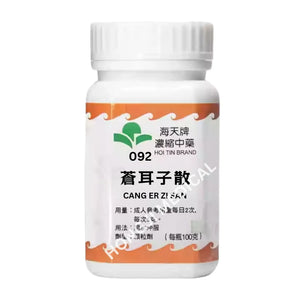
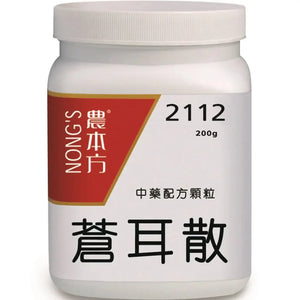
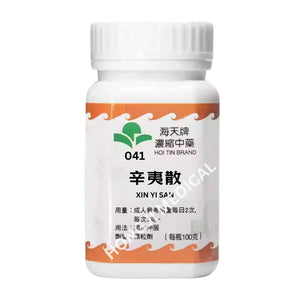
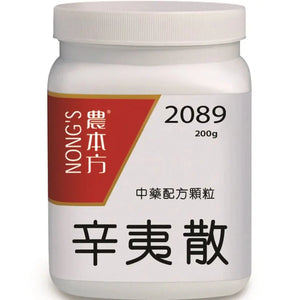
Compare Xin Yi Qing Fei TangCang Er SanXin Yi SanXie Bai San
Primary Function Clear Lung heat, open the nasal orificesDisperse wind, unblock the noseDisperse wind, unblock the nasal orificesClear Lung heat, stop cough and wheezing
Formula Category Heat-Clearing FormulasExterior-Releasing FormulasExterior-Releasing FormulasHeat-Clearing Formulas
Typical TCM Pattern Lung HeatWind-ColdWind-ColdLung Heat
Main Conditions Nasal Congestion, Dry Mouth & Throat, Headache, FeverNasal Congestion, Headache, Allergic RhinitisNasal Congestion, Headache, Allergic RhinitisCough, Dry Cough, Fever
Main Herbs Magnolia Flower · Scutellaria / Baikal Skullcap · Gypsum · Anemarrhena Rhizome · Ophiopogon Tuber · Angelica Dahurica Root · Cimicifuga Rhizome · Licorice Root · Loquat LeafXanthium Fruit · Magnolia Flower · Angelica Dahurica Root · Mentha / PeppermintMagnolia Flower · Angelica Dahurica Root · Saposhnikovia Root · Ligusticum Root · Cimicifuga Rhizome · Akebia Stem · Chuanxiong Rhizome · Asarum / Wild GingerMulberry Root Bark · Wolfberry Root Bark · Licorice Root · Non-glutinous Rice
Classical Source Wai Ke Zheng Zong (Chen Shigong, Ming dynasty)Ji Sheng Fang (Yan Yonghe, Song dynasty)Ji Sheng Fang (Yan Yonghe, Song dynasty)Li Dongyuan school / classical

How to tell them apart

Xin Yi Qing Fei Tang clears Lung heat for nasal congestion. Cang Er San and Xin Yi San open orifices for wind-cold. Xie Bai San drains Lung heat for cough without the same nasal focus.

For educational reference only, based on traditional pattern differentiation — not a substitute for professional advice.

Clinical Modifications for Xin Yi Qing Fei Tang

1. Adjustments for Specific Symptoms

Since everyone's body is different, this formula is highly customizable. Practitioners can add specific herbs to tackle your worst symptoms:

  • Severe Congestion: If your nose is completely blocked, herbs like Xi Xin and Bai Zhi can be added to really boost the formula's power to open up the nasal passages.
  • Intense Heat: If there is obvious, severe heat in your lungs and stomach (showing up as a high fever, extreme thirst, and constipation), strong heat-clearing herbs like Da Huang and Mang Xiao might be added to flush the heat out of your system.
  • Heavy Coughing: If a bad cough is your main issue, Xing Ren and Qian Hu are great additions to help stop the cough and break up stubborn phlegm.
  • Itchy Skin: If your condition is causing very itchy skin, wind-dispelling herbs like Fang Feng and Jing Jie can be mixed in to stop the itch.
Xin Yi Qing Fei Tang

2. Adapting to the Disease Progression

The formula is also meant to be tweaked flexibly as your sickness changes or progresses over time:

  • In the Early Stages: If you catch it early and the "wind-heat" symptoms are still relatively mild, the practitioner might lower the dosage of the intensely cold, heat-clearing herbs like Shi Gao and Huang Qin.
  • For Lingering Illness: If the sickness drags on for a long time without healing, it can start to dry out your lungs (what TCM calls a "lung yin deficiency"). In this case, deeply nourishing herbs like Sha Shen and Mai Dong can be added to help moisten, repair, and protect your lungs.

What the Science Suggests

1. Pharmacological Research

Modern science is really backing up what this formula can do. Here is what researchers have found in the lab:

  • Fights Allergies and Swelling: The active compounds found in Xin Yi are proven to have strong anti-inflammatory and anti-allergic effects.
  • Natural Fever Reducer: Shi Gao actually works on your body's temperature control center to help bring down a fever.
  • Fights Off Bugs: Other herbs in the mix, like Zhi Mu and Huang Qin, pack a serious punch with antibacterial, antiviral, and anti-inflammatory properties.

All of these scientific findings give us solid, modern proof for why Xin Yi Qing Fei Tang is so effective at treating these specific illnesses.

2. New Clinical Findings

Lately, more clinical trials have been putting Xin Yi Qing Fei Tang to the test in real-world scenarios, and the results are very promising:

  • Great for Sinus Issues: When treating conditions like sinusitis (Bi Yuan) and allergic rhinitis, studies show it does a fantastic job at relieving symptoms and healing the nasal lining, all while being highly safe for patients.
  • Helps with Skin Problems: It is also proving to be effective for treating itchy skin issues that are triggered by "wind-heat" trapped in the lung channel.

Safety Considerations

1. Dietary Contraindications

While taking Xinyi Qingfei Tang, avoid spicy, greasy, and irritating foods such as chili peppers and fried foods, as they may generate heat and worsen lung-stomach heat symptoms. Alcohol should also be avoided because it can increase internal heat and reduce the formula’s effectiveness.

2. Precautions for Special Populations

Pregnant or breastfeeding women, elderly or physically weak individuals, and those with spleen-stomach deficiency-cold should use this formula with caution. Because Xinyi Qingfei Tang is relatively cold in nature, it may damage spleen-stomach yang qi and cause indigestion, abdominal pain, or diarrhea in vulnerable individuals.

Questions About Xin Yi Qing Fei Tang

Q1: What are the actions of Xin Yi Qing Fei Tang?
Xin Yi Qing Fei Tang has the actions of clearing Lung Heat, opening the nasal orifices, moistening the Lungs, and dispersing stagnation. It addresses Heat in the Lung channel that rises to obstruct the nasal passages, producing congestion, thick discharge, and related symptoms.
Q2: Which modern diseases is Xin Yi Qing Fei Tang suited to?
Modern TCM clinical practice commonly applies it to individuals whose pattern differentiation falls within Lung Heat affecting the nasal orifices, including chronic sinusitis (especially Heat type with yellow discharge), chronic or hypertrophic rhinitis, nasal polyps, allergic rhinitis of Heat pattern, and post-nasal drip with thick yellow mucus.
Q3: Is Xin Yi Qing Fei Tang suitable for improving nasal congestion with thick yellow discharge and a sensation of heat in the nose?
For presentations of nasal blockage, thick yellow or purulent nasal discharge, reduced sense of smell, dryness or heat sensation in the nasal cavity, possible thirst or dry throat, and a red tongue with yellow coating — in those whose pattern differentiation confirms Lung Heat steaming the nasal orifices — TCM commonly applies Xin Yi Qing Fei Tang as an adjunct. It cannot replace standard medical treatment of sinus or nasal conditions.
Q4: Who should not take Xin Yi Qing Fei Tang?
Those with Cold-type nasal conditions (clear, watery discharge without Heat signs), marked Spleen deficiency with loose stools, or pure Yin deficiency without excess Heat are generally not suitable. The formula is cooling and clearing; it can worsen Cold patterns. Caution is advised in pregnancy. Use should be assessed by a qualified TCM physician.
Q5: Why is Xin Yi the key herb in this formula?
Xin Yi (Magnolia flower) is the premier herb for opening the nasal orifices and relieving congestion. In this formula it is combined with strong Lung-Heat-clearing herbs so that it can unblock the nose while the underlying Heat that is causing the obstruction is simultaneously cleared.
Q6: Can Xin Yi Qing Fei Tang help both acute flare-ups and more chronic Heat-type sinus problems?
Yes. It is used for chronic sinusitis or rhinitis that presents with Heat signs (yellow thick discharge, nasal heat or dryness, thirst), as well as for acute exacerbations of the same pattern. The combination of orifice-opening and Heat-clearing actions makes it suitable for both ongoing and flare-up presentations when Lung Heat is confirmed.
Q7: What are the main ingredients of Xin Yi Qing Fei Tang?
Typical ingredients include Xin Yi to open the nasal orifices; Shi Gao, Zhi Mu, Huang Qin, and Zhi Zi to clear Lung and Upper Burner Heat; Pi Pa Ye and Sheng Ma to clear and disperse Heat while assisting the orifices; and Bai He and Mai Men Dong to moisten the Lungs and protect Yin from the drying effect of Heat and clearing herbs.
Q8: Is Xin Yi Qing Fei Tang suitable for long-term use?
It may be used for a course of treatment in chronic Heat-type sinus or rhinitis conditions under professional supervision. However, continuous long-term use of its cooling and clearing herbs should be monitored, as overuse can potentially injure Spleen Yang or fluids. Duration should be guided by a practitioner.
Q9: How does Xin Yi Qing Fei Tang differ from Cang Er Zi San or other nasal formulas?
Cang Er Zi San primarily disperses Wind and opens the nose and is more suitable for Wind-Cold or mixed Wind patterns with clearer discharge. Xin Yi Qing Fei Tang specifically clears Lung Heat while opening the orifices, making it the better choice when yellow thick discharge, nasal heat, thirst, and Lung Heat signs predominate.
Q10: What lifestyle advice supports the use of Xin Yi Qing Fei Tang?
Avoiding spicy, greasy, and heating foods, reducing alcohol, maintaining good nasal hygiene, avoiding irritants and excessive air conditioning, and ensuring adequate rest help the formula clear Lung Heat and keep the nasal passages open. Persistent sinus or nasal symptoms should be properly evaluated by a healthcare professional.

General Questions

How do I choose the right formula?
TCM formulas are traditionally selected according to individual pattern differentiation rather than by symptom alone. If you're not sure which formula fits your presentation, take our AI Assessment below for a personalized starting point, then confirm with a qualified TCM practitioner.
What are concentrated herbal granules?
Concentrated herbal granules are made by decocting raw herbs, then extracting and concentrating the resulting liquid into a fine granule or powder form. This preserves the same active compounds as a traditional decoction while making the herbs far easier to store, measure, and prepare.
How should I take these products?
Dissolve the recommended amount of granules in hot water, stir until fully dissolved, and drink while warm — following the dosage and frequency advised by your TCM practitioner or as stated on the product packaging.
Are concentrated herbal granules equivalent to traditional decoctions?
Concentrated granules are produced from the same herbs and processed to retain their active compounds, so they are traditionally regarded as a convenient alternative to decoctions rather than a different remedy. Some practitioners note subtle differences in strength or absorption between the two forms, so your TCM practitioner may adjust dosage accordingly.
Are your products authentic?
Yes. HJMEDICAL sources its concentrated granules exclusively from established, reputable manufacturers such as Nong's and Hoi Tin, both long-standing names in the TCM granules industry, with GMP compliance stated directly on their packaging.
Are HJMEDICAL products manufactured under GMP standards?
HJMEDICAL sources its concentrated granules from established, reputable manufacturers such as Nong's and Hoi Tin, both long-standing names in the TCM granules industry. GMP compliance for these products is stated directly on their packaging.
Do you ship internationally?
Yes — we ship worldwide! Every order goes out via Hong Kong Post, and your exact shipping cost and estimated delivery time for your address are calculated and shown right at checkout, so there are never any surprises. We also offer free shipping once your order reaches our free-shipping threshold, so it's easy to stock up on your favorite formulas and save.
Can I take more than one formula at the same time?
Some formulas are traditionally combined, while others overlap or counteract each other. We recommend checking with a qualified TCM practitioner before combining formulas, especially if you are already taking other medication.
Are these products suitable during pregnancy or breastfeeding?
Some TCM formulas are not suitable during pregnancy or breastfeeding. Please consult a qualified TCM practitioner or your doctor before use if you are pregnant, trying to conceive, or nursing.
Do these products replace medical treatment?
No. These products are traditional herbal supplements intended to support wellbeing according to TCM principles — they are not a replacement for professional medical diagnosis or treatment. Please consult a qualified TCM practitioner or licensed healthcare provider before starting, stopping, or combining any treatment, especially if you have a chronic condition.
Medical Disclaimer

For general TCM education only — not medical advice. Consult a qualified TCM practitioner or licensed healthcare provider before use, especially if pregnant, nursing, on medication, or managing a chronic condition.

Not sure which formula is right for you?

Take the AI Assessment

最新文章

Login

Forgot your password?

Don't have an account yet?
Create account

Xin Yi Qing Fei Tang: Classic TCM Formula for Nasal Congestion, Sinusitis & Lung Heat