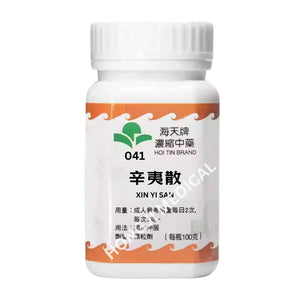
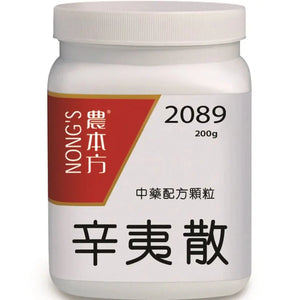
Xin Yi San: Classic TCM Formula for Allergic Rhinitis, Sinusitis & Nasal Congestion
1. Prescription Source & History
1. Origin Legend
Xin Yi San (辛夷散), known in English as Magnolia Flower Powder, is a classical TCM formula specifically designed to open the nasal orifices and relieve nasal congestion and sinus issues caused by external Wind invasion. This aromatic formula is particularly effective for allergic rhinitis, acute and chronic sinusitis, nasal polyps, and loss of smell when there is obstruction of the nasal passages by Wind-Cold or Wind-Heat, often with underlying Lung or Spleen Qi deficiency. In modern clinical practice, Xin Yi San is widely used for both seasonal and perennial allergic rhinitis, as well as sinus headaches and post-nasal drip. By combining ascending, aromatic, and Wind-dispersing herbs that specifically target the head and nasal region, it provides effective relief for nasal obstruction while supporting the body’s ability to resist recurrent external invasion when properly combined with tonifying herbs.
The origin of Xinyi San (Magnolia Flower Powder) has an interesting legend. It is said that in ancient times, there was a young scholar who was constantly troubled by nasal diseases such as nasal congestion and runny nose, which seriously affected his studies and life. By chance, when he was collecting herbs in the mountains, he met a hermit doctor. After hearing about his illness, the doctor treated him with some herbs, and the main herb was Xinyi. After taking it for a period of time, the scholar's nasal disease gradually healed. The scholar was amazed by the miraculous effect of these herbs and begged the doctor to record the prescription. On the original basis, the doctor added several other herbs to form a complete formula, which was the prototype of Xinyi San. Later, through continuous clinical practice and improvement, Xinyi San gradually spread and became a classic formula for treating nasal diseases.
2. Historical Records
Xinyi San was first recorded in the Jisheng Fang in the Song Dynasty. The Jisheng Fang is a comprehensive formula book written by the Southern Song doctor Yan Yonghe. The book elaborated in detail the composition, efficacy and main treatment diseases of Xinyi San. Yan Yonghe pointed out in the book that Xinyi San is mainly used to treat symptoms such as 'disharmony of the lung zang-organ, attack of pathogenic factors, resulting in nasal obstruction, runny nose with clear nasal discharge, dizziness of the head and eyes, or aversion to wind and spontaneous sweating'. Since then, doctors of successive dynasties have studied and applied Xinyi San and made some adjustments and supplements on the basis of the original formula to make its efficacy more exact. For example, the Jingyue Quanshu in the Ming Dynasty also included Xinyi San and further explained its formula meaning, providing more reference basis for later doctors to use this formula.
3. Development Evolution
As time goes by, Xinyi San has continuously developed and evolved in clinical application. Different doctors have appropriately adjusted the composition and dosage of the formula according to their clinical experience. For example, some doctors believe that when treating nasal diseases accompanied by headache, the dosage of Chuanxiong can be appropriately increased; for those with yellow nasal discharge and symptoms of lung heat, heat-clearing herbs such as Huangqin and Sangbaipi can be added. This flexible addition and subtraction make Xinyi San better adapt to the conditions of different patients and expand its clinical application range. At the same time, with the continuous progress of pharmaceutical technology, the dosage forms of Xinyi San have gradually become rich. In addition to the traditional decoction, there are also various dosage forms such as pills and powders, which are convenient for patients to take and store.

2. Composition Introduction (King, Minister, Assistant, Guide)
1. King Drug - Magnolia Flower
Xinyi is the dried flower bud of Magnolia biondii Pamp., Magnolia denudata Desr. or Yulania sprengeri Pamp. of the Magnoliaceae family. It has a pungent taste, a warm nature, and belongs to the lung and stomach meridians. Xinyi has the effects of dispersing wind-cold and dredging nasal passages, and is an important herb for treating nasal diseases such as nasal sinusitis and nasal congestion with runny nose. It can ascend to the head and face, directly reach the nasal passages, disperse wind-cold in the lung meridian, and make the nasal passages unobstructed. In Xinyi San, the dosage of Xinyi is relatively large and it is the monarch herb, playing a major therapeutic role. The volatile oil and other components it contains can stimulate the nasal mucosa, promote blood circulation in the nasal mucosa, reduce congestion and swelling of the nasal mucosa, and thus relieve nasal obstruction symptoms.
2. Minister Drug - Asarum
Asarum sieboldii Miq. has a pungent taste, a warm nature, and belongs to the heart, lung and kidney meridians. Asarum sieboldii Miq. has the effects of expelling wind-cold and opening the nasal passages to relieve pain. When combined with Xinyi, it enhances the effects of dispersing wind-cold and dredging nasal passages. Asarum sieboldii Miq. is good at penetrating and can penetrate deep into the meridians to disperse pathogenic wind. It has a good therapeutic effect on symptoms such as nasal sinusitis and headache. At the same time, Asarum sieboldii Miq. can also warm the lung and resolve fluid retention, and has a certain adjuvant therapeutic effect on nasal diseases accompanied by symptoms such as cough and thin and clear expectoration. In Xinyi San, Asarum sieboldii Miq. serves as the ministerial herb to assist the monarch herb in exerting the main efficacy and enhancing the therapeutic effect of the formula.
3. Assistant Drugs - Angelica Dahurica, Chuanxiong
Angelica dahurica (Fisch. ex Hoffm.) Benth. et Hook. f. has a pungent taste, a warm nature, and belongs to the lung, stomach and large intestine meridians. Angelica dahurica (Fisch. ex Hoffm.) Benth. et Hook. f. has the effects of relieving exterior syndrome by diaphoresis, expelling wind and relieving pain, opening the nasal passages, drying dampness and arresting leucorrhea, and dissipating swelling and discharging pus. In Xinyi San, Angelica dahurica (Fisch. ex Hoffm.) Benth. et Hook. f. mainly plays the roles of expelling wind and relieving pain and opening the nasal passages. It can disperse wind-cold in the yangming meridian and has a good relieving effect on symptoms such as nasal sinusitis and headache. At the same time, Angelica dahurica (Fisch. ex Hoffm.) Benth. et Hook. f. can also dry dampness and arrest leucorrhea and has a certain therapeutic effect on nasal diseases accompanied by increased leucorrhea. Ligusticum chuanxiong Hort. has a pungent taste, a warm nature, and belongs to the liver, gallbladder and pericardium meridians. Ligusticum chuanxiong Hort. has the effects of promoting blood circulation and qi movement, expelling wind and relieving pain. It can ascend to the head and eyes and is an important herb for treating headache. In Xinyi San, Ligusticum chuanxiong Hort. and Angelica dahurica (Fisch. ex Hoffm.) Benth. et Hook. f. are combined to enhance the effects of expelling wind and relieving pain and opening the nasal passages. At the same time, it can also promote blood circulation and remove blood stasis, improve blood circulation in the nasal passages, and assist the monarch herb and ministerial herb to better exert the therapeutic effect.
4. Messenger Herbs - Cimicifuga, Saposhnikovia
Cimicifuga foetida L. has a pungent and slightly sweet taste, a slightly cold nature, and belongs to the lung, spleen, stomach and large intestine meridians. Cimicifuga foetida L. has the effects of inducing eruption, clearing heat and detoxifying, and lifting yang qi. In Xinyi San, Cimicifuga foetida L. mainly plays the role of lifting yang and detoxifying. It can lift the clear yang qi, make the medicinal power ascend to the affected area directly, and enhance the therapeutic effect of the formula. At the same time, Cimicifuga foetida L. can also clear heat and detoxify and has a certain therapeutic effect on nasal diseases accompanied by accumulation of heat-toxicity. Saposhnikovia divaricata (Turcz.) Schischk. has a pungent and sweet taste, a slightly warm nature, and belongs to the bladder, liver and spleen meridians. Saposhnikovia divaricata (Turcz.) Schischk. has the effects of expelling wind and relieving exterior syndrome, eliminating dampness and relieving pain, and stopping convulsions. Saposhnikovia divaricata (Turcz.) Schischk. can expel pathogenic wind and is a common herb for treating wind diseases. In Xinyi San, Saposhnikovia divaricata (Turcz.) Schischk. assists other herbs to disperse pathogenic wind. At the same time, it can also regulate the ascending, descending, floating and sinking of various herbs, making the medicinal power of the formula better exerted, so it is the guiding herb.

III. Pathogenesis, Effects and Treatments
1. Analysis of Pathogenesis
The pathogenesis targeted by Xinyi San is mainly disharmony of the lung zang-organ and invasion of nasal passages by wind-cold pathogenic factors. The lung governs qi and respiration and opens into the nose. When the function of the lung zang-organ is disordered and the defensive qi is not firm, wind-cold pathogenic factors are likely to invade the nasal passages by taking advantage of the deficiency, resulting in congestion and swelling of the nasal mucosa, presenting symptoms such as nasal obstruction and runny nose. If the condition persists and the wind-cold pathogenic factors stagnate and transform into heat, symptoms such as yellow nasal discharge and headache may also occur. In addition, factors such as weakness of the spleen and stomach and deficiency of qi and blood can also lead to malnutrition of the nasal passages and aggravate the symptoms of nasal diseases.
2. Effects
Xinyi San has the effects of dispelling wind-cold and dredging nasal passages. In the formula, drugs such as magnolia flower bud and asarum can disperse wind-cold in the lung meridian, making the nasal passages unobstructed; drugs such as angelica dahurica and chuanxiong rhizome dispel wind and relieve pain, and dredge nasal passages, enhancing the therapeutic effect of the formula; drugs such as cimicifuga and ledebouriella root raise yang and detoxify, regulating various drugs, enabling the medicinal power to play a better role. Through the synergistic effect of these drugs, Xinyi San can effectively dispel wind-cold pathogens, dredge nasal passages, and relieve nasal disease symptoms.
3. Treatable Diseases
Xinyi San is mainly used to treat nasal diseases such as allergic rhinitis and nasal sinusitis caused by disharmony of the lung and attack of pathogenic factors. Allergic rhinitis is manifested as clear nasal discharge, nasal congestion, frequent sneezing, etc., mostly caused by wind-cold pathogens invading the nasal passages; nasal sinusitis is manifested as turbid nasal discharge, excessive amount without stopping, nasal congestion, reduced sense of smell, etc., which can be caused by transformation of wind-cold pathogens into heat. In addition, Xinyi San also has a good therapeutic effect on nasal diseases accompanied by headache, dizziness, aversion to wind and spontaneous sweating.

IV. Analysis of Formula Principles
1. Expelling External Wind-Cold
In Xinyi San, magnolia flower bud and asarum are used as the monarch drugs. Both of them are pungent in flavor and warm in nature, and are good at dispersing wind-cold pathogens. Magnolia flower bud can directly reach the nasal passages, disperse wind-cold in the lung meridian, making the nasal passages unobstructed; asarum can penetrate deep into the meridians, dispel wind and cold, enhancing the exterior-resolving power of the formula. Angelica dahurica, chuanxiong rhizome and other ministerial drugs assist the monarch drugs to further disperse wind-cold and relieve pain by wind. These drugs are combined with each other, which can effectively dispel the wind-cold pathogens invading the nasal passages, enabling the lung qi to be dispersed and the nasal passages to be unobstructed.
2. Unblocking Nasal Passages
All the drugs in the formula have the effect of dredging nasal passages. Magnolia flower bud is the key drug for dredging nasal passages. It can directly act on the nasal mucosa, improve the blood circulation of the nasal mucosa, reduce congestion and swelling, thus relieving nasal congestion symptoms. Drugs such as asarum, angelica dahurica and chuanxiong rhizome can also dredge nasal passages. They act through different channels and synergistically enhance the effect of dredging nasal passages of the formula. Cimicifuga and ledebouriella root and other adjuvant drugs can raise yang qi, making the medicinal power go upward and directly reach the diseased area, better playing the role of dredging nasal passages.
3. Overall Conditioning
Xinyi San not only focuses on the treatment of local symptoms of nasal passages, but also takes into account the overall conditioning. Cimicifuga in the formula can raise yang and detoxify, and has a certain therapeutic effect on nasal diseases accompanied by accumulation of heat-toxicity; ledebouriella root can regulate the ascending, descending, floating and sinking of various drugs, enabling the medicinal power of the formula to play a better role. At the same time, the drugs in the formula can also regulate the function of the lung, enhance the dispersing and descending functions of the lung, improve the resistance of the body, so as to achieve the purpose of treating both the symptoms and the root cause.

V. Comparison with Other Formulas
1. Xanthium Powder
Xanthium Powder and Xinyi San are both commonly used formulas for treating nasal diseases. Both of them have the effects of dispelling wind-cold and dredging nasal passages. However, the main components of Xanthium Powder are xanthium sibiricum, magnolia flower bud, angelica dahurica and mentha haplocalyx. Its medicinal power is relatively weak, focusing on dispersing wind-heat, and has a good therapeutic effect on nasal diseases such as nasal sinusitis and nasal congestion caused by wind-heat. And Xinyi San Among the component drugs, there are more pungent-warm exterior-resolving drugs, which are more focused on dispersing wind-cold, and are more applicable to diseases such as nasal congestion and nasal sinusitis caused by wind-cold.
2. Ligusticum Tea-Regulating Powder
Chuanxiong Chatiao San It is mainly used to treat headache caused by exogenous wind pathogen. Its component drugs include chuanxiong, schizonepeta, dahurian angelica root, notopterygium, licorice, asarum, ledebouriella, and mentha haplocalyx. Compared with Xinyi San Chuanxiong Chatiao San is more focused on treating headache and has a stronger effect of dispelling wind and relieving pain. While Xinyi San is mainly targeted at nasal diseases and has the main efficacy of dispersing wind-cold and dredging nasal passages. Although both have the effect of dispelling wind, the focuses of treatment are different.
3. Herba Pogostemonis Pills
Huodan Pills are mainly composed of patchouli leaves and pig bile powder, and have the efficacy of clearing heat and resolving dampness, and promoting nasal passage. It is applicable to symptoms such as nasal congestion, running clear or turbid nasal discharge, and frontal headache caused by wind-heat accumulating in the lungs and damp-heat accumulating internally. Compared with Xinyi San, Huodan Pills have a relatively cold property and are more focused on clearing heat and resolving dampness, and are more applicable to nasal diseases accompanied by damp-heat symptoms. While Xinyi San is partial to warming and dispersing wind-cold and has a good effect on nasal diseases caused by wind-cold.

VI. Clinical Applications and Indications
1. Allergic Rhinitis
Allergic rhinitis belongs to the category of 'nasal congestion' in traditional Chinese medicine and is mostly caused by deficiency of lung qi and insecurity of the defensive exterior. Xinyi San has the efficacy of dispersing wind-cold and dredging nasal passages, and has a good relieving effect on symptoms such as running clear nasal discharge, nasal congestion, and frequent sneezing in patients with allergic rhinitis. When applied clinically, drugs can be appropriately added or subtracted according to the specific conditions of the patients. For example, if accompanied by weakness of the spleen qi, drugs for strengthening the spleen and replenishing qi such as codonopsis pilosula and atractylodes macrocephala can be added; if accompanied by deficiency of kidney yang, drugs for warming and tonifying the kidney yang such as aconite root and cassia bark can be added.
2. Sinusitis
Sinusitis is equivalent to 'nasal sinusitis' in traditional Chinese medicine. Xinyi San has a certain therapeutic effect on symptoms such as running turbid nasal discharge, excessive amount without stopping, nasal congestion, and decreased sense of smell caused by sinusitis. In clinical application, the dosage of drugs can be adjusted according to the severity of the disease. For patients with more severe conditions, heat-clearing and detoxifying drugs such as honeysuckle and forsythia can be added; for those with obvious headache, the dosage of chuanxiong and dahurian angelica root can be increased to enhance the effect of dispelling wind and relieving pain.
3. Chronic Rhinitis
Patients with chronic rhinitis often experience symptoms such as nasal congestion and runny nose, which are lingering and difficult to cure. Xinyi San can disperse wind-cold, open the nasal passages, improve the blood circulation of the nasal mucosa, relieve the congestion and swelling of the nasal mucosa, and has a certain therapeutic effect on chronic rhinitis. In clinical application, it can be combined with therapies such as acupuncture and massage to improve the treatment effect. At the same time, patients should pay attention to avoiding contact with allergens and irritating substances, strengthening the constitution, and preventing colds.

VII. Modifications
1. Yellow Nasal Discharge, Add Scutellaria and Mulberry Bark
If the nasal discharge is yellow, it indicates that the nasal disease is accompanied by symptoms of lung heat. Scutellaria baicalensis is bitter in taste, cold in nature, and belongs to the lung, gallbladder, spleen, large intestine, and small intestine meridians. It has the effects of clearing heat and drying dampness, purging fire and detoxifying; Mori Cortex is sweet in taste, cold in nature, and belongs to the lung meridian. It has the functions of purging the lung to relieve asthma and promoting diuresis to alleviate swelling. After adding Scutellaria baicalensis and Mori Cortex, the power of clearing heat and purging fire of the formula can be enhanced, so that the lung heat can be cleared and the symptom of yellow nasal discharge can be relieved.
2. Severe Headache, Add Notopterygium and Ligusticum
Notopterygium incisum is pungent and bitter in taste, warm in nature, and belongs to the bladder and kidney meridians. It has the effects of relieving exterior syndrome, expelling wind and dampness, and relieving pain; Ligusticum sinense is pungent in taste, warm in nature, and belongs to the bladder meridian. It has the functions of expelling wind and cold, removing dampness and relieving pain. When the headache is obvious, adding Notopterygium incisum and Ligusticum sinense can enhance the function of expelling wind and relieving pain of the formula and relieve the headache symptoms. Notopterygium incisum is good at treating headache of the Taiyang meridian, and Ligusticum sinense is good at treating headache at the vertex. According to the different locations of the headache, the dosages of the two can be appropriately adjusted.
3. Severe Nasal Mucosa Congestion, Add Red Peony and Moutan Bark
Paeonia lactiflora is bitter in taste, slightly cold in nature, and belongs to the liver meridian. It has the effects of clearing heat and cooling blood, dispersing stasis and relieving pain; Moutan Cortex is pungent and bitter in taste, slightly cold in nature, and belongs to the heart, liver, and kidney meridians. It has the effects of clearing heat and cooling blood, promoting blood circulation and removing stasis. When the nasal mucosa is severely congested and swollen, adding Paeonia lactiflora and Moutan Cortex can play the roles of clearing heat and cooling blood, promoting blood circulation and removing stasis, relieve the congestion and swelling of the nasal mucosa, and improve the ventilation function of the nasal passages.
4. With Cough, Add Aster and Tussilago
Aster tataricus is pungent and bitter in taste, warm in nature, and belongs to the lung meridian. It has the effects of moistening the lung and lowering qi, resolving phlegm and relieving cough; Tussilago farfara is pungent, slightly bitter in taste, warm in nature, and belongs to the lung meridian. It has the functions of moistening the lung and lowering qi, relieving cough and resolving phlegm. When the nasal disease is accompanied by cough symptoms, adding Aster tataricus and Tussilago farfara can enhance the function of relieving cough and resolving phlegm of the formula, relieve the cough symptoms, and at the same time contribute to the recovery of the nasal disease.

VIII. Dosage (Traditional and Modern Concentrated Granules)
1. Traditional Method
The traditional usage of Xinyi San is to grind the drugs into coarse powder, take an appropriate amount each time, and decoct with water. The general dosage is: Magnoliae Flos (with hairs removed), Asari Radix et Rhizoma (washed with soil and dried by baking), Ligustici Rhizoma (with rhizome removed), Cimicifugae Rhizoma, Chuanxiong Rhizoma, Akebiae Caulis (with nodes removed) each 30 g, Saposhnikoviae Radix (with rhizome removed) 45 g, Notopterygii Rhizoma (with rhizome removed) 60 g, and prepared Glycyrrhizae Radix 15 g. Grind the above drugs into coarse powder, take 9 g each time, add 220 ml of water, decoct until 160 ml, remove the residue, take it warm after meals, three times a day.
2. Modern Concentrated Granules
With the development of modern pharmaceutical technology, Xinyi San also has a modern concentrated granule dosage form. This dosage form is convenient to take, with accurate dosage and definite curative effect. Generally speaking, the dosage of modern concentrated granules of Xinyi San is: the granule preparation made according to the original formula proportion, take 1 - 2 bags each time, dissolve it with boiling water, three times a day. The specific dosage can be appropriately adjusted according to factors such as the patient's age and condition.

IX. Precautions and Taboos
1. Dietary Taboos
During the period of taking Xinyi San, it is necessary to avoid eating spicy, greasy, and irritating foods, such as chili peppers, fried foods, and alcoholic beverages. These foods are likely to generate heat and promote fire, aggravating the symptoms of nasal diseases and being unfavorable to the recovery of the condition. At the same time, it is necessary to avoid eating raw and cold foods to prevent damage to the yang qi of the spleen and stomach and affect the curative effect of the drugs.
2. Medication Taboos
Xinyi Powder contains Asarum. The dosage of Asarum should not be too large to avoid poisoning reactions. At the same time, it is not suitable for those with yin deficiency and yang hyperactivity or headache due to blood deficiency and wind dryness. In addition, pregnant women should use Xinyi Powder with caution to avoid adverse effects on the fetus. During the medication process, if adverse reactions or changes in the condition occur, the medication should be stopped immediately and medical treatment should be sought.
3. Other Precautions
During the period of taking Xinyi Powder, patients should pay attention to rest, avoid fatigue, and ensure sufficient sleep. At the same time, they should pay attention to keeping warm to avoid being invaded by wind-cold pathogens again. In addition, appropriate physical exercise can be carried out to strengthen the body and improve the body's resistance, which is helpful for the recovery of nasal diseases.

X. Modern Research Progress
1. Pharmacological Research
Xinyi Powder is from Collection of Medical Formulas. It is a traditional Chinese medicine formula that treats nasal congestion, difficult breathing, inability to smell fragrance or stench, continuous nasal discharge, headache, etc. It is applicable to allergic rhinitis, rhinitis patients, nasal polyps, nasal polyps, sinusitis, colds, etc. In the formula, Flos Magnoliae, Radix Angelicae Dahuricae, Asarum, Radix Saposhnikoviae, Rhizoma Chuanxiong, Rhizoma Cimicifugae, Radix Glycyrrhizae, etc. are ground into fine powder. Take two qian each time and take it after decocting with tea. It has the functions of dredging nasal passages, promoting the rising of clear qi, assisting the clear yang, dredging the vital qi, dispersing heat and removing dampness, purging fire, nourishing the liver and moistening dryness, dispersing heat and breaking knots, leading the clear qi in the stomach, and ascending the clear yang, relieving its pungent dispersing effect, and treating nasal obstruction syndromes such as allergic rhinitis.
Modern research shows that the drugs in Xinyi Powder have various pharmacological effects. The volatile oil and other components contained in Flos Magnoliae can stimulate the nasal mucosa, promote the blood circulation of the nasal mucosa, reduce the congestion and swelling of the nasal mucosa, and thus relieve nasal congestion symptoms. Asarum has anti-inflammatory and anti-allergic effects, can reduce the inflammatory reaction of the nasal mucosa, and has a certain therapeutic effect on nasal diseases such as allergic rhinitis. Drugs such as Radix Angelicae Dahuricae and Rhizoma Chuanxiong have analgesic and anti-inflammatory effects, can relieve symptoms such as headache and nasal mucosa inflammation caused by nasal diseases. Drugs such as Rhizoma Cimicifugae and Radix Saposhnikoviae have the function of regulating immune function, can enhance the body's resistance, and prevent the recurrence of nasal diseases.
2. Clinical Efficacy Observation
Many clinical studies show that Xinyi Powder has good curative effects in the treatment of nasal diseases. For example, a study observed the clinical curative effect of Xinyi Powder in the treatment of allergic rhinitis. The results showed that Xinyi Powder could significantly improve the symptoms of nasal itching, sneezing, runny nose, etc. in patients and improve the quality of life of patients. Another study showed that Xinyi Powder also had an obvious relieving effect on the symptoms of nasal congestion, runny nose, headache, etc. in patients with sinusitis, could promote the drainage of the sinuses, reduce nasal secretions, and improve the cure rate of the sinuses.
3. Research on Dosage Form Improvement
In order to improve the curative effect of Xinyi Powder and the compliance of patients, in recent years, scientific research personnel have carried out research on the improvement of the dosage form of Xinyi Powder. In addition to the modern concentrated granule dosage form, nasal drops, sprays and other dosage forms of Xinyi Powder have also been developed. These new dosage forms can directly act on the local nasal cavity, with fast drug absorption, definite curative effect and convenient use. For example, Xinyi Powder nasal drops can quickly relieve nasal congestion symptoms and have fewer side effects, providing more treatment options for nasal disease patients.
4. Future Research Directions
With the continuous development of modern medicine, the research on Xinyi Powder will also be continuously deepened. The future research directions mainly include further clarifying the action mechanism of Xinyi Powder, optimizing the composition and dosage of the formula, developing safer and more effective new dosage forms, etc. At the same time, the research on the combined application of Xinyi Powder and other treatment methods should also be strengthened to explore the best comprehensive treatment plan for nasal diseases and provide better treatment effects for nasal disease patients.
Frequently Asked Questions
What is Xin Yi San used for in Traditional Chinese Medicine?
Xin Yi San (Magnolia Flower Powder) is a classical TCM formula primarily used to open the nasal orifices and relieve nasal congestion caused by Wind-Cold or Wind-Heat invading the Lung. It is indicated for allergic rhinitis, acute and chronic sinusitis, nasal polyps, and nasal congestion with clear or turbid discharge, sneezing, loss of smell, and frontal headache. The formula is especially effective when there is underlying Lung or Spleen Qi deficiency that allows external pathogens to easily invade the nasal passages. It is one of the most commonly prescribed formulas in TCM for both seasonal and perennial allergic rhinitis.
How does Xin Yi San open the nasal passages and relieve sinus congestion?
Xin Yi San works by combining aromatic, Wind-dispersing herbs that specifically target the head and nasal region. Xin Yi Hua (Magnolia Flower) is the chief herb that directly opens the nasal orifices and relieves congestion. Cang Er Zi (Xanthium) and Bai Zhi (Angelica Dahurica) further disperse Wind and unblock the sinuses. Supporting herbs like Fang Feng and Jing Jie help release the exterior, while the formula as a whole gently supports Lung Qi to prevent recurrent invasion. Unlike purely drying formulas, Xin Yi San opens the passages without excessively damaging fluids, making it suitable for both excess and deficient patterns when properly modified.
What are the precise herbal ingredients in Xin Yi San?
Xin Yi San contains: Xin Yi Hua (Magnolia Flower) as the chief herb that opens the nasal orifices and relieves congestion; Cang Er Zi (Xanthium Fruit) disperses Wind and unblocks the sinuses; Bai Zhi (Angelica Dahurica) relieves frontal headache and nasal congestion; Fang Feng (Siler) and Jing Jie (Schizonepeta) disperse Wind-Cold from the exterior; and other supporting herbs such as Chuan Xiong (Ligusticum) to move Blood and relieve headache, along with herbs to support Lung and Spleen Qi depending on the modification. The classic version focuses on aromatic, ascending, and Wind-dispersing actions to directly address nasal obstruction.
⚠️ This content is for reference only and does not provide medical advice. Consult a healthcare professional for any health concerns.