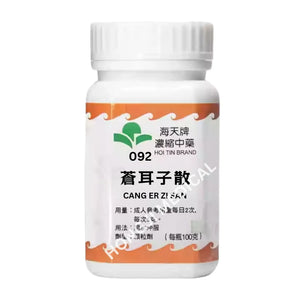
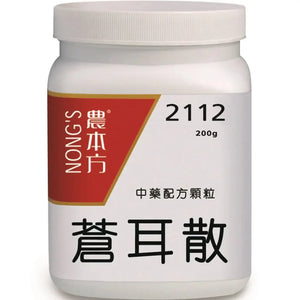
Cang'er San

Cang Er San

I. Origins and History

1. Origins and Legend

The origins of Cang'er San are accompanied by an interesting legend. It is said that in ancient times, a physician gathering herbs in the mountains came upon an injured wild rabbit. As the rabbit fled, it accidentally collided with a clump of Xanthium (Cang'er), and the plant's spines pierced its body. Curiously, however, the rabbit did not become listless from its injuries; on the contrary, after some time the wounds gradually healed and its vitality was restored. The physician was greatly intrigued, and through careful observation he discovered that Cang'er possessed certain medicinal properties. Later, when treating conditions of a similar nature, the physician cleverly combined Cang'er with several other herbs and gradually formulated the earliest version of Cang'er San. Although this is only a legend, it reflects from a different angle the process by which people in ancient times explored and discovered natural medicinal substances.

2. Historical Records

Cang'er San is first recorded in the Renzhai Zhizhi Fanglun (Direct Guidance on Formulas from Renzhai Studio) composed by Yang Shiying of the Song dynasty. This medical work elaborates in detail on the composition, actions, and applications of Cang'er San. Thereafter, Cang'er San was continuously applied and developed in the clinical practice of physicians throughout successive dynasties, becoming a classical formula for treating nasal sinusitis (bi yuan) and related conditions. As time passed, different physicians may have varied in their understanding and application of the formula, but the basic prescription and primary actions of Cang'er San have always been transmitted and preserved, providing an important reference for the treatment of related diseases in later generations.

Cang'er San: Dispelling Wind, Unblocking the Orifices and Scattering Cold for Allergic Rhinitis and Chronic Sinusitis | HJMEDICAL

II. Herb Composition (Sovereign, Minister, Assistant, Envoy)

1. Chief Herb: Xinyi

Xinyi (Magnolia Flower Bud) is the dried flower bud of Magnolia biondii, Magnolia denudata, or Magnolia sprengeri of the Magnoliaceae family. It is acrid in flavour, warm in nature, and enters the Lung and Stomach channels. Xinyi has the actions of scattering wind-cold and unblocking the nasal orifices; it is the principal herb in Cang'er San. It can ascend to the head and face, with a penetrating and reaching nature that can rapidly open the nasal orifices; it produces good therapeutic results for symptoms such as nasal congestion and nasal discharge. In treating nasal sinusitis, Xinyi can reach directly to the site of disease, driving away wind-cold pathogenic factors lodged in the nasal orifices and restoring free flow through the nasal passages.

2. Deputy Herb: Cang'er Zi

Cang'er Zi (Xanthium Fruit) is the dried mature fruit with involucre of Xanthium sibiricum of the Asteraceae family. It is acrid and bitter in flavour, warm in nature, mildly toxic, and enters the Lung channel. Cang'er Zi similarly has the actions of scattering wind-cold and unblocking the nasal orifices, and its medicinal potency is relatively strong. Combined with Xinyi, it reinforces the force of scattering wind and unblocking the orifices, and the two herbs jointly address the principal pathomechanism of nasal sinusitis. At the same time, Cang'er Zi can also eliminate dampness and relieve pain, and provides a certain degree of relief for nasal sinusitis accompanied by symptoms such as headache.

3. Adjuvant Herb: Bohe

Bohe (Peppermint) is the dried aerial parts of Mentha haplocalyx of the Lamiaceae family. It is acrid in flavour, cool in nature, and enters the Lung and Liver channels. Bohe has the actions of dispersing wind-heat, clearing and benefiting the head and eyes, benefiting the throat and venting rashes, and soothing the liver and moving qi. In Cang'er San, Bohe primarily fulfils the role of dispersing wind-heat, assisting Xinyi and Cang'er Zi in dispersing wind-heat from the Lung channel. It enables wind-heat in the Lung channel to be cleared and resolved, thereby reducing the symptoms of nasal sinusitis; at the same time it can relieve headache, red eyes, and other symptoms caused by wind-heat disturbing upward.

4. Envoy Herb: Baizhi

Baizhi (Dahurian Angelica Root) is the dried root of Angelica dahurica or Angelica dahurica var. formosana of the Apiaceae family. It is acrid in flavour, warm in nature, and enters the Stomach, Large Intestine, and Lung channels. Baizhi has the actions of releasing the exterior and scattering cold, dispelling wind and relieving pain, diffusing and unblocking the nasal orifices, drying dampness and stopping vaginal discharge, and reducing swelling and expelling pus. In Cang'er San, Baizhi serves as envoy herb: on one hand it guides all the herbs directly to the site of disease, enhancing the formula's therapeutic effect; on the other hand, its wind-dispelling and pain-relieving action helps to relieve headache caused by nasal sinusitis, and its action of diffusing and unblocking the nasal orifices also assists Xinyi and Cang'er Zi in better expressing their orifice-unblocking function.

Cang'er San: Dispelling Wind, Unblocking the Orifices and Scattering Cold for Allergic Rhinitis and Chronic Sinusitis | HJMEDICAL

III. Pathomechanism, Actions, and Indications

1. Pathomechanism

The occurrence of nasal sinusitis (bi yuan) is primarily related to dysfunction of the Lung, Spleen, and Kidney and invasion by external pathogenic factors. The Lung governs qi and respiration, opens through the nose, and corresponds externally to the skin and body hair. If Lung function is impaired and the defensive exterior is insecure, wind-cold pathogens can readily invade the Lung channel, follow the channel to attack the nasal orifices upward, impair the nasal orifices, and give rise to symptoms such as nasal congestion and nasal discharge. The Spleen governs transformation and transportation and is the source of blood and qi generation; if spleen deficiency leads to abnormal transformation and transportation, water-dampness is generated internally, accumulates into phlegm, and turbid phlegm attacks the nasal orifices upward, which can also cause nasal sinusitis. The Kidney governs the storage of essence; when kidney essence and qi are sufficient, the Lung is nourished; if kidney source qi is deficient, the Lung loses its warming nourishment, and this too will affect the normal function of the nasal orifices. In addition, wind-heat pathogens invading the Lung channel, or depressed heat in the Gallbladder organ disturbing the nasal orifices upward, can also cause nasal sinusitis. The pathomechanism primarily addressed by Cang'er San is wind-heat of the Lung channel disturbing the nasal orifices upward, causing the nasal orifices to become blocked, with manifestations such as nasal congestion, discharge of yellow nasal mucus, and headache.

2. Actions

Cang'er San has the actions of dispersing wind and clearing heat, and unblocking and opening the nasal orifices. In the formula, Xinyi and Cang'er Zi scatter wind-cold and unblock the nasal orifices as chief herbs; Bohe disperses wind-heat, assisting the chief herbs in clearing and resolving wind-heat from the Lung channel; Baizhi dispels wind and relieves pain, diffuses and unblocks the nasal orifices, and guides all herbs directly to the site of disease — together achieving the combined action of dispersing wind, clearing heat, and unblocking and opening the nasal orifices. By dispersing wind-heat from the Lung channel, the nasal orifices are made free and open, thereby relieving the various symptoms of nasal sinusitis.

3. Indications

Cang'er San is primarily used to treat nasal sinusitis (bi yuan). The principal symptoms of bi yuan are copious, continuous flow of turbid nasal discharge, and may be accompanied by nasal congestion, reduced sense of smell, and headache. Its symptoms are similar to sinusitis in modern medicine, encompassing both acute sinusitis and chronic sinusitis. For acute sinusitis, which presents as sudden-onset nasal congestion, discharge of yellow nasal mucus, and headache, Cang'er San can rapidly disperse wind-heat, unblock the nasal orifices, relieve symptoms, and promote recovery. For chronic sinusitis, which has a prolonged course with frequent recurrences, Cang'er San can regulate the balance of the body's blood, qi, yin, and yang, strengthen the body's immune capacity, improve the functional state of the nasal orifices, reduce the frequency of recurrence, and alleviate symptoms.

Cang'er San: Dispelling Wind, Unblocking the Orifices and Scattering Cold for Allergic Rhinitis and Chronic Sinusitis | HJMEDICAL

IV. Formula Analysis

1. Synergistic Action of Herb Combinations

Xinyi combined with Cang'er Zi — both having the primary actions of scattering wind-cold, unblocking the nasal orifices, raising the clear, and descending the turbid — work synergistically in their medicinal force to rapidly open the nasal orifices and address the principal pathomechanism of nasal sinusitis. Bohe's dispersal of wind-heat combined with Xinyi and Cang'er Zi's scattering of wind-cold enables wind-heat from the Lung channel to be cleared and resolved, enhancing the formula's ability to disperse external pathogens. Baizhi can not only dispel wind and relieve pain and diffuse and unblock the nasal orifices but can also guide all herbs directly to the site of disease, enabling the medicinal force to act more effectively on the nasal orifice area and enhancing the formula's therapeutic effect. The four herbs in combination work synergistically to fulfil the actions of dispersing wind, clearing heat, and unblocking and opening the nasal orifices.

2. Application of Channel Theory

From the perspective of channel theory, the Lung channel connects with the nasal orifices; when qi and blood in the Lung channel flow freely, the nasal orifices function normally. Xinyi, Cang'er Zi, and Bohe all enter the Lung channel and can disperse wind-heat from the Lung channel, enabling qi and blood in the Lung channel to circulate freely, thereby improving the qi and blood supply to the nasal orifices and restoring their normal function. Baizhi enters the Stomach, Large Intestine, and Lung channels; its penetrating and reaching nature can guide all herbs to ascend to the head and face, reaching directly to the site of nasal orifice disease, enabling the herbs to better express their action locally at the nasal orifices, regulating the channel qi and blood of the nasal orifices, and achieving the goal of unblocking and opening the nasal orifices.

Cang'er San: Dispelling Wind, Unblocking the Orifices and Scattering Cold for Allergic Rhinitis and Chronic Sinusitis | HJMEDICAL

V. Comparison with Related Formulas

1. Yinqiao San

Yinqiao San is primarily used to treat exterior patterns of externally contracted wind-heat, with principal symptoms of fever, mild aversion to wind-cold, sore throat, and thirst. Its composition is dominated by heat-clearing, toxin-resolving, and wind-heat-dispersing herbs such as Jinyinhua (Honeysuckle Flower), Lianqiao (Forsythia Fruit), Bohe (Peppermint), and Niubangzi (Burdock Seed). Compared with Cang'er San, Yinqiao San focuses on treating conditions in which externally contracted wind-heat pathogens invade the skin and muscles causing disharmony of wei qi, with its primary site of action being the skin and muscles. Cang'er San, by contrast, focuses specifically on treating nasal sinusitis caused by wind-heat of the Lung channel disturbing the nasal orifices upward, with its primary site of action being the nasal orifices. Although both formulas have the action of dispersing wind-heat, they differ in therapeutic emphasis and site of disease.

2. Huodan Wan

Huodan Wan is primarily composed of Guang Huoxiang leaf (Patchouli Leaf) and pig bile, and has the actions of clearing heat, transforming dampness, and diffusing and unblocking the nasal orifices. It is commonly used to treat nasal congestion, clear or turbid nasal discharge, and frontal headache caused by internal accumulation of damp-turbidity with depressed fire in the Gallbladder channel. Compared with Cang'er San, Huodan Wan focuses on treating the pattern of Gallbladder channel depressed fire combined with damp-turbidity, with herb composition primarily centred on transforming dampness and clearing heat. Cang'er San, by contrast, focuses primarily on dispersing wind, clearing heat, and unblocking the orifices, and is suited to nasal sinusitis caused by Lung channel wind-heat. The two formulas differ to a certain degree in pathomechanism, actions, and herb composition; clinical selection should be based on the specific condition.

Cang'er San: Dispelling Wind, Unblocking the Orifices and Scattering Cold for Allergic Rhinitis and Chronic Sinusitis | HJMEDICAL

VI. Clinical Applications

1. Acute Sinusitis (Bi Yuan)

In the early stage of acute sinusitis, patients commonly present with nasal congestion, discharge of yellow nasal mucus, headache, and accompanying exterior symptoms such as fever and mild aversion to wind-cold. At this point, Cang'er San can express its actions of dispersing wind, clearing heat, and unblocking the nasal orifices to rapidly relieve symptoms. When Cang'er San is applied promptly in the early stage of onset, it can effectively reduce nasal congestion and nasal discharge symptoms, shorten the course of the disease, and promote recovery. As the condition progresses, if symptoms such as high fever and severe headache appear, appropriate additions of heat-clearing, toxin-resolving, fire-draining, and pain-relieving herbs — such as Huangqin (Scutellaria Root), Huanglian (Coptis Rhizome), and Shigao (Gypsum) — may be made on the basis of Cang'er San to enhance efficacy.

2. Chronic Sinusitis

Patients with chronic sinusitis have a prolonged course with frequent recurrences, persistent copious turbid nasal discharge, and accompanying symptoms of nasal congestion, reduced sense of smell, and headache. Cang'er San produces good regulatory results for chronic sinusitis. Through long-term use of Cang'er San, the balance of the body's blood, qi, yin, and yang can be adjusted, the body's immune capacity strengthened, the functional state of the nasal orifices improved, the frequency of recurrence reduced, and symptoms alleviated. When applying Cang'er San to treat chronic sinusitis, spleen-strengthening, qi-tonifying, and kidney-consolidating herbs may be appropriately added based on the patient's specific condition — such as Huangqi (Astragalus Root), Baizhu (Atractylodes Rhizome), Shanyao (Chinese Yam), Shanzhuyu (Cornus Fruit), and Shudi (Processed Rehmannia Root) — to enhance efficacy and consolidate the condition.

3. Allergic Rhinitis

Patients with allergic rhinitis, upon exposure to allergens, commonly present with nasal itching, sneezing, and clear nasal discharge, possibly accompanied by nasal congestion. Cang'er San also has a certain therapeutic effect for allergic rhinitis. Its actions of dispersing wind and unblocking the orifices can relieve nasal congestion and reduce nasal discharge. At the same time, the herbs in the formula possess a certain antiallergic action and can reduce allergic reactions of the nasal mucosa. When applying Cang'er San to treat allergic rhinitis, wind-dispelling, itch-relieving, and ying-wei-harmonising herbs may be appropriately added based on the patient's allergic constitution and specific symptoms — such as Fangfeng (Saposhnikovia Root), Chantui (Cicada Slough), Guizhi (Cinnamon Twig), and Baishao (White Peony Root) — to enhance efficacy.

Cang'er San: Dispelling Wind, Unblocking the Orifices and Scattering Cold for Allergic Rhinitis and Chronic Sinusitis | HJMEDICAL

VII. Clinical Modifications

1. For Predominant Wind-Heat

If the patient's wind-heat is pronounced with evident fever, heat-clearing and toxin-resolving herbs such as Jinyinhua (Honeysuckle Flower), Lianqiao (Forsythia Fruit), and Huangqin (Scutellaria Root) may be added to strengthen the wind-heat-dispersing action. Jinyinhua and Lianqiao have the actions of clearing heat, resolving toxin, and dispersing wind-heat; Huangqin can clear heat and dry dampness, drain fire, and resolve toxin. Combined with the original Cang'er San formula, they can more effectively clear and resolve wind-heat from the Lung channel and relieve symptoms such as fever and headache.

2. For Predominant Dampness

If the patient's dampness pathogen is pronounced, with copious sticky yellow nasal discharge, water-promoting and dampness-draining herbs such as Yiyiren (Job's Tears Seed), Fuling (Poria), and Zexie (Alisma Rhizome) may be added. Yiyiren promotes urination and drains dampness, and strengthens the spleen to stop diarrhoea; Fuling promotes urination and drains dampness, strengthens the spleen, and calms the heart; Zexie promotes urination and clears damp-heat. Combined with Cang'er San, these herbs can enhance the dampness-dispelling action so that the dampness pathogen is expelled and the symptom of copious yellow nasal discharge is reduced.

3. For Severe Headache

If headache is severe, wind-dispelling and pain-relieving herbs such as Chuanxiong (Sichuan Lovage Root), Qianghuo (Notopterygium Root), and Xixin (Asarum Root) may be added. Chuanxiong activates blood, moves qi, dispels wind, and relieves pain; Qianghuo releases the exterior and scatters cold, dispels wind and overcomes dampness, and relieves pain; Xixin releases the exterior and scatters cold, dispels wind and relieves pain, and unblocks the orifices. These herbs can reinforce the formula's wind-dispelling and pain-relieving action to effectively relieve headache symptoms.

4. For Pronounced Qi Deficiency

Where the patient's qi deficiency is pronounced, presenting as shortness of breath, fatigue, and spontaneous sweating, qi-tonifying herbs such as Huangqi (Astragalus Root) and Dangshen (Codonopsis Root) may be added. Huangqi tonifies qi and raises yang, consolidates the exterior, and stops sweating; Dangshen strengthens the spleen, tonifies the lungs, nourishes blood, and engenders fluids. The addition of qi-tonifying herbs can strengthen the body's upright qi, improve immune capacity, and facilitate recovery from the condition.

Cang'er San: Dispelling Wind, Unblocking the Orifices and Scattering Cold for Allergic Rhinitis and Chronic Sinusitis | HJMEDICAL

VIII. Dosage and Preparation

1. Traditional Method

Traditional Classical Processing and Powder Administration Guide for Cang'er San

This guide introduces the classical processing and powder-grinding administration procedure for Cang'er San — a celebrated orifice-unblocking formula from the Song dynasty's Yan Shi Ji Sheng Fang (Yan's Formulas for Rescuing the Living). Through strict processing such as removing the inner core of Xinyi and stir-frying Cang'er Zi to remove its spines, combined with the distinctive vehicle of "scallion broth for dispersal" or "clear tea for clearing," the formula achieves its full effect of dispersing wind, consolidating the exterior, and diffusing the nasal orifices.

【Prescription Composition and Preparation Materials】
  • Cang'er Zi (Xanthium Fruit): an appropriate amount (deputy herb; stir-fried in the original formula to remove spines; scatters wind-cold and unblocks the nasal orifices)
  • Xinyi (Magnolia Flower Bud): an appropriate amount (chief herb; traditionally requires removal of inner core and hairs; acrid and warm, unblocks the orifices)
  • Baizhi (Dahurian Angelica Root): an appropriate amount (envoy herb; slice and sun-dry; dispels wind and scatters cold, unblocks the orifices and relieves pain)
  • Bohe (Peppermint): an appropriate amount (adjuvant herb; added late in classical decoction; in powder form a small amount is ground together; clears and benefits the head and eyes)
  • Scallion broth or clear light tea: an appropriate amount (used as administration vehicle; selected according to pattern differentiation)
Step 1: Clean and Process the Herbs by Classical Method Process each herb meticulously according to the classical method: **Xinyi must have its inner core removed (remove inner core)** to prevent nausea; **Cang'er Zi must be stir-fried in a pan until lightly yellow and the outer spines removed (stir-fry to remove spines)** to reduce toxicity and facilitate release of the medicinal constituents; Baizhi is cleaned, **sliced into thin pieces, and thoroughly sun-dried**.
Step 2: Combine the Herbs and Grind into a Fine Powder Mix the processed Xinyi, Cang'er Zi, Baizhi, and a small amount of Bohe evenly in the proportions specified in the medical prescription. Place all together into a mortar or pharmaceutical grinder and **grind together into an extremely fine powder**. Grind until the texture is light, clear, and smooth, allowing the medicinal properties of the orifice-unblocking herbs to blend and concentrate; then store in a sealed container.
Step 3: Select the Administration Vehicle According to Pattern Differentiation Before each dose, accurately **weigh out 6–9 g of the prepared Cang'er San fine powder**. Select the vehicle based on symptoms: for those with a predominance of wind-cold, send down with **scallion broth made from freshly boiled spring onion white (scallion root)** to enhance the action of dispersing and scattering wind-cold; for those with heat pain in the head and face, send down with **plain clear light tea** to enhance the action of clearing and benefiting the head and eyes.
Step 4: Take at Fixed Times to Consolidate the Exterior and Unblock the Orifices Mix the powder evenly with the vehicle before swallowing, or take directly. The classical method prescribes **3 doses per day, once in the morning and once in the evening (with one additional dose during the day)**. Strictly observe the principle of taking at fixed times in fixed amounts; through the rapidly absorbing properties of the powder formulation, the formula's targeted regulatory actions of dispersing wind and unblocking the orifices are given full expression.

2. Modern Concentrated Granules

Modern concentrated granules are prepared by extracting and concentrating the herbs of Cang'er San into a granule formulation through various pharmaceutical processes. They are relatively convenient to take and provide accurate dosing. Generally they are taken dissolved in hot water according to the recommended dosage on the package insert — usually 1–2 sachets per dose, 3 times daily, once in the morning and once in the evening. Modern concentrated granules retain the principal active constituents of the traditional formula, and are convenient to store and carry, making them well suited to modern fast-paced lifestyles.

Cang'er San: Dispelling Wind, Unblocking the Orifices and Scattering Cold for Allergic Rhinitis and Chronic Sinusitis | HJMEDICAL

IX. Precautions and Contraindications

1. Drug Allergy

Those allergic to any herb in Cang'er San are prohibited from using it. Allergy to Xinyi, Cang'er Zi, Bohe, Baizhi, or other herbs in the formula may produce allergic reactions such as rash, pruritus, and difficulty breathing after ingestion; in severe cases this may even be life-threatening. Before medication, a detailed account of the patient's drug allergy history should be obtained to ensure medication safety.

2. Dosage and Duration

Cang'er Zi is mildly toxic; when using it, the dosage must be strictly controlled and excess intake avoided. In general, when using the traditional method, the dose per administration should not exceed 9 g and it should not be taken continuously over an extended period. Modern concentrated granules should also be taken according to the recommended dosage in the package insert, and the duration of treatment should not be excessive. Overdose of Cang'er Zi may cause toxic reactions including dizziness, headache, nausea, vomiting, abdominal pain, and diarrhoea; in severe cases liver and kidney function damage may occur.

3. Dietary Restrictions

During the course of taking Cang'er San, consumption of pungent, oily, and stimulating foods should be avoided. Pungent foods such as chilli peppers and Sichuan pepper, oily foods such as deep-fried foods and fatty meats, and stimulating foods such as strong tea and coffee may aggravate the symptoms of nasal sinusitis and impair the efficacy of the herbs. At the same time, attention should be paid to eating a light diet, consuming plenty of vegetables and fruit, and maintaining regular bowel movements to facilitate recovery from the condition.

4. Special Populations

Cang'er San should be used with caution in pregnant women. Due to the relatively forceful nature of the herbs in the formula, they may have adverse effects on the foetus. Children, the elderly, and those with a weak constitution should use Cang'er San under the guidance of a physician, with dosage adjusted according to individual circumstances.

Cang'er San: Dispelling Wind, Unblocking the Orifices and Scattering Cold for Allergic Rhinitis and Chronic Sinusitis | HJMEDICAL

X. Modern Research

1. Pharmacological Research

Modern research has demonstrated that the herbs in Cang'er San possess multiple pharmacological actions. Xinyi has anti-inflammatory, antiallergic, and antibacterial actions; it can reduce the inflammatory response of the nasal mucosa, inhibit the release of allergic mediators, and has a certain inhibitory effect against common pathogenic bacteria in the nasal cavity. Cang'er Zi also has anti-inflammatory and antiallergic actions; its extract can inhibit the release of allergic mediators such as histamine and reduce congestion and oedema of the nasal mucosa. Bohe has antibacterial, antiviral, and anti-inflammatory actions and can strengthen the body's immune capacity and reduce nasal mucosal inflammation. Baizhi has anti-inflammatory, analgesic, and antibacterial actions; it can relieve headache caused by nasal sinusitis and inhibit inflammation within the nasal cavity. These pharmacological actions provide a scientific basis for the treatment of nasal sinusitis and related diseases with Cang'er San.

2. Clinical Efficacy Observation

In recent years, numerous clinical studies have observed the efficacy of Cang'er San in treating nasal sinusitis and related diseases. Research findings show that Cang'er San demonstrates significant efficacy in improving symptoms of nasal congestion, nasal discharge, and headache in nasal sinusitis patients. Compared with treatment using Western medication alone, Cang'er San combined with Western medication can improve therapeutic outcomes and reduce recurrence rates. At the same time, Cang'er San also has the advantages of high safety and few adverse effects, making it readily accepted by patients. These clinical studies further verify the effectiveness and advantages of Cang'er San in treating nasal sinusitis and related diseases.

3. Pharmaceutical Form Improvement Research

Addressing issues such as inconvenient administration and unstable quality in the traditional formulation of Cang'er San, modern research has pursued pharmaceutical form improvement studies. In addition to the modern concentrated granules mentioned above, research has also been conducted into preparing Cang'er San in new formulations such as capsules and dripping pills. These new formulations offer the advantages of convenient and rapid administration and good drug stability, better meeting the needs of clinical application. At the same time, quality control research into these new formulations can ensure the efficacy and safety of the herbs, providing better options for the clinical application of Cang'er San.

Cang'er San — Frequently Asked Questions

Q1: What are the actions of Cang'er San?

Cang'er San has the actions of dispelling wind and scattering cold, diffusing the lungs and unblocking the orifices, and relieving nasal congestion. It is primarily used for nasal congestion, nasal discharge, reduced sense of smell, headache, and blocked nasal orifices caused by wind-cold invading the Lung.

Q2: Which modern diseases is Cang'er San applicable to?

In modern TCM clinical practice, it is commonly used for individuals with allergic rhinitis, chronic sinusitis, turbinate hypertrophy, and recurrent nasal congestion that fall within the TCM pattern of wind-cold invading the Lung with impairment of the nasal orifices.

Q3: Is Cang'er San effective for allergic rhinitis?

For patients with wind-cold type allergic rhinitis presenting with nasal congestion, clear nasal discharge, frequent sneezing, and worsening with cold, TCM practitioners commonly apply Cang'er San based on pattern differentiation as adjunctive treatment to help improve nasal airway function; however, it cannot replace standard medical treatment.

Q4: Who should not take Cang'er San?

Patients with yin deficiency and effulgent fire, lung-heat nasal sinusitis, frequent nosebleeds, and a dry-heat constitution are generally not suitable candidates for Cang'er San. It should be used only after a qualified TCM physician has conducted a pattern-differentiation assessment based on the individual's constitution and syndrome.

⚠️ This content is for reference only and does not provide medical advice. Consult a healthcare professional for any health concerns.

Login

Forgot your password?

Don't have an account yet?
Create account

Cang'er San