Fruits and seedsPhlegm-resolvingPerillae Fructus

Zi Su Zi (Perilla Fruit)

A practical guide to Zi Su Zi: what it is, how Traditional Chinese Medicine uses it, the classical formulas it appears in, and who should be careful with it.

View Herb Profile →

Last reviewed Oct 13, 2026

Quick Facts

Latin NamePerillae Fructus
Chinese Name & Pinyin 紫蘇子 · Zi Su Zi
Medicinal PartFruits and seeds
The herbZi Su Zi is the dried ripe fruit of Perilla frutescens. Zi Su Ye and Zi Su Geng are different parts of the same plant. Xing Ren is a different official drug. Common forms: raw and stir-fried.
Nature and channelsAcrid, warm. Enters the Lung. Acridity moves. Warmth transforms phlegm. The oily fruit directs qi down and moistens the intestines.
Pharmacopoeia lineDirects qi downward and transforms phlegm. Stops cough and calms wheezing. Moistens the intestines and unblocks the bowels. Used for phlegm congestion with rebellious qi, cough and wheeze, and dry-stool constipation.
Pattern cuesCough and wheeze. Much sputum. Dry constipation. Chest tightness.
In this articleFruit versus leaf and stem. Zi Su Zi versus Xing Ren. Directing qi down versus releasing the exterior. Why loose stools should skip it. Who should skip it.

What Is Zi Su Zi?

Zi Su Zi (紫苏子; Zǐ Sū Zǐ; Latin: Perillae Fructus; English: perilla fruit) is the dried ripe fruit of Perilla frutescens (L.) Britt. In Chinese medicine it is a phlegm-transforming, cough-stopping herb. It is acrid and warm, enters the Lung channel, and its core actions are to direct qi downward and transform phlegm, stop cough and calm wheezing, and moisten the intestines and unblock the bowels. Stir-fried Zi Su Zi is used more often. It is not Zi Su Ye. Perilla leaf is acrid-warm. It releases the exterior, disperses cold, moves qi, and harmonizes the stomach. The fruit directs qi down, dispels phlegm, and moistens the intestines. It is not Xing Ren. Apricot kernel is bitter and slightly warm. It directs qi down, stops cough, and moistens the intestines, and is slightly toxic. Zi Su Zi is acrid-warm. Directing qi down and transforming phlegm are more specific. Dry constipation should sit with rebellious qi or damaged fluids. It is not every constipation. Yin-deficiency wheeze and spleen-deficiency loose stools are a poor match.

It is used most often for three patterns:

  • Phlegm congestion with rebellious qi — cough, wheeze, much sputum
  • Dry-stool constipation — with qi stagnation
  • Wheeze with excess above and deficiency below — a practitioner sets the formula

The usual decoction dose is 3–10 g. Acrid and warm, it is not a daily “wheeze perilla fruit.” Dry cough with no phlegm, and loose stools, get worse if more descent is added.

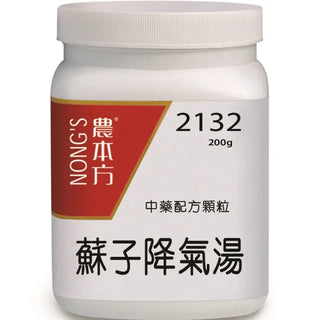
When phlegm turbidity fills the Lung and Lung qi rebels, phlegm wheeze is common. Zi Su Zi is acrid-warm. It directs down, dispels phlegm, and moistens the intestines, which is why it appears in Su Zi Jiang Qi Tang. It descends more than it holds. Shortness of breath, loose stools, and a red tongue with little fluid get worse if more is added.

Zi Su Zi is not a catch-all wheeze or laxative fruit. In yin-deficiency wheeze or spleen-deficiency diarrhea, using it alone can descend and injure the middle. Raw or stir-fried should be decided by a licensed Chinese medicine practitioner after pattern diagnosis.

Zi Su Zi (Perilla Fruit)

Zi Su Zi: Materia Medica Profile

Identification & Quality Standard

Perillae Fructus

Botanical Origin

The dried mature fruit of Perilla frutescens (L.) Britt.(Lamiaceae)

Production Regions

Primarily produced in the Chinese provinces of Zhejiang, Jiangsu, Hubei, Henan.

Quality Requirements

Superior medicinal material has even full body, grayish-brown color, oily.

Macroscopic Features

Oval or sub-spherical shape, about 1.5mm diameter. Externally grayish-brown, with slightly raised dark purple reticular lines, base is slightly pointed, with grayish-white spotted stem scars. Fruit skin is thin and brittle, easily crushed. Seed is yellowish-white, seed coat is membranous, 2 cotyledons, off-white, oily. When crushed, it has aromatic odor, slightly acrid taste.

Sourcing and Quality Identification

Historically, the finest Zi Su Zi is believed to come from regions like Jiangsu and Zhejiang, known for producing plump, highly aromatic seeds.

  • Premium Quality: Good seeds are full, uniform in size, grayish-brown, and emit a light, pleasant fragrance. When rubbed open, the inside should be yellowish-white and moderately oily.
  • Poor Quality: Inferior seeds are shriveled, oddly dark or pale, lack aroma, or may show signs of mold and insect damage.
  • Raw vs. Fried: Raw seeds have a lighter color and milder scent, while fried seeds are darker, crispier, and much more aromatic.

Traditional Properties & Historical Lineage

Nature, Flavour & Channel Tropism

Acrid; WarmLungLarge Intestine

1. Records in Ancient Texts

The uses of Zi Su Zi have been well-documented throughout TCM history:

  • Ming Yi Bie Lu: Noted its ability to direct Qi downward and dispel internal cold.
  • Xin Xiu Ben Cao: Highlighted its use for soothing coughs caused by upward-rebellious Qi, warming the center, and gently nourishing the body.
  • Ben Cao Gang Mu: Stated that while the perilla leaf and seed share similarities, the seed is exceptionally good at pushing Qi downward. It is highly recommended for breathlessness, phlegm blockages, and constipation.

2. Evolution of TCM Understanding

Over time, TCM practitioners have appreciated Zi Su Zi for two main reasons: regulating blocked Lung Qi (easing coughs and asthma) and lubricating the intestines (easing constipation caused by stagnant Qi). Because its nature is very mild, it fits a wide variety of body types when diagnosed correctly. However, practitioners advise caution for individuals with severe Qi deficiency or "Yin deficiency with fire," reminding us that even gentle herbs should not be used blindly.

Zi Su Zi (Perilla Fruit)

Core Efficacies & Traditional Applications

Traditional Functions

Downbears qi, transforms phlegm, calms panting, moistens intestines. Apply to adverse rising of qi due to stagnation of phlegm, dyspnea and cough, constipation induced by dryness of the intestine. Resolves exterior, disperse cold, moves qi, harmonizes stomach, apply to common cold of wind-cold, dyspnea and cough, hyperemesis gravidarum, threatened miscarriage, over indulgence of fish and crab.

1. Primary Focus: Descending Qi and Resolving Phlegm

  • Traditional Use: The primary role of Zi Su Zi (Perilla Seed) is to direct Qi downward and break down phlegm. It helps smooth the energy flow in the Lungs, Spleen, and Stomach, relieving discomfort caused by stagnant phlegm or upward-rebellious Qi.
  • Targeted Symptoms: It is commonly used for coughs, wheezing, and a feeling of fullness or tightness in the chest accompanied by watery, white phlegm. This is often seen in mild coughs triggered by autumn or winter cold, or when poor digestion leads to Qi stagnation and phlegm buildup.
  • Common Pairings: To boost its phlegm-resolving effects, it is often combined with herbs like Chen Pi (Tangerine Peel) and Ban Xia (Pinellia Rhizome). For cold-induced coughs, practitioners might add Zi Su Ye (Perilla Leaf) and Sheng Jiang (Fresh Ginger) to help dispel the surface cold.
  • Cautions: Do not use this herb on your own if your cough is caused by "Yin deficiency with active fire." Symptoms of this include a dry cough with no phlegm, hot hands and feet, and night sweats. Using Zi Su Zi (Perilla Seed) in this case could worsen the internal heat.

2. Secondary Focus: Moistening the Intestines and Relieving Constipation

  • Traditional Use: Another key function of Zi Su Zi (Perilla Seed) is its ability to lubricate the intestines and promote healthy bowel movements by regulating the local Qi flow.
  • Targeted Symptoms: It is highly effective for dry stools and constipation caused by Qi stagnation, physical weakness (such as in the elderly), or postpartum blood deficiency. It is especially helpful when constipation is paired with abdominal bloating and trapped gas.
  • Common Pairings: For better bowel lubrication, it is paired with Huo Ma Ren (Hemp Seed) and Xing Ren (Apricot Seed). If the constipation is heavily driven by trapped Qi, herbs like Zhi Shi (Immature Bitter Orange) and Hou Po (Magnolia Bark) are added to get things moving.
  • Cautions: Avoid this herb if you have a cold and weak Spleen and Stomach, which typically presents as chronic loose stools or frequent abdominal pain and diarrhea. Its moistening nature could make diarrhea worse.

3. Common Herb Pairing

Zi Su Zi (Perilla Seed) and Xing Ren (Apricot Seed) make a classic TCM combination.

  • The Synergy: Zi Su Zi (Perilla Seed) excels at pushing Qi downward and clearing phlegm, while Xing Ren (Apricot Seed) focuses on moistening the Lungs and stopping coughs. Together, they perfectly balance respiratory and digestive tract functions.
  • Best For: This pairing is excellent for patients experiencing coughs, breathlessness, and constipation driven by phlegm or Qi stagnation. Because it requires matching the exact body constitution, this combination should only be used after a professional TCM diagnosis.

Zi Su Zi (Perilla Fruit)

Modern Research

Modern research offers useful context, but Traditional Chinese Medicine prescribes on whole-pattern diagnosis rather than isolated compounds.

1. Key Chemical Components

Modern science has identified several compounds in Zi Su Zi, primarily focusing on its rich oil content.

  • Active Compounds: It contains unsaturated fatty acids like alpha-linolenic acid and linoleic acid, along with flavonoids and phenolic acids.
  • Lab Observations: In test-tube studies, extracts have shown potential regulating effects on certain inflammatory markers. Animal studies suggest potential benefits for respiratory health, though these results do not directly translate to human clinical use.

2. Modern Pharmacological Focus

Today, Western pharmacological research on Zi Su Zi mostly looks at its potential to support respiratory and intestinal functions, largely due to its oil content. Researchers are exploring how specific extracts might influence airway airflow and bowel motility, though human clinical trials remain limited.

3. Limitations of Modern Research

It is important to view modern findings through the right lens:

  • Lab vs. Life: Animal and cell studies do not equal proven human medical treatments.
  • Form Matters: Modern labs often use highly concentrated extracts or isolated compounds. These are vastly different from brewing traditional Zi Su Zi as an herbal tea or decoction.
  • Holistic Action: In TCM, the herb works as a whole entity. Judging its entire clinical value based on a single chemical compound isolates the herb from its traditional, synergistic use.

Zi Su Zi (Perilla Fruit)

Comparing Similar Herbs

1. Common Ground

When comparing Zi Su Zi (Perilla Seed) to a similar herb like Bai Jie Zi (White Mustard Seed), we see three main similarities:

  • Both are excellent at resolving phlegm and clearing internal blockages.
  • Both are frequently used to treat Lung-related issues like coughing and wheezing.
  • Both require careful dosage adjustments based on individual body constitutions to prevent misuse.

2. Core Differences

Here is how they differ in traditional practice:

  • Nature and Texture: Zi Su Zi (Perilla Seed) is warm, sweet, and naturally moistening, offering a very gentle action. Bai Jie Zi (White Mustard Seed), on the other hand, is warmer, more stimulating, and leans toward being dry.
  • Primary Focus: Zi Su Zi (Perilla Seed) shines in downward Qi regulation and bowel lubrication, perfect for coughs and constipation linked to Qi blockages. Bai Jie Zi (White Mustard Seed) is an expert at warming the Lungs and breaking up stubborn, deep-seated cold phlegm, making it better for joint pain or chest pain caused by cold dampness.
  • Action Direction: Zi Su Zi (Perilla Seed) pushes energy downward (descending), while Bai Jie Zi (White Mustard Seed) pushes energy outward (dispersing and warming).
  • Targeted Symptoms: Choose Zi Su Zi (Perilla Seed) for a cough with chest fullness, watery phlegm, and constipation. Choose Bai Jie Zi (White Mustard Seed) for a cough with rib pain, sticky/difficult phlegm, or cold-phlegm-induced joint swelling.
  • Cautions: Zi Su Zi (Perilla Seed) is wrong for dry coughs (Yin deficiency) or cold diarrhea. Bai Jie Zi (White Mustard Seed) is strictly avoided in chronic Lung deficiency or Yin deficiency, and its topical use must be avoided on broken or sensitive skin as it can cause irritation.

3. One-Sentence Summary

Simply put: Zi Su Zi (Perilla Seed) descends Qi, resolves phlegm, and moistens the bowels (great for Qi-blockage coughs and constipation), whereas Bai Jie Zi (White Mustard Seed) aggressively warms the Lungs, clears stubborn cold phlegm, and relieves pain; they are not interchangeable.

Zi Su Zi (Perilla Fruit)

Classical Formulas Containing Zi Su Zi

Formulas vs. Single Herbs

  • Synergy is Key: A formula is a balanced team. The healing power comes from how the herbs interact, so a single herb cannot simply replicate a full formula's effects.
  • Holistic Balance: The exact dosage and combination in a formula affect the entire body. Never try to mix or alter these formulas at home based on internet articles.

Diet & Daily Home Use

1. Home Herbal Diet and Tea

Here is a simple and gentle way to use this herb at home:

  • Zi Su Zi and Xing Ren Tea:
    • Ingredients: Zi Su Zi (Perilla Seed) 5g, Xing Ren (Apricot Seed) 3g, and 2 slices of fresh ginger.
    • Preparation: Wash the herbs, place them in a small gauze or cheesecloth bag, and put them in a pot with the ginger slices. Add a suitable amount of water, bring it to a boil over high heat, then turn the heat to low and simmer for 15 minutes. Remove the bag and drink the warm liquid.
    • Best For: Relieving mild coughs, chest tightness, or slight constipation caused by catching a chill during the autumn and winter seasons.
    • Avoid If: You have "Yin deficiency with active fire" (which shows up as a dry cough with no phlegm and hot hands/feet) or a cold and weak digestive system (frequent diarrhea).
    • Frequency: Enjoy this 2 to 3 times a week. It is not intended for long-term, continuous daily drinking. Always purchase high-quality medicinal herbs from reputable pharmacies to ensure safety.

2. Decoction and Processing Differences

  • Raw vs. Fried: Raw Zi Su Zi (Perilla Seed) is more moistening and better suited for relieving constipation. The stir-fried version is stronger at pushing Qi downward and clearing phlegm, making it better for coughs and wheezing.
  • Home Boiling Tips: To get the most out of the herb, gently crush the seeds before boiling so the active ingredients can release properly. It does not need special boiling procedures and can be cooked normally alongside other herbs.
  • Dosage Note: Dietary doses are much smaller than clinical doses. Do not use clinical prescription amounts for daily home wellness.

3. Dosage and Usage Cycle

  • Clinical Dosage: Traditional medical prescriptions typically call for 5 to 10g, tailored to the patient's specific condition.
  • Dietary Dosage: For home wellness, stick to a safer, smaller range of 3 to 6g.
  • Usage Cycle: Do not use it continuously for long periods. A typical home-care cycle is 3 to 5 days. If your symptoms do not improve, consult a doctor.
  • Special Groups: Pregnant women, children, and the elderly must always consult a healthcare professional before use and should never guess their own dosages.
Zi Su Zi (Perilla Fruit)

Contraindications & Safety Warnings

1. Who Should Avoid It

  • Yin Deficiency with Fire: If you experience a dry cough without phlegm, hot palms and soles, night sweats, or have a red tongue with little coating, avoid this herb.
  • Digestive Coldness: Individuals with a cold Spleen and Stomach who frequently suffer from diarrhea should avoid it, as its moistening properties can make loose stools worse.
  • Pregnancy and Nursing: Women in these stages should only use it under the strict supervision of a doctor to protect themselves and the baby.
  • Children and Elderly: These groups have more fragile systems; a doctor must adjust the dosage to avoid overwhelming their bodies.
  • Liver or Kidney Issues: Consult a doctor before use to ensure the herb does not add extra metabolic stress to your organs.
  • Allergies: If you are allergic to plants in the mint family (Lamiaceae), you may also be allergic to this herb and should avoid it.

2. Drug Interactions and Dietary Notes

While there is no scientific evidence that this herb negatively interacts with everyday foods, it can interact with certain strong Western medications. If you are currently taking blood thinners (anticoagulants), blood pressure medications, blood sugar medications, or sedatives, this herb might interfere with how those drugs are absorbed or processed in your body. Always consult a doctor or pharmacist to see if you need to space out your doses or avoid the herb altogether.

3. Adverse Reactions and Overdose Risks

  • Warning Signs: Taking too much can irritate your digestive system, leading to nausea, vomiting, or stomach discomfort. Some individuals might also develop allergic reactions, such as skin rashes or itching.
  • When to Seek Help: If you experience severe discomfort, persistent vomiting, an allergic reaction, breathing difficulties, changes in consciousness, or a rapid worsening of your symptoms, stop using the herb immediately and seek emergency medical care. Do not wait for it to pass.

Frequently Asked Questions About Zi Su Zi

What is Zi Su Zi? Are Zi Su Ye, Su Geng and Bai Jie Zi the same?
Official Zi Su Zi (紫苏子) is the dried ripe fruit of Perilla frutescens. The pharmacopoeial name is Perillae Fructus. Zi Su Ye is acrid-warm: releases the exterior, disperses cold, moves qi and harmonizes the Stomach. Zi Su Geng is acrid-warm: regulates qi, eases the center, stops pain and calms the fetus. Bai Jie Zi is acrid-warm: warms the Lung, sweeps phlegm, moves qi, disperses nodules, frees the collaterals and stops pain. Write Zi Su Zi. Use caution in Spleen-vacuity loose stool.
What are the TCM properties and traditional uses of Zi Su Zi?
According to the Chinese Pharmacopoeia, Zi Su Zi is acrid and warm, enters the Lung channel, and acts to direct qi downward, resolve phlegm, stop cough, calm panting, moisten the intestines and free the stool. It is used for phlegm obstruction with counterflow qi, cough and panting, and intestinal dryness with constipation. Acrid-warm and descending, it suits phlegm obstruction with counterflow and intestinal dryness—not Lung-vacuity cough, yin-vacuity panting, or Spleen-vacuity loose stool.
How do you choose raw versus dry-fried Zi Su Zi? Can Zi Su Ye replace it?
Raw fruit moistens the intestines more strongly. Dry-frying reduces the oil; directing qi downward and resolving phlegm remain, and it is relatively better when the stool tends to be loose. Crush it for decoction. Perilla leaf releases the exterior; it cannot replace directing qi downward and calming panting by equal weight. Commercial perilla-fruit tea is not equal-weight pieces.
What is the usual dosage? Can it be drunk daily as a panting tea?
The pharmacopoeial decoction dose is 3–10 g. It is not a four-season “perilla-fruit panting tea.” Spleen-vacuity loose stool only loosens further as it moistens. Cough and panting need a practitioner to name a short course; it does not replace respiratory assessment.
What are the contraindications? Can it be used in pregnancy?
Unsuitable in Lung-vacuity cough and panting, yin-vacuity counterflow panting, and Spleen-vacuity loose stool. Pregnancy needs a practitioner’s assessment. Stop if diarrhea appears. Panting with chest pain and cyanotic lips is an emergency.
Can Zi Su Zi direct qi downward, resolve phlegm, stop cough, calm panting, moisten the intestines and free the stool?
It can help cough and panting from phlegm obstruction with counterflow qi. It joins pinellia, Chinese angelica, peucedanum, magnolia bark and cinnamon bark in Su Zi Jiang Qi Tang. It directs qi downward, resolves phlegm, stops cough, calms panting, moistens the intestines and frees the stool—not a specific for every asthma or every constipation.
Can Zi Su Zi be drunk daily as a panting, phlegm or stool tea?
Phlegm obstruction with counterflow may enter a short formula; Spleen-vacuity loose stool only loosens further as it moistens. “Perilla fruit must calm panting and free the stool” does not replace respiratory assessment. Directing qi downward, resolving phlegm, stopping cough and calming panting should name 3–10 g, raw or dry-fried.
How do you choose among Zi Su Zi, Zi Su Ye, Su Geng, Xing Ren and Bai Jie Zi?
Perilla fruit is acrid-warm: directs qi downward, resolves phlegm, stops cough, calms panting, moistens the intestines and frees the stool—phlegm obstruction with counterflow. Perilla leaf is acrid-warm: releases the exterior, disperses cold, moves qi and harmonizes the Stomach—wind-cold common cold. Perilla stem is acrid-warm: regulates qi, eases the center, stops pain and calms the fetus—chest and abdominal qi stagnation and a restless fetus. Apricot kernel is bitter and slightly warm: directs qi downward, stops cough, calms panting, moistens the intestines and frees the stool—cough and panting with constipation. White mustard seed is acrid-warm: warms the Lung, sweeps phlegm, moves qi and disperses nodules—cold phlegm and yin abscess. Phlegm obstruction with fullness and panting favors Zi Su Zi (Su Zi Jiang Qi Tang); wind-cold exterior favors Zi Su Ye; restless fetus with qi stagnation favors Su Geng; cough with constipation favors Xing Ren; cold-phlegm masses favor Bai Jie Zi. They may be paired; Spleen-vacuity loose stool forbids large Zi Su Zi and Xing Ren.
Which herbs is Zi Su Zi combined with? What are the representative formulas?
Phlegm obstruction with counterflow joins pinellia, Chinese angelica, peucedanum, magnolia bark, cinnamon bark and licorice in Su Zi Jiang Qi Tang. Intestinal dryness may join hemp seed and apricot kernel after pattern differentiation. Write Zi Su Zi 3–10 g, crushed; do not replace directing qi downward with perilla leaf by equal weight.
How do you choose and store Zi Su Zi?
Choose ovoid gray-brown fruits with reticulate marks, aromatic when crushed and slightly acrid. Moldy, moth-eaten, empty or rancid lots are discarded. Store ventilated and dry against moths. Buy pharmacopoeial Zi Su Zi; do not replace directing qi downward, resolving phlegm, stopping cough, calming panting, moistening the intestines and freeing the stool with perilla leaf or stem by equal weight.

Medical Disclaimer — This article is provided for educational purposes only and describes traditional Chinese medicine concepts. It is not medical advice, and it is not intended to diagnose, treat, cure or prevent any disease. Always consult a qualified practitioner before using any herb, particularly if you are pregnant, nursing, taking medication or managing a diagnosed condition.

More Chinese Herbs

Login

Forgot your password?

Don't have an account yet?
Create account

Zi Su Zi (Perilla Fruit): Descend Qi, Transform Phlegm, and Calm Wheezing