Zoological substancesTonifyingTestudinis Carapax et Plastrum

Gui Jia (Tortose's Carapae and Plastron)

A practical guide to Gui Jia: what it is, how Traditional Chinese Medicine uses it, the classical formulas it appears in, and who should be careful with it.

View Herb Profile →

Last reviewed Oct 29, 2026

Quick Facts

Latin NameTestudinis Carapax et Plastrum
Chinese Name & Pinyin 龜甲 · Gui Jia
Medicinal PartZoological substances
The itemGui Jia is the dried carapace and plastron of Chinemys reevesii, used raw or vinegar-processed. Bie Jia is not this herb. It usually goes into pre-decocted decoctions.
Nature and channelsSweet, salty, slightly cold. Enters the Liver, Kidney, and Heart. It nourishes yin and subdues yang, and benefits the kidney to strengthen the bones.
Pharmacopoeia lineNourishes yin and subdues yang. Benefits the kidney and strengthens the bones. Used for tidal heat and night sweats, dizziness and tinnitus, irritability and insomnia, and weak sore lower back and knees.
Pattern cuesTidal heat. Night sweats. Warm palms and soles. Weak sore loins. Frail bones.
In this articleGui Jia versus Bie Jia. Tonifying and bone-building versus clearing deficient heat. Why it must be decocted first. Why spleen-stomach deficiency-cold should skip it. Who should not self-use it.

What Is Gui Jia?

Gui Jia (龟甲; Guī Jiǎ; Latin: Chinemys reevesii; English: tortoise shell) in the current pharmacopoeia is the dried carapace and plastron of the turtle Chinemys reevesii, gathered year-round with autumn to winter preferred, used raw or vinegar-processed. It is sweet, salty, and slightly cold, enters the Liver, Kidney, and Heart channels, and its core actions are to nourish yin and subdue yang, and to benefit the kidney and strengthen the bones. It usually goes into decoctions. The usual amount is 10–15 g. Being hard, it is crushed and decocted first for at least 30 minutes; the vinegar-processed form needs a shorter pre-decoction.

It is not Bie Jia. Bie Jia is salty and slightly cold, leans to clearing deficient heat and softening hardness for tidal heat and abdominal lumps. Gui Jia is sweet-salty, leans to tonifying, and builds the bones. Spleen-stomach deficiency-cold with cold abdominal pain and loose stools is a poor match. External fever or excess heat inside should not use it on its own, to avoid keeping the pathogen in.

It is used most often for three patterns:

  • Yin deficiency with yang hyperactivity: tidal heat, night sweats, warm palms and soles, irritability and insomnia
  • Kidney-essence insufficiency: weak sore lower back and knees, frail sinews and bones
  • Dizziness, tinnitus, and aching loins after illness or late nights

Sweet, salty, and slightly cold, it is not a daily “yin-nourishing bone tonic” to keep increasing. Tonifying when there is no yin deficiency, or using it in a cold weak stomach, brings bloating and discomfort.

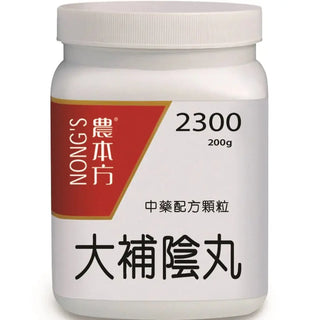
When liver-kidney yin fails to anchor floating yang, tidal heat, night sweats, dizziness, and weak sore loins are common. Gui Jia is sweet, salty, and slightly cold. It nourishes yin, subdues yang, and strengthens the bones, which is why it appears in Da Bu Yin Wan (Great Yin-Tonifying Pill)–type formulas. It builds and holds more than it drains. A cold weak stomach, with no yin deficiency, gets worse if more is added.

Gui Jia is not a catch-all yin or bone tonic. In spleen-stomach deficiency-cold, with external fever or excess heat, using it alone is a poor match. Raw or vinegar-processed, and whether it belongs in a formula, should be decided by a licensed Chinese medicine practitioner after pattern diagnosis.

Gui Jia

Gui Jia: Materia Medica Profile

Identification & Quality Standard

Testudinis Carapax et Plastrum

Botanical Origin

The dorsal and ventral shell of Chinemys reevesii (Gray) (Testudinidae). Harvested year-round, most abundantly in autumn and winter. After capture it is killed directly, the dorsal and ventral shells are scraped off, flesh is removed, also called ‘xue ban’. Or killed by boiled water, then scraped the dorsal and ventral shells off, removed the flesh, sun-dry, also called ‘tang ban’.

Production Regions

Primarily produced in the Chinese provinces of Anhui, Zhejiang, Hubei, Hunan.

Quality Requirements

Superior medicinal material has large plates, no flesh, and bloodstains on the shell.

Macroscopic Features

The dorsal and ventral plates are linked by shell link, dorsal shell is slightly longer than the ventral shell, and often separated. Dorsal shell is long oval arch-shape, 7.5~22cm long, 6~18cm wide; outer surface is brown or black-brown, with 3 ridges; 1 plate at the neck, narrow tip and wide bottom; 5 vertebral plates, length of first plate is longer or nearly equal to the width of it, the width of 2~4th plates length; 4 symmetrical sets of plates at the ribs, 11 symmetrical plates on the edges, 2 plates at the rump. Ventral shell is plate-shaped, nearly rectangular oval shape, 6.4~21cm long, 5.5~17cm wide; externally pale yellowish-brown to brownish-black, 12 plates, each has a purple-brown radial pattern, abdominal, chest and rump shells have even middle line length, throat and anal plates are ranked next, humerous plate is the shortest; inner surface is yellowish-white to grayish –white, sometimes with slight remnants of blood or flesh. After removing all remnants, the 9 bone plates can be seen and are linked in a saw-toothed line; apex is blunt round or flat, base has triangle incision, both sides have remnants of wing-like upward curled shell link. Hard texture; slightly fishy odor; slightly salty taste.

Main Regions and Quality Identification

Traditional materia medica and industry experience value the Gui Jia of the lower Yangtze region, but actual quality also depends on variety, harvest time, processing, and storage. In appearance, the raw Gui Jia has a plate-like carapace and a flat plate-like plastron, with scute patterns on the surface, a hard texture, and a faintly fishy odor; the vinegar-processed Gui Jia appears as irregular small pieces, deep yellow to yellowish-brown on the surface, crisp in texture, with a slight vinegar aroma. The common look-alikes are the shells of other turtle species — their scute patterns and textures differ from the turtle shell; watch the difference when buying.

Traditional Properties & Historical Lineage

Nature, Flavour & Channel Tropism

Salty, Sweet; Slightly coldHeartLiverKidney

1. Records in Classic Materia Medica

  • Shen Nong Ben Cao Jing: lists Gui Jia in the upper grade, saying it "mainly treats leaking discharge red and white, breaks zheng jia (masses), intermittent malaria, five hemorrhoids, yin erosion, damp bi, heavy and weak limbs, and children's fontanel not closing."
  • Ming Yi Bie Lu: supplements that it can "treat head sores slow to dry, female yin sores, and fright-anger qi, heart-abdomen pain, inability to stand long, cold-heat in the bones, typhoid relapse after overexertion, or body cold-heat as if dying — good taken as a decoction."
  • Ben Cao Gang Mu: clearly states it "treats lower-back and foot soreness, tonifies the heart and kidney, benefits the large intestine, stops chronic dysentery and chronic diarrhea, treats difficult labor, disperses abscesses, and burnt ash applied to shank sores."
  • De Pei Ben Cao: mentions it "treats yin-deficiency blood depletion and bone-steaming consumptive heat."

These records all revolve around its yin-nourishing, kidney-benefiting, and yang-subduing actions, without touching on conclusions of modern medicine.

2. How Views of Its Nature Changed

Views among physicians differ somewhat: some lean on its tonifying action, holding that it excels at tonifying the yin of the liver and kidney, for the bone-steaming and lower-back knee soreness of yin deficiency; some stress its clear-drain side, for the patterns of yin deficiency with damp-heat; some clearly define its scope — those with spleen-stomach deficiency-cold or internal cold-damp should not use it alone, to avoid the cold nature worsening the discomfort. This difference also shows it is not a universal remedy — use it according to the specific constitution and pattern.

Gui Jia

Core Efficacies & Traditional Applications

Traditional Functions

Nourishes yin and anchors yang, benefits kidney and strengthens bone, nourishes blood and fortifies heart, secures menses and stops flooding.

1. First Direction: Nourishing Yin and Subduing Yang

  • Traditional action: nourish the yin of the liver and kidney and gather the floating yang — easing the discomfort of yin deficiency with yang hyperactivity.
  • Typical signs: tidal heat with night sweats, warm hands and soles, dizziness and tinnitus, and irritability with insomnia — mostly caused by long-term staying up late, overwork, or yin fluid drained after a febrile illness.
  • Usual combinations: often paired with other yin-nourishing herbs — such as Shu Di and Zhi Mu — to strengthen the yin-nourishing, yang-subduing effect; with liver-yang rising headache, the liver-calming, yang-subduing herbs Gou Teng and Ju Hua are added.
  • Who should not self-use: those with spleen-stomach deficiency-cold and frequent abdominal pain with diarrhea should not self-use, to avoid worsening the internal cold signs.

2. Second Direction: Benefiting the Kidney and Strengthening the Bones

  • Traditional action: nourish the kidney essence and strengthen the bones — improving the bone nourishment loss of kidney-essence insufficiency.
  • Typical signs: weak, sore lower back and knees, frail sinews and bones, and children's fontanel not closing — mostly related to congenital deficiency and postnatal malnourishment.
  • Usual combinations: often paired with the kidney-tonifying, essence-filling herbs — such as Du Zhong and Niu Xi — to strengthen the kidney-benefiting, bone-strengthening action; with qi-blood deficiency, the qi-blood herbs Dang Gui and Huang Qi are added.
  • Who should not self-use: those with external-contraction fever or internal excess-heat should not self-use, to avoid closing the door and retaining the evil, worsening the excess-heat signs.

3. Classic Pairing: Gui Jia With Bie Jia

The common pair is Gui Jia with Bie Jia. Gui Jia excels at nourishing yin, subduing yang, benefiting the kidney, and strengthening the bones; Bie Jia excels at nourishing yin, clearing heat, softening hardness, and dispersing nodules. Combined, the two strengthen the yin-nourishing, yang-subduing effect while attending to softening hardness and dispersing nodules — fitting the traditional pattern of liver-kidney yin deficiency with yang hyperactivity and concurrent zheng jia (masses). This pairing needs the physician's pattern diagnosis — do not pair casually on your own; especially those with weak spleen and stomach need caution.

Gui Jia

Modern Research

Modern research offers useful context, but Traditional Chinese Medicine prescribes on whole-pattern diagnosis rather than isolated compounds.

1. Main Chemical Constituents

The main constituents currently detected in Gui Jia are animal keratin, bone collagen, calcium, phosphorus and other inorganic elements, plus small amounts of amino acids and fatty acids. To be clear: these constituents are detected in the Gui Jia medicinal material — not directly equivalent to the effect after human use. In in vitro experiments, its extract shows a certain antioxidant and immune-regulating action; in animal experiments, it affects certain bone-metabolism markers. But these results have not been fully verified by human clinical research and cannot be directly used as evidence of efficacy after human use.

2. Current Research Directions

Current research on Gui Jia mainly focuses on two directions: one is its potential effect on bone metabolism — experiments show its extract may help improve bone-formation-related markers; the other is its regulation of the oxidative-stress state related to yin deficiency — research shows it has a certain antioxidant activity in in vitro experiments. But most of these studies are at a preliminary stage — more human studies are still needed to verify its actual action.

3. Limitations of Current Research

  • Lab results are not clinical efficacy — in vitro and animal results cannot be directly extended to the effect after human use.
  • Extracts and monomers are not the same as traditional decoction pieces — the types, ratios, and contents of the effective constituents in Gui Jia extracts differ from those of the slices — they cannot simply be equated.
  • Doses and preparation methods vary between studies — the results lack comparability.
  • A single component does not define the whole herb — Gui Jia's action is the joint result of many constituents, not the effect of a single one.

Gui Jia

Comparing Similar Herbs

1. What They Share

Choosing Bie Jia as the similar herb, the two share these points:

  • Both have the yin-nourishing action.
  • Both are used for the traditional patterns of liver-kidney yin deficiency.
  • Both may appear in yin-nourishing formulas.
  • Both need constitution and dose adjusted in use.

2. The Key Differences: Gui Jia vs. Bie Jia

  • Nature and flavors: Gui Jia is sweet and salty, slightly cold; Bie Jia is salty, slightly cold — both are slightly cold, but Gui Jia also carries a sweet flavor with a certain tonifying action, while Bie Jia is purely salty, leaning to clearing-dispersing.
  • Focus: Gui Jia's core is benefiting the kidney, strengthening the bones, nourishing yin, and subduing yang — leaning to tonification — good at improving bone nourishment loss and the tidal heat of yin deficiency with yang hyperactivity; Bie Jia's core is nourishing yin, clearing heat, softening hardness, and dispersing nodules — leaning to clearing — good at improving yin-deficiency fever and zheng jia accumulation.
  • Qi tendency: Gui Jia's yin-nourishing action leans to gathering the floating yang and returning yang to the yin portion — an astringing, tonifying tendency; Bie Jia's yin-nourishing action leans to clearing and venting deficient heat, letting the heat evil leave from the yin portion — a clearing, dispersing tendency.
  • Best fit: Gui Jia is mostly for the lower-back knee soreness, frail sinews and bones, and dizziness and tinnitus of liver-kidney yin deficiency with bone weakness; Bie Jia is mostly for the tidal heat with night sweats and hypochondriac masses of yin deficiency with internal heat or masses.
  • Not suitable: Gui Jia — those with spleen-stomach deficiency-cold need caution; Bie Jia — those with spleen-stomach deficiency-cold, poor appetite, and loose stool need even more caution, and pregnant women should avoid it.
  • Use scenes: Gui Jia often appears in formulas regulating the bones and heart-kidney — such as Da Bu Yin Wan; Bie Jia often appears in formulas clearing deficient heat and softening hardness — such as Qing Hao Bie Jia Tang.

3. One-Sentence Summary

Simply put, Gui Jia leans toward benefiting the kidney, strengthening the bones, and gathering the floating yang, whereas Bie Jia leans toward clearing deficient heat and softening hardness to disperse nodules. Both can be used for liver-kidney yin deficiency regulation, but they are not interchangeable.

Gui Jia

Classical Formulas Containing Gui Jia

Formulas vs. Single Herbs

A formula is a whole of many herbs acting together — a single herb cannot simply replicate a full formula's effect. The doses and combinations in a formula are holistic; a herb that works in a formula does not mean taking it alone produces the same effect. The common misunderstanding is that a herb that works in a formula can be taken alone — in fact, without the synergy of the other herbs, it may not reach the expected effect, and may even bring discomfort from the single nature. Do not build formulas from online articles.

Diet & Daily Home Use

1. Home Recipes and Teas

Recipe 1 — Gui Jia Gou Qi Zhou (Tortoise-Shell and Wolfberry Porridge): Gui Jia 10 g (vinegar-processed slices), Gou Qi 15 g, Jing Mi 50 g. First decoct the Gui Jia in water for 30 minutes, take the liquid and discard the residue, add the Jing Mi and Gou Qi, and cook into porridge; a little rock sugar can be added for flavor. Suited to the lower-back knee soreness and dizziness and tinnitus of liver-kidney yin deficiency — fitting small amounts in autumn or winter. Not for those with spleen-stomach deficiency-cold and frequent abdominal pain with diarrhea. Suggested: once a week; do not eat long-term continuously. Note: this uses the medicinal Gui Jia slice — it is a medicinal material, not an ordinary food; do not casually treat it as daily food.

Recipe 2 — Gui Jia Mai Dong Cha (Tortoise-Shell and Ophiopogon Tea): Gui Jia 5 g (vinegar-processed slices), Mai Dong 10 g. Crush the Gui Jia, steep it with the Mai Dong in boiling water, cover 15 minutes, and drink. Suited to the irritability with insomnia and dry mouth and throat of yin deficiency — fitting after late nights or for autumn regulation. Not for those with external-contraction fever or internal excess-heat. Suggested: once every 2 days; after steeping, it can be refilled with water 2 times.

2. Decoction and Processing Differences

The raw Gui Jia is hard in texture and needs pre-boiling for over 30 minutes to release the effective constituents; the vinegar-processed Gui Jia, after processing, is crisp and the decoction time can be shortened to about 20 minutes. At home, crush the Gui Jia first and put it into the pot, add enough water to cover the herb, bring to a boil over high heat, then turn to low heat and decoct, before adding the other herbs. Different forms cannot be converted directly — for example, the Gui Jia slice dose in food therapy differs from that in a prescription; do not confuse them.

3. Dosage and Course

The common dose in traditional prescriptions is 10–15 g, adjusted after vinegar-processing; the food-therapy Gui Jia dose needs to be smaller — generally 5–10 g. The food-therapy and medicinal doses differ — do not use the food-therapy dose as a treatment dose. Long-term continuous use is not advised — generally each food-therapy course is no more than 2 weeks; if long-term use is needed, consult a physician or pharmacist.

Gui Jia

Contraindications & Safety Warnings

1. Who Should Avoid It

  • Spleen-stomach deficiency-cold — those with frequent abdominal pain, diarrhea, and loose stool should not use Gui Jia, to avoid worsening the cold signs.
  • Pregnancy and breastfeeding — use cautiously; consult a physician before deciding whether to use it.
  • Children and the elderly — special constitution — adjust the dose and use method under a physician's guidance.
  • Liver or kidney impairment — let a physician judge, based on the liver-kidney function status, whether it fits.
  • Allergy to Gui Jia or turtle-family animals — avoid use.
  • Those in special treatment — such as anticoagulant, blood-pressure, or glucose-lowering treatment — consult a doctor first, to avoid drug interactions.

2. Interactions and Diet Notes

Gui Jia may have potential interactions with anticoagulants, blood-pressure medications, and glucose-lowering medications, affecting the drug effect or increasing the risk of adverse reactions; some research suggests Gui Jia may affect the absorption of certain drugs — those on medication should consult a doctor or pharmacist first, and if needed, take Gui Jia 1–2 hours apart from other medications. There is no sufficient evidence of a general "food clash" between ordinary foods, but certain herbs can interact with specific drugs — in daily diet there is no need for excessive food avoidance; keep a balanced diet.

3. Adverse Reactions and Overdose Risk

Overdose of Gui Jia may cause spleen-stomach discomfort — such as bloating and poor appetite; a few people may have allergic reactions — such as rash and itching. If marked discomfort, allergy signs, persistent vomiting, breathing difficulty, altered consciousness, or rapidly worsening symptoms appear, stop at once and seek medical care — do not delay.

Frequently Asked Questions About Gui Jia

What is Guijia? Is it the same as Biejia or Lujiao?
Guijia is the dried carapace and plastron of Chinemys reevesii, Latin name Testudinis Carapax et Plastrum. It is a common Chinese medicine centered on nourishing yin and subduing yang, benefiting the kidney and strengthening bones, nourishing blood and tonifying the heart, and securing the menses to stop flooding. Biejia nourishes yin and subdues yang while softening hardness. Lujiao warms kidney yang and strengthens sinews. They cannot be used interchangeably in equal amounts. Prescribe as Guijia. Caution in spleen-stomach deficiency cold.
What are the composition and effects of Guijia?
Pharmacopoeial name Guijia, Latin Chinemys reevesii (Gray). Salty and sweet in taste, cold in nature, enters the Liver, Kidney and Heart meridians. Functions to nourish yin and subdue yang, benefit the kidney and strengthen bones, nourish blood and tonify the heart, and secure the menses to stop flooding. Used for yin deficiency tidal fever, bone steaming and night sweats, dizziness, internal stirring of deficient wind, flaccid sinews and bones, heart deficiency forgetfulness, and flooding and spotting with excessive menstruation. Nourishes yin and strengthens bones.
How to choose between raw and processed? Can Biejia replace it?
Shell is decocted first, used raw or vinegar-processed. Biejia emphasizes softening hardness rather than strongly strengthening bones, and cannot replace it in equal amounts. Commercial products are standardized; do not adjust arbitrarily.
What is the dosage of Guijia? Can it be used daily as a yin-nourishing tea?
Decoction, 9-24g, decocted first. Modern use requires physician-determined dosage. It is not a year-round "Guijia tea." Spleen-stomach deficiency cold will be further injured by prolonged use. Yin deficiency requires short-term, physician-determined dosage and cannot replace evaluation.
What are the contraindications of Guijia? Can pregnant women use it?
Not suitable for spleen-stomach deficiency cold or pregnant women. Stop if loose stools or abdominal pain occur. Seek immediate medical care for severe tidal fever or high fever.
Can Guijia nourish yin, strengthen bones, and stop flooding?
It can assist yin deficiency tidal fever, bone steaming and night sweats, dizziness, internal stirring of deficient wind, flaccid sinews and bones, heart deficiency forgetfulness, and flooding and spotting with excessive menstruation. It nourishes yin and subdues yang, benefits the kidney and strengthens bones, nourishes blood and tonifies the heart, and secures the menses to stop flooding, but is not a specific remedy for all yin deficiency or all flooding and spotting.
Can Guijia be taken daily as a yin-nourishing or bone-strengthening tea?
Yin deficiency tidal fever can be used short-term in formulas; spleen-stomach deficiency cold will be further injured. The idea that "Guijia must nourish yin" cannot replace evaluation. Nourishing yin and strengthening bones requires physician-determined formulation and dosage.
How to choose between Guijia, Biejia, Lujiao, Shudi, and Shanzhuyu?
Guijia nourishes yin and subdues yang while strengthening bones, suited to yin deficiency tidal fever. Biejia nourishes yin and softens hardness. Lujiao warms kidney yang and strengthens sinews. Shudi tonifies blood and nourishes yin. Shanzhuyu tonifies the liver and kidney and secures. Choose Guijia for nourishing yin; Biejia for softening hardness; Lujiao for warming yang; Shudi for tonifying blood; Shanzhuyu for securing. Pattern differentiation applies, but large doses of Guijia are contraindicated in spleen-stomach deficiency cold.
How is Guijia commonly modified? What is a representative usage?
Modifications depend on the pattern. Add Biejia for tidal fever; add Yuanzhi for forgetfulness. Specify Guijia; do not substitute Biejia in equal amounts for strengthening bones.
How to select and store Guijia?
Choose regular Chinese medicinal materials with intact shells. Discard if moldy, damp, or abnormal in odor. Store in a dry place. Purchase "Guijia"; do not substitute Biejia or Lujiao in equal amounts for nourishing yin, strengthening bones, and stopping flooding.

Medical Disclaimer — This article is provided for educational purposes only and describes traditional Chinese medicine concepts. It is not medical advice, and it is not intended to diagnose, treat, cure or prevent any disease. Always consult a qualified practitioner before using any herb, particularly if you are pregnant, nursing, taking medication or managing a diagnosed condition.

More Chinese Herbs

Login

Forgot your password?

Don't have an account yet?
Create account

Gui Jia (Tortoise Plastron): Nourishes yin, subdues yang, and strengthens bones