Fruits and seedsTonifyingCorni Fructus

Jiu Yu Rou (Wine-processed Asiatic Cornelian Cherry Fruit)

A practical guide to Jiu Yu Rou: what it is, how Traditional Chinese Medicine uses it, the classical formulas it appears in, and who should be careful with it.

View Herb Profile →

Last reviewed Oct 28, 2026

Quick Facts

Latin NameCorni Fructus
Chinese Name & Pinyin 酒萸肉 · Jiu Yu Rou
Medicinal PartFruits and seeds
The itemJiu Yu Rou is the wine-processed pulp of Cornus officinalis. Wu Wei Zi and raw Shan Yu Rou are not this drug. It is usually simmered with the other herbs.
Nature and channelsSour, astringent, slightly sweet, warm. Enters the Liver and Kidney. Nourishes the liver-kidneys, secures essence, and stems collapse and sweating.
Pharmacopoeia lineNourishes the liver and kidneys, secures essence and reduces urination, checks sweating, and steadies collapse and bleeding. Used for liver-kidney deficiency, achy weak lower back and knees, dizziness, ringing ears, involuntary emission, night sweats, frequent urination, bed-wetting, heavy sweating, and flooding bleeding.
Pattern cuesWeak lower back with tinnitus. Frequent urination. Heavy sweating. Flooding bleeding.
In this articleJiu Yu Rou versus Wu Wei Zi. Nourishing versus astringing. Why damp-heat and blazing fire are cautions. Why external evil is a poor match. Who should skip it.

What Is Jiu Yu Rou?

Jiu Yu Rou (酒萸肉; Jiǔ Yú Ròu; Latin: Corni Fructus; English: wine-processed dogwood fruit) is the wine-processed dried ripe pulp of Cornus officinalis, steamed, mixed with yellow rice wine, and stir-fried until the surface turns purple-black with a sheen. The raw herb is called Shan Yu Rou or Shan Zhu Yu. It is sour, astringent, and slightly sweet, warm, enters the Liver and Kidney channels, and its core actions are to nourish the liver and kidneys, and to consolidate and stem collapse. It is usually simmered with the other herbs, with no special "decoct first" or "add later" step. The usual amount is 6–12 g, slightly larger for nourishing and slightly smaller for consolidating. Food-style use is about 3–6 g per time.

It is not Wu Wei Zi. Wu Wei Zi is warm, sour-sweet, enters the Lung, Heart, and Kidney channels, consolidates lung qi, nourishes kidney fluids, and also settles the mind — suited to chronic cough, weak breathing, palpitations, and poor sleep. Jiu Yu Rou stays mainly in the lower liver-kidneys, nourishing essence and holding in leaks below. It is not a generic tonic. Use caution in pregnancy. People with damp-heat pouring downward — scanty dark urine, greasy yellow tongue coating — should not self-use, or consolidation traps the damp-heat. Blazing gate-of-vitality fire, with mouth sores, irritability, and dry bound stools, is a poor match. External fever with lingering evil qi is also a poor match, because astringing may close the door on the pathogen. Do not keep increasing it over a long course.

It is used most often for three patterns:

  • Liver-kidney deficiency — achy weak lower back and knees, dizziness, ringing ears, blurry vision, fading memory, involuntary emission
  • Kidney qi failing to secure — frequent urination, bed-wetting, heavy sweating, collapse-like cold hands and feet — seek care
  • Women's flooding and bleeding — heavy or prolonged uterine bleeding, postpartum bleeding — seek care

Sour, astringent, and slightly warm, it is not a daily "essence tonic" to keep adding. Where excess heat or external evil is still present, astringing freely locks the pathogen in.

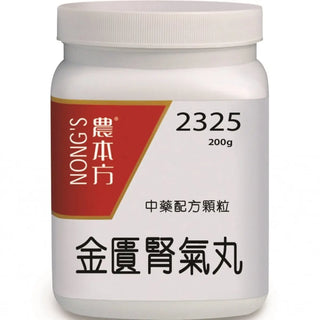
When liver-kidney essence is drained and the body leaks what it should hold — weak lower back, tinnitus, frequent urination, or heavy sweating — Jiu Yu Rou is sour, astringent, and slightly warm. It nourishes below and consolidates above, which is why it appears in Liu Wei Di Huang Wan–type formulas and Jin Gui Shen Qi Wan–type formulas. It consolidates more than it drains. A damp-heat or blazing-fire constitution, with no deficiency pattern, gets worse if more is added.

Jiu Yu Rou is not a catch-all astringent or tonic. In damp-heat, blazing gate-of-vitality fire, or external fever, using it alone is a poor match. Whether it belongs in a formula, and at what dose, should be decided by a licensed Chinese medicine practitioner after pattern diagnosis.

Jiu_Yu_Rou

Jiu Yu Rou: Materia Medica Profile

Identification & Quality Standard

Corni Fructus

Botanical Origin

The dried ripe sarcocarp of Cornus officinalis Sieb. et Zucc. (Cornaceae), processed with wine.

Production Regions

Primarily produced in Zhejiang, Anhui, Henan, Shaanxi.

Quality Requirements

Superior is large, thick, purplish-red, soft.

Macroscopic Features

Irregular flakes or sac-like pieces, 1~1.5cm long, 0.5~1cm wide. Externally purplish-red to purplish-black, wrinkled and lustrous. Soft texture. Faint wine aroma.

Where It Grows and How to Judge Quality

Traditional sources and industry experience often pay attention to the western Zhejiang and southern Shaanxi dogwood regions, though actual quality also depends on variety, harvest timing, processing, and storage.

Good-quality Jiu Yu Rou usually looks like this:

  • Irregular flake- or pouch-shaped pieces.
  • Surface dark black to purple-black, with a sheen.
  • Soft, slightly sticky texture.
  • Tastes sour, astringent, and slightly sweet.

The raw Shan Yu Rou is purple-red, harder, and mainly sour-astringent. Watch out for look-alikes — often fruit pulps of other plants, such as processed rose-family fruits, which are harder, more bitter, and lack the stickiness and sheen.

Traditional Properties & Historical Lineage

Nature, Flavour & Channel Tropism

Sour, Astringent; Slightly warmLiverKidney

1. What the Classics Recorded

Jiu Yu Rou has a clear paper trail in Chinese herbal literature. A few highlights:

  • Shen Nong Ben Cao Jing — listed it as a middle-grade herb, used for "stuck qi below the heart, chills and fever, warming the middle, and easing cold-damp joint pain."
  • Ming Yi Bie Lu — added that it "strengthens yin, benefits essence, settles the organs, opens the nine orifices, and reduces frequent urination."
  • Xin Xiu Ben Cao — noted its use for nasal blockage and long-standing diarrhea.
  • Ben Cao Gang Mu — said it "nourishes the liver-kidneys, checks essence and sweating, and steadies collapse and bleeding."
  • De Pei Ben Cao — added its use for bed-wetting and thirst from wasting patterns.

These records center on its nourishing and consolidating work — they do not equal modern medical conclusions.

2. How Views of the Herb Changed Over Time

Different generations of physicians read Jiu Yu Rou a little differently. Before and during the Tang dynasty, practitioners often stressed its cold-damp and joint-pain use, so its scope was fairly broad. From the Song dynasty on, the emphasis shifted toward its liver-kidney nourishing and essence-consolidating role, and Ming-era physicians focused on frequent urination and involuntary emission from essence depletion. Qing-era physicians were more precise about its limits, warning that "those with blazing gate-of-vitality fire or lingering damp-heat should not use it." This shift made its clinical use more targeted and stopped it from being treated as a universal tonic.

This evolution is a good reminder of a core idea in traditional Chinese medicine: herbs are chosen to match the person, not just the symptom.

Jiu_Yu_Rou

Core Efficacies & Traditional Applications

Traditional Functions

Supplements the liver and kidney, astringes and secures.

1. Main Use One: Nourishing the Liver-Kidneys

What it is: The first core use of Jiu Yu Rou is to nourish the essence of the liver and kidneys.

When it was used: Traditionally for tired, achy lower back and knees, dizziness, ringing ears, blurry vision, or a fading memory — and, in traditional terms, involuntary emission in men or irregular periods and thin, clear discharge in women.

Common partners: Often paired with Shu Di and Gou Qi to strengthen the nourishing effect, or with Tu Si Zi and Wu Wei Zi to strengthen the essence-consolidating effect.

Who should not self-use: People with damp-heat in the lower body (scanty dark urine, greasy yellow tongue coating) or blazing gate-of-vitality fire (mouth sores, irritability) should avoid it on their own.

2. Main Use Two: Consolidating and Preventing Collapse

What it is: The second core use focuses on holding in essence and fluids so they do not leak away.

When it was used: Traditionally for frequent urination, bed-wetting, heavy sweating, or a collapse-like state with cold hands and feet — and, for women, heavy or prolonged bleeding.

Common partners: Often paired with consolidating herbs such as Long Gu and Mu Li to check sweating, or with Wu Zei Gu and Qian Cao to help steady bleeding.

Who should not self-use: People with an external cold or heat and lingering pathogens should avoid consolidating herbs on their own, so as not to trap the pathogen inside.

3. A Classic Pairing: Jiu Yu Rou and Wu Wei Zi

A common pairing is Jiu Yu Rou with Wu Wei Zi. Wu Wei Zi is sour-sweet, consolidating lung qi and nourishing kidney fluids, while Jiu Yu Rou nourishes the liver-kidneys and holds in essence. Together they strengthen the consolidating effect while also nourishing the liver-kidneys — useful for essence-depletion patterns like involuntary emission, bed-wetting, or unrelenting sweating.

Like most pairings, this one should be matched to the person, not copied from a list. In patterns where excess pathogens are lingering, it would be unsuitable.

Jiu_Yu_Rou

Modern Research

Modern research offers useful context, but Traditional Chinese Medicine prescribes on whole-pattern diagnosis rather than isolated compounds.

1. Main Chemical Compounds

Modern studies have detected several groups of compounds in Jiu Yu Rou:

  • Iridoid glycosides — the main group, including loganin and morroniside.
  • Polysaccharides
  • Flavonoids
  • Triterpenoids
  • Organic acids

One important point: detecting a compound in a plant does not mean that compound produces the same effect in the human body. Lab chemistry and human response are two different things.

2. Where Research Is Heading

Research so far is mostly at the early laboratory stage. What has been observed:

  • In cell experiments, some extracts showed a protective effect in certain oxidation-damage models.
  • In animal studies, the extract appeared to regulate immune function and affect certain kidney-function markers in mice.
  • Some extracts scavenged free radicals in the test tube, suggesting antioxidant activity.

These are promising early findings, not proven human benefits. Human clinical research has not yet produced a clear conclusion on any specific disease.

3. The Limits of Current Research

It is important to read the research honestly. Four limits stand out:

  • Lab results are not clinical results. Animal findings cannot be carried straight into human use.
  • Extracts are not the dried herb. The concentration and dose in experiments differ greatly from everyday herb slices.
  • Doses and methods vary. Different studies use different doses and preparation methods, so some results are hard to repeat.
  • One compound is not the whole herb. Jiu Yu Rou's traditional value comes from many compounds acting together, so a single ingredient should not be treated as the whole story.

Jiu_Yu_Rou

Comparing Similar Herbs

1. What Jiu Yu Rou and Wu Wei Zi Share

Wu Wei Zi is the herb Jiu Yu Rou is most often compared with. They share quite a lot:

  • Both are sour and used to consolidate and hold in essence and fluids.
  • Both are used for liver-kidney deficiency patterns such as involuntary emission or bed-wetting.
  • Both may appear together in formulas or in food-style wellness.
  • Both need attention to body type and dose — too much of either can cause discomfort.

2. The Core Differences

Despite the similarities, the two herbs differ in a few practical ways:

  • Nature: Jiu Yu Rou is warm, sour-astringent with some sweetness, entering the Liver and Kidney channels, leaning downward, and combining nourishing with consolidating. Wu Wei Zi is warm, sour-sweet, entering the Lung, Heart, and Kidney channels, able to move both up and down, and combines consolidating with kidney-nourishing and heart-settling.
  • Focus: Jiu Yu Rou nourishes the liver-kidneys and consolidates essence, mainly for essence depletion from liver-kidney deficiency. Wu Wei Zi nourishes the kidneys and lungs and consolidates lung and heart qi, and also settles the mind — for lung-kidney deficiency and an unsettled heart.
  • Direction of action: Jiu Yu Rou works mainly on the lower liver-kidneys, holding in the essence that leaks below. Wu Wei Zi has a wider reach — it consolidates lung qi above, holds kidney qi below, and also steadies the heart's qi.
  • Best fit: Jiu Yu Rou suits tired lower back and knees, dizziness, ringing ears, and involuntary emission or bed-wetting. Wu Wei Zi suits long-standing cough, weak breathing, palpitations, poor sleep, or spontaneous sweating.
  • Caution: Jiu Yu Rou is avoided for damp-heat below or blazing gate-of-vitality fire. Wu Wei Zi is avoided for external pathogens or internal excess heat — such as a cold with fever or a cough with lots of phlegm.

3. The Difference in One Sentence

Jiu Yu Rou leans more toward nourishing the liver-kidneys and holding in essence, while Wu Wei Zi leans toward consolidating lung qi and settling the mind. Both can be used for essence-depletion patterns, but they are not freely interchangeable.

Jiu_Yu_Rou

Classical Formulas Containing Jiu Yu Rou

Formulas vs. Single Herbs

A formula combines several herbs to create a whole effect. This is different from using a single herb in one key way:

  • Formulas are built for balance — different herbs combine to cover several aspects and reach an overall effect.
  • A single herb cannot copy a full formula — Jiu Yu Rou is only one herb in a formula; its role is to support the whole.
  • Formulas are designed as a whole — every dose and pairing is built to the pattern, so changing any one herb can change the whole effect.
  • Do not build your own formulas from online articles — such information often lacks professional pattern analysis and dosing guidance.

Diet & Daily Home Use

1. Home Teas and Porridge

Two gentle, everyday ways to meet Jiu Yu Rou:

Example 1 — Jiu Yu Rou with Gou Qi tea:

  • Ingredients: about 5 g of Jiu Yu Rou, 3 g of Gou Qi, and 2 red dates (Hong Zao).
  • Method: place all ingredients in a cup, pour over boiling water, cover, and steep for 10 minutes. It can be re-brewed until the flavor fades.
  • When it fits: liver-kidney deficiency — tired lower back and knees, dry eyes, or a fading memory; a nice option for desk workers or middle-aged and older people.
  • Who should skip it: people with damp-heat below, mouth sores, or dry, bound stools.
  • Frequency: about three to four times a week — not for long, continuous use.

Example 2 — Jiu Yu Rou with lotus seed porridge:

  • Ingredients: about 6 g of Jiu Yu Rou, 10 g of lotus seeds (Lian Zi, with the cores removed), and 50 g of rice.
  • Method: wash the lotus seeds and rice, cook with the Jiu Yu Rou in enough water into a porridge.
  • When it fits: spleen-kidney deficiency — frequent urination and loose stools; a good choice for people with weaker digestion.
  • Who should skip it: people with an external fever or a thick, greasy tongue coating.
  • Frequency: about once every 2 to 3 days — not in excess.

2. Dried Herb Decocting and Processing

The raw Shan Yu Rou leans toward tonifying the kidneys and checking essence — often for involuntary emission or bed-wetting. The wine-processed Jiu Yu Rou has a stronger liver-kidney warming-nourishing effect and a softer texture, suiting everyday wellness. It does not require special decocting — just cook it with ordinary ingredients, with no "decoct first," "add later," or "wrap" steps.

Remember that different forms are not directly convertible — the dose of the dried slices differs greatly from the dose in a prepared medicine. Never use the slice dose to judge a medicine dose.

3. Dosage and How Long to Use

In traditional prescriptions, a common dose of Jiu Yu Rou is about 6 to 12 g — slightly larger for nourishing, slightly smaller for consolidating. For food-style use, about 3 to 6 g is typical, far below the medicinal dose.

Jiu Yu Rou is not meant for long-term, continuous use. A general wellness course is about two to four weeks, followed by a pause of one to two weeks before continuing. Pregnant women and children should consult a professional before use.

Jiu_Yu_Rou

Contraindications & Safety Warnings

1. Who Should Avoid Jiu Yu Rou

  • People with damp-heat below — scanty dark urine, greasy yellow tongue coating. Consolidation could trap the damp-heat.
  • People with blazing gate-of-vitality fire — mouth sores, irritability, dry, bound stools.
  • Pregnant and nursing women — consult a doctor first, to protect the mother, fetus, or infant.
  • Children and older adults — weaker liver-kidney function; control the dose and use under guidance.
  • People with liver or kidney concerns — tell your doctor before use, to avoid adding burden.
  • People allergic to dogwood-family plants — do not use Jiu Yu Rou.
  • People on blood thinners, blood-pressure, or diabetes medications — check with a doctor first to avoid interactions.

2. Drug Interactions and Food Notes

What deserves attention here is drug interaction:

  • Jiu Yu Rou may interact with blood thinners, blood-pressure medications, or diabetes medications, affecting their effect — anyone taking these should check with a doctor or pharmacist.
  • There is no solid evidence of broad "food conflicts" in the way folk stories describe. The real thing to watch is herb-drug interaction — if taking other medicines, space them about 1 to 2 hours apart, or ask a doctor.

3. Possible Side Effects and Overuse Risks

Taking too much Jiu Yu Rou may cause stomach discomfort, nausea, vomiting, or a rash — these usually ease once you stop.

If you notice clear discomfort, allergic signs, ongoing vomiting, trouble breathing, confusion, or symptoms that worsen quickly, stop use and seek medical attention promptly.

Frequently Asked Questions About Jiu Yu Rou

What is Jiu Yurou? Is it the same as raw Shanzhuyu or Wuweizi?
Jiu Yurou is the wine-processed dried mature sarcocarp of Cornus officinalis, Latin name Corni Fructus (wine-processed). It is a common Chinese medicine centered on tonifying the liver and kidney, and astringing and securing collapse. Raw Shanzhuyu is sour and astringent. Wuweizi astringes and secures, emphasizing the lung. They cannot be used interchangeably in equal amounts. Prescribe as Jiu Yurou. Caution in ministerial fire excess.
What are the composition and effects of Jiu Yurou?
Pharmacopoeial name Jiu Yurou, Latin Cornus officinalis Sieb. et Zucc. Sour and astringent in taste, slightly warm in nature, enters the Liver and Kidney meridians. Functions to tonify the liver and kidney, and astringe and secure collapse. Used for dizziness and tinnitus, soreness of the waist and knees, impotence and seminal emission, enuresis and frequent urination, flooding and spotting and leukorrhea, profuse sweating with collapse, and internal heat wasting-thirst. Tonifies the liver and secures collapse.
How to choose between raw and processed? Can raw Shanzhuyu replace it?
Sarcocarp is wine-steamed or wine-stewed. Raw product is excessively sour and astringent; wine-processing reduces astringency and enhances tonifying, and cannot replace it in equal amounts. Commercial products are standardized; do not adjust arbitrarily.
What is the dosage of Jiu Yurou? Can it be used daily as a kidney-tonifying tea?
Decoction, 6-12g. Modern use requires physician-determined dosage. It is not a year-round "Jiu Yurou tea." Ministerial fire excess will be further injured by prolonged use. Soreness of the waist and knees requires short-term, physician-determined dosage and cannot replace evaluation.
What are the contraindications of Jiu Yurou? Can pregnant women use it?
Not suitable for ministerial fire excess, persistent erection, inherent damp-heat, or inhibited urination. Pregnant women require physician evaluation. Stop if dry mouth or irritability with heat occur. Seek immediate medical care for severe seminal emission or high fever.
Can Jiu Yurou tonify the liver and kidney and secure collapse?
It can assist dizziness and tinnitus, soreness of the waist and knees, impotence and seminal emission, enuresis and frequent urination, flooding and spotting and leukorrhea, profuse sweating with collapse, and internal heat wasting-thirst. It tonifies the liver and kidney, and astringes and secures collapse, but is not a specific remedy for all soreness of the waist and knees or all seminal emission.
Can Jiu Yurou be taken daily as a kidney-tonifying or collapse-securing tea?
Liver and kidney insufficiency can be used short-term in formulas; ministerial fire excess will be further injured. The idea that "Jiu Yurou must tonify the kidney" cannot replace evaluation. Tonifying the liver and kidney requires physician-determined formulation and dosage.
How to choose between Jiu Yurou, raw Shanzhuyu, Wuweizi, Shudi, and Gouqizi?
Jiu Yurou tonifies the liver and kidney while securing collapse, suited to soreness of the waist and knees. Raw Shanzhuyu is sour and astringent. Wuweizi astringes and secures the lung. Shudi tonifies blood and nourishes yin. Gouqizi tonifies the liver and kidney for brightening the eyes. Choose Jiu Yurou for tonifying the kidney; raw Shanzhuyu for astringing; Wuweizi for astringing the lung; Shudi for nourishing yin; Gouqizi for brightening the eyes. Pattern differentiation applies, but large doses of Jiu Yurou are contraindicated in ministerial fire excess.
How is Jiu Yurou commonly modified? What is a representative usage?
Modifications depend on the pattern. Add Duzhong for soreness of the waist and knees; add Jinyingzi for seminal emission. Specify Jiu Yurou; do not substitute raw Shanzhuyu in equal amounts for tonifying.
How to select and store Jiu Yurou?
Choose regular Chinese medicinal materials with intact wine-processed sarcocarp. Discard if moldy, damp, or abnormal in odor. Store in a cool, dry place. Purchase "Jiu Yurou"; do not substitute raw Shanzhuyu or Wuweizi in equal amounts for tonifying the liver and kidney and securing collapse.

Medical Disclaimer — This article is provided for educational purposes only and describes traditional Chinese medicine concepts. It is not medical advice, and it is not intended to diagnose, treat, cure or prevent any disease. Always consult a qualified practitioner before using any herb, particularly if you are pregnant, nursing, taking medication or managing a diagnosed condition.

More Chinese Herbs

Login

Forgot your password?

Don't have an account yet?
Create account

Jiu Yu Rou (Wine-processed Asiatic Cornelian Cherry Fruit): Tonifies liver and kidney, astringes essence, and secures collapse