Exterior-Releasing Formulas

柴葛解肌湯 · Chái Gé Jiě Jī Tāng

Chai Ge Jie Ji Tang

A classical formula for exterior wind-cold transforming into heat, with high fever, headache and muscle ache.

View formula profile →
Last reviewed August 2026
Formula CategoryExterior-Releasing Formulas
Primary PatternWind-Heat
Primary FunctionRelease exterior, clear heat, relieve muscle layer fever
Primary Therapeutic PrincipleRelease pathogen from the muscle layer and clear interior heat
Main HerbsBupleurum Root · Kudzu Root · Licorice Root · Scutellaria / Baikal Skullcap · Notopterygium Root · Angelica Dahurica Root · White Peony Root · Platycodon Root · Gypsum
Classical SourceClassical TCM formulary

Why This Formula?

Traditionally selected when exterior Wind-Cold has transformed into heat with high fever and muscle ache, rather than pure Wind-Cold, pure Shaoyang, or Shaoyang-Yangming concurrent disease.

Traditionally selected when exterior Wind-Cold has transformed into heat with high fever and muscle ache, rather than pure Wind-Cold, pure Shaoyang, or Shaoyang-Yangming concurrent disease.

What Is Chai Ge Jie Ji Tang?

1. Origin Background

Chai Ge Jie Ji Tang (柴葛解肌汤), or Bupleurum and Kudzu Decoction to Release the Muscle Layer, is a classical formula from Tao Hua’s Shang Han Liu Shu (Six Books of Cold Damage). It belongs to the category of formulas that release the exterior and clear interior Heat from the muscle layer.

This formula addresses an unresolved Wind-Cold exterior pattern that is transforming into interior Heat, especially in the Yangming muscle layer. Typical signs include increasing fever, decreasing chills, headache, orbital or eye pain, dry nasal passages, irritability, insomnia, a thin yellow tongue coating, and a floating slightly flooding pulse.

Combining Chai Hu and Ge Gen as the chief herbs to release the muscle layer and vent Heat from Shaoyang and Yangming, Qiang Huo and Bai Zhi to dispel residual Wind-Cold from the Taiyang and Yangming channels of the face and head, Shi Gao and Huang Qin to clear interior Heat, Jie Geng to disseminate Lung Qi, Bai Shao to astringe Yin and prevent excessive sweating, and Gan Cao with Sheng Jiang and Da Zao to harmonize, Chai Ge Jie Ji Tang releases the muscle layer, clears transforming Heat, and is especially useful when a cold begins to “sink inward” with eye pain and rising fever.

Chai Ge Jie Ji Tang

2. Common Cold

For patients suffering from a common cold, Chai Ge Jie Ji Tang is an excellent choice if their symptoms match the specific pattern of "wind-cold turning into heat."

  • Key signs to look for: The patient's chills are gradually fading, but their fever is getting higher, they aren't sweating, and they have a headache and a dry nose. The formula helps relieve these mixed symptoms and gets the body back on track.

3. Influenza (The Flu)

During flu season, if a patient presents with the classic symptoms described above, this formula can be highly beneficial.

  • Its dual action of releasing the exterior and clearing interior heat helps bring the illness under control. It effectively soothes the intense fever, headaches, and severe body aches associated with the flu, while supporting the body's natural immune response for a faster recovery.
Chai Ge Jie Ji Tang

4. Upper Respiratory Tract Infections

Upper respiratory infections are often triggered by outside pathogens. When an infection causes symptoms like fever, chills, sore throat, and headaches—combined with signs of internal heat (like restlessness or a dry mouth)—Chai Ge Jie Ji Tang can be used.

  • It efficiently treats both the surface infection and the internal inflammation, helping to relieve discomfort and shorten the overall duration of the sickness.

Herb Composition (Sovereign / Minister / Assistant / Envoy)

1. Chai Hu (Bupleurum)

  • Role: One of the main "monarch" or lead herbs in Chai Ge Jie Ji Tang.
  • Properties: Slightly cold; targets the liver and gallbladder.
  • Functions: Chai Hu is excellent at venting out pathogens trapped near the body's surface and lifting energy (yang qi). It specifically targets the "half-exterior, half-interior" zone, making it highly effective for early-stage illnesses where you might feel alternating chills and fever, along with a tight, uncomfortable feeling in your chest and ribs.

2. Ge Gen (Kudzu Root)

  • Role: The other "monarch" herb in the formula.
  • Properties: Sweet, pungent, and cool; targets the spleen and stomach.
  • Functions: Ge Gen is famous for relieving muscle tension, especially stiff, aching necks and upper backs caused by wind-cold. It also helps generate healthy body fluids to relieve thirst and encourages healthy digestion by lifting the clear energy of the spleen and stomach.

3. Huang Qin (Baical Skullcap Root)

  • Role: Assistant herb.
  • Properties: Bitter and cold; targets the lungs, gallbladder, and digestive tract.
  • Functions: While the monarch herbs handle the surface, Huang Qin acts internally to clear heat and dry dampness. If an outside cold pathogen sinks deeper into the body and turns into heat, this herb stops it in its tracks, working with Chai Hu and Ge Gen to treat both the surface and the inside simultaneously.

4. Bai Shao (White Peony Root)

  • Role: Assistant herb.
  • Properties: Bitter, sour, and slightly cold; targets the liver and spleen.
  • Functions: Bai Shao is all about balance. It nourishes the blood and relieves pain and muscle spasms. It works alongside the dispersing herbs to make sure they don't accidentally drain your body's essential fluids (yin and blood) while fighting off the sickness.

5. Jie Geng (Balloon Flower Root)

  • Role: Assistant herb.
  • Properties: Bitter, pungent, and neutral; targets the lungs.
  • Functions: Jie Geng is a great respiratory herb. It helps to open up the lungs, clear phlegm, and soothe sore throats. It also acts like an elevator, guiding the effects of the other herbs upward to the upper body and muscle surface where they are needed most.

6. Gan Cao (Licorice Root)

  • Role: Assistant and guide herb.
  • Properties: Sweet and neutral; targets the heart, lungs, spleen, and stomach.
  • Functions: Think of Gan Cao as the peacemaker. It harmonizes all the other herbs, ensuring they work smoothly together without being too harsh on your stomach. As a bonus, it helps boost your overall energy (qi) to fight off the illness.

7. Qiang Huo (Notopterygium Root)

  • Role: Assistant herb.
  • Properties: Pungent, bitter, and warm; targets the bladder and kidneys.
  • Functions: Qiang Huo is a strong herb for driving out deep wind-cold and relieving pain. It specifically targets pain in the upper body, such as the head, neck, and back, significantly boosting the formula's pain-relieving power.
Chai Ge Jie Ji Tang

8. Bai Zhi (Angelica Root)

  • Role: Assistant herb.
  • Properties: Pungent and warm; targets the lungs, stomach, and large intestine.
  • Functions: Bai Zhi is excellent for relieving surface cold and stopping pain, especially tension headaches and toothaches caused by cold wind. It also helps clear nasal congestion, making it easier to breathe when you have a cold.

Clinical Presentation in TCM

1. Pathogenesis

The main target of Chai Ge Jie Ji Tang is an outside wind-cold illness that has started to turn into internal heat. This usually happens when your body's natural defenses are a bit low. The cold gets trapped on the surface (causing chills and body aches), but as your body fights it, the trapped energy turns into heat (causing a bitter taste in your mouth, a dry throat, and irritability).

2. Effects

This formula provides a "two-pronged" attack:

  • Releasing the exterior: Herbs like Chai Hu and Ge Gen push the sickness out of the muscles and surface level.
  • Clearing the interior: Herbs like Huang Qin cool down the heat building up inside. Together, they relieve muscle stiffness, stop pain, and protect your body's foundational energy while clearing the infection.
Chai Ge Jie Ji Tang

3. Treatments

In a clinical setting, Chai Ge Jie Ji Tang is used when a patient's chills are starting to decrease, but their fever is getting worse.

  • Common symptoms include: A stiff neck, lack of sweating, headaches, eye and orbital pain, dry nose, restlessness, poor sleep, and a dry throat.
  • Physical signs: A practitioner might notice a thin yellow coating on the tongue and a floating, slightly fast pulse. This formula efficiently addresses these mixed cold-surface and heat-interior symptoms to help the body recover.

The Mechanism in Classical Theory

1. Synergy of Relieving Exterior and Clearing Heat

  • Chai Hu (Bupleurum) and Ge Gen (Kudzu Root) are excellent at inducing a light sweat to push out wind-cold pathogens from the body's muscle layer, giving the sickness a way out.
  • Meanwhile, Huang Qin (Baical Skullcap Root) works internally to clear heat and stop the fever from moving deeper into the body.
  • The Synergy: By working together, these three herbs tackle the illness from the outside and the inside simultaneously, effectively clearing both the surface symptoms (like chills) and the internal symptoms (like fever).

2. Harmonizing Nutrient Qi and Defensive Qi for Pain

  • Bai Shao (White Peony Root) and Gan Cao (Licorice Root) are paired to balance the body's internal nourishment (Ying/Nutrient Qi) and outward defenses (Wei/Defensive Qi).
  • Bai Shao nourishes the blood and soothes the liver, while Gan Cao gently boosts the digestive system (spleen qi).
  • The Result: Together, they regulate the healthy flow of qi and blood, which significantly enhances the formula's pain-relieving power and eases uncomfortable muscle aches caused by the cold.

3. Dispelling Lung Qi and Unblocking the Passages for the Throat

  • Jie Geng (Balloon Flower Root) acts to open and ventilate the lung energy. It essentially guides the healing properties of all the other herbs upward to the head and throat, ensuring the medicine reaches where it is needed most. It also directly soothes coughs and sore throats.
  • Bai Zhi (Angelica Root) assists by dispersing surface wind and opening up the nasal passages. This partnership is great for clearing a stuffy nose and relieving sinus pressure.
Chai Ge Jie Ji Tang

4. Assistance of Qiang Huo and Bai Zhi

  • Qiang Huo (Notopterygium Root) is highly effective at driving out deep wind and cold. It is especially famous for relieving strong pain in the upper body, such as the head, neck, and upper back.
  • Bai Zhi (Angelica Root) also provides significant pain relief, particularly for headaches and toothaches triggered by a cold breeze.
  • Together, they act as powerful assistants to reinforce the formula's overall ability to break a fever and stop body aches.

Clinical Comparison Table

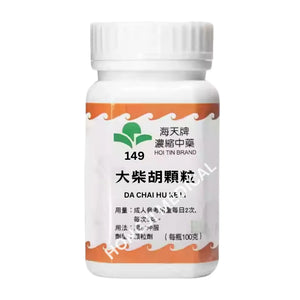
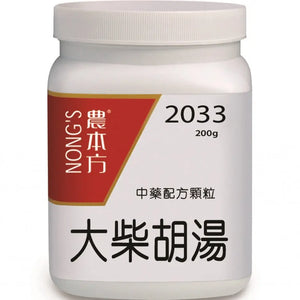
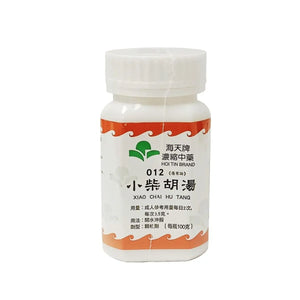
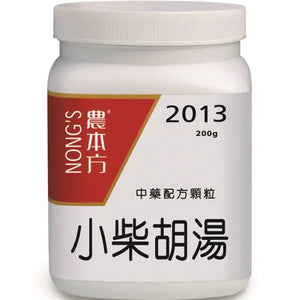
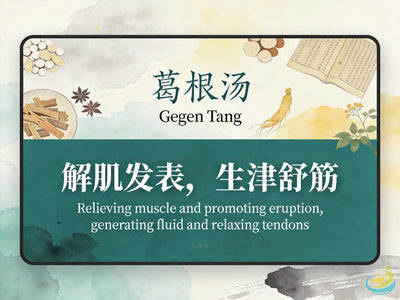
Compare Chai Ge Jie Ji TangGe Gen TangDa Chai Hu TangXiao Chai Hu Tang
Primary Function Release exterior, clear heat, relieve muscle layer feverRelease exterior, relieve neck stiffnessHarmonize Shaoyang, drain interior heat, move stoolHarmonise Shaoyang, release the pivot
Formula Category Exterior-Releasing FormulasExterior-Releasing FormulasHarmonising FormulasHarmonising Formulas
Typical TCM Pattern Wind-HeatWind-ColdShaoyang SyndromeQi Stagnation
Main Conditions Fever, Headache, Sore ThroatFever, Cold Limbs, Neck Pain, Muscular Stiffness, Nasal Congestion, Spontaneous SweatingFever, Constipation, Abdominal Pain, NauseaFever, Chest Tightness, Nausea, Poor Appetite, Bitter Taste in Mouth
Main Herbs Bupleurum Root · Kudzu Root · Licorice Root · Scutellaria / Baikal Skullcap · Notopterygium Root · Angelica Dahurica Root · White Peony Root · Platycodon Root · GypsumKudzu Root · Ephedra Herb · Cinnamon Twig · White Peony Root · Fresh Ginger · Jujube / Chinese Date · Honey-fried LicoriceBupleurum Root · Scutellaria / Baikal Skullcap · Pinellia Rhizome · Rhubarb Root and Rhizome · Immature Bitter Orange · White Peony Root · Fresh Ginger · Jujube / Chinese DateBupleurum Root · Scutellaria / Baikal Skullcap · Pinellia Rhizome · Ginseng Root · Fresh Ginger · Jujube / Chinese Date · Honey-fried Licorice
Classical Source Classical TCM formularyShang Han Lun (Zhang Zhongjing, Eastern Han)Shang Han Lun (Zhang Zhongjing, Eastern Han)Shang Han Lun (Zhang Zhongjing, Eastern Han)

How to tell them apart

Chai Ge Jie Ji Tang, Ge Gen Tang, Da Chai Hu Tang and Xiao Chai Hu Tang release exterior or harmonize. Ge Gen Tang releases exterior and stiff neck from Wind-Cold; Xiao Chai Hu Tang harmonizes Shaoyang; Da Chai Hu Tang combines Shaoyang with Yangming drain. Chai Ge Jie Ji Tang releases the muscle layer and clears heat for exterior cold transforming into heat with high fever and muscle ache.

For educational reference only, based on traditional pattern differentiation — not a substitute for professional advice.

Clinical Modifications for Chai Ge Jie Ji Tang

In clinical practice, a practitioner might tweak the standard Chai Ge Jie Ji Tang formula to perfectly match a patient's specific symptoms. Here are a few common adjustments:

1. If aversion to cold is severe

  • If the patient is feeling extremely cold and shivering, Ma Huang (Ephedra) and Gui Zhi (Cinnamon Twig) can be added to the mix.
  • These herbs are warm, pungent, and great at inducing a sweat. They work quickly to push out the cold pathogens from the body's surface, synergizing with the main formula to bring fast relief from the chills.

2. If interior heat is excessive

  • When a patient has strong signs of internal heat—like a bitter taste in the mouth, a very dry throat, or severe restlessness and trouble sleeping—practitioners will increase the dose of Huang Qin (Baical Skullcap Root) and might add Shi Gao (Gypsum).
  • Both are powerful herbs for clearing heat and purging internal fire, effectively cooling the body down from the inside.

3. If headache is severe

  • For intense, stubborn headaches caused by the cold, Chuan Xiong (Szechuan Lovage Root) and Xi Xin (Asarum) are excellent additions.
  • These herbs are famous for their ability to expel wind and stop pain, bringing much-needed comfort and relief to a throbbing head.
Chai Ge Jie Ji Tang

4. If cough is obvious

  • If a cough is one of the main complaints, adding Xing Ren (Apricot Seed) and Qian Hu (Peucedanum Root) is a smart move.
  • They are highly effective at relieving coughs and breaking up phlegm, helping to keep the airways clear and making breathing much easier.

What the Science Suggests

1. Pharmacological Research

Modern science has helped explain exactly why this traditional formula works so well:

  • Chai Hu (Bupleurum) has been shown to have strong antipyretic (fever-reducing), anti-inflammatory, and antiviral effects.
  • Ge Gen (Kudzu Root) helps to dilate blood vessels, which improves blood circulation and gives the immune system a helpful boost.
  • Other key herbs like Huang Qin (Baical Skullcap Root) and Bai Shao (White Peony Root) also bring their own antibacterial and antiviral properties to the table. Together, they create a powerful, multi-targeted defense against outside infections.
Chai Ge Jie Ji Tang

2. Clinical Research

  • Clinical studies confirm that Chai Ge Jie Ji Tang is highly effective at treating respiratory illnesses like the common cold and the flu.
  • It is proven to quickly relieve fever, headaches, and body aches, which noticeably shortens how long a person stays sick and greatly improves their overall comfort.
  • It also effectively treats common complications like sore throats and coughs. As modern research continues to deepen, the clinical value of this traditional formula is becoming even more recognized.

Safety Considerations

1. Precautions

While taking Chai Ge Jie Ji Tang, maintain a light diet and avoid spicy, greasy, and irritating foods. Get adequate rest and sleep, and drink a suitable amount of warm water after taking the formula to support absorption and metabolism.

2. Contraindications

Chai Ge Jie Ji Tang is contraindicated for wind-cold exterior syndrome without interior heat, as it may excessively disperse and weaken healthy qi. Pregnant women should use it only cautiously and under medical supervision.

Questions About Chai Ge Jie Ji Tang

Q1: What are the actions of Chai Ge Jie Ji Tang?
Chai Ge Jie Ji Tang has the actions of releasing the muscle layer and clearing interior Heat. It is used when an exterior Wind-Cold is already transforming into Heat: fever is rising, chills are fading, and Yangming signs are beginning to appear.
Q2: Which modern diseases is Chai Ge Jie Ji Tang suited to?
Modern TCM clinical practice commonly applies it to individuals whose pattern differentiation falls within exterior Cold transforming into Heat, including viral upper respiratory infection with increasing fever and decreasing chills, influenza of this transitional pattern, and some early sinus or eye-pain colds once Heat has entered the muscle layer.
Q3: Is Chai Ge Jie Ji Tang suitable for a cold whose fever is climbing while the chills are easing?
For presentations of increasing fever, decreasing aversion to cold, headache, eye pain or dry nose, insomnia or irritability, a thin yellow coating, and a floating slightly flooding pulse — in those whose pattern differentiation confirms Taiyang moving into Yangming — TCM commonly applies Chai Ge Jie Ji Tang as an adjunct. High fever with stiff neck rigidity or severe headache needs medical evaluation.
Q4: Who should not take Chai Ge Jie Ji Tang?
Those with a simple Wind-Cold still needing only warm sweating, a fully formed Yangming interior Excess that needs purging, or Yin-deficiency empty Heat are generally not suitable. Shi Gao and Huang Qin are cold. Use should be assessed by a qualified TCM physician.
Q5: Why use both exterior-releasing and Heat-clearing herbs?
The pathogen is no longer a simple Cold exterior, yet it has not fully become interior Yangming Excess. Chai Hu and Ge Gen release the muscle layer and vent Heat. Qiang Huo and Bai Zhi treat the remaining head and body-surface Cold. Shi Gao and Huang Qin clear the Heat that has already entered. Jie Geng vents the Lung; Bai Shao and Gan Cao preserve Yin so venting does not dry the patient. Releasing only would miss the Heat; clearing only would lock the remaining exterior.
Q6: How does Chai Ge Jie Ji Tang differ from Ge Gen Tang or Bai Hu Tang?
Ge Gen Tang releases Taiyang Wind-Cold with stiff neck and no interior Heat-clearing pair. Bai Hu Tang treats blazing Yangming Qi-level Heat with great fever, great sweat, and great thirst after the exterior has gone. Chai Ge Jie Ji Tang is the transitional formula: fever rising, chills falling, eye pain and dry nose, thin yellow coating.
Q7: What are the main ingredients of Chai Ge Jie Ji Tang?
The commonly used version consists of Chai Hu and Ge Gen to release the muscle layer; Qiang Huo and Bai Zhi to disperse remaining Wind-Cold from the head; Shi Gao and Huang Qin to clear interior Heat; Jie Geng to vent the Lung; Bai Shao to preserve Yin; and Gan Cao, Sheng Jiang, and Da Zao to harmonize. Some versions include Sheng Ma.
Q8: Is Chai Ge Jie Ji Tang suitable for long-term use?
No. It is a short-course formula for a transforming exterior. Once fever recedes and the exterior has cleared, the formula should be stopped. Continuing to vent and clear after the pathogen is gone only consumes Qi and fluids.
Q9: Can this formula help both the remaining chills and the new eye pain or dry nose?
Yes. That mixed picture is the reason for choosing Chai Ge Jie Ji Tang. Residual Wind-Cold still occupies the surface (mild chills, head pain), while Heat is already steaming the Yangming orifices (eyes, nose). Releasing the muscle layer and clearing Heat together address both ends of the transition.
Q10: What lifestyle advice supports the use of Chai Ge Jie Ji Tang?
Resting, keeping warm without bundling into a heavy sweat, drinking enough fluids, and seeking medical care for very high fever, stiff neck, confusion, or a rash with fever all support correct use. This formula treats a TCM transitional exterior pattern; it is not a substitute for evaluating serious infection.

General Questions

How do I choose the right formula?
TCM formulas are traditionally selected according to individual pattern differentiation rather than by symptom alone. If you're not sure which formula fits your presentation, take our AI Assessment below for a personalized starting point, then confirm with a qualified TCM practitioner.
What are concentrated herbal granules?
Concentrated herbal granules are made by decocting raw herbs, then extracting and concentrating the resulting liquid into a fine granule or powder form. This preserves the same active compounds as a traditional decoction while making the herbs far easier to store, measure, and prepare.
How should I take these products?
Dissolve the recommended amount of granules in hot water, stir until fully dissolved, and drink while warm — following the dosage and frequency advised by your TCM practitioner or as stated on the product packaging.
Are concentrated herbal granules equivalent to traditional decoctions?
Concentrated granules are produced from the same herbs and processed to retain their active compounds, so they are traditionally regarded as a convenient alternative to decoctions rather than a different remedy. Some practitioners note subtle differences in strength or absorption between the two forms, so your TCM practitioner may adjust dosage accordingly.
Are your products authentic?
Yes. HJMEDICAL sources its concentrated granules exclusively from established, reputable manufacturers such as Nong's and Hoi Tin, both long-standing names in the TCM granules industry, with GMP compliance stated directly on their packaging.
Are HJMEDICAL products manufactured under GMP standards?
HJMEDICAL sources its concentrated granules from established, reputable manufacturers such as Nong's and Hoi Tin, both long-standing names in the TCM granules industry. GMP compliance for these products is stated directly on their packaging.
Do you ship internationally?
Yes — we ship worldwide! Every order goes out via Hong Kong Post, and your exact shipping cost and estimated delivery time for your address are calculated and shown right at checkout, so there are never any surprises. We also offer free shipping once your order reaches our free-shipping threshold, so it's easy to stock up on your favorite formulas and save.
Can I take more than one formula at the same time?
Some formulas are traditionally combined, while others overlap or counteract each other. We recommend checking with a qualified TCM practitioner before combining formulas, especially if you are already taking other medication.
Are these products suitable during pregnancy or breastfeeding?
Some TCM formulas are not suitable during pregnancy or breastfeeding. Please consult a qualified TCM practitioner or your doctor before use if you are pregnant, trying to conceive, or nursing.
Do these products replace medical treatment?
No. These products are traditional herbal supplements intended to support wellbeing according to TCM principles — they are not a replacement for professional medical diagnosis or treatment. Please consult a qualified TCM practitioner or licensed healthcare provider before starting, stopping, or combining any treatment, especially if you have a chronic condition.
Medical Disclaimer

For general TCM education only — not medical advice. Consult a qualified TCM practitioner or licensed healthcare provider before use, especially if pregnant, nursing, on medication, or managing a chronic condition.

Not sure which formula is right for you?

Take the AI Assessment

最新文章

Login

Forgot your password?

Don't have an account yet?
Create account

Chai Ge Jie Ji Tang: Classic TCM Formula for Exterior Wind-Cold Transforming into Heat