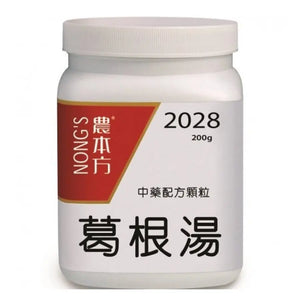
Ge Gen Tang: Classic Shang Han Lun Formula for Wind-Cold with Neck and Back Stiffness

Ge Gen Tang (葛根汤), known in English as Pueraria Decoction, is a classical formula from the Shang Han Lun for treating Taiyang Wind-Cold invasion with prominent stiffness in the neck and back. This important formula is indicated for early colds and flu with fever, chills without sweating, stiff neck and shoulders, body aches, headache, and aversion to wind and cold. In modern clinical practice, Ge Gen Tang is widely used for Wind-Cold type upper respiratory infections with significant musculoskeletal symptoms, particularly when there is marked stiffness in the neck and upper back. By powerfully releasing Wind-Cold from the exterior while specifically relaxing the muscle layer and channels, it provides effective relief for both the systemic symptoms and the local stiffness.

I. Origins and History

1. Recorded in the Classical Literature

Gegen Tang originates from the *Shang Han Lun* (Treatise on Cold Damage), written by the Eastern Han physician Zhang Zhongjing — the first classical text in the history of Chinese medicine to combine theory, method, formula, and herb, and revered by physicians throughout history as an authoritative standard. The *Shang Han Lun* records Gegen Tang as follows: "In Taiyang disease, with stiffness and tension in the nape and back, no sweating, and aversion to wind, Gegen Tang governs this condition." In just a few words, this precisely describes the symptoms and disease category for which Gegen Tang is suited.

2. Historical Transmission and Development

Since the appearance of the *Shang Han Lun*, Gegen Tang has been widely applied in clinical practice. Many later medical texts — such as the Jin dynasty physician Wang Shuhe's *Maijing* (Pulse Classic), the Tang dynasty physician Sun Simiao's *Beiji Qianjin Yaofang* (Essential Prescriptions for Urgent Need Worth a Thousand Gold), and the Song dynasty physician Zhu Gong's *Leizheng Huoren Shu* (Book of Classified Patterns for Saving Lives) — all mention and elaborate on Gegen Tang. As time passed, physicians continually summarised their clinical experience, gradually expanding and refining the scope of application for Gegen Tang, allowing it to play an important role in treating externally contracted disease. Having endured for a thousand years without falling from use, it has become a shining pearl in the treasury of Chinese medicine formulas.

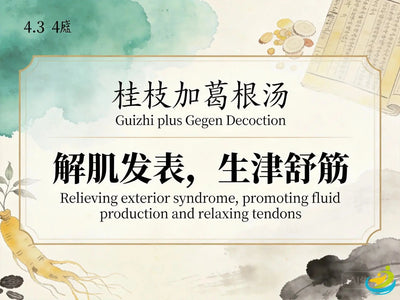
Gegen Tang: Releasing the Muscle Layer, Raising Fluids and Relaxing the Sinews — Precise Resolution of Nape and Back Stiffness, Wind-Cold Colds, and Acute Gastroenteritis | HJMEDICAL

II. Herb Composition (Sovereign, Minister, Assistant, Envoy)

1. Chief Herb — Gegen

Gegen (Kudzu Root) is sweet and acrid in flavour, cooling in nature, and enters the lung, spleen, and stomach channels. It has the actions of releasing the muscle layer to reduce fever, generating fluids to relieve thirst, venting rashes, raising yang to stop diarrhoea, unblocking the channels and collaterals, and resolving the toxicity of alcohol. In Gegen Tang, Gegen serves as the chief herb, mainly exerting the action of releasing the muscle layer and the exterior. It disperses pathogens from the muscle layer, and is particularly skilled at relieving stiffness and discomfort in the nape and back. The *Shennong Bencao Jing* (Divine Farmer's Materia Medica) records that Gegen "governs wasting-thirst, generalised high fever, vomiting, various bi-obstructions, raises yin qi, and resolves various toxins"; its power to release the muscle layer is strong, able to allow the exterior pathogen to resolve via sweating, making it the key herb for relieving an externally contracted exterior pattern.

2. Deputy Herbs — Mahuang and Guizhi

Mahuang (Ephedra) is acrid and slightly bitter in flavour, warm in nature, and enters the lung and bladder channels. It has the actions of inducing sweating to release the exterior, diffusing the lung to calm wheezing, and promoting urination to reduce swelling. Mahuang opens the striae and penetrates the pores, with a relatively strong sweating power, able to assist Gegen in dispersing wind-cold pathogens at the exterior. Guizhi (Cinnamon Twig) is acrid and sweet in flavour, warm in nature, and enters the heart, lung, and bladder channels, with the actions of inducing sweating to release the muscle layer, warming and unblocking the channels, and assisting yang to transform qi. Guizhi can warm and unblock the channels; combined with Mahuang, it strengthens the action of inducing sweating and releasing the exterior, while also harmonising ying and wei, allowing the exterior pathogen to be resolved. Mahuang and Guizhi work synergistically, assisting Gegen in strengthening the effect of releasing the muscle layer, releasing the exterior, and dispersing wind-cold, and are therefore deputy herbs.

3. Assistant Herbs — Shaoyao, Shengjiang, and Dazao

Shaoyao (Peony Root) is bitter and sour in flavour, slightly cold in nature, and enters the liver and spleen channels. It has the actions of nourishing blood and regulating menstruation, astringing yin to stop sweating, softening the liver to relieve pain, and calming hyperactive liver yang. In Gegen Tang, Shaoyao nourishes blood and harmonises ying, relieving muscle tension; combined with sweat-inducing herbs such as Mahuang and Guizhi, it prevents excessive sweating from damaging yin-blood. Shengjiang (Fresh Ginger) is acrid in flavour, slightly warm in nature, and enters the lung, spleen, and stomach channels, with the actions of releasing the exterior, dispersing cold, warming the middle, stopping vomiting, resolving phlegm, stopping coughing, and resolving the toxicity of fish and crab. Shengjiang both assists Mahuang and Guizhi in releasing the exterior, and harmonises the stomach to stop vomiting, while also moderating the fierce, potent nature of Mahuang and Guizhi. Dazao (Jujube) is sweet in flavour, warm in nature, and enters the spleen, stomach, and heart channels, able to tonify the middle, boost qi, nourish blood, and calm the spirit. Combined with Shengjiang, Dazao harmonises the spleen and stomach and tonifies qi and blood, allowing pathogens to be expelled without damaging righteous qi, while also helping the other herbs to better exert their efficacy; all three are therefore assistant herbs.

4. Envoy Herb — Zhigancao

Zhigancao (Honey-Fried Licorice) is sweet in flavour, neutral in nature, and enters the heart, lung, spleen, and stomach channels. It has the actions of tonifying the spleen, boosting qi, moistening the lung, stopping coughing, clearing heat, resolving toxicity, and harmonising the other herbs. In Gegen Tang, Zhigancao harmonises the properties of herbs such as Mahuang, Guizhi, and Gegen, allowing them to work synergistically and better exert their action. At the same time, Zhigancao also tonifies the spleen and stomach, protects righteous qi, and moderates the fierce, potent nature of the herbs in the formula, allowing the whole formula to attack pathogens without damaging righteous qi, and is therefore the envoy herb.

Gegen Tang: Releasing the Muscle Layer, Raising Fluids and Relaxing the Sinews — Precise Resolution of Nape and Back Stiffness, Wind-Cold Colds, and Acute Gastroenteritis | HJMEDICAL

III. Pathomechanism, Actions, and Indications of Gegen Tang

1. Pathomechanism Analysis

The pathomechanism targeted by Gegen Tang is mainly wind-cold binding the exterior, with unfavourable Taiyang channel qi. When the body is fatigued or exposed to wind after sweating, wind-cold pathogens invade the muscle layer, causing the movement of Taiyang channel qi to become sluggish. The Taiyang channel travels through the head, nape, and back, giving rise to symptoms of stiffness and tension in the nape and back. Cold, by nature contracting and congealing, causes the striae of the skin to become obstructed, wei qi to become depressed, and ying yin to become stagnant, thereby giving rise to manifestations such as absence of sweating and aversion to wind.

2. Actions

Based on the above pathomechanism, Gegen Tang has the actions of releasing the muscle layer and the exterior, and harmonising ying and wei. Through the synergistic action of Gegen, Mahuang, and Guizhi, wind-cold pathogens at the muscle layer are dispersed, allowing the exterior pathogen to be resolved. At the same time, Shaoyao, Dazao, and Zhigancao harmonise ying and wei, attending to both qi and blood, both expelling pathogens and supporting righteous qi, achieving the goal of pathogens being expelled and righteous qi remaining secure.

3. Indications

Gegen Tang mainly treats the pattern of externally contracted wind-cold with exterior excess. Symptoms include aversion to cold with fever, absence of sweating, stiffness and tension in the nape and back, bodily aches, or a stuffy, runny nose, cough with wheezing, a thin, white tongue coating, and a floating, tight pulse. Clinically, for the common cold, influenza, acute bronchitis, and cervical spondylosis attributable to a wind-cold exterior-excess pattern, presenting with the above symptoms, Gegen Tang may be considered for treatment. It is particularly effective for conditions where stiffness and pain in the nape and back are the prominent manifestation.

Gegen Tang: Releasing the Muscle Layer, Raising Fluids and Relaxing the Sinews — Precise Resolution of Nape and Back Stiffness, Wind-Cold Colds, and Acute Gastroenteritis | HJMEDICAL

IV. Formula Analysis of Gegen Tang

1. The Power of Releasing the Exterior and Dispersing Cold (Relieving a Cold)

In the formula, Mahuang, Guizhi, and Gegen are combined together — Mahuang, acrid and warm, opens the striae and induces sweating, rapidly dispersing wind-cold pathogens at the exterior; Guizhi assists Mahuang in inducing sweating and releasing the exterior, while also warming and unblocking the channels; Gegen releases the muscle layer and the exterior, excelling at relieving stiffness and tension in the nape and back. The three work synergistically, allowing wind-cold pathogens to resolve from the muscle layer, providing a powerful action of releasing the exterior and dispersing cold for externally contracted wind-cold with an exterior-excess pattern.

2. The Action of Harmonising Ying and Wei

Shaoyao nourishes blood and harmonises ying; combined with Dazao and Zhigancao, it both restrains the sweating power of Mahuang and Guizhi, preventing excessive sweating from damaging yin-blood, and harmonises ying and wei. When ying and wei are in harmony, qi and blood flow smoothly, helping to strengthen the body's resistance to pathogens, allowing the externally contracted pathogen to be more easily expelled, while also relieving symptoms such as bodily aches caused by ying-wei disharmony.

3. The Synergistic Action of the Various Herbs

Exterior-releasing herbs such as Mahuang, Guizhi, and Gegen work together with harmonising herbs such as Shaoyao, Shengjiang, Dazao, and Zhigancao, each fulfilling its own role. The exterior-releasing herbs are responsible for expelling the pathogen outward, while the harmonising herbs harmonise the properties of the herbs, tonify righteous qi, and prevent damage to righteous qi. The whole formula's combination is rigorous, working synergistically to jointly exert the actions of releasing the muscle layer and the exterior, and harmonising ying and wei, achieving the goal of treating externally contracted wind-cold with an exterior-excess pattern.

Gegen Tang: Releasing the Muscle Layer, Raising Fluids and Relaxing the Sinews — Precise Resolution of Nape and Back Stiffness, Wind-Cold Colds, and Acute Gastroenteritis | HJMEDICAL

V. Comparison with Related Formulas

1. Comparison with Mahuang Tang

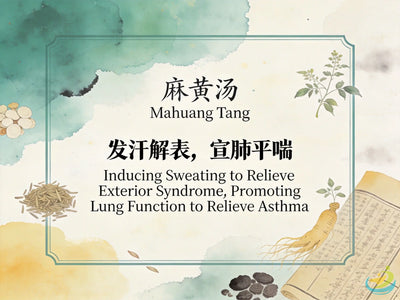
Mahuang Tang originates from the *Shang Han Lun* and is also a classical formula for treating externally contracted wind-cold with an exterior-excess pattern. Mahuang Tang is composed of Mahuang, Guizhi, Xingren (Apricot Kernel), and Zhigancao. Compared with Gegen Tang, both formulas use Mahuang and Guizhi to induce sweating and release the exterior, treating wind-cold exterior-excess patterns. However, Mahuang Tang uses Xingren to descend lung qi, emphasising treatment of aversion to cold with fever and wheezing without sweating caused by wind-cold binding the exterior with unregulated lung qi; Gegen Tang uses Gegen to release the muscle layer, emphasising treatment of stiffness and tension in the nape and back caused by wind-cold binding the exterior with unfavourable Taiyang channel qi. Mahuang Tang has a stronger sweating power, while Gegen Tang, while inducing sweating, places greater emphasis on releasing the muscle layer, with more targeted action for symptoms in the nape and back region.

2. Comparison with Guizhi Tang

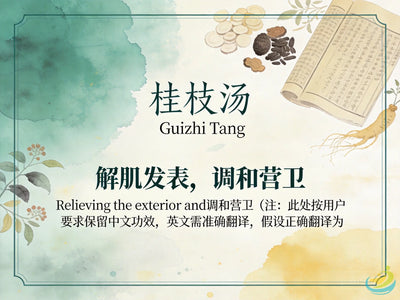
Guizhi Tang also originates from the *Shang Han Lun*, used to treat externally contracted wind-cold with an exterior-deficiency pattern. Its composition is Guizhi, Shaoyao, Shengjiang, Dazao, and Zhigancao. Guizhi Tang uses Guizhi to release the muscle layer and the exterior, and Shaoyao to harmonise ying and astringe yin; the two combine to harmonise ying and wei. Compared with Gegen Tang, the Guizhi Tang pattern is exterior deficiency with sweating, while the Gegen Tang pattern is exterior excess without sweating; Guizhi Tang emphasises harmonising ying and wei, while Gegen Tang emphasises releasing the muscle layer and the exterior, dispersing cold and unblocking the channels. In clinical application, the two formulas can be accurately distinguished according to the presence or absence of sweating and other accompanying symptoms.

Gegen Tang: Releasing the Muscle Layer, Raising Fluids and Relaxing the Sinews — Precise Resolution of Nape and Back Stiffness, Wind-Cold Colds, and Acute Gastroenteritis | HJMEDICAL

VI. Clinical Applications

1. Common Cold

For wind-cold colds presenting with pronounced aversion to cold, mild fever, absence of sweating, headache and bodily aches, a stuffy nose with clear discharge, cough with thin, white phlegm, no thirst or thirst with a preference for hot drinks, a thin, white tongue coating, and a floating, tight pulse, Gegen Tang is one of the commonly used formulas. By releasing the muscle layer and the exterior, and dispersing wind-cold, it can effectively relieve cold symptoms and promote bodily recovery.

2. Influenza

During the influenza season, if manifestations of a wind-cold exterior-excess pattern appear, such as aversion to cold, high fever, headache, bodily aches, and absence of sweating, Gegen Tang may be used as a treatment. It can rapidly disperse the exterior pathogen and reduce influenza symptoms, providing a certain benefit for controlling disease progression and shortening the course of illness.

3. Acute Bronchitis

For acute bronchitis triggered by externally contracted wind-cold, presenting with symptoms such as cough, thin, white phlegm, aversion to cold with fever, and absence of sweating, Gegen Tang may be applied based on pattern differentiation. The herbs in the formula can release the exterior, disperse cold, diffuse the lung, and stop coughing, helping to relieve bronchial inflammation and reduce cough and other symptoms.

4. Cervical Spondylosis

For patients with cervical spondylosis presenting with pain and stiffness in the neck, accompanied by manifestations of a wind-cold exterior pattern such as aversion to cold and absence of sweating, Gegen Tang also provides good therapeutic effect. Gegen can unblock the channels and relieve tension in the neck muscles; combined with other exterior-releasing, cold-dispersing herbs, it can improve symptoms of cervical spondylosis.

Gegen Tang: Releasing the Muscle Layer, Raising Fluids and Relaxing the Sinews — Precise Resolution of Nape and Back Stiffness, Wind-Cold Colds, and Acute Gastroenteritis | HJMEDICAL

VII. Clinical Modifications

1. Concurrent Cough

If the patient's cough symptoms are relatively pronounced, Xingren and Jiegeng (Platycodon Root) may be added to strengthen the action of stopping coughing and calming wheezing. Xingren can descend lung qi, while Jiegeng can diffuse the lung and benefit the throat; combined, they allow lung qi to diffuse and descend normally, relieving cough symptoms.

2. Concurrent Sore Throat

For patients with concurrent sore throat, Niubangzi (Burdock Fruit) and Lianqiao (Forsythia Fruit) may be added. Niubangzi can disperse wind-heat and resolve toxicity to benefit the throat; Lianqiao can clear heat, resolve toxicity, and disperse wind-heat. Combined, the two can effectively reduce sore throat symptoms.

3. Concurrent Damp Pathogens

If the patient also presents with manifestations of damp pathogens, such as heaviness of the limbs and a white, greasy tongue coating, Cangzhu (Atractylodes lancea Rhizome) and Yiyiren (Job's Tears) may be added. Cangzhu can dry dampness and strengthen the spleen, while Yiyiren can promote urination, drain dampness, strengthen the spleen, and stop diarrhoea, strengthening the action of eliminating dampness and allowing pathogens at both the exterior and interior to be better expelled.

Gegen Tang: Releasing the Muscle Layer, Raising Fluids and Relaxing the Sinews — Precise Resolution of Nape and Back Stiffness, Wind-Cold Colds, and Acute Gastroenteritis | HJMEDICAL

VIII. Dosage and Preparation (Traditional Method and Modern Concentrated Granules)

1. Traditional Method

The traditional decoction method for Gegen Tang is: Gegen, 4 liang; Mahuang, 3 liang (nodes removed); Guizhi, 2 liang (bark removed); Shengjiang, 3 liang (sliced); Gancao, 2 liang (honey-fried); Shaoyao, 2 liang; Dazao, 12 pieces (split open). Decoct in 1 dou of water (approx. 2000 ml in classical measure), first boiling the Mahuang and Gegen down by 2 sheng and removing the white foam, then adding the remaining herbs and decocting down to 3 sheng (approx. 600 ml); strain off the dregs and take 1 sheng (approx. 200 ml) warm per dose. Cover to induce a slight sweat; there is no need to drink porridge afterward, and the remaining post-treatment care follows the method for Guizhi Tang. In modern clinical application, the dosage of herbs may be adjusted according to actual circumstances, but the traditional decoction method should still be followed to ensure the herbs' efficacy is fully exerted.

2. Modern Concentrated Granules

With the development of modern pharmaceutical technology, a concentrated granule form of Gegen Tang is also available. Its method of administration is simpler — generally dissolved in boiled water according to the dosage specified on the product label. Modern concentrated granules preserve the efficacy of the traditional formula and are convenient to carry and take, suiting the fast pace of modern life, offering patients more options.

Gegen Tang: Releasing the Muscle Layer, Raising Fluids and Relaxing the Sinews — Precise Resolution of Nape and Back Stiffness, Wind-Cold Colds, and Acute Gastroenteritis | HJMEDICAL

IX. Precautions and Contraindications

1. Precautions

While taking Gegen Tang, care should be taken to keep warm and avoid re-exposure to wind-cold pathogens, so as not to affect treatment efficacy. At the same time, the diet should be light, avoiding spicy, greasy, raw, and cold irritating foods, to prevent an increased burden on the spleen and stomach that could affect the absorption and efficacy of the herbs.

2. Contraindications

This formula has a relatively strong sweating power and is contraindicated in those with a weak constitution, qi-blood insufficiency, or spontaneous and night sweating. Use with caution in pregnancy, to avoid excessive sweating adversely affecting the fetus. In addition, if the patient experiences profuse sweating, palpitations, dizziness, or other discomfort after taking the medication, it should be discontinued immediately and medical attention sought promptly.

Gegen Tang: Releasing the Muscle Layer, Raising Fluids and Relaxing the Sinews — Precise Resolution of Nape and Back Stiffness, Wind-Cold Colds, and Acute Gastroenteritis | HJMEDICAL

X. Modern Research

1. Pharmacological Research

Gegen Tang originates from the *Shang Han Lun*, and Gegen Tang governs Taiyang disease; it has the actions of inducing sweating, dispelling wind, activating blood and resolving stasis, and activating blood, able to relieve cold symptoms such as lumbar pain and diarrhoea. The formula is composed of herbs including Gegen, Mahuang, Guizhi, Baishao, Gancao, Shengjiang, and Dazao, and is clinically used for viral infections; care should be taken to apply this formula according to proper pattern differentiation.

Modern pharmacological research shows that Gegen Tang has antipyretic, anti-inflammatory, antiviral, and immune-regulating actions. The Gegen in the formula contains a variety of flavonoid compounds, with actions of dilating blood vessels, improving microcirculation, and lowering blood pressure; Mahuang can stimulate the central nervous system, enhance myocardial contractility, and dilate the bronchi; Guizhi has antibacterial, antiviral, and anti-inflammatory actions; and Shaoyao has antispasmodic, analgesic, and anti-inflammatory actions. These herbs work synergistically, jointly exerting a regulatory action on the body, providing scientific evidence for the clinical application of Gegen Tang.

2. Clinical Research

In recent years, numerous clinical studies have further verified the efficacy of Gegen Tang. In treating conditions such as the common cold, influenza, and cervical spondylosis, Gegen Tang has consistently shown good therapeutic effect. Some studies have also found that Gegen Tang has significant advantages in improving patients' symptoms, shortening the course of illness, and enhancing quality of life. At the same time, for certain obstinate conditions such as nerve-root type cervical spondylosis, combining Gegen Tang with other treatment methods can also achieve better comprehensive therapeutic results, providing more approaches and methods for clinical treatment.

As a classical Chinese medicine formula, Gegen Tang, having been transmitted for a thousand years, plays an important role in clinical application. Through in-depth understanding of its origins, composition, pathomechanism, actions, and applications, we can better apply this formula to relieve patients' suffering, while also appreciating the profound depth and distinctive charm of Chinese medicine formula studies.

💡 Gegen Tang — Frequently Asked Questions & Medication Safety (FAQ)

Q1: What are the core actions and mechanism of Gegen Tang?

Gegen Tang is precisely combined from Gegen, Mahuang, Guizhi, Baishao, Shengjiang, Dazao, and Zhigancao (its combination framework is derived from the muscle-layer-releasing formula Guizhi Tang, modified by adding the powerfully dispersing Mahuang and the fluid-raising, sinew-relaxing Gegen), with the core actions of releasing the muscle layer and the exterior, and raising fluids to relax the sinews. Chinese medicine holds that "when cold pathogens bind the exterior and Taiyang channel qi becomes unfavourable, stiffness and tension arise in the nape and back." When wind-cold pathogens invade the body's exterior, causing the skin's pores to become obstructed, and qi, blood, and fluids are unable to be distributed to the channels of the neck and back, the sinews and vessels, losing nourishment, undergo severe spasm and stiffness. The essence of this formula's combination fully embodies the outstanding Chinese medicine wisdom of "combining firmness with softness, attending to both exterior and interior": Gegen is used generously as the chief herb, sweet, acrid, warm, and moistening, entering specifically the Taiyang channel — it not only disperses pathogens at the muscle layer, but also possesses the distinctive instinct of "raising fluids to relax the sinews," powerfully transporting and raising the clear yang fluid of the middle-burner spleen and stomach directly to the parched sinews and bones of the nape. Combined with Mahuang and Guizhi acting in mutual reinforcement, it powerfully opens the striae, expels the exterior cold, and promotes sweating; and it skilfully incorporates Baishao and Gancao (Shaoyao Gancao Tang) in a sour-sweet combination that generates yin, deeply softening the sinews and relieving urgency and pain. HJMEDICAL notes that this formula, through the dual pathway of inducing sweating to disperse cold and raising fluids to nourish, can precisely interrupt muscle spasm caused by externally contracted cold pathogens and loss of channel nourishment.

Q2: What conditions is Gegen Tang mainly used for in modern medicine?

Modern clinical practice and pharmacological research in neuromusculoskeletal and virological science show that this formula is widely applied in treating cervical spondylosis (nerve-root type), wind-cold colds (with nape and back stiffness), acute gastroenteritis (with concurrent exterior pattern), stiff neck, frozen shoulder, rheumatic dermatitis, and non-specific diarrhoea in children triggered by summer externally contracted illness. When patients — particularly those who spend long periods bent over a desk, are directly exposed to air conditioning on the neck and back, or are exposed to cold during the changing seasons of winter and spring — present with extreme stiffness and aching pain in the back of the neck and entire back verging on breaking, severely limited neck rotation, together with bodily aversion to cold with fever, dry, closed skin over the entire body with absolutely no sweating, headache and bodily aches, or accompanying abdominal pain with diarrhoea, a pale red tongue, and a thin, white tongue coating — typical manifestations of "wind-cold binding the exterior with unfavourable Taiyang channel qi" — rational use of this formula can significantly and rapidly interrupt cold virus replication, relieve spasm of skeletal muscle and the smooth muscle of the nape and back muscles, improve vertebrobasilar microcirculatory blood flow, relieve nerve-root compression and oedema, and stabilise gastrointestinal peristalsis. Consultation with HJMEDICAL or a qualified physician for pattern-based diagnosis is recommended.

Q3: What are the strict pattern-based contraindications for taking Gegen Tang?

This formula's nature is acrid, warming, and dispersing, with a strong potent sweating power that can very readily deplete qi and damage yin; its clinical medication safety threshold is extremely high. It is absolutely contraindicated in exterior deficiency with spontaneous sweating (those who habitually sweat easily and have an aversion to wind), yin-deficiency night sweats, simple neck and nape aching caused by liver-yang hyperactivity or hypertension (presenting with dizziness and a distended, swollen sensation in the head, a flushed complexion with red eyes, a dry mouth and throat, and a red tongue with scanty coating and no exterior pattern), and externally contracted wind-heat colds (pronounced fever with mild aversion to cold, a red, swollen, severely painful throat, and a red tongue tip and edges). Careless misuse will cause the body's yin fluid to collapse entirely along with profuse sweating, or, due to the ephedrine constituent in Mahuang, cause a sharp increase in heart rate, or a spike in blood pressure in hypertensive patients, triggering the severe malignant risk of a cerebrovascular accident. In addition, the highest-level medication safety warning: because the formula's principal herb Mahuang has an extremely strong sweating, penetrating power, it can very readily produce intense stimulation of the uterus; pregnant women, breastfeeding women, and the elderly with a weak constitution must strictly avoid use, to prevent fetal restlessness and miscarriage or an increased fetal heart rate. This formula is a dispersing preparation meant to be stopped once the condition resolves (the medication must be discontinued immediately once a slight sweat appears and nape and back pain eases), and must not be used indiscriminately over the long term. During treatment, smoking, alcohol, spicy foods, seafood and other "hair-inducing" foods, and raw, cold, rich, greasy foods should be avoided. Those uncertain of their own constitution should seek professional assessment at an HJMEDICAL partner medical institution.

⚠️ This content is for reference only and does not provide medical advice. Consult a healthcare professional for any health concerns.

Login

Forgot your password?

Don't have an account yet?
Create account

Ge Gen Tang: Classic Shang Han Lun Formula for Wind-Cold with Neck and Back Stiffness