Q1: What are the actions of Zhu Ling Tang?
Zhu Ling Tang has the actions of promoting urination, clearing Heat, and nourishing Yin. It is primarily used for patterns of water and Heat binding together with concurrent Yin injury, featuring difficult urination, thirst, and restlessness.
Q2: Which modern diseases is Zhu Ling Tang suited to?
Modern TCM clinical practice commonly applies it to individuals whose pattern differentiation falls within water-Heat binding with Yin deficiency, including urinary tract infections, nephritis, cystitis, postpartum urinary retention, and certain cases of hematuria or edema with Heat and Yin injury.
Q3: Is Zhu Ling Tang suitable for improving difficult urination with thirst and irritability?
For presentations of scanty or difficult urination, fever, thirst with desire to drink, vexation or insomnia, and a red tongue with a thin rapid pulse — in those whose pattern differentiation confirms water and Heat binding with Yin damage — TCM commonly applies Zhu Ling Tang as an adjunct. It cannot replace standard medical treatment.
Q4: Who should not take Zhu Ling Tang?
Those with pure cold-type water retention, severe Yin deficiency without water accumulation, or cases of profuse sweating with thirst (where further diuresis would worsen dryness) are generally not suitable. Use should be assessed by a qualified TCM physician based on individual constitution and pattern differentiation.
Q5: How does Zhu Ling Tang differ from Wu Ling San?
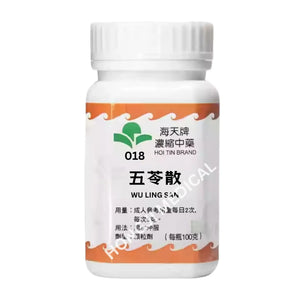
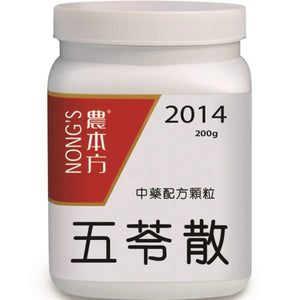
Wu Ling San primarily promotes urination and transforms Qi for water accumulation, often with milder or residual exterior signs and without significant Heat or Yin injury. Zhu Ling Tang addresses water retention complicated by Heat and Yin damage, adding Yin-nourishing (E Jiao) and Heat-clearing (Hua Shi) actions so that diuresis does not further deplete fluids.
Q6: Can Zhu Ling Tang help with bloody or painful urination?
Yes, when hematuria or painful urination arises from Damp-Heat damaging the urinary pathways in the context of water-Heat binding and Yin injury. The formula drains the pathogenic water and Heat while protecting Yin, provided the overall pattern matches.
Q7: What are the main ingredients of Zhu Ling Tang?
The classical formula consists of five herbs: Zhu Ling (Polyporus) and Fu Ling to promote urination and drain Dampness, Ze Xie to further leach out water, Hua Shi (Talc) to clear Heat and ease urination, and E Jiao (Donkey-hide gelatin) to nourish Yin and protect fluids.
Q8: Is Zhu Ling Tang suitable for long-term use?
It is generally used for a defined course under professional supervision until the water-Heat pattern resolves. Prolonged diuresis requires monitoring of fluid balance and Yin status, as the formula is not intended for indefinite use.
Q9: Why does the Shang Han Lun warn against using Zhu Ling Tang in certain Yang Ming cases?
When there is already profuse sweating and thirst (indicating Stomach dryness), further promoting urination can deplete remaining fluids. In such situations the formula is contraindicated because it would aggravate the dryness rather than resolve the pattern.
Q10: What lifestyle advice supports the use of Zhu Ling Tang?
Maintaining adequate but not excessive fluid intake as guided by the practitioner, avoiding excessively heating or drying foods, and ensuring rest help support the formula’s dual action of draining pathogenic water while protecting Yin. Professional guidance remains essential for safe and effective use.