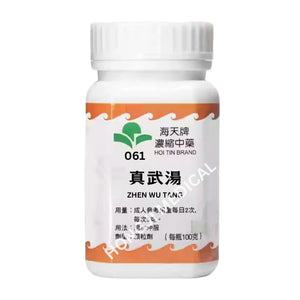
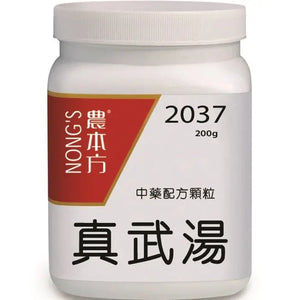
Zhen Wu Tang: TCM Formula for Yang Deficiency, Oedema and Water Metabolism
In daily life, many people suffer from these persistent discomforts: cold hands and feet, feeling chilly no matter how many layers they wear; lower-limb edema that pits on pressure and recovers slowly, with morning eyelid swelling that worsens by evening; palpitations, dizziness, shortness of breath and fatigue on slight exertion; loose stools, difficult urination, clear profuse leukorrhea in women, and sore weak cold lower back and knees in men.
These scattered symptoms share one TCM root cause — Yang deficiency with water retention. Kidney yang deficiency fails to warm and transform fluids, causing water to stagnate and flood, invading organs and blocking meridians. Zhen Wu Tang, the classic formula from Zhang Zhongjing’s Shang Han Lun, has been clinically validated for nearly 2,000 years. It simultaneously warms yang and drains water, treating both root and branch. It remains the core prescription for yang-deficient water-retention constitution today.
This article explains Zhen Wu Tang’s origins, composition, pairing logic, effects, suitable people, contraindications, dosage, modifications, and real cases — helping you understand its principles and decide if it fits you.

I. Origins of Zhen Wu Tang: Zhang Zhongjing’s Classic Water-Calming Formula
1. Formula Origins and the Meaning of Its Name
Zhen Wu Tang first appears in the Shang Han Lun under the chapters on Taiyang and Shaoyin diseases. It addresses two key patterns: Taiyang disease with excessive sweating that damages yang, causing water to flood (palpitations, dizziness, body tremors); and prolonged Shaoyin disease with yang deficiency and internal water retention (abdominal pain, difficult urination, heavy painful limbs, diarrhea).
“Zhen Wu” refers to the Northern Water Deity Xuanwu, symbolizing control over water. The name conveys that this formula, like a water deity, warms yang, calms water, strengthens the spleen, dries dampness, and resolves flooding from the root. It is the benchmark formula for yang deficiency with water retention and has been widely adapted by later physicians.
2. Core Pathomechanism: Yang Deficiency as Root, Water Retention as Branch
The core mechanism is yang deficiency with water retention. Kidney yang deficiency (the body’s “small furnace”) cannot warm and transform fluids, so water stagnates. Spleen yang deficiency weakens fluid transformation, worsening retention. Water floods upward causing dizziness and palpitations, invades the skin causing edema, flows into the intestines causing loose stools, and blocks meridians causing heavy painful limbs.
By warming yang and draining water, the formula treats both root (yang deficiency) and branch (water retention) simultaneously.

II. Dissecting Zhen Wu Tang: Five-Herb Synergy for Warming Yang and Draining Water
Zhen Wu Tang contains only five herbs and strictly follows the classic “chief–deputy–assistant–envoy” pairing. It warms yang and drains water while protecting yin and harmonizing the stomach — a model of TCM formulation.
1. Standard Composition and Common Dosages
Classic proportions (decoction): Processed Aconite 9 g (decoct first), Poria 9 g, Atractylodes 6 g, Peony 9 g, Fresh Ginger 9 g (sliced).
Modern common dosages: Processed Aconite 10–15 g (decoct first 30–60 min), Poria 15–20 g, Atractylodes 10–15 g, Peony 10–15 g, Fresh Ginger 10 g. Increase Aconite for severe yang deficiency; increase Poria and Atractylodes for obvious edema.
Key point: Processed Aconite must be decocted first to reduce toxicity — this is essential for safety.
2. Role of Each Herb
1. Chief Herb: Processed Aconite — Warm yang, dispel cold, transform qi and move water
Acrid, sweet, strongly hot; enters heart, kidney and spleen channels. It is the core herb that strongly warms kidney yang (the body’s “small furnace”), dispels cold, stops pain, and transforms qi to move water. Modern research shows its processed form supports heart function and relieves cold limbs. Must be processed and decocted first 30–60 min until no numbing taste remains. Contraindicated in yin deficiency with fire.
2. Deputy Herbs: Poria + Atractylodes — Strengthen spleen and drain water, cut off the source of dampness
Poria (sweet, bland, neutral) drains water and calms the spirit. Atractylodes (sweet, bitter, warm) strengthens the spleen and dries dampness. Together they form the “strengthen spleen and drain water” pair that stops new dampness formation at the root while Poria also calms palpitations.
3. Assistant Herb: Fresh Ginger — Warm and disperse water qi, harmonize stomach and descend rebellion
Acrid and warm. It assists Aconite in warming yang and dispelling cold, warms and disperses water qi, and harmonizes the stomach to relieve nausea or vomiting caused by water invading the stomach. It also moderates Aconite’s harsh nature.
4. Assistant-Envoy Herb: Peony — Astringe yin, protect from dryness, relieve pain
Sweet, sour, slightly cold. It astringes yin to prevent the acrid-warm herbs from damaging yin (“warm yang without injuring yin”), relaxes tension to relieve abdominal or limb pain, assists diuresis, and harmonizes all herbs.
3. Overall Pairing Summary
The formula forms a complete “warm–tonify–drain–astringe” system. Aconite warms kidney yang as chief; Poria and Atractylodes strengthen spleen and drain water as deputies; Ginger assists warming and harmonizes stomach; Peony protects yin and relieves pain. The classic line captures it: “Zhen Wu Tang strengthens kidney yang with Poria, Atractylodes, Peony, Aconite and Ginger; for Shaoyin abdominal pain with water qi it secures health from palpitations, dizziness and tremors.”

III. Core Effects and Suitable Scenarios
Core effects: Warm yang, drain water, strengthen spleen, dispel cold. Main indication: yang deficiency with water retention.
1. Traditional Main Indications
- Yang-deficient edema (especially below the waist, pitting, with chills and difficult urination)
- Palpitations and dizziness (water qi harassing the heart and clear orifices)
- Cold abdominal pain and loose stools (spleen-kidney yang deficiency)
- Heavy painful cold limbs (water blocking meridians)
2. Modern Applications
- Urinary: chronic glomerulonephritis, nephrotic syndrome (yang-deficient water retention)
- Cardiovascular: heart-failure edema, palpitations (water qi harassing heart) — Zhen Wu Tang
- Digestive: chronic enteritis, loose stools (spleen-kidney yang deficiency) — Zhen Wu Tang
- Joint: cold painful heavy joints worse with cold (yang-deficient cold-damp)
- Sub-health: chronic cold limbs, loose stools, clear urine (yang-deficient water-retention constitution)
3. Self-Check: Do You Fit? (3+ items → likely suitable under guidance)
- Cold constitution, cold hands/feet, pale puffy tongue with teeth marks, white slippery coating, deep thin pulse
- Pitting lower-limb edema, morning eyelid swelling, heavy cold limbs
- Difficult scanty clear urine, loose stools or diarrhea worse with cold
- Palpitations, dizziness, shortness of breath, cold abdominal pain, clear profuse discharge (women), sore cold lower back/knees (men)
- Long-term sedentary lifestyle, cold/raw diet, irregular sleep, elderly or postpartum weakness
IV. Contraindications and Key Precautions
1. Absolute Contraindications
- Pregnant women (Aconite may affect pregnancy stability)
- Allergy to any ingredient
- Uncontrolled hypertension or heart disease (use only under physician guidance)
2. Important Usage Notes
- Aconite safety: Must use processed Aconite; decoct alone first 30–60 min until no numbing taste. Stop immediately and seek help if numbness, dizziness or nausea occurs.
- Avoid raw/cold, greasy foods, alcohol, coffee, strong tea during use. Eat warming foods (ginger, lamb, longan).
- Avoid prolonged sitting/lying; do gentle walking. Keep waist, abdomen and lower limbs warm. Avoid staying up late.
- Typical course: 1–2 weeks. Do not use long-term without guidance. Reduce dose for children, elderly or weak patients.
V. Usage, Dosage and Clinical Modifications
1. Correct Decoction Method (Recommended)
Wash herbs. Decoct processed Aconite first in 500 ml water for 30–60 min until no numbing taste. Add remaining herbs + water to 600 ml, soak 30 min, boil then simmer 20–30 min. Strain and take warm, twice daily, 30 min after meals.
2. Convenient Options
Zhen Wu Tang granules or pills are available for milder cases or consolidation. Follow package instructions or physician advice.
3. Common Clinical Modifications (Use only under guidance)
- Severe edema / difficult urination → add Alisma, Polyporus, Plantago seed
- Cough, wheezing, profuse phlegm (water-cold shooting into lung) → add Dried Ginger, Asarum, Schisandra
- Obvious abdominal pain + loose stools → remove Peony, add Dried Ginger + Cinnamon bark
- Palpitations, insomnia (water qi harassing heart) → add Cinnamon twig + Honey-fried Licorice
- Severe lower-back/knee soreness & cold (kidney yang deficiency) → add Eucommia, Morinda, Goji
- Obvious vomiting → increase Ginger or add Pinellia + Tangerine peel
- Obvious qi deficiency → add Astragalus + Ginseng
VI. Clinical Case Reference
65-year-old male with coronary heart disease and chronic heart failure. Five months of bilateral lower-leg/ankle edema, shortness of breath, cough with white sticky phlegm, poor sleep, cold limbs, difficult urination. Tongue pale red with thin white coating, pulse deep slippery. Previous diuretic use brought only temporary relief.
Pattern: Yang deficiency with water retention, water qi harassing the heart (cardiac edema).
Modified Zhen Wu Tang: Processed Aconite 15 g (first), Atractylodes 10 g, Dried Ginger 10 g, Poria peel 20 g, Polyporus 15 g, Alisma 15 g, Licorice 5 g, etc. One packet daily, taken warm after meals.
Outcome: After 5 packets edema resolved, breathing and cough improved. Added Astragalus 30 g for 7 more packets. Then reduced Aconite to 10 g and consolidated another 10 packets. Follow-up: no recurrence of edema, markedly improved energy and daily activity.
VII. Conclusion: A Timeless Formula for Yang-Deficient Constitution
Zhen Wu Tang is the benchmark formula for yang deficiency with water retention. Its strength lies in treating both root (warm yang) and branch (drain water) while protecting yin. However, it is indicated only for yang-deficient water-retention patterns. It is not suitable for yin deficiency with fire or internal heat-dampness. Because it contains Aconite, professional guidance and correct decoction method are mandatory.
Medication alone is not enough. Combine with warm diet, avoid raw/cold foods, stay active, keep warm, and maintain regular sleep to rebuild yang and reduce water retention from the root. May this article help you use Zhen Wu Tang correctly and safely so you can regain warmth and comfort.
⚠️ This content is for reference only and does not provide medical advice. Consult a healthcare professional for any health concerns.