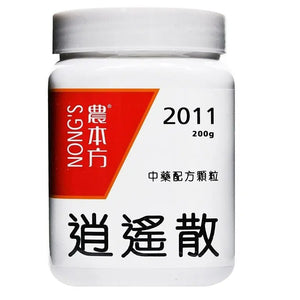
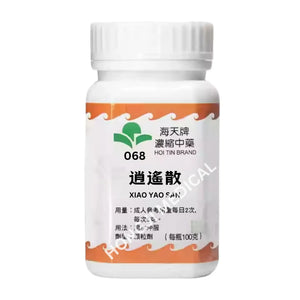
Xiao Yao San: Classic TCM Formula for Liver Qi Stagnation with Blood and Spleen Deficiency

Xiao Yao San (逍遥散), known in English as Free and Easy Powder, is one of the most important and widely used classical formulas in Traditional Chinese Medicine for soothing Liver Qi stagnation with underlying Blood and Spleen deficiency. Created in the Song dynasty, this elegant formula is particularly indicated for emotional disorders such as depression, irritability, anxiety, and PMS, as well as hypochondriac pain, chest and abdominal distension, poor appetite, fatigue, irregular menstruation, and breast distension. In modern clinical practice, Xiao Yao San is extensively used for stress-related emotional disorders, premenstrual syndrome, chronic hepatitis, and any condition where Liver Qi stagnation is complicated by deficiency. By combining Liver soothing with Blood nourishment and Spleen support, it effectively relieves both the stagnation and the underlying deficiency that often accompanies it in clinical practice.

Xiaoyao San: Soothing the Liver, Resolving Depression, Strengthening the Spleen and Nourishing Blood — Precise Conditioning for GERD, Irritable Bowel Syndrome and Irregular Menstruation | HJMEDICAL

I. Origins and History

1. The Origin of Xiaoyao San

Xiaoyao San originates from the *Taiping Huimin Heji Ju Fang* (Imperial Grace Formulary of the Taiping Era), officially compiled by the Song dynasty government, China's first government-compiled pharmacopoeia of patent medicines. To facilitate clinical application, physicians of the time organised and standardised numerous effective formulas, and Xiaoyao San was one of them. Its creation reflects the high level of development reached in Song dynasty formula studies, and represents the crystallisation of physicians' prolonged clinical experience.

2. Historical Transmission and Evolution

Since its appearance in the Song dynasty, Xiaoyao San has continuously been applied and refined through the clinical practice of physicians across successive generations. As medical theory continued to be enriched and clinical needs changed, its herb composition and scope of application were also adjusted. For example, some Ming dynasty medical texts contain more detailed records of experience in applying Xiaoyao San, with physicians making modifications according to the characteristics of different conditions, making it more precise and effective in treating disorders such as liver depression with blood deficiency. This transmission and evolution embodies the characteristic of Chinese medicine keeping pace with the times and continuously developing.

Xiaoyao San: Soothing the Liver, Resolving Depression, Strengthening the Spleen and Nourishing Blood — Precise Conditioning for GERD, Irritable Bowel Syndrome and Irregular Menstruation | HJMEDICAL

II. Herb Composition of Xiaoyao San (Sovereign, Minister, Assistant, Envoy)

1. Chief Herb — Chaihu

Chaihu (Bupleurum Root) is the chief herb in Xiaoyao San. It is slightly cold in nature, and enters the liver and gallbladder channels. It has the actions of harmonising the exterior and interior, and soothing the liver and resolving depression. It allows liver qi to move freely and smoothly, preventing it from becoming stagnant, and provides good therapeutic effect for symptoms such as distending pain in the chest and hypochondriac region and depressed mood caused by liver depression with qi stagnation. In Xiaoyao San, Chaihu leads the other herbs directly to the diseased site in the liver channel, exerting the core action of soothing the liver and regulating qi.

2. Deputy Herbs — Danggui and Baishao

Danggui (Angelica Root) is sweet, warm, and moist in nature, entering the liver, heart, and spleen channels, with the actions of tonifying and activating blood, and regulating menstruation and relieving pain. It nourishes liver blood, allowing liver blood to be sufficient, thereby softening the liver's substance. Baishao (White Peony Root) is sour and bitter in flavour, slightly cold in nature, and enters the liver and spleen channels, with the effect of nourishing blood, astringing yin, softening the liver, and relieving pain — it can nourish blood, soften the liver, and relieve urgency and pain. Combined, Danggui and Baishao both nourish liver blood and soften the liver's substance, assisting Chaihu in soothing the liver and regulating qi; together they are the deputy herbs, strengthening the formula's action of soothing the liver and nourishing blood.

3. Assistant Herbs — Baizhu, Fuling, and Gancao

Baizhu (Atractylodes Rhizome) is bitter and sweet in flavour, warm in nature, and enters the spleen and stomach channels, able to strengthen the spleen, boost qi, dry dampness, and promote urination. Fuling (Poria) is sweet and bland in flavour, neutral in nature, and enters the heart, spleen, and kidney channels, able to promote urination, drain dampness, strengthen the spleen, and calm the heart. Gancao (Licorice) is sweet in flavour, neutral in nature, and enters the heart, lung, spleen, and stomach channels, able to tonify the spleen, boost qi, moisten the lung, stop coughing, and harmonise the other herbs. Together, these three herbs strengthen the spleen and boost qi, allowing spleen qi to be robust. This both prevents liver depression from overwhelming the spleen, and allows qi-blood generation to have a source, providing the material foundation for liver blood generation, playing an assisting, synergistic role.

4. Envoy Herbs — Bohe and Roasted Shengjiang

Bohe (Peppermint) is acrid and cooling in nature, entering the lung and liver channels, able to disperse liver-depression qi stagnation, vent the depressed heat of the liver channel, and clear the head and eyes. Roasted Shengjiang (Fresh Ginger) is warm in nature, able to warm the stomach and harmonise the middle, while also helping Chaihu and Bohe disperse toward the exterior, allowing liver qi to move freely. Together, the two serve as envoy herbs, guiding the other herbs into the liver channel while also harmonising the properties of the herbs, allowing the whole formula's action to be better exerted.

Xiaoyao San: Soothing the Liver, Resolving Depression, Strengthening the Spleen and Nourishing Blood — Precise Conditioning for GERD, Irritable Bowel Syndrome and Irregular Menstruation | HJMEDICAL

III. Pathomechanism, Actions, and Indications of Xiaoyao San

1. Pathomechanism

The pathomechanism targeted by Xiaoyao San is mainly liver depression with blood deficiency and spleen weakness. The liver governs free coursing, delighting in smooth movement and being averse to depression. If emotions are unsettled and the liver loses its function of free coursing, the qi mechanism becomes stagnant, giving rise to liver-depression symptoms such as distending pain in the chest and hypochondriac region and depressed mood. The liver stores blood, its substance being yin while its function is yang; prolonged liver depression with qi stagnation readily leads to liver blood insufficiency. At the same time, liver-wood overwhelming the spleen can cause spleen qi to become weak, with disordered transportation and transformation. This pathological state, in which liver depression, blood deficiency, and spleen weakness mutually influence one another, is the pathomechanism targeted by Xiaoyao San.

2. Actions

Based on the above pathomechanism, Xiaoyao San has the actions of soothing the liver, resolving depression, nourishing blood, and strengthening the spleen. Through Chaihu soothing the liver and regulating qi, allowing liver qi to move freely; Danggui and Baishao nourishing blood and softening the liver, replenishing liver blood; and Baizhu, Fuling, and Gancao strengthening the spleen and boosting qi, preventing liver depression from overwhelming the spleen and promoting qi-blood generation — the combined herbs achieve the synergistic action of soothing the liver, resolving depression, nourishing blood, and strengthening the spleen, allowing the body's qi and blood to become harmonious and organ function to be restored to normal.

3. Indications

Xiaoyao San mainly treats the pattern of liver depression with blood deficiency and spleen weakness. Common symptoms include pain in both hypochondria, headache with dizziness, dryness of the mouth and throat, fatigue with poor appetite, or irregular menstruation, breast distension and pain, and a wiry, weak pulse. These symptoms encompass manifestations of liver depression, blood deficiency, and spleen weakness, fully reflecting Xiaoyao San's targeted therapeutic action for this pattern. Whether it is liver depression with qi stagnation caused by emotional factors, in turn affecting liver blood and spleen-stomach function, or irregular menstruation in women caused by liver depression with blood deficiency, Xiaoyao San can exert its distinctive therapeutic effect.

Xiaoyao San: Soothing the Liver, Resolving Depression, Strengthening the Spleen and Nourishing Blood — Precise Conditioning for GERD, Irritable Bowel Syndrome and Irregular Menstruation | HJMEDICAL

IV. Formula Analysis of Xiaoyao San

1. Soothing the Liver and Nourishing Blood in Parallel

Chaihu soothes the liver and resolves depression, forming the core of the formula, leading the qi mechanism toward free movement. Danggui and Baishao nourish blood and soften the liver; combined with Chaihu, one soothing and one nourishing, they allow liver qi to move freely and liver blood to be sufficient. The liver's substance is yin while its function is yang; when liver blood is sufficient, liver qi is nourished, and when liver qi moves freely, liver blood can circulate normally — the two complement each other, together regulating the liver's physiological function.

2. Strengthening the Spleen to Support Liver-Spleen Harmony

Baizhu, Fuling, and Gancao strengthen the spleen and boost qi, aiming to enhance spleen-stomach function. The spleen and stomach are the root of postnatal constitution and the source of qi-blood production. When spleen qi is robust, qi and blood are sufficient, able to nourish the liver. At the same time, this prevents liver depression from overwhelming the spleen, avoiding further aggravation of the pathological interaction between the liver and spleen, thereby achieving harmony between the two organs.

3. Harmonising the Middle and Regulating Qi to Support the Herbs' Action

Bohe disperses liver depression and clears the head and eyes; roasted Shengjiang warms the stomach, harmonises the middle, and helps Chaihu and Bohe reach the exterior. The two both guide the other herbs into the liver channel and harmonise the properties of the herbs, allowing the whole formula's action to be better exerted. On the basis of soothing the liver, nourishing blood, and strengthening the spleen, they play a synergistic, efficacy-enhancing role, making the formula's therapeutic effect more pronounced.

Xiaoyao San: Soothing the Liver, Resolving Depression, Strengthening the Spleen and Nourishing Blood — Precise Conditioning for GERD, Irritable Bowel Syndrome and Irregular Menstruation | HJMEDICAL

V. Comparison with Related Formulas

(1) Comparison with Sini San

1. Differences in Composition and Actions

Sini San is composed of Chaihu, Shaoyao (Peony Root), Zhishi (Immature Bitter Orange), and Gancao, with the action of venting pathogens, resolving depression, soothing the liver, and regulating the spleen. It mainly emphasises soothing the liver and regulating qi, harmonising the exterior and interior, and is suited to relatively mild liver depression with qi stagnation, presenting mainly with a sluggish qi mechanism. Xiaoyao San, building on Sini San, adds herbs such as Danggui, Baizhu, Fuling, Bohe, and roasted Shengjiang; besides soothing the liver and regulating qi, it also emphasises nourishing blood and strengthening the spleen, making it suited to the more complex pattern of liver depression with blood deficiency and spleen weakness.

2. Differences in Applicable Conditions

Sini San is commonly used to treat the pattern of yang depression with reversal cold, such as cold hands and feet, distending pain in the hypochondriac region, and epigastric and abdominal pain, mainly targeting the sluggish qi mechanism caused by liver depression with qi stagnation. Xiaoyao San is more commonly used to treat symptoms such as pain in both hypochondria, headache with dizziness, and irregular menstruation caused by liver depression with blood deficiency and spleen weakness, emphasising the factors of blood deficiency and spleen weakness.

(2) Comparison with Chaihu Shugan San

1. Characteristics of Herb Composition

Chaihu Shugan San is composed of Chaihu, Chenpi (Dried Tangerine Peel), Chuanxiong (Szechuan Lovage Rhizome), Xiangfu (Cyperus Rhizome), Zhiqiao (Bitter Orange), Shaoyao, and Gancao. Compared with Xiaoyao San, Chaihu Shugan San emphasises moving qi and relieving pain, with its composition leaning more toward qi-regulating herbs. Xiaoyao San, on the basis of regulating qi, adds blood-nourishing, spleen-strengthening herbs, giving it a more comprehensive composition.

2. Differences in Emphasis of Action

Chaihu Shugan San's actions mainly emphasise soothing the liver, moving qi, activating blood, and relieving pain, mainly used for treating relatively pronounced liver qi stagnation with hypochondriac pain as the main symptom. Xiaoyao San, besides soothing the liver, places greater emphasis on nourishing blood and strengthening the spleen, making it suited to conditions of liver depression with blood deficiency accompanied by spleen-weakness symptoms such as fatigue and poor appetite.

(3) Comparison with Jiawei Xiaoyao San and Hei Xiaoyao San

1. Characteristics of Herb Composition

Xiaoyao San, Jiawei Xiaoyao San, and Hei Xiaoyao San share a common basis in herb composition but each has its own emphasis: Xiaoyao San is the base formula, mainly composed of Chaihu, Danggui, Baishao, Baizhu, Fuling, and Zhigancao (Honey-Fried Licorice), emphasising soothing the liver, resolving depression, strengthening the spleen, and harmonising blood; Jiawei Xiaoyao San, building on this, often adds heat-clearing, qi-moving herbs such as Bohe, Xiangfu, or Zhizi (Gardenia Fruit) to strengthen the action of clearing heat, resolving depression, moving qi, and relieving pain, and is suited to those with signs of heat or pronounced epigastric distension; Hei Xiaoyao San, on the base formula, adds herbs that tonify the liver and kidney and nourish yin (such as Shudi [Prepared Rehmannia Root], Heshouwu [Fo-Ti Root], and Heizhima [Black Sesame]), or uses black sesame paste as an assistant, emphasising nourishing the liver and kidney and nourishing blood and boosting essence, while also attending to soothing the liver and resolving depression.

2. Differences in Emphasis of Action

In terms of emphasis of action, Xiaoyao San mainly soothes the liver, resolves depression, strengthens the spleen, and harmonises the interior, suiting emotional discomfort, distending pain in the chest and hypochondriac region, and poor appetite with fatigue caused by liver depression with spleen deficiency; Jiawei Xiaoyao San leans more toward clearing and resolving heat generated from liver depression and moving qi to relieve pain, suited to liver depression transforming into fire, or accompanied by a bitter, dry mouth and headache with irritability; Hei Xiaoyao San leans toward tonification and long-term conditioning, suited to liver depression with concurrent liver-kidney insufficiency, or those requiring nourishment after prolonged illness or weakness. In clinical use, the formula should be selected according to pattern differentiation, with attention to the balance between tonification and purgation.

Xiaoyao San is a commonly used formula for soothing the liver and resolving depression, mainly treating chest and hypochondriac distension and fullness, irregular menstruation, and other patterns of liver depression with blood deficiency. Jiawei Xiaoyao San can clear heat, while Hei Xiaoyao San tonifies blood, suited to steaming bone sensation and limb pain.

Xiaoyao San: Soothing the Liver, Resolving Depression, Strengthening the Spleen and Nourishing Blood — Precise Conditioning for GERD, Irritable Bowel Syndrome and Irregular Menstruation | HJMEDICAL

VI. Clinical Applications

1. Disorders Related to Liver Depression with Qi Stagnation

For symptoms such as distending pain in the chest and hypochondriac region, epigastric fullness, and frequent belching caused by emotional discomfort and liver depression with qi stagnation, Xiaoyao San, through its action of soothing the liver and regulating qi, can relieve the sluggish qi mechanism and reduce pain and distending discomfort. For example, in modern life, people facing work pressure and interpersonal issues readily develop manifestations of liver depression with qi stagnation, and Xiaoyao San can provide good regulatory benefit.

2. Irregular Menstruation Caused by Liver Depression with Blood Deficiency

For women with a disordered menstrual cycle, excessive or scanty flow, pale red menstrual blood, and accompanying breast distension and pain caused by liver depression with blood deficiency, Xiaoyao San is one of the commonly used formulas. By soothing the liver and nourishing blood, it regulates female hormonal balance, allowing qi and blood to become harmonious, thereby improving symptoms of irregular menstruation. Clinical research shows that Xiaoyao San has a relatively high effective rate for liver-depression, blood-deficiency type irregular menstruation.

3. Digestive System Symptoms of Liver Depression with Spleen Deficiency

Liver depression with spleen deficiency can give rise to digestive system symptoms such as poor appetite, abdominal distension, and loose stools. Xiaoyao San can soothe the liver and strengthen the spleen, enhancing spleen-stomach transportation and transformation function, improving digestion and absorption, and relieving the above symptoms. In some chronic digestive system disorders, such as functional dyspepsia, where the pattern is differentiated as liver depression with spleen deficiency, Xiaoyao San may serve as an adjunctive treatment.

Xiaoyao San: Soothing the Liver, Resolving Depression, Strengthening the Spleen and Nourishing Blood — Precise Conditioning for GERD, Irritable Bowel Syndrome and Irregular Menstruation | HJMEDICAL

VII. Clinical Modifications

1. Liver Depression Transforming into Fire

If symptoms of liver depression transforming into fire appear, such as a bitter, dry mouth and throat, irritability with a tendency to anger, and a red tongue with a yellow coating, Mudanpi (Tree Peony Bark) and Zhizi may be added on the basis of Xiaoyao San, to clear heat, drain fire, soothe the liver, and cool the blood. Mudanpi clears heat, cools the blood, activates blood, and disperses stasis; Zhizi drains fire, relieves vexation, clears heat, drains dampness, cools the blood, and resolves toxicity. Combined with the original Xiaoyao San formula, they strengthen the action of clearing heat and draining fire, suited to the pattern of liver depression transforming into fire.

2. Pronounced Blood Deficiency

When blood-deficiency symptoms are relatively pronounced, such as a sallow complexion and worsening dizziness, the dosages of Danggui and Baishao may be increased, or blood-nourishing, yin-nourishing herbs such as Shudi and Ejiao (Donkey-Hide Gelatin) may be added to strengthen the action of nourishing and tonifying blood. Shudi nourishes yin and tonifies blood, boosting essence and filling marrow; Ejiao tonifies blood, stops bleeding, nourishes yin, and moistens dryness, effectively improving blood-deficiency symptoms.

3. Spleen Deficiency with Dampness Excess

If there is spleen deficiency with dampness excess, presenting with symptoms such as heaviness and fatigue of the limbs, a white, greasy tongue coating, and a soft, slow pulse, Cangzhu (Atractylodes lancea Rhizome), Houpo (Magnolia Bark), and Yiyiren (Job's Tears) may be added to strengthen the action of strengthening the spleen and drying dampness. Cangzhu dries dampness and strengthens the spleen; Houpo dries dampness, resolves phlegm, and descends qi to relieve fullness; Yiyiren promotes urination, drains dampness, strengthens the spleen, and stops diarrhoea, improving the manifestations of spleen deficiency with dampness excess.

Xiaoyao San: Soothing the Liver, Resolving Depression, Strengthening the Spleen and Nourishing Blood — Precise Conditioning for GERD, Irritable Bowel Syndrome and Irregular Menstruation | HJMEDICAL

VIII. Dosage and Preparation (Traditional Method and Modern Concentrated Granules)

1. Traditional Method

The traditional form is a powder: 6 grams per dose, decocted in one cup of water down to seventy percent, strained, and taken warm before meals. It may also be prepared as a decoction, with the herbs decocted in water and taken. This traditional decoction method allows the herbs' properties and actions to be fully exerted, though it requires the patient to prepare and decoct the herbs themselves, which is relatively laborious.

2. Modern Concentrated Granules

A modern concentrated granule form of Xiaoyao San is available today, more convenient to take. It is generally dissolved in water according to the dosage specified on the product label. The concentrated granules preserve the efficacy of the original formula; through modern extraction and concentration processes, the volume taken is reduced, making it convenient for patients to carry and take, particularly suiting those with a fast-paced modern lifestyle.

Xiaoyao San: Soothing the Liver, Resolving Depression, Strengthening the Spleen and Nourishing Blood — Precise Conditioning for GERD, Irritable Bowel Syndrome and Irregular Menstruation | HJMEDICAL

IX. Precautions and Contraindications

1. Dietary Precautions During Treatment

While taking Xiaoyao San, raw, cold, greasy, and spicy irritating foods should be avoided. Raw and cold foods readily damage spleen-stomach yang qi; greasy foods are difficult to digest and increase the burden on the spleen and stomach; spicy foods may foster fire and generate heat, affecting the formula's therapeutic effect. Maintaining a light diet helps the herbs to take fuller effect.

2. Precautions for Special Populations

Use Xiaoyao San with caution in pregnancy. Although the formula does not contain herbs explicitly contraindicated in pregnancy, liver-soothing, qi-regulating herbs may have a certain stimulating effect on the uterus; to ensure the fetus's safety, pregnant women who need to use it should do so cautiously under a physician's guidance. In addition, those with spleen-stomach deficiency-cold or loose stools should adjust the dosage or combination of herbs according to their specific circumstances, avoiding excessive use of bitter-cold or qi-regulating herbs, so as not to damage spleen-stomach yang qi.

Xiaoyao San: Soothing the Liver, Resolving Depression, Strengthening the Spleen and Nourishing Blood — Precise Conditioning for GERD, Irritable Bowel Syndrome and Irregular Menstruation | HJMEDICAL

X. Modern Research

1. Regulatory Effects on the Nervous System

Modern research has found that Xiaoyao San has a regulatory effect on the nervous system; in the formula, Baishaoyao nourishes blood and softens the liver, while wei-processed ginger harmonises the spleen and stomach. It can improve behavioural manifestations in animal models of liver depression, such as reducing anxiety- and depression-related behaviours. Its mechanism may be related to regulating neurotransmitter levels — for example, increasing brain serotonin (5-HT) content and reducing dopamine (DA) and norepinephrine (NE) levels — thereby affecting neural transmission and emotional regulation.

2. Effects on the Endocrine System

Xiaoyao San also has a certain regulatory effect on the endocrine system. In female endocrine function, it can regulate oestrogen and progesterone levels, improving endocrine disorder symptoms caused by liver depression with blood deficiency, and has a certain regulatory effect on the menstrual cycle and flow. At the same time, it may also have a certain regulatory effect on thyroid function, helping to maintain balance within the endocrine system.

3. Anti-Inflammatory and Antioxidant Actions

Research shows that Xiaoyao San has a certain anti-inflammatory and antioxidant capacity. It can reduce inflammatory response and lower inflammatory factor levels, having a certain inhibitory effect on inflammation in tissues such as the liver and gastrointestinal tract. In terms of antioxidant activity, it can enhance the body's antioxidant enzyme activity, reducing free-radical damage to cells and protecting the normal function of tissues and organs — this may be related to its role in preventing and treating certain chronic diseases.

💡 Xiaoyao San — Frequently Asked Questions & Medication Safety (FAQ)

Q1: What are the core actions and mechanism of Xiaoyao San?

Xiaoyao San is precisely combined from six classical herbs — Chaihu, Danggui, Baishao, Baizhu, Fuling, and Zhigancao (traditionally, a small amount of fresh ginger and peppermint are often co-decocted as advised by a physician) — with the core actions of soothing the liver, resolving depression, strengthening the spleen, and nourishing blood. Chinese medicine holds that "the liver stores blood and governs free coursing, while the spleen governs blood and governs transportation and transformation." When emotional distress and immense mental pressure cause liver qi to become depressed and bound, over time this not only consumes liver blood but also rebels and overwhelms spleen-earth, giving rise to the classical Chinese medicine pathomechanism of "liver-spleen disharmony (wood overwhelming earth)." The exquisite combination of this formula fully embodies the supreme conditioning wisdom of the Song dynasty *Ju Fang*: "to treat the liver, first fortify the spleen; to soothe the liver, one must nourish blood." Chaihu, acrid, cooling, and fragrant, serves as the chief herb, specialising in allowing liver qi to move freely and resolving depression; combined with the large yin-nourishing contingent of Danggui and Baishao, which soften and nourish the liver, applying the principle that "when the liver's substance is moistened, the liver's function naturally becomes smooth" — this not only soothes liver-wood's dryness and intensity at the root, but also effectively prevents Chaihu's excessive acrid dispersal from depleting liver yin. The most ingenious touch is the generous use of Baizhu, Fuling, and Gancao to greatly strengthen spleen-stomach qi, solidifying the postnatal source of blood-sea generation, so that when the spleen is vigorous, earth becomes strong and is naturally no longer disturbed by the encroachment of liver-wood. A small counterbalancing amount of Shengjiang disperses and moves qi, while Bohe lightly diffuses and allows free movement. HJMEDICAL notes that this three-pronged regulation makes this formula the foremost timeless sacred formula for gynaecological and emotional conditioning, addressing the anxiety, stress-related weight gain, and qi-blood disorder common among modern people.

Q2: What conditions is Xiaoyao San mainly used for in modern medicine?

Modern clinical practice and pharmacological research in neuroscience and gastrointestinal endocrinology show that this formula is widely applied in treating gastroesophageal reflux disease, irritable bowel syndrome (IBS), irregular menstruation, menopausal syndrome, chronic superficial gastritis, premenstrual tension syndrome (PMS), mammary hyperplasia, melasma, functional low-grade fever, depression, anxiety disorder, and cardiac neurosis. When patients — particularly women who work long-term in high-pressure professional environments, experience mental tension, or are prone to overthinking, worry, and irritability — present with typical manifestations of "liver depression with blood deficiency and spleen dysfunction," such as recurrent distending, migrating pain in both hypochondriac regions, tightness in the chest, post-meal fullness with frequent belching and acid reflux, poor appetite, irregular stool consistency or abdominal pain and diarrhoea triggered by stress, a disordered menstrual cycle (irregular timing), severe premenstrual breast distension and pain, mental fatigue and listlessness, a pale red tongue, and a thin white coating, long-term rational use of this formula can significantly bidirectionally regulate gastrointestinal smooth muscle tone, promote gastric emptying, protect the gastric mucosal epithelium, regulate the stable secretion of hormones along the hypothalamic-pituitary-ovarian (HPO) axis, and powerfully enhance central nervous system stress resistance and antidepressant capacity. Consultation with HJMEDICAL or a qualified physician for pattern-based diagnosis is recommended.

Q3: What are the strict pattern-based contraindications for taking Xiaoyao San?

This formula's nature leans toward regulating and dispersing qi, soothing and penetrating, and can readily generate dryness and stir fire; it is not suitable for pure heat patterns or yin-deficiency patterns. Contraindicated categories: liver-kidney yin deficiency, yin deficiency with fire effulgence (presenting with dry mouth and throat, dry, burning eyes, pronounced night-time tidal fever and night sweats, heat in the palms and soles, stools dry and hard like sheep droppings for days on end, a red tongue with scanty or no coating, and a complete absence of chest and hypochondriac qi stagnation and fullness), and acute gynaecological infection arising from exuberant lower-burner damp-heat (thick, foul-smelling yellow discharge, unbearable vulval itching) are absolutely contraindicated. Careless misuse will further deplete the body's yin fluid through the acrid, dispersing herbs, triggering a full outbreak of deficiency fire, leading to uterine bleeding or worsening of facial melasma. In addition, an important medication safety note: because the formula's principal herbs Chaihu (dispersing and coursing) and Danggui (activating blood and penetrating) can strongly and readily stimulate the uterus, causing fluctuations, pregnant women, breastfeeding women, and women with heavy menstrual bleeding during their period should strictly avoid use, or use only with extreme caution, at a reduced dose and for a short duration, strictly based on constitutional assessment under the close guidance of a qualified TCM practitioner. During treatment, smoking, alcohol, spicy foods, raw and cold foods, and all rich, greasy, sticky, hard-to-digest foods should be avoided, and a relaxed, cheerful mood maintained as much as possible. Those uncertain of their own constitution should seek professional assessment at an HJMEDICAL partner medical institution.

⚠️ This content is for reference only and does not provide medical advice. Consult a healthcare professional for any health concerns.

登入

忘記密碼?

還沒有帳號?
建立帳戶

Xiao Yao San: Classic TCM Formula for Liver Qi Stagnation with Blood and Spleen Deficiency