FlowersExterior-releasingFlos Chrysanthemi

Ju Hua (Chrysanthemum Flower)

A practical guide to Ju Hua: what it is, how Traditional Chinese Medicine uses it, the classical formulas it appears in, and who should be careful with it.

View Herb Profile →

Last reviewed Sep 25, 2026

Quick Facts

Latin NameFlos Chrysanthemi
Chinese Name & Pinyin 菊花 · Ju Hua
Medicinal PartFlowers
The herbJu Hua is the dried flower head of C. morifolium. Ye Ju Hua is a separate official drug. Yellow and white flowers lean different ways. Tea bags are not equal to the decoction-grade flower.
Nature and channelsSweet, bitter, slightly cold. Enters the Lung and Liver. Sweetness moderates. Bitterness drains heat. Slight cold clears heat in the Liver and Lung.
Pharmacopoeia lineDisperses wind and clears heat. Calms the Liver and brightens the eyes. Clears heat and resolves toxin. Used for wind-heat common cold, headache and dizziness, red swollen eyes, dim vision, and sores.
Pattern cuesWind-heat headache. Red swollen eyes. Dizziness. Dim vision. Heat-toxin sores.
In this articleJu Hua versus Ye Ju Hua, Sang Ye, and Gou Qi Zi. Yellow versus white. Why a cold stomach should not sip it all day. Who should skip it.

What Is Ju Hua?

Ju Hua (菊花; Jú Huā; Latin: Chrysanthemi Flos; English: chrysanthemum flower) is the dried flower head of Chrysanthemum morifolium Ramat. In Chinese medicine it is an exterior-releasing herb that is also used as food. It is sweet, bitter, and slightly cold, enters the Lung and Liver channels, and its core actions are to disperse wind and clear heat, calm the Liver and brighten the eyes, and clear heat and resolve toxin. Common grades include Hang Bai Ju, Chu Ju, Gong Ju, and Bo Ju. Yellow chrysanthemum leans toward dispersing wind-heat. White chrysanthemum leans toward calming the Liver and brightening the eyes. It is not Ye Ju Hua (wild chrysanthemum), a separate official drug that is more bitter-cold and stronger at resolving toxin. It is not a daily unlimited tea. Garden ornamental mums are not this official flower.

It is used most often for three patterns:

  • Wind-heat common cold — fever, headache, red eyes
  • Liver heat / ascendant Liver yang — dizziness, red swollen eyes, dim vision
  • Sores and swellings — heat-toxin sores

It is usually used raw, decocted or steeped. The usual dose is 5–10 g. Qi deficiency with a cold stomach and loose stools is a poor match for large amounts of tea. Slightly cold and directing down, it is not an all-day “eye flower” in the water cup.

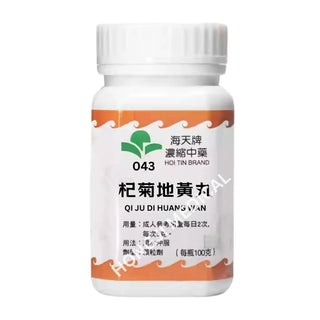
When wind-heat attacks upward or Liver yang rises, headache, red eyes, and dizziness are common. Ju Hua is sweet, bitter, and slightly cold. It disperses, clears, and brightens the eyes, which is why it appears in Sang Ju Yin and Qi Ju Di Huang Wan. It clears and courses more than it warms. Cold middle pain that likes warmth is injured further if more cooling tea is added.

Ju Hua is not a catch-all eye or anti-inflammatory flower. In wind-cold with no heat, or in spleen-stomach cold, using it alone can injure middle yang. White or yellow, tea or formula, should follow constitution and a licensed Chinese medicine practitioner’s pattern diagnosis.

Ju Hua Chrysanthemum Flower

Ju Hua: Materia Medica Profile

Identification & Quality Standard

Flos Chrysanthemi

Botanical Origin

The dried flower head of Chrysanthemum morifolium Ramat.(Asteraceae). Divided based on the different regions and processing methods into ‘Hang ju’, ‘Bo ju’, ‘Gong ju’, ‘Chu ju’.

Production Regions

Primarily produced in the Chinese provinces of Zhejiang, Anhui.

Quality Requirements

Superior medicinal material has intact flowers, fresh color, clear aromatic odor.

Macroscopic Features

Hang ju: flower head is flat spherical, irregular spherical or slightly flat, diameter often 1.5~4cm; involucres is formed by 3~4 layers of bracts, outer layers are numerous ligulate flowers, off-white or yellow, center is tubular flowers; clear aromatic odor, sweet and slightly bitter taste. Bo ju: inverse conical or cylindrical shape, sometimes slightly pressed flat in to a fan shape, diameter is 1.5~3cm, scattered; ligulate flowers are at the outer layers; pistil is off-white or pale yellowish-white, erect and raise upwards; scattered golden glands; numerous tubular flowers are bisexual, at the center, hidden by the lingulate flowers, yellow, with 5 teeth-cracks on the tip; light, clear aromatic odor; slightly bitter taste. Gong ju: lingulate flower is white or off-white, involucres is disc-like, 4~5 layers of angular oval shaped bracts, green, with green pedicel; center of flower is small, even, not scattered; soft texture, aromatic odor; sweet and slightly bitter taste. Chu ju: irregular spherical or flat spherical shape, diameter is 1.5~2.5cm; ligulate flower is off-white, irregular curved, rolls inward, the edges are wrinkled, sometimes pale brown gland spots can be seen; tubular flowers are mostly hidden; this medicinal material has the most tight petals among Chrysanthemi Flos.

Authentic Regions and Quality Identification

Traditionally, the highest quality Ju Hua (Chrysanthemum) is sourced from provinces like Zhejiang, Anhui, and Henan.

  • Quality Markers: A premium batch features intact flower shapes, tightly packed petals, a bright color, and a fresh, clear fragrance. The texture should be light and completely dry.
  • Raw vs. Processed: Sheng Ju Hua retains its original flower shape and lighter color, while Zhi Ju Hua takes on a slightly darker hue and a richer, more mellow aroma.
  • Important Distinction: Be careful not to confuse it with Ye Ju Hua (Wild Chrysanthemum). The wild variety has much smaller flowers and a sharp, intense smell; it serves a different medicinal purpose and is not a direct substitute.

Traditional Properties & Historical Lineage

Nature, Flavour & Channel Tropism

Bitter; Slightly coldLungLiver

1. Historical Records in Materia Medica

This herb is highly revered in classical Chinese medical texts:

  • Shen Nong Ben Cao Jing: Ranked as a top-tier herb, it is noted for managing dizziness, swelling, eye tearing, and wind-dampness issues.
  • Ming Yi Bie Lu: Highlights its ability to clear heat in the chest, soothe the stomach and intestines, and regulate the limbs.
  • Ben Cao Gang Mu: Emphasizes its use in treating "head wind" (headaches), brightening the eyes, and clearing toxins.

2. Evolution of TCM Understanding

While ancient texts praised its wide-ranging benefits, modern TCM practitioners have refined its specific uses:

  • Primary Focus: It is widely agreed that Ju Hua (Chrysanthemum) is best for clearing the head and eyes. It is the go-to herb for external "wind-heat" (like the early stages of a warm cold) or "Liver heat" (which often presents as red, dry, or painful eyes).
  • Limitations: Because it is slightly cold, practitioners warn against long-term daily use by individuals with a weak, cold digestive system, as it may cause stomach upset.
  • Not a Universal Tonic: Although a few historical scholars believed specific processed versions had tonifying (nourishing) effects, today it is strictly viewed as a clearing and dispersing herb, not a general daily supplement for everyone.
Ju Hua Chrysanthemum Flower

Core Efficacies & Traditional Applications

Traditional Functions

Clears heat, resolves toxin, calms the liver, brightens eyes, dispels wind, disperses heat.

1. Primary Focus: Dispersing Wind-Heat

In traditional medicine, the main function of Ju Hua (Chrysanthemum) is to disperse wind-heat, making it excellent for relieving head and facial discomfort caused by external pathogens.

  • Common Uses: It is typically used for headaches, mild fever, a slightly sore throat, and dry eyes associated with a wind-heat cold.
  • Herb Combinations: To boost its dispersing effects, it is often paired with Sang Ye (Mulberry Leaf) or Bo He (Peppermint). For throat discomfort, it works well with Jie Geng (Balloon Flower Root) and Gan Cao (Licorice Root).
  • Caution: If you have a weak and cold constitution (you often feel cold or have cold hands and feet), you should avoid using it on your own, as its cooling nature can make these symptoms worse.

2. Secondary Focus: Clearing the Head and Eyes

Another key benefit is its ability to clear heat from the Liver meridian, which often rises and affects the head and face.

  • Common Uses: It is highly effective for red, swollen, or dry eyes, mild dizziness, and a feeling of heat in the face.
  • Herb Combinations: It is frequently paired with Gou Qi (Goji Berry) and Jue Ming Zi (Cassia Seed) to gently nourish and clear the eyes, or with Sang Ye (Mulberry Leaf) for a combined cooling effect.
  • Caution: People with a weak digestive system or those prone to frequent diarrhea should not use it long-term, as it may further weaken the spleen and stomach.

3. Common Herb Pairing: Ju Hua and Gou Qi

The most famous herbal pairing is Ju Hua (Chrysanthemum) and Gou Qi (Goji Berry).

  • How It Works: Ju Hua clears wind-heat and soothes the eyes, while Gou Qi nourishes the yin of the Liver and Kidneys.
  • Best For: This synergistic pair is perfect for dizziness and dry eyes caused by wind-heat combined with underlying Liver and Kidney yin deficiency.
  • Note: Even though this is a common wellness tea, it is still best to use it under a practitioner's guidance to ensure it matches your specific body type.
Ju Hua Chrysanthemum Flower

Modern Research

Modern research offers useful context, but Traditional Chinese Medicine prescribes on whole-pattern diagnosis rather than isolated compounds.

1. Main Chemical Components

Modern science has identified several active compounds in the plant, including flavonoids, essential oils, and triterpenoids. Lab studies show these compounds possess mild antioxidant activity. In animal testing, specific doses of the extract have shown a positive regulating effect on eye-related metrics. However, comprehensive human clinical trials are still needed to confirm exactly how it works in the human body.

2. Modern Pharmacological Focus

Current Western pharmacological research primarily looks at two areas:

  • Antioxidant Effects: Driven mostly by the flavonoids, which have been shown to help clear free radicals in controlled test-tube environments.
  • Anti-inflammatory Potential: Driven by the essential oils, which display a trend toward regulating inflammation markers in preliminary studies.

3. Limitations of Modern Research

While modern lab results are promising, it is important to view them in context:

  • Lab vs. Life: Results from test tubes and animal models cannot be directly translated to human clinical results.
  • Dosage Disconnect: Scientific experiments often use highly concentrated, isolated extracts. These concentrations are vastly stronger than the doses you get from drinking chrysanthemum tea or taking a standard TCM herbal decoction.
  • The Holistic Approach: TCM relies on the synergistic effect of the entire herb. Judging the efficacy of Ju Hua (Chrysanthemum) based on one isolated chemical component fails to capture how the whole plant interacts with the human body.

Comparing Similar Herbs

1. What They Have in Common

Ju Hua (Chrysanthemum) and Bo He (Peppermint) share several traits: both disperse wind-heat, treat headaches and sore throats caused by early-stage colds, and are commonly used in home remedies. Both also require careful dosage adjustments based on individual body types.

2. Core Differences

  • Nature and Action: Ju Hua is slightly cold and works gently and persistently to clear heat. Bo He is cool and pungent, with a much stronger and faster dispersing action.
  • Focus and Strengths: Ju Hua excels at clearing the head and eyes, making it ideal for chronic or seasonal dry eyes and mild dizziness. Bo He is much better at aggressively pushing out external pathogens, making it ideal for acute symptoms like a sudden sore throat, stuffy nose, or headache.
  • Cautions: Avoid Ju Hua if you have a cold digestive system or frequent diarrhea. Avoid Bo He if you have heavy sweating or severe weakness in the spleen and stomach.

3. A One-Sentence Summary

Simply put, Ju Hua (Chrysanthemum) gently clears and soothes chronic head and eye discomfort, while Bo He (Peppermint) quickly pushes out acute cold symptoms from the body's surface.

Ju Hua Chrysanthemum Flower

Classical Formulas Containing Ju Hua

+2 more

Formulas vs. Single Herbs

  • Synergy is Key: A formula is a balanced team. The healing power comes from how the herbs interact, so a single herb cannot simply replicate a full formula's effects.
  • Holistic Balance: The exact dosage and combination in a formula affect the entire body. Never try to mix or alter these formulas at home based on internet articles.

Diet & Daily Home Use

1. Home Herbal Teas

  • Ju Hua and Gou Qi Tea:
    • Ingredients: 3 grams of Ju Hua (Chrysanthemum), 5 grams of Gou Qi (Goji Berry).
    • Method: Steep in a cup with warm water.
    • Best For: Gentle daily relief for seasonal dry eyes and mild dizziness.
    • Not For: People with cold digestion or chronic diarrhea. Drink 2 to 3 times a week, one cup at a time.
  • Ju Hua and Pear Drink:
    • Ingredients: 5 grams of Ju Hua (Chrysanthemum), half a pear (chopped).
    • Method: Boil the pear in water for 10 minutes, add the Ju Hua, boil for 2 more minutes, and drink warm.
    • Best For: Soothing a dry, scratchy throat and facial heat during autumn and winter.
    • Not For: People with a cold stomach or frequent stomachaches. Drink 1 to 2 times a week, about half a cup.

2. Decoction and Processing Differences

Raw Ju Hua is stronger at dispersing wind-heat, while processed versions are milder and better for long-term daily wellness. At home, there is no need to boil it for a long time; simple steeping in warm water works best, as boiling destroys its beneficial essential oils. Note: Daily tea dosages (3 to 5 grams) are much smaller than clinical prescription dosages (10 grams) and cannot be swapped directly.

3. Dosage and Usage Cycle

  • Dosage: Clinical prescriptions usually use 6 to 10 grams. For home teas, stick to a lighter dose of 3 to 5 grams.
  • Cycle: Do not drink it continuously for more than 2 weeks. Stop once your symptoms improve. Special groups (pregnant women, children, the elderly) must consult a professional first.
Ju Hua Chrysanthemum Flower

Contraindications & Safety Warnings

1. Who Should Avoid It

  • Cold Constitutions: People who easily feel cold, have cold hands and feet, or suffer from chronic diarrhea.
  • Pregnant & Nursing Women: Should only use under strict medical guidance.
  • Children & Seniors: Should use adjusted, smaller doses under supervision.
  • Organ Issues: Anyone with liver or kidney function abnormalities should consult a doctor.
  • Allergies: Avoid if you are allergic to plants in the Asteraceae (daisy/chrysanthemum) family.

2. Drug Interactions and Diet

Ju Hua (Chrysanthemum) may interact with blood thinners, blood pressure medications, and blood sugar medications. If you are taking these or other prescription drugs, consult your doctor or pharmacist to safely space out your intake and avoid negative interactions.

3. Adverse Reactions and Overdose Risks

Drinking too much can upset your stomach, leading to mild cramps or diarrhea. If you experience clear allergic reactions (such as rashes or itching), continuous vomiting, breathing difficulties, confusion, or a rapid worsening of symptoms, stop using it immediately and seek emergency medical help. Always stick to recommended daily doses to keep your body balanced.

Frequently Asked Questions About Ju Hua

What is Ju Hua? Are Hang Ju, Gong Ju, Ye Ju Hua and Tai Ju the same?
Official Ju Hua (菊花) is the dried flower head of Chrysanthemum morifolium. The pharmacopoeial name is Chrysanthemi Flos. By origin and processing it is divided into Bo, Chu, Gong, Hang and Huai chrysanthemum, one monograph. Ye Ju Hua is the wild species C. indicum, a separate drug—more bitter-cold, stronger to clear heat and treat sores; classics say “true chrysanthemum lengthens life, wild chrysanthemum drains a person.” Tai Ju is the unopened Hang-bai bud, slightly colder. Write Ju Hua and name a cultivated grade; do not swap in wild chrysanthemum, “imperial gold silk” tea or florist blooms.
What are the TCM properties and traditional uses of Ju Hua?
According to the Chinese Pharmacopoeia, Ju Hua is sweet, bitter and slightly cold, enters the Lung and Liver channels, and acts to disperse wind and clear heat, calm the Liver and brighten the eyes, and clear heat and resolve toxin. It is used for wind-heat common cold, headache and dizziness, red swollen painful eyes, dim vision, and sores. Sweet-bitter and slightly cold—suited to wind-heat harassing the upper body and Liver-heat eye disease, not to Spleen-Stomach deficient cold or Qi-deficient loose stool.
How do you choose Hang, Gong and Chu chrysanthemum? Tea versus decoction?
Hang Ju is sweet-fragrant and often used to clear the throat. Gong Ju is clearer in scent and more marked to calm the Liver and brighten the eyes. Chu Ju is stronger to disperse wind-heat. Decoction is usually 5–10 g; as tea use a small short course and do not drink overnight liquor. Tai Ju is richer in constituents and slightly colder—do not overdo it. Wild chrysanthemum is not a daily flower tea.
What is the usual dosage? Can it be steeped daily to clear fire and brighten the eyes?
The pharmacopoeial decoction dose is 5–10 g. Wind-heat and Liver-heat dry eyes may be a short tea, not an unlimited four-season “fire-down water.” Spleen-deficient Stomach cold, loose stool and a wind-cold cold grow more injured. Screen-fatigue still needs Liver heat versus Qi-Blood lack sorted; do not rely on chrysanthemum alone.
What are the contraindications? Can it be used in pregnancy?
Use caution in Spleen-Stomach deficient cold and Qi-deficient loose stool; avoid if allergic to Asteraceae. Slightly cold and dispersing, excess can cause abdominal pain and diarrhea. Pregnancy is not an absolute ban, but a weak middle should not live on the tea. Wild chrysanthemum more injures Stomach Qi and must not replace cultivated Ju Hua as a long drink. Stop if cold epigastrium, loose stool or rash appears.
Can Ju Hua disperse wind-heat, brighten the eyes and lower blood pressure?
It can help. Wind-heat cold and sore throat join mulberry leaf and apricot kernel in Sang Ju Yin. Liver-Kidney Yin lack with dim vision joins goji and prepared rehmannia in Qi Ju Di Huang Wan. Red eyes may be washed. Liver-Yang headache and dizziness may join abalone shell and Uncaria. It clears wind-heat and Liver heat—not a specific for every cold, every myopia or every hypertension. Sudden visual loss and severe pain are eye emergencies.
Can Ju Hua be drunk daily as an eye, fire-clearing or anti-aging tea?
Wind-heat and Liver heat may be a short tea; middle-cold loose stool only grows more draining. “Chrysanthemum against aging and pressure” does not replace eye care and standard hypertension treatment. Commercial teas often mix rock sugar and goji—people with diabetes should read the label. Wild chrysanthemum and Kunlun snow chrysanthemum are colder and must not replace Hang or Gong Ju as a long drink. Dispersing wind and brightening the eyes should name the cultivar and a dose.
How do you choose among Ju Hua, Sang Ye, Jue Ming Zi, Xia Ku Cao and Ye Ju Hua?
Cultivated chrysanthemum is sweet-bitter and slightly cold: evenly disperses wind-heat and calms the Liver to brighten the eyes. Mulberry leaf is bitter-sweet-cold: more opening to disperse wind-heat and clear the Lung while it moistens dryness. Cassia seed is sweet-bitter and slightly cold: clears the Liver and brightens the eyes and also moistens the intestine. Prunella is acrid-bitter-cold: clears Liver fire and dissipates binds, leaning to scrofula and night eye pain. Wild chrysanthemum is bitter-acrid and slightly cold: fiercer to clear heat, resolve toxin and treat sores. Wind-heat red eyes favor Ju Hua and Sang Ye; dry-intestine constipation favors cassia seed; boils favor Ye Ju Hua. They may be paired; all must be lightened when the stool is already cold and loose.
Which herbs is Ju Hua combined with? What are the representative formulas?
Wind-heat cough and sore throat join mulberry leaf, apricot kernel and Platycodon in Sang Ju Yin. Liver-Kidney Yin lack with dim vision joins goji, prepared rehmannia and cornus in Qi Ju Di Huang Wan. Ascendant Liver Yang may join Uncaria and white peony. Write Ju Hua or a named origin grade; do not confuse it with Ye Ju Hua or florist chrysanthemum.
How do you choose and store Ju Hua?
Choose intact heads, fresh color without mold, a clear aroma and no insects or debris; Hang Ju is larger, Gong Ju has a green receptacle and a clear scent. Black damp lots, sulfur sting and excess crumb are inferior. Store sealed, dry, away from light and damp. Buy pharmacopoeial Ju Hua with an origin grade; do not replace the decoction drug with wild-chrysanthemum tea bags, dyed cut flowers or anonymous “imperial chrysanthemum.”

Medical Disclaimer — This article is provided for educational purposes only and describes traditional Chinese medicine concepts. It is not medical advice, and it is not intended to diagnose, treat, cure or prevent any disease. Always consult a qualified practitioner before using any herb, particularly if you are pregnant, nursing, taking medication or managing a diagnosed condition.

More Chinese Herbs

Login

Forgot your password?

Don't have an account yet?
Create account

Ju Hua (Chrysanthemum Flower): Disperse Wind-Heat, Calm the Liver, and Brighten the Eyes