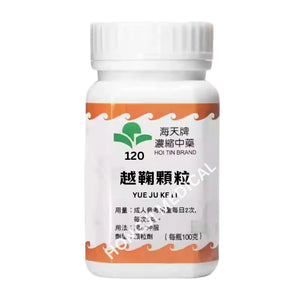
Yue Ju Wan: Classic TCM Formula for the Six Stagnations, Chest Oppression, Acid Reflux & Six Stagnations

Yue Ju Wan (越鞠丸), known in English as Escape Restraint Pill, is a classical TCM formula by Zhu Dan-xi for treating the Six Stagnations (Qi, Blood, Phlegm, Fire, Food, and Dampness). It is particularly indicated for chest oppression, epigastric fullness, belching, acid reflux, nausea, and emotional symptoms such as irritability and depression caused by multiple stagnations, especially from stress or emotional constraint. In modern clinical practice, Yue Ju Wan is widely used for stress-related digestive and emotional disorders with combined stagnations. By simultaneously moving Qi, invigorating Blood, transforming phlegm, clearing fire, promoting digestion, and drying dampness, it effectively resolves complex patterns involving multiple types of stagnation.

Yue Ju Wan: Regulating Qi, Resolving Depression and Smoothing Qi Movement, Improving Functional Dyspepsia and Anxiety-Related Gastrointestinal Discomfort | HJMEDICAL

I. Origins and History

1. Classical Records

Yue Ju Wan originates from the Danxi Xinfa (Teachings of Danxi), authored by Zhu Danxi of the Jin-Yuan period. Zhu Danxi was one of the celebrated Four Great Masters of the Jin-Yuan period in the history of Chinese medicine, advocating the academic view that "yang is perpetually in excess and yin is perpetually insufficient," and emphasising the nourishment of yin and the draining of fire in treatment. Yue Ju Wan stands as a classical work among his many formulas. In the Danxi Xinfa, Yue Ju Wan was designated as the principal formula for treating the pattern of the "Six Stagnations." The text records: "Yue Ju Wan treats the Six Stagnations. Xiangfu (vinegar-fried), Cangzhu (soaked in rice-washing water and fried), Fuxiong, Shenqu (fried), and Zhizi (fried), each in equal portions. Made into water-bound pills, fifty pills per dose, taken with ginger decoction." These few words alone established Yue Ju Wan's important place within the discipline of Chinese medicine formula studies.

2. Historical Evolution

Over time, Yue Ju Wan continued to develop and evolve through clinical application. While following the original formula, later physicians made adjustments and additions according to differing conditions and personal experience. For instance, some physicians would appropriately increase the dosage of certain herbs according to the patient's specific symptoms, or incorporate other synergistic herbs to enhance the formula's efficacy. In terms of dosage form, it also gradually developed from the original water-bound pill into honey pills, powders, and other forms, meeting the needs of different patients and clinical scenarios. Its scope of application has likewise expanded beyond the originally recorded "Six Stagnations" pattern; through the continuous exploration and practice of later physicians, it has gradually broadened to encompass numerous conditions arising from emotional disturbance and impeded qi movement, becoming one of the commonly used qi-regulating and depression-resolving formulas in Chinese medicine clinical practice.

Yue Ju Wan: Regulating Qi, Resolving Depression and Smoothing Qi Movement, Improving Functional Dyspepsia and Anxiety-Related Gastrointestinal Discomfort | HJMEDICAL

II. Herb Composition (Sovereign, Minister, Assistant, Envoy)

1. Chief Herb — Xiangfu (Cyperus Rhizome)

Flavour, Nature and Channel Tropism

Xiangfu is acrid, slightly bitter, and slightly sweet in flavour and neutral in nature, entering the Liver, Spleen, and Triple Burner channels.

Actions

Xiangfu has the actions of soothing the liver and regulating qi, and regulating menstruation to relieve pain. It can travel through all twelve channels and is skilled at soothing the liver and resolving depression, making it the foremost herb for soothing the liver and regulating qi. For symptoms such as distending pain in the chest and hypochondrium, distending pain in the epigastrium and abdomen, and hernial pain caused by liver qi stagnation, Xiangfu provides excellent regulatory benefit. In gynaecology, Xiangfu is commonly used to treat menstrual irregularities, dysmenorrhoea, and breast distension and pain caused by liver qi stagnation, regulating qi and blood to ensure free flow of qi movement, thereby achieving the goal of regulating menstruation and relieving pain.

Significance Within Yue Ju Wan

As the chief herb, Xiangfu in Yue Ju Wan primarily targets qi stagnation — the key pathomechanism. Qi stagnation is the important factor giving rise to the other stagnations; Xiangfu can soothe the liver and regulate qi, allowing qi to flow freely. When qi flows, blood flows; when qi flows, the stagnating pathogens of phlegm, fire, dampness, and food are also more readily dispersed — thereby fulfilling the leading role in treating the "Six Stagnations."

2. Deputy Herb — Cangzhu (Atractylodes Rhizome, Black)

Flavour, Nature and Channel Tropism

Cangzhu is acrid and bitter in flavour and warm in nature, entering the Spleen, Stomach, and Liver channels.

Actions

Cangzhu has the actions of drying dampness and strengthening the spleen, and dispelling wind and dispersing cold. It can dry dampness and move the spleen, eliminating the dampness pathogen from the spleen and stomach and restoring their transforming and transporting function. For symptoms such as epigastric and abdominal fullness and distension, poor appetite, nausea and vomiting, and a white greasy tongue coating caused by dampness obstructing the middle burner, Cangzhu produces marked therapeutic effects. Simultaneously, Cangzhu can also dispel wind and disperse cold, and may be used to treat wind-cold-damp painful obstruction and related conditions.

Significance Within Yue Ju Wan

Cangzhu targets the pathomechanism of dampness stagnation. Internal obstruction by dampness pathogen can cause disordered transformation and transport in the spleen and stomach and impeded qi movement, in turn giving rise to numerous conditions. Cangzhu dries dampness and strengthens the spleen, restoring normal spleen-stomach transforming and transporting function and eliminating the dampness pathogen, which helps relieve qi stagnation. Acting synergistically with Xiangfu, it reinforces the action of regulating qi, resolving depression, and eliminating the various stagnations — hence its role as deputy herb.

3. Assistant Herb — Chuanxiong (Chuanxiong Rhizome)

Flavour, Nature and Channel Tropism

Chuanxiong is acrid in flavour and warm in nature, entering the Liver, Gallbladder, and Pericardium channels.

Actions

Chuanxiong has the actions of activating blood and moving qi, and dispelling wind to relieve pain. It is the qi herb within the blood, capable of both activating blood and resolving stasis, and moving qi to relieve pain. For conditions such as stabbing pain in the chest and hypochondrium, headache, and dysmenorrhoea caused by qi stagnation and blood stasis, Chuanxiong produces marked therapeutic effects. Its wind-dispelling and pain-relieving action is also commonly used to treat wind-cold headache and wind-damp painful obstruction; it ascends to the head and eyes, descends to the blood sea, and reaches laterally to the four limbs, making it a commonly used herb for treating various pain conditions.

Significance Within Yue Ju Wan

Chuanxiong targets blood stagnation. Blood stagnation often mutually influences qi stagnation — impeded qi flow can cause blood to move sluggishly and stagnate, while blood stasis in turn further aggravates the obstruction of qi movement. Chuanxiong activates blood and moves qi, helping to eliminate blood stagnation and ensure free flow of qi and blood. Combined with Xiangfu and Cangzhu, it jointly regulates the circulation of qi and blood and promotes the dispersal of the various stagnations — hence its role as assistant herb.

4. Assistant Herb — Zhizi (Gardenia Fruit)

Flavour, Nature and Channel Tropism

Zhizi is bitter in flavour and cold in nature, entering the Heart, Lung, and Triple Burner channels.

Actions

Zhizi has the actions of draining fire and relieving vexation, clearing heat and disinhibiting dampness, and cooling blood and resolving toxicity. It can clear and drain fire from the Triple Burner, providing excellent heat-clearing and vexation-relieving benefit for symptoms such as vexation, depression, and restless agitation. In clearing heat and disinhibiting dampness, it may be used to treat damp-heat jaundice and painful urinary dribbling conditions. Simultaneously, Zhizi also has the action of cooling blood and stopping bleeding, and may be used to treat haematemesis and epistaxis caused by reckless movement of hot blood.

Significance Within Yue Ju Wan

Zhizi targets fire stagnation. Fire stagnation mostly arises from qi stagnation transforming into fire, or dampness stagnation transforming into heat. Zhizi drains fire and relieves vexation, clearing the fire-heat pathogen from within the body and allowing qi and fire to descend, which helps relieve qi stagnation. Acting synergistically with the other herbs, it reinforces the formula's heat-clearing and depression-resolving efficacy — hence its role as assistant herb.

5. Envoy Herb — Shenqu (Medicated Leaven)

Flavour, Nature and Channel Tropism

Shenqu is sweet and acrid in flavour and warm in nature, entering the Spleen and Stomach channels.

Actions

Shenqu has the action of promoting digestion and harmonising the stomach. It can resolve food accumulation, promoting the spleen and stomach's digestion and absorption of food. For symptoms such as epigastric and abdominal fullness and distension, poor appetite, and belching of rotten odour with acid regurgitation caused by food stagnation, Shenqu produces good therapeutic effects. Through promoting digestion and guiding out stagnation, spleen-stomach function is restored to normal, which helps ensure free flow of qi movement.

Significance Within Yue Ju Wan

Shenqu targets food stagnation. Undigested food accumulation can cause disordered spleen-stomach transformation and transport and obstructed qi movement, in turn giving rise to qi stagnation and other conditions. Shenqu promotes digestion and harmonises the stomach, eliminating food stagnation and restoring spleen-stomach function, which helps ensure overall smooth qi movement. Within the formula, it performs the role of harmonising all the herbs and enabling the various stagnations to be eliminated — hence its role as envoy herb.

Yue Ju Wan: Regulating Qi, Resolving Depression and Smoothing Qi Movement, Improving Functional Dyspepsia and Anxiety-Related Gastrointestinal Discomfort | HJMEDICAL

III. Pathomechanism, Actions, and Indications

1. Pathomechanism

The pathomechanism targeted by Yue Ju Wan is primarily the Six Stagnations — qi, blood, phlegm, fire, dampness, and food. Impeded movement of the body's qi mechanism is the key factor giving rise to the Six Stagnations. Emotional disturbance — such as prolonged depression, anxiety, and anger — can cause liver qi to become constrained; when qi is stagnant, blood flow becomes impeded, in turn forming blood stagnation. Prolonged qi stagnation can also affect spleen-stomach transforming and transporting function, leading to internal generation of dampness pathogen and the formation of dampness stagnation; dampness stagnation transforming into heat can form fire stagnation; failure of qi to move fluids can cause them to gather into phlegm, forming phlegm stagnation; dietary irregularity, overeating, or excessive consumption of rich, greasy foods can lead to undigested food accumulation, forming food stagnation. These six stagnation patterns mutually influence one another in a vicious cycle, giving rise to various symptoms of discomfort throughout the body.

2. Actions

Yue Ju Wan has the actions of regulating qi and resolving depression, and widening the middle to eliminate fullness. Within the formula, Xiangfu soothes the liver and regulates qi, serving as the primary herb for treating qi stagnation; Cangzhu dries dampness and strengthens the spleen, targeting dampness stagnation; Chuanxiong activates blood and moves qi, targeting blood stagnation; Zhizi drains fire and relieves vexation, targeting fire stagnation; Shenqu promotes digestion and harmonises the stomach, targeting food stagnation. Used in combination, the herbs regulate the relationships among qi, blood, phlegm, fire, dampness, and food, ensuring free flow of qi movement and resolution of the various stagnations, thereby achieving the effect of widening the middle and eliminating fullness.

3. Indications

Yue Ju Wan is indicated for the pattern of the Six Stagnations. Symptoms include glomus and oppression in the chest and diaphragm, distending pain in the epigastrium and abdomen, belching of rotten odour with acid regurgitation, nausea and vomiting, and indigestion. These symptoms mostly arise from factors such as emotional disturbance and dietary irregularity causing qi movement to become stagnant, which in turn gives rise to multiple pathological changes. Glomus and oppression in the chest and diaphragm represent a manifestation of qi stagnation, with impeded qi movement obstructed between the chest and diaphragm; distending pain in the epigastrium and abdomen results from qi stagnation affecting spleen-stomach qi movement, causing disordered spleen-stomach transformation and transport; belching of rotten odour with acid regurgitation, nausea and vomiting, and indigestion are mostly associated with food stagnation, with undigested food accumulation causing stomach qi to counterflow upward. Yue Ju Wan, through regulating the Six Stagnations, produces good therapeutic results for these symptoms.

Yue Ju Wan: Regulating Qi, Resolving Depression and Smoothing Qi Movement, Improving Functional Dyspepsia and Anxiety-Related Gastrointestinal Discomfort | HJMEDICAL

IV. Formula Analysis

1. Qi Stagnation as the Core

Qi stagnation plays the key role in the formation and development of the Six Stagnations. When qi flows, blood flows; when qi flows, fluids distribute normally; when qi flows, spleen-stomach transforming and transporting function is normal. Xiangfu, as the chief herb, soothes the liver and regulates qi, directly targeting qi stagnation — the core pathomechanism. It allows liver qi to flow smoothly and qi movement to be free, thereby creating the conditions for resolving the other stagnations. Once qi stagnation is relieved, blood flow becomes free, and the dampness, fire, phlegm, and food pathogens also more readily disperse.

2. Five-Phase Generation, Restraint, and Transformation

From the perspective of the five-phase relationships of generation, restraint, and transformation: qi belongs to wood, blood belongs to fire, dampness belongs to earth, phlegm belongs to water, food belongs to metal; fire belongs to the heart, the liver belongs to wood, the spleen belongs to earth, the lungs belong to metal, and the kidneys belong to water. Qi stagnation means wood fails to course earth, which can lead to dampness stagnation; dampness stagnation means earth fails to generate metal, which can lead to phlegm stagnation; qi stagnation transforming into fire can lead to fire stagnation; failure of qi to move blood can lead to blood stagnation; dietary accumulation can lead to food stagnation. In Yue Ju Wan, Xiangfu soothes the liver and regulates qi, regulating the wood qi; Cangzhu dries dampness and strengthens the spleen, cultivating and supplementing the earth qi; Chuanxiong activates blood and moves qi, regulating the fire qi; Zhizi drains fire and relieves vexation, clearing and descending the fire qi; Shenqu promotes digestion and harmonises the stomach, transforming and transporting the metal qi. Through regulating the generation, restraint, and transformation relationships among the five phases, the goal of regulating the Six Stagnations is achieved.

3. Interrelation of Qi, Blood, Phlegm, Fire, Dampness, and Food

Qi, blood, phlegm, fire, dampness, and food are interrelated and mutually influential. Qi stagnation can cause impeded blood flow, forming blood stagnation; qi stagnation transforming into fire can form fire stagnation; failure of qi to move fluids can cause them to gather into phlegm, forming phlegm stagnation; qi stagnation affecting spleen-stomach transformation and transport can lead to undigested food accumulation, forming food stagnation. Blood stagnation, fire stagnation, phlegm stagnation, and food stagnation, in turn, further aggravate qi stagnation. Yue Ju Wan, through the comprehensive regulation of these six pathological factors, restores balance among their relationships, thereby eliminating the various stagnation patterns. For example, Chuanxiong activates blood and moves qi, eliminating blood stagnation and ensuring free flow of qi and blood, which helps relieve qi stagnation; Zhizi drains fire and relieves vexation, eliminating fire stagnation and allowing qi and fire to descend, which also benefits the improvement of qi stagnation; Cangzhu dries dampness and strengthens the spleen, eliminating dampness stagnation and restoring normal spleen-stomach transformation and transport, which reduces the generation of food stagnation while also helping disperse qi stagnation.

Yue Ju Wan: Regulating Qi, Resolving Depression and Smoothing Qi Movement, Improving Functional Dyspepsia and Anxiety-Related Gastrointestinal Discomfort | HJMEDICAL

V. Comparison with Related Formulas

1. Comparison with Chaihu Shugan San

Composition and Actions

Chaihu Shugan San is composed of Chaihu (Bupleurum Root), Chenpi (Dried Tangerine Peel), Chuanxiong (Chuanxiong Rhizome), Xiangfu (Cyperus Rhizome), Zhike (Bitter Orange Fruit), Shaoyao (Peony Root), and Gancao (Licorice Root), with the actions of soothing the liver and regulating qi, and activating blood to relieve pain. Compared with Yue Ju Wan, Chaihu Shugan San places greater emphasis on soothing the liver and resolving depression, primarily targeting the single pathomechanism of liver qi stagnation. Within the formula, Chaihu serves as the chief herb with a relatively strong liver-soothing and depression-resolving potency, combined with qi-regulating herbs such as Xiangfu and Zhike to reinforce the liver-soothing and qi-regulating action, together with Chuanxiong to activate blood and relieve pain, Shaoyao to nourish blood and emolliate the liver, and Gancao to harmonise all the herbs. Yue Ju Wan, by contrast, comprehensively regulates the Six Stagnations of qi, blood, phlegm, fire, dampness, and food, with broader efficacy.

Applicable Symptoms

Chaihu Shugan San is suited to symptoms such as hypochondriac pain, chest oppression with a preference for sighing, and emotional depression or irritability caused by liver qi stagnation. Yue Ju Wan, beyond qi-stagnation-related symptoms, is also suited to presentations accompanied by epigastric and abdominal distending pain, belching of rotten odour with acid regurgitation, nausea and vomiting, and indigestion, reflecting multiple manifestations of the various stagnation patterns.

2. Comparison with Banxia Houpo Tang

Composition and Actions

Banxia Houpo Tang is composed of Banxia (Pinellia), Houpo (Magnolia Bark), Fuling (Poria), Shengjiang (Fresh Ginger), and Suye (Perilla Leaf), with the actions of moving qi to dissipate binds, and directing counterflow downward to transform phlegm. It primarily targets plum-pit qi caused by mutual binding of phlegm and qi in the throat, manifesting as a sensation of something obstructing the throat that cannot be coughed up or swallowed down, with fullness and oppression in the chest and diaphragm. Yue Ju Wan, by contrast, primarily regulates the Six Stagnations and is not limited to conditions of phlegm-qi mutual binding. Although Yue Ju Wan can also treat certain symptoms caused by qi stagnation generating phlegm, Banxia Houpo Tang is more specifically focused on the particular pathomechanism of phlegm-qi mutual binding.

Herb Characteristics

In Banxia Houpo Tang, Banxia transforms phlegm and dissipates binds, directing counterflow downward and harmonising the stomach; Houpo moves qi and opens depression, descending qi and eliminating fullness; Fuling strengthens the spleen and percolates dampness, assisting Banxia in transforming phlegm; Shengjiang is acrid-warm and dissipates binds, harmonising the stomach and stopping vomiting; Suye is aromatic and moves qi, regulating the lungs and soothing the liver. Yue Ju Wan, by contrast, employs multiple herbs acting synergistically to comprehensively regulate the Six Stagnations, with a more comprehensive herb composition.

Yue Ju Wan: Regulating Qi, Resolving Depression and Smoothing Qi Movement, Improving Functional Dyspepsia and Anxiety-Related Gastrointestinal Discomfort | HJMEDICAL

VI. Clinical Applications

1. Digestive System Disorders

Chronic Gastritis

Yue Ju Wan may be used to treat chronic gastritis belonging to the pattern of liver qi stagnation with spleen-stomach disharmony. Patients typically present with epigastric distending pain, glomus and discomfort, frequent belching, and poor appetite. Within the formula, Xiangfu soothes the liver and regulates qi, relieving epigastric distending pain; Cangzhu dries dampness and strengthens the spleen, improving spleen-stomach transforming and transporting function and reducing glomus and discomfort; Shenqu promotes digestion and harmonises the stomach, improving appetite; Chuanxiong and Zhizi regulate qi, activate blood, clear heat, and drain fire, helping to eliminate epigastric qi stagnation, blood stasis, and constrained heat transformation.

Functional Dyspepsia

For functional dyspepsia presenting with epigastric and abdominal fullness and distension, belching, nausea, vomiting, and poor appetite reflecting food stagnation and qi stagnation, Yue Ju Wan produces good therapeutic results. Through regulating qi movement and promoting spleen-stomach transformation and transport, it eliminates food accumulation and relieves symptoms of indigestion. Clinical research has shown that Yue Ju Wan combined with other treatment methods can improve the treatment outcomes of functional dyspepsia and enhance patients' symptoms and quality of life.

2. Psychiatric and Neurological Disorders

Depression

Patients with depression commonly present with accompanying symptoms such as low mood, anxiety, insomnia, and poor appetite, mostly related to factors such as liver qi stagnation and impeded qi-blood circulation. Yue Ju Wan can soothe the liver and regulate qi, and regulate qi and blood, providing a degree of benefit in improving the emotional state of patients with depression. Modern research has found that Yue Ju Wan may exert its antidepressant effect through mechanisms such as regulating neurotransmitters and improving cerebral blood circulation. In clinical application, herbs may be added or removed appropriately according to the patient's specific symptoms, combined with psychotherapy, to improve the therapeutic outcome for depression.

Insomnia

The causes of insomnia are relatively complex, among which liver qi stagnation transforming into fire and interior disturbance from phlegm-heat are relatively common factors. Within Yue Ju Wan, Zhizi drains fire and relieves vexation; Xiangfu, Chuanxiong, and the other herbs regulate qi and activate blood, helping to improve insomnia symptoms caused by liver qi stagnation transforming into fire. For insomnia patients accompanied by symptoms such as epigastric and abdominal fullness and distension, a bitter taste in the mouth, dry throat, and restless agitation, Yue Ju Wan can provide a degree of regulatory benefit, stabilising the patient's emotions and improving sleep quality.

3. Gynaecological Disorders

Menstrual Irregularities

For menstrual irregularities of the liver qi stagnation type, presenting with an irregular menstrual cycle, menstrual flow either excessive or scanty, dark red menstrual colour with blood clots, breast distension and pain, and hypochondriac fullness and distension, Yue Ju Wan can ensure free flow of qi movement and harmonise qi and blood through soothing the liver and regulating qi, and regulating qi and blood — thereby improving the symptoms of menstrual irregularities. In clinical application, blood-nourishing and menstruation-regulating herbs such as Danggui (Angelica Root) and Shudi (Prepared Rehmannia Root) may be appropriately added according to the patient's specific condition to reinforce the menstruation-regulating effect.

Dysmenorrhoea

For dysmenorrhoea caused by liver qi stagnation with qi-blood stasis, manifesting as lower abdominal pain before or during menstruation that resists pressure, chest, hypochondriac, and breast distension and pain, impeded menstrual flow, and dark purple menstrual colour with clots, the Xiangfu and Chuanxiong within Yue Ju Wan regulate qi and activate blood, relieving liver qi stagnation, promoting qi-blood circulation, and eliminating stasis obstruction — thereby alleviating dysmenorrhoea symptoms. Taking Yue Ju Wan before the onset of dysmenorrhoea or in its early stage can provide a degree of preventive and therapeutic benefit.

Yue Ju Wan: Regulating Qi, Resolving Depression and Smoothing Qi Movement, Improving Functional Dyspepsia and Anxiety-Related Gastrointestinal Discomfort | HJMEDICAL

VII. Clinical Modifications

1. Predominant Qi Stagnation

When qi stagnation symptoms are more pronounced, the dosage of Xiangfu may be increased, or Chaihu (Bupleurum Root) and Yujin (Turmeric Tuber) may be added to reinforce liver-soothing and qi-regulating action. Chaihu reinforces the liver-soothing and depression-resolving action; Yujin moves qi, resolves depression, clears the heart, and cools blood — acting synergistically with Xiangfu to more effectively relieve qi stagnation symptoms. For example, for a patient with pronounced chest and hypochondriac distending pain and emotional depression, the Xiangfu dosage may be increased to 15 g, with Chaihu 10 g and Yujin 10 g added, to reinforce the qi-regulating and depression-resolving potency.

2. Predominant Blood Stagnation

When blood stagnation is pronounced, the dosage of Chuanxiong may be increased, or blood-activating and stasis-resolving herbs such as Taoren (Peach Kernel) and Honghua (Safflower) may be added. Taoren and Honghua have a relatively strong blood-activating and stasis-resolving action, effectively improving impeded blood flow. If the patient presents with stabbing pain and menstrual blood clots reflecting blood stagnation, the Chuanxiong dosage may be increased to 12 g, with Taoren 10 g and Honghua 10 g added, to reinforce the blood-activating, stasis-resolving, and stagnation-dispersing efficacy.

3. Predominant Dampness Stagnation

When dampness stagnation is more pronounced, the dosage of Cangzhu may be increased, or water-disinhibiting and dampness-percolating herbs such as Fuling (Poria) and Zexie (Alisma Rhizome) may be added. Fuling and Zexie have a marked water-disinhibiting and dampness-percolating action, reinforcing the dampness-dispelling effect. When the patient presents with pronounced dampness stagnation symptoms such as epigastric and abdominal fullness and distension, a thick greasy tongue coating, and heaviness of the limbs, the Cangzhu dosage may be increased to 15 g, with Fuling 12 g and Zexie 12 g added, to more effectively eliminate the dampness pathogen.

4. Predominant Fire Stagnation

When fire stagnation is pronounced, the dosage of Zhizi may be increased, or heat-clearing and fire-draining herbs such as Huanglian (Coptis Root) and Huangqin (Scutellaria Root) may be added. Huanglian and Huangqin clear heat, dry dampness, drain fire, and resolve toxicity, reinforcing the heat-clearing and fire-draining action. If the patient presents with prominent fire stagnation symptoms such as vexation, a bitter taste in the mouth, dry throat, and a red tongue with yellow coating, the Zhizi dosage may be increased to 12 g, with Huanglian 6 g and Huangqin 10 g added, to clear and drain fire from the Triple Burner and relieve the fire stagnation symptoms.

5. Predominant Phlegm Stagnation

When phlegm stagnation symptoms are prominent, phlegm-transforming and qi-regulating herbs such as Banxia (Pinellia) and Chenpi (Dried Tangerine Peel) may be added. Banxia dries dampness and transforms phlegm; Chenpi regulates qi and transforms phlegm — combined, they effectively transform phlegm. If the patient presents with pronounced phlegm stagnation symptoms such as cough with profuse sputum and fullness and oppression in the chest and diaphragm, Banxia 10 g and Chenpi 10 g may be added to reinforce the phlegm-transforming and qi-regulating efficacy.

6. Predominant Food Stagnation

When food stagnation is severe, the dosage of Shenqu may be increased, or digestion-promoting and accumulation-resolving herbs such as Shanzha (Hawthorn Fruit) and Maiya (Barley Sprout) may be added. Shanzha and Maiya have a relatively strong digestion-promoting and accumulation-resolving action, more effectively eliminating food accumulation. When the patient presents with prominent food stagnation symptoms such as epigastric and abdominal fullness and distension, belching of rotten odour with acid regurgitation, and poor appetite, the Shenqu dosage may be increased to 15 g, with Shanzha 12 g and Maiya 12 g added, to reinforce the digestion-promoting, stomach-harmonising, and food-stagnation-eliminating action.

Yue Ju Wan: Regulating Qi, Resolving Depression and Smoothing Qi Movement, Improving Functional Dyspepsia and Anxiety-Related Gastrointestinal Discomfort | HJMEDICAL

VIII. Dosage and Preparation

1. Traditional Method

An introduction to the water-bound pill preparation ratios for "Yue Ju Wan," the classical depression-resolving formula of Zhu Danxi, one of the Four Great Masters of the Jin-Yuan period, along with the meticulous traditional herb-processing requirements and the traditional practice of taking the pills with ginger decoction.

【Prescription Composition and Processing Requirements】
  • Xiangfu (Cyperus Rhizome, vinegar-fried): equal portions
  • Cangzhu (Atractylodes Rhizome, soaked in rice-washing water then baked and fried): equal portions
  • Fuxiong (Chuanxiong Rhizome): equal portions
  • Shenqu (Medicated Leaven, fried): equal portions
  • Zhizi (Gardenia Fruit, fried): equal portions
  • Fresh ginger decoction: appropriate amount (used as the guiding vehicle for administration)
Step 1: Herb Processing and Water-Bound Pill Preparation Following the classical method, meticulously process the five herbs: fry Xiangfu in vinegar; soak Cangzhu in rice-washing water, then remove and fry until dry; fry Shenqu and Zhizi separately until lightly scorched. Then combine the five processed herbs in equal proportions, grind into a fine powder, and form into traditional water-bound pills the size of mung beans using water as the binding medium (classically described as the size of rabbit droppings or small pills).
Step 2: Preparing the Ginger Decoction for Administration Before taking the pills, take several slices of fresh ginger and decoct with an appropriate amount of clean water into a warm ginger decoction. The ginger decoction, serving as the guiding vehicle, has the special action of warming the stomach, dispersing cold, and harmonising the medicinal nature, greatly assisting the body's absorption of the pill's constituents and thereby fully realising the therapeutic effect.
Step 3: Oral Administration by Pill Count Administer orally. The correct dosage is fifty pills (traditional water-bound pills) per dose, swallowed directly with the prepared warm ginger decoction.
💡 Characteristics of the Traditional Water-Bound Pill:

Yue Ju Wan is formulated as a water-bound pill, with no additional excipients, and is extremely convenient for long-term storage and carrying. Its medicinal force is released gently and steadily, making it well suited to the long-term management of the various stagnation patterns common to the fast-paced rhythms of modern life.

2. Modern Patent Medicine Concentrated Granules

A concentrated granule dosage form of Yue Ju Wan is also available today. Its administration method is relatively simple, generally taken by dissolving in water according to medical guidance based on the patient's condition and individual differences. Concentrated granules are produced from traditional Chinese herbs through extraction, concentration, and related processes, retaining the active constituents of the herbs, with a relatively small dosage that is convenient for patients to take. For example, adults generally take 1–2 sachets per dose, 2–3 times daily, dissolved in boiled water. Compared with the traditional pill form, the concentrated granule dosage form is more readily absorbed by the body, may take effect more quickly, and offers improved palatability, making it better suited to the fast-paced modern lifestyle.

Yue Ju Wan: Regulating Qi, Resolving Depression and Smoothing Qi Movement, Improving Functional Dyspepsia and Anxiety-Related Gastrointestinal Discomfort | HJMEDICAL

IX. Precautions and Contraindications

1. Dietary Restrictions

During the course of taking Yue Ju Wan, raw, cold, greasy, and spicy or irritating foods should be avoided. Raw, cold, and greasy foods are difficult to digest, adding burden to the spleen and stomach and affecting the absorption and efficacy of the herbs. Spicy and irritating foods readily assist fire and generate heat, which conflicts with the heat-clearing action of herbs such as Zhizi in Yue Ju Wan, and may cause internal fire to flare upward, aggravating the condition. For example, foods such as ice cream, fried foods, chilli peppers, and Sichuan peppercorns should be avoided.

2. Emotional Regulation

While taking Yue Ju Wan, patients should maintain a relaxed and comfortable mood and avoid extreme emotional fluctuations. This is because emotional disturbance is an important factor giving rise to the Six Stagnations; pronounced emotional fluctuations — such as prolonged anxiety, depression, and anger — can affect the herb's therapeutic efficacy and may even cause the condition to recur. Appropriate exercise, listening to music, and communicating with friends are helpful ways to regulate the emotions and maintain a positive mindset, which benefits recovery from illness.

3. Special Populations

Pregnant women should use Yue Ju Wan with caution. As many of the herbs in the formula have qi-moving and blood-activating actions, although its qi-regulating and depression-resolving efficacy helps regulate the body's qi movement, this may carry a degree of risk for pregnant women and could affect normal fetal development. The elderly, the weak, and those with spleen-stomach deficiency-cold should use this formula under medical guidance. These populations have relatively weaker spleen-stomach function and poorer tolerance to medication, requiring adjustment of dosage and method according to individual circumstances to ensure safe and effective use.

Yue Ju Wan: Regulating Qi, Resolving Depression and Smoothing Qi Movement, Improving Functional Dyspepsia and Anxiety-Related Gastrointestinal Discomfort | HJMEDICAL

X. Modern Research

1. Pharmacological Research

Yue Ju Wan is a Chinese patent medicine used to treat chronic hepatitis, intercostal neuralgia, cholecystitis, and related conditions arising from disordered ascending and descending and resolved by treating the various stagnations, possessing the actions of soothing the liver and resolving depression, and regulating qi movement.

Modern research has demonstrated that Yue Ju Wan possesses multiple pharmacological actions. In terms of regulating neurological function, it may improve emotional states such as depression and anxiety by modulating cerebral neurotransmitter levels — such as dopamine and serotonin — exerting a degree of regulatory effect on the nervous system. In terms of the digestive system, Yue Ju Wan can promote gastrointestinal peristalsis and increase gastric acid secretion, helping to improve symptoms such as indigestion and epigastric distending pain. It also has certain anti-inflammatory and antioxidant actions, capable of reducing inflammatory responses within the body and protecting cells from oxidative damage, contributing positively to the maintenance of normal physiological function.

2. Clinical Efficacy Verification

Clinical research has further verified the efficacy of Yue Ju Wan. Extensive research has demonstrated that Yue Ju Wan produces significant therapeutic effects in treating chronic gastritis, functional dyspepsia, depression, menstrual irregularities, and other conditions. Compared with other treatment methods, combined use of Yue Ju Wan can improve therapeutic outcomes and reduce disease recurrence rates. For example, in treating functional dyspepsia, Yue Ju Wan combined with gastrointestinal prokinetic agents markedly improves symptoms such as epigastric fullness and distension and poor appetite, improving patients' quality of life. In treating depression, Yue Ju Wan combined with psychotherapy can effectively relieve depressive mood and improve patients' mental health.

3. Dosage Form Improvement Research

With the development of modern science and technology, research into improving the dosage form of Yue Ju Wan has been ongoing. Beyond the concentrated granule form mentioned above, several new dosage forms are also under exploration. For example, producing Yue Ju Wan as a sustained-release preparation allows the herb to be released slowly within the body, prolonging the duration of action, reducing the frequency of administration, and improving patient compliance. In addition, nanotechnology and targeted drug-delivery technology may also be applied to dosage form improvement for Yue Ju Wan, further enhancing the therapeutic efficacy and safety of the medication and providing more and better options for clinical treatment.

Yue Ju Wan — Frequently Asked Questions

Q1: What are the therapeutic actions of Yue Ju Wan?

Yue Ju Wan has the actions of regulating qi and resolving depression, activating blood and dispersing accumulation, and drying dampness and transforming phlegm. It is primarily used for chest oppression and abdominal distension, belching, poor appetite, and emotional depression caused by the Six Stagnations (qi stagnation, blood stagnation, phlegm stagnation, fire stagnation, dampness stagnation, and food stagnation).

Q2: What modern conditions is Yue Ju Wan used for?

In modern TCM clinical practice, it is commonly used for functional dyspepsia, irritable bowel syndrome (IBS), anxiety-related gastrointestinal discomfort, and chronic gastrointestinal dysfunction, among individuals whose presentation corresponds to the pattern of stagnant qi movement.

Q3: Is Yue Ju Wan suitable for those whose stomach bloats due to high stress?

For those who experience prolonged mental stress, emotional depression, chest oppression with belching, epigastric fullness and distension, decreased appetite, and indigestion reflecting stagnant qi movement, TCM practitioners commonly apply Yue Ju Wan through pattern differentiation as adjunctive treatment, while also attending to psychological stress management and lifestyle improvement.

Q4: Who should not take Yue Ju Wan?

Those with pronounced qi deficiency, yin deficiency with fire hyperactivity, pregnant women, and those whose pattern does not correspond to a stagnation pattern should generally not self-administer Yue Ju Wan. Assessment should be made by a qualified TCM practitioner based on the individual's constitution and pattern differentiation findings.

⚠️ This content is for reference only and does not provide medical advice. Consult a healthcare professional for any health concerns.

Login

Forgot your password?

Don't have an account yet?
Create account

Yue Ju Wan: Classic TCM Formula for the Six Stagnations, Chest Oppression, Acid Reflux & Six Stagnations