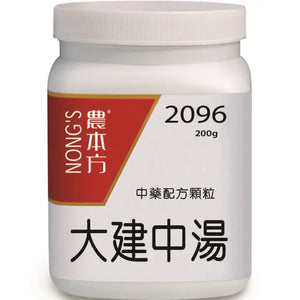
Da Jian Zhong Tang: TCM Formula for Abdominal Cold and Digestive Support

Da Jian Zhong Tang: Warming the Middle, Dispersing Cold and Tonifying Deficiency | HJMEDICAL

I. Origins and History

1. Classical Literature

Da Jian Zhong Tang (大建中汤) is a classical Traditional Chinese Medicine formula traditionally used to warm the middle burner, relieve abdominal pain, and address patterns of interior cold and digestive weakness. Da Jian Zhong Tang originates from the Jingui Yaolüe (Essential Prescriptions of the Golden Cabinet), authored by the renowned late Eastern Han physician Zhang Zhongjing.

The Jingui Yaolüe is the earliest surviving Chinese monograph devoted to the diagnosis and treatment of miscellaneous diseases, and has exerted a profound influence on the development of TCM clinical medicine across successive generations. In this text, Da Jian Zhong Tang is recorded in the chapter "Pulse Patterns and Treatment of Abdominal Fullness, Cold Mounting, and Retained Food," Chapter Ten, with the original passage stating: "Severe cold pain in the heart and chest; vomiting with inability to eat; cold in the abdomen, surging upward with visible protrusions on the skin, as if something with head and feet were present; pain above and below, intolerable to touch — Da Jian Zhong Tang governs this." These brief words precisely describe the symptomatic presentation for which Da Jian Zhong Tang is indicated.

2. Historical Background and Development

During the Eastern Han dynasty, social upheaval and hardship were widespread, and epidemic diseases were common. People were frequently afflicted by cold evil invasion, irregular diet, and other factors, leading to a high prevalence of conditions such as spleen-stomach deficiency-cold. Through sustained clinical practice, Zhang Zhongjing accumulated rich experience and, addressing the abdominal pain, vomiting, and related symptoms common at the time, developed Da Jian Zhong Tang through repeated research and validation. Over time, later physicians continued to explore and develop the formula in clinical application. They made appropriate adjustments to herb dosages, processing methods, and other aspects according to different disease characteristics and individual variation, making it more precise and effective in treating spleen-stomach deficiency-cold and related conditions. It has gradually become one of the commonly used classical formulas in TCM clinical practice, transmitted to the present day and relieving the suffering of countless patients.

Da Jian Zhong Tang: Warming the Middle, Dispersing Cold and Tonifying Deficiency | HJMEDICAL

II. Herb Composition (Sovereign, Minister, Assistant, Envoy)

1. Sovereign Herb: Shujiao (Sichuan Pepper)

Shujiao is acrid in flavour and warm in nature, entering the Spleen, Stomach, and Kidney channels. Its acrid-warm nature warms the middle and disperses cold, descends qi and alleviates pain. In Da Jian Zhong Tang, Shujiao plays the core role of dispersing cold and alleviating pain. It drives out the cold evil lurking in the spleen and stomach, relieving abdominal pain caused by cold evil congealing and stagnating. Shujiao's aroma is intense and penetrating; it excels at moving quickly to reach the site of disease, producing the effect of warming and unblocking the channels and eliminating cold congealing with qi stagnation — like a vanguard leading the charge in battle, forging a path for the resolution of disease.

2. Minister Herb: Ganjiang (Dry Ginger)

Ganjiang is also acrid in flavour and hot in nature, entering the Spleen, Stomach, Heart, and Lung channels. It warms the middle and disperses cold, restores yang and unblocks the vessels, and warms the lungs and transforms fluid retention. In Da Jian Zhong Tang, Ganjiang is paired with Shujiao to reinforce the middle-warming and cold-dispersing action. It further warms the spleen and stomach, restoring their transforming and transporting function. Ganjiang's warming and heating nature is rich and enduring, capable of nourishing the spleen and stomach with warmth over a sustained period — like a loyal and devoted minister assisting the sovereign herb to complete the treatment task, working together to improve the condition of spleen-stomach deficiency-cold.

3. Assistant Herb: Renshen (Ginseng)

Renshen is sweet and slightly bitter in flavour, slightly warm in nature, and enters the Spleen, Lung, Heart, and Kidney channels. It greatly tonifies primordial qi, restores the pulse and prevents collapse, tonifies the spleen and benefits the lungs, engenders fluids and nourishes blood, and calms the spirit and sharpens the intellect. In Da Jian Zhong Tang, Renshen serves as the assistant herb: on the one hand it tonifies spleen-stomach qi, preventing Shujiao and Ganjiang from being too acrid and hot and damaging the upright qi; on the other hand, it enhances the spleen and stomach's transforming and transporting function, allowing the spleen and stomach to better absorb the medicinal action and promoting the body's recovery. Like a gentle assistant mediating between the more forceful herbs, it harmonises and supports the upright, ensuring the formula can both effectively expel pathogens and protect the upright qi.

4. Envoy Herb: Yitang (Maltose)

Yitang is sweet in flavour and warm in nature, entering the Spleen, Stomach, and Lung channels. It tonifies the spleen and augments qi, moderates urgency and alleviates pain, and moistens the lungs and stops cough. In Da Jian Zhong Tang, Yitang serves as the envoy herb, moderating urgency and alleviating pain to relieve the severe abdominal pain. It also harmonises all the herbs, making the medicinal properties of Shujiao, Ganjiang, Renshen, and the other herbs more measured so that they act in coordinated synergy. Yitang's sweet flavour nourishes the spleen and stomach, bringing warmth and nourishment to a body suffering from spleen-stomach deficiency-cold — like a considerate envoy guiding the medicinal forces of every herb to act collectively upon the site of disease for optimal therapeutic effect.

Da Jian Zhong Tang: Warming the Middle, Dispersing Cold and Tonifying Deficiency | HJMEDICAL

III. Pathomechanism, Actions, and Indications

1. Pathomechanism (Decline of Middle Yang)

The pathomechanism targeted by Da Jian Zhong Tang is primarily spleen-stomach deficiency-cold with internal exuberance of yin-cold. Because the yang qi of the spleen and stomach is weak, cold evil takes advantage of the deficiency to invade, congealing in the middle burner and causing the qi dynamic of the spleen and stomach to become obstructed, with impeded circulation of qi and blood. Cold evil accumulating in the abdomen gives rise to severe pain. Spleen-stomach deficiency-cold disrupts the transforming and transporting function, producing symptoms such as vomiting and inability to eat. This pathomechanism of internally exuberant yin-cold makes the manifestations of middle-burner deficiency-cold severe, urgently requiring a powerful formula to warm yang, disperse cold, regulate qi, and alleviate pain.

2. Actions

Da Jian Zhong Tang warms the middle and tonifies deficiency, and descends counterflow to alleviate pain. Through the great acrid-hot nature of Shujiao and Ganjiang, the cold evil in the spleen and stomach is rapidly warmed and dispersed, and the yang qi of the spleen and stomach is restored. Renshen tonifies spleen-stomach qi and enhances the transforming and transporting function. Yitang moderates urgency and alleviates pain, and harmonises all the herbs; acting in synergy with the other herbs, it achieves the combined aims of warming the middle, tonifying deficiency, and relieving pain. The condition of spleen-stomach deficiency-cold is thereby improved, qi and blood flow freely, and the body recovers health.

3. Indications

Da Jian Zhong Tang primarily treats severe cold pain in the heart and chest, vomiting with inability to eat, cold in the abdomen, surging upward with visible protrusions on the skin, as if something with head and feet were present, and pain above and below that is intolerable to touch. The characteristic features of this pattern are severe abdominal pain, with the pain involving the heart, chest, and entire abdomen; during the painful episode there is a sensation of qi surging upward, the abdominal skin bulges, as if something with head and feet were leaping within the abdomen, and the pain is excruciating — even touch and pressure cannot be tolerated. This is accompanied by vomiting and inability to eat normally, all of which are caused by spleen-stomach deficiency-cold and internal exuberance of yin-cold. Da Jian Zhong Tang is the effective formula that targets precisely this condition.

Da Jian Zhong Tang: Warming the Middle, Dispersing Cold and Tonifying Deficiency | HJMEDICAL

IV. Formula Analysis

1. Dispersing Cold and Alleviating Pain

Shujiao and Ganjiang are the core herbs for dispersing cold and alleviating pain. Shujiao's acrid-warm nature directly drives out cold evil, and its penetrating quality allows the medicinal action to rapidly reach the site of disease, eliminating cold congealing and qi stagnation. Ganjiang's warming and heating nature is rich and enduring; paired with Shujiao in the formula, it further reinforces the middle-warming and cold-dispersing effect. The two herbs act synergistically, playing a key therapeutic role against the abdominal pain caused by spleen-stomach deficiency-cold and internal exuberance of yin-cold.

2. Warming the Middle and Tonifying Deficiency

Renshen greatly tonifies spleen-stomach qi, providing the driving force for the recovery of spleen-stomach function. Only when the qi of the spleen and stomach is sufficient can water-grain essence be properly transformed and transported to nourish the body. Yitang not only moderates urgency and alleviates pain but also tonifies the spleen and augments qi; together with Renshen it replenishes the spleen-stomach deficiency, allowing spleen-stomach function to gradually recover to normal and strengthening the body's resistance, which in turn helps ward off the invasion of cold evil.

3. Descending Counterflow and Stopping Vomiting

When spleen-stomach deficiency-cold causes stomach qi to counterflow upward, vomiting occurs. The warming and heating nature of Shujiao and Ganjiang in Da Jian Zhong Tang warms the spleen and stomach, suppressing the counterflow of stomach qi. At the same time, Yitang's moderating action also helps relieve the discomfort caused by upward counterflow of stomach qi, thereby achieving the effect of descending counterflow and stopping vomiting and allowing the patient to eat normally.

4. Synergistic Herb Interactions

Shujiao, Ganjiang, Renshen, and Yitang work in mutual coordination and act synergistically. The cold-dispersing, pain-relieving, and middle-warming actions of Shujiao and Ganjiang create favourable conditions for the deficiency-tonifying and urgency-moderating effects of Renshen and Yitang. In turn, the tonifying and moderating actions of Renshen and Yitang prevent Shujiao and Ganjiang from being excessively acrid-hot and damaging the upright. The four herbs complement one another, jointly regulating the pathomechanism of spleen-stomach deficiency-cold to achieve the therapeutic aim.

Da Jian Zhong Tang: Warming the Middle, Dispersing Cold and Tonifying Deficiency | HJMEDICAL

V. Comparison with Related Formulas

1. Comparison with Lizhong Wan

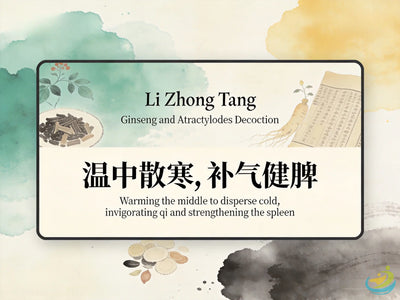
Lizhong Wan is also primarily used to treat spleen-stomach deficiency-cold patterns. Its composition includes Ganjiang, Renshen, Baizhu (Atractylodes Rhizome), and Zhigancao (Honey-Fried Licorice Root). Compared with Da Jian Zhong Tang, Lizhong Wan's medicinal force is relatively weaker. Lizhong Wan focuses on warming and tonifying the spleen and stomach to restore their transforming and transporting function, and is more appropriate for milder spleen-stomach deficiency-cold where abdominal pain symptoms are not severe. Da Jian Zhong Tang, by contrast, targets more severe spleen-stomach deficiency-cold with internal exuberance of yin-cold and intense abdominal pain; its cold-dispersing and pain-relieving force is stronger and its herb action more vigorous.

2. Comparison with Xiao Jianzhong Tang

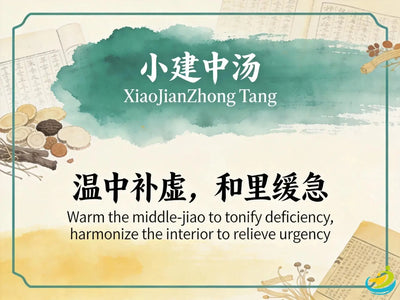
Xiao Jianzhong Tang is composed of Guizhi (Cinnamon Twig), Shaoyao (Peony Root), Zhigancao (Honey-Fried Licorice Root), Shengjiang (Fresh Ginger), Dazao (Jujube), and Yitang (Maltose). Its primary actions are warming the middle and tonifying deficiency, and harmonising the interior to moderate urgency; it focuses on harmonising ying and wei and relieving abdominal pain with preference for warmth and pressure caused by spleen-stomach deficiency-cold, and is commonly used to treat middle-burner deficiency-cold with liver-spleen disharmony patterns. Da Jian Zhong Tang, by contrast, focuses primarily on warming the middle and dispersing cold, descending counterflow and alleviating pain, and targets the more severe symptoms of spleen-stomach deficiency-cold, internal exuberance of yin-cold, intense abdominal pain, and vomiting. Xiao Jianzhong Tang is relatively moderate, while Da Jian Zhong Tang is more vigorous in medicinal force; the two differ in herb composition and action emphasis, and are suited to different degrees of spleen-stomach deficiency-cold.

3. Comparison with Huangqi Jianzhong Tang

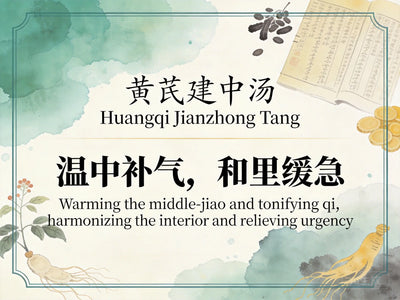
Huangqi Jianzhong Tang is formed by adding Huangqi (Astragalus Root) to Xiao Jianzhong Tang, and focuses on warming the middle and tonifying deficiency, and tonifying qi and nourishing blood. It is appropriate for conditions of spleen-stomach weakness and qi-blood insufficiency manifesting as fatigue and lack of strength, sallow complexion, poor appetite, recurrent abdominal pain, and constitutional weakness following illness. Compared with Da Jian Zhong Tang, Huangqi Jianzhong Tang has a more prominent tonifying action and a gentler warming-dispersing force, making it better suited to the long-term regulation of those with chronic weakness and insufficient constitution. Da Jian Zhong Tang and Huangqi Jianzhong Tang both belong to the "Jianzhong" (middle-building) category of formulas, but Da Jian Zhong Tang emphasises warming the middle, dispersing cold, tonifying deficiency, and alleviating pain, and is suited to cold abdominal pain, borborygmus, abdominal distension, and preference for warmth and pressure caused by decline of middle yang and internal exuberance of cold evil — conditions commonly seen in poor post-operative intestinal function recovery, chronic abdominal pain, and deficiency-cold gastrointestinal diseases.

In brief: in TCM formula discourse, Da Jian Zhong Tang excels at "warming yang, dispersing cold, and alleviating pain," treating abdominal symptoms where deficiency-cold is relatively severe; Huangqi Jianzhong Tang excels at "tonifying qi, supplementing deficiency, and nourishing the middle," treating chronic vacuity-depletion states arising from qi-blood insufficiency and spleen-stomach weakness.

Da Jian Zhong Tang: Warming the Middle, Dispersing Cold and Tonifying Deficiency | HJMEDICAL

VI. Clinical Applications

1. Digestive System Conditions

Da Jian Zhong Tang is commonly used in the treatment of a range of digestive system conditions. In gastric ulcer, duodenal ulcer, and similar conditions presenting with severe pain in the epigastrium or abdomen, aggravated by cold and relieved by warmth, accompanied by vomiting and poor appetite, the formula produces good results. For spleen-stomach deficiency-cold type chronic gastritis presenting with cold pain in the epigastrium, abdominal distension, and poor digestion, Da Jian Zhong Tang can also exert a good therapeutic effect. By warming the middle and tonifying deficiency, dispersing cold and alleviating pain, it improves spleen-stomach function and relieves the discomfort of digestive system conditions.

2. Functional Abdominal Pain

Clinically, some patients with functional abdominal pain have no obvious organic lesions but present with relatively severe abdominal pain — typically cold pain or cramping pain — accompanied by aversion to cold and cold extremities; TCM pattern differentiation identifies these as spleen-stomach deficiency-cold with internal exuberance of yin-cold. Da Jian Zhong Tang can serve as an effective treatment formula for these patients. By adjusting the yin-yang balance of the spleen and stomach, eliminating cold evil, relieving abdominal pain symptoms, and improving patients' quality of life, it offers comprehensive therapeutic benefit.

3. Other Conditions and Roundworm-Induced Intestinal Obstruction

Da Jian Zhong Tang, as recorded in the Yifang Jijie (Collected Explanations of Medical Formulas), also has some therapeutic effect on vomiting, diarrhoea, and other conditions caused by spleen-stomach deficiency-cold. For elderly patients with a weak constitution and spleen-stomach deficiency-cold who develop abdominal pain and vomiting following cold exposure or dietary irregularities, Da Jian Zhong Tang can rapidly relieve symptoms and restore spleen-stomach function. In paediatric clinical practice, for children's abdominal pain and poor appetite arising from spleen-stomach deficiency-cold, Da Jian Zhong Tang can also achieve good therapeutic results when applied through accurate pattern differentiation.

Da Jian Zhong Tang: Warming the Middle, Dispersing Cold and Tonifying Deficiency | HJMEDICAL

VII. Clinical Modifications

1. Severe Abdominal Pain

Where abdominal pain is severe, the dosage of Shujiao and Ganjiang may be appropriately increased to reinforce the cold-dispersing and pain-relieving action. Yanhusuo (Corydalis Rhizome) and Muxiang (Costus Root) may also be added to move qi and alleviate pain, producing a more marked analgesic effect. Yanhusuo moves qi stagnation within the blood and blood stagnation within the qi, and specialises in treating pain throughout the body; Muxiang excels at moving qi stagnation in the spleen and stomach, helping to reinforce the qi-moving and pain-relieving force. Combined with the original formula herbs, these additions relieve pain symptoms more comprehensively.

2. Frequent Vomiting

Where vomiting is frequent, counterflow-descending and vomiting-stopping herbs such as Banxia (Pinellia) and Chenpi (Dried Tangerine Peel) may be added. Banxia dries dampness and transforms phlegm, and descends counterflow to stop vomiting; Chenpi regulates qi and strengthens the spleen, and dries dampness and transforms phlegm. Used together, they reinforce the counterflow-descending and vomiting-stopping effect, relieving vomiting symptoms and restoring normal eating.

3. Pronounced Spleen-Stomach Weakness

Where spleen-stomach weakness is pronounced, the dosage of Renshen may be appropriately increased, or spleen-strengthening and qi-tonifying herbs such as Huangqi (Astragalus Root) and Baizhu (Atractylodes Rhizome) may be added. Huangqi tonifies qi and raises yang, and secures the exterior and stops sweating; Baizhu strengthens the spleen and tonifies qi, and dries dampness and promotes urination. Together with Renshen already in Da Jian Zhong Tang, they further reinforce the spleen and stomach's transforming and transporting function, elevate the body's upright qi, and promote recovery from illness.

Da Jian Zhong Tang: Warming the Middle, Dispersing Cold and Tonifying Deficiency | HJMEDICAL

VIII. Dosage and Preparation

1. Traditional Decoction Method

Traditional Decoction and Administration Method for Da Jian Zhong Tang

Da Jian Zhong Tang is an extremely powerful interior-warming formula recorded in the Shanghanlun, indicated for warming the middle, tonifying deficiency, and descending counterflow to alleviate pain. This guide breaks down in detail its distinctive classical decoction steps: decocting Shujiao, Ganjiang, and Renshen first together; straining the dregs; then adding Yitang after straining and dissolving it on an extremely low flame.

【Da Jian Zhong Tang: Classical and Modern Prescription Composition and Preparation】
  • Shujiao (Sichuan Pepper): two ge — modern reference: 14g (warming the middle and dispersing cold, warming the spleen and stomach)
  • Ganjiang (Dry Ginger): four liang — modern reference: 12g (warming the middle and restoring yang)
  • Renshen (Ginseng): two liang — modern reference: 6g (greatly tonifying primordial qi)
  • Yitang (Maltose): one sheng — modern reference: 30g (**added after straining and dissolved — must NOT be added in the initial decoction**)
  • Water: as needed (modern decocting pot: approximately 500–600 ml recommended for the first addition)
【Classical Fire Control and Special Herb-Addition Steps】
Step 1: Soaking the Three Herbs and Bringing to a Rapid Boil on High Heat First place the three herbs — **Shujiao, Ganjiang, and Renshen** — together into the ceramic decocting pot (note: **do not add the Yitang at this stage under any circumstances**). Add an appropriate amount of cold water and **soak in cold water for 20 minutes**. Apply heat and **first bring the liquid rapidly to a boil on high heat**, rapidly activating the middle-warming and cold-expelling medicinal properties of the plant-based herbs.
Step 2: Simmering on Low Heat and Straining the Dregs Completely Once the liquid reaches a rolling boil, **immediately reduce to low heat and simmer gently**, maintaining a just-simmering state to prevent the active constituents of the herbs from volatilising through excessive heat. When the decoction has reached an appropriate concentration, remove from heat and use a strainer or gauze cloth to **thoroughly filter and remove the herb dregs from the bottom of the pot**, retaining only the pure, warm Shujiao-Ganjiang-Renshen decoction liquid.
Step 3: Adding Yitang After Straining and Dissolving on an Extremely Low Flame Pour the strained pure decoction back into the pot and **add one sheng of Yitang (30g)**. Apply an **extremely low flame and heat again, stirring slowly, until the Yitang is completely melted and dissolved (烊化 — added after straining and dissolved)**. This step uses gentle heat to allow the viscous Yitang to dissolve completely in the decoction and blend seamlessly with it, moderating the drying and harsh nature of Shujiao and Ganjiang in the process. Remove from heat once dissolution is complete.
Step 4: Taking in Warm Divided Doses to Build the Middle and Strengthen the Spleen This formula's medicinal action is focused and pure; do not drink the entire decoction at once. It must be **taken warm in two divided doses (fen wen zai fu — divided warm re-administration)**. Taking it warm warms the stomach and expels cold; taking it in divided doses allows the active constituents to be absorbed by the spleen and stomach progressively for better effect, fully realising the formula's middle-building action of warming the middle, tonifying deficiency, and moderating urgency to alleviate pain.

2. Modern Concentrated Granules

With the development of modern pharmaceutical technology, Da Jian Zhong Tang is now also available in concentrated granule form. When using modern concentrated granules, simply dissolve in hot water according to the dosage stated in the product instructions. Generally, the dosage is scientifically formulated according to the proportions of the traditional formula, making it convenient and quick, well-suited to the pace of modern life. Patients need only dissolve the granules in hot water to take a medicinal preparation comparable in effect to the traditional decoction, greatly saving time and effort while ensuring the quality and therapeutic efficacy of the medicine.

Da Jian Zhong Tang: Warming the Middle, Dispersing Cold and Tonifying Deficiency | HJMEDICAL

IX. Precautions and Contraindications

1. Dietary Restrictions

During the course of taking Da Jian Zhong Tang, raw, cold, greasy, and spicy foods should be avoided. Raw and cold foods aggravate the spleen-stomach deficiency-cold symptoms and impair the formula's therapeutic effect. Greasy foods are difficult to digest and increase the burden on the spleen and stomach. Spicy foods readily irritate the gastrointestinal tract and may cause symptoms such as abdominal pain and vomiting to worsen. The diet should be light; warm, easily digestible foods such as millet congee and yam congee are recommended to support the recovery of the spleen and stomach.

2. Constitutional Contraindications

Da Jian Zhong Tang is not appropriate for those with a constitution of yin deficiency and effulgent fire. Da Jian Zhong Tang's medicinal nature is warm and hot; those with yin deficiency and effulgent fire already have a condition of insufficient yin-liquid within the body with vacuity-fire flaming upward, and using the warm-hot Da Jian Zhong Tang would further aggravate yin deficiency and effulgent fire symptoms, leading to dry mouth and throat, swollen and sore throat, and dry, bound stools. Additionally, pregnant women should exercise caution when using Da Jian Zhong Tang and should decide whether to use it based on specific circumstances under a physician's guidance, as the herbs in the formula may have some effect on the foetus.

3. Additional Precautions

During the course of taking Da Jian Zhong Tang, patients should keep warm and avoid the abdomen becoming cold. Maintaining a relaxed and positive state of mind and avoiding excessive emotional fluctuation is also important, as adverse emotions may affect spleen-stomach function and impair recovery. If any discomfort or changes in condition arise during the course of treatment, medical attention should be sought promptly to adjust the treatment plan.

Da Jian Zhong Tang: Warming the Middle, Dispersing Cold and Tonifying Deficiency | HJMEDICAL

X. Modern Research

1. Pharmacological Research

Da Jian Zhong Tang is a classical formula for warming the middle and expelling cold, recorded in the Jingui Yaolüe. It primarily treats decline of middle yang, severe cold pain in the heart and chest, abdominal pain, vomiting with inability to eat, cold reversal of the hands and feet, shortness of breath, and other manifestations of cold qi surging upward; the key pattern differentiation signs are a pale tongue with a white, slippery coating and a deep, slow pulse. In the formula, Ganjiang is acrid and hot and greatly expels cold evil; combined with Shujiao and other herbs, the formula is used clinically for roundworm-induced intestinal obstruction, gastroptosis, and localised peritonitis, among others. It is commonly used in combination with Huangqi Jianzhong Tang through additions and subtractions, and produces good therapeutic results for related deficiency-cold patterns.

Modern pharmacological research has demonstrated that Shujiao, Ganjiang, and other herbs in Da Jian Zhong Tang possess certain antibacterial and anti-inflammatory actions. They can inhibit harmful bacteria in the gastrointestinal tract, reduce inflammatory responses, and produce a degree of therapeutic effect in patients with spleen-stomach deficiency-cold accompanied by gastrointestinal inflammation. Renshen has the action of regulating immune function, enhancing the body's resistance, and contributing to patients' recovery of health. Yitang contains a range of nutritional constituents — including sugars and proteins — that provide energy to the body and promote metabolism.

2. Clinical Research

In recent years, a considerable number of clinical research reports on Da Jian Zhong Tang have been published. Some studies have indicated that Da Jian Zhong Tang produces good therapeutic results in treating spleen-stomach deficiency-cold type functional dyspepsia, gastric ulcer, and other conditions. Through observation and analysis of patients' symptoms, signs, and related indicators, it has been found that Da Jian Zhong Tang can significantly improve symptoms such as abdominal pain, abdominal distension, vomiting, and poor appetite, and enhance patients' quality of life. Other research has found that Da Jian Zhong Tang also has a degree of action in regulating gastrointestinal motility and improving the state of the gastrointestinal mucosa, providing further scientific evidence for its clinical application.

3. Research on Dosage Form Improvement

As technology has continued to advance, research into the improvement of Da Jian Zhong Tang's dosage forms has also deepened. In addition to the modern concentrated granule form, research is exploring the formulation of Da Jian Zhong Tang as capsules, tablets, and other new dosage forms. These new forms maintain the formula's therapeutic efficacy while further improving the stability of the medicine and the convenience of administration, offering patients more options. At the same time, research into the extraction process, quality control, and related aspects of Da Jian Zhong Tang continues to be refined to ensure the quality and safety of the medicine.

As a classical TCM formula that has been transmitted for over a thousand years, Da Jian Zhong Tang plays an important role in the treatment of spleen-stomach deficiency-cold and related conditions. As modern research has continued to deepen, its scientific basis and efficacy have been further validated and expanded, bringing the hope of health to an ever-wider range of patients.

Da Jian Zhong Tang — Frequently Asked Questions

Q1: What are the actions of Da Jian Zhong Tang?

Da Jian Zhong Tang warms the middle and tonifies deficiency, disperses cold and alleviates pain, and harmonises the stomach and intestines. It is primarily indicated for cold abdominal pain, borborygmus, vomiting, and reduced food intake caused by decline of middle yang and internal exuberance of yin-cold.

Q2: Which modern conditions is Da Jian Zhong Tang indicated for?

In modern TCM clinical practice, it is commonly used for individuals whose pattern differentiation falls within the categories of middle yang decline and cold congealing in the stomach and intestines — including intestinal obstruction recovery, chronic abdominal pain, post-operative intestinal paralysis, and functional gastrointestinal conditions.

Q3: Is Da Jian Zhong Tang suitable for post-operative intestinal function recovery?

For patients presenting with middle yang insufficiency signs following abdominal surgery — including abdominal distension, reduced borborygmus, delayed passage of flatus and stools, and dull abdominal pain — TCM practitioners commonly apply Da Jian Zhong Tang through pattern differentiation as an adjunct regulating formula to promote the recovery of stomach and intestinal function.

Q4: Who should not take Da Jian Zhong Tang?

Da Jian Zhong Tang is generally not suitable for patients with excess-heat abdominal pain, acute abdominal infection, yin deficiency with effulgent fire, or pronounced constipation accompanied by heat signs. Use should be preceded by a pattern differentiation assessment by a qualified TCM practitioner according to the patient's constitution and pattern presentation.

⚠️ This content is for reference only and does not provide medical advice. Consult a healthcare professional for any health concerns.

Login

Forgot your password?

Don't have an account yet?
Create account

Da Jian Zhong Tang: TCM Formula for Abdominal Cold and Digestive Support