Da Qing Long Tang: Traditional Chinese Formula for Exterior Cold with Interior Heat

Da Qing Long Tang: Inducing Sweat, Releasing the Exterior and Clearing Heat | HJMEDICAL

I. Origins and History

1. Classical Literature

Da Qing Long Tang (大青龙汤) is a classical Traditional Chinese Medicine formula traditionally used to release exterior cold, clear internal heat, and address patterns characterized by fever, body aches, and the absence of sweating. Da Qing Long Tang originates from the Shang Han Lun (Treatise on Cold Damage), composed by the celebrated physician Zhang Zhongjing at the end of the Eastern Han dynasty. The Shang Han Lun is the classic of classics in Chinese medicine; it systematically expounds the principles of pattern identification and treatment for externally contracted diseases and has provided important guidance for TCM clinical practice throughout history. Da Qing Long Tang, as one of its significant formulas, is documented in detail within the text, laying a solid foundation for later generations to study and apply this formula.

2. Historical Development

Since the compilation of the Shang Han Lun, Da Qing Long Tang has consistently been valued and applied by physicians of every dynasty. Over the course of history it has undergone continuous transmission and development. Physicians of each era, drawing on their own clinical experience and understanding of the classics, elaborated and expanded upon Da Qing Long Tang to varying degrees. For example, certain medical works record cases in which physicians used Da Qing Long Tang to cure difficult and complex conditions; these cases not only demonstrate the formula's therapeutic efficacy but also enriched its body of application experience. As the times changed and medical theory and practice continued to advance, Da Qing Long Tang has retained an important role in modern clinical settings; building on the inherited tradition and incorporating the findings of modern medical research, its scope of application and therapeutic outcomes have continued to expand and improve.

Da Qing Long Tang: Inducing Sweat, Releasing the Exterior and Clearing Heat | HJMEDICAL

II. Herb Composition (Sovereign, Minister, Assistant, Envoy)

1. Chief Herb: Mahuang

Mahuang (Ephedra) is the chief herb of Da Qing Long Tang. It is acrid and mildly bitter in flavour, warm in nature, and enters the Lung and Bladder channels. Mahuang possesses the powerful actions of inducing sweat to release the exterior and diffusing the lungs to calm wheezing. Its sweat-inducing force is relatively strong; it can rapidly open the pores of the body so that the pathogenic factors on the exterior are expelled with the sweat. In the Da Qing Long Tang pattern, the body's skin and muscles are bound by wind-cold pathogenic factors; Mahuang disperses the wind-cold from the exterior through its sweat-inducing and exterior-releasing action, making it the key to resolving the disease. At the same time, Mahuang can also diffuse the lungs and calm wheezing, producing good therapeutic results for symptoms such as dyspnoea caused by obstruction of lung qi.

2. Deputy Herb: Guizhi

Guizhi (Cinnamon Twig) is acrid and sweet in flavour, warm in nature, and enters the Heart, Lung, and Bladder channels. In Da Qing Long Tang, Guizhi assists Mahuang in inducing sweat and releasing the exterior, strengthening the formula's exterior-releasing force. It warms and unblocks the channels and vessels, assisting Mahuang in moving yang qi so that the medicinal force reaches the skin and muscles more effectively to disperse wind-cold pathogenic factors. At the same time, Guizhi harmonises ying and wei, and has a regulatory effect on the disharmony of ying and wei caused by external contraction of wind-cold, helping to restore the body's normal physiological function.

3. Adjuvant Herb: Shigao

Shigao (Gypsum) is acrid and sweet in flavour, greatly cold in nature, and enters the Lung and Stomach channels. Shigao serves as adjuvant herb in Da Qing Long Tang, primarily fulfilling the role of clearing heat and draining fire. Although the Da Qing Long Tang pattern is dominated by exterior cold excess, signs of interior heat such as irritability and restlessness have already appeared. The cold and cool nature of Shigao can clear and drain interior heat, preventing interior heat from being further intensified during the process of inducing sweat and releasing the exterior; it balances the cold and heat, making the formula's application safer and more effective.

4. Adjuvant Herb: Xingren

Xingren (Apricot Kernel) is bitter in flavour, mildly warm in nature, and enters the Lung and Large Intestine channels. It descends qi, relieves cough and calms wheezing, and moistens the intestines to unblock the bowels. In Da Qing Long Tang, Xingren assists Mahuang in calming wheezing, enhancing the formula's therapeutic effect on dyspnoea caused by counterflow of lung qi. At the same time, Xingren's intestine-moistening action also helps to regulate the body's qi dynamic, enabling lung qi to diffuse and descend and the intestines to remain unobstructed, thereby better coordinating with the other herbs to express the therapeutic actions of the formula.

5. Envoy Herb: Zhigancao

Zhigancao (Honey-Fried Licorice Root) is sweet in flavour, neutral in nature, and enters the Heart, Lung, Spleen, and Stomach channels. Zhigancao harmonises all herbs in Da Qing Long Tang, enabling the actions of each herb in the formula to be expressed synergistically and in coordination. It also tonifies the spleen and harmonises the stomach, augments qi, and restores the pulse; it provides a certain supplementing effect on the upright qi that may be consumed during the process of inducing sweat and releasing the exterior, ensuring that the body's upright qi is not excessively damaged in the course of expelling the pathogen, so that the entire treatment process proceeds more smoothly.

Da Qing Long Tang: Inducing Sweat, Releasing the Exterior and Clearing Heat | HJMEDICAL

III. Pathomechanism, Actions, and Indications

1. Pathomechanism

The primary pathomechanism addressed by Da Qing Long Tang is wind-cold binding the exterior with wei yang constrained, ying yin depressed and stagnant, and concurrent interior heat. When the body is invaded by wind-cold pathogenic factors, the yang qi of the skin and muscles is bound by the pathogen and cannot diffuse normally, causing impaired flow of wei qi and giving rise to symptoms such as aversion to cold, fever, and absence of sweating. Ying qi also becomes depressed and stagnant as a result of the constraint of wei qi, producing a state of ying yin stagnation. At this point the body's upright qi and the pathogenic factors are in mutual contention; if the condition progresses further and the pathogenic factors enter the interior and transform into heat, interior heat symptoms such as irritability and restlessness will emerge. This complex pathomechanism of simultaneous exterior cold and interior heat is precisely the situation for which Da Qing Long Tang is indicated.

2. Actions

Da Qing Long Tang has the actions of inducing sweat to release the exterior and clearing heat to relieve irritability. Through the sweat-inducing actions of Mahuang, Guizhi, and other herbs, it can rapidly resolve the wind-cold pathogenic factors from the exterior, allowing wei yang to diffuse and ying yin to flow freely. At the same time, Shigao's action of clearing heat and draining fire can eliminate interior heat and relieve symptoms such as irritability and restlessness. The formula as a whole, combining these herbs, can both release the exterior and scatter cold and clear heat to relieve irritability, achieving the goal of resolving both the exterior and interior simultaneously so that the body's yin and yang return to balance and the disease is cured.

3. Indications

Da Qing Long Tang primarily treats externally contracted wind-cold with concurrent interior heat. Clinical manifestations include aversion to cold with fever, head and body pain, absence of sweating, irritability and restlessness, and a floating, tight pulse. Among these, aversion to cold with fever, absence of sweating, and a floating, tight pulse are the typical presentations of exterior cold excess, while irritability and restlessness indicate the presence of interior heat. This condition of simultaneous exterior and interior disease is relatively common in clinical practice; Da Qing Long Tang produces good therapeutic results for such conditions, rapidly relieving symptoms and facilitating recovery from disease.

Da Qing Long Tang: Inducing Sweat, Releasing the Exterior and Clearing Heat | HJMEDICAL

IV. Formula Analysis

1. The Force of Releasing the Exterior and Scattering Cold

Mahuang combined with Guizhi — Mahuang's sweat-inducing and exterior-releasing force is relatively strong, while Guizhi assists Mahuang in inducing sweat; their synergistic action greatly strengthens the action of releasing the exterior and scattering cold. Together they can open the channels of the pores so that wind-cold pathogenic factors are expelled from the body with the sweat, effectively resolving the wind-cold binding of the body's skin and muscles and restoring the normal diffusing function of wei qi.

2. The Elegance of Clearing and Draining Interior Heat

The cold and cool nature of Shigao is combined with the warm and hot nature of Mahuang and Guizhi, forming a configuration of concurrent cold and heat in the formula. Shigao clears and drains interior heat, preventing interior heat from being further intensified during the process of inducing sweat and releasing the exterior, and simultaneously relieving the irritability and restlessness generated by interior heat. This method of combining cold and warm herbs embodies the elegance of TCM formula composition and enables the formula to both expel pathogenic factors and balance the body's cold-heat and yin-yang.

3. The Merit of Calming Wheezing and Relieving Cough

Mahuang and Xingren work synergistically to enhance the effect of calming wheezing and relieving cough. Mahuang diffuses the lungs and calms wheezing; Xingren descends qi, relieves cough, and calms wheezing. Together — one diffusing and one descending — they target dyspnoea caused by counterflow of lung qi, rapidly regulating the ascending and descending function of lung qi so that the airways are unobstructed and dyspnoea is relieved.

4. The Ability to Harmonise All Herbs

Zhigancao harmonises all herbs, enabling the actions of each herb in the formula to coordinate with one another and express their therapeutic effects more effectively. It also protects the spleen and stomach qi during the process of inducing sweat and releasing the exterior, preventing the upright qi from being excessively consumed, and providing a guarantee for the entire treatment process.

Da Qing Long Tang: Inducing Sweat, Releasing the Exterior and Clearing Heat | HJMEDICAL

V. Comparison with Related Formulas

1. Comparison with Mahuang Tang

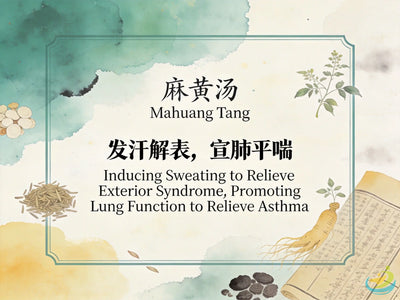
Mahuang Tang and Da Qing Long Tang are both exterior-releasing formulas that share the action of inducing sweat to release the exterior, and both use Mahuang as the principal herb. However, Mahuang Tang treats a pure exterior cold excess pattern without interior heat symptoms, and its composition comprises only four herbs — Mahuang, Guizhi, Xingren, and Zhigancao — with a strong sweat-inducing force. Da Qing Long Tang, by contrast, treats wind-cold binding the exterior with concurrent interior heat; built upon Mahuang Tang, it adds Shigao to clear and drain interior heat. Its sweat-inducing force is more intense than that of Mahuang Tang, and it is also capable of addressing the interior heat pattern.

2. Comparison with Xiao Qing Long Tang

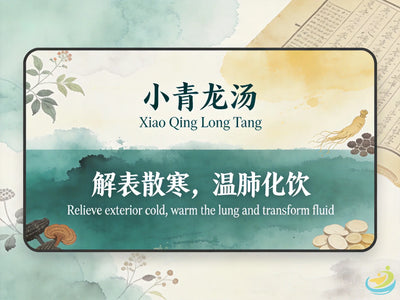
Xiao Qing Long Tang primarily treats the pattern of exterior cold with interior fluid retention, with principal manifestations of aversion to cold with fever, absence of sweating, dyspnoea and cough, and copious thin phlegm. It primarily releases the exterior and scatters cold through Mahuang, Guizhi, and other herbs, while simultaneously using Ganjiang (Dry Ginger), Xixin (Asarum Root), Banxia (Pinellia), and others to warm and transform cold fluid retention. Compared with Da Qing Long Tang, Xiao Qing Long Tang has no signs of interior heat but instead focuses on warming and transforming cold fluid retention. Da Qing Long Tang, by contrast, focuses on clearing and draining interior heat while simultaneously releasing the exterior; the two formulas differ in pathomechanism and actions.

Da Qing Long Tang: Inducing Sweat, Releasing the Exterior and Clearing Heat | HJMEDICAL

VI. Clinical Applications

1. Common Cold

In the early stage of a common cold, if aversion to cold with fever, absence of sweating, and severe head and body pain appear together with irritability, restlessness, and thirst, and pattern differentiation identifies wind-cold binding the exterior with concurrent interior heat, Da Qing Long Tang may be applied for treatment. It can rapidly relieve cold symptoms, shorten the course of the disease, and enable the patient to recover as quickly as possible.

2. Influenza

For influenza presenting with symptoms similar to those described above, Da Qing Long Tang also has a certain therapeutic effect. During high-incidence influenza seasons, timely application of Da Qing Long Tang can effectively control the progression of the condition, alleviate the patient's suffering, and prevent further deterioration.

3. Bronchitis

In bronchitis patients presenting with cough, dyspnoea, aversion to cold with fever, absence of sweating, and accompanying irritability, where TCM pattern differentiation identifies wind-cold constraining the lungs with interior heat, Da Qing Long Tang may be used as one of the treatment formulas. Through its actions of releasing the exterior, clearing heat, relieving cough, and calming wheezing, it can alleviate bronchitis symptoms and promote improvement of the condition.

Da Qing Long Tang: Inducing Sweat, Releasing the Exterior and Clearing Heat | HJMEDICAL

VII. Clinical Modifications

1. For Concurrent Yang Deficiency

Where the patient also presents with signs of yang deficiency, Fuzi (Aconite) may be added to Da Qing Long Tang. Fuzi warms yang and scatters cold, and can strengthen the formula's yang-warming force, preventing excessive consumption of yang qi during the process of inducing sweat and releasing the exterior; this modification is suitable for patients who are constitutionally yang-deficient and have contracted wind-cold with concurrent interior heat.

2. For Concurrent Yin Deficiency

When the patient is also yin-deficient, yin-nourishing herbs such as Shengdi (Fresh Rehmannia Root) and Maidong (Ophiopogon Root) may be appropriately added. Shengdi and Maidong nourish and supplement yin fluids, replenishing the yin fluids consumed by fever and other symptoms, ensuring that the formula does not excessively damage yin while releasing the exterior and clearing heat, achieving the therapeutic effect of addressing both yin and yang.

3. For Severe Cough

Where cough symptoms are more severe, cough-relieving herbs such as Ziwan (Aster Root) and Kuandonghua (Coltsfoot Flower) may be added. Ziwan and Kuandonghua moisten the lungs, descend qi, relieve cough, and transform phlegm, reinforcing the formula's cough-relieving action and better alleviating cough symptoms.

Da Qing Long Tang: Inducing Sweat, Releasing the Exterior and Clearing Heat | HJMEDICAL

VIII. Dosage and Preparation

1. Traditional Method

Traditional Shang Han Lun Decoction and Administration Guide for Da Qing Long Tang

This guide introduces the classical decoction procedure for Da Qing Long Tang — a powerful formula for exterior cold with interior heat from the Shang Han Lun. The method strictly observes the classical rule of pre-decocting Mahuang first and skimming the foam to prevent palpitations, and emphasises the vital precaution of "stopping administration as soon as sweating occurs and applying warming powder externally," in order to achieve the formula's full effect of releasing the exterior, inducing sweat, clearing heat, and relieving irritability.

【Prescription Composition and Preparation Materials】
  • Mahuang (Ephedra): 6 liang in classical measure (approx. 12–18g modern reference; remove nodes; pre-decoct first)
  • Guizhi (Cinnamon Twig): 2 liang (approx. 6g; remove bark; assists Mahuang in releasing the exterior)
  • Sheng Shigao (Raw Gypsum): approximately the size of a chicken's egg (approx. 24–30g; crush in advance; clears internal heat and relieves irritability)
  • Xingren (Apricot Kernel): 40 pieces (approx. 6g; remove skin and tip; benefits the lungs and calms wheezing)
  • Shengjiang (Fresh Ginger) and Dazao (Jujube): included in the original formula (adjuvant herbs; Shengjiang 3 liang, Dazao 12 pieces; harmonise ying and wei)
  • Zhigancao (Honey-Fried Licorice Root): 2 liang (approx. 6g; honey-fried; harmonises all herbs)
  • Water: 9 sheng in classical measure (approx. 1800 ml for modern decoction)
Step 1: Pre-Decoct Mahuang and Skim the Foam Place the node-removed Mahuang alone into a clay decocting pot and add **9 sheng of water in classical measure (approx. 1800 ml modern)**. Apply heat and **bring to a rapid boil over high heat (strong fire)**. Once the liquid has reduced by approximately 2 sheng (approx. 400 ml), use a ladle to thoroughly **skim off the white foam floating on the surface (remove the upper foam)**, to prevent palpitations and a racing heart after ingestion.
Step 2: Add the Remaining Herbs and Simmer over Gentle Heat After thoroughly skimming the Mahuang foam, **add the crushed Shigao, bark-removed Guizhi, skin-and-tip-removed Xingren, Zhigancao, Shengjiang, Dazao, and all remaining herbs**. Once the decoction returns to a full rolling boil, immediately **reduce to low heat (gentle fire) and simmer slowly**. Continue decocting gently until the liquid has reduced through evaporation to approximately one-third of its original volume (classically referred to as **reducing to 3 sheng**, approx. 600 ml modern).
Step 3: Strain, Serve Warm, and Stop at the First Sign of Sweat Remove from heat immediately upon completion of decoction and while still hot strain to **remove the dregs from the bottom**. Pour out **one sheng per dose (approx. 200 ml) and serve warm**. After taking the medicine, monitor the body closely: if **a gentle, light sweat appears, immediately discontinue the remaining doses (stop further doses once sweating occurs)**. On no account continue taking the medicine blindly.
Step 4: Apply Warming Powder Externally and Guard Strictly Against Yang Collapse If **excessive sweating occurs after taking the medicine, immediately apply traditional warming powder (wenfen) by dusting it over the entire body to arrest the sweating**. Da Qing Long Tang's medicinal force is powerful and intense; if a subsequent dose is taken leading to profuse drenching sweat, it can easily cause **yang collapse from excessive sweating and constitutional weakness**, triggering adverse patterns such as aversion to wind, irritability, and insomnia. This formula must be used strictly according to medical advice; patients are absolutely prohibited from self-increasing the dose.

2. Modern Concentrated Granules

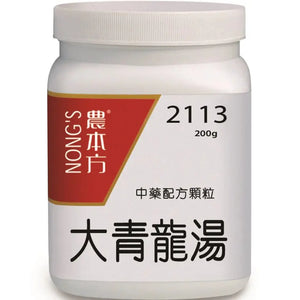
In modern clinical settings, Da Qing Long Tang is also available in a concentrated granule formulation. When using modern concentrated granules, dosage is generally adjusted based on the patient's specific situation and corresponds approximately to the dose of each herb in the traditional formula after conversion by ratio. For example, the concentrated granule doses of herbs such as Mahuang, Guizhi, Zhigancao, Xingren, and Shigao are formulated according to a set ratio to achieve a therapeutic effect similar to that of the traditional formula. Specific dosages, however, must still be determined by the physician based on comprehensive assessment of the patient's age, constitution, and condition. When using modern concentrated granules, the granules are generally dissolved in hot water before drinking; this is relatively convenient and quick, and well suited to modern fast-paced lifestyles.

Da Qing Long Tang: Inducing Sweat, Releasing the Exterior and Clearing Heat | HJMEDICAL

IX. Precautions and Contraindications

1. Stop Once the Condition Responds (Shang Han Lun Principle)

When using Da Qing Long Tang, it is essential to stop once the condition responds and not to exceed the appropriate dose. Because its sweat-inducing force is relatively strong, excessive dosage can easily cause profuse sweating that damages the body's upright qi, giving rise to adverse patterns such as yang collapse. Once symptoms have been relieved, medication should be discontinued promptly to avoid adverse effects on the body from over-medication.

2. Use with Caution in Those with a Weak Constitution

Da Qing Long Tang should be used with caution in those who are constitutionally weak or deficient in qi and blood. Because its sweat-inducing force is intense, this group of patients may be unable to withstand its medicinal force; it may cause excessive consumption of the upright qi, aggravating constitutional weakness and potentially triggering other diseases.

3. Adjust Based on the Condition

Throughout the course of medication, changes in the patient's condition should be closely monitored. If adverse symptoms such as excessive sweating, palpitations, or shortness of breath appear, medication should be discontinued immediately and medical attention sought promptly to adjust the treatment plan. At the same time, dosage and method of administration should be adjusted based on the patient's specific response to ensure safe and effective medication.

Da Qing Long Tang: Inducing Sweat, Releasing the Exterior and Clearing Heat | HJMEDICAL

X. Modern Research

1. Pharmacological Research

Da Qing Long Tang originates from the Jin Gui Yao Lue and primarily treats the pattern of exterior cold with interior heat presenting as fever with aversion to cold, absence of sweating, and irritability; it bears the actions of releasing the exterior with acrid-warm herbs and clearing heat to relieve irritability, and is suited to those in whom wind-cold constrains the exterior while interior heat is exuberant. Shengjiang and Dazao in the formula harmonise ying and wei; in clinical practice the formula is commonly compared with Yuebi Tang, and patients are advised to stop medication as soon as sweating occurs to avoid excessive sweating that damages the upright qi.

Modern pharmacological research has demonstrated that Mahuang in Da Qing Long Tang contains ephedrine and other constituents that produce sweat-inducing, anti-asthmatic, and diuretic actions; Guizhi has the effect of dilating blood vessels and promoting blood circulation; Shigao can clear heat and drain fire, reducing body temperature; Xingren has antitussive and anti-asthmatic actions; and Zhigancao has immune-regulating and anti-inflammatory functions. These herbs in combination may achieve the therapeutic effects of releasing the exterior and clearing heat, and relieving cough and calming wheezing, by regulating the body's physiological functions.

2. Clinical Research

In recent years, a substantial number of clinical research reports on Da Qing Long Tang have also been published. Some studies indicate that in treating diseases such as the common cold and influenza, Da Qing Long Tang can effectively relieve symptoms, shorten the course of the disease, and improve cure rates. In treating respiratory system diseases such as bronchitis and pneumonia, Da Qing Long Tang has also shown certain advantages, being able to improve patients' cough and dyspnoea symptoms and facilitate the absorption of pulmonary inflammation. These clinical studies provide more scientific evidence for the clinical application of Da Qing Long Tang and further advance its application and development in modern medicine.

Da Qing Long Tang — Frequently Asked Questions

Q1: What are the actions of Da Qing Long Tang?

Da Qing Long Tang has the actions of inducing sweat to release the exterior, clearing heat to relieve irritability, and diffusing the lungs to calm wheezing. It is primarily used for high fever, aversion to cold, absence of sweating, irritability and restlessness, and cough with dyspnoea caused by externally contracted wind-cold with concurrent interior heat.

Q2: Which modern diseases is Da Qing Long Tang applicable to?

In modern TCM clinical practice, it is commonly used for individuals with influenza, acute bronchitis, viral upper respiratory tract infections, and febrile respiratory diseases that fall within the TCM pattern of wind-cold binding the exterior with depressed heat accumulating internally.

Q3: Is Da Qing Long Tang suitable for influenza patients with high fever?

For influenza patients presenting with wind-cold depressed-heat manifestations — including high fever, pronounced aversion to cold, absence of sweating, body pain, irritability, and cough — TCM practitioners commonly apply Da Qing Long Tang based on pattern differentiation as adjunctive treatment. However, it cannot replace antiviral agents and other standard medical measures.

Q4: Who should not take Da Qing Long Tang?

Patients with exterior deficiency and spontaneous sweating, a weak constitution, yin deficiency with interior heat, or pronounced palpitations are generally not suitable candidates for Da Qing Long Tang. It should be used only after a qualified TCM physician has conducted a pattern-differentiation assessment based on the individual's constitution and condition.

⚠️ This content is for reference only and does not provide medical advice. Consult a healthcare professional for any health concerns.

Login

Forgot your password?

Don't have an account yet?
Create account

Da Qing Long Tang: Traditional Chinese Formula for Exterior Cold with Interior Heat