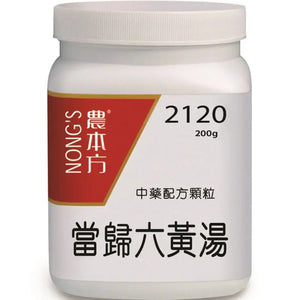
Danggui Liuhuang Tang

I. Origins and History
1. Classical Literature
Danggui Liuhuang Tang originates from the Lanshi Micang (Secrets from the Orchid Chamber), composed by the celebrated Jin-Yuan physician Li Dongyuan. Li Dongyuan was the founder of the spleen-stomach doctrine of Chinese medicine; his academic thought has exerted a profound and far-reaching influence on the development of medicine in later generations. Danggui Liuhuang Tang, as one of his representative works, holds an important place in the study of TCM formulas.
2. Historical Development
Since its creation in the Jin-Yuan period, Danggui Liuhuang Tang has withstood several centuries of clinical practice and has been widely applied and continuously refined by physicians of every dynasty. In different historical periods, physicians adjusted and expanded the herb dosages, processing methods, and scope of application based on their own clinical experience and understanding, enabling the formula to produce more pronounced efficacy in treating a variety of conditions.
3. Cultural Significance
Danggui Liuhuang Tang is not only an excellent formula for treating disease but also carries rich TCM cultural connotations. It embodies TCM's distinctive understanding and wisdom regarding the balance of yin and yang and the regulation of blood and qi in the human body, reflecting the invaluable experience accumulated by ancient physicians over long periods of medical practice. It is a shining gem in the treasury of TCM culture.

II. Herb Composition (Sovereign, Minister, Assistant, Envoy)
1. Chief Herbs: Danggui, Shengdihuang, and Shudihuang
- Danggui (Angelica Root)
Danggui is sweet and acrid in flavour, warm in nature, and enters the Liver, Heart, and Spleen channels. It has the actions of tonifying blood and activating blood, regulating menstruation and relieving pain, and moistening the intestines to unblock the bowels. In Danggui Liuhuang Tang, Danggui nourishes blood and enriches yin, serving as one of the chief herbs. Its blood-nourishing action can supplement the body's yin and blood so that yin fluids are sufficient to restrain hyperactive yang. At the same time, Danggui's blood-activating action can prevent yin-enriching herbs from being excessively cloying and impeding the movement of blood and qi.
- Shengdihuang (Fresh Rehmannia Root)
Shengdihuang is sweet and bitter in flavour, cold in nature, and enters the Heart, Liver, and Kidney channels. It has the actions of clearing heat and cooling blood, and nourishing yin and engendering fluids. Shengdihuang's force of clearing heat and cooling blood is relatively strong; it can clear and resolve heat toxin in the blood aspect and produces good therapeutic results for various symptoms caused by yin deficiency with internal heat. In the formula, it works synergistically with Danggui and Shudihuang, enhancing the actions of enriching yin, nourishing blood, clearing heat, and draining fire.
- Shudihuang (Processed Rehmannia Root)
Shudihuang is sweet in flavour, mildly warm in nature, and enters the Liver and Kidney channels. It has the actions of enriching yin, tonifying blood, and supplementing essence and filling the marrow. Shudihuang is thick and cloying in texture with a strong enriching nature; it can greatly supplement yin of the liver and kidneys and is a key herb for enriching yin and nourishing blood. Combined with Danggui and Shengdihuang, it makes the yin-enriching and blood-nourishing action more powerful, fundamentally replenishing the body's yin fluid insufficiency to achieve a state of yin-yang balance.
2. Deputy Herbs: Huangqin, Huanglian, and Huangbai
- Huangqin (Scutellaria Root)
Huangqin is bitter in flavour, cold in nature, and enters the Lung, Gallbladder, Spleen, Large Intestine, and Small Intestine channels. It has the actions of clearing heat and drying dampness, draining fire and resolving toxin, stopping bleeding, and calming the foetus. Huangqin excels at clearing Lung fire in the upper burner; in Danggui Liuhuang Tang, it can assist the chief herbs in clearing and draining heat from the Lung channel, preventing Lung fire from flaring upward to scorch the yin fluids, while also producing a certain clearing and resolving effect on the overall fire-heat pathogen.
- Huanglian (Coptis Rhizome)
Huanglian is bitter in flavour, cold in nature, and enters the Heart, Spleen, Stomach, Liver, Gallbladder, and Large Intestine channels. It has the actions of clearing heat and drying dampness, and draining fire and resolving toxin. Huanglian excels particularly at clearing Heart fire; it can directly break excess fire in the Heart channel and produces good therapeutic results for symptoms caused by Heart fire hyperactivity such as vexation and restlessness, and insomnia. In the formula, Huanglian combined with Huangqin strengthens the force of clearing heat and draining fire, jointly targeting the fire-heat pathogen within the body.
- Huangbai (Phellodendron Bark)
Huangbai is bitter in flavour, cold in nature, and enters the Kidney, Bladder, and Large Intestine channels. It has the actions of clearing heat and drying dampness, draining fire and eliminating steaming, and resolving toxin to treat sores. Huangbai is skilled at clearing damp-heat and ministerial fire in the lower burner; it can clear and drain Kidney fire, preventing the ministerial fire in the Kidney from flaring recklessly. Combined with Huangqin and Huanglian, it can comprehensively clear and drain fire-heat pathogen from all three burners of the body — upper, middle, and lower — strengthening the formula's heat-clearing and fire-draining action.
3. Adjuvant Herb: Huangqi
Huangqi (Astragalus Root) is sweet in flavour, mildly warm in nature, and enters the Spleen and Lung channels. It has the actions of tonifying qi and raising yang, consolidating the exterior and stopping sweating, promoting urination and reducing swelling, engendering fluids and nourishing blood, moving stagnation and unblocking impediment, supporting expulsion of toxin and pus, and closing sores to promote tissue regeneration. In Danggui Liuhuang Tang, Huangqi primarily fulfils two roles. First, it can tonify qi and consolidate the exterior, preventing excessive outward leakage of yin fluids. Second, Huangqi's qi-tonifying action helps to promote blood circulation and facilitate the generation and distribution of yin and blood; working in concert with the yin-enriching herbs, it enables yin enrichment without obstructing qi and qi tonification without assisting fire, fulfilling the adjuvant role.
4. Envoy Herb: Zhigancao
Zhigancao (Honey-Fried Licorice Root) is sweet in flavour, neutral in nature, and enters the Heart, Lung, Spleen, and Stomach channels. It has the actions of tonifying the spleen and augmenting qi, moistening the lungs and relieving cough, clearing heat and resolving toxin, and harmonising all herbs. In Danggui Liuhuang Tang, Zhigancao on one hand harmonises all herbs, enabling the various herbs in the formula to work together in better synergy; on the other hand, it can also tonify the spleen and augment qi, strengthen the spleen and stomach's transforming and transporting function, facilitate the absorption and utilisation of the herbs, and fulfil the envoy role.

III. Pathomechanism, Actions, and Indications
1. Pathomechanism
The primary pathomechanism addressed by Danggui Liuhuang Tang is yin deficiency with effulgent fire. When the body's yin fluids are deficient and unable to restrain yang qi, yang qi becomes relatively hyperactive and deficiency fire is generated internally. Yin deficiency generates internal heat; when deficiency fire flares upward, symptoms such as fever and night sweating may appear. When deficiency fire harasses the Heart, vexation and restlessness result. When heat damages yin fluids causing yin fluid to leak outward, spontaneous sweating occurs. In addition, yin deficiency with blood dryness may also give rise to a series of symptoms such as failure of the skin and flesh to receive nourishment.
2. Actions
Danggui Liuhuang Tang has the actions of enriching yin and draining fire, and consolidating the exterior and stopping sweating. Through the heavier use of yin-enriching and blood-nourishing substances such as Danggui, Shengdihuang, and Shudihuang, it greatly supplements the body's yin fluids and fundamentally resolves the problem of yin deficiency. At the same time, Huangqin, Huanglian, and Huangbai clear heat and drain fire, directly breaking the exuberant fire of all three burners so that deficiency fire is cleared. Huangqi tonifies qi and consolidates the exterior to prevent excessive leakage of yin fluids; Zhigancao harmonises all herbs — together they fulfil the actions of enriching yin, draining fire, consolidating the exterior, and stopping sweating.
3. Indications
- Night Sweating from Yin Deficiency with Effulgent Fire
Symptoms include night sweating during sleep, or possible spontaneous sweating, vexing heat in the five hearts (palms, soles, and chest), or concurrent tidal fever in the afternoon, flushed cheeks with thirst, a red tongue with scant coating, and a fine, rapid pulse. Danggui Liuhuang Tang produces excellent efficacy for night sweating caused by yin deficiency with effulgent fire; it can enrich yin and reduce fire so that the night sweating symptoms are relieved.
- Fever from Yin Deficiency with Effulgent Fire
This presents as fever, typically low-grade, worsening in the afternoon or at night, accompanied by vexing heat in the palms and soles, vexation and restlessness with insomnia, and dry throat and mouth. This formula can nourish yin and clear heat, regulate the balance of yin and yang in the body, and thereby reduce fever symptoms.

IV. Formula Analysis
1. Simultaneous Use of Yin Enrichment and Blood Nourishment with Heat Clearing and Fire Draining
The formula uses heavier doses of Danggui, Shengdihuang, and Shudihuang to enrich yin and nourish blood, supplementing the insufficiency of yin fluids. At the same time, Huangqin, Huanglian, and Huangbai clear heat and drain fire; targeting the pathomechanism of yin deficiency with effulgent fire, they clear and drain the exuberant fire within the body. Yin enrichment and fire reduction complement each other — enriching yin to restrain fire, and draining fire to preserve yin — so that yin fluids are restored, deficiency fire is subdued, and a state of yin-yang balance is achieved.
2. Tonifying Qi and Consolidating the Exterior to Prevent Leakage of Yin Fluids
Huangqi tonifies qi and consolidates the exterior; it can strengthen the function of the body's wei qi and prevent excessive outward leakage of yin fluids. While enriching yin and draining fire, consolidating the exterior through qi tonification enables yin fluids to be preserved internally, avoiding further damage to yin fluids from excessive sweating. This embodies TCM's thinking of comprehensive regulation and simultaneous treatment of both root and branch.
3. Harmonising All Herbs for Synergistic Action
Zhigancao harmonises all herbs, enabling the yin-enriching, heat-clearing, and qi-tonifying herbs in the formula to coordinate with one another and better fulfil each of their actions. It can also strengthen the spleen and harmonise the stomach, facilitating the absorption and transformation of the herbs and making the action of the entire formula more stable and effective.

V. Comparison with Related Formulas
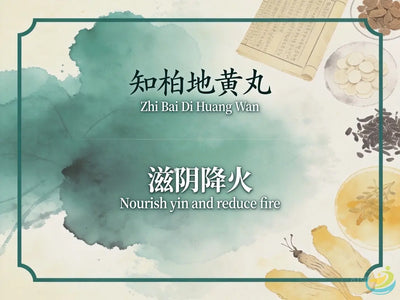
1. Comparison with Zhibo Dihuang Wan
- Herb Composition
Zhibo Dihuang Wan is primarily composed of Zhimu (Anemarrhena Rhizome), Huangbai (Phellodendron Bark), Shudihuang (Processed Rehmannia Root), Shanzhuyu (Cornus Fruit), Mudanpi (Tree Peony Bark), Shanyao (Chinese Yam), Fuling (Poria), and Zexie (Alisma Rhizome). Danggui Liuhuang Tang takes Danggui, Shengdihuang, Shudihuang, Huangqin, Huanglian, Huangbai, Huangqi, and Zhigancao as its principal herbs. The two formulas differ to a certain degree in herb composition; Zhibo Dihuang Wan focuses on tonifying Kidney yin with supplementary clearing of deficiency heat, while Danggui Liuhuang Tang provides a more balanced yin-enriching and blood-nourishing action alongside heat-clearing and fire-draining, and also includes qi-tonifying and exterior-consolidating herbs.
- Actions and Indications
The primary actions of Zhibo Dihuang Wan are enriching yin and reducing fire; it is used for yin deficiency with effulgent fire, tidal fever and night sweating, dry mouth and sore throat, tinnitus and seminal emission, and scanty dark urine. In addition to enriching yin and draining fire, Danggui Liuhuang Tang places greater emphasis on consolidating the exterior and stopping sweating; it is more suited to cases of yin deficiency with effulgent fire where spontaneous sweating or night sweating is more severe.
2. Comparison with Muli San
- Herb Composition
Muli San is composed of Huangqi (Astragalus Root), Mahuanggen (Ephedra Root), and Muli (Oyster Shell). Compared with Danggui Liuhuang Tang, it lacks herbs such as Danggui, Shengdihuang, Shudihuang, Huangqin, Huanglian, Huangbai, and Zhigancao. Muli San focuses primarily on consolidating the exterior and stopping sweating, while Danggui Liuhuang Tang, building on the foundation of consolidating the exterior and stopping sweating, places greater emphasis on enriching yin and nourishing blood, and clearing heat and draining fire.
- Actions and Indications
Muli San primarily treats patterns of spontaneous sweating and night sweating, with symptoms including spontaneous sweating or night sweating that is particularly severe during sleep, palpitations and fright, shortness of breath with fatigue, a pale red tongue, and a fine, weak pulse. Danggui Liuhuang Tang primarily treats night sweating, fever, and other symptoms of yin deficiency with effulgent fire. The two formulas have a certain overlap in their primary indications, but Danggui Liuhuang Tang addresses a more complex pathomechanism with a broader therapeutic scope.

VI. Clinical Applications
1. Internal Medicine Disorders
- Night Sweating
Whether primary or secondary night sweating, as long as it is caused by yin deficiency with effulgent fire, Danggui Liuhuang Tang produces good efficacy. For example, for night sweating symptoms occurring in those with a weak constitution, prolonged illness with physical weakness, or menopausal women, treatment with Danggui Liuhuang Tang with modifications often yields satisfactory results.
- Low-Grade Fever
For low-grade fever of unknown cause, especially where accompanied by yin deficiency symptoms, Danggui Liuhuang Tang can serve as a commonly used formula. For example, for low-grade fever occurring during the recovery phase of chronic diseases, accompanied by vexation and restlessness, dry mouth, and night sweating, applying Danggui Liuhuang Tang to enrich yin and clear heat can gradually relieve the low-grade fever.
2. Dermatological Disorders
- Dermatological Pruritus
Some patients with pruritus are of the yin-deficient blood-dry type, presenting with dry skin and itching that worsens at night, accompanied by vexation and restlessness and insomnia. Danggui Liuhuang Tang enriches yin, nourishes blood, and moistens dryness to improve skin symptoms and reduce pruritus.
- Acne
For some acne patients presenting with signs of yin deficiency and effulgent fire — such as facial flushing with acne breakouts, dry and bitter mouth, and dry, bound stools — Danggui Liuhuang Tang can help treat the acne through enriching yin, draining fire, and regulating the endocrine system.
3. Gynaecological Disorders
- Menopausal Syndrome
Menopausal women commonly present with tidal fever, night sweating, vexation and restlessness with insomnia, and other symptoms, most of which are related to yin deficiency with effulgent fire. Danggui Liuhuang Tang can enrich yin and drain fire, relieving the symptoms of menopausal syndrome and improving patients' quality of life.
- Early Menstruation
For early menstruation accompanied by yin deficiency and effulgent fire symptoms — such as scanty menstrual flow that is red in colour and thick in consistency, with concurrent tidal fever and night sweating — Danggui Liuhuang Tang can regulate the menstrual cycle through enriching yin and clearing heat.

VII. Clinical Modifications
1. For Severe Night Sweating
Mahuanggen (Ephedra Root) and Fuxiaomai (Light Wheat Grain) may be added to strengthen the action of consolidating the exterior and stopping sweating. Mahuanggen is sweet in flavour and neutral in nature, entering the Heart and Lung channels, with the action of consolidating the exterior and stopping sweating; it can astringe and stop sweating, and combined with Huangqi and other herbs it can effectively reduce night sweating. Fuxiaomai is sweet in flavour and cool in nature, entering the Heart channel; it can augment qi, eliminate heat, and stop sweating, producing good therapeutic results for both spontaneous sweating and night sweating. Working synergistically with Mahuanggen, it enhances the sweat-stopping effect.
2. For Severe Yin Deficiency
Xuanshen (Scrophularia Root) and Maidong (Ophiopogon Root) may be added to further enrich yin and moisten dryness. Xuanshen is sweet, bitter, and salty in flavour, mildly cold in nature, and enters the Lung, Stomach, and Kidney channels; it has the actions of clearing heat and cooling blood, enriching yin and draining fire, and resolving toxin and dissipating masses. Maidong is sweet and mildly bitter in flavour, mildly cold in nature, and enters the Heart, Lung, and Stomach channels; it can nourish yin and engender fluids, and moisten the lungs and clear the heart. Combined with the yin-enriching herbs in the formula such as Danggui, Shengdihuang, and Shudihuang, the two herbs can strengthen the yin-enriching force to better nourish a yin-deficient constitution.
3. For Concurrent Qi Deficiency
Dangshen (Codonopsis Root) and Baizhu (Atractylodes Rhizome) may be added to tonify qi and strengthen the spleen. Dangshen is sweet in flavour and neutral in nature, entering the Spleen and Lung channels; it can strengthen the spleen and tonify the lungs, nourish blood, and engender fluids. Baizhu is bitter and sweet in flavour, warm in nature, and enters the Spleen and Stomach channels; it has the actions of strengthening the spleen and augmenting qi, drying dampness and promoting urination, stopping sweating, and calming the foetus. Combined with Huangqi and Zhigancao in the formula, Dangshen and Baizhu enhance the action of tonifying qi and strengthening the spleen, improving spleen and stomach transformation and transportation function, facilitating herb absorption, and promoting physical recovery.
4. For Concurrent Yang Deficiency
Fuzi (Aconite) and Rougui (Cinnamon Bark) may be added to warm yang and scatter cold. Fuzi is acrid and sweet in flavour, greatly hot in nature, and enters the Heart, Kidney, and Spleen channels; it can restore yang and rescue from counterflow, supplement fire and assist yang, and scatter cold and relieve pain. Rougui is acrid and sweet in flavour, greatly hot in nature, and enters the Kidney, Spleen, Heart, and Liver channels; it has the actions of supplementing fire and assisting yang, scattering cold and relieving pain, warming and unblocking the channels and vessels, and directing fire to return to its source. Combined with the yin-enriching herbs in the formula, Fuzi and Rougui can fulfil the role of supplementing both yin and yang, and are suited to patients with concurrent yin and yang deficiency.

VIII. Dosage and Preparation
1. Traditional Method
This guide introduces the traditional water decoction method for Danggui Liuhuang Tang — a classical formula from Jin-Yuan medicine. Through the unique mechanism of combining three bitter-cold heat-clearing herbs with Huangqi used at double the standard dose to consolidate the exterior, and the trio of Danggui, Shengdihuang, and Shudihuang to nourish yin, together with the exacting transition from strong to gentle heat, the formula achieves its full actions of enriching yin, clearing heat, consolidating the exterior, and stopping sweating.
- Huangqi (Astragalus Root): 12g (adjuvant herb; used at double the standard dose to consolidate the exterior and stop sweating)
- Danggui (Angelica Root): 10g (chief herb; nourishes blood and enriches yin)
- Shengdihuang (Fresh Rehmannia Root): 10g (chief herb; enriches yin and clears heat)
- Shudihuang (Processed Rehmannia Root): 10g (chief herb; enriches yin and tonifies blood)
- Huangqin (Scutellaria Root): 6g (deputy herb; bitter and cold to clear heat)
- Huanglian (Coptis Rhizome): 6g (deputy herb; clears the Heart and drains fire)
- Huangbai (Phellodendron Bark): 6g (deputy herb; clears and drains ministerial fire)
- Zhigancao (Honey-Fried Licorice Root): 6g (envoy herb; harmonises all herbs)
- Water: an appropriate amount (for soaking the herbs and decoction)
2. Modern Concentrated Granules
Modern concentrated granules are prepared by extracting and concentrating Chinese herbs through various pharmaceutical processes into a granule formulation that is convenient to take. When using Danggui Liuhuang Tang concentrated granules, the dosage is generally as specified in the package insert. The standard dosages are: Danggui 10g, Shengdihuang 10g, Shudihuang 10g, Huangqin 6g, Huanglian 6g, Huangbai 6g, Huangqi 12g, Zhigancao 6g. Dissolve the granules in an appropriate amount of hot water and take in two divided doses, one decoction per day. Modern concentrated granules maintain the therapeutic actions of the Chinese herbs and are convenient to carry and store, making them well suited to modern fast-paced lifestyles.

IX. Precautions and Contraindications
1. Dietary Restrictions
During the course of taking Danggui Liuhuang Tang, consumption of pungent, oily, and stimulating foods should be avoided, so as not to aggravate the fire-heat pathogen within the body. Foods such as chilli peppers, Sichuan pepper, and deep-fried foods should all be consumed as little as possible. At the same time, alcohol should also be avoided; alcohol generates heat and will impair the efficacy of the formula.
2. Constitutional Contraindications
Those with spleen-stomach deficiency-cold and yang deficiency with aversion to cold should not use Danggui Liuhuang Tang. This formula's medicinal nature tends toward cold and cooling, and readily injures spleen and stomach yang qi; in patients with spleen-stomach deficiency-cold, it may cause discomfort such as abdominal pain and diarrhoea after use. Those with a yang-deficient constitution already have insufficient yang qi; use of the cold and cooling Danggui Liuhuang Tang will further damage yang qi, causing physical discomfort.
3. Special Circumstances
Danggui Liuhuang Tang should be used with caution in pregnant women. Although the herbs in the formula are mostly commonly used Chinese herbs, because the formula has certain blood-activating and heat-clearing actions, its use during pregnancy may affect the foetus. In addition, it should not be taken during the acute phase of a common cold with fever, as this may impair the efficacy of exterior-releasing herbs and delay recovery.

X. Modern Research
1. Pharmacological Research
Danggui Liuhuang Tang is a celebrated classical formula; it primarily treats fever, night sweating, flushed face, vexation and restlessness, dry mouth and lips, and dark scanty urine caused by yin deficiency with effulgent fire. Patients commonly present with a red tongue with a yellow coating and a rapid pulse. Herbs such as Danggui in the formula enrich yin and clear heat; the formula is applied clinically for conditions such as diabetes that fall within the pattern of yin deficiency with internal heat.
Modern pharmacological research has demonstrated that the herbs in Danggui Liuhuang Tang possess multiple pharmacological actions. Danggui has actions including promoting haematopoietic function, regulating uterine smooth muscle, and inhibiting platelet aggregation; Shengdihuang and Shudihuang have the functions of enriching yin and tonifying blood, and regulating immune function; Huangqin, Huanglian, and Huangbai have antibacterial, anti-inflammatory, and antiviral actions; Huangqi can strengthen the body's immune function and protect the cardiovascular system; Zhigancao has anti-inflammatory, antiallergic, and gastrointestinal regulatory actions. These pharmacological actions work in concert and may form the material basis for Danggui Liuhuang Tang's clinical efficacy.
2. Clinical Research
In recent years, numerous clinical studies have further verified the efficacy of Danggui Liuhuang Tang. In treating conditions such as night sweating, low-grade fever, and menopausal syndrome, Danggui Liuhuang Tang has demonstrated good therapeutic outcomes. Some studies have found through comparative observation that Danggui Liuhuang Tang is superior to other similar formulas or Western medication alone in improving symptoms and regulating bodily function. At the same time, studies have also explored the optimal dosage and duration of treatment for Danggui Liuhuang Tang, providing a reference basis for rational clinical use.
3. Pharmaceutical Form Improvement Research
With advances in modern science and technology, research into improving the formulation of Danggui Liuhuang Tang has continued to progress. In addition to the traditional water decoction and modern concentrated granules, new formulations such as capsules and pills have also emerged. These new formulations, while maintaining the therapeutic action of the formula, improve patient compliance and facilitate administration and storage, providing a broader prospect for the clinical application and promotion of Danggui Liuhuang Tang.
Danggui Liuhuang Tang — Frequently Asked Questions
Q1: What are the actions of Danggui Liuhuang Tang?
Danggui Liuhuang Tang has the actions of enriching yin and nourishing blood, draining fire and relieving vexation, and consolidating the exterior and stopping sweating. It is commonly used for night sweating, tidal fever, vexation and restlessness, dry mouth, and nocturnal sweating caused by yin deficiency with effulgent fire.
Q2: Which modern diseases is Danggui Liuhuang Tang applicable to?
In modern TCM clinical practice, it is commonly used for individuals with menopausal syndrome, hyperhidrosis and night sweating, discomfort related to hyperthyroidism, and autonomic nervous system dysregulation that fall within the TCM pattern of yin deficiency with effulgent fire.
Q3: Is Danggui Liuhuang Tang suitable for menopausal tidal fever and night sweating?
For those with recurring tidal fever, night sweating, vexation and restlessness with insomnia, dry mouth and throat, and pronounced nocturnal sweating who conform to the yin deficiency and effulgent fire pattern, TCM practitioners commonly apply Danggui Liuhuang Tang based on pattern differentiation as adjunctive treatment; however, it cannot replace standard endocrinological or gynaecological diagnosis and treatment.
Q4: Who should not take Danggui Liuhuang Tang?
Patients with yang-deficient spontaneous sweating, spleen-stomach deficiency-cold, aversion to cold with cold limbs, and internal exuberance of cold-dampness are generally not suitable candidates for Danggui Liuhuang Tang. It should be used only after a qualified TCM physician has conducted a pattern-differentiation assessment based on the individual's constitution and pattern characteristics.
⚠️ This content is for reference only and does not provide medical advice. Consult a healthcare professional for any health concerns.