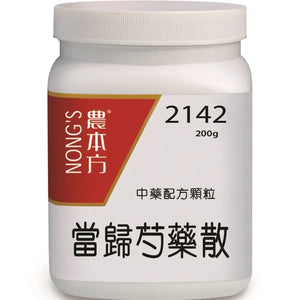
Danggui Shaoyao San

I. Origins and History
1. Classical Literature
Danggui Shaoyao San originates from Jingui Yaolue (Essential Prescriptions of the Golden Cabinet), authored by Zhang Zhongjing of the Eastern Han dynasty. This medical classic is itself a classic among TCM texts, and has exerted a profound and far-reaching influence on the subsequent development of TCM clinical practice and formula science. The Jingui Yaolue systematically compiled the experience and methods accumulated in treating various diseases prior to the Eastern Han dynasty; Danggui Shaoyao San, as one of its important formulas, has been valued and applied by physicians throughout successive generations.
2. Historical Development
Since its recording in the Jingui Yaolue, Danggui Shaoyao San has undergone a long process of historical transmission and development. In different historical periods, physicians continuously researched and practised with the formula, progressively broadening its scope of application and deepening the understanding of its actions. Through clinical practice, ancient physicians accumulated experience and made further refinements to aspects such as herb processing, dosage adjustment, and formula modifications — establishing it as an effective formula for treating multiple gynaecological and internal medicine conditions. For example, medical works of the Tang dynasty contain detailed records of applying Danggui Shaoyao San to conditions such as abdominal pain during pregnancy, with adjustments to herb dosages and combinations to meet the clinical needs of that era. As time passed, Danggui Shaoyao San was referenced in the medical texts of the Song, Yuan, Ming, and Qing dynasties, and its scope of application gradually expanded to encompass a variety of conditions related to qi-blood disharmony and liver depression with spleen deficiency.

II. Herb Composition (Sovereign, Minister, Assistant, Envoy)
1. Sovereign Herb: Danggui (Angelica Root)
Danggui is sweet and acrid in flavour and warm in nature, entering the Liver, Heart, and Spleen channels. It tonifies the blood and invigorates blood movement, regulates menstruation and relieves pain, and moistens the intestines to move the bowels. Within Danggui Shaoyao San, Danggui serves as the sovereign herb, principally fulfilling the function of tonifying the blood and nourishing the liver. As blood is the foundation of womanhood and the liver governs the storage of blood, Danggui nourishes liver blood, ensuring that the liver has an abundance of qi and blood and can perform its functions normally. For the various conditions caused by insufficient liver blood — such as a sallow complexion, dizziness and palpitations, and menstrual irregularity — Danggui provides excellent regulatory benefit. Its blood-tonifying action supplies the body's organs and tissues with abundant nourishment; its blood-invigorating action promotes the free movement of qi and blood, preventing stasis and obstruction. In gynaecological conditions, Danggui is particularly important for regulating menstrual irregularity and dysmenorrhoea: it promotes blood circulation, alleviates menstrual pain, regulates the cycle, and restores normal female physiological function.
2. Minister Herb: Shaoyao (White Peony Root / Baishao)
Shaoyao is bitter and sour in flavour and slightly cold in nature, entering the Liver and Spleen channels. It nourishes the blood and regulates menstruation, astringes yin and stops sweating, softens the liver and relieves pain, and calms liver yang. Within Danggui Shaoyao San, Baishao serves as the minister herb, assisting Danggui in nourishing the blood and softening the liver. Used together with Danggui, it reinforces the blood-nourishing and liver-nourishing effect while also softening the liver and relieving pain. The liver governs free coursing; if liver qi fails to flow freely, hypochondriac and epigastric pain readily arise. Baishao soothes liver qi and relieves pain, and is highly effective for pain caused by liver qi stagnation. Additionally, Baishao astringes yin and nourishes blood, providing a degree of regulatory benefit for dizziness, blurred vision, and other symptoms due to liver yin insufficiency. In gynaecological conditions, Baishao plays an important role in regulating menstrual irregularity and menstrual abdominal pain caused by liver depression and blood deficiency: by nourishing blood and softening the liver, it regulates the liver's free-coursing function and thereby achieves the aim of regulating menstruation.
3. Assistant Herbs: Fuling (Poria), Baizhu (White Atractylodes Rhizome), and Zexie (Alisma Rhizome)
Fuling is sweet and bland in flavour and neutral in nature, entering the Heart, Lung, Spleen, and Kidney channels. Its actions include promoting urination and draining dampness, strengthening the spleen, and calming the heart. Baizhu is bitter and sweet in flavour and warm in nature, entering the Spleen and Stomach channels. It strengthens the spleen and benefits qi, dries dampness and promotes urination, stops sweating, and calms the foetus. Zexie is sweet and bland in flavour and cold in nature, entering the Kidney and Bladder channels. Its actions include promoting urination and draining dampness, and draining heat. These three herbs serve as assistant herbs within Danggui Shaoyao San, principally fulfilling the function of strengthening the spleen and draining dampness. The spleen and stomach are the postnatal root and the source of qi and blood generation. When spleen-stomach function is weak and transformation and transportation become disordered, water-dampness readily accumulates internally. Used together, Fuling, Baizhu, and Zexie reinforce the spleen and stomach's transforming and transporting function, promote the metabolism of water-dampness, and enable excess water to be excreted from the body. Once water-dampness is eliminated, qi and blood flow more freely, benefiting the nourishment of liver blood and the free coursing of liver qi. Strengthening the spleen and draining dampness also improves abdominal distension, diarrhoea, and other symptoms caused by water-dampness obstruction — providing important auxiliary benefit to the overall adjustment of the body. In gynaecological conditions, internal accumulation of water-dampness often disrupts the normal arrival of menstruation, causing scanty menstruation and delayed periods; the application of Fuling, Baizhu, and Zexie can improve gynaecological symptoms by regulating the spleen and stomach and expelling water-dampness.
4. Envoy Herb: Chuanxiong (Sichuan Lovage Rhizome)
Chuanxiong is acrid in flavour and warm in nature, entering the Liver and Gallbladder channels. It invigorates blood and moves qi, and dispels wind and relieves pain. Within Danggui Shaoyao San, Chuanxiong serves as the envoy herb, guiding all the other medicinals directly to the site of disease and reinforcing the formula's blood-invigorating and qi-moving power. Used with Danggui, it further strengthens the blood-invigorating and stasis-resolving effect, making qi and blood movement even more fluent. Chuanxiong's wind-dispelling and pain-relieving action is highly effective for headache and body pain caused by wind pathogen obstructing the channels. In gynaecological conditions, Chuanxiong promotes the circulation of qi and blood, improving dysmenorrhoea and amenorrhoea caused by blood stasis obstruction so that menstruation can descend freely. It also regulates the qi dynamic, relieving hypochondriac distending pain and discomfort caused by qi stagnation and blood stasis, concentrating the formula's medicinal force and making its action more pronounced.

III. Pathomechanism, Actions, and Indications
1. Pathomechanism
The pathomechanism targeted by Danggui Shaoyao San is primarily liver depression and spleen deficiency with qi-blood disharmony. The liver governs free coursing and flourishes with uninhibited movement while aversion to constraint. When emotional constraint causes liver qi depression and stagnation, the liver's normal free-coursing function is disrupted. Liver depression leads to qi stagnation; qi stagnation leads to impeded blood movement, readily generating internal blood stasis. Simultaneously, liver wood overacts on spleen earth: prolonged liver depression impairs the spleen and stomach's transforming and transporting function, giving rise to spleen deficiency. Spleen deficiency means insufficient generation of qi and blood, and disordered transformation and transportation of water-dampness, producing symptoms of qi-blood deficiency and internal accumulation of water-dampness. This mutually reinforcing pathomechanism of liver depression and spleen deficiency with qi-blood disharmony gives rise to a series of conditions.
2. Actions (Danggui Shaoyao Tang)
Based on the above pathomechanism, Danggui Shaoyao San possesses the actions of nourishing blood and soothing the liver, and strengthening the spleen and draining dampness. Through the blood-nourishing and liver-softening actions of Danggui, Shaoyao, and related herbs, it regulates the liver's qi and blood, soothes liver qi, and restores normal liver function. At the same time, spleen-strengthening and dampness-draining herbs such as Fuling, Baizhu, and Zexie reinforce the spleen and stomach's transforming and transporting function, eliminate water-dampness, and improve the various symptoms caused by spleen deficiency and dampness excess. With qi and blood harmonised and water-dampness expelled, the body's overall condition improves and the aim of treating disease is achieved.
3. Indications
Danggui Shaoyao San is primarily used to treat a variety of conditions arising from liver depression and spleen deficiency with qi-blood disharmony. In gynaecology, it is commonly used to treat menstrual irregularity, dysmenorrhoea, and abdominal pain during pregnancy. For menstrual irregularity presenting as disordered menstrual cycles, scanty or excessive menstrual flow, and pale menstrual blood, Danggui Shaoyao San nourishes blood and soothes the liver, and regulates qi and blood, restoring cycle regularity and normalising menstrual volume and colour. Dysmenorrhoea is most often caused by liver qi stagnation, blood stasis obstruction, or spleen deficiency with dampness excess; this formula can move qi, invigorate blood, resolve stasis, relieve pain, and strengthen the spleen to drain dampness, thereby alleviating dysmenorrhoea. Where abdominal pain during pregnancy is caused by liver depression and spleen deficiency — presenting with hypochondriac distending pain, epigastric and abdominal fullness and distension, and foetal restlessness — Danggui Shaoyao San can also provide good regulatory benefit, nourishing blood and softening the liver and strengthening the spleen and harmonising the stomach to stabilise the pregnant woman's condition and support normal foetal development. In andrology, it also has a degree of therapeutic effect for hypochondriac distending pain, scrotal dampness, and reduced sexual function due to liver depression and spleen deficiency. Furthermore, in internal medicine conditions such as dizziness, headache, abdominal distension, and diarrhoea caused by liver depression and spleen deficiency, Danggui Shaoyao San may be applied with appropriate modifications according to the specific symptoms to achieve the aims of regulating the body and treating disease.

IV. Formula Analysis
1. Nourishing the Blood and Softening the Liver
Danggui and Shaoyao are the principal herbs for nourishing the blood and softening the liver. Danggui tonifies the blood and nourishes the liver, providing the liver with abundant blood nourishment so that it can perform its functions normally. Shaoyao nourishes blood and astringes yin, softens the liver and relieves pain; acting in synergy with Danggui, it reinforces the blood-nourishing and liver-softening effect. The liver stores blood and governs free coursing; when liver blood is abundant, liver qi flows freely and free coursing proceeds normally. If liver blood is insufficient, liver qi readily stagnates, producing a range of discomforts. Danggui Shaoyao San nourishes the blood and softens the liver, regulating the liver's qi and blood and allowing liver qi to flow freely — thereby improving the various conditions caused by liver depression. For example, in hypochondriac distending pain caused by liver qi stagnation, the Danggui and Shaoyao in Danggui Shaoyao San nourish liver blood and soothe liver qi, alleviating the hypochondriac pain.
2. Strengthening the Spleen and Draining Dampness
Fuling, Baizhu, and Zexie jointly exert the action of strengthening the spleen and draining dampness. Fuling promotes urination and drains dampness, strengthens the spleen and calms the heart; Baizhu strengthens the spleen and benefits qi, dries dampness and promotes urination; Zexie promotes urination and drains dampness, and drains heat. The spleen and stomach are the postnatal root and the source of qi and blood generation; when the spleen is deficient, transformation and transportation become disordered and water-dampness is generated internally. Used together, Fuling, Baizhu, and Zexie reinforce the spleen and stomach's transforming and transporting function and promote the metabolism of water-dampness. Once water-dampness is expelled, qi and blood flow more freely, benefiting the nourishment of liver blood and the free coursing of liver qi. Strengthening the spleen and draining dampness also improves abdominal distension, diarrhoea, and other symptoms caused by water-dampness obstruction. In gynaecological conditions, internal accumulation of water-dampness often disrupts normal menstruation, causing scanty menses and delayed periods; the application of Fuling, Baizhu, and Zexie can improve gynaecological symptoms by regulating the spleen and stomach and expelling water-dampness.
3. Invigorating Blood and Moving Qi
Chuanxiong possesses the actions of invigorating blood and moving qi, and dispelling wind and relieving pain, fulfilling the blood-invigorating and qi-moving role within the formula. Used with Danggui, it reinforces the blood-invigorating and stasis-resolving effect, making qi and blood movement even more fluent. When qi and blood flow freely, the organ systems function normally and all parts of the body receive nourishment. In gynaecological conditions, Chuanxiong promotes the circulation of qi and blood, improving dysmenorrhoea and amenorrhoea caused by blood stasis obstruction so that menstruation descends freely. It also regulates the qi dynamic, relieving hypochondriac distending pain and discomfort caused by qi stagnation and blood stasis, concentrating the formula's medicinal force and making its action more prominent.

V. Comparison with Related Formulas
1. Comparison with Xiaoyao San
Xiaoyao San (Free Wanderer Powder) is also a classical formula for treating liver depression and spleen deficiency. It is principally composed of Chaihu (Bupleurum Root), Danggui (Angelica Root), Baishao (White Peony Root), Baizhu (White Atractylodes Rhizome), Fuling (Poria), Gancao (Licorice Root), and Bohe (Peppermint). Xiaoyao San focuses primarily on soothing the liver and resolving depression, emphasising the regulation of liver qi stagnation: Chaihu's liver-soothing and qi-regulating action is combined with Danggui and Baishao to nourish blood and soften the liver, Fuling and Baizhu to strengthen the spleen and benefit qi, Gancao to harmonise the formula, and Bohe to disperse stagnant liver qi. Danggui Shaoyao San, building on the same liver-soothing and spleen-strengthening foundation, places greater emphasis on nourishing blood, invigorating blood, and strengthening the spleen to drain dampness. In Danggui Shaoyao San, the doses of Danggui and Shaoyao are relatively large, reinforcing the blood-nourishing action, while the pairing of Fuling, Baizhu, and Zexie more prominently highlights the spleen-strengthening and dampness-draining effect. Xiaoyao San is primarily used where liver qi stagnation is relatively mild, with symptoms dominated by emotional constraint and hypochondriac distending pain; Danggui Shaoyao San is suited to conditions where liver depression and spleen deficiency are accompanied by more pronounced qi-blood disharmony and water-dampness accumulation — such as menstrual irregularity, dysmenorrhoea, and abdominal pain during pregnancy simultaneously presenting with abdominal distension, diarrhoea, and other manifestations of spleen deficiency with dampness excess.
2. Comparison with Guipi Tang
Guipi Tang (Restore the Spleen Decoction) is primarily effective for tonifying qi and nourishing blood and strengthening the spleen and nourishing the heart, composed of Baizhu, Fuling, Huangqi (Astragalus Root), Longyan Rou (Longan Flesh), Suanzaoren (Sour Jujube Seed), Renshen (Ginseng), Muxiang (Costus Root), Zhi Gancao (Honey-fried Licorice Root), Danggui, and Yuanzhi (Polygala Root). Guipi Tang focuses on tonifying and supplementing the heart and spleen, treating heart-spleen dual deficiency pattern — with symptoms dominated by palpitations and fearful throbbing, insomnia and forgetfulness, a sallow complexion, and fatigue with poor appetite. While Danggui Shaoyao San also strengthens the spleen and nourishes blood, it focuses more on the qi-blood disharmony and water-dampness accumulation arising from liver depression and spleen deficiency. Danggui Shaoyao San does not include the heart-and-spleen-supplementing and spirit-calming herbs found in Guipi Tang — such as Huangqi, Longan Flesh, Sour Jujube Seed, and Polygala Root — but instead uses Danggui and Shaoyao to nourish blood and soften the liver, Fuling, Baizhu, and Zexie to strengthen the spleen and drain dampness, and Chuanxiong to invigorate blood and move qi, primarily addressing gynaecological and related conditions arising from liver depression and spleen deficiency. Guipi Tang is most often used to treat symptoms of unsettled spirit and qi-blood insufficiency due to heart-spleen dual deficiency, while Danggui Shaoyao San is more focused on regulating problems of qi-blood and fluid-dampness metabolism arising from liver depression and spleen deficiency.

VI. Clinical Applications
1. Gynaecological Conditions
Menstrual Irregularity
Danggui Shaoyao San is commonly used to treat liver depression and spleen deficiency-type menstrual irregularity. Such patients typically present with a disordered menstrual cycle — either early or delayed — scanty menses with pale, dull blood, and accompanying symptoms of hypochondriac distending pain, epigastric and abdominal fullness, and emotional depression. Danggui Shaoyao San nourishes blood and soothes the liver, strengthens the spleen and drains dampness, and regulates qi-blood and organ function to restore cycle regularity and normalise menstrual volume. For example, women under high work pressure with unstable emotions may develop liver qi stagnation which subsequently disrupts spleen and stomach function, producing menstrual irregularity. Following use of Danggui Shaoyao San, as liver qi becomes uninhibited and spleen-stomach function improves, the menstrual cycle gradually normalises.
Dysmenorrhoea
Dysmenorrhoea is one of the most common gynaecological conditions, and Danggui Shaoyao San has good efficacy for dysmenorrhoea caused by liver depression and spleen deficiency with qi-blood disharmony. Patients with dysmenorrhoea often present with concurrent chest and hypochondriac fullness, breast distension and pain, and abdominal distension and diarrhoea. Danggui Shaoyao San moves qi, invigorates blood, resolves stasis, relieves pain, and strengthens the spleen to drain dampness. Danggui and Chuanxiong invigorate blood and resolve stasis, alleviating pain; Shaoyao softens the liver and relieves pain; Fuling, Baizhu, and Zexie strengthen the spleen and drain dampness, improving discomfort caused by spleen deficiency and dampness excess. In clinical practice, many dysmenorrhoea patients experience marked reduction in pain and smoother menstrual flow after taking Danggui Shaoyao San.
Abdominal Pain During Pregnancy
During pregnancy, where abdominal pain arises from liver depression and spleen deficiency, Danggui Shaoyao San can be applied. Pregnant women typically present with hypochondriac distending pain, epigastric and abdominal fullness and distension, and foetal restlessness. Danggui Shaoyao San nourishes blood and softens the liver, and strengthens the spleen and harmonises the stomach — alleviating the pregnant woman's discomfort and ensuring normal foetal development. For example, some pregnant women develop liver depression and spleen deficiency symptoms during pregnancy due to emotional fluctuation and dietary irregularity; following use of Danggui Shaoyao San, the abdominal pain subsides and the physical condition stabilises.
2. Andrological Conditions
Liver Depression and Spleen Deficiency-Type Hypochondriac Distending Pain
Men who experience emotional constraint and high work pressure are prone to liver depression and spleen deficiency, giving rise to hypochondriac distending pain. Danggui Shaoyao San can nourish blood and soothe the liver, and strengthen the spleen and regulate qi, providing a degree of therapeutic benefit for this pattern of hypochondriac distending pain. Danggui and Shaoyao nourish blood and soften the liver, soothing liver qi; Fuling, Baizhu, and Zexie strengthen the spleen and drain dampness, improving spleen-stomach function; Chuanxiong invigorates blood and moves qi, reinforcing the qi-moving and pain-relieving action. In clinical practice, patients experience alleviation of hypochondriac distending pain following use of Danggui Shaoyao San.
Scrotal Dampness
Scrotal dampness is most often related to spleen deficiency and dampness excess. Fuling, Baizhu, and Zexie in Danggui Shaoyao San can strengthen the spleen and drain dampness, improving scrotal dampness. At the same time, Danggui and Shaoyao nourish blood and soften the liver, regulating overall qi and blood — providing good regulatory benefit for scrotal dampness arising from liver depression and spleen deficiency. In clinical practice, some patients with scrotal dampness accompanied by hypochondriac distending pain, abdominal distension, and loose stools reflecting liver depression and spleen deficiency experience improvement in scrotal dampness following use of Danggui Shaoyao San.
3. Internal Medicine Conditions
Liver Depression and Spleen Deficiency-Type Dizziness
Liver depression and spleen deficiency can give rise to qi and blood insufficiency and failure of the clear yang to ascend, producing dizziness. Danggui Shaoyao San nourishes blood and soothes the liver, strengthens the spleen and drains dampness, improves the qi-blood state, allows the clear yang to ascend, and alleviates dizziness. Patients commonly present concurrently with dizziness and blurred vision, hypochondriac distending pain, epigastric and abdominal fullness, and poor appetite. Danggui and Shaoyao nourish blood and soften the liver, supplying nourishment to the head and eyes; Fuling, Baizhu, and Zexie strengthen the spleen and drain dampness, promoting spleen-stomach transformation and transportation and reinforcing the source of qi and blood generation; Chuanxiong invigorates blood and moves qi, improving qi-blood movement. Danggui Shaoyao San has a degree of therapeutic effect for liver depression and spleen deficiency-type dizziness in clinical practice.
Liver Depression and Spleen Deficiency-Type Headache
Headache is another common symptom of liver depression and spleen deficiency. Danggui Shaoyao San nourishes blood and soothes the liver, strengthens the spleen and regulates qi, and invigorates blood to relieve pain, yielding good results for headache arising from liver depression and spleen deficiency. Patients' headaches are commonly accompanied by emotional constraint, hypochondriac distending pain, and abdominal distension and diarrhoea. Danggui and Shaoyao nourish blood and soften the liver, alleviating headache caused by liver qi counterflowing upward; Fuling, Baizhu, and Zexie strengthen the spleen and drain dampness, improving spleen-stomach function and reducing upward disturbance from phlegm-dampness; Chuanxiong invigorates blood and moves qi, unblocking the channels to relieve pain. Many patients with liver depression and spleen deficiency-type headache experience reduction in headache symptoms following use of Danggui Shaoyao San.

VII. Clinical Modifications
1. Pronounced Liver Qi Stagnation
Where liver qi stagnation symptoms are pronounced, Chaihu (Bupleurum Root) and Xiangfu (Cyperus Rhizome) may be added to the base formula to reinforce the liver-soothing and qi-regulating action. Chaihu soothes the liver and resolves depression, and raises yang qi; Xiangfu soothes the liver, regulates qi, and relieves pain. Their addition makes liver qi flow more freely, alleviating hypochondriac distending pain, chest tightness, and other symptoms caused by liver qi stagnation. For patients with marked emotional fluctuation and pronounced liver qi stagnation symptoms, adding Chaihu and Xiangfu to Danggui Shaoyao San can more effectively improve symptoms.
2. Pronounced Blood Stasis Obstruction
When blood stasis obstruction symptoms are more pronounced — such as dysmenorrhoea with blood clots in the menstrual flow, or amenorrhoea — blood-invigorating and stasis-resolving herbs including Taoren (Peach Kernel) and Honghua (Safflower) may be added. Taoren invigorates blood and resolves stasis, and moistens the intestines to move the bowels; Honghua invigorates blood and unblocks menstruation, and disperses stasis to relieve pain. Used in synergy with Danggui and Chuanxiong, they reinforce the blood-invigorating and stasis-resolving power, so that stasis is eliminated and menstruation flows freely. In clinical practice, adding Taoren and Honghua for gynaecological conditions with more severe blood stasis obstruction can markedly improve therapeutic outcomes.
3. Severe Spleen Deficiency with Dampness Excess
Where spleen deficiency and dampness excess symptoms are severe — with abdominal distension and frequent diarrhoea — Shanyao (Chinese Yam) and Yiyiren (Coix Seed) may be added to reinforce the spleen-strengthening and dampness-draining action. Shanyao tonifies the spleen and nourishes the stomach, generates fluids and benefits the lung, and tonifies the kidney and consolidates essence; Yiyiren promotes urination and drains dampness, strengthens the spleen and stops diarrhoea, relieves impediment, expels pus, and resolves toxicity. Their addition further improves spleen-stomach function and enhances the dampness-eliminating and diarrhoea-stopping effect, providing better regulatory benefit for the various symptoms caused by spleen deficiency and dampness excess. For patients with persistent diarrhoea and pronounced abdominal distension, adding Shanyao and Yiyiren to Danggui Shaoyao San can significantly alleviate symptoms.
4. Pronounced Blood Deficiency
When blood deficiency symptoms are pronounced — such as pallor, dizziness and blurred vision, and palpitations with insomnia — blood-tonifying herbs including Shu Di (Processed Rehmannia Root) and Ejiao (Ass-hide Gelatin) may be added. Shu Di tonifies the blood and nourishes yin, and enriches essence and fills the marrow; Ejiao tonifies the blood and stops bleeding, and nourishes yin and moistens dryness. Used with Danggui, Shu Di and Ejiao reinforce the blood-tonifying action and improve blood deficiency symptoms. For patients with more severe blood deficiency, adding Shu Di and Ejiao can more effectively replenish blood and improve the physical condition.

VIII. Dosage and Preparation
1. Traditional Decoction Method
This covers the classical herb proportions and composition, the pre-decoction soaking points, and the standard water-decoction method — with attention to flame control and stirring technique — for the Han dynasty classical formula Danggui Shaoyao San, to be taken warm.
- Shaoyao (White Peony Root): 1 jin (classical measure — used in a sovereignly large dose in the original formula)
- Zexie (Alisma Rhizome): 0.5 jin (classical measure)
- Chuanxiong (Sichuan Lovage Rhizome): 0.5 jin (classical measure)
- Fuling (Poria): 4 liang (classical measure)
- Baizhu (White Atractylodes Rhizome): 4 liang (classical measure)
- Danggui (Angelica Root): 3 liang (classical measure)
- Water: an appropriate amount (add sufficient water according to the herb volume)
💡 Note: When preparing this formula as a water-decocted decoction in modern clinical practice, specific gram quantities may be adjusted appropriately per the physician's instructions based on the actual situation, but the original formula's compositional ratios should generally be maintained.
2. Modern Concentrated Granules
Modern concentrated granules are a convenient prepared herbal form produced by extracting and concentrating traditional Chinese herbs. When using modern concentrated granules of Danggui Shaoyao San, the dose is generally taken as specified in the product instructions — typically corresponding to the concentrated equivalent of each herb's original formula amount. For example, Danggui at 3 liang in the original formula is taken in the regulated dose after concentration. The typical course is also one preparation per day, divided into two doses. Modern concentrated granules are dissolved directly in hot water — no decoction required — saving time and effort. When selecting modern concentrated granules, care should be taken to choose products from reputable manufacturers with reliable quality to ensure therapeutic efficacy and safety. Attention should also be paid to water temperature when dissolving: water that is too hot may degrade medicinal constituents; as a general guide, water at 60–80°C is recommended.

IX. Precautions and Contraindications
1. Dietary Restrictions
While taking Danggui Shaoyao San, raw and cold, greasy, and spicy or irritating foods should be avoided. Raw and cold foods such as ice cream, cold drinks, and raw fish can readily damage spleen-stomach yang qi and impair the spleen and stomach's transforming and transporting function, undermining the absorption and action of the medicinals. Greasy foods such as deep-fried items and fatty meat are difficult to digest and increase the burden on the spleen and stomach. Spicy foods such as chilli peppers, Sichuan peppercorn, and raw ginger readily engender fire and generate heat, potentially aggravating internal damp-heat manifestations and compromising the therapeutic effect. Alcohol should also be avoided, as it damages the liver and spleen-stomach and is unfavourable to recovery.
2. Emotional Regulation
Maintaining emotional wellbeing is of great importance when using Danggui Shaoyao San for treatment. Liver depression and spleen deficiency are closely related to emotional factors; when there are large emotional fluctuations and liver qi stagnates, the condition will worsen. During the medication period, patients should as much as possible avoid adverse emotions such as anger, anxiety, and depression. The emotional state may be regulated through appropriate means such as listening to music, walking, and socialising with friends. A positive emotional state aids the free flow of liver qi, strengthens the body's resistance, and promotes recovery from illness.
3. Special Populations
Pregnant women need to exercise caution when using Danggui Shaoyao San. Although certain herbs in the formula — such as Danggui and Shaoyao — have blood-nourishing and foetus-calming actions, the formula's overall effects are relatively complex, and use during pregnancy should be conducted under medical supervision, with a careful weighing of benefits and risks before deciding whether to use it. Additionally, individuals with a constitutionally weak or spleen-stomach deficiency-cold constitution may need to adjust the dosage or duration of treatment when taking Danggui Shaoyao San, to avoid the medicinals being too cold or too drastic and damaging the upright qi. Those with spleen-stomach deficiency-cold may appropriately reduce the doses of dampness-draining herbs such as Fuling, Baizhu, and Zexie, or add warming spleen-strengthening herbs to the formula — such as Ganjiang (Dry Ginger) and Sharen (Cardamom) — to reduce irritation to the spleen and stomach.

X. Modern Research
1. Research on Gynaecological Conditions
Danggui Shaoyao San (Danggui Shaoyao Tang) is a classical formula for treating gynaecological conditions, principally indicated for recurrent miscarriage, threatened miscarriage, and related presentations. It is applicable to patterns of liver-spleen disharmony and internal accumulation of water-dampness manifesting as fatigue and chronic hepatitis, possessing the actions of nourishing blood and regulating menstruation, and strengthening the spleen and draining dampness.
Modern research has demonstrated that Danggui Shaoyao San yields good therapeutic results for a variety of gynaecological conditions. In the area of menstrual irregularity, research has found that this formula can regulate the female endocrine system and improve uterine endometrial blood circulation, thereby restoring cycle regularity. Clinical observation and experimental studies of patients with menstrual irregularity have found that, following use of Danggui Shaoyao San, hormonal levels undergo adjustment, endometrial thickness and blood flow improve, and menstrual irregularity symptoms are relieved. In treating dysmenorrhoea, Danggui Shaoyao San can achieve pain relief by inhibiting excessive uterine smooth muscle contraction and reducing uterine ischaemia and hypoxia. Experimental research shows that the formula can reduce uterine smooth muscle tension, decrease the synthesis and release of prostaglandins, and alleviate dysmenorrhoea symptoms. For abdominal pain during pregnancy, Danggui Shaoyao San can regulate the qi-blood balance in pregnant women, improve uterine-placental blood circulation, provide a favourable growth environment for the foetus, and reduce the occurrence of abdominal pain during pregnancy. Several clinical studies report high response rates in treating pregnant women with abdominal pain using Danggui Shaoyao San, with marked relief of abdominal pain and protection of normal foetal development.
2. Research on Andrological Conditions
In andrological conditions, Danggui Shaoyao San has also seen a degree of research progress. For liver depression and spleen deficiency-type hypochondriac distending pain, modern research has found that the formula can regulate hepatic neuroendocrine function, relieve liver qi stagnation, and reduce hypochondriac pain. Clinical observation and laboratory testing of relevant patients have found that, following use of Danggui Shaoyao San, certain liver function-related serum indicators improve, liver qi stagnation symptoms are relieved, and hypochondriac distending pain is markedly reduced. In treating scrotal dampness, research indicates that Danggui Shaoyao San can regulate the body's fluid metabolism, improve local blood circulation, and reduce sweat secretion in the scrotal area, thereby improving scrotal dampness. Experimental research has found that the formula can regulate the body's osmotic pressure and electrolyte balance and promote blood circulation in the scrotal area, leading to improvement in scrotal dampness.
3. Research on Other Conditions
Beyond gynaecological and andrological conditions, Danggui Shaoyao San has attracted attention in the treatment of several other conditions. For liver depression and spleen deficiency-type dizziness, modern research has found that the formula can improve cerebral blood circulation, increase the supply of blood and oxygen to brain tissue, and thereby relieve dizziness. Imaging studies and haemorheological testing of patients with dizziness have found that, following use of Danggui Shaoyao San, cerebrovascular blood flow velocity increases, blood viscosity decreases, and dizziness symptoms markedly improve. In treating liver depression and spleen deficiency-type headache, research indicates that Danggui Shaoyao San can regulate the neurovascular function of the head and reduce headache severity. Experimental research has found that the formula can inhibit abnormal neurotransmitter release, regulate vascular vasomotion, and relieve headache symptoms. Several clinical studies report high response rates in treating patients with liver depression and spleen deficiency-type headache using Danggui Shaoyao San, with marked improvement in headache symptoms and quality of life. In addition, research into Danggui Shaoyao San in certain digestive system and neurological conditions continues to deepen, with prospects for providing new approaches and methods for the treatment of a wider range of conditions.
Danggui Shaoyao San — Frequently Asked Questions
Q1: What are the actions of Danggui Shaoyao San?
Danggui Shaoyao San nourishes the blood and regulates the liver, strengthens the spleen and drains dampness, and relaxes tension and relieves pain. It is commonly used for abdominal pain, oedema, dizziness, and menstrual irregularity arising from blood deficiency combined with internal accumulation of water-dampness.
Q2: Which modern conditions is Danggui Shaoyao San indicated for?
In contemporary TCM clinical practice, it is frequently used for individuals with polycystic ovary syndrome (PCOS), premenstrual oedema, premenstrual syndrome, and abdominal pain during pregnancy — where the pattern diagnosis is liver-spleen disharmony with blood deficiency and dampness excess.
Q3: Is Danggui Shaoyao San suitable for PCOS management?
For presentations of disordered menstrual cycles, abnormal ovulation, lower limb oedema, fatigue and lack of energy, and a pale tongue with white coating — where the pattern corresponds to blood deficiency with dampness excess — TCM physicians will commonly prescribe Danggui Shaoyao San as an adjunct treatment. However, it cannot replace standard gynaecological care and diagnosis.
Q4: Who should not take Danggui Shaoyao San?
It is generally unsuitable for patients with downward infusion of damp-heat, exuberant internal excess-heat, acute pelvic infection, or a pronounced stasis-heat pattern. A qualified TCM physician should conduct a full pattern assessment based on the individual's constitution and presenting symptoms before prescribing.
⚠️ This content is for reference only and does not provide medical advice. Consult a healthcare professional for any health concerns.