Blood-Tonifying Formulas

当归四逆汤 · Dāng Guī Sì Nì Tāng

Dang Gui Si Ni Tang

Formula for Blood deficiency with Cold in the channels, presenting with cold extremities, pain, and a fine almost imperceptible pulse. Commonly used for cold-type pain and Raynaud-like presentations.

View formula profile →
Last reviewed October 2026
Formula CategoryBlood-Tonifying Formulas
Primary PatternBlood Deficiency
Primary FunctionWarm channels, nourish Blood, disperse Cold
Primary Therapeutic PrincipleWarm the channels, disperse Cold, nourish Blood and unblock the vessels
Main HerbsChinese Angelica Root · Cinnamon Twig · White Peony Root · Asarum / Wild Ginger · Tetrapanax Pith · Jujube / Chinese Date · Honey-fried Licorice
Classical SourceShang Han Lun (Zhang Zhongjing, Eastern Han)

Why This Formula?

Traditionally selected when Blood deficiency and Cold lodged in the channels produce cold, painful extremities — nourishing Blood while warming, unlike Huang Qi Gui Zhi Wu Wu Tang, which leads with Qi tonification for numbness, or Si Ni Tang, which rescues systemic Yang collapse rather than channel-level Cold.

Traditionally selected when Blood deficiency and Cold lodged in the channels produce cold, painful extremities — nourishing Blood while warming, unlike Huang Qi Gui Zhi Wu Wu Tang, which leads with Qi tonification for numbness, or Si Ni Tang, which rescues systemic Yang collapse rather than channel-level Cold.

What Is Dang Gui Si Ni Tang?

1. The Classic Source

Dang Gui Si Ni Tang comes from the Shang Han Lun (Treatise on Cold Damage Diseases), written by Zhang Zhong Jing during the Eastern Han Dynasty. This text is revered as the "Ancestor of all Formula Books" and has profoundly shaped Chinese medicine. Within the chapter on "Jue Yin Disease," the text states: "When the hands and feet are cold to the touch and the pulse is so thin it feels nearly gone, Dang Gui Si Ni Tang is the primary treatment." This concise instruction established the formula as the gold standard for treating cold limbs caused by blood deficiency.

Dang Gui Si Ni Tang

2. Treating Frostbite

Frostbite is a classic winter problem caused by extreme cold literally "freezing" your circulation. Since Dang Gui Si Ni Tang is designed to warm the channels and move the blood, it’s a perfect match for this condition.

  • For Mild Cases: If your skin is red, swollen, and itchy but hasn't broken open yet, drinking the tea helps improve your overall circulation and builds up your resistance to the cold.
  • A Pro Tip: You can also take the leftover herb dregs, boil them in water, and use the warm steam and liquid to soak the affected area. This local "herb bath" helps get the blood moving directly where you need it most.
  • For Severe Cases: If the skin has cracked or started to leak fluid, you should use the tea alongside a topical ointment to prevent infection and help the skin heal.

3. Managing Raynaud’s Disease

Raynaud’s is a condition where the small arteries in your fingers or toes spasm when they get cold or stressed. This makes the skin turn white, then blue, and finally red, often accompanied by numbness or pain.

Because this disease is rooted in "stuck" blood and cold, Dang Gui Si Ni Tang works by dilating the blood vessels and pushing warmth back into the extremities.

  • Does it work? Many people find that after taking the formula for a while, they don't have as many flare-ups, and their hands stay a more natural color.
  • Customizing the Formula: If the cold is extra intense, a practitioner might add more Gui Zhi or Xi Xin. If there’s a lot of stagnant blood, they might add "movers" like Dan Shen (Red Sage) or Chuan Xiong (Ligusticum) to clear the traffic jam in your vessels.
Dang Gui Si Ni Tang

4. Easing Sciatica

Sciatica often feels like a sharp pain or numbness that travels from your lower back down your leg. In Chinese medicine, this is frequently caused by a combination of "wind, cold, and dampness" blocking your nerves.

Dang Gui Si Ni Tang helps by warming the channels and feeding the nerves with fresh blood. This reduces inflammation and eases the pressure that causes pain.

  • For Intense Pain: A doctor might add herbs like Chuan Wu or Cao Wu (Aconite varieties) to strongly kill the pain and drive out the deep chill.
  • For Numbness: If your leg feels weak or numb, herbs like Mu Gua (Papaya) or Sang Ji Sheng (Mulberry Mistletoe) can be added to relax the muscles and support the nerves. When combined with rest and staying warm, this formula can significantly improve your ability to move comfortably.

Herb Composition (Sovereign / Minister / Assistant / Envoy)

1. The Chief Herb — Dang Gui

Dang Gui (Angelica Root) is the "Sovereign" or leader. It is warm and moistening, and it targets the Liver, Heart, and Spleen.

Think of Dang Gui as the "Quartermaster" of the formula. It is the ultimate blood-nourishing herb, providing the "supplies" needed to refill the body's blood levels so the vessels are properly nourished. It also keeps the blood moving, ensuring that the nourishment doesn't become stagnant. This provides the essential foundation for warming up cold hands and feet.

2. The Deputy Herbs — Gui Zhi and Shao Yao

These two work as the "Ministers" to support the Chief:

  • Gui Zhi (Cinnamon Twig) is like warm sunshine. It warms the channels and boosts the body's internal fire (Yang). It helps "thaw out" the frozen blood vessels, allowing blood to flow again like a river in spring.
  • Shao Yao (Peony Root) is the "Balancer." While Dang Gui builds blood, Shao Yao helps hold that nourishment in and calms the Liver. Its slightly cooling nature prevents the warming herbs (like Gui Zhi) from becoming too drying, keeping the formula gentle and effective.

3. The Assistant Herbs — Xi Xin, Tong Cao, and Da Zao

These three provide specialized support:

  • Xi Xin (Asarum) is like a sharp "ice-breaker." It dives deep into the coldest parts of the body to break up blocks and help the other herbs warm the channels more effectively.
  • Tong Cao (Tetrapanax) acts like a clear pipe. Its job is to open up the blood vessels so the herbal energy can reach the very tips of your fingers and toes.
  • Da Zao (Jujube/Red Date) is the "Support Staff." It boosts energy and works with Dang Gui to build blood. It also mellows out the harsher properties of the other herbs.
Dang Gui Si Ni Tang

4. The Envoy Herb — Zhi Gan Cao

Zhi Gan Cao (Honey-fried Licorice) is the "Commander-in-Chief" of the formula. It has two jobs: first, it strengthens the Spleen to help the body produce more blood and energy. Second, it harmonizes all the different herbs, making sure they work together as a perfect team to complete the healing mission.

Clinical Presentation in TCM

1. How the Problem Starts (Pathomechanism)

The root cause that Dang Gui Si Ni Tang addresses is a combination of Internal Blood Deficiency and External Cold Invasion.

Think of your blood and energy (Qi) as a river system that nourishes your entire body. For the river to flow properly, it needs two things: enough water and a warm climate.

  • Running Low on Water: "Blood deficiency" means your internal river is running low, so it lacks the pressure to reach the ends of the system (your hands and feet).
  • The Big Freeze: When "External Cold" hits, it acts like a deep winter freeze, turning that slow-moving water into ice and blocking the channels.

Because the channels are blocked and the blood is thin, your body’s internal warmth (Yang) cannot reach your extremities. This results in hands and feet that feel ice-cold to the touch. The "pulse so thin it's nearly gone" is the classic sign of this—the blood vessels are both empty (from deficiency) and constricted (from the cold).

2. Actions: What the Formula Does

To fix this, Dang Gui Si Ni Tang performs two main tasks: Warming the Channels to Disperse Cold and Nourishing the Blood to Unblock the Vessels.

  • Thawing the System: Using warming herbs like Gui Zhi and Xi Xin, it acts like a heater that melts the "ice" in your channels, allowing your internal warmth to move freely again.
  • Refilling the River: Using nourishing herbs like Dang Gui, Shao Yao, Da Zao, and Zhi Gan Cao, it refills your blood supply. This ensures the blood vessels are full and healthy.
  • Opening the Flow: Combined with Tong Cao (which acts like a pipe-cleaner), the formula ensures that the newly warmed and replenished blood can circulate all the way to your fingertips and toes.
Dang Gui Si Ni Tang

3. When to Use It (Indications)

This formula is the primary treatment for Blood Deficiency with Cold in the Channels. You might need it if you experience:

  • Ice-Cold Extremities: Hands and feet that feel very cold, sometimes reaching all the way up to your elbows or knees.
  • Body Aches: Aching or sharp pain in the lower back, hips, legs, feet, shoulders, or arms that feels worse in the cold.
  • Other Signs: A pale tongue with a white coating, a lack of thirst, and a pulse that feels very deep and thin (like a fine thread).
  • Modern Applications: In modern clinics, it is often used to treat frostbite and Raynaud’s disease (where fingers turn white or blue in the cold). Both of these conditions are classic examples of what happens when blood flow is cut off by a combination of weakness and cold temperatures.

The Mechanism in Classical Theory

1. Warming and Nourishing: A Two-Way Street

Dang Gui Si Ni Tang works by combining two essential strategies: warming up the channels (Gui Zhi and Xi Xin) and refilling the body's blood supply (Dang Gui, Bai Shao, Da Zao, and Zhi Gan Cao).

Think of your body like a river system. For a river to flow, it needs water (blood) and a warm enough temperature so the water doesn't turn into ice. Warming the channels clears the "ice" (cold) so energy can move, while nourishing the blood refills the "water" so the vessels aren't empty. By doing both at the same time, the formula ensures that your internal warmth has enough blood to carry it all the way to your fingers and toes.

2. A Precision Team: How the Herbs Work Together

The herbs in this formula are paired up like a high-performance team, each with a specific role:

  • The Ice-Breakers: Gui Zhi warms the surface of the body, while Xi Xin dives deep into the joints and channels. Together, they leave no place for cold to hide.
  • The Blood-Builders: Dang Gui focuses on building new blood and keeping it moving, while Bai Shao calms and preserves the blood. This combo ensures your blood is rich and flowing, but not agitated.
  • The Logistics Crew: Da Zao and Zhi Gan Cao provide the energy needed to sustain the treatment, while Tong Cao acts like a traffic controller, clearing out the blood vessels so the medicine reaches exactly where it’s needed.

This teamwork makes the formula much more effective than just taking the herbs individually. For example, when treating body aches, the "ice-breakers" stop the pain quickly, while the "blood-builders" nourish the damaged areas to prevent the pain from coming back.

Dang Gui Si Ni Tang

3. The Protective Shield: Supporting the Spleen and Stomach

In Chinese medicine, the Spleen and Stomach are the "source" of all your blood and energy. Da Zao and Zhi Gan Cao are included to protect these vital organs.

Some of the stronger warming and moving herbs, like Dang Gui or Gui Zhi, can be a bit intense for a sensitive digestive system. Da Zao and Zhi Gan Cao act like a "protective shield," buffering the harshness of the other herbs and ensuring the formula is gentle on your stomach. By keeping your digestion healthy, they ensure your body can continue to produce the very blood it needs to stay warm and healthy.

Clinical Comparison Table

Compare Dang Gui Si Ni TangSi Ni TangSi Ni SanWen Jing Tang
Primary Function Warm channels, nourish Blood, disperse ColdRestore Yang, rescue from collapseCourse Liver Qi, resolve constraint, harmonizeWarm channels, nourish Blood, regulate menses
Formula Category Blood-Tonifying FormulasYang-Tonifying FormulasHarmonising FormulasBlood-Tonifying Formulas
Typical TCM Pattern Blood DeficiencyYang DeficiencyQi StagnationBlood Deficiency
Main Conditions Cold Limbs, Joint Discomfort, Low Back PainCold Limbs, Abdominal Pain, Stomach Discomfort, Fatigue & Low Energy, General LethargyCold Limbs, Hypochondriac Distension, Bloating, Emotional Depression, Chest TightnessIrregular Menstruation, Dysmenorrhea, Cold Limbs, Abdominal Pain
Main Herbs Chinese Angelica Root · Cinnamon Twig · White Peony Root · Asarum / Wild Ginger · Tetrapanax Pith · Jujube / Chinese Date · Honey-fried LicoricePrepared Aconite Accessory Root · Dried Ginger · Honey-fried LicoriceBupleurum Root · Immature Bitter Orange · White Peony Root · Honey-fried LicoriceEvodia Fruit · Cinnamon Twig · Chinese Angelica Root · Chuanxiong Rhizome · White Peony Root · Donkey-hide Gelatin · Ophiopogon Tuber · Moutan Bark / Tree Peony Bark · Ginseng Root · Fresh Ginger · Pinellia Rhizome · Licorice Root
Classical Source Shang Han Lun (Zhang Zhongjing, Eastern Han)Shang Han Lun (Zhang Zhongjing, Eastern Han)Shang Han Lun (Zhang Zhongjing, Eastern Han)Jin Gui Yao Lue (Zhang Zhongjing, Eastern Han)

How to tell them apart

Dang Gui Si Ni Tang focuses on Blood deficiency with Cold in the channels. Huang Qi Gui Zhi Wu Wu Tang emphasises Qi deficiency with numbness. Gui Zhi Tang is the exterior parent. Si Ni Tang is for deeper Yang collapse without significant Blood nourishment.

For educational reference only, based on traditional pattern differentiation — not a substitute for professional advice.

Clinical Modifications for Dang Gui Si Ni Tang

1. When the Cold is Extra Intense

If the "internal freeze" is very severe and causing intense cold or pain, we need to turn up the thermostat. In this case, we can increase the doses of Gui Zhi (Cinnamon Twig) and Xi Xin (Asarum). Gui Zhi warms the outer channels, while Xi Xin dives deep to clear hidden cold. Increasing these doses helps the formula break through the most stubborn energy blocks.

To give the formula even more "fire," a practitioner might add Wu Zhu Yu (Evodia Fruit) and Gan Jiang (Dried Ginger). Wu Zhu Yu is excellent at driving out deep, painful chill, and Gan Jiang provides intense heat to the core of the body. Together, they act like a high-powered heater to melt away severe cold.

2. When You Are Especially Depleted (Severe Blood Deficiency)

If you feel particularly weak or "drained," it means your body needs even more "supplies" to refill your blood levels. To handle this, we can increase the amounts of Dang Gui (Angelica Root) and Bai Shao (Peony Root) to strengthen the blood-building power of the formula.

We can also add heavy-duty blood tonics like Shu Di Huang (Processed Rehmannia) and E Jiao (Donkey-Hide Gelatin). Shu Di Huang is like a rich fertilizer that nourishes your body’s essence, and E Jiao is a famous tonic for quickly refilling blood levels. Adding these helps support a very weak constitution so the warming herbs have enough "fuel" to work with.

Dang Gui Si Ni Tang

3. Dealing with "Stuck" Energy and Blood (Stagnation)

If you are also feeling bloated or experiencing sharp, fixed pains (signs of a "traffic jam" in your energy and blood), we add herbs that act as movers. We can include Xiang Fu (Cyperus Rhizome), Chuan Xiong (Ligusticum), and Hong Hua (Safflower).

  • Xiang Fu helps smooth out emotional stress and bloating.
  • Chuan Xiong and Hong Hua are specialists at breaking up blood clots and getting circulation moving again.

Adding these ensures that while we warm the body and build blood, nothing gets "clumped up," effectively relieving the sharp pains and swelling caused by poor circulation.

What the Science Suggests

1. How It Works: Pharmacological Research

Modern science has shown that Dang Gui Si Ni Tang is much more than just a traditional remedy; it has real, measurable effects on the body.

  • A "Vessel Opener": The formula acts as a powerful regulator for your cardiovascular system. Ingredients like Gui Zhi and Dang Gui help your blood vessels relax and widen. This lowers resistance and allows blood to flow much more easily to your fingers and toes, which is exactly why it helps so much with cold extremities and Raynaud's disease.
  • Natural Pain and Inflammation Fighter: It also works as a natural anti-inflammatory and painkiller. By calming down the body's inflammatory responses, it helps soothe conditions like sciatica.
  • Immune Support: Additionally, it helps balance the immune system, making your body more resilient to stress and better at handling the physical toll of cold weather.

2. New Uses: Expansion of Clinical Applications

As modern medicine evolves, doctors are finding that Dang Gui Si Ni Tang can help with a much wider range of health issues than previously thought:

  • Migraines: Research suggests the formula can help with chronic migraines by regulating how blood vessels in the brain expand and contract, improving overall brain circulation.
  • Heart Health: For people with coronary heart disease or angina (chest pain), this formula can help increase blood flow to the heart and reduce the frequency of painful attacks.
  • Digestive Comfort: It is also being used for "cold-type" stomach aches and chronic diarrhea. By warming the digestive system and settling the gut, it helps restore normal function for people with a weak, cold constitution.
Dang Gui Si Ni Tang

3. The Science of the "Team": Compatibility Research

Scientists are now using advanced technology to study exactly how these herbs work together as a perfect team.

  • Chemical Analysis: Researchers use lab tests to see how the chemical compounds in each herb interact. They’ve discovered that the specific ratios of the herbs are very important—changing the balance even a little bit can make the formula better at moving blood or stronger at stopping pain.
  • Optimizing the Formula: By understanding these patterns, doctors can better "fine-tune" the formula for individual patients.
  • Computer Modeling: Scientists even use computer simulations to predict how the formula will react in the body, which helps in developing new, even more effective versions of this ancient medicine for the modern world.

Safety Considerations

1. Diet Rules

While taking this formula, stay away from "antagonist" foods:

  • No Raw or Cold Food: Ice cream, cold drinks, and raw salads will fight against the warming herbs and make your condition worse.
  • No Greasy or Heavy Food: Fried foods and heavy fats are hard to digest and can block your body from absorbing the blood-building nutrients.
  • No Alcohol or Strong Tea: These can interfere with how your body processes the herbs and may cause unwanted side effects.

2. Special Groups

  • Pregnant Women: You must be very careful. Some warming herbs like Gui Zhi and Xi Xin move the blood strongly, which can be risky during pregnancy. Always consult your doctor first.
  • Children & Seniors: Dosages need to be adjusted based on weight and age. Since children have developing systems and seniors may have weaker digestion, a "one size fits all" dose does not work.

3. Monitoring Your Progress

Keep a close eye on how you feel. If your hands start feeling warmer and your pain decreases, the formula is working! However, if you develop a fever, start vomiting, or the pain gets worse, stop taking it and talk to your doctor immediately. This could mean your condition is changing or you need a different herbal strategy. Regular check-ups with your herbalist will ensure that your treatment stays safe and effective.

Questions About Dang Gui Si Ni Tang

Q1: What are the actions of Dang Gui Si Ni Tang?
Dang Gui Si Ni Tang has the actions of warming the channels and dispersing Cold, nourishing Blood and unblocking the vessels. It is primarily used for Blood deficiency with Cold congealing in the channels, leading to cold extremities and related pain.
Q2: Which modern diseases is Dang Gui Si Ni Tang suited to?
Modern TCM clinical practice commonly applies it to individuals whose pattern differentiation falls within Blood deficiency with Cold in the channels, including Raynaud’s phenomenon, chilblains, cold-type dysmenorrhea, diabetic peripheral neuropathy, and certain cold-aggravated joint or limb pain conditions.
Q3: Is Dang Gui Si Ni Tang suitable for improving cold hands and feet?
For presentations of cold hands and feet (often limited to the extremities rather than extending past elbows and knees), possible limb or joint pain worsened by cold, pale tongue, and a thin pulse — in those whose pattern differentiation confirms Blood deficiency with Cold in the channels — TCM commonly applies Dang Gui Si Ni Tang as an adjunct. It cannot replace standard medical treatment.
Q4: Who should not take Dang Gui Si Ni Tang?
Those with Yin deficiency with Heat, true Yang collapse (Si Ni Tang pattern), excess Heat patterns, or heavy bleeding tendencies are generally not suitable. Pregnant women should use it only under professional guidance. Use should be assessed by a qualified TCM physician based on individual constitution and pattern differentiation.
Q5: How does Dang Gui Si Ni Tang differ from Si Ni Tang?
Dang Gui Si Ni Tang treats cold extremities caused by Blood deficiency with Cold in the channels; the cold is usually limited to the hands and feet and is accompanied by a thin pulse. Si Ni Tang is for critical Yang collapse with deeper, more severe cold (often past the elbows and knees), faint pulse, and systemic Yang failure. They address different patterns and should not be interchanged.
Q6: Can Dang Gui Si Ni Tang help with menstrual pain?
Yes, when dysmenorrhea is due to Blood deficiency combined with Cold congealing in the channels, presenting with cold pain that improves with warmth. The formula nourishes Blood, warms the channels, and helps restore flow. Pattern differentiation is essential.
Q7: Is Dang Gui Si Ni Tang suitable for Raynaud’s phenomenon or chilblains?
It is frequently used in modern practice for these conditions when the underlying pattern is Blood deficiency with Cold stagnation in the channels. It helps nourish Blood and warm the vessels to improve peripheral circulation. Professional diagnosis remains necessary.
Q8: What are the main ingredients of Dang Gui Si Ni Tang?
The classical formula includes Dang Gui to nourish and invigorate Blood, Gui Zhi to warm the channels, Bai Shao to nourish Blood and soften, Xi Xin to disperse Cold, Tong Cao to unblock the vessels, plus Zhi Gan Cao and Da Zao to harmonize and support the formula.
Q9: Can Dang Gui Si Ni Tang be used long-term?
It may be used for a course of treatment under professional supervision for chronic Blood deficiency with Cold patterns. Regular reassessment is recommended to adjust the formula according to the patient’s response and changing condition.
Q10: What lifestyle advice supports the use of Dang Gui Si Ni Tang?
Keeping the extremities warm, avoiding prolonged exposure to cold, eating warm and nourishing foods, and gentle movement to support circulation can enhance the formula’s effects. Professional guidance remains essential for safe and effective use.

General Questions

How do I choose the right formula?
TCM formulas are traditionally selected according to individual pattern differentiation rather than by symptom alone. If you're not sure which formula fits your presentation, take our AI Assessment below for a personalized starting point, then confirm with a qualified TCM practitioner.
What are concentrated herbal granules?
Concentrated herbal granules are made by decocting raw herbs, then extracting and concentrating the resulting liquid into a fine granule or powder form. This preserves the same active compounds as a traditional decoction while making the herbs far easier to store, measure, and prepare.
How should I take these products?
Dissolve the recommended amount of granules in hot water, stir until fully dissolved, and drink while warm — following the dosage and frequency advised by your TCM practitioner or as stated on the product packaging.
Are concentrated herbal granules equivalent to traditional decoctions?
Concentrated granules are produced from the same herbs and processed to retain their active compounds, so they are traditionally regarded as a convenient alternative to decoctions rather than a different remedy. Some practitioners note subtle differences in strength or absorption between the two forms, so your TCM practitioner may adjust dosage accordingly.
Are your products authentic?
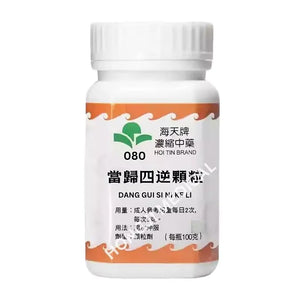
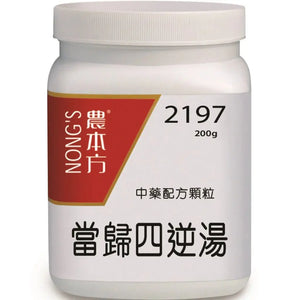
Yes. HJMEDICAL sources its concentrated granules exclusively from established, reputable manufacturers such as Nong's and Hoi Tin, both long-standing names in the TCM granules industry, with GMP compliance stated directly on their packaging.
Are HJMEDICAL products manufactured under GMP standards?
HJMEDICAL sources its concentrated granules from established, reputable manufacturers such as Nong's and Hoi Tin, both long-standing names in the TCM granules industry. GMP compliance for these products is stated directly on their packaging.
Do you ship internationally?
Yes — we ship worldwide! Every order goes out via Hong Kong Post, and your exact shipping cost and estimated delivery time for your address are calculated and shown right at checkout, so there are never any surprises. We also offer free shipping once your order reaches our free-shipping threshold, so it's easy to stock up on your favorite formulas and save.
Can I take more than one formula at the same time?
Some formulas are traditionally combined, while others overlap or counteract each other. We recommend checking with a qualified TCM practitioner before combining formulas, especially if you are already taking other medication.
Are these products suitable during pregnancy or breastfeeding?
Some TCM formulas are not suitable during pregnancy or breastfeeding. Please consult a qualified TCM practitioner or your doctor before use if you are pregnant, trying to conceive, or nursing.
Do these products replace medical treatment?
No. These products are traditional herbal supplements intended to support wellbeing according to TCM principles — they are not a replacement for professional medical diagnosis or treatment. Please consult a qualified TCM practitioner or licensed healthcare provider before starting, stopping, or combining any treatment, especially if you have a chronic condition.
Medical Disclaimer

For general TCM education only — not medical advice. Consult a qualified TCM practitioner or licensed healthcare provider before use, especially if pregnant, nursing, on medication, or managing a chronic condition.

Not sure which formula is right for you?

Take the AI Assessment

最新文章

Login

Forgot your password?

Don't have an account yet?
Create account

Dang Gui Si Ni Tang: Classic TCM Formula for Blood Deficiency, Cold Extremities & Pain