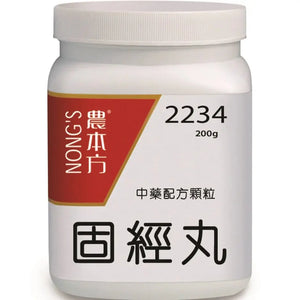
Gu Jing Wan: Classic TCM Formula for Excessive or Irregular Uterine Bleeding

Gu Jing Wan: Nourishing Yin, Clearing Heat, Consolidating the Chong Vessel and Stopping Bleeding, Improving Functional Uterine Bleeding and Perimenopausal Abnormal Bleeding | HJMEDICAL

I. Origins and History

1. Classical Source

Gu Jing Wan originates from the Danxi Xinfa (Teachings of Danxi), authored by the celebrated Jin-Yuan period physician Zhu Zhenheng. Zhu Zhenheng, known to the world as Master Danxi, was the founder of the "Yin-Nourishing School," emphasising that "yang is perpetually in excess and yin is perpetually insufficient," and basing his treatment of disease largely on nourishing yin and draining fire. Gu Jing Wan is one of the concrete expressions of his academic thought, holding an important place within the field of Chinese medicine gynaecology.

2. Historical Evolution

Since its emergence in the Jin-Yuan period, Gu Jing Wan has withstood several centuries of clinical practice and verification, continuously applied and refined by physicians of later generations. During the Ming and Qing dynasties, numerous physicians, while inheriting Master Danxi's original formula, made appropriate adjustments and additions based on clinical experience, allowing it to better align with the clinical needs of different periods. For example, some physicians fine-tuned herb dosages according to differences in patient constitution; others incorporated targeted herbs into the original formula in response to newly emerging conditions, further enriching the scope of Gu Jing Wan's application. With the development of the times, modern Chinese medicine, while inheriting tradition, has also applied modern scientific technology to research Gu Jing Wan, exploring its mechanisms of action and providing a more solid theoretical foundation for its application in modern clinical practice.

Gu Jing Wan: Nourishing Yin, Clearing Heat, Consolidating the Chong Vessel and Stopping Bleeding, Improving Functional Uterine Bleeding and Perimenopausal Abnormal Bleeding | HJMEDICAL

II. Herb Composition (Sovereign, Minister, Assistant, Envoy)

1. Chief Herb — Huangbai (Phellodendron Bark)

Huangbai is bitter in flavour and cold in nature, entering the Kidney and Bladder channels. Its primary actions are clearing heat and drying dampness, draining fire and resolving toxicity, and reducing deficiency-heat. In Gu Jing Wan, Huangbai serves as the chief herb. On one hand, it can clear damp-heat from the lower burner; lower-burner damp-heat is frequently one of the important factors causing menstrual abnormalities in women, and Huangbai can effectively clear this damp-heat pathogen, restoring normal function to the lower-burner organs. On the other hand, Huangbai can drain fire to consolidate yin; in keeping with Master Danxi's emphasis on "yin being perpetually insufficient," Huangbai reduces depletion of the yin fluids by draining fire, thereby performing the function of consolidating yin, helping to maintain sufficient yin fluids within the female body, and playing a key therapeutic role for menstrual problems caused by yin deficiency with heat.

2. Deputy Herb — Huangqin (Scutellaria Root)

Huangqin is likewise bitter in flavour and cold in nature, entering the Lung, Gallbladder, Spleen, Large Intestine, and Small Intestine channels. It has the actions of clearing heat and drying dampness, draining fire and resolving toxicity, and stopping bleeding to calm the fetus. In Gu Jing Wan, Huangqin assists Huangbai in clearing heat and draining fire, reinforcing the formula's potency in clearing lower-burner damp-heat and draining fire. Simultaneously, Huangqin also has a haemostatic action, producing good therapeutic results for symptoms such as excessive menstrual flow and flooding and spotting caused by reckless movement of hot blood. Combined with Huangbai, it jointly targets the heat pathogen within the pathomechanism, producing a synergistic effect and reinforcing the formula's efficacy in clearing heat, cooling blood, and consolidating the menses to stop bleeding.

3. Assistant Herb — Chungenpi (Ailanthus Root-bark)

Chungenpi is bitter and astringent in flavour and cold in nature, entering the Large Intestine, Stomach, and Liver channels. Its actions are clearing heat and drying dampness, astringing to stop vaginal discharge, stopping diarrhoea, and stopping bleeding. Chungenpi performs an important assistant role in Gu Jing Wan. It can both assist Huangbai and Huangqin in clearing heat and drying dampness, and also possesses a distinctive astringing and haemostatic action. For symptoms in women such as excessive vaginal discharge and excessive menstrual bleeding caused by downward pouring of damp-heat, Chungenpi can reduce bleeding through its astringing properties while simultaneously clearing the lower-burner damp-heat pathogen, thereby relieving the condition. In addition, Chungenpi can also regulate female reproductive system function, exerting a positive influence on maintaining a normal menstrual cycle and flow.

4. Envoy Herb — Xiangfu (Cyperus Rhizome)

Xiangfu is acrid, slightly bitter, and slightly sweet in flavour and neutral in nature, entering the Liver, Spleen, and Triple Burner channels. It has the actions of soothing the liver and resolving depression, regulating qi and widening the middle, and regulating menstruation to relieve pain. As the envoy herb, Xiangfu primarily performs the role of regulating qi and moving stagnation. In women's menstrual disorders, qi stagnation with blood stasis is one of the common pathomechanisms. Xiangfu can soothe the liver and regulate qi, ensuring free flow of qi movement and avoiding impeded blood circulation caused by qi stagnation, thereby helping to regulate the menstrual cycle and relieve symptoms such as dysmenorrhoea caused by qi stagnation. Simultaneously, Xiangfu also guides the other herbs to exert their effects more effectively, enabling the medicinal force of the entire formula to better reach the site of disease and achieve the goal of regulating menstruation.

Gu Jing Wan: Nourishing Yin, Clearing Heat, Consolidating the Chong Vessel and Stopping Bleeding, Improving Functional Uterine Bleeding and Perimenopausal Abnormal Bleeding | HJMEDICAL

III. Pathomechanism, Actions, and Indications

1. Pathomechanism

The pathomechanism targeted by Gu Jing Wan is primarily yin deficiency with blood heat, and downward pouring of damp-heat. When yin is deficient, yang becomes relatively hyperactive, generating internal deficiency-heat; this heat disturbs the chong and ren vessels, unsettling the blood sea, leading to symptoms such as early menstruation and excessive flow. Damp-heat pathogen accumulating and binding in the lower burner injures the chong and ren vessels, forcing the blood to move recklessly, which likewise causes menstrual abnormalities. In addition, yin deficiency with blood heat and downward pouring of damp-heat may also lead to conditions such as excessive vaginal discharge. This pathomechanism is relatively common among modern women, often related to lifestyle, dietary habits, and emotional factors. For example, prolonged staying up late, excessive consumption of spicy and greasy foods, and pronounced emotional fluctuations can all readily lead to yin-yang imbalance within the body, giving rise to the condition of yin deficiency with blood heat and downward pouring of damp-heat.

2. Actions

Based on the above pathomechanism, Gu Jing Wan has the actions of nourishing yin and clearing heat, and consolidating the menses to stop bleeding. Through the heat-clearing and fire-draining herbs Huangbai and Huangqin within the formula, the deficiency-heat and damp-heat pathogen of the lower burner are cleared, reducing the disturbance of heat pathogen on the chong and ren vessels; simultaneously, by utilising Chungenpi's astringing and haemostatic action and Xiangfu's qi-regulating and stagnation-moving action, the formula together achieves the goal of consolidating the menses, stopping bleeding, and regulating menstruation. Nourishing yin and clearing heat can nourish the yin fluids, balancing the body's yin and yang, thereby improving the various symptoms caused by yin deficiency; consolidating the menses and stopping bleeding can effectively control bleeding symptoms such as excessive menstrual flow and flooding and spotting, maintaining the normal function of the female reproductive system.

3. Indications

Gu Jing Wan is primarily used to treat excessive menstrual flow and flooding and spotting caused by yin deficiency with blood heat, and downward pouring of damp-heat. Clinical manifestations include excessive menstrual flow, or flooding and spotting, with deep red or purplish-black, thick and viscous blood, vexing heat in the palms and soles, soreness and weakness of the lumbar region and knees, a red tongue, and a wiry and rapid pulse. These symptoms are relatively common in modern clinical practice, particularly among adolescent and perimenopausal women, who are more prone to yin deficiency with blood heat due to fluctuations in hormone levels within the body, leading to menstrual abnormalities. Gu Jing Wan has good clinical efficacy in improving these symptoms and regulating the menstrual cycle.

Gu Jing Wan: Nourishing Yin, Clearing Heat, Consolidating the Chong Vessel and Stopping Bleeding, Improving Functional Uterine Bleeding and Perimenopausal Abnormal Bleeding | HJMEDICAL

IV. Formula Analysis

1. Combining Heat-Clearing and Fire-Draining with Yin-Nourishing and Blood-Tonifying

Within the formula, Huangbai and Huangqin clear heat and drain fire, directly breaking the momentum of fire to clear the heat of the lower burner. Simultaneously, recognising that heat pathogen readily damages the yin fluids, the formula is composed to treat both root and manifestation by safeguarding yin nourishment. Although the formula does not explicitly name a dedicated yin-nourishing and blood-tonifying herb, the overall combination rationale embodies the protection and nourishment of the yin fluids. Through clearing heat and draining fire, the depletion of yin fluids by the heat pathogen is reduced, thereby achieving the goal of nourishing yin and tonifying blood, allowing the yin fluids to become sufficient, the deficiency-heat to be cleared, and the menses to be regulated. This method of combining heat-clearing and fire-draining with yin-nourishing and blood-tonifying accords with the Chinese medicine principle of "treating disease by seeking the root," and holds important significance for treating menstrual disorders caused by yin deficiency with blood heat.

2. Combining Cooling the Blood to Stop Bleeding with Regulating Qi to Move Stagnation

Chungenpi cools the blood and stops bleeding, directly treating the bleeding symptoms caused by reckless movement of hot blood. Xiangfu regulates qi and moves stagnation, ensuring free flow of qi movement and avoiding the worsening of bleeding caused by qi stagnation aggravating blood stasis. Used together, the two not only stop bleeding but also prevent the disadvantage of stasis retention from haemostatic treatment. In treating conditions such as excessive menstrual flow and flooding and spotting, regulating qi and moving stagnation helps blood to be expelled smoothly, avoiding internal obstruction by blood stasis; cooling the blood and stopping bleeding rapidly controls the bleeding symptoms, allowing the condition to be relieved. This combination method of cooling blood to stop bleeding together with regulating qi to move stagnation reflects the comprehensive Chinese medicine approach to treating haemorrhagic conditions, making the formula's therapeutic effect more pronounced.

3. Synergistic Herb Action and Holistic Regulation

The herbs within the formula act synergistically, working together to exert their effects. Huangbai and Huangqin clear heat and drain fire; Chungenpi astringes to stop bleeding; Xiangfu regulates qi and moves stagnation. The four herbs combined target the pathomechanism of yin deficiency with blood heat and downward pouring of damp-heat, treating it from different angles. Clearing heat and draining fire eliminates the cause of disease; astringing to stop bleeding treats the symptomatic manifestation; regulating qi to move stagnation regulates the circulation of qi and blood — together achieving the goal of holistically regulating the female reproductive system's function. This synergistic action allows the formula's medicinal force to be more concentrated and its therapeutic effect more definite, effectively improving menstrual abnormalities and related conditions caused by multiple factors.

Gu Jing Wan: Nourishing Yin, Clearing Heat, Consolidating the Chong Vessel and Stopping Bleeding, Improving Functional Uterine Bleeding and Perimenopausal Abnormal Bleeding | HJMEDICAL

V. Comparison with Related Formulas

1. Comparison with Qingjing San

Qingjing San originates from the Fu Qingzhu Nuke (Fu Qingzhu's Gynaecology), with its primary actions being clearing heat and cooling blood, and consolidating the chong vessel to stop bleeding. Its herb composition consists of Mudanpi (Tree Peony Bark), Digupi (Lycium Root-bark), Baishao (White Peony Root), Shudi (Prepared Rehmannia Root), Qinghao (Sweet Wormwood), Huangbai (Phellodendron Bark), and Fuling (Poria). Compared with Gu Jing Wan, Qingjing San places greater emphasis on clearing heat and cooling blood, with a relatively strong heat-clearing potency, making it more suitable for symptoms such as early menstruation and excessive flow caused by simple blood heat. Gu Jing Wan, while also clearing heat, places greater emphasis on nourishing yin, astringing to stop bleeding, and regulating qi to move stagnation, offering better therapeutic results for menstrual disorders involving yin deficiency with blood heat accompanied by downward pouring of damp-heat and qi stagnation. The herb combination of Qingjing San is relatively simple, centred primarily around clearing heat and cooling blood; Gu Jing Wan, on the foundation of clearing heat, comprehensively considers multiple pathomechanism factors, with a more complex herb combination.

2. Comparison with Shixiao San

Shixiao San originates from the Taiping Huimin Hejiju Fang (Imperial Grace Formulary of the Pharmacy Service), with the actions of activating blood and expelling stasis, and dissipating binds to relieve pain. Its composition consists of only two herbs — Wulingzhi (Flying Squirrel Faeces) and Puhuang (Cattail Pollen). Compared with Gu Jing Wan, the two formulas treat entirely different conditions. Shixiao San is primarily used to treat menstrual irregularities and dysmenorrhoea caused by blood stasis obstruction, focusing on activating blood and resolving stasis; Gu Jing Wan, by contrast, targets haemorrhagic menstrual disorders caused by yin deficiency with blood heat and downward pouring of damp-heat, focusing on clearing heat, cooling blood, and consolidating the menses to stop bleeding. The medicinal force of Shixiao San is relatively concentrated on activating blood and resolving stasis, whereas Gu Jing Wan emphasises regulating the body's yin-yang balance, clearing the heat pathogen, and consolidating and astricting the menstrual blood. In clinical application, the appropriate formula must be accurately selected according to the patient's specific symptoms and pathomechanism.

Gu Jing Wan: Nourishing Yin, Clearing Heat, Consolidating the Chong Vessel and Stopping Bleeding, Improving Functional Uterine Bleeding and Perimenopausal Abnormal Bleeding | HJMEDICAL

VI. Clinical Applications

1. Early Menstruation

For patients with an advanced menstrual cycle, excessive menstrual flow, deep red or purplish-black colour, and thick viscous quality, accompanied by symptoms such as vexing heat in the palms and soles, soreness and weakness of the lumbar region and knees, a red tongue, and a wiry and rapid pulse, Gu Jing Wan produces good therapeutic results. These patients mostly suffer from yin deficiency with blood heat, with heat disturbing the chong and ren vessels and unsettling the blood sea. Gu Jing Wan, through its actions of nourishing yin, clearing heat, consolidating the menses, and stopping bleeding, regulates the menstrual cycle, reduces menstrual flow, and improves symptoms. For example, some adolescent women, due to incomplete physical development, have relatively insufficient kidney yin and are prone to yin deficiency with blood heat, leading to early menstruation; after taking Gu Jing Wan, their symptoms are often noticeably improved.

2. Flooding and Spotting

Flooding and spotting refers to non-cyclical uterine bleeding in women; sudden, profuse, gushing bleeding is termed "flooding," while a slow course with scanty, continuous, unremitting bleeding is termed "spotting." For flooding and spotting caused by yin deficiency with blood heat and downward pouring of damp-heat, Gu Jing Wan can perform the actions of clearing heat, cooling blood, consolidating the menses, and stopping bleeding. Clinical manifestations include profuse vaginal bleeding with deep red or purplish-black blood, accompanied by symptoms such as vexing heat and thirst, and soreness and weakness of the lumbar region and knees. In modern clinical practice, some middle-aged women, due to high life stress and emotional fluctuations, are prone to endocrine disorders leading to flooding and spotting; using Gu Jing Wan in combination with other treatment methods often achieves good haemostatic results and regulates the menstrual cycle.

3. Vaginal Discharge Disorders

Vaginal discharge disorders refer to a marked increase or decrease in vaginal discharge, abnormalities in colour, consistency, or odour, possibly accompanied by generalised or local symptoms. For excessive vaginal discharge caused by downward pouring of damp-heat, with yellow or yellow-green colour, thick viscous consistency, and a foul odour, possibly accompanied by symptoms such as vaginal itching, a bitter taste in the mouth, dry throat, and short, reddish urination, Gu Jing Wan also has a degree of therapeutic action. Within the formula, Huangbai, Huangqin, and Chungenpi clear heat and dry dampness, effectively clearing the lower-burner damp-heat pathogen and reducing the volume of discharge. In clinical application, herbs may be added or removed appropriately according to the specific symptoms to improve the therapeutic effect.

section-7

VII. Clinical Modifications

1. Heavy Bleeding

If the volume of bleeding is excessive, Xianhecao (Hairyvein Agrimonia) and Diyu (Sanguisorba Root) may be added to reinforce the haemostatic action. Xianhecao has the actions of astringing to stop bleeding, arresting malaria, stopping dysentery, resolving toxicity, and tonifying deficiency; Diyu can cool the blood, stop bleeding, resolve toxicity, and astringe to heal sores. Combined with the original Gu Jing Wan formula, the two can reinforce the haemostatic effect, rapidly controlling the bleeding symptoms. For example, when treating heavy bleeding in flooding and spotting, the addition of Xianhecao and Diyu allows the bleeding condition to be relieved more rapidly.

2. Pronounced Damp-Heat

If damp-heat is more pronounced, heat-clearing and dampness-disinhibiting herbs such as Cheqianzi (Plantain Seed) and Zexie (Alisma Rhizome) may be added. Cheqianzi can clear heat, promote urination, unblock painful urinary dribbling, percolate dampness, stop diarrhoea, brighten the eyes, and dispel phlegm; Zexie has the actions of disinhibiting water, percolating dampness, and draining heat. They reinforce the formula's heat-clearing and dampness-disinhibiting potency, more effectively clearing the lower-burner damp-heat pathogen and improving the various symptoms caused by downward pouring of damp-heat, such as excessive vaginal discharge and short, reddish urination.

3. Pronounced Yin Deficiency

If yin deficiency is pronounced, yin-nourishing herbs such as Shengdi (Fresh Rehmannia Root) and Maidong (Ophiopogon Root) may be added. Shengdi can clear heat, cool blood, nourish yin, and generate fluids; Maidong can nourish yin, moisten the lungs, benefit the stomach, generate fluids, and clear the heart to relieve vexation. With the addition of these two herbs, the yin fluids can be further nourished, improving symptoms of yin deficiency, making the formula better suited to the patient's specific condition, and improving the therapeutic effect.

Gu Jing Wan: Nourishing Yin, Clearing Heat, Consolidating the Chong Vessel and Stopping Bleeding, Improving Functional Uterine Bleeding and Perimenopausal Abnormal Bleeding | HJMEDICAL

VIII. Dosage and Preparation

1. Traditional Method

Correct Administration of Traditional Gu Jing Wan and the Vinegar-Paste Pill-Making Method

An introduction to the pill dosage for the traditional, celebrated formula "Gu Jing Wan," with a detailed breakdown of the distinctive traditional preparation technique of "using vinegar paste to form the pills" and its synergistic pharmacological action of dispersing stasis and stopping bleeding.

【Prescription Composition and Reference Dosage】
  • Huangbai (Phellodendron Bark): appropriate amount (as directed by physician)
  • Huangqin (Scutellaria Root): appropriate amount (as directed by physician)
  • Chungenpi (Ailanthus Root-bark): appropriate amount (as directed by physician)
  • Xiangfu (Cyperus Rhizome): appropriate amount (as directed by physician)
  • Rice vinegar (for making the paste): appropriate amount (used as binding agent and guiding vehicle)
Step 1: Grinding the Herbs into Powder and Preparing the Vinegar Paste Dry-process Huangbai, Huangqin, Chungenpi, and Xiangfu according to standard protocol, then thoroughly grind into a uniform fine powder. Separately, mix an appropriate amount of rice vinegar with flour or rice flour and heat, simmering into a traditional paste (vinegar paste).
Step 2: Classical Vinegar-Paste Pill Formation (Reinforcing Medicinal Efficacy) Add an appropriate amount of the prepared vinegar paste to the fine herb powder as a binding agent, knead, and form into pills. The vinegar paste not only serves a physical binding function but vinegar itself also has the actions of dispersing stasis and stopping bleeding, and regulating qi to relieve pain, acting synergistically with the various herbs in the formula to significantly reinforce the formula's therapeutic effect of consolidating the menses and stopping bleeding.
Step 3: Oral Administration at Fixed Times and Doses Administer orally. The correct dosage is 6–9 g per dose, taken at fixed times twice daily, recommended to be swallowed with warm boiled water.
💡 Characteristics of the Traditional Vinegar-Paste Pill:

Gu Jing Wan is prepared in the traditional pill dosage form, which not only greatly reduces the unpleasant taste of the bitter, cold herbs but also makes it more convenient for patients to take regularly over the long term. Pills release relatively slowly within the body, giving the medicinal action greater persistence — making this dosage form especially well suited to the long-term management of chronic stasis-heat patterns such as gynaecological flooding and spotting and excessive menstrual flow.

2. Modern Concentrated Granules

Modern concentrated granules are granular preparations produced from traditional Chinese herbs through extraction, concentration, and related processes — convenient to take, with precise dosing. The dosage of Gu Jing Wan concentrated granules generally follows the product instructions of different manufacturers. Typically, the method of administration is to dissolve in boiled water, taking 1–2 sachets per dose, twice daily. Modern concentrated granules retain the active constituents of the herbs while removing impurities, with a relatively smaller dosage required compared with the traditional pill form, and a better taste — better suited to the fast-paced modern lifestyle and patients' needs.

Gu Jing Wan: Nourishing Yin, Clearing Heat, Consolidating the Chong Vessel and Stopping Bleeding, Improving Functional Uterine Bleeding and Perimenopausal Abnormal Bleeding | HJMEDICAL

IX. Precautions and Contraindications

1. Dietary Restrictions

During the course of taking Gu Jing Wan, spicy, greasy, and irritating foods — such as chilli peppers, fried foods, and coffee — should be avoided. These foods readily generate heat and assist fire, aggravating the heat pathogen within the body and being unfavourable for recovery. Alcohol should also be avoided, as it likewise carries a degree of irritant property and may affect the herb's therapeutic efficacy.

2. Emotional Regulation

Patients should maintain a relaxed and comfortable mood and avoid pronounced emotional fluctuations. Prolonged anxiety, depression, anger, and other negative emotions readily lead to liver qi stagnation, in turn aggravating the disharmony of qi and blood within the body and affecting the menstrual cycle and flow. Patients should learn to adjust their mindset, maintain an optimistic and positive outlook on life, and combine this with herbal treatment to improve the therapeutic effect.

3. Contraindicated in Pregnancy

Gu Jing Wan is contraindicated for pregnant women. The herbs within Gu Jing Wan mostly have cold-natured and blood-activating actions, which may readily have adverse effects on the fetus. During pregnancy, a woman's physiological state is unique, and medication requires great caution; the advice of a physician should be strictly followed, avoiding medications that may be harmful to the fetus.

Gu Jing Wan: Nourishing Yin, Clearing Heat, Consolidating the Chong Vessel and Stopping Bleeding, Improving Functional Uterine Bleeding and Perimenopausal Abnormal Bleeding | HJMEDICAL

X. Modern Research

1. Pharmacological Research

Gu Jing Wan is a Chinese medicine formula primarily indicated for excessive menstrual flow, early menstruation, red and white vaginal discharge, and purplish-black clotted blood in women — conditions of deficiency complicated by heat and insufficient yin — possessing the actions of consolidating the menses and stopping bleeding, consolidating the menses and stopping discharge, consolidating flooding and stopping discharge, astringing to stop prolapse, nourishing yin and clearing heat, nourishing yin while tonifying blood, and clearing fire from the upper burner. The formula is composed of Guiban (Tortoise Plastron), Shaoyao (Peony Root), and Huangqin to nourish yin and clear heat, consolidate the menses and stop bleeding, and clear fire from the upper burner, together with Xiangfuzi, Fuzi (Aconite), Aiye (Mugwort Leaf), Chupi, and Chishizhi (Halloysite), formed into pills with wine, ground into powder, and taken with plain boiled water; it is used clinically to disperse depression and strengthen water to restrain yang fire, suitable for vaginal discharge and related conditions caused by downward pouring of deficiency-heat. This is recorded in the Yifang Leiju (Classified Collection of Medical Formulas).

Modern research has demonstrated that the heat-clearing herbs Huangbai and Huangqin within Gu Jing Wan possess antibacterial, anti-inflammatory, and antiviral actions. They can inhibit the growth and proliferation of numerous bacteria and viruses, reduce inflammatory responses, and provide a degree of therapeutic benefit for menstrual abnormalities caused by infection or inflammation. Chungenpi contains multiple chemical constituents and possesses astringing, haemostatic, and antibacterial properties; its astringing action helps reduce bleeding, while its antibacterial action can prevent and treat gynaecological conditions caused by infection. Xiangfu has actions including regulating uterine smooth muscle and moving qi to relieve pain, improving uterine blood circulation and relieving symptoms such as dysmenorrhoea.

2. Clinical Efficacy Observation

Multiple clinical studies have confirmed the effectiveness of Gu Jing Wan in treating early menstruation, flooding and spotting, vaginal discharge disorders, and related conditions. Through observation of large numbers of patients, Gu Jing Wan has been found to significantly improve patients' symptoms, regulate the menstrual cycle, reduce menstrual flow, and improve patients' quality of life. Compared with certain Western pharmaceutical treatment methods, Gu Jing Wan has the advantages of fewer side effects and sustained efficacy, holding a distinctive therapeutic advantage particularly for menstrual disorders of the yin deficiency with blood heat and downward pouring of damp-heat type.

3. Dosage Form Improvement Research

With the development of modern science and technology, research into improving the dosage form of Gu Jing Wan has been ongoing. Beyond the traditional pill form and modern concentrated granules, new dosage forms such as tablets and capsules are also being explored and developed. These new forms maintain the herb's therapeutic efficacy while further improving patient compliance and convenience of administration. For example, the Gu Jing Wan tablet form uses advanced tableting technology to ensure the uniformity and stability of the medicine, while also being convenient to take and easy to carry, providing more options for clinical application.

In summary, Gu Jing Wan, as a classical formula in Chinese medicine gynaecology, possesses rich content and significant clinical efficacy. Through a detailed introduction to its origins and history, herb composition, pathomechanism and actions, formula analysis, comparison with related formulas, clinical applications, modifications, dosage and preparation, precautions, and modern research progress, it is hoped that more people will come to understand this excellent Chinese medicine formula, providing beneficial assistance for women's health.

Gu Jing Wan — Frequently Asked Questions

Q1: What are the therapeutic actions of Gu Jing Wan?

Gu Jing Wan has the actions of nourishing yin and clearing heat, consolidating the chong vessel and stopping bleeding, and regulating menstruation. It is primarily used for excessive menstrual flow, prolonged menstrual period, flooding and spotting, and bright red menstrual blood caused by yin deficiency with blood heat.

Q2: What modern conditions is Gu Jing Wan used for?

In modern TCM clinical practice, it is commonly used for functional uterine bleeding, perimenopausal abnormal uterine bleeding, excessive menstrual flow, and bleeding associated with adenomyosis, among individuals whose presentation corresponds to the pattern of yin deficiency with blood heat.

Q3: Is Gu Jing Wan suitable for those with excessive menstrual flow?

For those who have long experienced a marked increase in menstrual flow, prolonged menstrual period, red-coloured menstrual blood, vexing heat in the palms and soles, and dry mouth with vexing heat reflecting yin deficiency with blood heat, TCM practitioners commonly apply Gu Jing Wan through pattern differentiation as adjunctive treatment, while also undergoing gynaecological examination to rule out organic pathology.

Q4: Who should not take Gu Jing Wan?

Those with yang-deficiency bleeding, deficiency-cold flooding and spotting, spleen-kidney yang deficiency, and those whose pattern does not correspond to yin deficiency with blood heat should generally not self-administer Gu Jing Wan. Assessment should be made by a qualified TCM practitioner based on the individual's constitution and pattern differentiation findings.

⚠️ This content is for reference only and does not provide medical advice. Consult a healthcare professional for any health concerns.

Login

Forgot your password?

Don't have an account yet?
Create account

Gu Jing Wan: Classic TCM Formula for Excessive or Irregular Uterine Bleeding