Gui Ma Ge Ban Tang: Classic TCM Formula for Mixed Taiyang Wind-Cold Patterns

Gui Ma Ge Ban Tang (桂麻各半汤), known in English as Cinnamon and Ephedra Equal Parts Decoction, is a classical formula from the Shang Han Lun for Taiyang Wind-Cold patterns with mixed exterior excess and exterior deficiency signs. It is particularly indicated for early colds with fever, chills, body aches, headache, and sometimes mild sweating or no sweating, representing a transitional or mixed pattern between pure Wind-Cold (Ma Huang Tang) and Wind-Cold with deficiency (Gui Zhi Tang). In modern clinical practice, Gui Ma Ge Ban Tang is used for nuanced Taiyang Wind-Cold presentations that do not fit neatly into pure excess or pure deficiency patterns. By balancing strong exterior release with harmonization, it effectively addresses mixed or transitional Wind-Cold invasions.

Gui Ma Ge Ban Tang: Releasing the Muscle Layer and Inducing Sweating to Harmonise Ying and Wei, Improving Early-Stage Colds, Fever with Aversion to Cold, and Recurrent Low-Grade Fever | HJMEDICAL

I. Origins and History

1. Recorded in the Classical Literature

Gui Ma Ge Ban Tang originates from the *Shang Han Lun* (Treatise on Cold Damage), written by Zhang Zhongjing, the Sage of Medicine of the Eastern Han dynasty. The *Shang Han Lun* is a classic among classics in Chinese medicine, systematically expounding the principles of pattern differentiation and treatment for externally contracted disease, and exerting a profound influence on the clinical practice and theoretical development of later generations of Chinese medicine. As one of its important formulas, Gui Ma Ge Ban Tang has been valued and applied by physicians throughout history.

In the *Shang Han Lun*, it is mainly used to treat cases of Taiyang disease that has lingered without resolving, where the pathogenic qi remains lodged at the muscle layer and ying-wei qi and blood become disharmonious. The original text states: when Taiyang disease has persisted for eight or nine days, presenting like malaria, with fever and aversion to cold, more fever than cold, the patient not vomiting, urination and bowel movements roughly normal, and the episodes occurring two or three times a day — if the pulse is faintly moderate, recovery is imminent; if the pulse is faint with aversion to cold, this indicates deficiency of both yin and yang, and further sweating, purgation, or emesis must not be induced; if the complexion instead shows a heat colour, resolution has not yet occurred, because the patient cannot achieve a slight sweat, and the body must itch — in such cases, Gui Ma Ge Ban Tang is indicated. This passage describes in detail the indications and pathomechanism for which the formula is suited.

2. Historical Transmission and Development

Since the appearance of the *Shang Han Lun*, Gui Ma Ge Ban Tang has continuously been transmitted and applied in Chinese medicine clinical practice. Physicians throughout history have continually enriched and developed the understanding of this formula through practice.

For example, when Wang Shuhe of the Jin dynasty compiled the *Shang Han Lun*, he provided further annotation and elaboration of its passages, deepening later generations' understanding of Gui Ma Ge Ban Tang. Sun Simiao of the Tang dynasty also cited Gui Ma Ge Ban Tang in the *Qianjin Yaofang* (Essential Prescriptions Worth a Thousand Gold), expanding its scope of application based on his own clinical experience. During the Song, Jin, and Yuan dynasties, physicians conducted in-depth discussions on the formula's meaning and actions, putting forward many original insights. In the Ming and Qing dynasties, although the Warm Disease school arose, Gui Ma Ge Ban Tang continued to play an important role in treating externally contracted disease, with physicians paying attention to combining it with modifications suited to the characteristics of warm-heat disease when applying it.

As the times have progressed, modern Chinese medicine, building on the experience inherited from ancient physicians and applying modern scientific technology and research methods, has conducted deeper research into Gui Ma Ge Ban Tang, continually revealing its potential mechanisms and application value in treating a variety of diseases.

Gui Ma Ge Ban Tang: Releasing the Muscle Layer and Inducing Sweating to Harmonise Ying and Wei, Improving Early-Stage Colds, Fever with Aversion to Cold, and Recurrent Low-Grade Fever | HJMEDICAL

II. Herb Composition (Sovereign, Minister, Assistant, Envoy)

1. Chief Herb: Guizhi (Cinnamon Twig)

Guizhi is acrid and sweet in flavour, warm in nature, and enters the heart, lung, and bladder channels. Its main actions are to induce sweating and release the muscle layer, warm and unblock the channels, and assist yang to transform qi.

In Gui Ma Ge Ban Tang, Guizhi serves as the chief herb, playing an important, leading role. It releases the muscle layer and the exterior, dispersing wind-cold, targeting the pathogen at the muscle layer in Taiyang disease so that the wind-cold lodged at the exterior can be resolved. At the same time, Guizhi warms and unblocks the channels, promoting the movement of qi and blood, and helping to harmonise ying and wei. The body's ying and wei are like yin and yang in nature, coordinating with each other to maintain normal physiological function. When ying and wei become disharmonious, symptoms such as fever and aversion to cold arise. Guizhi, by warming and unblocking the channels and regulating ying and wei, restores harmony between them, thereby achieving the goal of treating disease. For example, for fever, aversion to cold, headache, and other symptoms caused by wind-cold binding the exterior, Guizhi can effectively disperse the wind-cold and relieve the symptoms.

2. Deputy Herb: Mahuang (Ephedra)

Mahuang is acrid and slightly bitter in flavour, warm in nature, and enters the lung and bladder channels. It has the actions of inducing sweating to release the exterior, diffusing the lung to calm wheezing, and promoting urination to reduce swelling.

In Gui Ma Ge Ban Tang, Mahuang serves as the deputy herb, assisting Guizhi to strengthen the power of inducing sweating and releasing the exterior. It opens the pores and penetrates the skin, allowing wind-cold pathogens to resolve from the muscle layer. Combined with Guizhi, the two herbs work synergistically, producing a moderate sweating action that effectively expels exterior pathogens without inducing excessive sweating that would damage righteous qi. Mahuang's action of diffusing the lung and calming wheezing is also somewhat helpful in relieving symptoms of unregulated lung qi, cough, and wheezing caused by externally contracted wind-cold. In clinical application, for patients with wind-cold exterior patterns accompanied by cough and wheezing, the presence of Mahuang in Gui Ma Ge Ban Tang can better improve the symptoms.

3. Assistant Herbs: Shaoyao, Shengjiang, and Dazao

Shaoyao (Peony Root) is bitter and sour in flavour, slightly cold in nature, and enters the liver and spleen channels. It nourishes blood and regulates menstruation, astringes yin to stop sweating, softens the liver to relieve pain, and calms hyperactive liver yang. In Gui Ma Ge Ban Tang, Shaoyao mainly serves to harmonise ying blood. Since Guizhi and Mahuang induce sweating to release the exterior, this may cause ying yin to leak outward; Shaoyao can astringe yin and nourish blood, preventing excessive sweating from damaging yin, allowing ying blood to be harmonised, and working together with Guizhi and Mahuang to achieve the goal of releasing the exterior without damaging righteous qi.

Shengjiang (Fresh Ginger) is acrid in flavour, slightly warm in nature, and enters the lung, spleen, and stomach channels. It releases the exterior and disperses cold, warms the middle to stop vomiting, and warms the lung to stop coughing. In the formula, Shengjiang both assists Guizhi and Mahuang in dispersing wind-cold, and warms the stomach and harmonises the middle, preventing the exterior-releasing herbs from damaging spleen-stomach yang qi. It also strengthens the formula's exterior-releasing power, allowing the herbs' actions to take fuller effect.

Dazao (Jujube) is sweet in flavour, warm in nature, and enters the spleen, stomach, and heart channels. It has the actions of tonifying the middle and boosting qi, and nourishing blood to calm the spirit. In Gui Ma Ge Ban Tang, Dazao on the one hand tonifies the spleen and boosts qi to support the source of qi and blood production, strengthening the body's righteous qi; on the other hand, it harmonises the actions of the other herbs, allowing the various herbs in the formula to work together more effectively. At the same time, Dazao's sweet flavour also moderates the acrid, dispersing nature of Guizhi and Mahuang, making the overall nature of the formula more gentle and balanced.

4. Envoy Herb: Zhigancao (Honey-Fried Licorice)

Zhigancao is sweet in flavour, neutral in nature, and enters the heart, lung, spleen, and stomach channels. It has the actions of tonifying the spleen and boosting qi, moistening the lung to stop coughing, clearing heat and resolving toxicity, and harmonising the actions of the other herbs. In Gui Ma Ge Ban Tang, Zhigancao serves as the envoy herb, mainly harmonising the actions of the other herbs. It coordinates the properties of the various herbs in the formula so they work together to achieve the goal of treating disease. At the same time, Zhigancao's action of tonifying the spleen and boosting qi strengthens spleen-stomach function, aiding in the transportation of the herbs' power and promoting recovery from illness. In addition, the sweet, moderating nature of Zhigancao also tempers the fierce, potent nature of Guizhi and Mahuang, making the overall action of the formula steadier and avoiding excessive sweating or other adverse reactions.

III. Pathomechanism, Actions, and Indications

1. Pathomechanism Analysis

The pathomechanism targeted by Gui Ma Ge Ban Tang is Taiyang disease that has lingered without resolving, with pathogenic qi remaining lodged at the muscle layer and ying-wei qi and blood becoming disharmonious.

When the body contracts wind-cold pathogens, if righteous qi is sufficient, recovery can occur through timely sweating and release of the exterior. However, if the condition drags on without resolving and wind-cold pathogens linger at the muscle layer, the movement of ying-wei qi and blood becomes obstructed. Ying qi and wei qi coordinate with each other to jointly maintain the body's normal physiological function. When wind-cold pathogens invade the muscle layer and wei qi is obstructed, unable to warm the muscle layer normally, aversion to cold arises; when ying qi's movement is obstructed, it stagnates and transforms into heat, producing fever. Because the pathogen lingers and cannot be completely resolved, the fever and aversion to cold occur in paroxysmal episodes, with more fever than cold, resembling a malarial pattern. At the same time, the pathogen obstructing the muscle layer causes the movement of qi and blood to become sluggish, and the skin loses nourishment, giving rise to itching of the body.

2. Actions

The main actions of Gui Ma Ge Ban Tang are to harmonise ying and wei, and release the exterior to disperse pathogens.

Through Guizhi, Mahuang, and other herbs that induce sweating and release the exterior, wind-cold pathogens at the muscle layer are dispersed, allowing the exterior pathogen to be resolved. At the same time, Shaoyao, Dazao, Zhigancao, and other herbs harmonise ying blood, preventing excessive sweating from damaging yin, and allowing ying-wei qi and blood to be restored to a harmonious balance. When ying and wei are in harmony and qi and blood flow smoothly, symptoms such as fever, aversion to cold, and itching naturally subside, and the disease is resolved.

3. Indications

Gui Ma Ge Ban Tang mainly treats Taiyang disease of eight or nine days' duration, presenting like malaria, with fever and aversion to cold, more fever than cold, the patient not vomiting, urination and bowel movements roughly normal, episodes occurring two or three times a day, the complexion showing a heat colour, and the body necessarily itching.

This pattern is commonly seen after externally contracted wind-cold, when the condition has dragged on without resolving and the pathogen remains lodged at the muscle layer. The patient presents with alternating fever and aversion to cold, with the fever more pronounced than the cold, occurring two or three times a day, without vomiting, and with normal urination and bowel movements. Because the pathogen stagnates at the muscle layer and qi and blood movement is obstructed, the complexion shows a heat colour, and the body feels itchy. Gui Ma Ge Ban Tang, targeting this pathomechanism and these symptoms, can effectively exert its actions of harmonising ying and wei and releasing the exterior to disperse pathogens, thereby achieving the goal of treating the disease.

Gui Ma Ge Ban Tang: Releasing the Muscle Layer and Inducing Sweating to Harmonise Ying and Wei, Improving Early-Stage Colds, Fever with Aversion to Cold, and Recurrent Low-Grade Fever | HJMEDICAL

IV. Formula Analysis of Gui Ma Ge Ban Tang

1. Releasing the Exterior and Dispersing Pathogens

The combination of Guizhi and Mahuang is the core pairing for releasing the exterior and dispersing pathogens. Guizhi, acrid and warm, releases the muscle layer and exterior, and warms and unblocks the channels; Mahuang, acrid and warm, induces sweating to release the exterior, and diffuses the lung to calm wheezing. Combined, the two produce a moderate sweating action, able to expel wind-cold pathogens from the muscle layer without inducing excessive sweating. For Taiyang disease that has lingered without resolving, with pathogenic qi lodged at the muscle layer, this combination can effectively disperse the exterior pathogen, allowing it to be resolved and relieving symptoms such as fever and aversion to cold.

For example, when the body contracts wind-cold pathogens, the wei qi at the muscle layer is obstructed by the pathogen and cannot normally warm the muscle layer, giving rise to aversion to cold. Guizhi and Mahuang, by inducing sweating and releasing the exterior, disperse the wind-cold pathogen at the muscle layer and restore the normal function of wei qi, thereby relieving the aversion to cold. At the same time, for symptoms of unregulated lung qi, cough, and wheezing caused by wind-cold binding the exterior, Mahuang's action of diffusing the lung and calming wheezing also provides some relief.

2. Harmonising Ying and Wei

Shaoyao, Dazao, and Zhigancao work together to harmonise ying and wei. Shaoyao astringes yin and nourishes blood, preventing Guizhi and Mahuang's sweating action from being excessive and damaging yin, allowing ying blood to be harmonised. Dazao tonifies the spleen and boosts qi, nourishes blood and calms the spirit, strengthening the body's righteous qi, while also harmonising the other herbs. Zhigancao tonifies the spleen and boosts qi, harmonises the other herbs, and moderates the fierce, potent nature of Guizhi and Mahuang.

The body's ying and wei are like yin and yang in nature, coordinating with each other to maintain normal physiological function. When ying and wei become disharmonious, various symptoms arise. Gui Ma Ge Ban Tang, by harmonising ying and wei, restores ying qi and wei qi to a coordinated balance, thereby achieving the goal of treating disease. For example, for symptoms of fever, aversion to cold, spontaneous sweating, and night sweats caused by ying-wei disharmony, the herbs in the formula can regulate ying and wei, relieving the symptoms.

3. Treating Qi and Blood Together

In the formula, Guizhi and Mahuang release the exterior and disperse pathogens, unblocking and regulating qi and blood; Shaoyao, Dazao, and Zhigancao harmonise ying blood, nourishing qi and blood. The whole formula both emphasises releasing the exterior and dispersing pathogens to allow qi and blood to move freely, and attends to harmonising ying blood so that qi and blood have a source for their production, achieving the goal of treating qi and blood together.

In the body's physiological activities, qi and blood are mutually dependent and mutually supportive. When pathogens obstruct the muscle layer and the movement of qi and blood becomes sluggish, this not only produces an exterior pattern but also affects the normal function of qi and blood. Gui Ma Ge Ban Tang, through the dual actions of releasing the exterior and dispersing pathogens and harmonising ying blood, can improve the sluggish movement of qi and blood, restoring their normal physiological function and thereby promoting recovery from illness. For example, for symptoms of limb numbness and pain caused by sluggish qi and blood movement, the herbs in the formula can relieve the symptoms by regulating qi and blood.

Gui Ma Ge Ban Tang: Releasing the Muscle Layer and Inducing Sweating to Harmonise Ying and Wei, Improving Early-Stage Colds, Fever with Aversion to Cold, and Recurrent Low-Grade Fever | HJMEDICAL

V. Comparison with Related Formulas

1. Comparison with Guizhi Tang

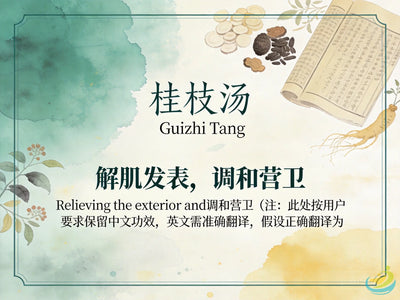
Guizhi Tang is another classical formula from the *Shang Han Lun*, whose main action is to release the muscle layer and exterior and harmonise ying and wei. It shares the action of harmonising ying and wei with Gui Ma Ge Ban Tang, but differs in the strength of its exterior-releasing power.

In Guizhi Tang, Guizhi and Shaoyao are combined in equal amounts, giving a relatively weaker sweating action that emphasises harmonising ying and wei; it is suited to patients with externally contracted wind-cold and ying-wei disharmony, presenting mainly with spontaneous sweating, fever, and aversion to wind. In Gui Ma Ge Ban Tang, Guizhi is combined with Mahuang, giving a stronger sweating action; it is suited to patients with Taiyang disease that has lingered without resolving, pathogenic qi lodged at the muscle layer, and relatively pronounced symptoms of fever, aversion to cold with more fever than cold, and itching of the body.

For example, for patients of relatively weak constitution who, after contracting wind-cold, present mainly with spontaneous sweating and fever with aversion to wind, and whose symptoms are relatively mild, Guizhi Tang may be more suitable; whereas for patients of relatively good constitution whose condition has dragged on after contracting wind-cold, with more severe symptoms such as fever, aversion to cold with more fever than cold, and itching of the body, Gui Ma Ge Ban Tang is more appropriate.

2. Comparison with Mahuang Tang

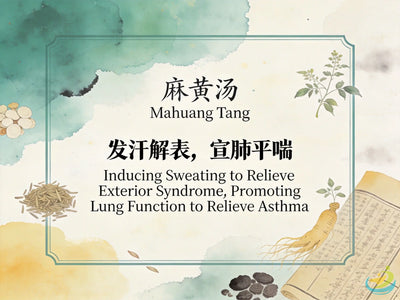
Mahuang Tang's main action is to induce sweating to release the exterior and diffuse the lung to calm wheezing; it is a classical formula for treating externally contracted wind-cold with an exterior excess pattern. It shares similarities with Gui Ma Ge Ban Tang in releasing the exterior, but also has differences.

In Mahuang Tang, the dosage of Mahuang is relatively large, giving a stronger sweating action; it is mainly used to treat externally contracted wind-cold with a pronounced exterior excess pattern, presenting mainly with aversion to cold, fever, absence of sweating, and wheezing. In Gui Ma Ge Ban Tang, Mahuang is combined with Guizhi, giving a relatively weaker sweating action, and also has the action of harmonising ying and wei; it is suited to patients with Taiyang disease of long duration, pathogenic qi lodged at the muscle layer, presenting with both an exterior pattern and manifestations of ying-wei disharmony.

For example, for patients with a pronounced exterior excess pattern after contracting wind-cold, presenting markedly with absence of sweating and wheezing, Mahuang Tang is the formula of choice; whereas for patients whose condition has dragged on after contracting wind-cold, presenting with fever, aversion to cold with more fever than cold, itching of the body, and accompanying manifestations of ying-wei disharmony, Gui Ma Ge Ban Tang should be selected.

3. Comparison with Xiao Chaihu Tang

Xiao Chaihu Tang is mainly used to treat Shaoyang disease, with the action of harmonising and releasing Shaoyang. It differs markedly from Gui Ma Ge Ban Tang in pathomechanism, action, and indication.

The pathomechanism targeted by Xiao Chaihu Tang is pathogenic invasion of Shaoyang with an unfavourable pivot mechanism, clinically presenting as alternating chills and fever, fullness and discomfort in the chest and hypochondriac region, taciturnity and lack of desire to eat, and vexation with a tendency to vomit. Gui Ma Ge Ban Tang, on the other hand, mainly targets the pathomechanism of Taiyang disease of long duration, with pathogenic qi lodged at the muscle layer and ying-wei qi and blood disharmony, presenting with fever, aversion to cold with more fever than cold, and itching of the body.

In terms of action, Xiao Chaihu Tang harmonises and releases Shaoyang, emphasising the regulation of the body's qi mechanism ascent and descent; Gui Ma Ge Ban Tang harmonises ying and wei and releases the exterior to disperse pathogens, mainly targeting the pathogen at the muscle layer and ying-wei disharmony. Their indications are also entirely different: Xiao Chaihu Tang is suited to Shaoyang disease, while Gui Ma Ge Ban Tang is suited to the specific symptoms of Taiyang disease that has lingered without resolving.

Gui Ma Ge Ban Tang: Releasing the Muscle Layer and Inducing Sweating to Harmonise Ying and Wei, Improving Early-Stage Colds, Fever with Aversion to Cold, and Recurrent Low-Grade Fever | HJMEDICAL

VI. Clinical Applications

1. Common Cold

In modern medicine, if a common cold presents as wind-cold binding the exterior, with the condition dragging on without resolving and symptoms of fever, aversion to cold with more fever than cold, and itching of the body, Gui Ma Ge Ban Tang may be considered.

For example, if a patient's cold symptoms show no clear improvement after taking cold medication, with recurrent fever and aversion to cold, the temperature slightly higher during the fever phase than during the cold phase, itchy skin, and absent or unsmooth sweating, Gui Ma Ge Ban Tang may be selected for treatment. By harmonising ying and wei and releasing the exterior to disperse pathogens, it can effectively relieve cold symptoms and promote recovery.

2. Urticaria

Urticaria falls under the TCM category of "yinzhen" (hidden rash). If caused by external wind-cold invasion with ying-wei disharmony, presenting with itchy wheals, worsening on exposure to cold, and aversion to cold with fever, Gui Ma Ge Ban Tang has a certain therapeutic effect.

In the formula, Guizhi and Mahuang release the exterior and disperse pathogens, dispelling wind-cold; Shaoyao, Dazao, and Zhigancao harmonise ying and wei, improving the state of ying-wei disharmony. For this type of urticaria patient, taking Gui Ma Ge Ban Tang can relieve itchy wheal symptoms, reduce the frequency of episodes, and improve quality of life.

3. Pruritus

Patients with pruritus who also present with aversion to cold and fever, with more fever than cold, and whose pattern is differentiated as external wind-cold binding with ying-wei disharmony, may also be treated with Gui Ma Ge Ban Tang.

Wind-cold pathogens invading the muscle layer cause ying-wei disharmony and sluggish movement of qi and blood, leaving the skin without nourishment and giving rise to pruritus. Gui Ma Ge Ban Tang, by releasing the exterior and dispersing pathogens and harmonising ying and wei, allows qi and blood to flow smoothly and the skin to be nourished, relieving the itching symptoms.

Gui Ma Ge Ban Tang: Releasing the Muscle Layer and Inducing Sweating to Harmonise Ying and Wei, Improving Early-Stage Colds, Fever with Aversion to Cold, and Recurrent Low-Grade Fever | HJMEDICAL

VII. Clinical Modifications

1. Pronounced Aversion to Cold

If aversion to cold symptoms are relatively pronounced, the dosages of Mahuang and Guizhi may be appropriately increased to strengthen the sweating and exterior-releasing action and disperse the wind-cold pathogen.

For example, on the basis of the original formula, Mahuang may be increased to 10 grams and Guizhi increased to 10 grams to better relieve the aversion to cold. However, any increase in dosage should be based on the patient's specific condition and carried out under a physician's guidance, avoiding excessive sweating.

2. Pronounced Fever

If fever symptoms are relatively pronounced, the dosage of Shaoyao may be appropriately increased to strengthen the action of clearing heat, cooling the blood, and harmonising ying blood, preventing the fever from damaging yin.

The dosage of Shaoyao may be increased to around 15 grams, allowing the formula to better regulate ying blood while releasing the exterior, relieving the fever symptoms.

3. Severe Itching of the Body

If itching of the body is severe, Fangfeng (Siler Root) and Jingjie (Schizonepeta) may be added to dispel wind and relieve itching.

Fangfeng and Jingjie have the actions of dispelling wind, releasing the exterior, and relieving itching; combined with Gui Ma Ge Ban Tang, they strengthen the action of dispelling wind and relieving itching, easing the itching symptoms. Generally, 10 grams of Fangfeng and 10 grams of Jingjie may be added.

4. Concurrent Cough

If the patient also has cough symptoms, Xingren (Apricot Kernel) and Jiegeng (Platycodon Root) may be added to stop coughing and resolve phlegm.

Xingren descends qi to stop coughing and calm wheezing, while Jiegeng diffuses the lung, expels phlegm, and benefits the throat. Adding these two herbs strengthens the formula's action of stopping cough and resolving phlegm, relieving the cough symptoms. Xingren is generally used at 10 grams and Jiegeng at 6 grams.

Gui Ma Ge Ban Tang: Releasing the Muscle Layer and Inducing Sweating to Harmonise Ying and Wei, Improving Early-Stage Colds, Fever with Aversion to Cold, and Recurrent Low-Grade Fever | HJMEDICAL

VIII. Dosage and Preparation (Traditional Method and Modern Concentrated Granules)

1. Traditional Method

Guizhi (Cinnamon Twig), 1 liang 16 zhu in classical measure, approx. 25g (bark removed); Shaoyao (Peony Root), 1 liang, approx. 15g; Shengjiang (Fresh Ginger), 1 liang, approx. 15g (sliced); Gancao (Licorice), 1 liang, approx. 15g (honey-fried); Mahuang (Ephedra), 16 zhu, approx. 10g (nodes removed); Dazao (Jujube), 4 pieces (split open).

Decoct the above six ingredients in 5 sheng of water (approx. 1000 ml), first bringing the Mahuang to one or two boils and skimming off the foam on the surface, then adding the remaining herbs and decocting down to 1 sheng 8 ge (approx. 360 ml). Strain off the dregs and take 6 ge (approx. 120 ml) warm per dose. The original text notes this as equivalent to combining 3 ge of Guizhi Tang decoction with 3 ge of Mahuang Tang decoction, making 6 ge, taken in a single dose, with post-treatment care as described for Guizhi Tang.

In the traditional preparation method, Mahuang is first brought to one or two boils and the foam skimmed from the surface, after which the other herbs are added and decocted together. This decoction method allows the active constituents of the herbs to be fully extracted while removing impurities from the Mahuang, reducing the risk of adverse reactions.

2. Modern Concentrated Granules

Modern concentrated granules are produced from the Chinese herbs through extraction, concentration, and other processing methods, offering a convenient way to take the medicine.

The dosage of the modern concentrated granule form of Gui Ma Ge Ban Tang generally depends on the product instructions of the particular manufacturer. It is typically taken by dissolving in boiled water, one sachet per dose, or as advised by a physician. Its advantages are ease of carrying and taking, without the need for the laborious decoction process, though its efficacy may differ slightly from the traditional decoction.

Gui Ma Ge Ban Tang: Releasing the Muscle Layer and Inducing Sweating to Harmonise Ying and Wei, Improving Early-Stage Colds, Fever with Aversion to Cold, and Recurrent Low-Grade Fever | HJMEDICAL

IX. Precautions and Contraindications

1. Precautions

While taking Gui Ma Ge Ban Tang, patients should keep warm and avoid re-exposure to wind-cold pathogens, so as not to affect the treatment's efficacy.

At the same time, changes in the condition should be observed closely, such as whether symptoms like fever, aversion to cold, and itching are relieved. If symptoms persist without improvement or worsen, medical attention should be sought promptly and the treatment plan adjusted.

In addition, patients' diet should be light and easy to digest, avoiding spicy, greasy, and irritating foods, so as not to increase the burden on the spleen and stomach and affect the absorption and efficacy of the herbs.

2. Contraindications

Gui Ma Ge Ban Tang should be used with caution in those with a weak constitution or qi-blood deficiency, as the formula's sweating and exterior-releasing action is relatively strong and may further damage righteous qi.

Use with caution in pregnancy. Since the herbs in the formula may affect the fetus, pregnant women should consult a physician before use.

Raw and cold foods should be avoided during treatment. Raw and cold foods may affect spleen-stomach function, leading to spleen-stomach deficiency-cold, which is unfavourable for the absorption of the herbs and recovery from illness.

Gui Ma Ge Ban Tang: Releasing the Muscle Layer and Inducing Sweating to Harmonise Ying and Wei, Improving Early-Stage Colds, Fever with Aversion to Cold, and Recurrent Low-Grade Fever | HJMEDICAL

X. Modern Research

1. Pharmacological Research

Modern research shows that the herbs in Gui Ma Ge Ban Tang, such as Guizhi and Mahuang, have certain pharmacological actions. Guizhi Tang treats exterior deficiency and Mahuang Tang treats exterior excess, while Gui Ma Ge Ban Tang is suited to cases of wind-cold cold where a slight sweat cannot be achieved, with the inability to achieve a slight sweat serving as the key point of pattern differentiation; it can also be used for conditions such as wind rash.

Guizhi has actions of dilating blood vessels and promoting blood circulation, able to improve local blood circulation and relieve the sluggish movement of qi and blood caused by wind-cold invasion. Mahuang has diaphoretic, antitussive-antiasthmatic, and diuretic actions; its volatile oil and other constituents may have a relaxing effect on respiratory tract smooth muscle, helping to relieve cough and wheezing symptoms. Shaoyao has anti-inflammatory, analgesic, and antispasmodic actions, able to reduce inflammatory response and relieve pain and muscle spasm. Dazao contains a variety of nutrients and has immune-regulating and antioxidant actions, helping to strengthen the body's resistance. Zhigancao has anti-inflammatory, antiallergic, and immune-regulating actions, able to reduce inflammatory response and regulate the body's immune function.

2. Observation of Clinical Efficacy

In clinical research, Gui Ma Ge Ban Tang has achieved certain therapeutic effects in treating conditions such as the common cold, urticaria, and pruritus.

For cold patients, the time for symptoms such as fever, aversion to cold, and itching to resolve was noticeably shortened after taking Gui Ma Ge Ban Tang, with an improved recovery rate. In the treatment of urticaria, some patients who took Gui Ma Ge Ban Tang experienced fewer episodes of wheals and reduced severity of itching, with improved quality of life. For patients with pruritus, itching symptoms were markedly relieved after applying this formula, and sleep quality also improved to some extent.

3. Safety Research

Research has found that Gui Ma Ge Ban Tang is relatively safe at normal dosages. However, because the formula contains Mahuang and other herbs, excessive use may lead to adverse reactions such as ephedrine toxicity.

Ephedrine has actions such as stimulating the central nervous system and constricting blood vessels; excessive use may cause symptoms such as headache, dizziness, palpitations, and insomnia. Therefore, in clinical application, the dosage and administration of the herbs should be strictly controlled to avoid adverse reactions. At the same time, special populations such as the elderly, children, and those with impaired liver or kidney function should use it with even greater caution, with close observation of their response after taking the medicine.

Gui Ma Ge Ban Tang: Releasing the Muscle Layer and Inducing Sweating to Harmonise Ying and Wei, Improving Early-Stage Colds, Fever with Aversion to Cold, and Recurrent Low-Grade Fever | HJMEDICAL

Gui Ma Ge Ban Tang — Frequently Asked Questions

What are the main actions of Gui Ma Ge Ban Tang?

Gui Ma Ge Ban Tang releases the muscle layer, induces sweating, and harmonises ying and wei, and is commonly used for early-stage externally contracted wind-cold presenting with fever, aversion to cold, and body aches.

What is it commonly used for in modern practice?

It is commonly used to support early-stage colds, flu-like symptoms, fever with aversion to cold, recurrent low-grade fever, headache and body aches, and the early stage of upper respiratory tract infection.

Is Gui Ma Ge Ban Tang suitable for long-term use?

It is not suitable as a long-term conditioning formula. This formula is mainly intended for the early stage of externally contracted illness, and the treatment plan should be adjusted promptly according to changes in symptoms.

Who should avoid taking it?

Those with yin-deficiency fever, excessive spontaneous sweating, exuberant heat without cold, and a markedly weak constitution should use it with caution. If persistent high fever, difficulty breathing, or worsening symptoms occur, medical attention should be sought promptly.

⚠️ This content is for reference only and does not provide medical advice. Consult a healthcare professional for any health concerns.

Login

Forgot your password?

Don't have an account yet?
Create account

Gui Ma Ge Ban Tang: Classic TCM Formula for Mixed Taiyang Wind-Cold Patterns