Gui Zhi Fu Ling Tang: Classic TCM Formula for Gynecological Masses, Uterine Fibroids, Dysmenorrhea & Blood Stasis
Gui Zhi Fu Ling Tang (桂枝茯苓汤), known in English as Cinnamon Twig and Poria Decoction, is a classical TCM formula by Zhang Zhong-jing for moving Blood and resolving stasis in the lower jiao. It is particularly indicated for abdominal masses, dysmenorrhea (painful periods), amenorrhea (absent periods), postpartum lochia retention, and uterine fibroids or endometriosis with fixed pain and Blood stasis signs. In modern clinical practice, Gui Zhi Fu Ling Tang is widely used for gynecological conditions with Blood stasis causing masses or painful/irregular menstruation. By warming and moving the Blood while breaking up stasis and resolving masses, it effectively treats gynecological conditions caused by Blood stasis in the lower jiao.

I. Origins and History
1. Classical Source
Guizhi Fuling Tang originates from Chapter 20, "Pulse Patterns, Diagnosis, and Treatment of Diseases of Pregnancy in Women," within the Jin Gui Yao Lue (Essential Prescriptions of the Golden Cabinet) by Zhang Zhongjing of the Eastern Han dynasty. The original text reads: "The Master said: among women there are those with metrostaxis, those in whom bleeding continues unremittingly following miscarriage, and those who bleed during pregnancy. If, during pregnancy, there is abdominal pain, this is fetal obstruction, and Jiao Ai Tang governs it; it also governs unremitting postpartum bleeding. For bleeding during pregnancy, Guizhi Fuling Wan governs it." This passage clearly states the therapeutic action of Guizhi Fuling Wan for conditions such as bleeding during pregnancy.
2. Historical Evolution
Guizhi Fuling Tang has undergone continuous transmission and development through later generations. As the times changed, its dosage form also evolved — from the original pill gradually giving rise to the decoction and other different forms, adapting to varying clinical needs. In ancient times, physicians' application of this formula was concentrated primarily within the field of gynaecology, used to treat blood-stasis disorders in women. With the development of medicine, its scope of application gradually expanded, beginning to play a role in the treatment of conditions in andrology, surgery, and other fields as well. Furthermore, later physicians, in applying Guizhi Fuling Tang, continuously summarised their experience and made certain adjustments and optimisations to its herb combination and dosage, making its therapeutic effect more definite.
3. Influence and Status
As a classical formula in Chinese medicine, Guizhi Fuling Tang occupies an important place within the discipline of formula studies. It is one of the representative blood-activating and stasis-resolving formulas, providing an important example and approach for later treatment of blood-stasis disorders. Its characteristic of activating blood and resolving stasis without damaging the righteous qi has exerted a far-reaching influence on Chinese medicine clinical practice. Many later blood-activating and stasis-resolving formulas were developed on the foundation of Guizhi Fuling Tang; it has made an important contribution to the development of Chinese medicine blood-stasis theory and the enrichment of clinical practice.

II. Herb Composition (Sovereign, Minister, Assistant, Envoy)
1. Chief Herb — Guizhi (Cinnamon Twig)
Guizhi is acrid and sweet in flavour and warm in nature. It has the actions of inducing perspiration to release the muscles, warming and unblocking the channels, and assisting yang to transform qi. In Guizhi Fuling Tang, Guizhi warms and unblocks the blood vessels, capable of driving blood circulation and dispersing blood stasis. It can warm and nourish the uterus, ensuring free flow of qi and blood within the uterus, and plays a key therapeutic role for the various conditions caused by blood stasis obstructing the uterus. For example, in symptoms such as abdominal pain and metrostaxis arising in women from blood stasis, Guizhi, by warming and unblocking the blood vessels, improves local blood circulation, relieves pain, and reduces bleeding.
2. Deputy Herb — Fuling (Poria)
Fuling is sweet and bland in flavour and neutral in nature. It has the actions of disinhibiting water and percolating dampness, strengthening the spleen, and calming the heart. Here, Fuling primarily performs the action of strengthening the spleen and percolating dampness. This is because the generation of blood stasis is often related to disordered spleen-stomach function; when spleen-stomach transformation and transport is abnormal, water-dampness becomes internally retained, and over time this can give rise to internal blood stasis. Fuling strengthens the spleen and percolates dampness, helping to improve spleen-stomach function and eliminate the water-dampness pathogen, reducing the internal factors contributing to blood stasis formation. Simultaneously, Fuling can also calm the heart and settle the spirit, providing a degree of regulatory benefit for symptoms such as restlessness of the heart-spirit caused by blood stasis.
3. Assistant Herb — Mudanpi (Tree Peony Bark)
Mudanpi is bitter and acrid in flavour and slightly cold in nature. It has the actions of clearing heat and cooling blood, and activating blood and resolving stasis. It can both cool the blood to clear the heat generated by prolonged stasis of blood, and activate blood to disperse stasis. In Guizhi Fuling Tang, Mudanpi assists Guizhi and Fuling in activating blood and resolving stasis, while simultaneously preventing the blood stasis from transforming excessively into heat. When blood stasis obstructs the uterus, it may transform into heat over time; Mudanpi's heat-clearing action can restrain this tendency toward heat transformation, making the formula more balanced and effective. For example, for women with blood stasis accompanied by symptoms such as fever, Mudanpi can perform an excellent action of clearing heat, cooling blood, and resolving stasis.
4. Assistant Herb — Taoren (Peach Kernel)
Taoren is bitter and sweet in flavour and neutral in nature. It has the actions of activating blood and dispelling stasis, and moistening the intestines to unblock the bowels. Taoren is skilled at breaking blood and moving stasis, and is a commonly used herb for activating blood and resolving stasis. In Guizhi Fuling Tang, Taoren works synergistically with Guizhi, Mudanpi, and the other herbs, reinforcing the blood-activating and stasis-resolving potency. It can act directly upon the site of blood stasis, promoting its dispersal. Furthermore, Taoren's action of moistening the intestines and unblocking the bowels also provides a degree of regulatory benefit for conditions such as impeded intestinal qi movement caused by blood stasis obstruction, allowing the blood stasis within the body to be more readily expelled.
5. Envoy Herb — Shaoyao (Peony Root)
Shaoyao is bitter and sour in flavour and slightly cold in nature. It has the actions of nourishing blood and regulating menstruation, astringing yin and stopping perspiration, emolliating the liver and relieving pain, and calming liver yang. In Guizhi Fuling Tang, Shaoyao primarily performs the actions of nourishing blood, harmonising blood, and relieving spasm and pain. On one hand, Shaoyao nourishes blood, assisting the generation of new blood after the blood stasis disperses, allowing the stasis to be eliminated without damaging the righteous qi; on the other hand, it relieves symptoms such as abdominal pain caused by blood stasis obstruction, producing the effect of emolliating the liver, relieving spasm, and stopping pain. Simultaneously, Shaoyao also restrains the warm-dry nature of Guizhi and the other herbs, preventing the formula from becoming overly warm-hot, achieving balance among the medicinal natures.

III. Pathomechanism, Actions, and Indications
1. Pathomechanism of Guizhi Fuling Tang
The pathomechanism targeted by Guizhi Fuling Tang is primarily blood stasis obstruction. Under the influence of various internal and external factors, the body's qi and blood circulation becomes impeded, blood stagnates locally, and blood stasis forms. Blood stasis obstructing the uterus can affect its normal function, leading to conditions such as menstrual irregularities, abdominal pain, and metrostaxis. In andrology, blood stasis obstructing the lower burner can lead to prostate conditions and the like; in surgery, blood stasis obstructing locally can give rise to swelling, pain, and masses. In short, blood stasis obstruction is one of the important pathomechanisms underlying numerous conditions.
2. Actions and Functions
Its primary action is activating blood and resolving stasis. Through the synergistic action of blood-activating and stasis-resolving herbs such as Guizhi, Taoren, and Mudanpi within the formula, the dispersal of blood stasis is promoted and local blood circulation is improved. Simultaneously, Fuling strengthens the spleen and percolates dampness, and Shaoyao nourishes blood and harmonises blood; together they perform the action of supporting the righteous and expelling the pathogen, allowing the blood stasis to be eliminated without damaging the righteous qi, and new blood to be generated without retaining stasis.
3. Indications
Guizhi Fuling Tang is indicated for blood-stasis disorders in women — for example, restless fetal movement during pregnancy and unremitting metrostaxis caused by pre-existing blood stasis; unresolved postpartum lochia with hard, painful lower abdomen; or amenorrhoea with abdominal pain, and dysmenorrhoea. In addition, as clinical application has expanded, it may also be used to treat other conditions caused by internal obstruction of blood stasis, such as uterine fibroids, ovarian cysts, benign prostatic hyperplasia, and swelling and pain from traumatic injury with blood stasis.

IV. Formula Analysis
1. The Subtlety of Activating Blood and Resolving Stasis
Within the formula, Guizhi warms and unblocks the blood vessels, while Taoren and Mudanpi break blood and expel stasis; the three combined can effectively disperse blood stasis. Guizhi is acrid-warm and can warm and unblock the channels, driving blood circulation so that blood stasis can be dispersed; Taoren is bitter and neutral, skilled at breaking blood and moving stasis, reaching directly to the site of disease; Mudanpi clears heat, cools blood, and resolves stasis, preventing the blood stasis from transforming into heat. Acting together, they target the key pathomechanism of blood stasis obstruction, performing the core action of activating blood and resolving stasis.
2. The Method of Supporting the Righteous and Expelling the Pathogen
Fuling strengthens the spleen and percolates dampness, improving spleen-stomach function, eliminating the water-dampness pathogen, and reducing the internal factors contributing to blood stasis formation, while also helping to support the righteous qi. Shaoyao nourishes blood and harmonises blood, both assisting the generation of new blood after the blood stasis disperses and relieving spasm to stop pain, while restraining the warm-dry nature of the other herbs — allowing the formula, while activating blood and resolving stasis, to avoid damaging the righteous qi, embodying the combination principle of supporting the righteous while expelling the pathogen.
3. Synergistic Herb Action
Guizhi paired with Fuling: Guizhi warms and unblocks the blood vessels, while Fuling strengthens the spleen and percolates dampness — one warming, one disinhibiting — together promoting qi-blood circulation and eliminating water-dampness and blood stasis. Taoren and Mudanpi act synergistically, reinforcing the potency of breaking blood and expelling stasis. Shaoyao paired with Guizhi: Shaoyao is sour and cold and astringes yin, while Guizhi is acrid-warm and unblocks yang — one dispersing, one astringing — harmonising ying and wei so that qi and blood become regulated. Throughout the entire formula, the herbs act synergistically, jointly performing the actions of activating blood, resolving stasis, supporting the righteous, and expelling the pathogen.

V. Comparison with Related Formulas
1. Comparison with Xuefu Zhuyu Tang
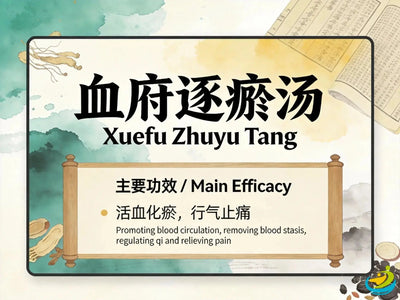
Xuefu Zhuyu Tang has a relatively strong blood-activating and stasis-resolving potency, with a more complex herb composition; beyond blood-activating and stasis-resolving herbs such as Taoren and Honghua (Safflower), it is also combined with liver-soothing and qi-regulating herbs such as Chaihu (Bupleurum Root) and Zhike (Bitter Orange Fruit). Xuefu Zhuyu Tang is primarily used to treat blood-stasis patterns in the chest, such as chest pain, headache, and insomnia. Guizhi Fuling Tang, by comparison, has a relatively milder blood-activating and stasis-resolving potency, placing greater emphasis on gynaecological blood-stasis disorders such as restless fetal movement during pregnancy and metrostaxis, with its herb combination focused more on regulating the qi and blood of the uterus.
2. Comparison with Shixiao San
Shixiao San is composed of Puhuang (Cattail Pollen) and Wulingzhi (Flying Squirrel Faeces), with the actions of activating blood and dispelling stasis, and dissipating binds to relieve pain. It is primarily used for stabbing pain in the chest and heart region and epigastric and abdominal pain caused by blood stasis stagnation. Compared with Guizhi Fuling Tang, Shixiao San's herb composition is more concise, with its blood-activating and stasis-resolving action focused more on relieving pain. Guizhi Fuling Tang, on the foundation of activating blood and resolving stasis, also has the actions of strengthening the spleen, percolating dampness, nourishing blood, and harmonising blood, with a broader scope of application.
3. Comparison with Shenghua Tang
Shenghua Tang is primarily used for postpartum blood-stasis abdominal pain, with the actions of nourishing blood and dispelling stasis, and warming the channels to relieve pain. Its herb composition centres primarily on Danggui (Angelica Root), Chuanxiong (Chuanxiong Rhizome), and Taoren (Peach Kernel), emphasising blood nourishment and blood activation. Guizhi Fuling Tang may also be used for conditions such as unresolved postpartum lochia, but its blood-activating and stasis-resolving action is more comprehensive — it is used not only postpartum but also for blood-stasis disorders during pregnancy, and its herb combination, including Fuling and Shaoyao, has a distinctive righteous-supporting action.

VI. Clinical Applications
1. Gynaecological Application
In the gynaecological field, Guizhi Fuling Tang is widely applied. For uterine fibroids, it can improve local blood circulation around the fibroid, inhibit fibroid growth, and relieve symptoms such as menstrual irregularities and abdominal pain caused by the fibroid. For ovarian cysts, it can produce a degree of cyst-dispersing benefit. For dysmenorrhoea, it can relieve uterine spasm and reduce pain through activating blood and resolving stasis. For amenorrhoea, it can promote the expulsion of blood stasis and restore normal menstruation. For example, one patient with scanty menstrual flow, dark colour with clots, and accompanying abdominal pain experienced gradually increasing menstrual flow, decreased clots, and relief of abdominal pain after taking Guizhi Fuling Tang.
2. Andrological Application
In andrology, it may be used for benign prostatic hyperplasia. Prostatic hyperplasia is often related to blood stasis obstruction; Guizhi Fuling Tang can activate blood and resolve stasis, improving local blood circulation in the prostate, reducing the compression of surrounding tissue by the hyperplastic tissue, and relieving symptoms such as frequent urination, urgency, and difficulty urinating. For male infertility, if blood stasis obstructing the seminal pathway is present, using Guizhi Fuling Tang to activate blood and resolve stasis helps improve sperm quality and increase the chance of conception.
3. Surgical Application
In surgery, for swelling and pain from traumatic injury with blood stasis, Guizhi Fuling Tang can promote the absorption of blood stasis, reducing swelling and pain. For conditions such as ganglion cysts, through activating blood and resolving stasis, the cyst may shrink or even disperse. For example, a patient with local swelling and pain from blood stasis caused by trauma experienced gradual absorption of the blood stasis and marked relief of swelling and pain after taking Guizhi Fuling Tang.
4. Dermatological Application
In dermatology, it has a degree of therapeutic effect for certain skin conditions caused by blood stasis obstruction. For example, cutaneous purpura is often related to blood stasis; Guizhi Fuling Tang can activate blood and resolve stasis, improving skin blood circulation and reducing the occurrence of purpura. For conditions such as melasma, if the pattern is identified as internal blood stasis obstruction, using Guizhi Fuling Tang can also provide a degree of regulatory benefit, improving facial pigmentation.

VII. Clinical Modifications
1. Pronounced Blood Stasis
If blood stasis is more pronounced, Sanleng (Bur-reed Rhizome) and Ezhu (Curcuma Rhizome) may be added — herbs with a stronger potency for breaking blood and expelling stasis. Sanleng is acrid and bitter in flavour and neutral in nature, capable of breaking blood, moving qi, dispersing accumulation, and relieving pain; Ezhu is acrid and bitter in flavour and warm in nature, capable of breaking blood, moving qi, dispersing accumulation, and relieving pain. The addition of these two herbs can reinforce the formula's blood-activating and stasis-resolving action, more effectively dispersing the blood stasis.
2. Concurrent Qi Stagnation
If accompanied by qi stagnation, liver-soothing and qi-regulating herbs such as Chaihu (Bupleurum Root) and Xiangfu (Cyperus Rhizome) may be added. Chaihu is bitter and acrid in flavour and slightly cold in nature, capable of harmonising the exterior and interior, and soothing the liver to resolve depression; Xiangfu is acrid, slightly bitter, and slightly sweet in flavour and neutral in nature, capable of soothing the liver, regulating qi, and regulating menstruation to relieve pain. The addition of liver-soothing and qi-regulating herbs ensures free flow of qi movement, helping the blood stasis to disperse, while simultaneously relieving symptoms such as distending pain caused by qi stagnation.
3. Concurrent Cold Signs
If accompanied by cold signs, channel-warming and cold-dispersing herbs such as Paojiang (Blast-fried Ginger) and Aiye (Mugwort Leaf) may be added. Paojiang is acrid in flavour and warm in nature, capable of warming the channels to stop bleeding, and warming the middle to relieve pain; Aiye is acrid and bitter in flavour and warm in nature, capable of warming the channels to stop bleeding, dispersing cold to regulate menstruation, and calming the fetus. Channel-warming and cold-dispersing herbs can reinforce the formula's warming and unblocking potency, making it more suitable for conditions of blood stasis accompanied by cold signs.
4. Concurrent Heat Signs
If accompanied by heat signs, heat-clearing, blood-cooling, and stasis-resolving herbs such as Chishao (Red Peony Root) and Xiakucao (Prunella Spike) may be added. Chishao is bitter in flavour and slightly cold in nature, capable of clearing heat, cooling blood, dispersing stasis, and relieving pain; Xiakucao is acrid and bitter in flavour and cold in nature, capable of clearing heat, draining fire, brightening the eyes, and dissipating binds to reduce swelling. Heat-clearing, blood-cooling, and stasis-resolving herbs can clear and resolve the heat generated by the blood stasis while simultaneously activating blood and resolving stasis.

VIII. Dosage and Preparation
1. Traditional Method
The traditional administration of Guizhi Fuling Tang is in pill form, as recorded as a pill in the Jin Gui Yao Lue. The general dosage is equal portions each of Guizhi, Fuling, Mudanpi, Taoren, and Shaoyao. The herbs are ground into a fine powder, combined with refined honey, and formed into pills the size of rabbit droppings. One pill is taken per dose, three times daily, swallowed with wine. This pill form is convenient to take, with a gentle medicinal action, suitable for the long-term management of blood-stasis disorders. It may also be prepared as a decoction according to the condition; the decoction dosage is generally Guizhi 9 g, Fuling 9 g, Mudanpi 9 g, Taoren 12 g, and Shaoyao 9 g, decocted in water and taken warm in three divided doses. The decoction has a stronger medicinal potency and a faster onset, suitable for patients with a more urgent condition.
Traditional Preparation and Administration of Guizhi Fuling Tang (Wan)
An introduction to the traditional herb ratios of the Jin Gui Yao Lue's classical blood-activating and stasis-resolving formula "Guizhi Fuling Fang," with a detailed breakdown of the traditional usage of its two different dosage forms — the "pill (for chronic management)" and the "decoction (suitable for acute conditions)."
- Guizhi (Cinnamon Twig): equal portions (pill form) / 9 g (decoction)
- Fuling (Poria): equal portions (pill form) / 9 g (decoction)
- Mudanpi (Tree Peony Bark): equal portions (pill form) / 9 g (decoction)
- Taoren (Peach Kernel): equal portions (pill form) / 12 g (decoction)
- Shaoyao (Peony Root): equal portions (pill form) / 9 g (decoction)
- Refined honey / Yellow wine / Water: appropriate amount (selected according to dosage form being prepared)
2. Administration: Take one pill orally per dose, fixed at three times daily, recommended to be taken with wine. The pill form is convenient to take, with a gentle medicinal action that can exert its effect over a sustained period.
2. Administration: Strain the decocted liquid, divide evenly into three portions, and take warm in three divided doses (to be completed within the day). The decoction has a stronger medicinal potency and a faster onset.
2. Modern Concentrated Granules
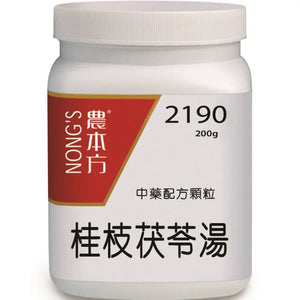
A concentrated granule dosage form of Guizhi Fuling Tang is also available today. Its administration method is relatively simple, dissolved in water according to the dosage specified in the product instructions. Generally speaking, the concentrated granule form better retains the active constituents of the herbs, with the dosage taken relatively reduced compared with the traditional decoction. For example, a certain brand's Guizhi Fuling Tang concentrated granules may be taken per dose at a certain quantity equivalent to the original raw herbs, such as 1–2 sachets, 2–3 times daily. This dosage form is convenient and quick, suited to the fast-paced modern lifestyle, though care should be taken to select a product of reliable quality.

IX. Precautions and Contraindications
1. Use with Caution in Pregnancy
Guizhi Fuling Tang has a blood-activating and stasis-resolving action; pregnant women taking it may experience restless fetal movement or even miscarriage, so it should be used with caution in pregnancy. If a pregnant woman has a blood-stasis disorder requiring treatment, it should be used cautiously under strict medical supervision, weighing the benefits and risks.
2. Precautions During Menstruation
Women with heavier menstrual flow during their period should use Guizhi Fuling Tang with caution, to avoid further increasing menstrual flow or prolonging the menstrual period. For those with scanty menstrual flow and manifestations of blood stasis obstruction, the formula may be used appropriately under medical guidance, but changes in menstrual flow should still be closely monitored.
3. Those with a Weak Constitution
Those with a weak constitution and insufficient qi and blood should use Guizhi Fuling Tang with caution. Because blood-activating and stasis-resolving herbs may deplete the righteous qi, those with a weak constitution may have difficulty tolerating them; according to the specific circumstances, blood-activating and stasis-resolving herbs should be appropriately combined on the foundation of supporting the righteous, or their dosage reduced.
4. Dietary Restrictions
During the course of taking Guizhi Fuling Tang, spicy, greasy, and raw, cold irritating foods should be avoided. These foods may affect the herb's therapeutic efficacy and may even aggravate the condition. For example, chilli peppers, fried foods, and cold drinks should all be avoided as far as possible. At the same time, attention should be paid to regular eating habits and maintaining balanced nutrition, which helps the herb to better exert its effect.

X. Modern Research
1. Pharmacological Research
Guizhi Fuling Wan is a blood-activating and stasis-resolving formula originating from the Jin Gui Yao Lue, possessing the actions of activating blood and resolving stasis, warming and unblocking the channels, harmonising qi and blood, percolating dampness and strengthening the spleen, and transforming phlegm and disinhibiting water. Within the formula, Guizhi warms and unblocks the channels, Fuling transforms phlegm and disinhibits water, and Mudanpi disperses blood and moves stasis, among other constituents; it is applicable for blood-stasis patterns such as uterine fibroids, pelvic inflammatory disease, acne, deep vein thrombosis of the lower limb, benign prostatic hyperplasia, andrological conditions, telangiectasia, and pulmonary hypertension. It is used clinically for gynaecological conditions, fetal movement above the navel, urgent binding in the lower abdomen, forgetfulness, and manic-like agitation, in patients with sublingual varicosities, and is applicable for those with qi-blood stasis; in modern practice it is commonly used for chronic pelvic inflammatory disease and related conditions.
Modern pharmacological research has demonstrated that Guizhi Fuling Tang has the actions of improving blood circulation, exerting anticoagulant effects, and inhibiting platelet aggregation. Its blood-activating and stasis-resolving action may be related to regulating blood rheology and improving microcirculation. The herbs within the formula can dilate blood vessels, increase blood flow, and reduce blood viscosity, thereby promoting the dispersal of blood stasis. For example, cinnamaldehyde within Guizhi has vasodilatory and microcirculation-improving actions; constituents such as amygdalin within Taoren can inhibit platelet aggregation and prevent thrombus formation.
2. Clinical Research
Clinical research has found that Guizhi Fuling Tang has a degree of therapeutic effect in treating gynaecological conditions such as uterine fibroids and ovarian cysts. Through observation of patients' symptoms, signs, and related indicators, it has been found that following administration of Guizhi Fuling Tang, fibroid volume decreases in some patients. In andrological conditions, there are also clinical reports on its use in treating benign prostatic hyperplasia, improving patients' urinary symptoms. In dermatology, for certain skin conditions related to blood stasis, such as cutaneous purpura, the use of Guizhi Fuling Tang can also achieve good therapeutic results.
3. Dosage Form Research
With the development of modern science and technology, research into the dosage forms of Guizhi Fuling Tang has continued to deepen. Beyond the traditional pill and decoction forms, capsule, granule, and injection forms have also been developed. The injection form can be administered intravenously with a faster onset, suitable for certain acute and severe cases. The granule form is convenient to take and easy to store, suited to modern clinical application. Research into different dosage forms aims to improve the herb's therapeutic efficacy, facilitate patient use, and further expand the scope of application of Guizhi Fuling Tang.
Guizhi Fuling Wan — Frequently Asked Questions
Q1: What are the therapeutic actions of Guizhi Fuling Wan?
Guizhi Fuling Wan has the actions of activating blood and resolving stasis, dispersing masses and dissipating binds, and unblocking the channels to relieve pain. It is primarily used for menstrual abdominal pain, menstrual blood with clots, lower abdominal masses, and chronic gynaecological pain caused by blood stasis obstruction.
Q2: What modern conditions is Guizhi Fuling Wan used for?
In modern TCM clinical practice, it is commonly used for uterine fibroids, adenomyosis, ovarian cysts, and pelvic congestion syndrome, among individuals whose presentation corresponds to the pattern of internal obstruction by blood stasis.
Q3: Is Guizhi Fuling Wan suitable for patients with uterine fibroids?
For those with uterine fibroids accompanied by increased menstrual flow, menstrual blood with clots, menstrual pain, lower abdominal bearing-down distension, and manifestations of blood stasis, TCM practitioners commonly apply Guizhi Fuling Wan through pattern differentiation as adjunctive treatment, but it cannot replace ultrasound examination and formal gynaecological treatment.
Q4: Who should not take Guizhi Fuling Wan?
Pregnant women, those with heavy menstrual flow without manifestations of blood stasis, patients with a bleeding tendency, and those whose pattern does not correspond to internal obstruction by blood stasis should generally not self-administer Guizhi Fuling Wan. Assessment should be made by a qualified TCM practitioner based on the individual's constitution and pattern differentiation findings.
⚠️ This content is for reference only and does not provide medical advice. Consult a healthcare professional for any health concerns.