Guizhi Jia Houpo Xingren Tang

Guizhi Jia Houpo Xingren Tang: Releasing Muscles, Harmonising Ying-Wei and Calming Wheeze | HJMEDICAL

I. Origins and History

1. Classical Documentation of Guizhi Jia Houpo Xingren Tang in the Shanghan Lun

Guizhi Jia Houpo Xingren Tang originates from the Shanghan Lun (Treatise on Cold Damage), authored by Zhang Zhongjing of the Eastern Han dynasty — one of the most important classical works in Chinese medicine and the text that established the foundations of pattern-based diagnosis and treatment. Article 43 of the Shanghan Lun records: "For Taiyang disease, when purging downward has caused mild wheezing, this is because the exterior has not yet resolved — Guizhi Jia Houpo Xingren Tang governs it." Article 18 states: "For habitual wheezers treated with Guizhi Tang, it is best to add Houpo and Xingren." In these few concise lines, the formula's indications are described with remarkable precision.

2. Historical Transmission and Development

Since the Shanghan Lun was first circulated, Guizhi Jia Houpo Xingren Tang has been consistently valued and applied by physicians of every generation. It has been transmitted through the ongoing development of Chinese medical theory and clinical practice, becoming an effective formula for treating a variety of conditions. Later physicians continued to enrich the formula's scope of application, adapting it flexibly to different disorders and individual presentations to achieve more precise and effective clinical results. For example, clinical case records document physicians adjusting herb dosages or incorporating supplementary medicinals according to the patient's specific symptoms to enhance the formula's efficacy. When treating patients with externally-contracted cough accompanied by wheezing, physicians would follow the original herb composition and dosage while adding spleen-strengthening, phlegm-transforming, or kidney qi-consolidating herbs according to the patient's constitution, treating both root and branch.

Guizhi Jia Houpo Xingren Tang: Releasing Muscles, Harmonising Ying-Wei and Calming Wheeze | HJMEDICAL

II. Herb Composition (Sovereign, Minister, Assistant, Envoy)

1. Chief Herb — Guizhi (Cinnamon Twig)

Guizhi is acrid and sweet in flavour and warm in nature, entering the Heart, Lung, and Bladder channels. It has the actions of inducing perspiration to release the muscles, warming and unblocking the channels, and assisting yang to transform qi. In Guizhi Jia Houpo Xingren Tang, Guizhi serves as the chief herb and plays the dominant role. It releases the muscles and exterior, dispersing wind-cold to resolve the Taiyang exterior pathogen. For wind-cold invasion of the body's surface causing aversion to cold, fever, headache, and body aches, Guizhi uses its acrid-warm nature to open the interstices, regulate ying and wei, and dispel the wind-cold pathogen through the exterior. Guizhi also warms and unblocks the channels, providing some benefit for channel obstruction and joint pain caused by cold congealing and blood stagnating. Within this formula, Guizhi warms and unblocks lung qi, allowing lung qi to diffuse freely and offering some relief for wheezing caused by lung qi stagnation and closure.

2. Deputy Herb — Shaoyao (Peony Root)

Shaoyao is bitter and sour in flavour and slightly cold in nature, entering the Liver and Spleen channels. It has the actions of nourishing blood, regulating menstruation, astringing yin, stopping perspiration, emolliating the liver, relieving pain, and calming liver yang. In Guizhi Jia Houpo Xingren Tang, Shaoyao serves as the deputy herb, assisting Guizhi in exerting its actions. Shaoyao and Guizhi are paired as complementary opposites — one dispersing, the other astringing. Guizhi is acrid-warm and disperses outward; Shaoyao is sour-cool and astringes inward. Used together, they reinforce Guizhi's muscle-releasing and exterior-resolving action while preventing excessive perspiration from damaging the yin fluids. In treating exterior deficiency patterns from wind-cold, Guizhi releases the muscles and exterior while Shaoyao astringes yin and harmonises the ying, bringing ying and wei into harmony so that the pathogen exits with perspiration without depleting the yin fluids. Shaoyao also emolliates the liver and relieves spasm and pain, offering some relief for liver qi constraint and hypochondriac pain arising from externally-contracted pathogens.

3. Assistant Herbs — Shengjiang (Fresh Ginger) and Dazao (Jujube)

Shengjiang is acrid in flavour and slightly warm in nature, entering the Lung, Spleen, and Stomach channels. It has the actions of releasing the exterior, dispersing cold, warming the middle to stop vomiting, and warming the lungs to stop cough. Dazao is sweet in flavour and warm in nature, entering the Spleen, Stomach, and Heart channels. It has the actions of tonifying the middle, boosting qi, nourishing blood, and calming the spirit. Shengjiang and Dazao serve as the assistant herbs in Guizhi Jia Houpo Xingren Tang. Shengjiang assists Guizhi in dispersing wind-cold, reinforcing the exterior-releasing potency. It also warms the stomach to stop vomiting, providing some treatment for nausea and vomiting associated with wind-cold and spleen-stomach deficiency-cold. Dazao tonifies the middle and boosts qi, nourishes blood and calms the spirit; paired with Shaoyao, it reinforces the blood-nourishing and ying-harmonising action. Dazao also harmonises all the herbs, enabling the medicinals in the formula to act synergistically. The pairing of Shengjiang and Dazao — one dispersing, one supplementing — simultaneously reinforces the exterior-releasing action and protects the spleen and stomach, ensuring the righteous qi is sufficient to assist in expelling the pathogen.

4. Envoy Herb — Zhigancao (Honey-fried Licorice Root)

Zhigancao is sweet in flavour and neutral in nature, entering the Heart, Lung, Spleen, and Stomach channels. It has the actions of tonifying the spleen and boosting qi, moistening the lungs to relieve cough, clearing heat and resolving toxicity, and harmonising all the herbs. In Guizhi Jia Houpo Xingren Tang, Zhigancao serves as the envoy herb. It tonifies the spleen and boosts qi, strengthening the spleen and stomach's transforming and transporting function so that the generation of qi and blood has a source, nourishing the whole body. Zhigancao also moistens the lungs and relieves cough, providing some relief for externally-contracted cough and wheezing. Most importantly, Zhigancao harmonises all the herbs — coordinating the nature of the various medicinals in the formula so that the formula's overall medicinal action is more balanced and well-ordered, producing a better therapeutic effect.

5. Houpo (Magnolia Bark) and Xingren (Apricot Kernel)

Houpo is bitter and acrid in flavour and warm in nature, entering the Spleen, Stomach, Lung, and Large Intestine channels. It has the actions of drying dampness and dissolving phlegm, descending qi, and eliminating fullness. Xingren is sweet and sour in flavour and warm in nature, entering the Lung and Large Intestine channels. It has the actions of stopping cough, calming wheeze, and moistening the intestines to promote defecation. Houpo and Xingren are also important components of this formula. Houpo descends qi and eliminates fullness, producing excellent therapeutic results for wheezing and chest oppression caused by upward counterflow of lung qi. It descends lung qi and restores its smooth flow, thereby relieving wheezing symptoms. Xingren focuses primarily on stopping cough and calming wheeze, effectively reducing cough and wheezing in patients with externally-contracted cough accompanied by wheezing. The combination of Houpo and Xingren strengthens the formula's qi-descending and wheeze-calming efficacy, playing a critical therapeutic role in addressing the wheezing symptoms arising from lung qi stagnation and closure caused by externally-contracted wind-cold.

Guizhi Jia Houpo Xingren Tang: Releasing Muscles, Harmonising Ying-Wei and Calming Wheeze | HJMEDICAL

III. Pathomechanism, Actions, and Indications

1. Pathomechanism Analysis

The pathomechanism targeted by Guizhi Jia Houpo Xingren Tang is primarily externally-contracted wind-cold with disharmony of ying and wei and upward counterflow of lung qi. When the body is invaded by wind-cold pathogen, wind-cold constrains the exterior, causing dysregulation of ying and wei: the wei qi cannot properly warm the exterior, and the ying-yin cannot be retained within, resulting in aversion to cold, fever, and perspiration. Simultaneously, wind-cold can invade the lungs, causing failure of lung qi to diffuse, and lung qi counterflowing upward, manifesting as wheezing and cough. This pathomechanism involves both disease of the Taiyang channel exterior and closely associated dysfunction of the lungs.

2. Actions

This formula has the actions of releasing the muscles and exterior, harmonising ying and wei, and descending qi to calm wheeze. Guizhi releases the muscles and exterior, dispersing wind-cold to resolve the exterior pathogen; Shaoyao pairs with Guizhi to harmonise ying and wei, bringing them into harmony. Shengjiang assists Guizhi in releasing the exterior; Dazao and Zhigancao tonify the spleen and boost qi and harmonise all the herbs — all working together to release the muscles, resolve the exterior, and harmonise ying and wei. Houpo descends qi and eliminates fullness; Xingren stops cough and calms wheeze. Acting synergistically, the two descend lung qi and stop wheezing, achieving the action of descending qi and calming wheeze.

3. Indications

Guizhi Jia Houpo Xingren Tang is indicated for exterior deficiency wind-cold pattern combined with upward counterflow of lung qi. Clinical manifestations include fever, aversion to wind, perspiration, headache, body aches, wheezing, and cough. Among these, fever, aversion to wind, and perspiration are the characteristic presentations of Taiyang exterior deficiency pattern, while wheezing and cough are symptoms of upward counterflow of lung qi. This formula is suitable for patients who develop lung qi stagnation with wheezing and cough due to externally-contracted wind-cold, and is particularly appropriate for patients with a relatively weaker constitution who are prone to wind-cold contractions and have a history of wheezing. In clinical practice, patients who develop cough and wheeze after a cold — accompanied by perspiration and aversion to wind — often achieve good therapeutic outcomes with Guizhi Jia Houpo Xingren Tang.

Guizhi Jia Houpo Xingren Tang: Releasing Muscles, Harmonising Ying-Wei and Calming Wheeze | HJMEDICAL

IV. Formula Analysis

1. Exterior Release and Harmonisation of Ying-Wei

Guizhi is acrid-warm and releases the muscles and exterior, dispersing wind-cold pathogen and resolving the exterior pathogen. Shaoyao is sour-cool and pairs with Guizhi as complementary opposites — one dispersing, one astringing — reinforcing Guizhi's muscle-releasing and exterior-dispersing action while preventing excessive perspiration from damaging the yin fluids, and simultaneously harmonising ying and wei. Disharmony of ying and wei is one of the key pathomechanisms of exterior deficiency wind-cold pattern; the combination of Guizhi and Shaoyao harmonises ying and wei, restoring normal physiological function. Shengjiang assists Guizhi in releasing the exterior; Dazao and Zhigancao tonify the spleen and boost qi and harmonise all the herbs, collectively assisting Guizhi and Shaoyao in releasing the exterior and harmonising ying and wei.

2. Descending Qi and Calming Wheeze

Houpo descends qi and eliminates fullness, reducing lung qi and restoring its smooth flow — producing excellent therapeutic results for wheezing and chest oppression caused by upward counterflow of lung qi. Xingren stops cough and calms wheeze, directly addressing the cough and wheezing symptoms arising from upward counterflow of lung qi. The combination of Houpo and Xingren strengthens the formula's qi-descending and wheeze-calming efficacy, allowing the lung qi to be purged and descended and the wheezing and cough symptoms to be relieved. Throughout the formula, the qi-descending and wheeze-calming medicinals work in concert with those releasing the exterior and harmonising ying-wei, together treating the pathomechanism of externally-contracted wind-cold combined with upward counterflow of lung qi — embodying the holistic concept and pattern-based treatment principles of Chinese medicine.

3. Synergistic Actions of the Herb Combination

The pairing of Guizhi and Shaoyao is one of the key combinations in this formula: they mutually restrain and mutually support one another, releasing the exterior without damaging yin, and astringing yin without retaining the pathogen. Shengjiang and Guizhi synergistically reinforce the exterior-releasing potency; Dazao and Shaoyao synergistically reinforce the blood-nourishing and ying-harmonising action. Zhigancao harmonises all the herbs, making the medicinal nature of the various herbs more coordinated so that they act together therapeutically. The combination of Houpo and Xingren focuses specifically on descending qi and calming wheeze; in concert with the other herbs, they form an integrated organic whole — each fulfilling its role in relation to a different aspect of the pathomechanism, thereby achieving the therapeutic goal of treating exterior deficiency wind-cold pattern combined with upward counterflow of lung qi.

Guizhi Jia Houpo Xingren Tang: Releasing Muscles, Harmonising Ying-Wei and Calming Wheeze | HJMEDICAL

V. Comparison with Related Formulas

1. Comparison with Mahuang Tang

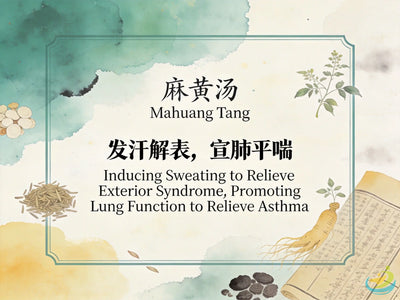
Mahuang Tang, also from the Shanghan Lun, is the representative formula for exterior excess wind-cold pattern. Its herb composition consists primarily of Mahuang (Ephedra), Guizhi (Cinnamon Twig), Xingren (Apricot Kernel), and Zhigancao (Honey-fried Licorice Root). Compared with Guizhi Jia Houpo Xingren Tang, Mahuang Tang has a stronger diaphoretic and exterior-releasing potency, and is indicated for exterior excess wind-cold pattern presenting with aversion to cold, fever, absence of perspiration, headache, body aches, and wheezing. Guizhi Jia Houpo Xingren Tang, by contrast, is indicated for exterior deficiency wind-cold pattern, with perspiration and aversion to wind as its defining characteristics, and a relatively weaker diaphoretic and exterior-releasing potency. In Mahuang Tang, Mahuang is the chief herb with a potent diaphoretic and cold-dispersing action; Guizhi assists Mahuang in releasing the exterior; Xingren descends lung qi to calm wheeze; and Zhigancao harmonises all the herbs. In Guizhi Jia Houpo Xingren Tang, Guizhi is the chief herb, releasing the muscles and exterior; Shaoyao pairs with Guizhi to harmonise ying and wei; and Houpo and Xingren descend qi and calm wheeze. The two formulas differ clearly in herb composition and in their actions and indications; accurate pattern differentiation is required in clinical application to select the appropriate formula.

2. Comparison with Xiao Qing Long Tang

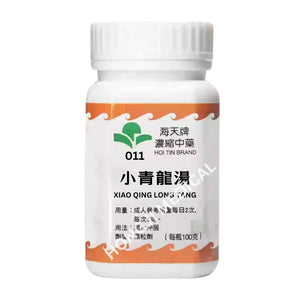
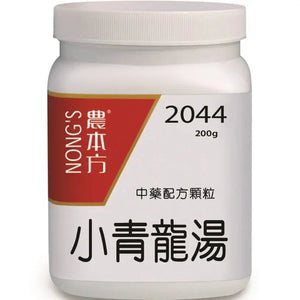
Xiao Qing Long Tang is also a formula for externally-contracted wind-cold with internally-retained cold-fluid. Its herb composition includes Mahuang (Ephedra), Shaoyao (Peony Root), Xixin (Asarum), Ganjiang (Dry Ginger), Zhigancao (Honey-fried Licorice Root), Guizhi (Cinnamon Twig), Wuweizi (Schisandra Fruit), and Banxia (Pinellia). Xiao Qing Long Tang primarily targets the pathomechanism of externally-contracted wind-cold with internally-retained cold-fluid, with the actions of releasing the exterior and dispersing cold, and warming the lungs to transform fluid. Compared with Guizhi Jia Houpo Xingren Tang, Xiao Qing Long Tang places greater emphasis on warming and transforming cold-fluid, making it more appropriate for the symptoms of internally-retained cold-fluid such as cough, wheezing, and copious thin clear sputum. Guizhi Jia Houpo Xingren Tang primarily targets exterior deficiency wind-cold pattern combined with upward counterflow of lung qi, focusing on releasing the muscles and exterior, harmonising ying and wei, and descending qi to calm wheeze. In terms of herb composition, Xiao Qing Long Tang contains Xixin, Ganjiang, Wuweizi, and Banxia to warm and transform cold-fluid, whereas Guizhi Jia Houpo Xingren Tang does not include these herbs. The two formulas each have distinct characteristics in terms of pathomechanism, actions, and herb composition; differential diagnosis and selection based on the patient's specific clinical presentation are required in clinical application.

Guizhi Jia Houpo Xingren Tang: Releasing Muscles, Harmonising Ying-Wei and Calming Wheeze | HJMEDICAL

VI. Clinical Applications

1. Post-Cold Cough and Wheezing

In clinical practice, Guizhi Jia Houpo Xingren Tang is well suited for patients who develop cough and wheezing after a cold, accompanied by perspiration and aversion to wind and other exterior deficiency presentations. These patients typically have a relatively weaker constitution; after contracting wind-cold, they are prone to lung qi stagnation and closure, manifesting in cough and wheezing. Guizhi Jia Houpo Xingren Tang releases the muscles and exterior, harmonises ying and wei, and descends qi to calm wheeze, effectively relieving post-cold cough and wheezing. For example, some patients present after a cold with fever, aversion to wind, perspiration, frequent cough, and marked wheezing. After taking Guizhi Jia Houpo Xingren Tang, the exterior symptoms of fever and perspiration gradually abate, and the cough and wheezing also diminish significantly.

2. Acute Exacerbation of Chronic Bronchitis

For patients with chronic bronchitis during acute exacerbation who present with wind-cold symptoms alongside worsening cough and wheezing and increased sputum production, Guizhi Jia Houpo Xingren Tang may be considered. Patients with chronic bronchitis typically have underlying lung qi weakness and are susceptible to externally-contracted pathogens. Guizhi Jia Houpo Xingren Tang both releases the exterior and disperses cold and descends qi to calm wheeze, providing some benefit in relieving symptoms during acute exacerbation of chronic bronchitis. In clinical practice, through pattern-based treatment with rational application of Guizhi Jia Houpo Xingren Tang, patients' cough and wheezing symptoms can be improved, the frequency of exacerbations reduced, and quality of life enhanced.

3. Bronchial Asthma

For patients with bronchial asthma during an attack who have an externally-contracted trigger and present with aversion to cold, fever, perspiration, cough, and wheezing, Guizhi Jia Houpo Xingren Tang may be considered as a reference formula. The pathogenesis of bronchial asthma is closely related to factors such as lung qi weakness and externally-contracted pathogens. Guizhi Jia Houpo Xingren Tang can target the pathomechanism of externally-contracted wind-cold combined with upward counterflow of lung qi, relieving symptoms during the attack phase of bronchial asthma. However, in clinical application it is necessary to combine other treatments according to the patient's specific presentation — such as inhaled bronchodilators — for comprehensive management to achieve a better therapeutic outcome.

Guizhi Jia Houpo Xingren Tang: Releasing Muscles, Harmonising Ying-Wei and Calming Wheeze | HJMEDICAL

VII. Clinical Modifications

1. Concurrent Phlegm-Dampness

For patients with heavy phlegm-dampness and a productive cough with copious sputum, Banxia (Pinellia) and Chenpi (Dried Tangerine Peel) may be added to the base formula. Banxia dries dampness and transforms phlegm; Chenpi regulates qi and transforms phlegm. Used together, they strengthen the phlegm-transforming potency, facilitating expectoration and relieving cough. For example, in patients with cough and wheezing accompanied by thick copious sputum with chest oppression and nausea reflecting phlegm-dampness, the addition of Banxia and Chenpi produces noticeable reduction in cough and wheezing, with markedly decreased sputum.

2. Concurrent Heat Signs

For patients who develop fever, thirst, and a dry throat — indicating concurrent heat — Shigao (Gypsum) and Huangqin (Scutellaria Root) may be appropriately added. Shigao clears heat and drains fire; Huangqin clears heat and dries dampness. The two can clear and resolve interior heat, preventing the exterior pathogen from transmitting inward and transforming into heat. For patients with externally-contracted wind-cold combined with interior constraint transforming into heat, the addition of Shigao and Huangqin relieves symptoms of fever and thirst without impairing the exterior-releasing and cold-dispersing function.

3. Pronounced Lung Qi Weakness

For patients with marked lung qi weakness, Huangqi (Astragalus Root) and Dangshen (Codonopsis Root) may be added to reinforce the qi-tonifying potency. Huangqi and Dangshen tonify the spleen and benefit the lungs, strengthening the body's resistance and improving lung qi function. For patients with underlying lung qi weakness who are prone to repeated colds and recurring cough and wheezing, the addition of Huangqi and Dangshen reduces the frequency of illness and strengthens the constitution.

Guizhi Jia Houpo Xingren Tang: Releasing Muscles, Harmonising Ying-Wei and Calming Wheeze | HJMEDICAL

VIII. Dosage and Preparation

1. Traditional Method

Traditional Classical Decoction Method for Guizhi Jia Houpo Xingren Tang

An introduction to the classical herb composition of the Han dynasty Shanghan Lun formula "Guizhi Jia Houpo Xingren Tang" for releasing the exterior and diffusing the lungs — including the rigorous herb pre-processing techniques and the standard traditional decoction and administration steps of low-flame slow decocting and post-dose covering to induce perspiration.

【Classical Composition and Modern Reference Dosages】
  • Guizhi (Cinnamon Twig, bark removed): 3 liang (commonly used in modern practice: 9 g)
  • Shaoyao (Peony Root): 3 liang (commonly used in modern practice: 9 g)
  • Houpo (Magnolia Bark, honey-fried, bark removed): 2 liang (commonly used in modern practice: 6 g)
  • Shengjiang (Fresh Ginger, sliced): 3 liang (commonly used in modern practice: 9 g)
  • Xingren (Apricot Kernel, skin and tip removed): 50 pieces (commonly used in modern practice: 9 g)
  • Gancao (Licorice Root, honey-fried): 2 liang (commonly used in modern practice: 6 g)
  • Dazao (Jujube, split open): 12 pieces (commonly used in modern practice: 4 pieces)
  • Water: 7 sheng in classical measure (approx. 1,400 ml; for modern preparation, please add sufficient water to cover all herbs)

💡 Note: For modern clinical use, herb dosages may be adjusted at the physician's discretion according to the patient's specific presentation.

Step 1: Herb Cleaning and Pre-Processing Strictly follow Zhang Zhongjing's classical requirements for the preliminary processing of all seven herbs:
Guizhi and Houpo: Both must have their outer rough bark thoroughly removed (qupí). Houpo must additionally be honey-fried according to protocol.
Shengjiang and Dazao: Wash the Fresh Ginger and slice it thinly; wash the Jujubes and split them open by hand (pīkāi — split open), to facilitate the release of their medicinal flavour.
Xingren: Must be carefully processed to remove the outer skin and tip (qupíjiān), to prevent toxicity from accidental ingestion and avoid excessive qi dispersal.
Step 2: Low-Flame Slow Decoction and Straining Place all seven prepared herbs together into the decoction vessel and add sufficient water (7 sheng in classical measure, approximately 1,400 ml). Bring to the boil over a high flame, then immediately reduce to a low flame and decoct slowly, until the liquid has been concentrated and reduced to just under half its original volume — reduce to 3 sheng in classical measure, approximately 600 ml. Once decocted, strain thoroughly, remove the herb dregs (quzha), and retain the pure decoction liquid.
Step 3: Divided Warm Oral Administration Divide the strained 3 sheng of decoction liquid evenly into three portions. Each dose is one portion, taken orally while warm (approximately 200 ml per dose, taken warm), typically administered three times within a day.
Step 4: Covering to Induce Perspiration (Traditional Recovery Care) After taking the medicine, the patient should rest calmly in bed and cover themselves with clothing or bedding to assist the medicinal action in dispersing. The ideal outcome during recovery is a light, thin sheen of perspiration across the body — profuse sweating must be strictly avoided, as it may exhaust the righteous qi.

2. Modern Concentrated Granules

Concentrated granule preparations of Guizhi Jia Houpo Xingren Tang are also available on the modern market. The method of administration is relatively simple: follow the guidance in the product instructions and dissolve in hot water to take. The dosage of the concentrated granules is scientifically formulated to preserve the active constituents of the herbs well, providing convenience for patients. For example, one brand's concentrated granule preparation of Guizhi Jia Houpo Xingren Tang contains a drug content per dose equivalent to the traditional formula's dosage; patients simply dissolve it in hot water and take 1–2 doses per day, divided into 2–3 administrations. Compared with the traditional decoction, concentrated granules are easy to carry and convenient to take, making them more suited to modern fast-paced lifestyles.

Guizhi Jia Houpo Xingren Tang: Releasing Muscles, Harmonising Ying-Wei and Calming Wheeze | HJMEDICAL

IX. Precautions and Contraindications

1. Dietary Restrictions During Treatment

During the course of taking Guizhi Jia Houpo Xingren Tang, patients should avoid raw and cold foods, greasy or fatty foods, and spicy or pungent foods. Raw and cold foods — such as ice cream and cold drinks — can easily damage the yang qi of the spleen and stomach, impairing the absorption and efficacy of the herbs. Greasy foods such as fried foods and fatty meat are difficult to digest and may further burden the spleen and stomach. Spicy and pungent foods such as chilli and Sichuan pepper tend to generate fire and heat, which is unfavourable to recovery. Alcohol should also be avoided, as it can affect drug metabolism, reduce therapeutic efficacy, and may even cause adverse interactions with the herbs.

2. Precautions for Special Populations

Special populations such as pregnant women, breastfeeding women, and children should exercise caution when using Guizhi Jia Houpo Xingren Tang. Pregnant women require particular care, as the herbs may have effects on the fetus; if use is necessary, it should be carried out under medical supervision with strict control of dosage and treatment duration. For breastfeeding women, the herbs may pass through breast milk to affect the infant, and the decision to use them should be made following medical evaluation. Paediatric dosages must be adjusted according to factors such as age and body weight; since children's physiological characteristics differ from those of adults, even greater care is required when prescribing, and medication should be taken under medical guidance.

3. Monitoring and Management of Changes in Condition

Throughout the course of taking Guizhi Jia Houpo Xingren Tang, patients should closely monitor changes in their condition. If symptoms show no significant improvement after taking the medicine, or if worsening occurs — such as persistent fever, worsening cough and wheezing, or the appearance of new symptoms — medical attention should be sought promptly for reassessment and adjustment of the treatment plan. Patients should also take the medicine at the prescribed times as instructed by their physician and should not independently increase or decrease the dosage or discontinue the medicine, to avoid compromising the therapeutic effect.

Guizhi Jia Houpo Xingren Tang: Releasing Muscles, Harmonising Ying-Wei and Calming Wheeze | HJMEDICAL

X. Modern Research

1. Pharmacological Research

Guizhi Jia Houpo Xingren Tang is a modification of Guizhi Tang with Houpo and Xingren as the core additions, possessing the actions of releasing the exterior and dispersing cold, diffusing the lungs and calming wheeze. It is indicated for wheezing patterns characterised by exterior-interior disharmony and an intermingling of cold and heat.

Modern pharmacological research has demonstrated that the herbs in Guizhi Jia Houpo Xingren Tang have a broad range of pharmacological actions. Guizhi has vasodilatory, blood circulation-promoting, antipyretic, and anti-inflammatory effects. Shaoyao has anti-inflammatory, analgesic, and antispasmodic effects. Shengjiang has antibacterial, anti-inflammatory, and antiemetic effects. Dazao has immune-enhancing and antioxidant effects. Houpo has antibacterial, anti-inflammatory, and wheeze-calming effects. Xingren has cough-suppressing, wheeze-calming, and anti-inflammatory effects. These pharmacological actions working in concert are likely the material basis for the therapeutic effect of Guizhi Jia Houpo Xingren Tang. For example, the active constituents of Guizhi can relax bronchial smooth muscle to relieve wheezing; the honokiol and magnolol in Houpo have anti-inflammatory and wheeze-calming actions, reducing pulmonary inflammation and improving respiratory function.

2. Clinical Research

In recent years, a number of clinical research reports on Guizhi Jia Houpo Xingren Tang have appeared. Several studies indicate that Guizhi Jia Houpo Xingren Tang produces good therapeutic results in treating post-cold cough and wheezing. By observing patients' symptoms, signs, and lung function indicators, researchers have found that this formula can effectively relieve cough and wheezing and improve lung function. For example, one clinical study divided 100 patients with post-cold cough and wheezing into two groups: one treated with Guizhi Jia Houpo Xingren Tang, the other with Western pharmaceutical cough-suppressant and wheeze-calming drugs. The results showed that patients treated with Guizhi Jia Houpo Xingren Tang outperformed the Western medicine group in terms of symptom relief time and lung function improvement, with fewer adverse reactions.

3. Dosage Form Improvement Research

With the development of modern science and technology, research into dosage form improvement for Guizhi Jia Houpo Xingren Tang has been ongoing. In addition to the concentrated granule form mentioned earlier, research efforts have been devoted to developing new preparations of Guizhi Jia Houpo Xingren Tang such as tablets and capsules. These new dosage forms maintain the formula's therapeutic efficacy while offering advantages such as ease of administration and good quality stability, better meeting the demands of modern clinical application. For example, a tablet preparation of Guizhi Jia Houpo Xingren Tang developed by one research team used an optimised manufacturing process to improve the drug's stability and bioavailability; after clinical trial validation, its efficacy was shown to be equivalent to the traditional decoction, with better patient compliance.

In summary, Guizhi Jia Houpo Xingren Tang, as a classical formula from the Shanghan Lun, possesses rich content and important clinical application value. Through a detailed introduction to its origins and history, herb composition, pathomechanism and actions, formula analysis, comparison with related formulas, clinical applications, modifications, dosage and preparation, precautions, and modern research progress, it is hoped that more people will come to understand this formula and that it may serve as a useful reference for Chinese medicine clinical practice and public health.

Guizhi Jia Houpo Xingren Tang — Frequently Asked Questions

Q1: What are the therapeutic actions of Guizhi Jia Houpo Xingren Tang?

Guizhi Jia Houpo Xingren Tang has the actions of releasing the muscles and exterior, descending qi to calm wheeze, and expanding the chest to stop cough. It is commonly used for cough, wheezing, chest oppression, and difficulty breathing following externally-contracted wind-cold.

Q2: What modern conditions is Guizhi Jia Houpo Xingren Tang used for?

In modern TCM clinical practice, it is commonly used for acute bronchitis, post-cold cough, recovery phase of upper respiratory tract infection, and cough-variant asthma, among individuals whose presentation corresponds to the pattern of wind-cold constraining the exterior with upward counterflow of lung qi.

Q3: Is Guizhi Jia Houpo Xingren Tang suitable for a prolonged cough after a cold?

For persistent cough after a cold — presenting with throat itching, chest oppression, wheezing, or worsening on exposure to cold — that corresponds to the pattern of unresolved wind-cold with upward counterflow of lung qi, TCM practitioners commonly apply Guizhi Jia Houpo Xingren Tang through pattern differentiation for adjunctive treatment.

Q4: Who should not take Guizhi Jia Houpo Xingren Tang?

Patients with lung-heat cough, yellow viscous sputum, pronounced high fever, or yin deficiency with dry cough are generally not suitable for this formula. Assessment should be made by a qualified TCM practitioner through pattern differentiation based on the specific pattern characteristics.

⚠️ This content is for reference only and does not provide medical advice. Consult a healthcare professional for any health concerns.

Login

Forgot your password?

Don't have an account yet?
Create account

Guizhi Jia Houpo Xingren Tang