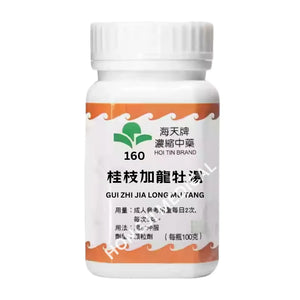
Guizhi Jia Long Gu Muli Tang

Guizhi Jia Long Gu Muli Tang: Harmonising Ying-Wei, Astringing Essence and Calming the Spirit | HJMEDICAL

I. Origins and History

1. Classical Literature

Guizhi Jia Long Gu Muli Tang originates from the Jin Gui Yao Lue (Essential Prescriptions of the Golden Cabinet), authored by Zhang Zhongjing of the Eastern Han dynasty. The Jin Gui Yao Lue is the earliest extant Chinese medical monograph devoted to the diagnosis and treatment of miscellaneous diseases, and has exerted a profound influence on subsequent Chinese medicine clinical practice and the development of formula studies. This work systematically expounds on the aetiology, pathomechanism, diagnosis, and treatment of numerous diseases, and Guizhi Jia Long Gu Muli Tang stands as one of its classical formulas.

2. Historical Transmission and Development

Since the Jin Gui Yao Lue was first circulated, Guizhi Jia Long Gu Muli Tang has consistently been valued and applied by physicians of every generation. Across different historical periods, physicians further researched and expanded upon this formula based on clinical practice. Later generations continued to summarise the evolving scope of its indications and gradually broadened the range of its applications. With the ongoing development of Chinese medical theory and clinical practice, Guizhi Jia Long Gu Muli Tang remains an effective and commonly used formula in clinical practice today, relieving the suffering of countless patients.

Guizhi Jia Long Gu Muli Tang: Harmonising Ying-Wei, Astringing Essence and Calming the Spirit | HJMEDICAL

II. Herb Composition (Sovereign, Minister, Assistant, Envoy)

1. Chief Herb — Guizhi (Cinnamon Twig)

Flavour, Nature and Channel Tropism

Guizhi is acrid and sweet in flavour and warm in nature, entering the Heart, Lung, and Bladder channels.

Actions

Guizhi has the actions of inducing perspiration to release the muscles, warming and unblocking the channels, and assisting yang to transform qi. It can resolve exterior pathogens, dispersing wind-cold from the exterior; by warming and unblocking the channels it promotes the circulation of qi and blood, providing good therapeutic results for various pain conditions caused by cold congealing and blood stagnating; assisting yang to transform qi benefits the bladder's qi-transforming function and promotes fluid metabolism. In Guizhi Jia Long Gu Muli Tang, Guizhi serves as the chief herb with the important role of releasing the muscles and exterior and harmonising ying and wei, laying the foundation for the formula's treatment of externally-contracted wind-cold and ying-wei disharmony.

2. Deputy Herb — Shaoyao (Peony Root)

Flavour, Nature and Channel Tropism

Shaoyao is bitter and sour in flavour and slightly cold in nature, entering the Liver and Spleen channels.

Actions

Shaoyao has the actions of nourishing blood, regulating menstruation, astringing yin, stopping perspiration, emolliating the liver, relieving pain, and calming liver yang. In this formula, Shaoyao pairs with Guizhi as complementary opposites — one dispersing, one astringing — assisting Guizhi in releasing the muscles whilst restraining Guizhi's acrid dispersal from being excessive and preventing excessive perspiration from damaging the yin fluids. Simultaneously, Shaoyao nourishes blood and harmonises the ying, jointly regulating ying and wei with Guizhi to bring them into harmony. It plays an important role in relieving symptoms such as spontaneous sweating and night sweating caused by ying-wei disharmony, and can also emolliate the liver and relieve spasm, alleviating possible abdominal cramping and pain.

3. Assistant Herbs — Shengjiang (Fresh Ginger) and Dazao (Jujube)

Shengjiang (Fresh Ginger)

Flavour, Nature and Channel Tropism

Shengjiang is acrid in flavour and slightly warm in nature, entering the Lung, Spleen, and Stomach channels.

Actions

Shengjiang has the actions of releasing the exterior, dispersing cold, warming the middle to stop vomiting, and transforming phlegm to relieve cough. In Guizhi Jia Long Gu Muli Tang, Shengjiang assists Guizhi in dispersing wind-cold, reinforcing the exterior-releasing potency. It also warms the stomach to stop vomiting, preventing the herbs from injuring the stomach, thereby harmonising the spleen and stomach and facilitating the absorption and efficacy of the formula.

Dazao (Jujube)

Flavour, Nature and Channel Tropism

Dazao is sweet in flavour and warm in nature, entering the Spleen, Stomach, and Heart channels.

Actions

Dazao has the actions of tonifying the middle and boosting qi, and nourishing blood to calm the spirit. Dazao tonifies the spleen and boosts qi; combined with Shengjiang, it harmonises the spleen and stomach and strengthens their transforming and transporting function, ensuring the generation of qi and blood has a source. Dazao also nourishes blood, assisting Shaoyao in nourishing blood and harmonising the ying, and can moderate the medicinal nature of the formula, making the overall formula gentler and easier to take.

4. Envoy Herbs — Long Gu (Dragon Bone) and Muli (Oyster Shell)

Long Gu (Dragon Bone)

Flavour, Nature and Channel Tropism

Long Gu is sweet and astringent in flavour and neutral in nature, entering the Heart, Liver, and Kidney channels.

Actions

Long Gu has the actions of settling fright and calming the spirit, calming the liver and subduing yang, and astringing and consolidating. In this formula, Long Gu heavily settles and calms the spirit, producing good therapeutic results for insomnia, profuse dreaming, and palpitations with fright caused by yin-yang disharmony and spirit-mind restlessness. It also calms the liver and subdues yang, helping to balance the body's yin and yang and relieve the various discomforts arising from yin-yang disharmony. In addition, Long Gu's astringing and consolidating action can be used to treat spontaneous sweating, night sweating, and similar symptoms; acting in concert with the other herbs, it enhances the formula's overall therapeutic efficacy.

Muli (Oyster Shell)

Flavour, Nature and Channel Tropism

Muli is salty in flavour and slightly cold in nature, entering the Liver, Gallbladder, and Kidney channels.

Actions

Muli has the actions of heavily settling and calming the spirit, subduing yang and supplementing yin, and softening hardness and dissipating binds. Muli also heavily settles and calms the spirit; used in mutual reliance with Long Gu, the two reinforce one another in calming the spirit and stabilising the will. Its yang-subduing and yin-supplementing action helps to balance yin and yang, particularly in addressing yin deficiency with yang hyperactivity. The softening and dissipating action of Muli also provides certain supplementary therapeutic benefit in some conditions. In Guizhi Jia Long Gu Muli Tang, Long Gu and Muli serve as the envoy herbs with the primary and critical roles of heavily settling and calming the spirit, astringing and consolidating, and balancing yin and yang, regulating the core pathomechanism of the disorders treated by this formula.

Guizhi Jia Long Gu Muli Tang: Harmonising Ying-Wei, Astringing Essence and Calming the Spirit | HJMEDICAL

III. Pathomechanism, Actions, and Indications

1. Pathomechanism Analysis

Yin-Yang Disharmony

The pathomechanism targeted by Guizhi Jia Long Gu Muli Tang is primarily yin-yang disharmony. The body's yin and yang should exist in a state of relative balance; when they become disharmonised, various disorders arise. In the pattern addressed by this formula, yin-yang disharmony may follow externally-contracted wind-cold leading to ying-wei disharmony; or it may arise from the body's own depletion of yin or yang — yin deficiency failing to restrain yang, or yang deficiency failing to consolidate yin — resulting in yin-yang disharmony. For example, patients may develop yin-fluid depletion through excessive taxation or emotional disturbance, with yang relatively hyperactive, manifesting as vexing restlessness with insomnia and tidal fever with night sweating; or through prolonged illness and bodily weakness with insufficient yang qi, leading to failure to consolidate the yin fluids and manifesting as spontaneous sweating and aversion to cold.

Qi-Blood Disharmony

Qi and blood are the essential material foundation of the body's life activities, and qi-blood disharmony also holds an important place in the pathomechanism. Ying-wei disharmony can lead to impeded flow of qi and blood, further affecting the functions of the zang-fu organs. For example, externally-contracted wind-cold can cause the wei qi to fail in warming the exterior normally, and the ying qi to fail in being retained within, obstructing the flow of qi and blood and producing fever, aversion to cold, and perspiration. At the same time, yin-yang disharmony can further affect the generation and movement of qi and blood, leading to qi-blood insufficiency or qi-blood stasis. For instance, long-term emotional constraint can lead to qi stagnation and blood stasis, and qi-blood stasis in turn aggravates yin-yang disharmony, forming a vicious cycle.

2. Actions

Harmonising Yin and Yang

One of the primary actions of Guizhi Jia Long Gu Muli Tang is harmonising yin and yang. Through Guizhi, Shaoyao, and related herbs regulating ying and wei, ying and wei are brought into harmony, thereby balancing the body's yin and yang. Long Gu and Muli heavily settle and calm the spirit and calm the liver to subdue yang, helping to correct the state of yin-yang disharmony and restore a relative balance of yin and yang. For various symptoms arising from depletion of both yin and yang or yin-yang disharmony — such as spontaneous sweating, night sweating, insomnia, and profuse dreaming — the formula has good regulatory effects.

Consolidating Astriction and Arresting Perspiration

This formula has the action of consolidating astriction and arresting perspiration. The astringing and consolidating action of Long Gu and Muli can effectively treat spontaneous sweating and night sweating. Whether the spontaneous sweating is caused by yang deficiency failing to consolidate the exterior, or the night sweating arises from yin deficiency with internal heat forcing fluids outward, Guizhi Jia Long Gu Muli Tang can consolidate and astringently retain perspiration, reducing excessive outflow of sweat, thereby improving the patient's symptoms and quality of life.

Calming the Spirit and Settling the Will

Long Gu and Muli in the formula heavily settle and calm the spirit, relieving insomnia and palpitations with fright caused by yin-yang disharmony and spirit-mind restlessness. At the same time, Guizhi, Shaoyao, and other herbs harmonising ying and wei also help to stabilise the spirit-mind. For spirit-mind unrest caused by emotional factors or physical discomfort, this formula achieves the effect of calming the spirit and settling the will by regulating the overall yin-yang qi-blood, allowing patients to obtain restful sleep and relieving mental tension.

3. Indications

Deficiency-Taxation with Loss of Essence

Guizhi Jia Long Gu Muli Tang is primarily indicated for deficiency-taxation with loss of essence. Patients commonly present with symptoms such as spermatorrhoea and seminal efflux in men, and nocturnal emission with dream intercourse in women. Due to yin-yang disharmony and failure of the kidneys to consolidate essence, the seminal essence leaks outward. Simultaneously, patients may also have accompanying symptoms such as a dull complexion, aversion to cold, dizziness, insomnia, and profuse dreaming. This formula produces good therapeutic results for deficiency-taxation with loss of essence through harmonising yin and yang and consolidating the kidney essence.

Spontaneous Sweating and Night Sweating due to Yin-Yang Disharmony

Guizhi Jia Long Gu Muli Tang also produces notable therapeutic effects for spontaneous sweating and night sweating arising from yin-yang disharmony. Spontaneous sweating is mostly caused by yang deficiency failing to consolidate the exterior, with sweat leaking outward; night sweating is mostly caused by yin deficiency with internal heat forcing fluids outward. This formula harmonises yin and yang so that yang qi becomes consolidated and yin fluids are retained within, thereby achieving the effect of stopping perspiration. When patients experience spontaneous or night sweating, they often have accompanying fatigue, shortness of breath, and vexing heat; these symptoms are also correspondingly relieved after using this formula.

Insomnia, Profuse Dreaming and Palpitations with Fright

Insomnia, profuse dreaming, and palpitations with fright caused by yin-yang disharmony and spirit-mind restlessness also fall within the scope of indications for Guizhi Jia Long Gu Muli Tang. Patients may have difficulty falling asleep or experience profuse dreaming with frequent waking during sleep, accompanied by feelings of palpitations and fright. This formula improves the patient's sleep quality, relieves mental symptoms, and restores normal sleep and mental state through harmonising yin and yang and calming the spirit.

Guizhi Jia Long Gu Muli Tang: Harmonising Ying-Wei, Astringing Essence and Calming the Spirit | HJMEDICAL

IV. Formula Analysis

1. The Guizhi–Shaoyao Combination

Harmonising Ying and Wei

Guizhi is acrid-warm and releases the muscles and exterior, dispersing the wind-cold pathogen so that the exterior pathogen can be resolved; Shaoyao is sour-cool and astringes yin and harmonises the ying, restraining Guizhi's acrid dispersal from being excessive and preventing excessive perspiration from damaging the yin fluids. The two paired together — one dispersing, one astringing — harmonise ying and wei and bring them into accord. When ying and wei are harmonised, qi and blood flow freely and the zang-fu organs function normally, thereby improving the various symptoms caused by ying-wei disharmony such as fever, aversion to cold, and perspiration.

Balancing Yin and Yang

Guizhi is warm in nature and assists yang; Shaoyao is slightly cool in nature and nourishes yin. Their combination helps to balance the body's yin and yang. In disorders of yin-yang disharmony, Guizhi and Shaoyao work together to adjust the excess or deficiency of yin and yang, restoring relative yin-yang balance. For instance, in patients with yang deficiency and yin excess, Guizhi can augment yang qi whilst Shaoyao restrains yin cold; for patients with yin deficiency and yang hyperactivity, Shaoyao nourishes yin whilst Guizhi prevents yang qi from over-dispersing, thereby achieving the therapeutic goal of yin-yang balance.

2. The Role of Shengjiang and Dazao

Harmonising the Spleen and Stomach

Shengjiang is acrid-warm and warms the stomach to disperse cold, promoting the spleen and stomach's transforming and transporting function; Dazao is sweet-warm and tonifies the spleen and boosts qi. Together they harmonise the spleen and stomach and strengthen its transforming and transporting function. The spleen and stomach are the postnatal root and the source of qi-blood generation; normal spleen and stomach function facilitates the absorption and efficacy of the herbs, while also providing the body with sufficient nutrients and strengthening its resistance. In Guizhi Jia Long Gu Muli Tang, Shengjiang and Dazao enable the entire formula to exert its therapeutic action more effectively through harmonising the spleen and stomach.

Reinforcing Medicinal Potency

Shengjiang and Dazao also reinforce the medicinal potency, enabling the herbs to exert better synergistic action. Shengjiang assists Guizhi in dispersing wind-cold; Dazao supports Shaoyao in nourishing blood and harmonising the ying. Together with the other herbs, they jointly enhance the formula's exterior-releasing, ying-harmonising, and spirit-calming efficacy, making the medicinal action more comprehensive and synergistic, and improving the formula's therapeutic effect.

3. The Significance of Long Gu and Muli

Heavy Settling to Calm the Spirit

Long Gu and Muli, with their heavy settling quality, possess a powerful action of settling fright and calming the spirit. When yin-yang disharmony leads to spirit-mind restlessness, they heavily settle the spirit-mind and relieve symptoms such as insomnia, profuse dreaming, and palpitations with fright. By heavily settling and calming the spirit, the spirit-mind is brought to tranquillity, the patient's mental state improves, and this contributes to the recovery of the overall condition.

Astringing and Consolidating

The astringing and consolidating action of Long Gu and Muli has important significance for treating symptoms such as spontaneous sweating, night sweating, spermatorrhoea, and seminal efflux. They astringently retain the body's lost fluids and essence, preventing excessive outward leakage. In deficiency-taxation with loss of essence and sweating disorders caused by yin-yang disharmony, Long Gu and Muli perform the function of consolidating the body's righteous qi through astriction, reducing the worsening of the condition caused by the outward leakage of righteous qi and promoting the body's recovery.

Calming the Liver and Subduing Yang

Both herbs also have the action of calming the liver and subduing yang. When the body's yin and yang become disharmonised and yin deficiency with yang hyperactivity develops, Long Gu and Muli calm the liver and subdue yang, restraining the upward hyperactivity of yang qi and relieving symptoms such as dizziness and vertigo caused by yang hyperactivity, thereby restoring yin-yang balance and maintaining normal physiological function.

Guizhi Jia Long Gu Muli Tang: Harmonising Ying-Wei, Astringing Essence and Calming the Spirit | HJMEDICAL

V. Comparison with Related Formulas

1. Comparison with Guizhi Tang

Compositional Differences

Guizhi Jia Long Gu Muli Tang is built upon Guizhi Tang with the addition of Long Gu and Muli. Guizhi Tang is composed of Guizhi, Shaoyao, Shengjiang, Dazao, and Gancao, with the primary actions of releasing the muscles and exterior and harmonising ying and wei. With the addition of Long Gu and Muli, Guizhi Jia Long Gu Muli Tang gains reinforced actions of heavy settling and spirit calming, and astringing and consolidating.

Emphasis of Actions

Guizhi Tang focuses on harmonising ying and wei, treating fever, aversion to cold, and perspiration caused by externally-contracted wind-cold with ying-wei disharmony. Guizhi Jia Long Gu Muli Tang, on the foundation of harmonising ying and wei, places greater emphasis on harmonising yin and yang, consolidating astriction to arrest perspiration, and calming the spirit. It has unique therapeutic effects for spontaneous sweating, night sweating, insomnia, and deficiency-taxation with loss of essence caused by yin-yang disharmony, and its scope of action is broader than that of Guizhi Tang.

2. Comparison with Suanzaoren Tang

Differing Pathomechanisms

Suanzaoren Tang primarily targets insomnia caused by liver blood insufficiency with deficiency-heat disturbing the interior. Its pathomechanical focus is on liver blood depletion with deficiency-heat ascending to disturb the spirit-mind. The pathomechanism of Guizhi Jia Long Gu Muli Tang is yin-yang disharmony, encompassing a broader scope — not only spirit-mind restlessness but also ying-wei disharmony, qi-blood disharmony, and yin-yang depletion, among other conditions.

Herb Composition and Actions

Suanzaoren Tang uses Suanzaoren (Ziziphus Seed) as the chief herb, focusing primarily on nourishing blood to calm the spirit and clearing heat to relieve vexation. Guizhi Jia Long Gu Muli Tang uses Guizhi and Shaoyao to harmonise ying and wei, and Long Gu and Muli to heavily settle and calm the spirit — differing in herb composition and emphasis of action. Guizhi Jia Long Gu Muli Tang has unique actions in harmonising yin and yang and consolidating astriction to arrest perspiration, being applicable to multiple disorders caused by yin-yang disharmony; Suanzaoren Tang focuses primarily on treating insomnia caused by liver blood insufficiency.

3. Comparison with Guipi Tang

Indications

Guipi Tang is primarily indicated for dual deficiency of heart-spleen qi and blood, with palpitations, insomnia, poor appetite, fatigue, and a sallow complexion as the main manifestations, focusing on tonifying and supplementing heart-spleen qi and blood. Guizhi Jia Long Gu Muli Tang is primarily indicated for spontaneous sweating, night sweating, insomnia, and deficiency-taxation with loss of essence caused by yin-yang disharmony — a more complex pathomechanism involving multiple aspects of yin and yang.

Herb Combination

Guipi Tang uses herbs such as Renshen (Ginseng), Baizhu (Atractylodes Rhizome), Huangqi (Astragalus Root), Longyanrou (Longan Flesh), Suanzaoren (Ziziphus Seed), and Fushen (Poria with Pine Root) as its core, focusing on strengthening the spleen, nourishing the heart, and tonifying qi and blood. Guizhi Jia Long Gu Muli Tang uses Guizhi, Shaoyao, Shengjiang, and Dazao to harmonise ying and wei, and Long Gu and Muli to heavily settle and calm the spirit — with the herb combination organised around the pathomechanism of yin-yang disharmony, distinctly different from Guipi Tang in both herb composition and combination rationale.

Guizhi Jia Long Gu Muli Tang: Harmonising Ying-Wei, Astringing Essence and Calming the Spirit | HJMEDICAL

VI. Clinical Applications

1. Male Disorders

Spermatorrhoea and Premature Ejaculation

In male clinical practice, Guizhi Jia Long Gu Muli Tang is commonly used to treat spermatorrhoea and premature ejaculation. For patients with spermatorrhoea and premature ejaculation caused by kidney deficiency with failure to consolidate and yin-yang disharmony, this formula effectively improves symptoms by harmonising yin and yang and consolidating the kidney essence. Patients often have accompanying symptoms of kidney deficiency such as soreness and weakness of the lumbar region and knees, dizziness, tinnitus, and aversion to cold; after taking Guizhi Jia Long Gu Muli Tang, the frequency of spermatorrhoea and premature ejaculation gradually decreases and the kidney deficiency symptoms are also alleviated.

Male Infertility

Guizhi Jia Long Gu Muli Tang may also be applied for some cases of male infertility. For infertility caused by yin-yang disharmony and kidney essence depletion, this formula regulates yin and yang and supplements kidney essence, helping to improve sperm quality and quantity and restoring reproductive function. Patients may present with reduced sexual function and abnormal semen parameters; after taking this formula for a period of time, semen quality may improve and the chance of conception correspondingly increases.

2. Gynaecological Disorders

Menstrual Irregularities

Guizhi Jia Long Gu Muli Tang has certain therapeutic effects for menstrual irregularities arising from ying-wei disharmony and yin-yang disharmony. Patients may experience menstrual cycle irregularities, abnormal menstrual flow, and dysmenorrhoea. The formula improves qi-blood circulation and regulates the menstrual cycle and relieves menstrual discomfort through harmonising ying and wei and balancing yin and yang. For instance, in patients with delayed menstruation and scanty flow accompanied by aversion to cold and spontaneous sweating reflecting ying-wei disharmony, the menstrual pattern may gradually normalise after using this formula.

Menopausal Syndrome

Women in the menopausal transition commonly experience symptoms such as hot flushes, night sweating, insomnia, and emotional fluctuations, which are largely related to yin-yang disharmony. Guizhi Jia Long Gu Muli Tang can harmonise yin and yang, calm the spirit and settle the will, and relieve the symptoms of menopausal syndrome. By regulating the yin-yang balance within the female body, it reduces discomfort such as hot flushes and night sweating, improves sleep quality, stabilises the emotions, and helps women navigate the menopausal transition smoothly.

3. Psychiatric and Neurological Disorders

Insomnia

Insomnia is a common psychiatric and neurological condition; Guizhi Jia Long Gu Muli Tang produces good therapeutic results for insomnia arising from multiple causes. Whether the insomnia is caused by emotional disturbance, yin-yang disharmony, or qi-blood disharmony, this formula can improve the sleep condition through harmonising yin and yang and calming the spirit. In patients who have difficulty falling asleep and experience profuse dreaming with frequent waking, sleep quality gradually improves, sleep duration lengthens, and mental state also improves after taking this formula.

Anxiety and Depression

In the treatment of anxiety and depression, Guizhi Jia Long Gu Muli Tang may be used as a supplementary formula. These conditions are often accompanied by emotional instability, insomnia, and palpitations, and are closely associated with yin-yang disharmony and spirit-mind restlessness. Guizhi Jia Long Gu Muli Tang can relieve patients' emotional symptoms, reduce feelings of anxiety and depression, whilst simultaneously improving sleep and palpitations and other somatic symptoms, thereby improving the patient's quality of life, through harmonising yin and yang and calming the spirit.

Guizhi Jia Long Gu Muli Tang: Harmonising Ying-Wei, Astringing Essence and Calming the Spirit | HJMEDICAL

VII. Clinical Modifications

1. Pronounced Yang Deficiency

Add Fuzi (Aconite)

For patients with pronounced yang deficiency presenting with aversion to cold, cold limbs, and cold pain in the lumbar region and knees, Fuzi (Aconite) may be added to the base formula. Fuzi is acrid-hot and can greatly supplement source yang and disperse cold to relieve pain. Combined with the original herbs, it reinforces the yang-warming potency, more effectively improving yang deficiency symptoms and restoring sufficient yang qi and yin-yang balance.

Add Rougui (Cinnamon Bark)

Rougui also has the actions of supplementing fire and assisting yang and dispersing cold to relieve pain; it may be added for milder yang deficiency. Rougui warms and unblocks the channels; paired with Guizhi, it reinforces the action of warming and unblocking yang qi, whilst also helping to improve impeded qi-blood circulation and limb pain caused by yang deficiency, making the formula more suitable for the clinical presentation of yang-deficient patients.

2. Pronounced Yin Deficiency

Add Shengdi (Rehmannia Root, raw) and Maidong (Ophiopogon Root)

When patients have pronounced yin deficiency presenting with dry mouth and throat, vexing heat in the five centres, tidal fever, and night sweating, Shengdi and Maidong may be added. Shengdi clears heat, cools blood, nourishes yin, and generates fluids; Maidong nourishes yin and moistens the lungs, benefits the stomach and generates fluids, and clears the heart to relieve vexation. Acting synergistically with Shaoyao and other herbs in the original formula, they reinforce the yin-nourishing and heat-clearing action, effectively relieving yin deficiency symptoms and regulating the body's yin-yang balance.

Add Guijia (Tortoise Plastron) and Biejia (Turtle Shell)

Guijia and Biejia have the action of nourishing yin and subduing yang, and may be added for patients with more pronounced yin deficiency and yang hyperactivity. They can heavily subdue and anchor yang, and combined with Long Gu and Muli, reinforce the liver-calming and yang-subduing effect, improving symptoms of dizziness, vertigo, and vexing agitation caused by yin deficiency with yang hyperactivity and restoring relative yin-yang balance.

3. Qi-Blood Insufficiency

Add Huangqi (Astragalus Root) and Dangshen (Codonopsis Root)

For patients with accompanying symptoms of qi-blood insufficiency — such as pallor, dizziness, and fatigue — Huangqi and Dangshen may be added. Huangqi tonifies qi and raises yang, consolidates the exterior to arrest perspiration, promotes urination to reduce oedema, and generates fluids to nourish blood; Dangshen strengthens the spleen and benefits the lungs, nourishes blood and generates fluids. Their addition reinforces the formula's qi-tonifying and blood-nourishing action, improving the state of qi-blood insufficiency.

Guizhi Jia Long Gu Muli Tang: Harmonising Ying-Wei, Astringing Essence and Calming the Spirit | HJMEDICAL

VIII. Dosage and Preparation

1. Traditional Method

Traditional Decoction Method for Guizhi Jia Long Gu Muli Tang

An introduction to the reference herb composition and adult dosages for the classical yin-yang harmonising and spirit-calming formula "Guizhi Jia Long Gu Muli Tang" (commonly used modified version), along with the classical double-decoction and combined-dose method and the divided warm-administration steps.

【Common Prescription and Adult Dosage Reference】
  • Long Gu (Dragon Bone, dried): 15–30 g
  • Muli (Oyster Shell, dried): 15–30 g
  • Suanzaoren (Ziziphus Seed, dried): 9–15 g
  • Guizhi (Cinnamon Twig, dried): 6–9 g
  • Baishao (White Peony Root, dried): 6–9 g
  • Zhigancao (Honey-fried Licorice Root, dried): 3–6 g
  • Yuanzhi (Polygala Root, dried): 3–6 g
  • Shengjiang (Fresh Ginger): 3–6 slices
  • Dazao (Jujube): 3–5 pieces
  • Water: sufficient quantity (for two decoctions)

⚠️ Note: The above dosages are for adult reference (dried herbs) only. In clinical use, please always adjust according to medical advice.

Step 1: Herb Soaking and First Decoction Prepare the correct quantities of Guizhi, Baishao, Shengjiang, Dazao, Zhigancao, Long Gu, Muli, Suanzaoren, and Yuanzhi. Place them in the decoction vessel, add sufficient clean water, and soak for approximately 30 minutes. Then bring to the boil over a high flame, reduce to a low flame, and simmer slowly to complete the first decoction; strain off the first decoction liquid. (Note: mineral-type herbs such as Long Gu and Muli, if not crushed in advance, may traditionally be pre-decocted first; this preparation follows the standard water-decoction procedure.)
Step 2: Second Decoction and Combined Straining Add sufficient warm water to the herb dregs remaining after the first decoction and carry out a second decoction. Once done, strain off the second decoction liquid. Pour both decoction liquids together into the same vessel and combine them, then thoroughly filter out all herb dregs from the bottom (combine and remove dregs).
Step 3: One Dose Per Day in Divided Portions This formula is taken as 1 dose per day. Divide the combined, strained total decoction liquid evenly into two portions, to be taken in 2 portions orally while warm — one in the morning and one in the evening — to achieve the optimal effects of harmonising qi and blood, calming the spirit, and settling the mind.

2. Modern Concentrated Granules

Modern concentrated granules (dosage and administration): Modern Chinese medicine concentrated granules are typically equivalent-concentration preparations; the packaging indicates how many grams of raw herbs each sachet is equivalent to (e.g. equivalent to one daily dose). The standard adult method of administration is one sachet per dose (or as indicated in the instructions), dissolved in warm water, taken once or twice daily. For children, the elderly, or those requiring dosage adjustment, please reduce according to the instructions or as directed by a physician.

Guizhi Jia Long Gu Muli Tang: Harmonising Ying-Wei, Astringing Essence and Calming the Spirit | HJMEDICAL

IX. Precautions and Contraindications

This formula should be used with caution or avoided by those with fever, excess heat, yin deficiency with internal heat, or severe hepatic or renal dysfunction. Caution is also warranted for those with oyster allergy or thyroid dysfunction. Long Gu and Muli are heavy-settling, spirit-calming medicinals; patients with weak gastrointestinal function should monitor for digestive discomfort during use. For pregnant women, long-term high-dose use, or concurrent use with Western pharmaceuticals, a TCM practitioner or treating physician should be consulted beforehand.

Guizhi Jia Long Gu Muli Tang: Harmonising Ying-Wei, Astringing Essence and Calming the Spirit | HJMEDICAL

X. Modern Developments

1. Pharmacological Research

Guizhi Long Gu Muli Tang originates from the Shanghan Lun and is primarily indicated for patterns of kidney essence insecurity — including spermatorrhoea in men and nocturnal emission with dream intercourse — presenting with an extremely vacuous, hollow, and slow pulse, a cold sensation at the glans penis, tense urgency in the lower abdomen, and a white tongue coating. It has the actions of supplementing kidney essence and astringing to stop seminal efflux, and is used clinically for patterns of kidney deficiency with failure to consolidate.

Research has focused primarily on the sedative, anxiolytic, anticonvulsant, and autonomic nervous system-regulating actions of the formula's constituents. In vitro and in vivo experiments indicate that Long Gu, Muli, and Suanzaoren (Ziziphus Seed) exert an influence on central inhibition and the GABA system, though the mechanisms require further elucidation.

2. Clinical Research

Clinical studies focus primarily on relieving insomnia, palpitations, nervous hypersensitivity, and menopausal vexing heat, with some randomised controlled or observational studies suggesting efficacy. However, inconsistencies remain in sample size, blinding, and outcome assessment, and high-quality clinical trials are still needed to confirm efficacy and safety.

3. Dosage Form Development

Beyond decoctions and granules, the formula has been developed into pills, capsules, oral liquids, and compound preparations to improve patient compliance and stability. Active constituents have also been extracted and purified for quality control purposes, facilitating standardised production.

4. Future Directions

Further research into molecular mechanisms and multi-centre randomised controlled clinical trials is recommended to establish clear indications and dose-response relationships. Efforts should also be advanced in quality standardisation, drug interaction studies, and individualised dosing guidelines to improve safety and reproducibility of therapeutic outcomes.

Guizhi Jia Long Gu Muli Tang — Frequently Asked Questions

Q1: What are the therapeutic actions of Guizhi Jia Long Gu Muli Tang?

Guizhi Jia Long Gu Muli Tang has the actions of harmonising ying and wei, calming the spirit, and consolidating the essence and qi. It is commonly used for symptoms such as spirit-mind restlessness, insomnia with profuse dreaming, palpitations with susceptibility to fright, mental tension, and a weak constitution with deficiency-taxation.

Q2: What modern conditions is Guizhi Jia Long Gu Muli Tang used for?

In modern TCM clinical practice, it is commonly used for insomnia, anxiety disorders, autonomic nervous system dysfunction, menopausal syndrome, and spermatorrhoea, among individuals whose presentation corresponds to the pattern of ying-wei disharmony and spirit-mind restlessness.

Q3: Is Guizhi Jia Long Gu Muli Tang suitable for people with chronic insomnia?

For those who have chronically experienced difficulty falling asleep, profuse dreaming with frequent waking, palpitations with fright, emotional tension, and fatigue — and whose presentation corresponds to the ying-wei disharmony pattern — TCM practitioners commonly apply Guizhi Jia Long Gu Muli Tang through pattern differentiation for adjunctive treatment. However, it cannot replace formal psychiatric or sleep medicine management.

Q4: Who should not take Guizhi Jia Long Gu Muli Tang?

Patients with blazing excess fire, phlegm-heat disturbing the heart, high-fever infection, or pronounced yin deficiency with fire hyperactivity are generally not suitable for this formula. Assessment should be made by a qualified TCM practitioner through pattern differentiation based on the patient's constitution and specific pattern characteristics.

⚠️ This content is for reference only and does not provide medical advice. Consult a healthcare professional for any health concerns.

Login

Forgot your password?

Don't have an account yet?
Create account

Guizhi Jia Long Gu Muli Tang