Yang-Tonifying Formulas

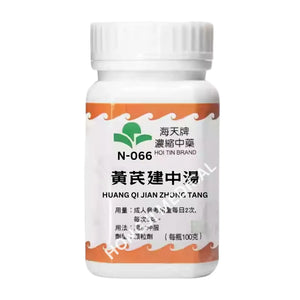
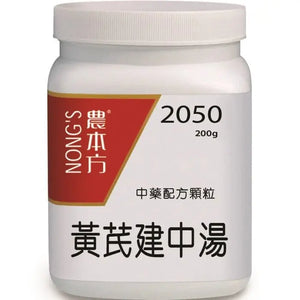
黄芪建中汤 · Huáng Qí Jiàn Zhōng Tāng

Huang Qi Jian Zhong Tang

Modification of Xiao Jian Zhong Tang by adding a large dose of Huang Qi. Used when Middle Jiao deficiency Cold is accompanied by significant Qi deficiency, fatigue and spontaneous sweating.

View formula profile →
Last reviewed August 2026
Formula CategoryYang-Tonifying Formulas
Primary PatternYang Deficiency
Primary FunctionWarm Middle, strongly tonify Qi, relieve pain
Primary Therapeutic PrincipleWarm the Middle, tonify Qi, moderate urgency and stop pain
Main HerbsAstragalus Root · Maltose / Barley Malt Sugar · Cinnamon Twig · White Peony Root · Fresh Ginger · Jujube / Chinese Date · Honey-fried Licorice
Classical SourceJin Gui Yao Lue (Zhang Zhongjing, Eastern Han)

Why This Formula?

Traditionally selected when Middle-Burner deficiency-Cold is accompanied by pronounced Qi deficiency — shortness of breath and spontaneous sweating — adding Huang Qi to the warming, pain-relieving base of Xiao Jian Zhong Tang, whereas Li Zhong Tang addresses simpler Middle Yang deficiency without the Qi-consolidating emphasis.

Traditionally selected when Middle-Burner deficiency-Cold is accompanied by pronounced Qi deficiency — shortness of breath and spontaneous sweating — adding Huang Qi to the warming, pain-relieving base of Xiao Jian Zhong Tang, whereas Li Zhong Tang addresses simpler Middle Yang deficiency without the Qi-consolidating emphasis.

What Is Huang Qi Jian Zhong Tang?

1. Classic Source

Huang Qi Jian Zhong Tang, also known as Astragalus Decoction to Construct the Middle, is a classical formula from Zhang Zhongjing’s Jin Gui Yao Lue (Essential Prescriptions of the Golden Cabinet). It is a refined modification of Xiao Jian Zhong Tang by the addition of Huang Qi, designed to more strongly tonify qi while warming the middle burner and relieving abdominal pain.

This formula is primarily used for patterns of middle jiao deficiency cold accompanied by qi deficiency, addressing symptoms such as intermittent abdominal pain relieved by warmth and pressure, fatigue, spontaneous sweating, poor appetite, and a weak, thin pulse. It remains one of the most important remedies in Traditional Chinese Medicine for deficiency-cold conditions of the spleen and stomach with concurrent qi insufficiency.

Huang Qi Jian Zhong Tang

2. Digestive Health Support

Huang Qi Jian Zhong Tang is widely utilized in various clinical scenarios due to its comprehensive effects. 

Effectively treats chronic gastritis and peptic ulcers stemming from middle-jiao deficiency-cold. It alleviates epigastric pain and enhances spleen and stomach function, promoting digestion and absorption.

3. Anemia Treatment

Beneficial for qi and blood deficiency anemias by stimulating bone marrow hematopoiesis and improving nutrient absorption. Key herbs like Astragalus, Chinese Date, and White Peony replenish qi and nourish blood.

4. Immune System Enhancement

Strengthens the body's resistance and improves overall constitution for individuals with general physical weakness, susceptibility to colds, and fatigue, all linked to middle-jiao deficiency-cold.

Huang Qi Jian Zhong Tang

5. Chronic Disease Recovery

Serves as an auxiliary treatment during the recovery phase of chronic conditions like hepatitis and nephritis. It aids in restoring organ function, replenishing qi and blood, and accelerating the healing process.

Herb Composition (Sovereign / Minister / Assistant / Envoy)

1. Sovereign - Huangqi (Astragalus)

Replenishes qi, strengthens the spleen, and enhances qi & blood generation. Greatly tonifies vital qi and treats consumptive fatigue with middle-jiao deficiency.

2. Minister - Guizhi & Shaoyao

Guizhi (Ramulus Cinnamomi): Warms & dredges yang qi, assists Astragalus in supplementing qi, improves qi & blood circulation.
Shaoyao (Radix Paeoniae Alba): Nourishes blood, relieves spasm & abdominal pain; paired with Guizhi to harmonize nutrient & defensive qi.

3. Assistant - Shengjiang & Dazao

Shengjiang (Ginger): Warms the middle-jiao & suppresses adverse qi.
Dazao (Chinese Date): Supplements qi, nourishes blood, and moderates the overall formula.

Huang Qi Jian Zhong Tang

4. Envoy - Prepared Licorice Root

Tonifies the spleen, harmonizes all herbs, alleviates toxicity, and protects stomach qi — unifying the formula into a cohesive whole.

Clinical Presentation in TCM

1. Pathogenesis Analysis

Huang Qi Jian Zhong Tang addresses deficiency-cold in the middle jiao and insufficiency of qi and blood. This leads to weakened spleen and stomach function, insufficient qi and blood transformation, and symptoms like consumptive fatigue, abdominal pain, sallow complexion, and palpitations.

2. Therapeutic Effects

The formula warms the middle-jiao to replenish qi, soothes the interior, alleviates spasm, regulates yin and yang, and nourishes blood. Herbs like Astragalus and Honey-fried Licorice restore qi, improve transportation, promote qi and blood generation, and strengthen overall healthy qi.

Huang Qi Jian Zhong Tang

3. Treatable Conditions

Primarily used for consumptive fatigue with interior urgency, presenting with cramped abdominal pain (relieved by warmth and pressure), sallow complexion, palpitations, and sweating. Clinically, it effectively treats chronic digestive issues, anemia, and general physical weakness related to middle-jiao deficiency-cold.

The Mechanism in Classical Theory

1. Tonify Qi & Invigorate Spleen

Astragalus, as the sovereign herb, deeply tonifies spleen and stomach qi. This restores their function for generating qi and blood, addressing the root cause of middle-jiao deficiency-cold and consumptive fatigue.

2. Regulate Ying & Wei Qi

Cinnamon Twig and White Peony balance nutrient and defensive qi. Cinnamon Twig warms yang, while White Peony nourishes yin. This combination harmonizes internal systems, alleviating discomfort from qi and blood stagnation.

3. Warm Middle & Stop Pain

Fresh Ginger, Chinese Date, and Cinnamon Twig synergistically warm the middle-jiao and dispel cold. This effective blend targets and relieves cramped abdominal pain, a key symptom of middle-jiao deficiency-cold.

4. Nourish Blood to Strengthen

White Peony, Chinese Date, and Honey-fried Licorice enrich blood and nourish yin. This strengthens zang-fu organs, boosts body resistance, and aids in the recovery from various consumptive fatigue conditions.

Huang Qi Jian Zhong Tang

5. Harmonize Herbs & Enhance Effect

Honey-fried Licorice acts as a guiding herb, harmonizing all ingredients. It ensures synergistic action, enhances overall efficacy, and moderates potential interactions, making the formula mild and easily absorbed for optimal therapeutic effect.

Clinical Comparison Table

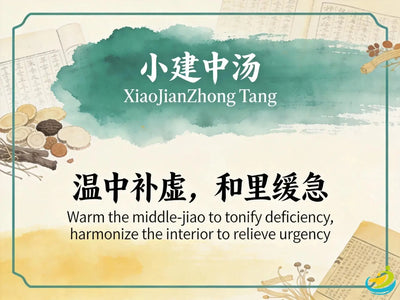
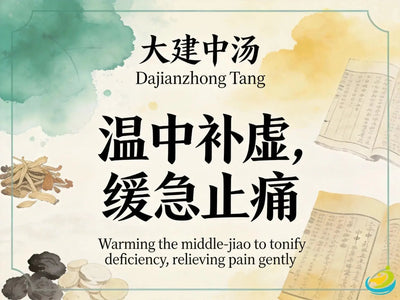
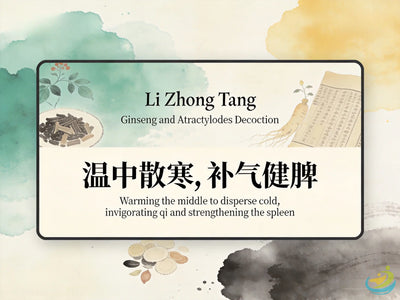
Compare Huang Qi Jian Zhong TangXiao Jian Zhong TangLi Zhong TangDa Jian Zhong Tang
Primary Function Warm Middle, strongly tonify Qi, relieve painWarm Middle, tonify Qi and Blood, relieve spasmodic painWarm Middle, tonify Spleen YangStrongly warm Middle Yang, stop severe Cold pain
Formula Category Yang-Tonifying FormulasYang-Tonifying FormulasYang-Tonifying FormulasYang-Tonifying Formulas
Typical TCM Pattern Yang DeficiencyYang DeficiencyYang DeficiencyYang Deficiency
Main Conditions Abdominal Pain, Fatigue & Low Energy, Spontaneous Sweating, Poor Appetite, Lung Qi DeficiencyAbdominal Pain, Poor Appetite, Fatigue & Low Energy, Spontaneous SweatingAbdominal Pain, Diarrhea, Stomach Discomfort, Poor Appetite, Cold LimbsAbdominal Pain, Stomach Discomfort, Cold Limbs
Main Herbs Astragalus Root · Maltose / Barley Malt Sugar · Cinnamon Twig · White Peony Root · Fresh Ginger · Jujube / Chinese Date · Honey-fried LicoriceMaltose / Barley Malt Sugar · Cinnamon Twig · White Peony Root · Fresh Ginger · Jujube / Chinese Date · Honey-fried LicoriceGinseng Root · Dried Ginger · White Atractylodes Rhizome · Honey-fried LicoriceSichuan Pepper · Dried Ginger · Ginseng Root · Maltose / Barley Malt Sugar
Classical Source Jin Gui Yao Lue (Zhang Zhongjing, Eastern Han)Shang Han Lun / Jin Gui Yao Lue (Zhang Zhongjing, Eastern Han)Shang Han Lun (Zhang Zhongjing, Eastern Han)Jin Gui Yao Lue (Zhang Zhongjing, Eastern Han)

How to tell them apart

Huang Qi Jian Zhong Tang emphasises Qi tonification on top of the warming and pain-relieving action of Xiao Jian Zhong Tang. Li Zhong Tang is simpler for pure Middle Yang deficiency. Da Jian Zhong Tang is for severe Cold excess pain.

For educational reference only, based on traditional pattern differentiation — not a substitute for professional advice.

Clinical Modifications for Huang Qi Jian Zhong Tang

1. Severe Pain

Adding Yanhusuo (Rhizoma Corydalis) and Muxiang (Radix Aucklandiae) enhances qi circulation and pain relief. This modification is ideal for abdominal pain aggravated by qi stagnation and blood stasis.

2. Obvious Yang Deficiency

For severe yang deficiency symptoms like cold limbs and intense cold abdominal pain, Fuzi (Radix Aconiti Lateralis Preparata) is added. It powerfully warms yang, dispels cold, and restores vital energy.

3. Obvious Blood Deficiency

To nourish blood and yin, Danggui (Radix Angelicae Sinensis) and Shudihuang (Radix Rehmanniae Preparata) are included. This is beneficial for patients experiencing paleness, dizziness, and other pronounced blood deficiency signs.

Huang Qi Jian Zhong Tang

4. Those with qi deficiency and sinking

When qi deficiency leads to sinking symptoms such as chronic diarrhea with rectal or uterine prolapse, Shengma (Rhizoma Cimicifugae) and Chaihu (Radix Bupleuri) are added to lift yang and raise sinking qi, bolstering Huangqi's effects.

What the Science Suggests

1. Pharmacological Research

Modern research reveals Huang Qi Jian Zhong Tang's diverse pharmacological effects. Astragalus polysaccharides boost immunity. Cinnamon twig and peony offer anti-inflammatory and analgesic benefits. Ginger and jujube aid digestion. The formula also exhibits antioxidant and cardiovascular regulatory effects, validating its clinical use.

2. Clinical efficacy observation

Clinical studies confirm Huang Qi Jian Zhong Tang's efficacy in treating digestive diseases, anemia, and physical weakness. It improves chronic gastritis symptoms, enhances gastric mucosa repair, significantly increases hemoglobin in anemia, and boosts immunity in weak individuals.

3. Dosage Form Improvement Research

Ongoing research focuses on enhancing Huang Qi Jian Zhong Tang's dosage forms. Beyond concentrated granules, new capsules and oral liquids are being developed. These innovations improve drug stability and convenience, offering patients more accessible treatment options.

Huang Qi Jian Zhong Tang

4. Mechanism of Action Research

The formula's mechanism is under in-depth study. It likely acts by regulating the neuroendocrine, immune, and digestive systems, improving stress response, modulating cytokine levels, and enhancing gastrointestinal function through neurotransmitter and hormone regulation.

Safety Considerations

1. Dietary Restrictions & Special Populations

While taking Huang Qi Jian Zhong Tang, avoid raw/cold, greasy, spicy, and other irritating foods—these injure spleen‑stomach yang, hinder digestion, or generate heat; follow a light, easily digestible diet (e.g., rice porridge, noodles, cooked vegetables). Consult a physician before use in pregnancy, lactation, childhood, the elderly, or in those with very weak constitutions; adjust dose or avoid use per medical guidance.

2. Monitoring & Drug Interactions

Monitor condition during treatment—if symptoms worsen, new signs appear, or there is no improvement, seek medical review and do not self‑adjust the dose. Inform your clinician of all concurrent medications, as interactions may occur and require therapy adjustment to avoid reduced efficacy or adverse reactions.

Questions About Huang Qi Jian Zhong Tang

Q1: What are the actions of Huang Qi Jian Zhong Tang?
Huang Qi Jian Zhong Tang has the actions of warming and tonifying the Middle Jiao, tonifying Qi, and relieving spasmodic abdominal pain. It is primarily used for deficiency-cold of the Spleen and Stomach with Qi deficiency, marked by abdominal pain that prefers warmth and pressure, fatigue, spontaneous sweating, and poor appetite.
Q2: Which modern diseases is Huang Qi Jian Zhong Tang suited to?
Modern TCM clinical practice commonly applies it to individuals whose pattern differentiation falls within Middle Jiao deficiency-cold with Qi deficiency, including chronic gastritis, peptic ulcers (deficiency-cold type), chronic atrophic gastritis, irritable bowel syndrome with cold patterns, and post-illness or consumptive weakness.
Q3: Is Huang Qi Jian Zhong Tang suitable for improving abdominal pain and fatigue?
For presentations of spasmodic or dull abdominal pain that improves with warmth and pressure, fatigue, spontaneous sweating, poor appetite, and a pale complexion — in those whose pattern differentiation confirms Middle Jiao deficiency-cold with Qi deficiency — TCM commonly applies Huang Qi Jian Zhong Tang as an adjunct. It cannot replace standard medical treatment.
Q4: Who should not take Huang Qi Jian Zhong Tang?
Those with Yin deficiency with empty Heat, excess Heat patterns, damp-Heat accumulation, or marked vomiting are generally not suitable. Patients with diabetes should use caution due to the presence of Yi Tang (maltose). Use should be assessed by a qualified TCM physician based on individual constitution and pattern differentiation.
Q5: How does Huang Qi Jian Zhong Tang differ from Xiao Jian Zhong Tang?
Huang Qi Jian Zhong Tang is Xiao Jian Zhong Tang with the addition of Huang Qi (Astragalus). The extra Huang Qi strengthens Qi tonification and exterior-securing effects, making it more suitable when Qi deficiency, spontaneous sweating, and general weakness are more prominent alongside abdominal cold pain.
Q6: Can Huang Qi Jian Zhong Tang help with spontaneous sweating?
Yes, when spontaneous sweating occurs due to Qi deficiency and exterior insecurity accompanying Middle Jiao deficiency-cold. Huang Qi helps tonify Wei Qi and consolidate the exterior, while the formula overall warms and strengthens the center. Pattern differentiation is essential.
Q7: Is Huang Qi Jian Zhong Tang suitable for long-term use?
It may be used for a period of time in chronic deficiency-cold conditions under professional guidance. Regular reassessment by a TCM physician is recommended to adjust the formula or duration according to the patient’s response and changing pattern.
Q8: What dietary advice is recommended while taking Huang Qi Jian Zhong Tang?
Patients are generally advised to avoid raw, cold, or excessively greasy foods that may further burden the Spleen and Stomach. Warm, easily digestible meals support the formula’s warming and tonifying action. Individual dietary guidance should come from a qualified practitioner.
Q9: Can Huang Qi Jian Zhong Tang be used for recovery after chronic illness?
Yes, it is classically indicated for consumptive disease (xu lao) with abdominal urgency and various deficiencies. When the presentation shows Middle Jiao deficiency-cold with Qi deficiency after prolonged illness, it may support recovery of digestive strength and overall vitality as an adjunct under professional supervision.
Q10: Does Huang Qi Jian Zhong Tang contain sugar, and is it suitable for people with blood sugar concerns?
Yes, traditional preparations include Yi Tang (maltose/barley sugar), which has a sweet nature. Individuals with diabetes or blood sugar concerns should consult a qualified TCM physician and medical doctor before use; modified versions without or with reduced Yi Tang may be considered when appropriate.

General Questions

How do I choose the right formula?
TCM formulas are traditionally selected according to individual pattern differentiation rather than by symptom alone. If you're not sure which formula fits your presentation, take our AI Assessment below for a personalized starting point, then confirm with a qualified TCM practitioner.
What are concentrated herbal granules?
Concentrated herbal granules are made by decocting raw herbs, then extracting and concentrating the resulting liquid into a fine granule or powder form. This preserves the same active compounds as a traditional decoction while making the herbs far easier to store, measure, and prepare.
How should I take these products?
Dissolve the recommended amount of granules in hot water, stir until fully dissolved, and drink while warm — following the dosage and frequency advised by your TCM practitioner or as stated on the product packaging.
Are concentrated herbal granules equivalent to traditional decoctions?
Concentrated granules are produced from the same herbs and processed to retain their active compounds, so they are traditionally regarded as a convenient alternative to decoctions rather than a different remedy. Some practitioners note subtle differences in strength or absorption between the two forms, so your TCM practitioner may adjust dosage accordingly.
Are your products authentic?
Yes. HJMEDICAL sources its concentrated granules exclusively from established, reputable manufacturers such as Nong's and Hoi Tin, both long-standing names in the TCM granules industry, with GMP compliance stated directly on their packaging.
Are HJMEDICAL products manufactured under GMP standards?
HJMEDICAL sources its concentrated granules from established, reputable manufacturers such as Nong's and Hoi Tin, both long-standing names in the TCM granules industry. GMP compliance for these products is stated directly on their packaging.
Do you ship internationally?
Yes — we ship worldwide! Every order goes out via Hong Kong Post, and your exact shipping cost and estimated delivery time for your address are calculated and shown right at checkout, so there are never any surprises. We also offer free shipping once your order reaches our free-shipping threshold, so it's easy to stock up on your favorite formulas and save.
Can I take more than one formula at the same time?
Some formulas are traditionally combined, while others overlap or counteract each other. We recommend checking with a qualified TCM practitioner before combining formulas, especially if you are already taking other medication.
Are these products suitable during pregnancy or breastfeeding?
Some TCM formulas are not suitable during pregnancy or breastfeeding. Please consult a qualified TCM practitioner or your doctor before use if you are pregnant, trying to conceive, or nursing.
Do these products replace medical treatment?
No. These products are traditional herbal supplements intended to support wellbeing according to TCM principles — they are not a replacement for professional medical diagnosis or treatment. Please consult a qualified TCM practitioner or licensed healthcare provider before starting, stopping, or combining any treatment, especially if you have a chronic condition.
Medical Disclaimer

For general TCM education only — not medical advice. Consult a qualified TCM practitioner or licensed healthcare provider before use, especially if pregnant, nursing, on medication, or managing a chronic condition.

Not sure which formula is right for you?

Take the AI Assessment

最新文章

Login

Forgot your password?

Don't have an account yet?
Create account

Huang Qi Jian Zhong Tang: Classic TCM Formula for Spleen Deficiency & Abdominal Pain