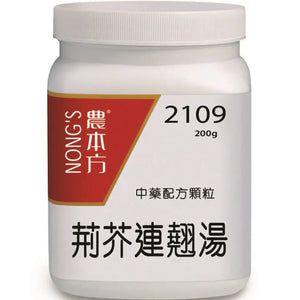
Jing Jie Lian Qiao Tang: Traditional Chinese Formula for Wind-Heat and Skin Health

Jing Jie Lian Qiao Tang: Dispersing Wind, Clearing Heat and Resolving Toxins | HJMEDICAL

I. Origins and History

1. Origins and Background

Jing Jie Lian Qiao Tang originates from Japanese Kampo medicine, and its creation is closely connected to the deep study and practical application of classical Chinese medical texts by ancient Japanese physicians. During Japan's Edo period, Kampo medicine flourished and a large number of practitioners dedicated themselves to combining the theoretical foundations of traditional Chinese medicine with clinical experience accumulated in Japan. It was against this background that Jing Jie Lian Qiao Tang was gradually formed — developed by Japanese physicians drawing on related formulas from ancient Chinese medical literature, through repeated clinical practice and refinement.

2. Historical Development

In its earliest form, Jing Jie Lian Qiao Tang likely emerged from attempts to treat certain specific conditions. Over time, its therapeutic efficacy gradually gained recognition and its scope of application continued to expand. Through the transmission and development of successive generations of Japanese physicians, its formulation and accumulated clinical experience were continually enriched and refined. From its initial conception to the mature formula of today, Jing Jie Lian Qiao Tang has undergone several centuries of evolution, becoming one of the commonly used classical formulas in Japanese Kampo medicine and playing an important role in clinical practice.

Jing Jie Lian Qiao Tang: Dispersing Wind, Clearing Heat and Resolving Toxins | HJMEDICAL

II. Herb Composition (Sovereign, Minister, Assistant, Envoy)

1. Sovereign Herbs: Jingjie (Schizonepeta Herb) and Lianqiao (Forsythia Fruit)

Jingjie is acrid in flavour and slightly warm in nature, entering the Lung and Liver channels. It releases the exterior and disperses wind, vents rashes and resolves sores. In Jing Jie Lian Qiao Tang, it disperses wind evil and is the key herb for treating externally contracted wind evil. Lianqiao is bitter in flavour and slightly cold in nature, entering the Lung, Heart, and Small Intestine channels. It clears heat and resolves toxins, and reduces swelling and dissipates binding, producing good results for conditions of heat-toxin accumulation and binding. Jingjie and Lianqiao are paired together — one warm, one cold — to simultaneously disperse wind evil and clear heat and resolve toxins. Together they serve as sovereign herbs, exerting the primary therapeutic action against the pathomechanism of wind evil and heat-toxin invading the body.

2. Minister Herbs: Fangfeng (Saposhnikovia Root), Baizhi (Angelica Dahurica Root), and Jiegeng (Platycodon Root)

Fangfeng is acrid and sweet in flavour and slightly warm in nature, entering the Bladder, Liver, and Spleen channels. It expels wind and releases the exterior, overcomes dampness and alleviates pain, and stops spasms. It assists Jingjie in reinforcing the wind-expelling action so that wind evil is dispersed more effectively. Baizhi is acrid in flavour and warm in nature, entering the Lung, Stomach, and Large Intestine channels. It releases the exterior and disperses cold, expels wind and alleviates pain, and unblocks the nasal orifices. Its acrid-warm and aromatic-drying nature reinforces the wind-expelling and pain-relieving action; acting synergistically with Fangfeng, it strengthens the formula's capacity to expel wind and release the exterior. Jiegeng is bitter and acrid in flavour and neutral in nature, entering the Lung channel. It diffuses the lungs, expels phlegm, benefits the throat, and expels pus. It not only opens and diffuses lung qi and assists in dispersing wind evil, but also carries the medicinal action upward so that it acts more effectively on the upper burner and head-face region. All three serve as minister herbs assisting the sovereigns.

3. Assistant Herbs: Danggui (Angelica Root), Chuanxiong (Ligusticum Rhizome), Shaoyao (Peony Root), and Shengdihuang (Fresh Rehmannia Root)

Danggui is sweet and acrid in flavour and warm in nature, entering the Liver, Heart, and Spleen channels. It nourishes and activates blood, regulates menstruation and alleviates pain, and moistens the intestines to promote bowel movement. Chuanxiong is acrid in flavour and warm in nature, entering the Liver, Gallbladder, and Pericardium channels. It activates blood and moves qi, and expels wind and alleviates pain. Shaoyao is bitter and sour in flavour and slightly cold in nature, entering the Liver and Spleen channels. It nourishes blood and regulates menstruation, astringes yin and stops sweating, softens the liver and alleviates pain, and subdues liver yang. Shengdihuang is sweet and bitter in flavour and cold in nature, entering the Heart, Liver, and Kidney channels. It clears heat and cools blood, and nourishes yin and engenders fluids. These four herbs act in concert to nourish and activate blood, and enrich yin and clear heat. On the one hand, they prevent wind evil and heat-toxin from depleting yin-blood during the course of the disease; on the other hand, they regulate qi and blood, addressing the qi-blood stagnation and obstruction caused by wind evil and heat-toxin, serving a supporting and harmonising function.

4. Envoy Herb: Gancao (Licorice Root)

Gancao is sweet in flavour and neutral in nature, entering the Heart, Lung, Spleen, and Stomach channels. It tonifies the spleen and augments qi, moistens the lungs and stops cough, clears heat and resolves toxins, and harmonises all herbs. In Jing Jie Lian Qiao Tang, Gancao harmonises the medicinal properties of all the herbs, allowing the various substances to act in better synergy; it also moderates the toxic or harsh nature of some herbs in the formula, protects the spleen-stomach qi, and fulfils the envoy function.

Jing Jie Lian Qiao Tang: Dispersing Wind, Clearing Heat and Resolving Toxins | HJMEDICAL

III. Pathomechanism, Actions, and Indications

1. Pathomechanism

The pathomechanism targeted by Jing Jie Lian Qiao Tang is primarily wind evil and heat-toxin invading the body — particularly the upper burner and head-face region. Wind evil readily attacks yang positions; the head and face are the convergence of all yang channels, and when wind evil and heat-toxin attack upward, a variety of conditions arise in the head-face region. For example, wind-heat evil invading the body surface gives rise to exterior-pattern signs such as fever and aversion to cold; heat-toxin accumulating and binding in the channels and collaterals of the head and face, obstructing the free flow of qi and blood, can cause toothache and gum swelling, oral ulcers, and red, swollen, painful eyes. At the same time, prolonged retention of wind evil and heat-toxin may also deplete yin-blood, leading to manifestations of yin deficiency with internal heat.

2. Actions

Based on the above pathomechanism, Jing Jie Lian Qiao Tang possesses the actions of dispersing wind and clearing heat, resolving toxins and reducing swelling, and nourishing and activating blood. By dispersing wind evil, it relieves the pathogen lodged in the body surface; by clearing heat and resolving toxins, it eliminates the threat of heat-toxin; by nourishing and activating blood, it regulates qi and blood, improving the impeded flow of qi and blood and the yin-blood deficiency caused by wind evil and heat-toxin, thereby achieving the therapeutic aim for a range of conditions.

3. Indications

Jing Jie Lian Qiao Tang is primarily used to treat head-face wind-heat patterns. Common symptoms include toothache and gum swelling, oral ulcers, swollen and sore throat, red and swollen painful eyes, facial acne, and rosacea. These conditions are mostly caused by wind evil and heat-toxin attacking upward into the head and face; Jing Jie Lian Qiao Tang, through its distinctive actions, effectively relieves these symptoms and improves the patient's condition. In addition, it also has some therapeutic effect on skin itching and urticaria caused by wind evil and heat-toxin.

Jing Jie Lian Qiao Tang: Dispersing Wind, Clearing Heat and Resolving Toxins | HJMEDICAL

IV. Formula Analysis

1. Dispersing Wind Evil

Jingjie, Fangfeng, and Baizhi are all acrid-warm exterior-releasing herbs capable of dispersing wind evil. Jingjie is light and upward-dispersing, excelling at dispersing wind evil from the upper body; Fangfeng has a stronger wind-expelling action and can overcome dampness and alleviate pain; Baizhi is acrid, warm, and aromatic-drying, and expels wind and alleviates pain. The three herbs used together rapidly relieve the pattern of wind evil invading the body surface, allowing wind evil to be resolved from the exterior — forming the foundation for treating head-face wind-heat patterns.

2. Clearing Heat and Resolving Toxins

Lianqiao is bitter and cold; it clears heat and resolves toxins, reduces swelling and dissipates binding, and produces excellent results for conditions of heat-toxin accumulation and binding. Acting synergistically with the other herbs, it clears and resolves the heat-toxin in the head-face region, relieving symptoms such as toothache and gum swelling, oral ulcers, and red, swollen, painful eyes. It is the key herb targeting the heat-toxin pathomechanism.

3. Nourishing and Activating Blood

Danggui, Chuanxiong, Shaoyao, and Shengdihuang are used together in the manner of the Four Substances combination to nourish and activate blood. Danggui nourishes blood and activates blood; Chuanxiong activates blood and moves qi; Shaoyao nourishes blood and softens the liver; Shengdihuang clears heat, cools blood, and nourishes yin. On the one hand they prevent wind evil and heat-toxin from depleting yin-blood; on the other they regulate qi and blood, improving the obstructed flow of qi and blood caused by heat-toxin, allowing qi and blood in the head-face region to flow freely, and thereby facilitating recovery.

4. Harmonising All Herbs

Gancao is sweet and neutral; it harmonises all the herbs. It can moderate the harsh nature of the herbs in the formula, allowing the various medicinal substances to act more effectively in synergy; it also protects the spleen and stomach, preventing the herbs from damaging spleen-stomach function, and ensures that the formula exerts its therapeutic effects within the body in a measured and effective manner.

Jing Jie Lian Qiao Tang: Dispersing Wind, Clearing Heat and Resolving Toxins | HJMEDICAL

V. Comparison with Related Formulas

1. Comparison with Yinqiao San

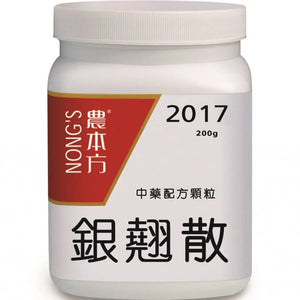
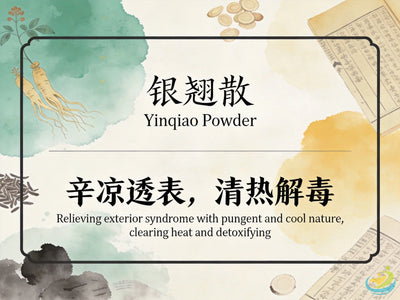
Yinqiao San is also a classical formula for treating externally contracted wind-heat exterior patterns. Yinqiao San focuses on clearing heat and resolving toxins, and releasing the exterior through acrid-cool dispersal; its composition centres on Jinyinhua (Honeysuckle Flower) and Lianqiao (Forsythia Fruit) as sovereign herbs, combined with Bohe (Peppermint), Niubangzi (Burdock Fruit), Jingjie Sui (Schizonepeta Spike), and other wind-heat dispersing herbs. Jing Jie Lian Qiao Tang shares similarities with Yinqiao San in dispersing wind evil, but places greater emphasis on conditions where wind evil and heat-toxin attack upward into the head and face, and incorporates a distinctive combination of blood-nourishing and blood-activating herbs. It is suited to head-face wind-heat accompanied by impeded flow of qi and blood or yin-blood deficiency, whereas Yinqiao San is comparatively more focused on straightforward externally contracted wind-heat exterior patterns.

2. Comparison with Huanglian Jiedu Tang

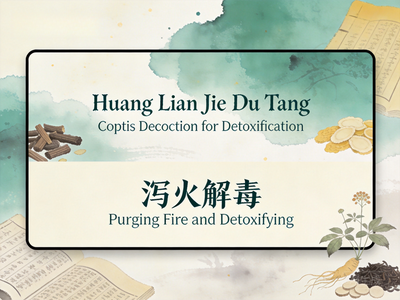
Huanglian Jiedu Tang primarily drains fire and resolves toxins, and treats the pattern of fire-toxin heat exuberance in the triple burner. Its composition uses Huanglian (Coptis Rhizome), Huangqin (Scutellaria Root), Huangbai (Phellodendron Bark), and Zhizi (Gardenia Fruit) in a bitter-cold direct-purging approach to drain fire and resolve toxins. Compared with Huanglian Jiedu Tang, Jing Jie Lian Qiao Tang, while also clearing heat and resolving toxins, places greater emphasis on dispersing wind evil and nourishing and activating blood, and is suited to the wide range of conditions caused by wind evil and heat-toxin invading the head and face. Huanglian Jiedu Tang, by contrast, primarily targets systemic heat-toxin conditions with intense fire-toxin in the triple burner.

Jing Jie Lian Qiao Tang: Dispersing Wind, Clearing Heat and Resolving Toxins | HJMEDICAL

VI. Clinical Applications

1. Oral Conditions

Jing Jie Lian Qiao Tang produces good results for oral conditions such as toothache with gum swelling and oral ulcers. Wind evil and heat-toxin attacking upward into the oral cavity cause symptoms such as red, swollen, painful gums and painful ulcer surfaces. By dispersing wind evil and clearing heat and resolving toxins, Jing Jie Lian Qiao Tang reduces inflammation, promotes ulcer healing, and alleviates pain.

2. Ophthalmic Conditions

Jing Jie Lian Qiao Tang is also commonly used in treating ophthalmic conditions such as red, swollen, painful eyes and hordeolum (stye). Wind-heat evil attacking upward to the eyes gives rise to symptoms such as red, swollen, painful eyes, photophobia, and lacrimation. The herbs in the formula disperse wind evil from the eyes, clear and resolve heat-toxin, and improve the circulation of qi and blood in the eye region, thereby achieving the therapeutic aim.

3. Skin Conditions

Skin conditions such as facial acne and rosacea are largely related to wind evil and heat-toxin accumulating and binding in the skin. Jing Jie Lian Qiao Tang disperses wind evil, clears heat and resolves toxins, and regulates qi and blood, producing a degree of action in improving skin symptoms. It can reduce the inflammatory response of acne, relieve the redness and swelling of rosacea, and promote skin recovery.

Jing Jie Lian Qiao Tang: Dispersing Wind, Clearing Heat and Resolving Toxins | HJMEDICAL

VII. Clinical Modifications

1. Pronounced Wind-Heat

Where wind-heat signs are pronounced, Bohe (Peppermint) and Niubangzi (Burdock Fruit) may be added to reinforce the action of dispersing wind-heat. Bohe is acrid and cool; it disperses wind-heat and clears and benefits the head and eyes. Niubangzi disperses wind-heat, diffuses the lungs and vents rashes, and resolves toxins and benefits the throat, making the formula's wind-heat-dispersing action stronger.

2. Intense Heat-Toxin

Where heat-toxin is pronounced, heat-clearing and toxin-resolving herbs such as Pugongying (Dandelion) and Zihua Diding (Violet Herb) may be added. Both Pugongying and Zihua Diding have strong heat-clearing and toxin-resolving actions, further clearing and resolving the heat-toxin in the head-face region and reinforcing the formula's heat-clearing and toxin-resolving efficacy.

3. Pronounced Yin-Blood Deficiency

Where yin-blood deficiency symptoms are prominent, yin-enriching and blood-nourishing herbs such as Shudihuang (Processed Rehmannia Root) and Gouqizi (Wolfberry Fruit) may be added. Shudihuang nourishes yin and nourishes blood, and replenishes essence and fills the marrow; Gouqizi tonifies the liver and kidneys and benefits essence and brightens the eyes. Together they reinforce the formula's blood-nourishing and yin-enriching action, better addressing the yin-blood depletion caused by wind evil and heat-toxin.

Jing Jie Lian Qiao Tang: Dispersing Wind, Clearing Heat and Resolving Toxins | HJMEDICAL

VIII. Dosage and Preparation

1. Traditional Decoction Method

Traditional Classical Decoction Method for Jing Jie Lian Qiao Tang

This outlines the classical water-decoction process for Jing Jie Lian Qiao Tang, the classical heat-clearing and toxin-resolving formula. Using the two-decoction extraction and combined-dose administration method, the wind-dispersing and exterior-releasing herbs blend gently with the blood-activating and yin-nourishing herbs, achieving the effects of dispersing wind, clearing heat, reducing swelling, and dissipating binding.

【Prescription Composition and Preparation Materials】
  • Jingjie (Schizonepeta Herb): 6–9g (sovereign herb — releases the exterior and disperses wind, vents rashes and resolves sores)
  • Lianqiao (Forsythia Fruit): 6–9g (sovereign herb — clears heat and resolves toxins, reduces swelling and dissipates binding)
  • Fangfeng (Saposhnikovia Root), Baizhi (Angelica Dahurica Root), Jiegeng (Platycodon Root): 6–9g each (minister herbs — expelling wind and unblocking the orifices, diffusing the lungs and expelling pus)
  • Danggui (Angelica Root), Chuanxiong (Ligusticum Rhizome), Shaoyao (Peony Root), Shengdihuang (Fresh Rehmannia Root): 9–12g each (assistant herbs — activating and nourishing blood, enriching yin and cooling blood)
  • Gancao (Licorice Root): 6–9g (envoy herb — clearing heat and resolving toxins, harmonising all herbs)
  • Water: as needed (for soaking the herbs and the classical two-decoction method)

Step 1: Cold-Water Soaking and Bringing to a Boil on High Heat Precisely weigh high-quality decoction pieces of Jingjie, Lianqiao, the Four Substances herbs, and all other herbs, and place them neatly in a ceramic decocting pot. Add an appropriate amount of cold water (enough to cover the herbs and stand 2–3 cm above them) and **soak in cold water in the pot for approximately 30 minutes**, allowing the herbs to absorb water thoroughly. Then apply heat and **first bring the liquid rapidly to a boil on high heat**.
Step 2: Simmering the First Decoction on Low Heat and Extracting the Second Decoction Once the liquid boils, **immediately reduce to low heat and simmer gently**, maintaining a just-simmering state. Strain the first decoction to yield **approximately 300–400 ml of liquid**. Then add a second quantity of water (approximately half the volume of the first addition) to the pot and **extract the second decoction using the same low heat**, straining to yield a further **approximately 200–300 ml of liquid**.
Step 3: Combining the Decoctions and Measuring **Thoroughly combine the two decoctions obtained from both extractions into the same container.** By merging the two decoctions, the concentrated medicinal action of the first extraction blends fully with the remaining medicinal force of the second, ensuring a uniform concentration of active constituents throughout the entire decoction.
Step 4: Taking in Morning and Evening Doses with Pattern-Based Adjustment **Divide the combined decoction equally into two warm doses.** The traditional method is **one dose in the morning and one in the evening (one decoction per day)**. When taking the medicine, follow the prescribed timing and quantity as directed; do not take cold. Through this regular application of the medicinal action, the formula's targeted ENT and dermatological heat-clearing and swelling-reducing effects are fully realised.

2. Modern Concentrated Granules

Modern concentrated granules are produced from traditional Chinese herbs through extraction and concentration processes. Simply dissolve the granules in hot water according to the dosage stated in the product instructions. The dosage is generally calculated based on a conversion from the traditional formula's herb quantities, making it convenient and quick. For example, concentrated granule preparations of Jing Jie Lian Qiao Tang are dosed according to an amount equivalent to the traditional decoction pieces, and are generally also taken once in the morning and once in the evening; specific dosage may be confirmed with a physician or pharmacist.

Jing Jie Lian Qiao Tang: Dispersing Wind, Clearing Heat and Resolving Toxins | HJMEDICAL

IX. Precautions and Contraindications

1. Constitutional Differences

Those with a constitutionally deficiency-cold body type should use Jing Jie Lian Qiao Tang with caution. Since most of the herbs in the formula are acrid-warm or bitter-cold in nature, their use in constitutionally deficiency-cold individuals may aggravate the body's deficiency-cold symptoms, potentially causing discomfort such as abdominal pain and diarrhoea.

2. Dietary Restrictions

During the course of treatment, spicy, greasy, and irritating foods should be avoided. These foods readily assist fire and generate heat, aggravating the wind evil and heat-toxin pattern and impeding recovery. Smoking and alcohol should also be avoided so as not to impair the formula's therapeutic efficacy.

3. Special Circumstances

Use with caution during pregnancy. Although the formula does not contain herbs that are explicitly contraindicated in pregnancy, its blood-activating action means there is a degree of potential risk for pregnant women; if use is necessary, it should be carried out under a physician's guidance.

Jing Jie Lian Qiao Tang: Dispersing Wind, Clearing Heat and Resolving Toxins | HJMEDICAL

X. Modern Research

1. Pharmacological Research

Jing Jie Lian Qiao Tang is an empirical formula recorded in the Wanbing Huichun (Restoration of Health from the Myriad Diseases). It possesses the actions of clearing heat and draining fire, harmonising blood and draining fire, dispersing wind and releasing the exterior, and dispersing wind and regulating qi. It primarily treats heat-toxin patterns including bi yuan (sinusitis), otitis media, bilateral ear swelling and pain, gallbladder fire ascending to the brain, depressed fire with blood stasis, and wind-heat in the Kidney channel, and is also applicable to chronic colitis and related conditions. The formula is composed of herbs including Baishao (White Peony Root), Chaihu (Bupleurum Root), Zhike (Bitter Orange Peel), and Fen Bixie (Dioscorea Rhizome), and is commonly modified through additions and subtractions in combination with Siwu Tang (Four Substances Decoction) and Sini San (Four Counterflow Powder); it is taken as a water decoction or warm decoction and produces good results for the relevant patterns.

Modern research has demonstrated that several of the herbs in Jing Jie Lian Qiao Tang possess a range of pharmacological actions. For example, Jingjie has anti-inflammatory, antibacterial, and anti-allergic actions; Lianqiao has antibacterial, antiviral, anti-inflammatory, and antipyretic actions. These pharmacological actions help explain the therapeutic mechanism of the formula in treating conditions related to wind evil and heat-toxin, providing a scientific basis for its clinical application.

2. Clinical Efficacy Validation

In recent years, a number of clinical studies have further validated the efficacy of Jing Jie Lian Qiao Tang. In the treatment of oral conditions, skin conditions, and related disorders, comparative observation has found that patients treated with Jing Jie Lian Qiao Tang show good outcomes in terms of symptom improvement and disease recovery, with a relatively high response rate — indicating that the formula has significant clinical application value.

3. Pharmaceutical Development and Research

As modern pharmaceutical technology has advanced, the development of new preparations of Jing Jie Lian Qiao Tang has continued to be explored. In addition to the traditional decoction and modern concentrated granule forms, efforts are also under way to develop other dosage forms such as tablets and capsules, in order to improve the stability and ease of administration of the medicine and better meet clinical and patient needs.

Jing Jie Lian Qiao Tang — Frequently Asked Questions

Q1: What are the actions of Jing Jie Lian Qiao Tang?

Jing Jie Lian Qiao Tang disperses wind and clears heat, resolves toxins and dissipates binding, and reduces swelling and alleviates pain. It is primarily indicated for facial acne, swollen and sore throat, nasal congestion, and skin redness and swelling caused by wind-heat depression and binding.

Q2: Which modern conditions is Jing Jie Lian Qiao Tang indicated for?

In modern TCM clinical practice, it is commonly used for individuals whose pattern differentiation falls within the categories of wind-heat depression and binding and internal accumulation of heat-toxin — including acne, chronic rhinitis, recurrent pharyngitis, folliculitis, and seborrhoeic dermatitis.

Q3: Is Jing Jie Lian Qiao Tang suitable for patients with acne?

For patients presenting with wind-heat accumulation and binding signs — including red, swollen facial papules, recurrent comedones, excessive sebum secretion, and accompanying throat discomfort — TCM practitioners commonly apply Jing Jie Lian Qiao Tang through pattern differentiation as an adjunct regulating formula to improve the inflammatory response and skin condition.

Q4: Who should not take Jing Jie Lian Qiao Tang?

Jing Jie Lian Qiao Tang is generally not suitable for patients with spleen-stomach deficiency-cold, chronic diarrhoea, qi-blood insufficiency, or a yang-deficient constitution. Use should be preceded by a pattern differentiation assessment by a qualified TCM practitioner according to the patient's constitution and pattern presentation.

⚠️ This content is for reference only and does not provide medical advice. Consult a healthcare professional for any health concerns.

Login

Forgot your password?

Don't have an account yet?
Create account

Jing Jie Lian Qiao Tang: Traditional Chinese Formula for Wind-Heat and Skin Health