Ju Yuan Jian: Classic TCM Formula for Qi Deficiency with Sinking Causing Bleeding or Prolapse
Ju Yuan Jian (举元煎), known in English as Lift the Source Decoction, is a classical TCM formula by Li Shi-zhen for tonifying Qi and raising Yang to stop bleeding and lift prolapse. It is particularly indicated for Qi deficiency with sinking causing uterine bleeding, rectal bleeding, prolonged lochia, or organ prolapse (uterus, rectum). In modern clinical practice, Ju Yuan Jian is used for bleeding disorders and prolapse caused by Qi deficiency failing to contain Blood or hold organs in place, especially after childbirth or in chronic illness. By powerfully tonifying Qi and raising the sunken Yang, it enables the body to contain Blood and lift prolapsed organs, addressing both the symptom (bleeding or prolapse) and the root (Qi deficiency with sinking).

I. Origins and History
1. Tracing Its Origins in the Classical Literature
Ju Yuan Jian originates from the Jingyue Quanshu (Complete Works of Jingyue), authored by the celebrated Ming dynasty physician Zhang Jingyue. Zhang Jingyue made outstanding contributions to both Chinese medicine theory and clinical practice; he placed great importance on yang qi and was skilled in the methods of warming tonification, with his academic thought exerting a far-reaching influence on the subsequent development of Chinese medicine. Ju Yuan Jian, as one of his classical formulas, is recorded in detail within the text, providing an important formula reference for later physicians treating sinking of middle qi and related conditions.
2. Historical Evolution and Transmission
Since the publication of the Jingyue Quanshu, Ju Yuan Jian has been widely applied and transmitted in Chinese medicine clinical practice. Physicians across the generations, in the course of applying Ju Yuan Jian, continued to summarise their experience and made appropriate adjustments and expansions according to actual clinical conditions. As the times progressed, Chinese medicine formula studies continued to grow richer, and Ju Yuan Jian has consistently held an important place within the Chinese medicine treatment system, becoming one of the commonly used formulas among many TCM practitioners for treating numerous conditions. It bears witness to the developmental journey of Chinese medicine formula studies, carrying the wisdom and experience of physicians across the generations.

II. Herb Composition (Sovereign, Minister, Assistant, Envoy)
1. Chief Herb — Renshen (Ginseng)
Renshen is sweet and slightly bitter in flavour and slightly warm in nature. It has the actions of greatly tonifying source qi, restoring the pulse and rescuing from collapse, tonifying the spleen and benefiting the lungs, generating fluids and nourishing blood, and calming the spirit and boosting intelligence. In Ju Yuan Jian, Renshen serves as the chief herb, performing a critical role. It can greatly tonify spleen-stomach qi, reinforcing spleen-stomach transforming and transporting function, thereby providing sufficient driving force for the source of qi-blood transformation and generation. When the spleen and stomach function vigorously, qi and blood can be sufficiently transformed and generated, middle qi becomes stabilised, providing good regulatory benefit for the various conditions caused by middle-qi insufficiency.
2. Deputy Herb — Huangqi (Astragalus Root)
Huangqi is sweet in flavour and slightly warm in nature. It has the actions of tonifying qi and raising yang, consolidating the exterior and stopping perspiration, promoting urination and reducing swelling, generating fluids and nourishing blood, moving stagnation and unblocking painful obstruction, expelling toxin and discharging pus, and astringing sores to generate new flesh. Combined with Renshen, Huangqi reinforces the action of tonifying qi and raising yang. It can further raise the body's middle qi, assisting the spleen-stomach qi to ascend and preventing sinking of middle qi. Simultaneously, Huangqi also has an exterior-consolidating action, capable of strengthening the body's resistance to external pathogens, producing good regulatory effects for patients with unconsolidated defensive qi caused by middle-qi weakness.
3. Assistant Herb — Zhigancao (Honey-fried Licorice Root)
Zhigancao is sweet in flavour and neutral in nature. It has the actions of tonifying the spleen and boosting qi, moistening the lungs to relieve cough, clearing heat and resolving toxicity, and harmonising all the herbs. In Ju Yuan Jian, Zhigancao on one hand assists Renshen and Huangqi in reinforcing the spleen-tonifying and qi-boosting action, and on the other hand performs the role of harmonising all the herbs, making the entire formula's medicinal nature more balanced and synergistically exerting its therapeutic effect. It can also moderate the potent nature of the other herbs within the formula, protecting the spleen-stomach qi, and allowing the herbs to be better absorbed and utilised by the body.
4. Envoy Herbs — Shengma (Cimicifuga Rhizome) and Baizhu (Atractylodes Rhizome)
Shengma is acrid and slightly sweet in flavour and slightly cold in nature. It has the actions of releasing the exterior to vent rashes, clearing heat and resolving toxicity, and raising yang qi. Baizhu is bitter and sweet in flavour and warm in nature. It can strengthen the spleen and boost qi, dry dampness and promote urination, stop perspiration, and calm the fetus. Shengma and Baizhu serve as envoy herbs in Ju Yuan Jian: Shengma can raise the clear yang qi of the spleen and stomach, guiding the medicinal force of Renshen, Huangqi, and the other herbs upward, achieving the goal of raising middle qi. Baizhu reinforces the action of strengthening the spleen and drying dampness; acting synergistically with the other herbs, it jointly regulates spleen-stomach function and restores the normal movement of middle qi.

III. Pathomechanism, Actions, and Indications
1. Pathomechanism Analysis
The pathomechanism targeted by Ju Yuan Jian is primarily sinking of middle qi. Middle qi, namely the qi of the spleen and stomach, is the pivot of the body's qi-movement ascent and descent. When the spleen and stomach are weak with insufficient middle qi, the spleen-stomach qi cannot normally raise the clear, and instead sinks, leading to the appearance of a series of conditions. For example, sinking of spleen qi may manifest as chronic diarrhoea and dysentery, rectal prolapse, and uterine prolapse; failure of clear qi to rise, with the head and eyes losing nourishment, may manifest as symptoms such as dizziness and blurred vision.
2. Elaboration of Actions
Its primary action is boosting qi and raising yang. Through greatly tonifying spleen-stomach qi, reinforcing spleen-stomach transforming and transporting function, middle qi becomes sufficient, thereby raising the sunken middle qi and restoring the normal ascent and descent of spleen-stomach qi. Simultaneously, it also has a degree of spleen-strengthening and stomach-harmonising action, promoting the spleen and stomach's digestion and absorption of food, maintaining normal physiological function of the body.
3. Indications
Ju Yuan Jian is indicated for the pattern of sinking of middle qi. Common symptoms include shortness of breath with fatigue, a sallow complexion, dizziness and blurred vision, chronic diarrhoea and dysentery, a bearing-down sensation at the anus, and uterine prolapse. These conditions are mostly caused by middle-qi insufficiency with disordered spleen-stomach transformation and transport, leading to sinking of qi movement. Through its action of boosting qi and raising yang, Ju Yuan Jian produces good therapeutic results for these conditions, able to improve the patient's symptoms, strengthen the constitution, and promote bodily recovery.

IV. Formula Analysis
1. The Subtlety of Tonifying the Middle and Boosting Qi
Within the formula, Renshen and Huangqi greatly tonify spleen-stomach qi, serving as the core herbs for tonifying the middle and boosting qi. Renshen potently tonifies source qi, while Huangqi tonifies qi and raises yang; the two combined can rapidly supplement middle qi, reinforcing spleen-stomach transforming and transporting function, ensuring middle qi becomes sufficient and providing the driving force for the body's normal functioning.
2. The Method of Raising Yang and Lifting Prolapse
Shengma and Baizhu serve as envoy herbs: Shengma can raise the clear yang qi of the spleen and stomach, guiding the medicinal force upward to reach directly the site of disease, correcting the pathological state of sinking middle qi. Baizhu strengthens the spleen and dries dampness; acting synergistically with the other herbs, it ensures the normal exertion of spleen-stomach function, helping middle qi to recover and rise.
3. The Action of Harmonising All the Herbs
Zhigancao performs the role of harmonising all the herbs within the formula. It can moderate the potent nature of herbs such as Renshen and Huangqi, making the entire formula's medicinal nature balanced and easily absorbed. Simultaneously, Zhigancao itself also has the action of tonifying the spleen and boosting qi, assisting the other herbs in reinforcing the therapeutic effect.

V. Comparison with Related Formulas
1. Comparison with Buzhong Yiqi Tang
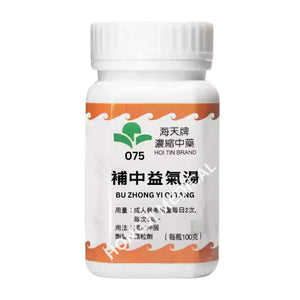
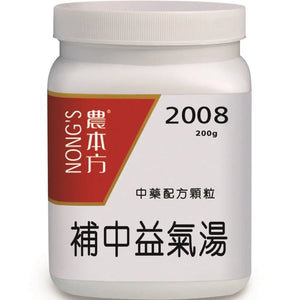
Buzhong Yiqi Tang is also a classical formula for treating sinking of middle qi. Compared with Ju Yuan Jian, Buzhong Yiqi Tang's herb composition is richer, including not only qi-tonifying herbs such as Renshen, Huangqi, and Zhigancao, but also herbs such as Danggui (Angelica Root), Chenpi (Dried Tangerine Peel), Chaihu (Bupleurum Root), and Shengma. Beyond boosting qi and raising yang, its actions also include nourishing blood, regulating qi, and soothing the liver; Ju Yuan Jian, by contrast, is relatively more concise, primarily focusing on boosting qi and raising yang, with its emphasis on raising the middle qi. In clinical application, Ju Yuan Jian is more suitable for patients with simple sinking of middle qi and relatively mild symptoms; Buzhong Yiqi Tang is more appropriate for patients with sinking of middle qi accompanied by complex symptoms such as blood deficiency and qi stagnation.
2. Similarities and Differences with Guipi Tang
Guipi Tang's primary actions are boosting qi and tonifying blood, and strengthening the spleen and nourishing the heart, indicated for the pattern of dual heart-spleen qi-blood deficiency. Its similarity with Ju Yuan Jian lies in both having the action of strengthening the spleen and boosting qi. The difference lies in the fact that Guipi Tang places greater emphasis on tonifying blood and nourishing the heart, suited to symptoms such as palpitations, insomnia, and forgetfulness caused by dual heart-spleen deficiency; Ju Yuan Jian, by contrast, primarily targets the pattern of sinking middle qi, with boosting qi and raising yang as its primary goal, producing marked therapeutic results for symptoms such as chronic diarrhoea and rectal prolapse caused by sinking middle qi.

VI. Clinical Applications
1. Application in Gynaecology
In gynaecology, Ju Yuan Jian is commonly used to treat conditions such as uterine prolapse and flooding and spotting caused by sinking middle qi. For patients with uterine prolapse, Ju Yuan Jian, through boosting qi and raising yang, can raise the position of the uterus and relieve prolapse symptoms. In treating flooding and spotting, if caused by sinking middle qi leading to failure of the chong and ren vessels to consolidate, with symptoms such as continuous, unremitting menstrual bleeding, Ju Yuan Jian can tonify the middle and boost qi, consolidate and astringe the chong and ren vessels, achieving the goal of stopping bleeding.
2. Treatment of Internal Medicine Conditions
In internal medicine, Ju Yuan Jian may be used to treat conditions of sinking middle qi such as chronic diarrhoea and dysentery, and rectal prolapse. For patients with chronic diarrhoea, if the pattern is identified as the sinking middle qi type, taking Ju Yuan Jian can reinforce spleen-stomach function, raise the middle qi, and improve diarrhoea symptoms. For patients with rectal prolapse using Ju Yuan Jian, the middle qi can become sufficient, lifting the anus and gradually restoring it to its normal position.
3. Related Applications in Paediatrics
In paediatrics, Ju Yuan Jian may be used to treat childhood enuresis and related conditions. If childhood enuresis is caused by middle-qi insufficiency with failure of the bladder to restrain, Ju Yuan Jian can, through boosting qi and raising yang, reinforce the child's middle qi, improve bladder function, and reduce the frequency of enuresis.

VII. Clinical Modifications
1. Concurrent Blood Deficiency
If the patient also presents with blood-deficiency symptoms — such as a pale complexion, dizziness and blurred vision, and palpitations with insomnia — blood-tonifying herbs such as Danggui (Angelica Root) and Shudi (Prepared Rehmannia Root) may be added to the foundation of Ju Yuan Jian. Danggui can tonify blood and activate blood, while Shudi nourishes yin and tonifies blood; the two, combined with the original herbs of Ju Yuan Jian, act synergistically — boosting qi and raising yang while also tonifying and nourishing blood, improving the patient's dual qi-blood deficiency symptoms.
2. Concurrent Qi Stagnation
When the patient is accompanied by qi-stagnation symptoms — such as chest oppression, abdominal distension, and belching — qi-regulating herbs such as Muxiang (Costus Root) and Chenpi (Dried Tangerine Peel) may be added. Muxiang can move qi and relieve pain; Chenpi regulates qi and strengthens the spleen, relieving the qi-stagnation symptoms, ensuring free flow of qi movement, while also helping spleen-stomach transforming and transporting function, working together with Ju Yuan Jian to exert the therapeutic action.
3. Concurrent Damp-Heat
If the patient also presents with damp-heat symptoms — such as a bitter taste in the mouth, dry throat, and sticky stools — heat-clearing and dampness-drying herbs such as Huanglian (Coptis Root) and Huangbai (Phellodendron Bark) may be appropriately added. Huanglian and Huangbai can clear heat and dry dampness, eliminating the damp-heat pathogen within the body, preventing the damp-heat pathogen from further damaging the middle qi, allowing Ju Yuan Jian to attend to the treatment of damp-heat conditions while treating sinking of middle qi.

VIII. Dosage and Preparation (Traditional Method and Modern Concentrated Granules)
1. Traditional Decoction Method
In the traditional method, Ju Yuan Jian is administered by water decoction. Generally, the five herbs — Renshen (or Dangshen/Codonopsis Root), Huangqi, Zhigancao, Baizhu, and Shengma — are weighed according to a set ratio, soaked in water for a period of time, and then decocted slowly over a low flame. The decocted liquid is taken in two administrations, once in the morning and once in the evening. The specific dosage is determined according to the condition and the patient's constitution; generally, Renshen (or Dangshen) 6–9 g, Huangqi 12–15 g, Zhigancao 3–6 g, Baizhu 9–12 g, and Shengma 3–6 g.
Traditional Decoction Method for Ju Yuan Jian
An introduction to the traditional herb ratios, specific dosage ranges, and standard water-decoction administration method for the classical qi-boosting and yang-raising formula "Ju Yuan Jian."
- Renshen (Ginseng, or Dangshen/Codonopsis Root): 6–9 g
- Huangqi (Astragalus Root): 12–15 g
- Baizhu (Atractylodes Rhizome): 9–12 g
- Zhigancao (Honey-fried Licorice Root): 3–6 g
- Shengma (Cimicifuga Rhizome): 3–6 g
- Water: appropriate amount (for soaking and decoction)
⚠️ Note: The specific dosage must be determined according to the patient's condition and constitution; please prepare as directed by a physician.
2. Modern Concentrated Granule Administration
A concentrated granule preparation of Ju Yuan Jian is available today, with a relatively simple method of administration. Simply dissolve in boiled water according to the dosage specified in the product instructions. The concentrated granule preparation preserves the therapeutic effect of the original formula while being convenient to carry and take, suited to the fast-paced modern lifestyle. Its dosage is generally also adjusted according to the product instructions of different manufacturers and the patient's specific circumstances, but is generally consistent with the herb proportions of the traditional decoction method, to ensure consistency of therapeutic effect.

IX. Precautions and Contraindications
1. Dietary Precautions During Medication
During the course of taking Ju Yuan Jian, patients should maintain a light diet and avoid spicy, greasy, and raw, cold irritating foods. These foods may affect spleen-stomach transforming and transporting function and aggravate the condition. More foods that strengthen the spleen and benefit the stomach — such as Shanyao (Dioscorea Rhizome), Yiyiren (Coix Seed), and Qianshi (Euryale Seed) — should be eaten, helping to reinforce spleen-stomach function and promote herb absorption and therapeutic efficacy.
2. Contraindications for Special Populations
Pregnant women should use Ju Yuan Jian with caution. As the herbs within the formula are mostly qi-tonifying in nature, and Shengma has a degree of dispersing and raising action, use by pregnant women may affect the fetus. In addition, patients with excess patterns or heat patterns should not use this formula. Patients with excess patterns have an exuberant pathogen within the body; using qi-tonifying herbs may cause the pathogen to be retained, aggravating the condition; patients with heat patterns already have excessive yang qi, and using a warm-tonifying preparation may assist fire and generate heat, being unfavourable for treating the condition.

X. Modern Research
1. Pharmacological Action Research
Ju Yuan Jian is a formula for boosting qi and raising yang, modified from Buzhong Yiqi Tang, primarily indicated for qi deficiency with sinking, flooding bleeding with blood collapse, near-fatal yang exhaustion, and prolapse, possessing the actions of tonifying qi, and raising yang to lift what has sunk. The formula is composed of Renshen, Huangqi, Shengma, and Zhigancao, suited to those with yang qi deficiency-cold, taken warm, with additional herbs incorporated as appropriate — Ganjiang (Dry Ginger) is commonly added for those tonifying qi. In clinical comparison with Buzhong Yiqi Tang, it is suited to the pattern of qi deficiency with sinking.
Modern research has demonstrated that the herbs Renshen and Huangqi within Ju Yuan Jian possess multiple pharmacological actions. Renshen can strengthen the body's immunity, regulate nervous system function, and improve cardiovascular system function. Huangqi has actions including strengthening immune function, anti-inflammatory, antiviral, and anti-fatigue effects. Zhigancao has actions including regulating immune function, anti-inflammatory, and antiallergic effects. Baizhu can regulate gastrointestinal function and strengthen digestive and absorptive capacity. Shengma has antibacterial, anti-inflammatory, and antipyretic actions. These pharmacological actions working together likely form the material basis for Ju Yuan Jian's therapeutic effect in treating the pattern of sinking middle qi and related conditions.
2. Clinical Efficacy Verification
Multiple clinical studies have verified the efficacy of Ju Yuan Jian. In treating conditions related to sinking middle qi such as uterine prolapse and chronic diarrhoea and dysentery, Ju Yuan Jian can significantly improve patients' symptoms and enhance their quality of life. Through observation and analysis of patients' symptom scores and related physiological indicators, Ju Yuan Jian has been found to have a definite therapeutic effect in raising middle qi and improving spleen-stomach function, providing a scientific basis for its clinical application. With the continuing deepening of modern research, the application prospects of Ju Yuan Jian within Chinese medicine clinical practice will become broader still, with the potential to bring better therapeutic outcomes to more patients.
Ju Yuan Jian — Frequently Asked Questions
Q1: What are the therapeutic actions of Ju Yuan Jian?
Ju Yuan Jian has the actions of tonifying qi and raising yang, consolidating and stopping bleeding, and supporting the righteous and cultivating the root. It is primarily used for spirit fatigue with lassitude, shortness of breath with disinclination to speak, organ prolapse, and bodily weakness after prolonged illness caused by sinking middle qi and insufficient source qi.
Q2: What modern conditions is Ju Yuan Jian used for?
In modern TCM clinical practice, it is commonly used for uterine prolapse, gastroptosis, chronic fatigue syndrome, postpartum bodily weakness, dysfunctional uterine bleeding, and qi-deficiency-related conditions, among individuals whose presentation corresponds to the pattern of sinking middle qi and spleen-lung qi deficiency.
Q3: Is Ju Yuan Jian suitable for managing uterine prolapse and prolonged fatigue?
For those with a pronounced bearing-down sensation after prolonged standing, easy fatigability, shortness of breath with lassitude, a weak, low voice, and decreased appetite reflecting qi deficiency with sinking, TCM practitioners commonly apply Ju Yuan Jian through pattern differentiation as adjunctive treatment.
Q4: Who should not take Ju Yuan Jian?
Those with yin deficiency and fire hyperactivity, exuberant interior excess-heat, qi stagnation with blood stasis, or no manifestation of qi deficiency with sinking should generally not use Ju Yuan Jian. Prescription should be made by a qualified TCM practitioner based on pattern differentiation according to the individual's constitution and pattern type.
⚠️ This content is for reference only and does not provide medical advice. Consult a healthcare professional for any health concerns.