Liang Ge San: Classic TCM Formula for Mouth Ulcers, Sore Throat & Upper Jiao Heat
Liang Ge San (凉膈散), known in English as Cool the Diaphragm Powder, is a classical TCM formula for clearing heat from the upper and middle jiao (above the diaphragm). It is particularly indicated for mouth ulcers, sore throat, red and swollen eyes, nosebleeds, chest oppression, irritability, constipation, and dark urine due to heat accumulation in the head, face, and chest. In modern clinical practice, Liang Ge San is used for heat patterns affecting the upper body with concurrent constipation. By combining strong heat clearing from above with purgation to drain heat from below, it effectively resolves heat in the upper and middle jiao while preventing heat from rising and causing symptoms in the head and chest.

I. Origins and History
1. Origins in the Classical Literature
Liang Ge San originates from the Song dynasty's Taiping Huimin Hejiju Fang (Imperial Grace Formulary of the Pharmacy Service). This officially compiled formula monograph exerted a far-reaching influence on the development of later formula studies. At that time, the Pharmacy Service brought together the wisdom of numerous physicians, systematically organising and standardising treatment formulas for various conditions. Liang Ge San is one of the celebrated formulas meticulously developed within this text for a specific condition. Its emergence provided an effective formula option for clinical treatment, marking a more mature herb combination within Chinese medicine for clearing heat, draining fire, resolving toxicity, and unblocking the bowels.
2. Historical Transmission and Evolution
Since its emergence in the Song dynasty, Liang Ge San has continued to be transmitted and applied through the clinical practice of physicians across the generations. As the times changed, the disease spectrum shifted, and physicians adjusted and refined the formula according to the clinical needs of different periods. For example, during the Jin-Yuan period, physicians, while inheriting the formula, explored aspects such as herb dosage and combination, making it better suited to the disease characteristics and treatment requirements of that time. During the Ming and Qing dynasties, as warm-disease theory emerged, physicians, in applying Liang Ge San, combined it with the onset patterns and treatment principles of warm disease, further expanding its scope of application and allowing it to play a distinctive role in the treatment of warm disease.

II. Herb Composition (Sovereign, Minister, Assistant, Envoy)
1. Chief Herb — Lianqiao (Forsythia Fruit)
Lianqiao is bitter in flavour and slightly cold in nature, entering the Lung, Heart, and Small Intestine channels. It has the actions of clearing heat and resolving toxicity, and dispersing wind-heat. In Liang Ge San, Lianqiao can clear and resolve heat-toxin from the upper burner, making it the key herb for treating early-stage externally-contracted febrile disease with symptoms such as fever, mild aversion to wind-cold, headache, and sore throat. Light and clear in nature, floating upward, it is skilled at venting and dispersing wind-heat pathogen from the upper burner, giving the pathogen an exit route, and produces excellent therapeutic effects for symptoms such as throat swelling and pain and mouth and tongue sores caused by exuberant lung-channel heat. Simultaneously, Lianqiao can also reduce swelling and dissipate binds, providing a degree of therapeutic benefit for carbuncles and sores caused by accumulated heat-toxin.
2. Deputy Herbs — Huangqin (Scutellaria Root) and Zhizi (Gardenia Fruit)
Huangqin is bitter in flavour and cold in nature, entering the Lung, Gallbladder, Spleen, Large Intestine, and Small Intestine channels. It has the actions of clearing heat and drying dampness, and draining fire and resolving toxicity. Huangqin can clear and drain lung fire, producing good therapeutic effects for cough and wheezing caused by lung heat. In Liang Ge San, it assists Lianqiao in clearing and resolving upper-burner heat-toxin, reinforcing the formula's heat-clearing and fire-draining potency. Zhizi is bitter in flavour and cold in nature, entering the Heart, Lung, and Triple Burner channels. Zhizi has the actions of draining fire and relieving vexation, clearing heat and disinhibiting dampness, and cooling blood and resolving toxicity. It can clear and drain fire from the Triple Burner, allowing the fire-heat pathogen of the upper, middle, and lower burners to be cleared and resolved. It has therapeutic effects for vexing irritability, red, swollen, painful eyes, and damp-heat jaundice, among other conditions. Huangqin and Zhizi together, attending to both upper and lower, jointly reinforce the formula's heat-clearing and fire-draining efficacy, serving as important deputy herbs in Liang Ge San.
3. Assistant Herbs — Dahuang (Rhubarb Root) and Mangxiao (Mirabilite)
Dahuang is bitter in flavour and cold in nature, entering the Spleen, Stomach, Large Intestine, Liver, and Pericardium channels. Dahuang has the actions of draining downward to attack accumulation, clearing heat and draining fire, cooling blood and resolving toxicity, and expelling stasis to unblock the channels. In Liang Ge San, Dahuang drains downward to unblock the bowels, flushing out the excess heat and accumulated stagnation within the stomach and intestines, allowing the heat-toxin pathogen to be expelled via the stool, performing the action of cutting off the fuel beneath the cauldron. Mangxiao is salty and bitter in flavour and cold in nature, entering the Stomach and Large Intestine channels. Mangxiao has the actions of draining downward to attack accumulation, softening hardness and moistening dryness, and clearing heat and reducing swelling. It can soften hardness and moisten dryness, assisting Dahuang in reinforcing the downward-draining potency, ensuring smooth defecation and allowing the heat-toxin to be expelled. Dahuang combined with Mangxiao produces a potent downward-draining and heat-clearing force, serving as important assistant herbs within Liang Ge San for draining downward, unblocking the bowels, and clearing excess heat.
4. Envoy Herbs — Bohe (Peppermint) and Zhuye (Bamboo Leaf)
Bohe is acrid in flavour and cool in nature, entering the Lung and Liver channels. Bohe has the actions of dispersing wind-heat, clearing and benefiting the head and eyes, benefiting the throat and venting rashes, and soothing the liver and moving qi. It can disperse wind-heat from the upper burner and clear and benefit the head, eyes, and throat, allowing Liang Ge San's heat-clearing and fire-draining potency to better act upon the upper burner, while also relieving symptoms such as headache and red eyes caused by externally-contracted wind-heat. Zhuye is sweet, acrid, and bland in flavour and cold in nature, entering the Heart, Stomach, and Small Intestine channels. Zhuye has the actions of clearing heat and draining fire, relieving vexation, generating fluids, and promoting urination. It can clear heart fire and eliminate vexing heat, providing a degree of therapeutic benefit for symptoms such as vexation and thirst caused by exuberant heart-channel heat. Bohe combined with Zhuye, light and clear, floating upward, guides the other herbs upward, disperses upper-burner wind-heat, and harmonises all the herbs, serving as the envoy herbs in Liang Ge San. In addition, the formula also includes Gancao (Licorice Root), sweet in flavour and neutral in nature, entering the Heart, Lung, Spleen, and Stomach channels. Gancao has the actions of tonifying the spleen and boosting qi, moistening the lungs to relieve cough, clearing heat and resolving toxicity, and harmonising all the herbs. In Liang Ge San, Gancao can both moderate the potent nature of the various herbs within the formula and harmonise all the herbs, making the entire formula's medicinal nature more balanced.

III. Pathomechanism, Actions, and Indications
1. Pathomechanism Analysis
The pathomechanism targeted by Liang Ge San is primarily exuberant pathogenic heat blazing in the upper and middle burners, with concurrent inhibition of bowel qi. Externally-contracted heat pathogen entering the interior first invades the upper-burner lung-defence level, causing exuberant lung-channel heat, with symptoms such as fever and sore throat appearing. The heat pathogen further transmits to the middle-burner spleen and stomach, binding with accumulated heat in the stomach and intestines, forming the presentation of Yangming bowel excess, with symptoms such as constipation appearing. Simultaneously, the heat pathogen disturbs the heart-spirit above, which may lead to symptoms such as vexing irritability. In addition, the heat pathogen scorches the fluids, which may manifest as thirst.
2. Actions
Liang Ge San has the actions of clearing heat and resolving toxicity, and draining fire and unblocking the bowels. Within the formula, Lianqiao clears heat, resolves toxicity, and disperses wind-heat, serving as the chief herb; Huangqin and Zhizi clear heat and drain fire, assisting Lianqiao in clearing and resolving upper-burner heat-toxin, serving as deputy herbs; Dahuang and Mangxiao drain downward to unblock the bowels, flushing out the excess heat and accumulated stagnation within the stomach and intestines, allowing the heat-toxin pathogen to be expelled via the stool, serving as assistant herbs; Bohe and Zhuye, light and clear, float upward, dispersing upper-burner wind-heat and guiding the other herbs upward, while Gancao harmonises all the herbs — together serving as envoy herbs. The combination of the entire formula allows the heat of the upper burner to be cleared and resolved, and the excess of the middle burner to be unblocked and drained, thereby achieving the actions of clearing heat, resolving toxicity, draining fire, and unblocking the bowels.
3. Indications
Liang Ge San is indicated for the pattern of exuberant pathogenic heat blazing in the upper and middle burners. Symptoms include generalised heat with thirst, a flushed face with parched lips, vexing heat in the chest and diaphragm, mouth and tongue sores, sore throat with vomiting of blood or epistaxis, constipation, and short, reddish urination. It is clinically commonly used to treat conditions such as influenza, upper respiratory tract infection, acute tonsillitis, oral ulcers, and gingivitis, belonging to the pattern of exuberant pathogenic heat blazing in the upper and middle burners. For childhood acute fever and restless agitation, if the pattern corresponds to this presentation, the use of Liang Ge San also produces good therapeutic results.

IV. Formula Analysis
1. Synergistic Action of Clearing Heat, Draining Fire, and Resolving Toxicity
Within Liang Ge San, the combination of Lianqiao, Huangqin, Zhizi, and the other herbs together exerts the action of clearing heat, draining fire, and resolving toxicity. Lianqiao clears and resolves upper-burner heat-toxin; Huangqin clears and drains lung fire; Zhizi clears and drains fire from the Triple Burner — the three working together allow the heat-toxin of the upper and middle burners to be comprehensively cleared and resolved. This synergistic action, targeting the pathomechanism of exuberant heat pathogen, can rapidly and effectively eliminate the fire-heat pathogen within the body, relieving symptoms such as fever, sore throat, and mouth and tongue sores.
2. Simultaneous Treatment of Exterior and Interior Through Draining and Heat-Clearing
The downward-draining and bowel-unblocking action of Dahuang and Mangxiao, combined with the heat-clearing herbs, embodies the treatment method of simultaneously treating exterior and interior. Heat pathogen accumulated within the stomach and intestines causes inhibition of bowel qi and constipation. Dahuang and Mangxiao drain downward and unblock the bowels, allowing the excess heat and accumulated stagnation within the stomach and intestines to be expelled, thereby reducing the heat-toxin pathogen within the body. Simultaneously, draining downward also assists in clearing heat, giving the heat pathogen an exit route and avoiding further interior sinking of the heat pathogen. This method of simultaneously treating exterior and interior can rapidly relieve the condition, allowing the heat of the upper burner and the excess of the middle burner to both be attended to, achieving a better therapeutic effect.
3. Dispersing Wind-Heat and Guiding the Herbs to Their Channel
Bohe and Zhuye disperse upper-burner wind-heat, not only relieving the symptoms of externally-contracted wind-heat but also guiding the other heat-clearing and fire-draining herbs upward, allowing them to better act upon the diseased site within the upper burner. As envoy herbs, they perform the action of guiding the other herbs to their channel, allowing the medicinal force of the entire formula to act precisely upon the site of disease, improving the therapeutic precision. Simultaneously, the light, clear nature of Bohe and Zhuye also helps to disperse the constrained heat of the upper burner, ensuring free flow of qi movement and relieving symptoms.

V. Comparison with Related Formulas
1. Comparison with Huanglian Jiedu Tang
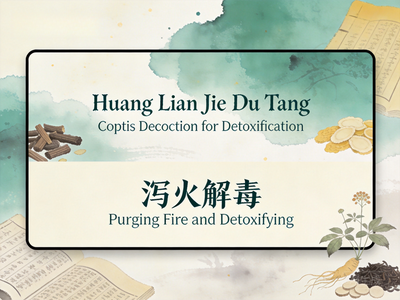
Huanglian Jiedu Tang is composed of Huanglian (Coptis Root), Huangqin, Huangbai (Phellodendron Bark), and Zhizi, with the action of draining fire and resolving toxicity. Compared with Liang Ge San, Huanglian Jiedu Tang places greater emphasis on clearing and draining fire from the Triple Burner, with a relatively stronger fire-draining and toxicity-resolving potency, primarily used to treat the pattern of exuberant Triple-Burner fire-toxin heat, manifesting as severe heat with vexing agitation, dry mouth and throat, disordered speech with insomnia, yellow-reddish urine, a red tongue with yellow coating, and a forceful, rapid pulse. Liang Ge San, while clearing and draining heat pathogen from the upper and middle burners, also includes downward-draining and bowel-unblocking herbs, suited to conditions of exuberant pathogenic heat blazing in the upper and middle burners with concurrent inhibition of bowel qi — manifesting not only with exuberant-heat presentations but also accompanied by symptoms such as constipation.
2. Comparison with Da Chengqi Tang
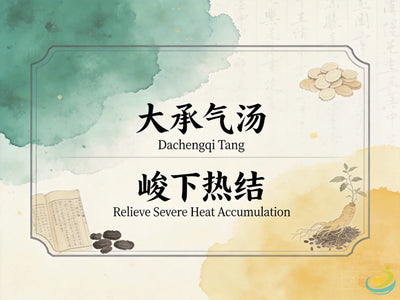
Da Chengqi Tang is composed of Dahuang, Houpo (Magnolia Bark), Zhishi (Unripe Bitter Orange), and Mangxiao, with the action of potently draining heat-bind. It is primarily used to treat the pattern of Yangming bowel excess, manifesting as constipation, frequent passing of flatus, epigastric and abdominal glomus and fullness, abdominal pain that resists pressure with hardness on palpation, and tidal fever with delirious speech. Although Liang Ge San and Da Chengqi Tang both have a downward-draining action, Da Chengqi Tang has a potent downward-draining force, focused primarily on flushing out excess heat and accumulated stagnation from the stomach and intestines, suited to severe cases of Yangming bowel excess. Liang Ge San's downward-draining force is relatively milder, and it includes more heat-clearing and fire-draining herbs, emphasising clearing and resolving heat pathogen from the upper and middle burners, suited to conditions of exuberant pathogenic heat blazing in the upper and middle burners with relatively milder inhibition of bowel qi.
3. Comparison with Yinqiao San
Yinqiao San is composed of Jinyinhua (Honeysuckle Flower), Lianqiao, Bohe, Jingjie (Schizonepeta), Dandouchi (Fermented Soybean), Niubangzi (Burdock Fruit), Jiegeng (Platycodon Root), Gancao, Zhuye, and Lugen (Reed Rhizome), with the actions of acrid-cool venting of the exterior, and clearing heat and resolving toxicity. It is primarily used to treat early-stage warm disease, with fever and absence of perspiration, or perspiration without resolution, mild aversion to wind-cold, headache with thirst, cough, and sore throat. Liang Ge San and Yinqiao San both have heat-clearing, toxicity-resolving, and wind-heat-dispersing actions, but Yinqiao San places emphasis on releasing the exterior and clearing heat, suited to the early onset of externally-contracted wind-heat pathogen, with the disease location primarily at the lung-defence level. Liang Ge San, on the foundation of clearing heat, also includes downward-draining and bowel-unblocking herbs, suited to conditions of exuberant pathogenic heat blazing in the upper and middle burners with concurrent inhibition of bowel qi, with a disease location relatively broader than that of Yinqiao San, involving both the upper and middle burners.

VI. Clinical Applications
1. Upper Respiratory Tract Infection
Upper respiratory tract infection is mostly caused by externally-contracted wind-heat pathogen, manifesting as fever, mild aversion to wind-cold, headache, sore throat, and cough. Liang Ge San has the actions of clearing heat, resolving toxicity, and dispersing wind-heat, capable of effectively clearing and resolving the upper-burner wind-heat pathogen and relieving symptoms such as fever and sore throat. For upper respiratory tract infections belonging to the pattern of exuberant pathogenic heat blazing in the upper and middle burners, treatment with Liang Ge San allows the condition to be more rapidly relieved.
2. Acute Tonsillitis
Acute tonsillitis commonly presents with symptoms such as throat swelling and pain, difficulty swallowing, and fever, mostly caused by exuberant lung-stomach heat. Within Liang Ge San, herbs such as Lianqiao, Huangqin, and Zhizi can clear and drain lung-stomach fire, while Bohe and Zhuye disperse wind-heat, helping to relieve symptoms such as throat swelling and pain. Dahuang and Mangxiao drain downward and unblock the bowels, allowing the lung-stomach heat to have an exit route, thereby achieving the goal of treating acute tonsillitis.
3. Oral Ulcers
Oral ulcers are mostly caused by accumulated heart-spleen heat, manifesting as ulceration, pain, and red swelling of the oral mucosa, accompanied by symptoms such as vexation, thirst, and dry, hard stools. Liang Ge San has the actions of clearing heat, draining fire, resolving toxicity, and unblocking the bowels, capable of clearing and resolving heart-spleen heat, allowing the heat-toxin pathogen to be expelled via the stool, thereby promoting the healing of oral ulcers and relieving symptoms such as pain.
4. Gingivitis
Gingivitis commonly presents with symptoms such as gum redness, swelling, pain, and bleeding, mostly caused by stomach fire flaming upward. Herbs such as Huangqin and Huanglian within Liang Ge San can clear and drain stomach fire, while Dahuang and Mangxiao drain downward and unblock the bowels, giving the stomach fire an exit route. Simultaneously, herbs such as Lianqiao and Bohe disperse wind-heat, helping to relieve local gingival symptoms, producing good therapeutic effects for gingivitis.

VII. Clinical Modifications
1. If Heat Exuberance with Marked Damage to Fluids and Pronounced Thirst Is Present
Tianhuafen (Trichosanthes Root) and Maidong (Ophiopogon Root) may be added to clear heat and generate fluids. Tianhuafen is sweet and slightly bitter in flavour and slightly cold in nature, entering the Lung and Stomach channels, with the actions of clearing heat and draining fire, generating fluids to relieve thirst, and reducing swelling and expelling pus. Maidong is sweet and slightly bitter in flavour and slightly cold in nature, entering the Heart, Lung, and Stomach channels, with the actions of nourishing yin and moistening the lungs, benefiting the stomach and generating fluids, and clearing the heart to relieve vexation. Combined with Liang Ge San, the two can reinforce the heat-clearing and fluid-generating action, relieving the thirst symptoms caused by heat exuberance damaging the fluids.
2. If Sore Throat Is More Severe
Shegan (Belamcanda Rhizome) and Mabo (Puffball) may be added to benefit the throat and reduce swelling. Shegan is bitter in flavour and cold in nature, entering the Lung channel, with the actions of clearing heat and resolving toxicity, dissolving phlegm, and benefiting the throat. Mabo is acrid in flavour and neutral in nature, entering the Lung channel, with the actions of clearing the lungs and benefiting the throat, and resolving toxicity and stopping bleeding. They can reinforce Liang Ge San's throat-benefiting action, effectively relieving sore throat symptoms.
3. If Constipation Is More Severe
The dosage of Dahuang and Mangxiao may be increased to reinforce the downward-draining potency. Simultaneously, Zhishi (Unripe Bitter Orange) and Houpo (Magnolia Bark) may be added to move qi and guide out stagnation. Zhishi is bitter, acrid, and sour in flavour and slightly cold in nature, entering the Spleen and Stomach channels, with the actions of breaking qi to disperse accumulation, and transforming phlegm to dissipate glomus. Houpo is bitter and acrid in flavour and warm in nature, entering the Spleen, Stomach, Lung, and Large Intestine channels, with the actions of drying dampness and dissolving phlegm, and descending qi to eliminate fullness. Combined with Liang Ge San, the two can reinforce the downward-draining, bowel-unblocking, qi-moving, and stagnation-guiding action, ensuring smooth defecation and unobstructed bowel qi.
4. If Concurrent Cough Is Present
Xingren (Apricot Kernel) and Jiegeng (Platycodon Root) may be added to stop cough and transform phlegm. Xingren is bitter in flavour and slightly warm in nature, entering the Lung and Large Intestine channels, with the actions of descending qi to stop cough and calm wheeze, and moistening the intestines to unblock the bowels. Jiegeng is bitter and acrid in flavour and neutral in nature, entering the Lung channel, with the actions of diffusing the lungs, expelling phlegm, benefiting the throat, and expelling pus. They can reinforce Liang Ge San's cough-stopping and phlegm-transforming action, relieving cough symptoms.

VIII. Dosage and Preparation (Traditional Method and Modern Concentrated Granules)
1. Traditional Method
The traditional administration is to decoct the herb decoction pieces with water. Generally, the composition is: Lianqiao 2.5 jin (750 g), Huangqin (wine-fried) and Zhizi (fried) 10 liang each (300 g), Dahuang (wine-soaked) and Mangxiao 20 liang each (600 g), Bohe 7.5 liang (225 g), Zhuye 4 liang (120 g), and Gancao (honey-fried) 10 liang (300 g). These herbs are cut into pieces; each dose is 2 qian (6 g), decocted with 1 zhan of water (200 ml), with 7 pieces of Zhuye and a small amount of honey added, decocted to 70% of the original volume (140 ml), the dregs removed, and taken warm after meals. In modern clinical application, the dosage may be appropriately adjusted according to the condition and individual patient variation, while still following the traditional sovereign-minister-assistant-envoy combination principle.
2. Modern Concentrated Granule Dosage and Administration
Modern concentrated granules are granule preparations produced from traditional Chinese herbs through extraction, concentration, and related processes, convenient to take. The dosage of modern concentrated granules of Liang Ge San is generally determined according to the herb content and factors such as the patient's age and condition. For example, for adult patients, the dosage per dose is generally concentrated granules equivalent to the traditional decoction-piece dosage — such as Lianqiao approximately 15 g, Huangqin approximately 6 g, Zhizi approximately 6 g, Dahuang approximately 12 g, Mangxiao approximately 12 g, Bohe approximately 4.5 g, Zhuye approximately 2.4 g, and Gancao approximately 6 g — dissolved in boiled water, 2–3 times daily. The paediatric dosage is appropriately reduced according to age, generally 1/3 to 1/2 of the adult dosage. The specific dosage should still be adjusted according to the clinical physician's judgement.

IX. Precautions and Contraindications
1. Use with Caution in Those with a Weak Constitution
Liang Ge San contains potent downward-draining herbs such as Dahuang and Mangxiao; those with a weak constitution may, after taking the formula, experience excessive diarrhoea and damage to the righteous qi. Therefore, those with a weak constitution, spleen-stomach deficiency-cold, and loose stools should use it with caution or avoid it.
2. Use with Caution in Pregnancy
Herbs within the formula such as Dahuang and Mangxiao have a degree of downward-draining action; pregnant women taking the formula may experience uterine contractions, leading to adverse outcomes such as miscarriage or premature labour. Therefore, pregnant women should use Liang Ge San with caution; if use is necessary, it must be carried out under medical supervision.
3. Not Suitable for Prolonged Use
Liang Ge San is cold in nature; prolonged administration may damage spleen-stomach yang qi, leading to spleen-stomach functional disorder. Therefore, the medication should be promptly discontinued once symptoms have resolved, and should not be taken over a prolonged period.
4. Dietary Restrictions
During the course of taking Liang Ge San, spicy, greasy, and irritating foods should be avoided, to prevent aggravating the fire-heat pathogen within the body. A light diet should be maintained, with increased consumption of vegetables and fruit, which helps the condition to recover.

X. Modern Research
1. Pharmacological Action Research
Liang Ge San, as a Chinese medicine formula name, signifies "clearing above and draining below," primarily indicated for heat patterns of the chest and diaphragm, possessing the function of clearing above and draining below simultaneously, suited to conditions such as aversion to cold with fever, constipation with reddish urination, and a slippery, rapid pulse, reflecting deficiency-fire flaring upward. The formula's composition includes Chenpi (Dried Tangerine Peel), Shanzhizi Ren (Gardenia Fruit Kernel), Huangqin, and Chuan Dahuang (Sichuan Rhubarb Root), prepared as a water decoction; clinically, modifications may be applied, treating related conditions through draining in place of clearing.
Modern research has demonstrated that Liang Ge San possesses multiple pharmacological actions. Its heat-clearing and toxicity-resolving action may be related to the chemical constituents contained within herbs such as Lianqiao, Huangqin, and Zhizi in the formula; these constituents possess anti-inflammatory, antibacterial, and antiviral actions, capable of inhibiting the growth and proliferation of pathogens and reducing inflammatory responses. The downward-draining and bowel-unblocking action is related to Dahuang and Mangxiao: the anthraquinone compounds within Dahuang can stimulate intestinal peristalsis and promote defecation; Mangxiao can raise osmotic pressure within the intestinal lumen, absorb water, and increase intestinal content volume, thereby exerting a downward-draining action. In addition, Liang Ge San may also possess actions including regulating the body's immune function and improving blood circulation; these actions help to strengthen the body's resistance and promote recovery from illness.
2. Clinical Efficacy Observation
In clinical practice, numerous studies have observed the therapeutic effect of Liang Ge San. For conditions such as upper respiratory tract infection and acute tonsillitis, after treatment with Liang Ge San, patients' symptoms such as fever and sore throat are markedly relieved, the time for body temperature to return to normal is shortened, and indicators such as the blood count also improve. In treating conditions such as oral ulcers and gingivitis, Liang Ge San has also demonstrated good therapeutic effects, capable of promoting ulcer healing and relieving symptoms such as gum swelling and pain. These clinical research findings further confirm the effectiveness and safety of Liang Ge San in treating numerous conditions.
3. Dosage Form Improvement Research
With the development of modern pharmaceutical technology, research into improving the dosage form of Liang Ge San has been ongoing. Beyond the traditional decoction, various other dosage forms have also been developed, including pills, granules, and capsules. These new dosage forms have the advantages of convenient administration and ease of storage, better meeting modern clinical needs. For example, Liang Ge San granules, while preserving the therapeutic effect of the original formula, have improved drug stability and effectiveness through optimised extraction processes and formulation technology, providing patients with better treatment options. Simultaneously, dosage form improvement research also helps to further explore the mechanism of action and pharmacokinetic characteristics of Liang Ge San, laying the foundation for its clinical application and further development.
Liang Ge San — Frequently Asked Questions
Q1: What are the therapeutic actions of Liang Ge San?
Liang Ge San has the actions of draining fire and unblocking the bowels, clearing heat and resolving toxicity, and dispersing constrained heat. It is primarily used for mouth and tongue sores, facial acne, throat swelling and pain, vexing thirst, and constipation caused by exuberant heat in the upper and middle burners.
Q2: What modern conditions is Liang Ge San used for?
In modern TCM clinical practice, it is commonly used for oral ulcers, acne, comedones, acute laryngopharyngitis, constipation, and heat-toxin type skin inflammation, among individuals whose presentation corresponds to the pattern of exuberant interior excess-heat with fire-toxin attacking upward.
Q3: Is Liang Ge San suitable for acne and recurrent mouth ulcers?
If acne or mouth ulcers recur repeatedly, accompanied by constipation, bad breath, throat swelling and pain, facial heat, and a red tongue with yellow coating reflecting heat exuberance, TCM practitioners commonly apply Liang Ge San through pattern differentiation for regulation.
Q4: Who should not take Liang Ge San?
Those with spleen-stomach deficiency-cold, chronic diarrhoea, a yang-deficiency constitution, or yin deficiency with fluid depletion should generally not use Liang Ge San. If chronic aversion to cold, poor appetite, or loose stools are present, professional pattern-differentiation assessment by a qualified TCM practitioner should be sought first.
⚠️ This content is for reference only and does not provide medical advice. Consult a healthcare professional for any health concerns.