Liu Yi San

I. Origins and History
1. Ancient Origins
Liu Yi San originates from the Jin-Yuan period and is one of the classical formulas of Chinese medicine. It was first recorded in Shanghan Zhige (Straight Formulas for Cold Damage), authored by Liu Wansu of the Jin dynasty, where it was originally named Yi Yuan San. Liu Wansu was one of the Four Great Masters of the Jin-Yuan era and built his theoretical framework on the primacy of fire and heat; his academic thought exerted a profound and far-reaching influence on the subsequent development of wenbing (warm disease) scholarship. At the time, Liu Yi San was primarily used to treat cold damage febrile illness and a range of other conditions. Its composition is concise yet ingenious, its clinical efficacy remarkable, and it gradually came into widespread clinical use.
2. Historical Development
Over time, the composition and application of Liu Yi San continued to evolve. Later physicians made various adjustments and additions, broadening its scope of use. For example, Li Shizhen's Bencao Gangmu (Compendium of Materia Medica) of the Ming dynasty provides a more detailed account of Liu Yi San, with further elaboration on its actions and clinical application. By the Qing dynasty, Liu Yi San had become one of the most commonly used clinical formulas, referenced by numerous physicians in their writings. Its composition — fixed at a ratio of 6 liang of Huashi (Talcum) to 1 liang of Gancao (Licorice Root) — has been transmitted and used to this day, establishing Liu Yi San as a classical and well-known formula within the TCM pharmacopoeia.

II. Herb Composition (Sovereign, Minister, Assistant, Envoy)
1. Sovereign Herb: Huashi (Talcum)
Huashi is sweet and bland in flavour and cold in nature, entering the Bladder, Lung, and Stomach channels. Its texture is smooth and gliding, and it possesses the action of clearing heat and promoting urination, making it the sovereign herb of Liu Yi San. Huashi clears and drains lower-burner damp-heat, directing damp-heat pathogen out of the body through the urine. In treating symptoms of inhibited urination, dribbling, and astringent and painful urination arising from downward infusion of damp-heat, Huashi performs the principal function of clearing heat and draining dampness. It acts as a vanguard, guiding the smooth expulsion of damp-heat pathogen and thereby relieving the various discomforts caused by lower-burner damp-heat.
2. Minister Herb: Gancao (Licorice Root)
Gancao is sweet in flavour and neutral in nature, entering the Heart, Lung, Spleen, and Stomach channels. Within Liu Yi San, Gancao serves as the minister herb, performing the function of harmonising the other herbs. It moderates the cold nature of Huashi, allowing it to clear heat and promote urination without becoming excessively cold and injuring the middle burner. At the same time, Gancao tonifies the spleen and benefits qi, preventing the excessive urination-promoting action of Huashi from depleting spleen-stomach qi. Gancao acts as a gentle moderating agent, making the whole formula more balanced — enabling the full expression of the heat-clearing and dampness-draining effect while avoiding undue damage to the body's upright qi.
3. Note on Assistant and Envoy Roles
Although Liu Yi San contains only two herbs, viewed through the lens of formula composition theory, the two work in coordinated partnership: Huashi performs the primary function of clearing heat and promoting urination, while Gancao acts as auxiliary by harmonising the medicinal nature. Together they achieve the effect of clearing heat and draining dampness, and the formula as a whole accords with the principles of sovereign-minister-assistant-envoy composition. The dosage ratio of Huashi to Gancao — six to one — is uniquely calibrated: this precise proportion ensures that the formula's medicinal force is exactly right, effectively clearing heat and draining dampness without being so forceful as to cause adverse effects on the body.

III. Pathomechanism, Actions, and Indications
1. Pathomechanism
The pathomechanism targeted by Liu Yi San is primarily internal accumulation of damp-heat. Damp-heat pathogen can invade multiple areas of the body, giving rise to a variety of conditions. When damp-heat accumulates in the lower burner, it impairs the bladder's qi transformation function, leading to inhibited urination, urinary frequency, urgency, and pain. Furthermore, damp-heat may steam and smoulder in the skin and flesh, causing eczema, prickly heat rash, and other dermatological conditions. In the hot and humid environment of summer, the body is particularly susceptible to summer-heat dampness pathogen, making the above symptoms especially likely to appear — at such times, Liu Yi San becomes an effective formula for treating damp-heat conditions.
2. Summer-Heat Clearing and Dampness-Draining Actions
The principal action of Liu Yi San is to clear heat and drain dampness. Huashi clears heat and promotes urination; Gancao harmonises the medicinal nature. Acting synergistically, the two herbs rapidly eliminate damp-heat pathogen from the body, restore free urinary flow, and resolve the damp-heat. For symptoms of short, dark-yellow urine and dribbling, astringent, painful urination arising from downward infusion of damp-heat, Liu Yi San alleviates urinary tract discomfort through its heat-clearing and dampness-draining action, restoring the urine to its normal state. Simultaneously, for skin conditions caused by damp-heat steaming in the skin and flesh, Liu Yi San also has a degree of therapeutic effect — by regulating internal damp-heat, it improves the damp-heat manifestations in the skin.
3. Indications
Liu Yi San principally treats summer-heat dampness pattern and various conditions arising from downward infusion of damp-heat. During the summer months, when the weather is hot and the climate damp and rainy, the body is prone to contracting summer-heat dampness pathogen, giving rise to fever, vexing thirst, and inhibited urination; Liu Yi San can effectively clear heat, resolve summer-heat, drain dampness, and unblock strangury, relieving the discomforts of summer-heat dampness. Additionally, for lin patterns (strangury) arising from damp-heat pouring downward — including urinary frequency, urgency, pain, and short, dark-yellow urine — as well as eczema and prickly heat caused by damp-heat accumulating in the skin, Liu Yi San also yields good therapeutic results. It acts as a key that unlocks the treatment of various conditions triggered by damp-heat.

IV. Formula Analysis
1. Huashi: Clearing Heat and Promoting Urination
Huashi is cold in nature and gliding in texture, with a downward-descending quality that allows it to act directly on the lower burner and bladder. It excels at clearing and draining lower-burner damp-heat, directing damp-heat pathogen out of the body through the urine. This characteristic of Huashi is intimately related to its texture and nature: its gliding, lubricating quality smooths the urinary tract, reducing the irritation of damp-heat pathogen on the urethra and thereby alleviating inhibited urination and dribbling, astringent, painful urination. In treating conditions of downward infusion of damp-heat, Huashi performs the key function of clearing heat and promoting urination, making it one of the core medicinals through which Liu Yi San exerts its effects.
2. Gancao: Harmonising the Formula
Gancao is sweet in flavour and neutral in nature, and is an excellent harmonising agent. Within Liu Yi San, Gancao on one hand moderates the cold nature of Huashi, preventing its excessive coldness from damaging spleen-stomach yang qi. On the other hand, Gancao coordinates with Huashi's heat-clearing and urination-promoting action, making the medicinal force more balanced and sustained. Gancao acts as a quietly dedicated assistant, performing the crucial function of balancing the various medicinal actions within the formula, ensuring that Liu Yi San can both effectively clear heat and drain dampness and exert its therapeutic effects safely.
3. Compositional Characteristics
The defining characteristic of Liu Yi San's composition is its economy and single-minded focus. The formula uses only Huashi and Gancao and yet is able to exert the effect of clearing heat and draining dampness, targeting the pathomechanism of internal damp-heat accumulation. The dosage ratio of Huashi to Gancao is precisely calibrated: the 6:1 ratio allows the heat-clearing and urination-promoting power of Huashi to be fully expressed, while Gancao's harmonising action prevents the formula from becoming overly drastic. This concise yet effective compositional approach exemplifies the unique appeal of TCM formula science and gives Liu Yi San both broad clinical applicability and reliable therapeutic efficacy.

V. Comparison with Related Formulas
1. Comparison with Bazheng San
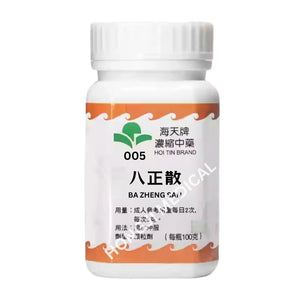
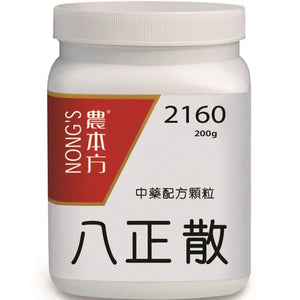
Bazheng San is another commonly used formula for treating damp-heat strangury (lin pattern), composed of eight herbs: Mutong (Akebia Stem), Cheqianzi (Plantain Seed), Qumai (Dianthus), Bianxu (Common Knotgrass), Huashi (Talcum), Gancao (Licorice Root), Zhizi (Gardenia Fruit), and Dahuang (Rhubarb Root). Compared with Liu Yi San, Bazheng San is considerably more forceful and drastic in action, with a more complex composition: in addition to clearing heat and draining dampness, it incorporates Dahuang to drain fire and unblock the bowels, and Zhizi and other herbs to clear heat and drain fire. Bazheng San is therefore more suited to strangury where damp-heat accumulation is more severe, accompanied by dry, bound stools, bitter taste in the mouth, dry throat, and similar symptoms. Liu Yi San, by comparison, is relatively mild in force, focusing on simple heat-clearing and dampness-draining, and is more suitable for patients with relatively less severe damp-heat symptoms.
2. Comparison with Ganlu Xiaodu Dan
Ganlu Xiaodu Dan (Sweet Dew Toxin-Resolving Elixir) drains dampness and resolves turbidity, clears heat and resolves toxicity, and is primarily used to treat epidemic warm-damp disease where the pathogen is in the qi aspect with both dampness and heat equally pronounced. Its composition includes Huashi, Huangqin (Scutellaria Root), Yinchen (Artemisia capillaris), Shi Changpu (Acorus Rhizome), Chuan Beimu (Sichuan Fritillary Bulb), Mutong (Akebia Stem), Huoxiang (Agastache), Lianqiao (Forsythia Fruit), Bai Kouren (White Cardamom), Bohe (Peppermint), and Shegan (Belamcanda Rhizome), among others. Compared with Liu Yi San, Ganlu Xiaodu Dan has a broader therapeutic scope: it not only clears heat and drains dampness but also resolves toxicity and aromatically disperses turbidity. It focuses on treating damp-heat pathogen diffusing through the triple burner, producing chest tightness, abdominal distension, fever with aching limbs, sore throat, and swelling of the parotid region. Liu Yi San, by contrast, primarily targets lower-burner damp-heat, emphasising the clearing of heat, promotion of urination, and unblocking of strangury. The two formulas differ markedly in therapeutic actions and clinical indications.

VI. Clinical Applications
1. Urological Conditions
Liu Yi San is widely used in urological conditions. For symptoms of urinary frequency, urgency, pain, and short, dark-yellow urine arising from cystitis, urethritis, and similar conditions, Liu Yi San alleviates urinary tract inflammation and reduces patient suffering through its heat-clearing and dampness-draining actions. Clinical research indicates that combining Liu Yi San with antibiotic therapy for urinary tract infections improves treatment outcomes and shortens disease duration. In addition, for the early stage of acute pyelonephritis where symptoms of downward infusion of damp-heat are present, Liu Yi San may be used as an adjunct formula to help clear internal damp-heat and support recovery.
2. Skin Conditions
In dermatology, Liu Yi San is commonly used to treat eczema, prickly heat rash, and other skin conditions. Eczema is most often caused by internal accumulation of damp-heat combined with external invasion of wind pathogen; Liu Yi San clears heat and drains dampness, improving the skin's damp-heat state and reducing the itching, erythema, and swelling of eczema. For prickly heat rash, Liu Yi San clears heat, resolves summer-heat, drains dampness, and relieves itching; used in summer, it effectively prevents and treats heat rash. Applying an appropriate amount of Liu Yi San powder to the affected area can rapidly relieve the discomfort of heat rash and keep the skin dry.
3. Summer Heatstroke and Summer-Heat Conditions
In summer, when the weather is hot and humid, the body is prone to contracting summer-heat dampness pathogen, giving rise to fever, vexing thirst, and inhibited urination. Liu Yi San is one of the commonly used formulas for treating summer-heat dampness conditions. It clears heat, resolves summer-heat, drains dampness, and unblocks strangury, allowing summer-heat dampness pathogen to be expelled from the body. In summer, people may take Liu Yi San in appropriate doses to prevent summer-heat dampness colds, or take it promptly upon the onset of summer-heat dampness symptoms to relieve discomfort. For example, after working or exercising in a high-temperature environment, drinking a Liu Yi San decoction or dissolving Liu Yi San granules in water can effectively clear heat, resolve summer-heat, and maintain physical comfort.

VII. Clinical Modifications
1. Severe Damp-Heat
Where damp-heat symptoms are more severe, heat-clearing and dampness-drying herbs such as Huanglian (Coptis Rhizome) and Huangbo (Phellodendron Bark) may be added to the base formula. Both Huanglian and Huangbo possess strong heat-clearing and dampness-drying actions and can enhance the formula's heat-clearing and dampness-draining effect, more effectively eliminating internal damp-heat pathogen. For patients with pronounced symptoms of urinary frequency, urgency, and pain from downward infusion of damp-heat, accompanied by bitter taste in the mouth and a yellow, greasy tongue coating indicating heavier damp-heat, the addition of Huanglian and Huangbo can significantly amplify the therapeutic effect.
2. Pronounced Inhibited Urination
When inhibited urination is particularly prominent, herbs that promote urination and unblock strangury — such as Cheqianzi (Plantain Seed) and Qumai (Dianthus) — may be added. Both Cheqianzi and Qumai promote urination and unblock strangury, reinforcing Liu Yi San's ability to facilitate the free flow of urine. They promote the excretion of urine, alleviate inhibited urination, and enable damp-heat pathogen in the lower burner to be expelled through the urine more rapidly. For patients in whom damp-heat accumulation in the lower burner has caused extreme urinary inhibition — even to the point of complete suppression — the addition of Cheqianzi and Qumai may be expected to improve symptoms.
3. Concurrent Summer-Heat
Where concurrent summer-heat symptoms are present — such as high fever and intense thirst — heat-draining fire-purging herbs including Shigao (Gypsum) and Zhimu (Anemarrhena Rhizome) may be added. Shigao and Zhimu clear heat, drain fire, generate fluids, and relieve thirst; they reinforce the formula's capacity to clear heat and resolve summer-heat, alleviating summer-heat symptoms. During the summer-heat dampness season, when a patient presents with both summer-heat dampness symptoms and prominent summer-heat manifestations such as high fever and intense thirst, the addition of Shigao and Zhimu enables Liu Yi San to more comprehensively perform its functions of clearing heat, resolving summer-heat, and draining dampness.

VIII. Dosage and Preparation
1. Traditional Powder Method
Traditional Classical Powder Preparation and Administration Method for Liu Yi San
This outlines the classical powder preparation method for Liu Yi San, the celebrated formula for dispelling summer-heat and draining dampness. The formula's name derives from its defining "six-to-one" golden ratio of 6 liang of Huashi (Talcum) to 1 liang of Gancao (Licorice Root). Mixed and taken with warm water, the preparation allows the medicinals to dissolve and be absorbed rapidly in the body, exerting the effects of clearing summer-heat, draining dampness, generating fluids, and relieving thirst.
- Huashi (Talcum): 6 liang (chief herb — modern reference dose approx. 180g; promotes urination and drains dampness, clears and resolves summer-heat)
- Gancao (Licorice Root): 1 liang (deputy/envoy herb — modern reference dose approx. 30g; used honey-fried or raw; clears heat and resolves toxicity, harmonises the middle and relaxes tension)
- Warm water: an appropriate amount (used as the medicinal vehicle)
2. Modern Concentrated Granules
With advances in modern pharmaceutical technology, Liu Yi San is now also available in a modern concentrated granule formulation. Modern concentrated granules are a prepared herbal dosage form produced through extraction and concentration processes, offering considerably greater convenience. The dose for Liu Yi San modern concentrated granules is generally as directed on the product label — typically one sachet per administration, dissolved in hot water. This dosage form retains the active constituents of the herbs while being easy for patients to carry and take, making it well-suited to the pace of contemporary life. Compared with the traditional powder preparation, modern concentrated granules offer more stable potency and improved absorption and have been well received by many patients.

IX. Precautions and Contraindications
1. Contraindicated in Deficiency-Cold Patterns
Liu Yi San is cold and cooling in nature and is primarily used to treat damp-heat conditions. For patients with deficiency-cold patterns — such as spleen-stomach deficiency-cold or kidney yang insufficiency — taking Liu Yi San may aggravate internal deficiency-cold symptoms, producing adverse effects such as abdominal pain, diarrhoea, and cold aversion with cold limbs. Patients with deficiency-cold patterns should therefore avoid Liu Yi San to prevent damage to yang qi and worsening of their condition. In clinical practice, accurate pattern differentiation is essential to determine whether Liu Yi San is appropriate for the individual patient and to avoid erroneous treatment.
2. Caution in Pregnancy
Pregnant women have a particularly sensitive constitution and require extra caution in the use of any medication. Herbs in Liu Yi San such as Huashi (Talcum) may have some potential effect on the foetus; while there is as yet no conclusive evidence that Liu Yi San causes foetal malformation or other serious consequences, pregnant women should exercise caution in its use in order to ensure foetal safety. Should a pregnant woman require treatment for a damp-heat condition, she should weigh the benefits and risks under medical guidance before selecting an appropriate treatment approach and medication.
3. Dietary Restrictions
While taking Liu Yi San, patients should observe dietary restrictions. Spicy, greasy, and irritating foods — such as chilli peppers and deep-fried items — should be avoided, as they readily aggravate internal damp-heat pathogen and undermine the formula's efficacy. Alcohol should also be avoided, as it exacerbates damp-heat symptoms and is unfavourable to recovery. A light diet, with an emphasis on vegetables and fruit, supports the clearance of internal damp-heat and promotes overall recovery.

X. Modern Research
1. Pharmacological Research
Liu Yi San is a classical formula for clearing summer-heat and draining dampness, composed of 6 liang of Huashi (Talcum) and 1 liang of Gancao (Licorice Root), principally treating scanty urination and internal accumulation of summer-heat dampness. Clinically it is commonly mixed and administered with Dengxin Tang (Rush Stem Decoction) as a vehicle, or modified into Ji Su San (Chicken-Perilla Powder) or Bi Yu San (Jade-Green Powder), each applied for its respective effects of clearing summer-heat and draining dampness.
Modern pharmacological research has demonstrated that Huashi in Liu Yi San contains magnesium silicate and other constituents, with diuretic and antibacterial actions. Huashi increases urine output, promotes the metabolic activity of the urinary system, and has a preventive and therapeutic role in urinary tract infections. Gancao contains multiple chemical constituents — including glycyrrhizin and liquiritin — with anti-inflammatory, anti-allergic, and immunoregulatory properties. Taken together, Liu Yi San exerts its heat-clearing, dampness-draining, and anti-inflammatory effects through the synergistic action of Huashi and Gancao, providing a scientific basis for its clinical application.
2. Clinical Efficacy Observations
Extensive clinical studies have observed the efficacy of Liu Yi San in the treatment of urological conditions, skin conditions, and other disorders. Research results indicate that Liu Yi San demonstrates good clinical efficacy in treating cystitis, urethritis, eczema, and other conditions. Compared with the use of Western pharmaceuticals alone, combining Liu Yi San with Western medicines improves cure rates, reduces recurrence rates, and produces fewer adverse effects. Furthermore, Liu Yi San has a degree of effectiveness in preventing summer-heat dampness colds, improving summer-heat dampness symptoms, and enhancing the body's resistance.
3. Dosage Form Improvement Research
With advances in modern science and technology, research into new dosage forms for Liu Yi San is ongoing. In addition to modern concentrated granules, researchers have explored preparing Liu Yi San as capsules, tablets, and other new dosage forms. These new forms retain the original therapeutic effects of Liu Yi San while further improving medicinal stability and convenience of administration. For example, Liu Yi San capsules better protect the medicinal constituents, reduce gastrointestinal irritation, and improve patient compliance. Dosage form improvement research provides an expanding array of options for the clinical application and broader promotion of Liu Yi San.
Liu Yi San, as a classical formula of Chinese medicine, carries a long history and a rich body of clinical experience. Through the detailed presentation of its origins, herb composition, pathomechanism and actions, formula analysis, comparisons with other formulas, clinical applications, modifications, dosage and preparation, precautions, and modern research developments, it is hoped that readers will gain a more comprehensive and in-depth understanding of Liu Yi San — providing a reference for its rational application in clinical practice. When using TCM formulas, one should follow TCM theory and apply pattern-based treatment to ensure safe and effective prescribing.
Liu Yi San — Frequently Asked Questions
Q1: What are the actions of Liu Yi San?
Liu Yi San clears summer-heat and drains heat, promotes urination and unblocks strangury, and relieves vexation and thirst. It is commonly used for vexing thirst, short dark-yellow urine, dry mouth, and fever and discomfort arising from summer-heat combined with dampness.
Q2: Which modern conditions is Liu Yi San indicated for?
In contemporary TCM clinical practice, it is frequently used for individuals with urinary tract infections, heatstroke, heat stress reactions, and mild urinary tract inflammation — where the pattern diagnosis is internal accumulation of summer-heat dampness or downward infusion of damp-heat.
Q3: Is Liu Yi San suitable for summer heatstroke management?
For presentations of thirst and irritability, fever with profuse sweating, short, dark-yellow urine, and dizziness and fatigue following exposure to high temperatures — where the pattern corresponds to internal accumulation of summer-heat dampness — TCM physicians will commonly prescribe Liu Yi San as an adjunct treatment. However, it cannot replace emergency medical intervention for severe heatstroke.
Q4: Who should not take Liu Yi San?
It is generally unsuitable for patients with spleen-stomach deficiency-cold, cold-damp diarrhoea, urinary frequency without heat signs, or a yang-deficient constitution. A qualified TCM physician should conduct a full pattern assessment based on the individual's constitution and presenting symptoms before prescribing.
⚠️ This content is for reference only and does not provide medical advice. Consult a healthcare professional for any health concerns.