Mu Xiang Bing Lang Wan: TCM Formula for Digestive Stagnation and Damp-Heat

Mu Xiang Bing Lang Wan: Moving Qi, Guiding Stagnation and Attacking Accumulation for Constipation and Abdominal Distension | HJMEDICAL

I. Origins and History

1. Origins and Background

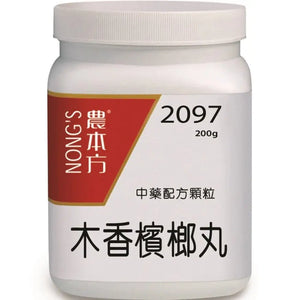
Mu Xiang Bing Lang Wan (木香槟榔丸) is a classical Traditional Chinese Medicine formula traditionally used to promote digestion, move Qi, resolve damp-heat, and address food stagnation in the gastrointestinal tract. Mu Xiang Bing Lang Wan originated from the extensive clinical research and accumulated practical experience of ancient physicians studying digestive system disorders. In ancient times, people's diets were relatively monotonous and hygienic conditions were limited, making digestive diseases commonplace. Through long-term observation and treatment of such conditions, physicians gradually accumulated rich medicinal experience, and Mu Xiang Bing Lang Wan emerged from this background.

2. Historical Development

Its earliest origins can be traced to the Jin-Yuan period. Medical thought at that time was characterised by a flourishing of diverse schools, each with distinct academic viewpoints and prescribing approaches. Under the continuous exploration and refinement of Jin-Yuan physicians, Mu Xiang Bing Lang Wan gradually developed a relatively fixed composition and set of actions. Through the Ming and Qing dynasties, numerous physicians further validated the formula clinically and elaborated its theoretical basis, broadening and refining its application in treating digestive diseases. For example, Ming dynasty physicians built upon the work of their predecessors to optimise the processing of individual herbs and adjust dosages, making the formula's effects more pronounced.

Mu Xiang Bing Lang Wan: Moving Qi, Guiding Stagnation and Attacking Accumulation for Constipation and Abdominal Distension | HJMEDICAL

II. Herb Composition (Sovereign, Minister, Assistant, Envoy)

1. Chief Herbs

Muxiang (Costus Root) and Binglang (Areca Seed) are the chief herbs of Mu Xiang Bing Lang Wan. Muxiang is warm in nature, acrid and bitter in flavour, and enters the Spleen, Stomach, Large Intestine, Triple Burner, and Gallbladder channels. It moves qi, relieves pain, strengthens the spleen, and promotes digestion; it is a key herb for moving qi stagnation in the gastrointestinal tract and relieving pain. In this formula, Muxiang effectively alleviates epigastric and abdominal distension and pain, belching, and related symptoms. Binglang (Areca Seed) is bitter and acrid in flavour, warm in nature, and enters the Stomach and Large Intestine channels. Its primary actions are killing parasites, dispersing accumulation, moving qi, promoting urination, and intercepting malaria. Binglang breaks qi downward, disperses accumulation, and guides stagnation; it is particularly effective for food accumulation with qi stagnation, abdominal distension, and constipation. Together, Muxiang and Binglang work in complementary directions — one raising and one lowering — to facilitate the flow of gastrointestinal qi, eliminate accumulation, and form the core pairing for treating gastrointestinal stagnation.

2. Deputy Herbs

Qingpi (Unripe Tangerine Peel), Xiangfu (Cyperus Rhizome), Zhiqiao (Bitter Orange Fruit), Huanglian (Coptis Rhizome), and Huangbai (Phellodendron Bark) are the deputy herbs of Mu Xiang Bing Lang Wan. Qingpi is bitter and acrid in flavour, warm in nature, and enters the Liver, Gallbladder, and Stomach channels. It disperses liver qi and breaks accumulation, reinforcing the qi-moving and accumulation-dispersing actions of Muxiang and Binglang, with particular strength in resolving qi stagnation in the Liver channel. Xiangfu (Cyperus Rhizome) is acrid, mildly bitter, and mildly sweet in flavour, neutral in nature, and enters the Liver, Spleen, and Triple Burner channels. It soothes the liver, resolves depression, regulates qi, relaxes the middle, regulates menstruation, and relieves pain, working in concert with Muxiang and other herbs to move qi and resolve constraint so that the qi dynamic flows freely. Zhiqiao (Bitter Orange Fruit) is bitter, acrid, and sour in flavour, slightly cold in nature, and enters the Spleen and Stomach channels. It regulates qi, relaxes the middle, and moves stagnation to reduce distension, helping to enhance gastrointestinal motility and eliminate qi stagnation and fullness. Huanglian (Coptis Rhizome) is bitter in flavour, cold in nature, and enters the Heart, Spleen, Stomach, Liver, Gallbladder, and Large Intestine channels. It clears heat, dries dampness, drains fire, and resolves toxin; combined with qi-moving herbs such as Binglang, it prevents accumulation from generating excessive heat. Huangbai (Phellodendron Bark) is bitter in flavour, cold in nature, and enters the Kidney and Bladder channels. It clears heat, dries dampness, drains fire, eliminates steaming, and resolves toxin; it assists Huanglian in clearing heat and drying dampness so that gastrointestinal damp-heat is eliminated.

3. Adjuvant Herbs

Ezhu (Zedoary Rhizome), Sanleng (Sparganium Rhizome), Dahuang (Rhubarb Root), and Qianniuzi (Morning Glory Seed) are the adjuvant herbs of Mu Xiang Bing Lang Wan. Ezhu (Zedoary Rhizome) is acrid and bitter in flavour, warm in nature, and enters the Liver and Spleen channels. It breaks blood, moves qi, disperses accumulation, and relieves pain, assisting the chief and deputy herbs in breaking qi and dispersing accumulation to eliminate stubborn stagnation. Sanleng (Sparganium Rhizome) is acrid and bitter in flavour, neutral in nature, and enters the Liver and Spleen channels. It breaks blood, moves qi, disperses accumulation, and relieves pain; working synergistically with Ezhu, it intensifies the ability to break blood and disperse accumulation. Dahuang (Rhubarb Root) is bitter in flavour, cold in nature, and enters the Spleen, Stomach, Large Intestine, Liver, and Pericardium channels. It purges and attacks accumulation, clears heat and drains fire, cools blood and resolves toxin, and expels stasis to open the channels. Dahuang flushes gastrointestinal accumulation and promotes the elimination of old waste, while clearing gastrointestinal excess heat so that accumulation and heat are expelled together. Qianniuzi (Morning Glory Seed) is bitter in flavour, cold in nature, toxic, and enters the Lung, Kidney, and Large Intestine channels. It purges water, unblocks the bowels, disperses phlegm, clears retained fluids, kills parasites, and attacks accumulation; it reinforces the formula's purgative action so that gastrointestinal accumulation is swiftly expelled from the body.

4. Envoy Herb

Mangxiao (Mirabilite) is the envoy herb of Mu Xiang Bing Lang Wan. Mangxiao is salty and bitter in flavour, cold in nature, and enters the Stomach and Large Intestine channels. It purges and attacks accumulation, moistens dryness and softens hardness, and clears heat to reduce swelling. It softens hardness and moistens dryness, assisting Dahuang and other herbs in purging accumulation more effectively to produce smooth bowel movements; at the same time, it clears heat and drains fire, working synergistically with the heat-clearing herbs in the formula to enhance the heat-clearing effect.

Mu Xiang Bing Lang Wan: Moving Qi, Guiding Stagnation and Attacking Accumulation for Constipation and Abdominal Distension | HJMEDICAL

III. Pathomechanism, Actions, and Indications

1. Pathomechanism

The primary pathomechanism addressed by Mu Xiang Bing Lang Wan is gastrointestinal accumulation and stagnation with impaired qi dynamic and internal generation of damp-heat. Due to dietary irregularities — excessive consumption of rich, fatty, pungent, raw, or cold foods — the spleen and stomach lose their normal transforming and transporting function, causing food to accumulate in the gastrointestinal tract. As stagnation persists, it obstructs the movement of qi so that gastrointestinal qi no longer flows freely, giving rise to epigastric and abdominal distension and pain, belching, constipation, and other symptoms. At the same time, accumulation transforms into heat, and damp-heat binds in the gastrointestinal tract, further aggravating the condition.

2. Actions

This formula moves qi, guides stagnation, attacks accumulation, and drains heat. Through qi-moving herbs such as Muxiang and Binglang, it facilitates the gastrointestinal qi dynamic and eliminates qi stagnation and fullness. With the assistance of purgative herbs such as Dahuang and Qianniuzi, it flushes gastrointestinal accumulation and expels it from the body. Heat-clearing herbs including Huanglian, Huangbai, and Mangxiao clear and drain gastrointestinal damp-heat, preventing accumulation from generating excessive heat. The synergistic action of multiple herbs achieves the goals of moving qi, guiding stagnation, attacking accumulation, and draining heat.

3. Indications

Mu Xiang Bing Lang Wan primarily treats the pattern of internal retention of accumulation and stagnation with dampness binding and generating heat. Common symptoms include epigastric and abdominal fullness, distension, and pain; red and white dysentery; tenesmus; or constipation; a yellow, greasy tongue coating; and a sunken, forceful pulse. Epigastric and abdominal fullness and distension result from gastrointestinal accumulation and impaired qi flow. Red and white dysentery with tenesmus arise from damp-heat accumulation in the Large Intestine causing blood and qi congestion with failure of the bowels to transmit normally. Constipation reflects internal retention of accumulation with obstruction of the bowel qi. A yellow, greasy tongue coating and sunken, forceful pulse are manifestations of damp-heat accumulation and stagnation.

Mu Xiang Bing Lang Wan: Moving Qi, Guiding Stagnation and Attacking Accumulation for Constipation and Abdominal Distension | HJMEDICAL

IV. Formula Analysis

1. Equal Emphasis on Moving Qi and Dispersing Accumulation

Muxiang and Binglang, as the chief herbs, work in complementary directions — one raising and one lowering — and form the core pairing for moving qi and dispersing accumulation. Muxiang moves gastrointestinal qi stagnation, while Binglang breaks qi downward and guides accumulation and stagnation; together they rapidly relieve gastrointestinal qi stagnation, fullness, and obstruction. The deputy herbs Qingpi, Xiangfu, and Zhiqiao reinforce the actions of moving qi, resolving constraint, and dispersing accumulation and stagnation, assisting the chief herbs in facilitating gastrointestinal qi dynamic and eliminating stagnation. The adjuvant herbs Ezhu and Sanleng break blood, move qi, disperse accumulation, and relieve pain, further intensifying the formula's accumulation-dispersing power so that even stubborn stagnation can be eliminated. The formula as a whole places equal emphasis on moving qi and dispersing accumulation, targeting the primary pathomechanism of gastrointestinal stagnation.

2. Synergy Between Heat Clearing and Purgation

Huanglian and Huangbai clear heat and dry dampness, preventing accumulation from generating excessive heat and simultaneously clearing gastrointestinal damp-heat. Dahuang, Qianniuzi, and Mangxiao purge and attack accumulation, flushing the gastrointestinal tract. The synergistic action of heat-clearing and purgative herbs both eliminates gastrointestinal accumulation and clears the heat that accumulation generates, so that gastrointestinal damp-heat is resolved and accumulation is expelled, achieving the goals of attacking accumulation and draining heat. This synergy makes the formula more comprehensively effective when treating gastrointestinal accumulation accompanied by a damp-heat pattern.

3. Synergistic Enhancement Through Herb Pairing

The multi-herb composition of Mu Xiang Bing Lang Wan is elegantly designed for synergistic enhancement. Qi-moving herbs combined with accumulation-dispersing herbs intensify the therapeutic effect on gastrointestinal stagnation. Heat-clearing herbs combined with purgative herbs both clear gastrointestinal damp-heat and promote the expulsion of accumulation. The herbs interact with and check one another, collectively expressing the formula's actions of moving qi, guiding stagnation, attacking accumulation, and draining heat, making its therapeutic effect more pronounced. For example, Muxiang paired with Huanglian — one warm, one cold — both moves qi to relieve pain and clears heat to dry dampness, preventing excessive warm-dryness; Dahuang paired with Mangxiao intensifies the purgative force against accumulation so that stagnation is rapidly expelled from the body.

Mu Xiang Bing Lang Wan: Moving Qi, Guiding Stagnation and Attacking Accumulation for Constipation and Abdominal Distension | HJMEDICAL

V. Comparison with Related Formulas

1. Comparison with Zhishi Daozhi Wan

Zhishi Daozhi Wan and Mu Xiang Bing Lang Wan can both be used to treat gastrointestinal accumulation and stagnation patterns. Zhishi Daozhi Wan primarily disperses food and guides stagnation, with supplementary actions of clearing heat and dispelling dampness; its constituent herbs are Dahuang, Zhishi, Shenqu, Fuling, Huangqin, Huanglian, Baizhu, and Zexie. In this formula, Dahuang and Zhishi attack and purge accumulation, Shenqu disperses food and transforms accumulation, Fuling and Zexie promote urination and drain dampness, Huangqin and Huanglian clear heat and dry dampness, and Baizhu strengthens the spleen and dries dampness. Compared with Mu Xiang Bing Lang Wan, Zhishi Daozhi Wan has a stronger capacity to clear heat and dispel dampness but a relatively weaker ability to break qi and disperse accumulation. Mu Xiang Bing Lang Wan places greater emphasis on moving qi, guiding stagnation, attacking accumulation, and draining heat; its qi-breaking and accumulation-dispersing action is more prominent, and its composition additionally includes blood-and-qi-breaking herbs such as Ezhu and Sanleng.

2. Comparison with Baohe Wan

Baohe Wan's primary action is dispersing food and harmonising the stomach; it is used to treat food accumulation and stagnation presenting with epigastric and abdominal fullness, putrid belching with acid regurgitation, and loss of appetite. Its composition includes Shanzha (Chinese Hawthorn Fruit), Shenqu (Medicated Leaven), Banxia (Pinellia), Fuling (Poria), Chenpi (Dried Tangerine Peel), Lianqiao, and Laifuzi (Radish Seed). Baohe Wan focuses on dispersing food and transforming accumulation, with a relatively mild medicinal potency. Mu Xiang Bing Lang Wan's actions are moving qi, guiding stagnation, attacking accumulation, and draining heat; it treats the pattern of internal retention of accumulation and stagnation with dampness binding and generating heat, where the condition is comparatively more severe and the medicinal potency more forceful. Baohe Wan centres on dispersing food and transforming accumulation, whereas Mu Xiang Bing Lang Wan, beyond dispersing food, places greater emphasis on moving qi, guiding stagnation, clearing heat, and draining fire to eliminate gastrointestinal accumulation and damp-heat.

Mu Xiang Bing Lang Wan: Moving Qi, Guiding Stagnation and Attacking Accumulation for Constipation and Abdominal Distension | HJMEDICAL

VI. Clinical Applications

1. Digestive System Disorders

Mu Xiang Bing Lang Wan is commonly used to treat various digestive system disorders. In functional dyspepsia, patients often present with epigastric and abdominal fullness, loss of appetite, and belching; Mu Xiang Bing Lang Wan can move qi, guide stagnation, promote gastrointestinal motility, improve digestive function, and alleviate symptoms. For constipation caused by gastrointestinal accumulation — particularly when accompanied by symptoms such as abdominal distension and pain — this formula can effectively purge and attack accumulation to produce smooth bowel movements. In treating dysentery, Mu Xiang Bing Lang Wan demonstrates good efficacy for symptoms of damp-heat dysentery such as abdominal pain, tenesmus, and red and white diarrhoea, clearing heat and drying dampness, moving qi, and guiding stagnation to resolve dysentery symptoms.

2. Other Related Conditions

In clinical practice, Mu Xiang Bing Lang Wan may also be used to treat certain conditions related to gastrointestinal accumulation and stagnation. For example, in paediatric food accumulation with fever, children's spleen and stomach function is relatively weak, and dietary irregularities readily lead to food accumulation that subsequently transforms into heat and causes fever. Mu Xiang Bing Lang Wan can disperse accumulation, guide stagnation, clear heat, and drain fire to alleviate paediatric food accumulation with fever. For certain cases of halitosis and thick, greasy tongue coating arising from gastrointestinal accumulation, Mu Xiang Bing Lang Wan may also be applied to clear gastrointestinal stagnation and improve oral odour and tongue coating.

Mu Xiang Bing Lang Wan: Moving Qi, Guiding Stagnation and Attacking Accumulation for Constipation and Abdominal Distension | HJMEDICAL

VII. Clinical Modifications

1. Modifications for Different Symptoms

If epigastric and abdominal distension and pain are pronounced, the dosage of Muxiang and Qingpi may be increased to strengthen the qi-moving and pain-relieving action. If accumulation and stagnation are severe with constipation and obstructed bowel movement, the doses of Dahuang and Qianniuzi may be increased to enhance the purgative and accumulation-attacking effect. If damp-heat symptoms are prominent — including a yellow, greasy tongue coating, bitter taste in the mouth, and dry throat — the doses of Huanglian and Huangbai may be increased to strengthen the heat-clearing and dampness-drying action. If nausea and vomiting accompany the presentation, herbs such as Banxia (Pinellia) and Zhuru (Bamboo Shavings) may be added to harmonise the stomach, direct counterflow downward, and stop vomiting.

2. Adjustments Based on Constitution

For patients with a weaker constitution, the doses of purgative herbs such as Dahuang and Qianniuzi should be appropriately reduced when using Mu Xiang Bing Lang Wan to avoid excessive attack that may damage the upright qi. At the same time, spleen-strengthening and qi-tonifying herbs such as Dangshen (Codonopsis Root) and Baizhu (Atractylodes Rhizome) may be added to support the upright and expel pathogenic factors, making the formula better suited to the condition of weaker patients. For patients with a robust constitution, the doses of accumulation-attacking and heat-draining herbs in the formula may be appropriately increased based on the clinical presentation in order to achieve a better therapeutic outcome.

Mu Xiang Bing Lang Wan: Moving Qi, Guiding Stagnation and Attacking Accumulation for Constipation and Abdominal Distension | HJMEDICAL

VIII. Dosage and Preparation

1. Traditional Method

Traditional Usage and Pill Administration Guide for Mu Xiang Bing Lang Wan

Mu Xiang Bing Lang Wan is a classical formula attributed to Liu Wansu, one of the Four Great Masters of the Jin-Yuan period, indicated for internal retention of accumulation and stagnation with damp-heat dysentery. This guide provides a detailed breakdown of the traditional pill preparation characteristics, the standard daily dosage, and the correct steps for administration with warm water.

【Traditional Pill Specifications and Administration Materials】
  • Mu Xiang Bing Lang Wan (Traditional Pill Form): 3–6 g per dose (standard single oral dose)
  • Administration vehicle: warm boiled water: an appropriate amount (the classical method specifies a moderate water temperature to help the pills dissolve gradually in the stomach)
  • Dosing frequency: 2–3 times daily (to maintain a sustained therapeutic effect in the body)
【Standard Oral Administration and Dosage Control Steps】
Step 1: Measure the Traditional Pill Dose Based on individual constitution or as directed by a physician, accurately weigh out or count **3–6 g of the traditional pill formulation**. The classical preparation of Mu Xiang Bing Lang Wan is highly exacting — the herbs must undergo **rigorous processing, fine grinding, and pill-rolling** through multiple painstaking stages before yielding a quality pill with long-lasting efficacy and stable storage properties.
Step 2: Administer with Warm Boiled Water Prepare an appropriate amount of **warm boiled water** and swallow the pills directly. Do not use cold water or tea. Warm boiled water gently warms the stomach qi and helps the dense, firm pills dissolve gradually in the digestive tract, allowing their actions of moving qi, guiding stagnation, draining heat, and unblocking the bowels to be released smoothly and steadily.
Step 3: Maintain Dosing Frequency for Sustained Treatment Strictly observe the dosing schedule of **2–3 times daily**. Because pills are absorbed more slowly than decoctions but exert a longer-lasting effect, taking them regularly and consistently at the correct dose effectively clears gastrointestinal damp-heat and accumulation, and restores the normal ascending and descending of middle-burner qi dynamic.
💡 Modern Purchasing Guide: While traditional pills offer the distinct advantages of **long-lasting efficacy and stable storage**, the relatively larger single dose may be inconvenient for patients who have **difficulty swallowing, are elderly, or have poor medication compliance** when taking the pills whole. Such customers may consult our team about modern improved formulations, or, under the guidance of a qualified physician, lightly crush the pills before administration.

2. Modern Concentrated Granules

Modern concentrated granules are prepared by extracting and concentrating the herbs of Mu Xiang Bing Lang Wan into a granule formulation. The standard dosage is generally 1–2 sachets per dose (each sachet equivalent to 10 g of raw herbal material), taken 2–3 times daily dissolved in hot water. Modern concentrated granules are convenient to take, the dose per administration is relatively smaller, and they are more readily accepted by patients. The concentrated granules retain the active constituents of the herbs, and their efficacy is comparable to that of the traditional pill formulation. However, due to differences in the manufacturing process compared with traditional pills, attention should be paid to storage conditions, including protection from moisture and insects.

Mu Xiang Bing Lang Wan: Moving Qi, Guiding Stagnation and Attacking Accumulation for Constipation and Abdominal Distension | HJMEDICAL

IX. Precautions and Contraindications

1. Dietary Restrictions

During the course of taking Mu Xiang Bing Lang Wan, consumption of pungent, oily, raw, and cold or otherwise stimulating foods should be avoided. Such foods easily increase the burden on the gastrointestinal tract, impair the efficacy of the formula, and may cause the condition to recur or worsen. Alcohol consumption should also be avoided, as alcohol irritates the gastric and intestinal mucosa and is detrimental to eliminating gastrointestinal stagnation and facilitating recovery.

2. Constitution and Condition Contraindications

Mu Xiang Bing Lang Wan should be used with caution in individuals with a weak constitution and is contraindicated in pregnant women. In those with a weak constitution, upright qi is already insufficient and an attacking formula may damage it further. Pregnant women must exercise particular caution; certain herbs in Mu Xiang Bing Lang Wan — such as Ezhu, Sanleng, Dahuang, and Qianniuzi — possess blood-activating, qi-moving, and purgative properties that may adversely affect the foetus. Additionally, those with spleen-stomach deficiency-cold should not use this formula, as its nature tends toward cold and cooling, which may injure spleen and stomach yang qi and aggravate spleen-stomach deficiency-cold symptoms.

3. Medication Precautions

Mu Xiang Bing Lang Wan should be taken at the prescribed dose and according to the specified method; dosage should not be self-adjusted nor the duration of use extended independently. If abdominal pain, diarrhoea, or other adverse symptoms develop after taking the formula, it should be discontinued immediately and a physician consulted. Additionally, if other medications are being taken concurrently during the course of Mu Xiang Bing Lang Wan, the physician should be informed to avoid drug interactions that may impair efficacy or cause adverse reactions.

Mu Xiang Bing Lang Wan: Moving Qi, Guiding Stagnation and Attacking Accumulation for Constipation and Abdominal Distension | HJMEDICAL

X. Modern Research

1. Pharmacological Research

Mu Xiang Bing Lang Wan is a classical formula for attacking accumulation and guiding stagnation. It carries the actions of moving qi downward to relax the intestines, moving qi to transform stagnation, breaking qi within the blood, and moving qi to resolve accumulation; it is suited to abdominal distension and constipation caused by food accumulation and stagnation, qi stagnation, and damp-heat.

Modern research has demonstrated that Mu Xiang Bing Lang Wan exerts multiple pharmacological actions. It bidirectionally regulates gastrointestinal motility — both promoting gastrointestinal peristalsis and enhancing gastrointestinal emptying capacity to improve the state of stagnation, and also providing a certain inhibitory effect when gastrointestinal motility is excessive, thus regulating functional gastrointestinal balance. The herbs in the formula also possess anti-inflammatory and antimicrobial actions, reducing gastrointestinal inflammatory responses, inhibiting the growth and reproduction of intestinal pathogenic bacteria, and exerting a therapeutic effect on gastrointestinal damp-heat patterns. In addition, Mu Xiang Bing Lang Wan may also regulate the secretion of digestive fluids and improve overall digestive function.

2. Clinical Efficacy Verification

Clinical research has demonstrated good efficacy for Mu Xiang Bing Lang Wan in treating multiple digestive system disorders. For example, in clinical trials treating functional dyspepsia, patients receiving Mu Xiang Bing Lang Wan showed significantly greater improvement in symptoms such as epigastric and abdominal fullness, loss of appetite, and belching compared with the control group. In treating damp-heat dysentery, Mu Xiang Bing Lang Wan effectively alleviated symptoms including abdominal pain, tenesmus, and red and white diarrhoea, and shortened the course of the disease. These clinical research findings further confirm the effectiveness and safety of Mu Xiang Bing Lang Wan in treating digestive system disorders.

3. Pharmaceutical Form Improvement Research

With advances in modern pharmaceutical technology, research into improving the formulation of Mu Xiang Bing Lang Wan has continued to progress. In addition to modern concentrated granule formulations, investigations are ongoing into the development of other novel formulations such as soft capsules and dripping pills. New formulations are expected to offer advantages in improving drug stability, enhancing drug absorption, and facilitating patient administration, providing additional options for the clinical application of Mu Xiang Bing Lang Wan. At the same time, quality control research into Mu Xiang Bing Lang Wan is being strengthened; through establishing a more comprehensive quality standard system, the quality and efficacy of the medicine are ensured.

Mu Xiang Bing Lang Wan — Frequently Asked Questions

Q1: What are the actions of Mu Xiang Bing Lang Wan?

Mu Xiang Bing Lang Wan has the actions of moving qi and guiding stagnation, attacking accumulation and draining heat, and relieving distension to unblock the bowels. It is primarily used for epigastric and abdominal fullness and distension, constipation, tenesmus, and undigested food accumulation caused by damp-heat accumulation and stagnation.

Q2: Which modern diseases is Mu Xiang Bing Lang Wan applicable to?

In modern TCM clinical practice, it is commonly used for individuals with functional constipation, intestinal obstruction with abdominal distension, constipation-predominant irritable bowel syndrome, and impaired intestinal motility that fall within the TCM pattern of damp-heat accumulation and stagnation with obstructed qi dynamic.

Q3: Is Mu Xiang Bing Lang Wan suitable for patients with chronic constipation?

For constipation patients presenting with pronounced abdominal distension, dry and bound stools, difficulty in defecation, undigested food accumulation, and manifestations of internal damp-heat, TCM practitioners commonly apply Mu Xiang Bing Lang Wan based on pattern differentiation as adjunctive treatment. However, it is not suitable for chronic constipation caused by qi deficiency, blood deficiency, or yin deficiency.

Q4: Who should not take Mu Xiang Bing Lang Wan?

Pregnant women, those with spleen-stomach deficiency-cold, individuals with a weak constitution, and patients with chronic diarrhoea are generally not suitable candidates for Mu Xiang Bing Lang Wan. It should be used only after a qualified TCM physician has conducted a pattern-differentiation assessment based on the individual's constitution and syndrome.

⚠️ This content is for reference only and does not provide medical advice. Consult a healthcare professional for any health concerns.

Login

Forgot your password?

Don't have an account yet?
Create account

Mu Xiang Bing Lang Wan: TCM Formula for Digestive Stagnation and Damp-Heat