Qing Fei Tang: Classic TCM Formula for Lung Heat and Phlegm-Heat in the Lung
Qing Fei Tang (清肺汤), known in English as Clear the Lung Decoction, is a classical TCM formula for clearing Lung Heat and resolving Phlegm-Heat obstructing the Lung. It is particularly indicated for cough with yellow or thick phlegm, fever, thirst, chest pain, and dyspnea due to Lung Heat or Phlegm-Heat patterns. In modern clinical practice, Qing Fei Tang is widely used for acute bronchitis, pneumonia, and Lung Heat conditions with productive cough and Heat signs. By powerfully clearing Lung Heat while transforming and expelling phlegm, it restores normal Lung function and relieves the cough and dyspnea associated with Lung Heat patterns.

I. Origins and History
1. The Legend of Qingfei Tang's Origin
The origin of Qingfei Tang comes with a rich store of legend. It is said that in ancient times, there lived a highly skilled physician whose region was frequently struck by epidemics, causing many people to suffer from lung disorders such as cough and wheezing. Witnessing the suffering of the people, the physician resolved to develop a formula that could effectively treat lung disorders. He travelled far and wide through the mountains gathering herbs and consulting local folk healers, and after countless trials and adjustments, finally created the prototype of Qingfei Tang. It is said that this early version of Qingfei Tang showed remarkable efficacy in treating lung discomfort caused by the epidemic, saving many lives.
2. Historical Evolution
As time passed, Qingfei Tang continued to evolve through the practice and transmission of physicians across successive generations. Physicians of different dynasties adjusted and refined the formula's composition and dosage proportions according to the clinical experience and medical theory of their time. For example, during the Ming and Qing dynasties, physicians paid greater attention to improving herb processing methods, in order to enhance efficacy and reduce toxicity. Through continuous exploration, they made Qingfei Tang more precise and effective in treating various lung disorders, and it gradually became one of the commonly used formulas in Chinese medicine clinical treatment of lung disease, spreading widely among the general population.
3. Recorded in Classical Medical Texts
Qingfei Tang is recorded in many classical medical texts. For instance, although the *Shang Han Za Bing Lun* (Treatise on Cold Damage and Miscellaneous Diseases) does not directly mention Qingfei Tang, its methods of pattern differentiation and treatment for lung disorders laid the foundation for the formula's development. Later physicians, drawing on the experience of their predecessors and combining it with their own clinical practice, continually refined the content related to Qingfei Tang and recorded it in various medical texts. Works such as the *Qianjin Fang* (Prescriptions Worth a Thousand Gold) and the *Taiping Huimin Heji Ju Fang* (Imperial Grace Formulary of the Taiping Era) all contain records of formulas similar to Qingfei Tang; these texts built upon and complemented one another, continually enriching and maturing the theoretical system and clinical application of Qingfei Tang.

II. Herb Composition (Sovereign, Minister, Assistant, Envoy)
1. Chief Herbs
- Mahuang (Ephedra)
Mahuang is one of the chief herbs in Qingfei Tang. It is acrid and slightly bitter in flavour, warm in nature, and enters the lung and bladder channels. Mahuang has the actions of inducing sweating to release the exterior, and diffusing the lung to calm wheezing. In Qingfei Tang, Mahuang opens and diffuses lung qi, allowing lung qi to be released and the airway to be unblocked, thereby relieving symptoms such as cough and wheezing. Its sweating action helps disperse pathogens from the body's exterior, allowing the pathogen to resolve from the exterior and reducing the burden on the lungs. For example, for cough and wheezing caused by externally contracted wind-cold, Mahuang's power to diffuse the lung can rapidly improve sluggish lung qi movement, playing an important therapeutic role.
- Shigao (Gypsum)
Shigao is also one of the chief herbs. It is acrid and sweet in flavour, intensely cold in nature, and enters the lung and stomach channels. Shigao has the actions of clearing heat, draining fire, generating fluids, and relieving thirst. In Qingfei Tang, Shigao clears and drains pent-up heat in the lung, providing good therapeutic effect for cough, fever, and other symptoms caused by exuberant lung heat. It reduces the fire-heat pathogen within the lung, restoring the lung's normal balanced function. When a patient presents with high fever, thirst, cough, and wheezing accompanied by manifestations of lung heat, Shigao's heat-clearing action effectively relieves the symptoms; combined with Mahuang, one diffusing and one clearing, they jointly regulate the pathological state of the lung.
2. Deputy Herbs
- Xingren (Apricot Kernel)
Xingren serves as a deputy herb; it is sweet and bitter in flavour, slightly warm in nature, and enters the lung and large intestine channels. Xingren has the actions of stopping cough and calming wheezing, and moistening the intestines to unblock bowel movements. In Qingfei Tang, Xingren descends lung qi to stop cough and calm wheezing. Combined with Mahuang, one diffusing and one descending, they strengthen the lung's diffusing and descending function, providing better relief for cough and wheezing symptoms. At the same time, Xingren also moistens the intestines to unblock bowel movements; for patients with lung-heat cough accompanied by dry, hard stools, it helps improve intestinal function and promote bowel movement, allowing internal heat toxin to be expelled and reducing the burden on the lungs.
- Huangqin (Scutellaria Root)
Huangqin is bitter in flavour, cold in nature, and enters the lung and gallbladder channels. Huangqin has the actions of clearing heat, drying dampness, draining fire, and resolving toxicity. It clears and drains lung fire, providing good therapeutic effect for lung-heat cough and thick, yellow sputum. In Qingfei Tang, Huangqin assists Shigao in strengthening the heat-clearing action, allowing the fire-heat pathogen in the lung to be more effectively eliminated, thereby improving the inflammatory state of the lung and relieving cough and other symptoms.
3. Assistant Herbs
- Sangbaipi (Mulberry Root Bark)
Sangbaipi is sweet in flavour, cold in nature, and enters the lung channel. Sangbaipi has the actions of draining the lung to calm wheezing, and promoting urination to reduce swelling. In Qingfei Tang, Sangbaipi drains water-fluid from the lung, providing therapeutic effect for cough, wheezing, and profuse sputum caused by exuberant lung heat with fluid retention accumulating in the lung. By draining the lung and promoting urination, it reduces pulmonary oedema and improves respiratory function, working synergistically with the other herbs to strengthen the overall efficacy of Qingfei Tang.
- Zhimu (Anemarrhena Rhizome)
Zhimu is sweet and bitter in flavour, cold in nature, and enters the lung, stomach, and kidney channels. Zhimu has the actions of clearing heat, draining fire, nourishing yin, and moistening dryness. Zhimu clears heat and nourishes yin; in Qingfei Tang, it assists Shigao, Huangqin, and other heat-clearing herbs, strengthening the heat-clearing action while also preventing excessive heat-clearing from damaging yin. For patients with lung-heat cough accompanied by manifestations of yin deficiency, Zhimu's action of nourishing yin and moistening dryness provides good regulation, allowing the formula to clear heat while also attending to nourishing yin, achieving better therapeutic results.
4. Envoy Herb
- Gancao (Licorice)
Gancao is sweet in flavour, neutral in nature, and enters the heart, lung, spleen, and stomach channels. Gancao has the actions of tonifying the spleen and boosting qi, moistening the lung to stop coughing, clearing heat and resolving toxicity, and harmonising the actions of the other herbs. In Qingfei Tang, Gancao harmonises the various herbs, allowing them to work together synergistically. It also moistens the lung to stop coughing, relieving cough symptoms, and tonifies the spleen and boosts qi, strengthening the body's resistance and aiding recovery. Gancao's harmonising action makes the overall nature of Qingfei Tang more gentle and balanced, avoiding conflicts between the herbs and ensuring the formula's safety and efficacy.

III. Pathomechanism, Actions, and Indications
1. Pathomechanism
The pathomechanism targeted by Qingfei Tang is mainly exuberant lung heat. Externally contracted pathogens invade the body, penetrate to the interior, and transform into heat; the heat pathogen becomes pent up in the lung, causing the lung to lose its diffusing and descending function. The lung governs qi and controls respiration; when lung heat is exuberant, lung qi cannot diffuse and descend normally, giving rise to symptoms such as cough and wheezing. At the same time, lung heat can also condense fluids into phlegm, causing an increase in phlegm and a thicker consistency, further aggravating airway obstruction and affecting respiratory function. In addition, if lung heat persists over a long period without being eliminated, it may also consume lung yin, leading to lung yin deficiency, giving rise to symptoms such as dry cough with scanty phlegm, and dryness of the throat and mouth.
2. Actions (Nourishing Yin and Clearing the Lung)
Qingfei Tang has the actions of clearing heat, diffusing the lung, stopping cough, and calming wheezing. Through the lung-diffusing, heat-clearing action of Mahuang, Shigao, and other herbs in the formula, the heat pathogen in the lung can be rapidly dispersed, allowing lung qi to be diffused smoothly. The qi-descending, cough-stopping, heat-clearing, and fire-draining actions of Xingren, Huangqin, and other herbs effectively relieve cough and wheezing symptoms and reduce phlegm production. The lung-draining, water-promoting, and heat-clearing, yin-nourishing actions of Sangbaipi, Zhimu, and other herbs further improve the pathological state of the lung, reducing pulmonary oedema and yin-deficiency symptoms. Gancao's harmonising action ensures that the whole formula's efficacy is fully realised, gradually restoring normal lung function.
3. Indications
Qingfei Tang is mainly used to treat cough, wheezing, fever, thirst, and thick yellow sputum caused by exuberant lung heat. It is commonly seen in modern medicine's pneumonia, bronchitis, emphysema, and other lung disorders; as long as the pattern differentiation identifies exuberant lung heat, Qingfei Tang may be used for treatment. For the acute phase of lung disease, Qingfei Tang can rapidly relieve symptoms and control disease progression; for chronic lung disease, using Qingfei Tang during the remission phase can regulate lung function, strengthen the body's resistance, and reduce recurrence. For example, for pneumonia patients presenting with high fever, severe cough, unsmooth expectoration, and rapid breathing, with a red tongue, yellow greasy coating, and a slippery, rapid pulse, differentiated as exuberant lung heat, Qingfei Tang can provide good therapeutic effect, improving the patient's symptoms and promoting the resolution of pulmonary inflammation.

IV. Formula Analysis of Qingfei Tang
1. Diffusing-Descending Combination
Mahuang combined with Xingren: Mahuang primarily diffuses the lung, opening and releasing lung qi so that it disperses upward and outward; Xingren primarily descends the lung, directing lung qi downward and inward. The two, one diffusing and one descending, work together to regulate the imbalance in the lung's diffusing and descending function, restoring the normal ascent and descent of lung qi, thereby relieving symptoms such as cough and wheezing. This diffusing-descending combination is the key to Qingfei Tang's treatment of lung disorders, allowing lung qi to flow freely, the airway to be unblocked, and breathing to become normal.
2. Combined Use of Heat-Clearing and Yin-Nourishing
Heat-clearing herbs such as Shigao and Huangqin are used together with yin-nourishing herbs such as Zhimu. Shigao and Huangqin clear heat and drain fire, rapidly eliminating the fire-heat pathogen in the lung and relieving symptoms such as high fever and cough. Zhimu nourishes yin and moistens dryness, preventing the heat-clearing herbs' overly bitter, cold nature from damaging yin, while also providing some nourishing benefit for any existing lung yin deficiency. This combination of heat-clearing and yin-nourishing effectively eliminates lung heat while protecting lung yin, making the treatment more comprehensive and well-balanced, avoiding the yin-fluid damage caused by heat-clearing alone, and also preventing the drawback of yin-nourishing herbs fostering heat.
3. Synergy Between Draining Water and Stopping Cough
Sangbaipi drains the lung and promotes urination, reducing water-fluid in the lung, improving the state of pulmonary oedema, and reducing phlegm production. At the same time, working synergistically with the other cough-stopping, wheezing-calming herbs, it strengthens the cough-stopping effect. By promoting urination, pathological products in the lung are expelled, reducing the burden on the lung and facilitating the smooth diffusion of lung qi, thereby better exerting the effect of stopping cough and calming wheezing. This synergistic mechanism between draining water and stopping cough is of great significance for treating cough and wheezing caused by exuberant lung heat accompanied by fluid retention.

V. Comparison with Related Formulas
1. Comparison with Maxing Shigan Tang
Maxing Shigan Tang is also a classical formula for treating lung-heat cough, mainly composed of Mahuang, Xingren, Shigao, and Gancao. Compared with Qingfei Tang, both formulas share these same four herbs and both have the actions of clearing heat, diffusing the lung, stopping cough, and calming wheezing. However, Qingfei Tang builds on Maxing Shigan Tang by adding Sangbaipi, Huangqin, and Zhimu. Sangbaipi strengthens the action of draining the lung and promoting urination, Huangqin further clears and drains lung fire, and Zhimu emphasises clearing heat and nourishing yin. Therefore, Qingfei Tang has a stronger heat-clearing power and also attends to regulating fluid retention in the lung and lung yin, making it more suitable for exuberant lung heat accompanied by fluid retention or lung yin deficiency, while Maxing Shigan Tang is relatively more focused on simple lung-heat excess patterns.
2. Comparison with Qingzao Jiufei Tang
Qingzao Jiufei Tang is mainly used to treat warm-dryness damaging the lung with a pattern of dual qi and yin damage. Its composition includes Sangye (Mulberry Leaf), Shigao, Renshen (Ginseng), Gancao, Humaren (Sesame Seed), Ejiao (Donkey-Hide Gelatin), Maidong (Ophiopogon Root), Xingren, and Pipaye (Loquat Leaf). Compared with Qingfei Tang, Qingzao Jiufei Tang places greater emphasis on nourishing yin and moistening dryness, while also including qi-tonifying herbs such as Renshen to support righteous qi while expelling pathogens. Qingfei Tang, on the other hand, is mainly focused on clearing heat and diffusing the lung, emphasising the elimination of lung heat, and is more suitable for cases of simple exuberant lung heat where qi and yin have not yet been damaged. Qingzao Jiufei Tang is suited to warm-dryness pathogens damaging the lung, presenting with dry cough without phlegm, rebellious qi with wheezing, and dryness of the throat and mouth — symptoms of dual qi-yin damage; Qingfei Tang mainly targets cough, wheezing, fever, and thick yellow sputum caused by exuberant lung heat — an excess pattern.

VI. Clinical Applications
1. Pneumonia
In the treatment of pneumonia, if the patient presents with high fever, severe cough, thick yellow sputum, rapid breathing, a red tongue with yellow greasy coating, and a slippery, rapid pulse, differentiated as an exuberant lung-heat pattern, Qingfei Tang may be used. Qingfei Tang can rapidly eliminate the heat pathogen in the lung, relieve high fever symptoms, reduce cough and wheezing, and promote expectoration, helping the resolution of pneumonia's inflammation and recovery of the condition. For example, for patients with bacterial pneumonia, combining Qingfei Tang with antibiotic treatment can improve therapeutic outcomes and shorten the course of illness.
2. Bronchitis
For bronchitis patients presenting with frequent coughing, profuse sputum that is yellow and thick, accompanied by fever, thirst, and other lung-heat symptoms, Qingfei Tang also provides good therapeutic effect. Through clearing heat, diffusing the lung, stopping cough, and calming wheezing, it reduces phlegm secretion, relieves cough symptoms, and improves the discomfort of bronchitis patients. For patients with acute exacerbation of chronic bronchitis presenting with manifestations of lung heat, Qingfei Tang can effectively control symptoms, reduce inflammatory response, and promote resolution of the condition.
3. Emphysema
For emphysema patients who, in the course of disease progression, present with symptoms of exuberant lung heat such as worsening cough and wheezing, thick yellow sputum, and fever, Qingfei Tang may serve as an adjunctive treatment formula. It can regulate lung function, reduce pulmonary inflammation and oedema, relieve symptoms such as breathing difficulty, and improve quality of life. Combined with other comprehensive treatment measures such as respiratory exercises and oxygen therapy, it can better improve the condition of emphysema patients.

VII. Clinical Modifications
1. Severe Lung Heat
If lung heat is relatively severe, the dosages of Shigao and Huangqin may be increased to strengthen the heat-clearing action. Shigao may be increased to 30–60 grams, and Huangqin to 15–20 grams, allowing the heat pathogen in the lung to be more effectively eliminated. Yuxingcao (Houttuynia) and Pugongying (Dandelion) may also be added to further strengthen heat-clearing and anti-inflammatory action, providing better relief for symptoms such as high fever and cough caused by lung heat.
2. Severe Cough
When cough is severe, cough-stopping herbs such as Ziwan (Aster Root) and Kuandonghua (Coltsfoot Flower) may be added. Ziwan moistens the lung and descends qi, resolving phlegm and stopping cough; Kuandonghua moistens the lung and descends qi, stopping cough and resolving phlegm. Combined with the other herbs in Qingfei Tang, they work synergistically to strengthen the cough-stopping effect and relieve the patient's cough symptoms. Ziwan and Kuandonghua are generally used at 10–15 grams each.
3. Profuse Phlegm
If phlegm is relatively profuse, phlegm-resolving herbs such as Gualou (Trichosanthes Fruit) and Beimu (Fritillaria Bulb) may be added. Gualou clears heat and resolves phlegm, broadening the chest and dispersing binding; Beimu clears heat and resolves phlegm, moistening the lung and stopping cough. They thin the phlegm, making it easier to expectorate and reducing airway obstruction. Gualou is generally used at 15–20 grams, and Beimu at 10–15 grams.
4. Lung Yin Deficiency
For patients with concurrent lung yin deficiency, yin-nourishing herbs such as Shashen (Glehnia Root) and Maidong (Ophiopogon Root) may be added. Shashen nourishes yin and clears the lung, benefiting the stomach and generating fluids; Maidong nourishes yin and moistens the lung, benefiting the stomach, generating fluids, and clearing the heart to relieve vexation. Shashen and Maidong are used at 10–15 grams each, to nourish lung yin and prevent the heat-clearing herbs from excessively damaging yin, allowing Qingfei Tang to clear heat while also attending to nourishing yin, better suiting the patient's condition.

VIII. Dosage and Preparation (Traditional Method and Modern Concentrated Granules)
1. Traditional Method
For the traditional decoction of Qingfei Tang, generally Mahuang 9g, Shigao 18g, Xingren 9g, Sangbaipi 9g, Huangqin 9g, Zhimu 9g, and Gancao 6g are washed and placed in a clay pot with an appropriate amount of water, and soaked for around 30 minutes. The mixture is then brought to a boil over high heat, reduced to a low flame, and simmered for 20–30 minutes before straining off the liquid. This decoction is repeated 2–3 times, and the liquid from each decoction is combined and mixed evenly, then taken warm in 2–3 divided doses. One dose is taken per day.
2. Modern Concentrated Granules
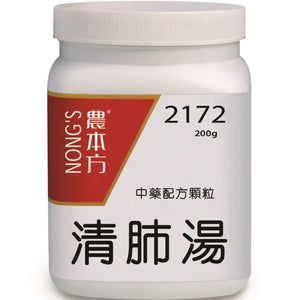
Modern concentrated granules are more convenient. Generally, the individual herbs of Qingfei Tang are each made into concentrated granule form. When taking, the granules for each herb are dissolved in an appropriate amount of boiled water according to the dosage on the product label. For example, Mahuang concentrated granules, Shigao concentrated granules, Xingren concentrated granules, and so on, are each formulated according to the specified dosage, one dose per day, taken in 2–3 divided doses. Modern concentrated granules preserve the efficacy of the traditional formula while being convenient to take, easy to store, and easy to carry, suiting the fast pace of modern life.

IX. Precautions and Contraindications
1. Dietary Precautions
While taking Qingfei Tang, spicy, greasy, and irritating foods such as chili peppers, fried foods, and fresh ginger should be avoided. These foods can readily generate heat and foster fire, aggravating lung heat and being unfavourable for recovery. A light diet should be maintained, with more vegetables and fruits such as pear, lily bulb, and white fungus, which help moisten the lung and stop coughing.
2. Special Populations
Use Qingfei Tang with caution in pregnancy. Since the formula contains Mahuang, which has a certain stimulating effect on uterine smooth muscle, it may adversely affect the fetus. When using Qingfei Tang in children, the dosage should be appropriately adjusted according to age and condition, generally lower than the adult dosage, and taken under a physician's guidance. Elderly individuals with a weak constitution, particularly those with underlying cardiovascular or cerebrovascular disease, should also exercise caution when using Qingfei Tang, paying attention to any response after taking the medicine and seeking prompt medical attention if discomfort occurs.
3. Adverse Reactions
During the course of taking Qingfei Tang, some patients may experience mild gastrointestinal reactions such as diarrhoea or abdominal pain. This may be due to the herbs' cold nature irritating the gastrointestinal tract. If symptoms are mild, they generally resolve gradually as treatment continues. If symptoms are more severe or persist without improvement, the medication should be discontinued promptly and a physician consulted to adjust the treatment plan.

X. Modern Research
1. Pharmacological Research
Qingfei Tang is a classical formula for clearing heat and resolving phlegm, mainly treating lung-heat cough and related conditions; it is prepared by decoction in water, and clinically the composition is often modified according to the specific condition to improve efficacy.
Modern research shows that the Mahuang in Qingfei Tang has actions of calming wheezing and suppressing cough; its active constituent, ephedrine, can relax bronchial smooth muscle, relieving wheezing symptoms. Shigao has an antipyretic action, able to reduce body temperature and relieve fever symptoms. Huangqin and Zhimu have antibacterial and anti-inflammatory actions, able to inhibit pulmonary inflammatory response. Sangbaipi has a diuretic action, able to reduce pulmonary oedema. Gancao has an immune-regulating action, able to strengthen the body's resistance, aiding recovery. These pharmacological actions provide a scientific basis for Qingfei Tang's treatment of lung disorders.
2. Observation of Clinical Efficacy
Extensive clinical research has confirmed that Qingfei Tang has significant efficacy in treating pneumonia, bronchitis, and other lung disorders. Compared with treatment using Western medicine alone, combining it with Qingfei Tang can improve cure rates, shorten the course of illness, and reduce the occurrence of complications. In some clinical observations, patients treated with Qingfei Tang showed markedly shortened resolution times for symptoms such as cough and wheezing, faster resolution of pulmonary inflammation, and improved quality of life. At the same time, Qingfei Tang, when used during the remission phase of chronic lung disease, can also regulate the functional state of the lung and reduce disease recurrence.
3. Research on Dosage Form Improvement
With the development of modern technology, research into improving the dosage forms of Qingfei Tang continues to progress. Besides the modern concentrated granules mentioned above, research is also exploring the development of oral liquid and capsule forms of Qingfei Tang. These new dosage forms, while maintaining the formula's efficacy, are more convenient for patients to take and carry, improving patient medication compliance. For example, Qingfei Tang oral liquid, through optimised extraction processes, makes the active constituents of the herbs easier to absorb, with a better taste, suiting patients of different age groups. In the future, research into further improving the dosage forms of Qingfei Tang will continue, to meet more clinical and patient needs.
Qingfei Tang — Frequently Asked Questions
What are the main actions of Qingfei Tang?
Qingfei Tang clears the lung, drains heat, resolves phlegm, and stops cough, and is commonly used for cough, profuse phlegm, throat discomfort, and respiratory tract inflammation caused by phlegm-heat obstructing the lung.
What is it commonly used for in modern practice?
It is commonly used to support chronic cough, bronchitis, laryngitis, the recovery phase of upper respiratory tract infection, phlegm-heat cough with wheezing, and respiratory tract inflammation.
Is Qingfei Tang suitable for long-term use?
This should be determined according to the cause and pattern of the condition. If cough persists for more than several weeks or recurs repeatedly, a professional evaluation should be sought; long-term self-administration is not recommended.
Who should avoid taking it?
Those with wind-cold cough, chronic cough from lung deficiency, prolonged dry cough without phlegm, and spleen-stomach deficiency-cold should use it with caution. If symptoms persist and worsen, or are accompanied by difficulty breathing, medical attention should be sought promptly.
⚠️ This content is for reference only and does not provide medical advice. Consult a healthcare professional for any health concerns.