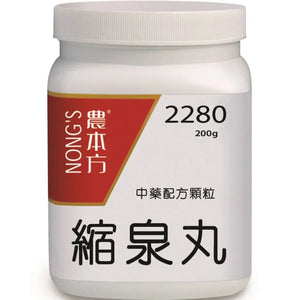
Suo Quan Wan: Classic TCM Formula for Kidney Deficiency Causing Enuresis and Urinary Incontinence

Suo Quan Wan (缩泉丸), known in English as Shrink the Spring Pill, is a classical TCM formula for astringing and warming the Kidney to stop urinary leakage. It is particularly indicated for frequent urination, enuresis (bedwetting), urinary incontinence, and nocturia due to Kidney deficiency failing to contain fluids. In modern clinical practice, Suo Quan Wan is widely used for children with bedwetting and adults with urinary incontinence due to Kidney Qi or Yang deficiency. By warming the deficient Kidney while astringing to contain fluids, it effectively stops urinary leakage and restores bladder control.

Suo Quan Wan: Warming the Kidneys, Consolidating and Astringing, Stopping Enuresis and Reducing Urination, Improving Frequent Urination, Nocturia and Overactive Bladder | HJMEDICAL

I. Origins and History

1. Origins in the Classical Literature

Suo Quan Wan originates from classical Chinese medicine literature, with a long history that can be traced back to the continuous exploration and summarisation by ancient physicians regarding urinary system conditions. Over the long course of Chinese medicine's development, understanding and treatment methods for symptoms such as frequent urination and enuresis gradually grew richer. The emergence of Suo Quan Wan represents the crystallisation of ancient physicians' wisdom, carrying forward the accumulated experience of earlier generations in this field. Traces of content related to Suo Quan Wan can be found in numerous ancient medical texts, and these records laid a solid foundation for its subsequent application and development.

2. Development and Evolution Across the Dynasties

Over time, Suo Quan Wan continued to develop and evolve through the practice and transmission of physicians across the dynasties. Physicians of different dynasties adjusted and optimised the formula according to their own clinical experience. From the selection of herbs to the proportions of dosage, the formula continuously adapted to meet the needs of the times and the realities of clinical practice. Its composition gradually became fixed and more refined, and its therapeutic effect was further verified through practice, making it one of the classical formulas in Chinese medicine for treating frequent urination, enuresis, and related conditions — continuing to play an important role in Chinese medicine clinical application.

Suo Quan Wan: Warming the Kidneys, Consolidating and Astringing, Stopping Enuresis and Reducing Urination, Improving Frequent Urination, Nocturia and Overactive Bladder | HJMEDICAL

II. Herb Composition (Sovereign, Minister, Assistant, Envoy)

1. Chief Herb — Shanyao (Dioscorea Rhizome)

Shanyao is the chief herb in Suo Quan Wan. It is sweet in flavour and neutral in nature, entering the Spleen, Lung, and Kidney channels. It has the actions of strengthening the spleen and benefiting the stomach, and nourishing the kidneys and boosting essence. Within the formula, Shanyao can tonify the qi of the spleen and kidneys, laying the foundation for the entire formula's righteous-supporting and root-consolidating action. Its spleen-strengthening function promotes spleen-stomach transformation and transport, reinforcing the postnatal root and ensuring qi and blood have a source for transformation and generation; its kidney-nourishing and essence-boosting action helps tonify kidney qi and consolidate the lower burner, playing a key role in improving symptoms such as frequent urination and enuresis caused by failure of kidney qi to consolidate.

2. Deputy Herb — Yizhiren (Alpinia Fruit)

Yizhiren is the deputy herb in Suo Quan Wan. It is acrid in flavour and warm in nature, entering the Spleen and Kidney channels. It has the actions of warming the kidneys, consolidating essence and reducing urination, and warming the spleen, opening the appetite and restraining salivation. It can warm kidney yang, reinforcing the kidneys' storing and consolidating function, thereby reducing urinary frequency and incontinence. Simultaneously, its spleen-warming action helps to transform and transport water-dampness, regulating the body's fluid metabolism, assisting the chief herb Shanyao in jointly exerting the therapeutic action, reinforcing the formula's therapeutic effect for conditions caused by dual spleen-kidney deficiency.

3. Assistant Herb — Wuyao (Lindera Root)

Wuyao serves as the assistant herb, acrid in flavour and warm in nature, entering the Lung, Spleen, Kidney, and Bladder channels. It can move qi to relieve pain, and warm the kidneys to disperse cold. Within the formula, Wuyao can unblock qi movement, ensuring that when qi flows, water also flows, helping to improve symptoms such as inhibited urination caused by qi stagnation. Its action of warming the kidneys and dispersing cold acts synergistically with Yizhiren in warming kidney yang, reinforcing the formula's yang-warming and astringing potency, producing good regulatory benefit for frequent urination and enuresis caused by kidney yang insufficiency and bladder deficiency-cold.

4. Envoy Herb — Zhigancao (Honey-fried Licorice Root)

Zhigancao is the envoy herb in Suo Quan Wan, sweet in flavour and neutral in nature, entering the Heart, Lung, Spleen, and Stomach channels. It has the actions of tonifying the spleen and harmonising the stomach, and boosting qi and restoring the pulse. Within the formula, it harmonises all the herbs, allowing Shanyao, Yizhiren, Wuyao, and the others to work synergistically and exert their optimal therapeutic effect. Simultaneously, Zhigancao's spleen-tonifying action also assists Shanyao in reinforcing the spleen-strengthening potency, further consolidating the formula's therapeutic effect and making the entire formula's combination more refined.

Suo Quan Wan: Warming the Kidneys, Consolidating and Astringing, Stopping Enuresis and Reducing Urination, Improving Frequent Urination, Nocturia and Overactive Bladder | HJMEDICAL

III. Pathomechanism, Actions, and Indications

1. Pathomechanism Analysis

The pathomechanism targeted by Suo Quan Wan is primarily dual spleen-kidney deficiency, with failure of the bladder to restrain. The kidneys govern storage and control the two lower orifices; when kidney qi is insufficient, the storage function fails, and the bladder's opening and closing become disordered, leading to symptoms such as frequent urination and enuresis. The spleen governs the transformation and transport of water-dampness; when the spleen is deficient, its transforming and transporting function weakens, fluid metabolism becomes disordered, which may also affect normal bladder function. In addition, factors such as externally-contracted cold pathogen or emotional disturbance can also aggravate the bladder's failure to restrain, thereby giving rise to a series of urinary system symptoms.

2. Elaboration of Actions

Suo Quan Wan has the actions of tonifying the kidneys to reduce urination, and strengthening the spleen and boosting qi. Through tonifying spleen-kidney qi, reinforcing the kidneys' storing and consolidating capacity and the spleen's transforming and transporting function, it achieves the goals of reducing urinary frequency and controlling enuresis. Its kidney-tonifying action can supplement kidney qi, allowing the bladder's opening and closing to occur appropriately; its spleen-strengthening action can regulate water-dampness metabolism, improving overall physiological function, fundamentally regulating urinary system problems caused by dual spleen-kidney deficiency.

3. Indications

Suo Quan Wan is primarily used to treat childhood enuresis and adult frequent urination, among other conditions. It produces good therapeutic results for nocturnal enuresis or daytime frequent urination in children caused by kidney qi insufficiency and spleen-lung qi deficiency. In adults, for frequent urination, urgency, and urinary incontinence caused by spleen-kidney weakness and bladder deficiency-cold, Suo Quan Wan can also perform a degree of regulatory action. It is particularly suited to patients with no marked organic pathology, whose primary presentation is functional frequent urination or enuresis.

Suo Quan Wan: Warming the Kidneys, Consolidating and Astringing, Stopping Enuresis and Reducing Urination, Improving Frequent Urination, Nocturia and Overactive Bladder | HJMEDICAL

IV. Formula Analysis

1. The Principle of Treating the Spleen and Kidneys Together

Suo Quan Wan adopts the principle of treating the spleen and kidneys together. Within the formula, Shanyao strengthens the spleen and benefits the stomach, while Yizhiren warms the kidneys and consolidates essence; one spleen-focused, one kidney-focused, the two work together, jointly tonifying spleen-kidney qi. Through reinforcing spleen-kidney function, qi and blood within the body gain a source for transformation and generation, kidney qi becomes sufficient, thereby improving the various symptoms caused by spleen-kidney weakness. This method of treating the spleen and kidneys together accords with the Chinese medicine concepts of holism and treatment based on pattern differentiation, fundamentally regulating the body's physiological function to achieve the goal of treating disease.

2. The Action of Warming Yang and Astringing

Within the formula, Yizhiren and Wuyao warm the kidneys and disperse cold, possessing the action of warming yang and astringing. Warming yang can supplement kidney yang, restoring normal kidney function and reinforcing the storing and consolidating potency; astringing can constrain and consolidate the urine, reducing the occurrence of symptoms such as frequent urination and enuresis. Zhigancao harmonises all the herbs, assisting the yang-warming and astringing herbs in better exerting their effects, allowing the entire formula's yang-warming and astringing efficacy to be fully realised, effectively regulating the pathomechanism of bladder failure to restrain.

3. Synergistic Herb Action

The four herbs Shanyao, Yizhiren, Wuyao, and Zhigancao act synergistically, performing a mutually reinforcing role. Shanyao's spleen-strengthening and stomach-benefiting action echoes Yizhiren's kidney-warming and essence-consolidating action, jointly regulating the spleen and kidneys; Wuyao's qi-moving and cold-dispersing action assists the yang-warming herbs in better exerting their effects, promoting free flow of qi movement and benefiting fluid metabolism; Zhigancao harmonises all the herbs, making the interactions among the various herbs more coordinated, reinforcing the formula's overall therapeutic effect, thereby achieving the goals of tonifying the kidneys to reduce urination and strengthening the spleen to boost qi.

Suo Quan Wan: Warming the Kidneys, Consolidating and Astringing, Stopping Enuresis and Reducing Urination, Improving Frequent Urination, Nocturia and Overactive Bladder | HJMEDICAL

V. Comparison with Related Formulas

1. Comparison with Sangpiaoxiao San

Sangpiaoxiao San has the primary actions of regulating and tonifying the heart and kidneys, and astringing essence to stop emission, focusing on treating frequent urination, enuresis, and spermatorrhoea caused by dual heart-kidney deficiency with failure of water and fire to communicate. Its herb composition centres primarily on tonifying the kidneys, astringing essence, and nourishing the heart to calm the spirit. Suo Quan Wan, by contrast, primarily targets dual spleen-kidney deficiency with bladder failure to restrain, focusing on warming and tonifying the spleen and kidneys, and astringing and consolidating the bladder. The two differ in their pathomechanism focus and herb emphasis; the appropriate formula should be selected according to the patient's specific symptoms and pattern-differentiation findings in clinical application.

2. Differences from Jin Gui Shenqi Wan

Jin Gui Shenqi Wan focuses primarily on tonifying the kidneys and assisting yang, suited to symptoms such as soreness and weakness of the lumbar region and knees, aversion to cold with cold limbs, and frequent urination caused by kidney yang insufficiency. Its herb composition is relatively complex, focusing on warming and tonifying kidney yang while also attending to kidney yin. Suo Quan Wan, by contrast, places greater emphasis on treating the spleen and kidneys together, with strengthening the spleen and boosting qi, and tonifying the kidneys to reduce urination, as its primary actions. For patients with simple kidney yang insufficiency accompanied by marked symptoms of spleen-kidney weakness, Jin Gui Shenqi Wan may be more appropriate; for patients with frequent urination and enuresis primarily caused by dual spleen-kidney deficiency with bladder failure to restrain, Suo Quan Wan is more suitable.

Suo Quan Wan: Warming the Kidneys, Consolidating and Astringing, Stopping Enuresis and Reducing Urination, Improving Frequent Urination, Nocturia and Overactive Bladder | HJMEDICAL

VI. Clinical Applications

1. Paediatric Clinical Application

In paediatrics, Suo Quan Wan is commonly used to treat childhood enuresis. Children's kidney qi is not yet replete; if postnatal feeding is inappropriate, or if weakened by prolonged illness, this readily leads to dual spleen-kidney deficiency with bladder failure to restrain, giving rise to enuresis. In clinical application, the dosage is adjusted according to factors such as the child's age and constitution. Generally speaking, the dosage may be appropriately reduced for children aged 3 to 5, combined with dietary regulation and psychological guidance, helping the child develop good urination habits and improving the therapeutic effect.

2. Adult Clinical Application

If adult symptoms such as frequent urination and urinary incontinence are caused by spleen-kidney weakness and bladder deficiency-cold, Suo Quan Wan may also be used. For example, in some middle-aged and elderly individuals, as spleen-kidney function gradually declines with age, conditions such as frequent nocturnal urination and urinary incontinence appear; taking Suo Quan Wan can effectively improve these symptoms. For adults engaged in prolonged mental labour, lacking exercise, and with a relatively weak constitution, Suo Quan Wan also produces good regulatory effects for urinary system problems caused by spleen-kidney insufficiency.

3. Expansion of Special Indications

Beyond the common conditions of frequent urination and enuresis, Suo Quan Wan also has applications in certain special circumstances. For example, some female patients develop symptoms such as frequent urination and incontinence postpartum or after experiencing a major illness; if the pattern is identified as dual spleen-kidney deficiency, use of Suo Quan Wan for regulation may also be considered. In addition, for certain chronic urinary system infections caused by spleen-kidney weakness, combining Suo Quan Wan with anti-infective treatment can strengthen the body's resistance, improve symptoms, and reduce the likelihood of recurrence.

Suo Quan Wan: Warming the Kidneys, Consolidating and Astringing, Stopping Enuresis and Reducing Urination, Improving Frequent Urination, Nocturia and Overactive Bladder | HJMEDICAL

VII. Clinical Modifications

1. Modifications for Concurrent Cold Pattern

If the patient also presents with pronounced cold signs — such as aversion to cold with cold limbs and a pale complexion — Rougui (Cinnamon Bark) and Ganjiang (Dry Ginger) may be added to the base formula to warm yang and disperse cold. Rougui can supplement fire and assist yang, and disperse cold to relieve pain; Ganjiang can warm the middle and disperse cold, and restore yang to unblock the vessels, reinforcing the formula's yang-warming potency, more effectively improving symptoms caused by cold pathogen.

2. Management of Concurrent Damp-Heat Pattern

When the patient is accompanied by damp-heat symptoms — such as frequent, urgent, painful urination, and yellow-reddish urine — the warm-dry herbs should be reduced, with heat-clearing and dampness-disinhibiting herbs added instead. For example, Cheqianzi (Plantain Seed) and Huashi (Talc) may be added; Cheqianzi can clear heat, promote urination, and unblock painful strangury, while Huashi can disinhibit water, unblock painful strangury, and clear heat to relieve summer-heat — allowing the formula to both clear heat and disinhibit dampness while still attending to the spleen and kidneys, avoiding the warm-dry herbs from assisting heat and generating dampness, which would aggravate the condition.

3. Principle of Modification According to Symptoms

In clinical application, modifications may also be made according to the patient's specific symptoms. If accompanied by soreness and weakness of the lumbar region and knees, Duzhong (Eucommia Bark) and Niuxi (Achyranthes Root) may be added to tonify the liver and kidneys and strengthen the sinews and bones; if accompanied by insomnia with profuse dreaming, Suanzaoren (Ziziphus Seed) and Yuanzhi (Polygala Root) may be added to nourish the heart and calm the spirit; if accompanied by poor appetite, fried Maiya (Barley Sprout) and Shenqu (Medicated Leaven) may be added to promote digestion and harmonise the stomach. In short, the formula should be flexibly adjusted according to the patient's overall condition to achieve the optimal therapeutic effect.

Suo Quan Wan: Warming the Kidneys, Consolidating and Astringing, Stopping Enuresis and Reducing Urination, Improving Frequent Urination, Nocturia and Overactive Bladder | HJMEDICAL

VIII. Dosage and Preparation (Traditional Method and Modern Concentrated Granules)

1. Traditional Decoction Method

The traditional method is to decoct the herb decoction pieces of Suo Quan Wan and take as a liquid. Generally, appropriate amounts of Shanyao, Yizhiren, Wuyao, and Zhigancao are taken, soaked in water, and then decocted slowly over a low flame. The decocted liquid is taken in two administrations, once in the morning and once in the evening. The specific dosage should be determined by a physician according to factors such as the patient's age and condition. This decoction method allows the active constituents of the herbs to be fully realised, but is relatively laborious, requiring the patient to prepare the herbs and decoct them independently.

Traditional Decoction Method for Suo Quan Wan

An introduction to the herb composition, soaking details, and traditional administration method of slow decoction over a low flame for the traditional Chinese herbal formula Suo Quan Wan (decoction usage). This method allows the active constituents of the herbs to be fully realised.

【Traditional Combination and Herb Composition】
  • Shanyao (Dioscorea Rhizome): appropriate amount (as directed by physician)
  • Yizhiren (Alpinia Fruit): appropriate amount (as directed by physician)
  • Wuyao (Lindera Root): appropriate amount (as directed by physician)
  • Zhigancao (Honey-fried Licorice Root): appropriate amount (as directed by physician)
  • Water: appropriate amount (for soaking and decoction)

⚠️ Note: The specific dosage must be determined by a qualified physician according to factors such as the patient's age and condition.

Step 1: Soaking the Herbs Prepare independently the herb decoction pieces prescribed by the physician. Place the Shanyao, Yizhiren, Wuyao, and Zhigancao into the decoction vessel, add an appropriate amount of clean water, and soak, allowing the herbs to fully absorb the water.
Step 2: Slow Decoction Over a Low Flame Once soaking is complete, formally begin heating. First bring to the boil over a high flame, then switch to a low flame for slow decoction, fully extracting and realising the active constituents of the herbs through the traditional decoction method.
Step 3: Divided Morning and Evening Administration Divide the strained decoction liquid evenly into two portions. Take in two administrations daily, once in the morning and once in the evening.

Tip: Although the traditional manual decoction process is relatively laborious, it is conducive to the release of the herb's active constituents — please be patient and follow the proper method.

2. Modern Concentrated Granule Dosage Form

A modern concentrated granule dosage form of Suo Quan Wan is available today, making administration more convenient. Patients need only follow the product instructions or medical guidance and dissolve in boiled water to take. The concentrated granule form preserves the therapeutic effect of the original formula while offering accurate dosing, and is convenient to carry and take. For people with fast-paced lifestyles, particularly office workers and students, the concentrated granule form provides a more convenient medication option.

Suo Quan Wan: Warming the Kidneys, Consolidating and Astringing, Stopping Enuresis and Reducing Urination, Improving Frequent Urination, Nocturia and Overactive Bladder | HJMEDICAL

IX. Precautions and Contraindications

1. Dietary Restrictions

During the course of taking Suo Quan Wan, raw, cold, greasy, and spicy irritating foods should be avoided. Raw, cold foods readily damage spleen-stomach yang qi; greasy foods are difficult to digest and may add burden to the spleen and stomach; spicy foods may assist fire and generate heat, affecting the herb's therapeutic efficacy. For example, ice cream, fried foods, and chilli peppers should all be avoided as far as possible, to prevent compromising the therapeutic effect.

2. Precautions for Special Populations

Pregnant women should use Suo Quan Wan with caution, because the herbs within the formula are mostly warm-hot in nature and may have adverse effects on the fetus. Paediatric dosages must be strictly adjusted according to age and constitution, with attention paid to observing the response after administration. If elderly patients have multiple concurrent chronic conditions, they should inform their physician of their medical history and current medications when taking Suo Quan Wan, to avoid drug interactions.

3. Side Effects of Long-Term Use

During the course of taking Suo Quan Wan, patients should closely monitor changes in their own symptoms. If symptoms such as frequent urination and enuresis persist without improvement or worsen, medical attention should be sought promptly to reassess the condition and adjust the treatment plan. Attention should also be paid to observing whether adverse drug reactions occur — such as dry mouth, constipation, or epigastric discomfort — and any abnormalities should be promptly communicated to the physician.

Suo Quan Wan: Warming the Kidneys, Consolidating and Astringing, Stopping Enuresis and Reducing Urination, Improving Frequent Urination, Nocturia and Overactive Bladder | HJMEDICAL

X. Modern Research

1. Pharmacological Action Research

Suo Quan Wan, as a Chinese patent medicine, has primary constituents including Yizhiren, Wuyao, and Shanyao, possessing the action of warming the kidneys and astringing, primarily indicated for enuresis and frequent urination caused by kidney yang deficiency. Administration should be under medical guidance; this product is best taken before meals, and attention should be paid to side effects during the course of medication, avoiding prolonged use.

Modern research has demonstrated that Suo Quan Wan possesses multiple pharmacological actions. The herb constituents it contains have a degree of regulatory action on the urinary system, capable of improving the function of the bladder detrusor muscle and urethral sphincter, reinforcing the bladder's storage and voiding capacity. Simultaneously, it also has a degree of influence on the nervous system, capable of regulating neurotransmitter release, improving symptoms such as frequent urination and enuresis caused by nervous system dysfunction. In addition, Suo Quan Wan also has a degree of anti-inflammatory and antibacterial action, helping to prevent urinary system infections.

2. Clinical Efficacy Verification

Extensive clinical research has verified the efficacy of Suo Quan Wan. In treating childhood enuresis, the effectiveness rate is relatively high, significantly reducing the frequency of enuresis and improving the child's sleep quality and quality of life. For adult conditions such as frequent urination and urinary incontinence, it can also markedly improve symptoms and enhance patients' comfort in daily life. Some research has also found that Suo Quan Wan combined with other treatment methods — such as behavioural therapy and physical therapy — can further improve treatment outcomes and shorten the course of treatment.

3. Exploration of Dosage Form Improvement

With the development of modern science and technology, exploration into improving the dosage form of Suo Quan Wan has been ongoing. Beyond the concentrated granule form mentioned above, research has also attempted to produce it as new dosage forms such as capsules and dropping pills. These new dosage forms, while maintaining the herb's therapeutic effect, further improve the herb's stability and convenience of administration, providing patients with more options. Simultaneously, exploration is also underway into optimising the herb extraction process to improve the content of active constituents and reinforce the therapeutic effect of Suo Quan Wan.

Suo Quan Wan — Frequently Asked Questions

Q1: What are the therapeutic actions of Suo Quan Wan?

Suo Quan Wan has the actions of warming the kidneys and dispelling cold, consolidating and astringing to stop enuresis, and regulating bladder function. It is primarily used for frequent urination, increased nocturia, clear and copious urination, and enuresis caused by kidney qi insufficiency and bladder failure to restrain.

Q2: What modern conditions is Suo Quan Wan used for?

In modern TCM clinical practice, it is commonly used for overactive bladder (OAB), nocturia, urinary incontinence, childhood enuresis, age-related frequent urination, and frequent urination symptoms associated with benign prostatic hyperplasia, among individuals whose presentation corresponds to the pattern of kidney qi insufficiency.

Q3: Is Suo Quan Wan suitable for frequent nocturia and urgency?

For those who long experience increased nocturnal urination frequency, urgency, frequent urination with a small volume each time, accompanied by manifestations of kidney qi insufficiency such as soreness and weakness of the lumbar region and knees, and aversion to cold, TCM practitioners commonly apply Suo Quan Wan through pattern differentiation as adjunctive treatment.

Q4: Who should not take Suo Quan Wan?

Those with downward pouring of damp-heat, an acute phase of urinary tract infection, painful urination with haematuria, or an excess-heat pattern should generally not use Suo Quan Wan. If fever, a burning sensation on urination, or haematuria occur, formal medical examination should be sought promptly.

⚠️ This content is for reference only and does not provide medical advice. Consult a healthcare professional for any health concerns.

Login

Forgot your password?

Don't have an account yet?
Create account

Suo Quan Wan: Classic TCM Formula for Kidney Deficiency Causing Enuresis and Urinary Incontinence