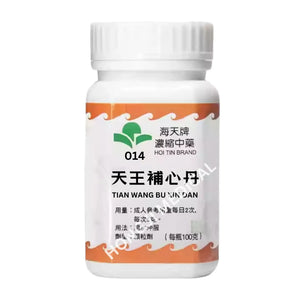
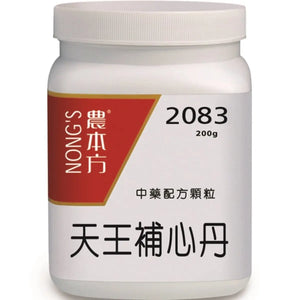
Tian Wang Bu Xin Dan: The Classic TCM Formula for Insomnia, Palpitations and Heart-Kidney Yin Deficiency

In today's fast-paced world, more and more people are plagued by a restless mind: tossing and turning at night, unable to fall asleep, and even when they do, troubled by frequent dreams and light sleep — waking exhausted. By day there is heart palpitation and anxiety, inability to sit still, dizziness and shortness of breath with the slightest exertion. Memory grows increasingly poor, with forgetfulness and poor concentration. Others experience dry mouth and throat, feverish palms and soles, mouth sores, and a constant sense of irritability and mental unrest that is not obviously "heat," sometimes accompanied by nocturnal emission and constipation.

From a TCM perspective, the root cause of these complaints is not simply "insomnia" or "heat flaring up," but rather heart-kidney yin-blood deficiency with deficiency fire disturbing the mind (心肾阴血亏虚、虚火内扰) — prolonged overthinking, sleep deprivation, and overexertion deplete the heart-kidney yin-blood; the mind loses its nourishment, deficiency fire arises internally and harasses the spirit, giving rise to a cascade of unsettled shen (spirit) symptoms. The formula discussed in this article — Tianwang Buxin Dan (Celestial Emperor Heart-Supplementing Elixir) — is a classical prescription for nourishing yin, replenishing blood, and calming the mind, sourced from the Ming-dynasty text Jiao Zhu Fu Ren Liang Fang. Validated over centuries of clinical practice, its combination is exquisite and its properties are moderate: it simultaneously replenishes heart-kidney yin-blood to nourish the mind, clears deficiency fire, and quiets the spirit. It is a time-tested formula for heart-kidney yin deficiency with an unsettled mind, and one of the most widely used Chinese patent medicines today for insomnia and palpitations.

This blog will fully unpack Tianwang Buxin Dan — from its historical origins, standard composition, combination logic, core effects, suitable populations, contraindications, dosage, and clinical modifications to real case examples — with special emphasis on the safety of formulations containing Zhusha (Cinnabar). The aim is to help you understand its therapeutic principles, correctly assess whether it is appropriate for you, and keep this as a reference for protecting your mental calm and freeing yourself from the burden of insomnia and palpitations.

Tianwang Buxin Dan: Formula for Insomnia, Palpitations & Forgetfulness | HJMEDICAL

I. Origins of Tianwang Buxin Dan: A Ming-Dynasty Formula for Calming the Mind

1. Origins and the Meaning Behind the Name

Tianwang Buxin Dan was first recorded in Jiao Zhu Fu Ren Liang Fang compiled by the Ming-dynasty physician Xue Ji, and was subsequently included in multiple classical medical texts such as She Sheng Mi Pou and Dan Xi Xin Fa. It stands as the representative formula in the "tonifying and calming shen" category of TCM spirit-calming medicines. The ancients held that "the heart is the sovereign organ, from which the spirit-mind originates"; the heart governs the spirit, and when heart yin-blood becomes deficient, the spirit loses nourishment, giving rise to insomnia, palpitations, and other complaints. This formula takes "tonifying the heart" (补心) as its name — implying the ability to nourish heart blood and supplement the heart spirit, as if building a protective shield for the mind, safeguarding its tranquillity — hence "Tianwang Buxin Dan."

As a classical formula for nourishing yin and calming shen, Tianwang Buxin Dan has been extolled by generations of physicians over centuries of clinical practice. Its combination philosophy fully embodies the TCM principle of "treating the root cause of disease" — rather than blindly sedating the mind, it fundamentally replenishes heart-kidney yin-blood and clears deficiency fire, achieving treatment of both branch and root. Today, Tianwang Buxin Dan has been developed into various patent medicine forms including pills and capsules, widely applied in clinical practice and daily management as a go-to remedy for insomnia, palpitations, and forgetfulness — especially suited for those who habitually stay up late or are under heavy mental stress.

2. Core Pathomechanism: Heart-Kidney Yin-Blood Deficiency with Deficiency Fire Disturbing the Mind

The core pathomechanism of Tianwang Buxin Dan is "heart-kidney yin-blood deficiency with deficiency fire disturbing the mind." According to TCM, the heart governs blood and houses the spirit; the kidney governs essence and generates marrow; heart and kidney share the same origin, with essence and blood mutually engendering each other. Prolonged overthinking, habitual late nights, chronic illness, advancing age, or emotional dysregulation all deplete heart-kidney yin-blood, depriving the mind-spirit of nourishment and leading to palpitations, forgetfulness, and insomnia. Simultaneously, insufficient yin-blood cannot restrain yang qi, generating internal deficiency fire; this fire harasses the mind-spirit, worsening heart vexation, insomnia, and profuse dreaming, while also manifesting as feverish palms and soles, oral ulcers, and constipation — all signs of yin deficiency with internal heat.

In simple terms, the therapeutic core of Tianwang Buxin Dan is "nourishing yin and replenishing blood to treat the root, clearing heat and calming shen to treat the branch" — by supplementing heart-kidney yin-blood to nourish the mind-spirit, it resolves the fundamental cause of mental unrest; at the same time, clearing the internally generated deficiency fire relieves surface symptoms such as heart vexation and insomnia, harmonising heart and kidney and calming the mind. This is what sets it apart from other spirit-calming formulas. It must be noted that it targets "deficiency fire," not ordinary "excess fire" — taking it indiscriminately can produce the opposite of the intended effect.


Tianwang Buxin Dan: Formula for Insomnia, Palpitations & Forgetfulness | HJMEDICAL

II. The Twelve-Herb Formula: Composition, Synergy, and Logic

The combination of Tianwang Buxin Dan is a model of TCM "tonifying and calming shen" therapy. It is composed of twelve herbs — Shengdihuang (Rehmannia), Maidong (Ophiopogon), Tiandong (Asparagus), Suanzaoren (Ziziphus Seed, dry-fried), Baiziren (Platycladus Seed), Danggui (Angelica, wine-soaked), Renshen (Ginseng), Danshen (Salvia), Xuanshen (Scrophularia), Fuling (Poria), Yuanzhi (Polygala), and Jiegeng (Platycodon) — with some versions coating the pills in Zhusha (Cinnabar). The formula strictly follows the "sovereign, minister, assistant, and envoy" combination principle, balancing yin-nourishing blood-replenishing with heat-clearing and mind-calming — tonifying without stagnation, clearing without damage — simultaneously nourishing heart-kidney yin-blood and calming the mind. Twelve herbs, yet displaying consummate TCM prescribing wisdom. Below is a herb-by-herb breakdown.

(I) Standard Composition and Dosage

1. Classic composition (pill/decoction): Shengdihuang 120g, Maidong 30g, Tiandong 30g, Suanzaoren (dry-fried) 30g, Baiziren 30g, Danggui (wine-soaked) 30g, Renshen 15g, Danshen 15g, Xuanshen 15g, Fuling 15g, Yuanzhi 15g, Jiegeng 15g; some versions coat the pills with Zhusha 9–15g. This is the classic dosage from Jiao Zhu Fu Ren Liang Fang; the core ratio reflects the principle of "prioritising yin-nourishment and blood-replenishment, with shen-calming as secondary."

2. Modern common dosage (decoction): Reduce proportionally from the original formula. Generally Shengdihuang 30–60g, Maidong 10–15g, Tiandong 10–15g, other herbs 6–15g as appropriate, adjusted to constitution and symptom severity. For the patent medicine (Tianwang Buxin Wan), follow the product insert; generally adults take 1 pill (approximately 9g) twice daily; children take half the adult dose; or as directed by a physician.

3. Key points: The formula contains many yin-nourishing herbs with a cool nature; those with spleen-stomach weakness and loose stools should use it with caution. Some preparations contain Zhusha (Cinnabar), which is toxic; dosage and treatment duration must be strictly controlled and it must not be taken long-term.

(II) Herb-by-Herb Analysis

1. Chief Herb: Shengdihuang — Nourishing Yin and Replenishing Blood

Shengdihuang (Fresh Rehmannia Root) is sweet, slightly bitter, and cold; it enters the heart, liver, and kidney channels and is the core sovereign herb of Tianwang Buxin Dan, with the primary actions of nourishing yin and replenishing blood, clearing heat and cooling blood. Sweet and moistening in nature, it nourishes the heart's blood and supplements the kidney's yin — simultaneously addressing the root of yin-blood deficiency and clearing the internally generated deficiency fire, relieving symptoms of deficiency heat. It is the premier herb for nourishing yin and replenishing blood.

The large dose of Shengdihuang (the classic formula uses 120g) underscores the centrality of "yin-nourishment and blood-replenishment," laying the yin-supplementing foundation for the whole formula, so that the mind-spirit receives adequate yin-blood nourishment, resolving palpitations and insomnia at their root. Modern pharmacological research shows that the Rehmannia polysaccharides in Shengdihuang have antioxidant, endocrine-regulating, and sedative-calming effects, improving insomnia and fatigue caused by yin-blood deficiency while also regulating metabolism to assist in clearing deficiency fire.

2. Deputy Herbs: Maidong + Tiandong + Suanzaoren + Baiziren + Danggui — Assisting Yin-Nourishment and Calming the Mind

These five herbs serve as deputy herbs, synergistically assisting Shengdihuang to enhance yin-nourishment, blood-replenishment, heart-nourishing, and mind-calming effects, while also addressing heat-clearing and dryness-moistening for a more comprehensive therapeutic approach.

Maidong (Ophiopogon) and Tiandong (Asparagus) are both sweet, cold, and enter the heart, lung, and kidney channels; their core actions are nourishing yin, clearing heat, and generating fluids. They assist Shengdihuang in nourishing yin-blood while clearing deficiency fire and relieving dry mouth, dry throat, and constipation due to yin deficiency with internal heat. Maidong focuses on nourishing heart yin, while Tiandong focuses on nourishing kidney yin — together they achieve simultaneous heart-kidney tonification. Suanzaoren (Ziziphus Seed) and Baiziren (Platycladus Seed) form the classic heart-nourishing and mind-calming pair: Suanzaoren (sweet, sour, neutral) excels at nourishing the heart and liver to calm the mind, relieving insomnia, profuse dreams, and palpitations; Baiziren (sweet, neutral) excels at nourishing the heart to calm the mind and moistening the intestines, both assisting with spirit-calming and easing the constipation caused by yin deficiency. Danggui (Angelica Root, sweet, acrid, warm) enters the heart, liver, and spleen channels; its core action is nourishing blood and moistening dryness, assisting Shengdihuang in nourishing heart blood to provide the mind-spirit with even richer nourishment, while also relieving the dizziness and fatigue caused by blood deficiency.

3. Adjuvant Herbs: Renshen + Danshen + Xuanshen + Fuling + Yuanzhi — Tonifying Qi, Activating Blood, and Calming the Mind

These five herbs serve as adjuvant herbs: they reinforce the formula's mind-calming effects, moderate the cloying nature of the yin-nourishing herbs to prevent stagnation, and concurrently tonify qi, activate blood, and clear heat, making the overall formula more balanced.

Renshen (Ginseng, sweet, slightly bitter, slightly warm) enters the spleen, lung, and heart channels; its core actions are tonifying qi, strengthening the spleen, calming the mind, and enhancing intelligence — tonifying qi to generate blood, assisting yin-nourishment and blood-replenishment while enhancing immunity and relieving mental fatigue and forgetfulness. Danshen (Salvia, bitter, slightly cold) enters the heart and liver channels; its core actions are clearing heat from the heart and activating blood circulation — simultaneously assisting in clearing deficiency fire and calming the mind while moving blood and resolving stasis, preventing qi-blood stagnation from excessive yin-nourishment, achieving "tonifying without stagnation." Xuanshen (Scrophularia, sweet, bitter, salty, cold) enters the lung, stomach, and kidney channels; its core action is nourishing yin and directing fire downward — assisting in clearing deficiency fire of the kidney channel, relieving feverish palms and soles and oral ulcers. Fuling (Poria, sweet, bland, neutral) enters the spleen, kidney, and heart channels; its core actions are promoting urination to drain dampness, strengthening the spleen, and calming the mind — simultaneously assisting in quieting the mind and strengthening the spleen to eliminate dampness, moderating the cloying nature of Shengdihuang and other yin-nourishing herbs to protect the spleen and stomach. Yuanzhi (Polygala, bitter, acrid, warm) enters the heart, kidney, and lung channels; its core actions are calming the mind and enhancing intelligence, resolving phlegm and opening the orifices — assisting in quieting the mind and calming the spirit, relieving insomnia, forgetfulness, and palpitations, while also communicating between heart and kidney to harmonise them, enhancing the calming effect.

4. Envoy Herb: Jiegeng — Carrying the Medicines Upward

Jiegeng (Platycodon, acrid, bitter, neutral) enters the lung channel; its core actions are diffusing the lung, benefiting the throat, and resolving phlegm. As the envoy herb, its pivotal role is "carrying the medicines upward." Since the core function of Tianwang Buxin Dan is to supplement the heart and calm the spirit, Jiegeng guides the medicinal force of the entire formula upward to travel directly to the heart channel, allowing the herbs to more effectively nourish the mind-spirit and quiet the shen. At the same time, Jiegeng harmonises all the herbs and moderates the cloying nature of the yin-nourishing medicines, making the overall formula more balanced and synergistic.

(III) Overall Formula Summary

The combination logic of Tianwang Buxin Dan is clear: the twelve herbs act synergistically to form a complete therapeutic system of "nourish yin, replenish blood, clear heat, and calm shen." Shengdihuang forms the core — nourishing yin and replenishing blood, clearing heat and cooling blood, addressing the root of heart-kidney yin-blood deficiency. The five deputy herbs (Maidong, Tiandong, Suanzaoren, Baiziren, Danggui) assist in nourishing yin-blood and calming the mind to reinforce the core effects. The five adjuvant herbs (Renshen, Danshen, Xuanshen, Fuling, Yuanzhi) tonify qi, activate blood, calm the mind, and moderate the cloying quality while caring for the spleen and stomach. Jiegeng serves as the envoy — carrying medicines upward and harmonising all herbs to direct the medicinal force directly to the heart channel.

As the formula mnemonic states: "Buxin Dan uses Bai and Zao Ren, Er Dong Shengdi and Danggui Shen; Three Shen, Jiegeng, Zhusha, and Wuwei, Yuanzhi and Fuling together nourish shen." This precisely captures the combination essence and core actions of Tianwang Buxin Dan. The combination core is "treating both branch and root" — nourishing yin and replenishing blood to treat the root, clearing heat and calming shen to treat the branch — addressing both heart and kidney, tonifying without stagnation, clearing without damage. It simultaneously nourishes heart-kidney yin-blood, clears deficiency fire, and quiets the mind-spirit, making it suitable for the various unsettled shen symptoms caused by heart-kidney yin-blood deficiency with deficiency fire disturbing the mind.


Tianwang Buxin Dan: Formula for Insomnia, Palpitations & Forgetfulness | HJMEDICAL

III. Core Actions and Clinical Applications

Based on its combination logic, the core actions of Tianwang Buxin Dan can be summarised as nourishing yin and replenishing blood, tonifying the heart and calming shen, and clearing heat and directing fire downward. Its core clinical indication is "heart-kidney yin-blood deficiency with deficiency fire disturbing the mind" — i.e., insufficient heart-kidney yin-blood generating internal deficiency fire, giving rise to various unsettled shen and yin-deficiency internal heat symptoms. These are divided below into traditional indications and modern applications for easy self-reference.

1. Traditional Indications

These are the original uses of Tianwang Buxin Dan, clearly recorded in classical texts such as Jiao Zhu Fu Ren Liang Fang, and remain the core direction of TCM clinical application today. They primarily target the following conditions caused by heart-kidney yin-blood deficiency with deficiency fire disturbing the mind:

Unsettled shen pattern: palpitations and fearful throbbing, deficiency vexation with insomnia, profuse dreams with easy waking, mental fatigue and forgetfulness — mostly caused by heart-kidney yin-blood deficiency failing to nourish the mind-spirit.

Yin deficiency with internal heat pattern: feverish palms and soles, dry mouth and throat, oral ulcers, constipation — mostly caused by yin deficiency generating heat with deficiency fire disturbing internally.

Other manifestations: nocturnal emission, dizziness and tinnitus, malar flush and night sweats — mostly caused by kidney yin deficiency with deficiency fire disturbing the essence chamber or mind-spirit. A red tongue with scanty coating and a thin rapid pulse are the characteristic clinical signs.

2. Modern Applications

With the changes in modern lifestyle — habitual late nights, heavy mental stress, and excessive overthinking — heart-kidney yin-blood deficiency is increasingly prevalent. The clinical scope of Tianwang Buxin Dan has expanded accordingly, especially benefiting chronic night-owl professionals, perimenopausal women, and the elderly:

Neurological disorders: neurasthenia, anxiety, and depression presenting with insomnia, profuse dreams, palpitations, forgetfulness, and heart vexation attributable to heart-kidney yin-blood deficiency with deficiency fire disturbing the mind — symptoms effectively relieved.

Cardiovascular conditions: coronary heart disease and cardiac arrhythmia presenting with palpitations, chest tightness, and dizziness attributable to heart-kidney yin-blood deficiency — may be used as an adjunct therapy.

ENT and oral conditions: recurrent aphthous ulcers and chronic pharyngitis presenting with mouth sores and dry, painful throat attributable to yin deficiency with internal heat — can assist in clearing heat and directing fire downward.

Sub-health management: those who habitually stay up late, are under heavy mental stress, or overthink excessively and present with insomnia, palpitations, forgetfulness, dry mouth and throat, and feverish palms due to heart-kidney yin-blood deficiency — suitable for daily management.

Special populations: perimenopausal women experiencing insomnia, palpitations, irritability, and hot flushes/night sweats due to hormonal changes attributable to heart-kidney yin-blood deficiency; elderly individuals experiencing insomnia, forgetfulness, and dizziness due to age-related yin-blood insufficiency — may use under physician guidance.

Other conditions: functional constipation (attributable to yin deficiency with fluid insufficiency) and nocturnal emission (attributable to kidney yin deficiency with deficiency fire disturbing the essence) may also be treated with Tianwang Buxin Dan after proper pattern differentiation.

3. Self-Assessment Checklist

To assess whether Tianwang Buxin Dan is appropriate for you, check the following indicators. Matching 3 or more strongly suggests heart-kidney yin-blood deficiency with deficiency fire disturbing the mind, and the formula may be used under qualified TCM physician guidance:

Constitution: yin-deficient constitution — chronically dry mouth and throat, feverish palms and soles, dislikes acrid and warm foods, red and slightly slender tongue with scanty coating, thin rapid pulse.

Core symptoms: insomnia with profuse dreams, difficulty falling asleep or easy waking, inability to return to sleep after waking — accompanied by palpitations, forgetfulness, and heart vexation.

Yin deficiency signs: dry mouth and throat, oral ulcers, constipation; afternoon or nocturnal flushing, malar redness, and night sweats.

Other features: dizziness and tinnitus, mental fatigue, poor concentration; menopausal hot flushes in women; nocturnal emission in men.

Lifestyle history: habitual late nights, heavy mental stress, excessive overthinking, lack of exercise, or chronic illness and advancing age.

IV. Contraindications and Precautions

Tianwang Buxin Dan, though an excellent formula for nourishing yin and calming shen, is not appropriate for everyone. Its core mechanism is "nourishing yin-blood and clearing heat to calm the spirit"; the formula is cool in nature, and some preparations contain Zhusha (Cinnabar), which is toxic. Safety in use is paramount. The following groups must never use this formula without medical supervision.

1. Absolute Contraindications

Special contraindications for Cinnabar-containing preparations: strictly prohibited in pregnant women, breastfeeding women, children, and those with impaired liver or kidney function. Mercury in Cinnabar is metabolised slowly in the body; prolonged or excessive use causes mercury accumulation, damaging liver and kidney function. Use during pregnancy may harm the foetus; children have immature liver-kidney function and face even higher risk.

Allergy to formula ingredients: those allergic to Shengdihuang, Maidong, Renshen, or any component may develop skin itching, rash, nausea, or vomiting. Strictly contraindicated.

Phlegm-heat harassing the heart: presenting with insomnia, heart vexation, thick sticky phlegm, chest tightness, and a yellow greasy tongue coating — caused by phlegm-heat disturbing the mind, the opposite of the cold-nature yin-nourishment this formula provides. Use would worsen the phlegm-heat condition. Strictly contraindicated.

2. Usage Precautions (Emphasis on Cinnabar Safety)

Cinnabar safety — critical: For Cinnabar-containing Tianwang Buxin Dan, strictly control dosage and duration; do not take continuously for long periods (generally no more than 2 weeks); do not self-increase the dose. If dizziness, nausea, lip numbness, or decreased urine output occur during treatment, stop immediately and seek medical attention — these may be signs of mercury toxicity.

Dietary restrictions: strictly avoid acrid, warm, and greasy foods during treatment; do not consume alcohol, coffee, or strong tea, as these generate heat and dry the body, depleting yin fluids and reducing efficacy. Also avoid coriander, garlic, and radish, which may interfere with the formula's action. A light diet is recommended; foods such as tremella, lily bulb, and wolfberry (goji) that nourish yin and moisten dryness are helpful adjuncts.

Lifestyle precautions: avoid staying up late and overexertion — late nights deplete yin-blood and worsen symptoms. Avoid emotional agitation and excessive overthinking; maintain an upbeat mood to support mental tranquillity. Gentle exercise such as walking and Tai Chi promotes qi-blood circulation and strengthens the constitution.

Treatment duration: Cinnabar-free preparations may be taken for a longer duration under physician guidance, but generally no more than 1 month. Cinnabar-containing preparations must be strictly limited to 2 weeks; discontinue once symptoms improve and do not become dependent on them.

Special populations: the elderly and those with weak constitutions should take reduced doses under physician supervision. Those with normal liver-kidney function taking Cinnabar-containing preparations are advised to have periodic liver-kidney function checks during the course of treatment.

Patent medicine use: when taking Tianwang Buxin Wan, strictly adhere to the stated dose — do not self-increase. If symptoms have not improved after 2 weeks, consult a physician promptly; do not continue taking blindly.

Combination restrictions: avoid concurrent use of tonifying herbs (e.g. Lurong, Renshen) and warm-acrid herbs (e.g. Guizhi, Fuzi), as these may interfere with efficacy or worsen discomfort. Do not combine with sedative-hypnotics or antidepressants, to avoid additive sedation causing dizziness or respiratory slowing.

V. Dosage, Preparation, and Clinical Modifications

(I) Preparation and Dosage

1. Decoction (Good Efficacy — Requires Pattern Differentiation)

Method: Rinse all twelve herbs, place in a ceramic pot, add 600 ml of water, soak for 30 minutes, bring to a boil over high heat, then simmer over low heat for 20–30 minutes. Strain the liquid and divide into two portions, taken warm in the morning and evening — ideally 30 minutes after meals to minimise digestive irritation. If Zhusha is to be added, grind it to a fine powder and take it dissolved in the strained decoction liquid; the dose must not exceed 1g per administration.

Dosage: 1 decoction per day for adults. Adjust as needed: for predominant deficiency fire, increase Xuanshen and Maidong; for predominant insomnia, increase Suanzaoren and Baiziren; for weaker spleen-stomach function, reduce Shengdihuang and add Shanyao (Dioscorea) and Lianzi (Lotus Seed) to strengthen the spleen.

2. Patent Medicine Options (Convenient for Daily Management)

Multiple patent medicine preparations of Tianwang Buxin Dan are available, including Tianwang Buxin Wan (pills) and Tianwang Buxin Capsules. The core ingredients are consistent with the original formula; some preparations contain Zhusha (Cinnabar) — check the product insert carefully when purchasing.

Administration: take orally with warm water, after meals. Dosage: follow the product insert. Generally, adults take 1 pill (9g) twice daily; children take 4.5g twice daily; the elderly take 1 pill once daily; or as directed by a physician. Cinnabar-containing preparations must be taken strictly at the stated dose and must not be taken long-term.

(II) Common Clinical Modifications (Use Under Medical Guidance)

TCM practice emphasises pattern differentiation and tailored modification. In clinical use, herbs are added to or removed from Tianwang Buxin Dan based on the patient's specific presentation for optimal results. Common modifications are listed below for reference — do not self-modify the formula:

Marked insomnia with profuse dreams and easy waking: add Longgu (Dragon Bone) and Cishi (Magnetite) to enhance heavy sedation and calm the mind, relieving insomnia.

Pronounced palpitations and fearful throbbing: add Longyanrou (Longan Flesh) and Yejiaoteng (Polygonum Stem) to reinforce heart-nourishing and mind-calming effects and improve heart racing.

Pronounced feverish palms and yin deficiency with internal heat: add Digupi (Lycium Root Bark) and Qinghao (Artemisia) to clear heat and direct fire downward, relieving deficiency heat symptoms.

Dry mouth and constipation: add Yuzhu (Solomon's Seal) and honey to nourish yin and moisten dryness, relieving dry mouth and constipation.

Pronounced forgetfulness: add Yizhiren (Galangal Fruit) and Gouqizi (Goji Berry) to tonify the kidney, nourish the brain, and enhance memory.

Nocturnal emission and spermatorrhoea: add Jinyingzi (Cherokee Rose Fruit) and calcined Muli (Oyster Shell) to consolidate the kidney and astringe essence, relieving the complaint.

Menopausal hot flushes and irritability: add Yujin (Turmeric Tuber) and Hehuanpi (Mimosa Bark) to soothe the liver and regulate qi, alleviating irritability and assisting in managing menopausal symptoms.

Spleen-stomach weakness with loose stools: add Shanyao (Dioscorea), Lianzi (Lotus Seed), and Baizhu (Atractylodes) to strengthen the spleen and tonify qi, relieve digestive discomfort, and moderate the cloying nature of the yin-nourishing herbs.

VI. Clinical Case Studies

To give a more tangible sense of how Tianwang Buxin Dan works in practice, the following 2 real-world cases are shared (simplified and anonymised for educational purposes). Note: these cases are for educational reference only — do not self-diagnose or self-medicate. Specific treatment requires proper pattern differentiation. Cinnabar-containing preparations must have their duration strictly controlled.

Case 1: Neurasthenia (Yin Deficiency with Blood Insufficiency and Deficiency Fire Disturbing the Mind)

Patient: Female, 35 years old, office worker, habitual late nights and heavy mental stress. For the past 3 months: insomnia with profuse dreams, difficulty falling asleep, able to sleep only 2–3 hours per night; accompanied by palpitations, forgetfulness, dry mouth and throat, feverish palms and soles, and recurrent oral ulcers; red tongue with scanty coating, thin rapid pulse. Had previously taken sedative-hypnotics; symptoms recurred after discontinuation and side effects of dizziness and fatigue emerged.

Pattern differentiation: Heart-kidney yin-blood deficiency with deficiency fire disturbing the mind (neurasthenia).

Prescription: Tianwang Buxin Wan (Cinnabar-free), 1 pill per dose, twice daily, after meals; supplemented with Baihe (Lily Bulb) and Maidong steeped as a tea infusion; sleep schedule adjusted and staying up late avoided; mood relaxation encouraged.

Outcome: After 1 week, dry mouth, feverish palms, and oral ulcers improved. After 2 weeks, insomnia and palpitations markedly improved — able to sleep 5–6 hours per night. After 1 month, all symptoms resolved, memory returned, mental state notably better. At 3-month follow-up, no recurrence.

Case 2: Menopausal Syndrome (Heart-Kidney Yin Deficiency)

Patient: Female, 52 years old, post-menopausal for 6 months. For the past 2 months: hot flushes and night sweats, insomnia with profuse dreams, irritability and easy agitation, palpitations and forgetfulness; accompanied by dizziness and tinnitus, dry mouth and throat, constipation; red tongue with scanty coating, thin rapid pulse. Affecting normal daily life; prior use of gamma-oryzanol was ineffective.

Pattern differentiation: Heart-kidney yin-blood deficiency with deficiency fire disturbing the mind (menopausal syndrome).

Prescription: Modified Tianwang Buxin Dan decoction — Shengdihuang 30g, Maidong 15g, Tiandong 15g, Suanzaoren 15g, Baiziren 15g, Danggui 10g, Renshen 6g, Danshen 10g, Xuanshen 10g, Fuling 10g, Yuanzhi 6g, Jiegeng 6g, plus Yujin 10g and Hehuanpi 10g; 1 decoction daily, decocted in water, taken warm after meals; course of treatment 2 weeks.

Outcome: After 7 decoctions, hot flushes, night sweats, and heart vexation improved, sleep quality enhanced. After 2 weeks, insomnia, palpitations, dizziness, and tinnitus had largely resolved, bowel movements normalised, and mood stabilised. Subsequently switched to Tianwang Buxin Wan (Cinnabar-free) for 1 month of consolidation; all symptoms resolved and constitution notably improved.

VII. Conclusion: A Time-Tested Formula for Nourishing Yin and Calming the Mind

Tianwang Buxin Dan, as a classical TCM spirit-calming formula validated over centuries of clinical practice, has become the benchmark prescription for nourishing yin-blood and calming the mind. Its core strength is treating both branch and root: herbs such as Shengdihuang nourish yin and replenish blood to nourish heart and kidney, addressing the root of heart-kidney yin-blood deficiency; Suanzaoren, Baiziren, and others calm the mind; Xuanshen and others clear deficiency fire, relieving surface symptoms such as insomnia and palpitations — tonifying without stagnation, clearing without damage, gently harmonising the mind-spirit.

It must be remembered, however, that the core indication of Tianwang Buxin Dan is "heart-kidney yin-blood deficiency with deficiency fire disturbing the mind" — not all insomnia and palpitations are appropriate for this formula. Those with cold spleen and stomach, excess-heat patterns, or yang-deficient constitutions will not benefit from it and may see their condition worsen. Of particular importance: preparations containing Zhusha (Cinnabar) are toxic. Dosage and treatment duration must be strictly controlled; the formula must not be taken long-term to avoid mercury accumulation damaging liver-kidney function. Always consult a qualified TCM physician before use.

Moreover, managing a heart-kidney yin-blood deficient constitution cannot rely on herbal medicine alone; healthy diet and lifestyle habits are equally essential. Eating less acrid and warm food, avoiding late nights and overexertion, reducing overthinking, maintaining an upbeat mood, exercising appropriately, and eating more yin-nourishing and dryness-moistening foods are the only ways to fundamentally replenish heart-kidney yin-blood, nourish the mind-spirit, and free oneself from the burdens of insomnia and palpitations — restoring mind-body balance and tranquillity.

We hope this in-depth guide to Tianwang Buxin Dan helps readers understand and use this formula correctly. May everyone troubled by a restless mind find their way back to mental calm, restful sleep, and good health through evidence-based care.

⚠️ This content is for reference only and does not provide medical advice. Consult a healthcare professional for any health concerns.

Login

Forgot your password?

Don't have an account yet?
Create account

Tian Wang Bu Xin Dan: The Classic TCM Formula for Insomnia, Palpitations and Heart-Kidney Yin Deficiency