Tiaojing Wan

Tiaojing Wan: Nourishing Blood and Regulating the Menstrual Cycle | HJMEDICAL

I. Origins and History

1. Legendary Origins

The origins of Tiaojing Wan are accompanied by a wealth of folk stories. According to tradition, in ancient times a woman had long suffered from menstrual irregularity, her complexion haggard and her body frail. A renowned local physician, upon hearing of her plight, resolved to develop an effective remedy to help her. The physician searched extensively through ancient texts, gathering records of the properties of various herbs, and combined this research with his own many years of clinical experience. After countless attempts and adjustments, he finally compounded a remarkable pill formulation. Upon taking it, the woman's menstrual cycle gradually normalised and her health steadily recovered. As word spread, many women afflicted with similar conditions came seeking the remedy, and the formula began to circulate widely. Through continuous refinement and improvement, it gradually evolved into the Tiaojing Wan known today.

2. Historical Development

Over time, Tiaojing Wan developed continuously through the practice and transmission of physicians across successive dynasties. Ancient physicians optimised the formula's composition and processing methods in accordance with the clinical needs and medicinal resources of their respective eras. From an initial simple combination of a few herbs, additional medicinals were gradually incorporated to enhance therapeutic effect. In terms of dosage form, the process evolved from handcrafted pill production to increasingly standardised and refined manufacturing methods. Medical texts of different dynasties all contain records of similar menstruation-regulating formulas, which drew upon and transmitted each other's knowledge. This continuous exchange enriched and refined the composition and production methods of Tiaojing Wan, establishing it as one of the most respected classical formulas in the field of TCM gynaecology.

3. Historical Clinical Application

Numerous ancient physicians applied and wrote about Tiaojing Wan and similar formulas. For example, the Ming dynasty physician Zhang Jingyue mentioned certain menstruation-regulating formulas in his writings whose prescribing approach and compositional principles bear similarities to Tiaojing Wan. He emphasised that regulating the menstrual cycle requires attention to the harmonisation of qi and blood, with pattern-based treatment tailored to individual symptoms and constitution. The Qing dynasty physician Fu Qingzhu was renowned for his particular expertise in gynaecological conditions, and some of his formulas for menstrual regulation reflect distinctive insights and prescribing characteristics that also exerted a degree of influence on the development of Tiaojing Wan. The clinical experience and theoretical contributions of these ancient physicians laid a solid foundation for the transmission and continued evolution of Tiaojing Wan.

Tiaojing Wan: Herb Composition (Sovereign, Minister, Assistant, Envoy) | HJMEDICAL

II. Herb Composition (Sovereign, Minister, Assistant, Envoy)

1. Sovereign Herbs

The sovereign herbs in Tiaojing Wan are typically the core medicinals that perform the principal regulatory function. Shu Dihuang (Processed Rehmannia Root) is commonly regarded as one of the sovereign herbs. Shu Dihuang is sweet in flavour and slightly warm in nature, entering the Liver and Kidney channels. It nourishes yin and replenishes blood, and enriches essence and fills the marrow. It supplies the body with an abundance of yin-blood, nourishing the liver and kidney; for menstrual irregularity and amenorrhoea arising from liver-kidney yin deficiency, it provides excellent regulatory benefit. As blood is the very foundation of womanhood, the normal arrival of the menstrual period depends on an adequate supply of blood, and Shu Dihuang provides this material foundation for regular menstruation through its yin-nourishing and blood-supplementing action.

Another commonly included sovereign herb is Danggui (Angelica Root). Danggui is sweet and acrid in flavour and warm in nature, entering the Liver, Heart, and Spleen channels. It tonifies the blood and invigorates blood movement, regulates menstruation and relieves pain, and moistens the intestines to move the bowels. Danggui both supplements and nourishes the blood and invigorates blood movement to resolve stagnation, keeping the blood flowing freely without becoming stagnant. In regulating the menstrual cycle, it modulates the movement of qi and blood in the female body and has marked efficacy for menstrual irregularity and dysmenorrhoea — excelling in particular at addressing menstrual problems caused by impeded qi and blood movement. It is a widely esteemed medicinal for menstrual regulation.

2. Minister Herbs

The minister herbs assist the sovereigns and reinforce their therapeutic effect through coordinated action. Baishao (White Peony Root) is one of the important minister herbs in Tiaojing Wan. Baishao is bitter and sour in flavour and slightly cold in nature, entering the Liver and Spleen channels. It nourishes the blood and regulates menstruation, astringes yin and stops sweating, and softens the liver and relieves pain. Used together with sovereign herbs such as Shu Dihuang and Danggui, it reinforces the yin-nourishing, blood-supplementing, and qi-blood-regulating effects. It also alleviates hypochondriac pain arising from liver qi stagnation, providing regulatory benefit for menstrual irregularity caused by emotional disturbance; it softens the liver and relaxes tension, enabling the liver to perform its functions normally and thereby assisting in the normal regulation of menstruation.

Chuanxiong (Sichuan Lovage Rhizome) is another important minister herb. Chuanxiong is acrid in flavour and warm in nature, entering the Liver, Gallbladder, and Pericardium channels. It invigorates blood and moves qi, and dispels wind and relieves pain. Chuanxiong promotes the movement of qi and blood, enhancing the blood-invigorating efficacy of Danggui and other herbs, so that when Tiaojing Wan regulates menstruation it is better able to unblock the channels, improve blood circulation, and treat symptoms of menstrual irregularity accompanied by blood stasis obstruction — such as impeded menstrual flow and dark-purple blood with clots.

3. Assistant Herbs

The assistant herbs perform supporting and moderating functions within the formula. Xiangfu (Cyperus Rhizome) is one of the assistant herbs in Tiaojing Wan. Xiangfu is acrid, slightly bitter, and slightly sweet in flavour and neutral in nature, entering the Liver, Spleen, and Triple Burner channels. It soothes the liver and resolves depression, regulates qi and widens the middle, and regulates menstruation and relieves pain. Xiangfu soothes the liver and regulates qi, alleviating liver qi stagnation caused by emotional constraint; acting in coordination with the sovereign and minister herbs, it enhances the overall menstruation-regulating effect of Tiaojing Wan. It also regulates the qi dynamic, allowing qi and blood to move more smoothly, and provides good relief for menstrual irregularity accompanied by qi stagnation symptoms such as chest and hypochondriac distension and breast distension and pain.

Another assistant herb is Aiye (Argy Wormwood Leaf / Moxa Leaf). Aiye is acrid and bitter in flavour and warm in nature, entering the Liver, Spleen, and Kidney channels. It warms the channels and stops bleeding, disperses cold and regulates menstruation, and calms the foetus. Aiye's warm nature warms the uterus, disperses cold, and relieves pain; it is highly effective for menstrual irregularity and dysmenorrhoea arising from cold-congealing blood stasis. Within Tiaojing Wan, Aiye acts as an assistant herb, supporting the sovereign and minister herbs in their channel-warming, cold-dispersing, and menstruation-regulating functions — particularly suited to women with a cold constitution.

4. Envoy Herb

The envoy herb guides the other medicinals directly to the site of disease and harmonises the medicinal nature of the formula. Gancao (Licorice Root) is the commonly used envoy herb in Tiaojing Wan. Gancao is sweet in flavour and neutral in nature, entering the Heart, Lung, Spleen, and Stomach channels. It tonifies the spleen and benefits qi, moistens the lung and stops coughing, clears heat and resolves toxicity, and harmonises the formula. Within the formula, Gancao harmonises the various medicinals, enabling all the herbs in Tiaojing Wan to work in coordinated fashion and avoiding conflicts between their individual properties. At the same time, it tonifies the spleen and stomach, strengthening their transforming and transporting function, facilitating the absorption and utilisation of the medicinals and enabling Tiaojing Wan to exert its menstruation-regulating effects more effectively.

Tiaojing Wan: Pathomechanism, Actions and Menstrual Indications | HJMEDICAL

III. Pathomechanism, Actions, and Indications

1. Pathomechanism

The pathomechanism of menstrual irregularity is relatively complex, involving dysfunction across multiple viscera as well as imbalances of qi and blood. Common pathomechanisms include liver qi stagnation, where emotional constraint impairs the liver's free-coursing function, obstructing the movement of qi and blood and thereby disrupting the normal arrival of menstruation; qi and blood insufficiency, where weakness of the spleen and stomach or chronic illness depletes the body, leaving no source for the generation of qi and blood, emptying the Sea of Blood, and producing disordered menstrual cycles or scanty menses; cold-congealing blood stasis, where exposure to cold during the menstrual period or a constitutionally yang-deficient body generates cold internally, congealing in the uterus and impeding qi and blood movement, with resulting delayed menstruation, abdominal pain during menstruation, and dark-purple blood with clots; and phlegm-dampness obstruction, where dietary irregularity impairs the spleen and stomach's transforming and transporting function, generating phlegm-dampness internally, which obstructs the Thoroughfare and Conception Vessels (Chong and Ren Mai) and disrupts normal menstrual discharge.

2. Principal Actions

Tiaojing Wan possesses multiple therapeutic actions, chiefly including regulating qi and blood, soothing the liver and moving qi, warming the channels and dispersing cold, and strengthening the spleen and harmonising the stomach. By regulating qi and blood, the formula ensures that qi and blood are both abundant and freely flowing, providing the basis for normal menstruation. Soothing the liver and moving qi alleviates the symptoms of liver qi stagnation and mitigates the influence of emotional factors on menstruation. Warming the channels and dispersing cold improves menstrual irregularities caused by cold-congealing blood stasis, warms the uterus, and promotes the discharge of menstrual blood. Strengthening the spleen and harmonising the stomach enhances the spleen and stomach's transforming and transporting function, promotes the generation of qi and blood and the absorption of the medicinals, and thereby comprehensively regulates the woman's menstrual condition.

3. Indications

Tiaojing Wan principally treats a variety of menstrual irregularity conditions. It has good regulatory effects on disordered menstrual cycles, including early menstruation, delayed menstruation, and amenorrhoea, and can modulate the female endocrine system to restore cycle regularity. For dysmenorrhoea — whether primary or secondary — Tiaojing Wan can alleviate pain through its actions of regulating qi and blood and dispersing cold to relieve pain. In addition, Tiaojing Wan may also be used to treat scanty menstruation, dark-purple blood with clots, chest and hypochondriac distension and pain, and breast distension and pain, as well as other menstruation-related symptoms, improving menstrual quality and overall physical wellbeing in women.

Tiaojing Wan: Formula Analysis — Qi-Blood Regulation and Warming the Uterus | HJMEDICAL

IV. Formula Analysis

1. Qi-Blood Regulation

The blood-supplementing herbs Shu Dihuang and Danggui serve as sovereign herbs, nourishing yin and replenishing blood to provide the material foundation for normal menstruation. Baishao assists the sovereign herbs by nourishing the blood and regulating menstruation, reinforcing the yin-nourishing and blood-supplementing effect. Qi-moving and blood-invigorating herbs such as Chuanxiong and Xiangfu promote the movement of qi and blood, ensuring that blood supplementation does not produce stagnation and that blood invigoration does not damage the blood. Gancao harmonises the formula so that qi and blood are balanced, and all herbs together fulfil the function of regulating qi and blood to guarantee the normal arrival and flow of menstruation.

2. Soothing the Liver and Moving Qi

Xiangfu, as the principal herb for soothing the liver and moving qi, resolves liver depression and regulates the liver's free-coursing function. When the liver's free-coursing is normal and the qi dynamic flows freely without obstruction, this supports the normal regulation of menstruation. Baishao softens the liver and relaxes tension, alleviating hypochondriac pain and other symptoms arising from liver qi stagnation, and assists Xiangfu in better fulfilling its liver-soothing and qi-moving role — ensuring that the whole formula attends to the influence of emotional factors on menstruation while simultaneously regulating the menstrual cycle.

3. Warming the Channels and Dispersing Cold

Aiye, warm in nature and entering the Liver, Spleen, and Kidney channels, warms the uterus, disperses cold, and relieves pain. For menstrual irregularity and dysmenorrhoea arising from cold-congealing blood stasis, Aiye acts in synergy with the other herbs to reinforce the formula's channel-warming and cold-dispersing effect. It dispels cold pathogen, promotes qi and blood movement, warms the uterus, and ensures the free flow of menstrual blood, thereby improving cold-type menstrual disorders.

4. Strengthening the Spleen and Harmonising the Stomach

Gancao tonifies the spleen and benefits qi, harmonises the formula, and strengthens the spleen and stomach's transforming and transporting function. The spleen and stomach are the postnatal root and the source of qi and blood generation. By strengthening the spleen and harmonising the stomach, the formula promotes the generation of qi and blood and provides an abundant material foundation for menstrual regulation. Moreover, healthy spleen-stomach function facilitates the absorption and utilisation of the medicinals, enabling Tiaojing Wan to more effectively fulfil its role in regulating menstrual irregularity.

Tiaojing Wan: Comparison with Related Menstrual-Regulating Formulas | HJMEDICAL

V. Comparison with Related Formulas

1. Comparison with Bazhen Yimu Wan

Bazhen Yimu Wan (Eight-Treasure Motherwort Pill) is principally composed of Bazhen Tang (Eight-Treasure Decoction) plus Yimucao (Motherwort), with an emphasis on simultaneously tonifying both qi and blood while invigorating blood and regulating menstruation. In its composition, Bazhen Tang tonifies qi and nourishes blood, while Yimucao invigorates blood and regulates menstruation. Compared with Tiaojing Wan, Bazhen Yimu Wan is more prominently focused on simultaneous qi and blood tonification, making it more effective for menstrual irregularity due to deficiency of both qi and blood. Tiaojing Wan, by contrast, has distinct advantages in the areas of soothing the liver, moving qi, warming the channels, and dispersing cold, making it a stronger formula for menstrual irregularity arising from liver qi stagnation and cold-congealing blood stasis.

2. Comparison with Wuji Baifeng Wan

Wuji Baifeng Wan (Black Chicken and White Phoenix Pill) uses black-boned chicken as a principal ingredient, with the actions of tonifying qi and nourishing blood, and regulating menstruation and relieving leukorrhoea. It focuses on nourishing the liver and kidney and regulating the Thoroughfare and Conception Vessels (Chong and Ren Mai). Compared with Tiaojing Wan, Wuji Baifeng Wan is more gentle in its tonifying action and better suited to women with more pronounced qi and blood insufficiency and liver-kidney yin deficiency. Tiaojing Wan places greater emphasis on comprehensive regulation of qi and blood — especially in moving qi, invigorating blood, dispersing cold, and relieving pain — making it more appropriate for menstrual irregularity caused by qi stagnation and blood stasis, or cold congealing.

3. Comparison with Xiaoyao Wan

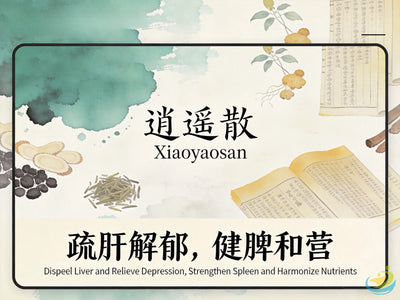
Xiaoyao Wan (Free Wanderer Pill) primarily soothes the liver and strengthens the spleen, and nourishes the blood and regulates menstruation, with its emphasis on soothing the liver and moving qi. It yields good results for menstrual irregularity, chest and hypochondriac distension and pain, and dizziness arising from liver depression and spleen deficiency. Built on the same liver-soothing and qi-moving foundation, Tiaojing Wan additionally addresses qi-blood regulation, channel-warming, cold-dispersing, and other dimensions of treatment. With a richer and more varied composition and a broader scope of application, it can provide regulatory benefit for menstrual irregularity arising from multiple causes.

Tiaojing Wan: Clinical Applications for Menstrual Disorders | HJMEDICAL

VI. Clinical Applications

1. Disordered Menstrual Cycle

For patients with early menstruation accompanied by vexation, dry mouth, and a red tongue — presentations most often due to liver depression transforming into heat — Tiaojing Wan may be used with added heat-clearing medicinals on the basis of liver-soothing and qi-moving treatment, to regulate the menstrual cycle. For patients with delayed menstruation accompanied by cold pain in the lower abdomen and cold aversion with cold limbs — symptoms of cold congealing — Tiaojing Wan can strengthen its channel-warming and cold-dispersing actions to promote the timely arrival of menstruation. For amenorrhoea patients whose condition is caused by qi and blood insufficiency or qi stagnation and blood stasis, Tiaojing Wan may be modified and adjusted according to the specific situation, with the aim of regulating qi and blood, unblocking the channels, and restoring menstruation.

2. Dysmenorrhoea

Primary dysmenorrhoea patients most commonly suffer from impeded qi and blood movement and cold-congealing blood stasis. Tiaojing Wan can alleviate dysmenorrhoea symptoms by regulating qi and blood and warming the channels to disperse cold. For secondary dysmenorrhoea — such as pain caused by endometriosis or adenomyosis — Tiaojing Wan can provide adjunctive relief of the associated menstrual irregularity and other symptoms while alleviating pain. In clinical application, the drug dosage and duration of treatment may be appropriately adjusted according to the patient's specific symptoms and constitution to achieve optimal therapeutic outcomes.

3. Abnormal Menstrual Volume

For patients with scanty menstruation accompanied by pallor, dizziness, and blurred vision indicating qi and blood insufficiency, Tiaojing Wan may focus on supplementing and nourishing the blood to increase menstrual volume. For patients with heavy menstruation accompanied by bright-red blood and a viscous consistency indicating blood-heat, Tiaojing Wan may be combined with heat-clearing and blood-cooling medicinals to reduce menstrual volume. For patients with qi stagnation and blood stasis-type abnormal menstrual volume — dark-purple blood with clots and either scanty or heavy flow — Tiaojing Wan can intensify its qi-moving and blood-invigorating action to ensure smooth menstrual discharge and restore normal menstrual volume.
Tiaojing Wan: Clinical Modifications | HJMEDICAL

VII. Clinical Modifications

1. Liver Depression Transforming into Heat

Where a patient presents with symptoms of liver depression transforming into heat — such as vexation, bitter taste in the mouth, and a red tongue with yellow coating — Mudanpi (Tree Peony Bark) and Zhizi (Gardenia Fruit) may be added to the base formula as heat-clearing and blood-cooling agents. Mudanpi clears heat and cools the blood, and invigorates blood and resolves stasis; Zhizi drains fire and relieves vexation, and clears heat and drains dampness. Used in synergy with the original formula herbs, they simultaneously soothe the liver and move qi while clearing heat and draining fire, regulating the menstrual irregularity caused by liver depression transforming into heat.

2. Severe Cold-Congealing Blood Stasis

For patients with more severe cold-congealing blood stasis symptoms — such as intense cold pain in the lower abdomen that is relieved by warmth, dark-purple menstrual blood with large clots — the dose of Aiye may be increased and additionally warm-natured herbs such as Xiao Huixiang (Fennel Seed) and Paojiang (Blast-fried Ginger) may be incorporated. Xiao Huixiang disperses cold and relieves pain, and regulates qi and harmonises the stomach; Paojiang warms the channels and stops bleeding, and warms the middle and relieves pain. These herbs reinforce the formula's channel-warming, cold-dispersing, stasis-resolving, and pain-relieving actions, more effectively alleviating the menstrual disorders caused by cold-congealing blood stasis.

3. Pronounced Deficiency of Both Qi and Blood

Where a patient's deficiency of both qi and blood is pronounced — with symptoms such as a sallow complexion, dizziness, blurred vision, palpitations, and insomnia — qi-tonifying herbs including Dangshen (Codonopsis Root) and Huangqi (Astragalus Root) may be added to Tiaojing Wan. Dangshen strengthens the spleen and benefits the lung, and nourishes the blood and generates fluids; Huangqi tonifies qi and raises yang, and consolidates the exterior and stops sweating. Combined with the blood-supplementing herbs already present in the formula, they reinforce the simultaneous tonification of both qi and blood, improving the menstrual irregularity arising from deficiency of both qi and blood.

Tiaojing Wan: Dosage, Administration and Modern Granule Instructions | HJMEDICAL

VIII. Dosage and Preparation

1. Traditional Pill Method

Traditional Administration Method for Tiaojing Wan

This covers the dosage form characteristics of the traditional gynaecological formula Tiaojing Wan in pill form, the standard oral dosage, and guidance on how to administer and adjust it according to individual constitution.

【Dosage Form and Administration Preparation】
  • Tiaojing Wan: pill formulation produced by traditional methods
  • Warm water: an appropriate amount (to swallow the pills and aid dissolution)

⚠️ Note: The specific dose must be individually adjusted by a physician based strictly on factors including age, constitution, and the nature and severity of the condition.

Step 1: Measuring the Dose For oral administration. Before each dose, accurately weigh or measure out the appropriate amount of Tiaojing Wan. **The standard dose is typically 6–9 g per administration.**
Step 2: Swallowing with Warm Water Place the prepared Tiaojing Wan in the mouth and **swallow directly with warm water**. Warm water can moderately accelerate the breakdown of the pills in the gastrointestinal tract, facilitating better dissolution and absorption of the medicinals.
Step 3: Taking at Regular Times Maintain regular daily medication, taking **a fixed 2 doses per day** (ideally at fixed times, such as half an hour after breakfast and dinner), to maintain a relatively stable blood concentration of the medicinals in the body.
💡 Traditional Tiaojing Wan Dosage Form Note:

Tiaojing Wan is prepared in the traditional pill form, whose notable advantages include a gradual and sustained medicinal action, and excellent convenience for long-term storage and everyday carrying. While pills require a certain amount of time to dissolve and be absorbed gradually in the body — making them somewhat less straightforward to take compared with decoctions — their gentle, sustained character is particularly well-suited to the long-term management of chronic women's conditions such as menstrual irregularity and qi-blood stagnation.

2. Modern Concentrated Granules

Modern concentrated granules are prepared from traditional Chinese herbs through extraction, concentration, and other processing steps. They are taken by dissolving directly in hot water; the dose per administration depends on the product specification, but is generally 1–2 sachets, twice daily. The advantages of modern concentrated granules include ease of administration, ready dissolution and absorption, and relatively good palatability. Moreover, their active constituent content is high and their therapeutic effects are reliable, making them more compatible with the pace of modern life.

Tiaojing Wan: Precautions, Contraindications and Emotional Care | HJMEDICAL

IX. Precautions and Contraindications

1. Dietary Restrictions

While taking Tiaojing Wan, raw and cold, greasy, and spicy or irritating foods should be avoided. Raw and cold foods such as ice cream and cold drinks can readily damage spleen-stomach yang qi and impair the absorption and efficacy of the medicinals. Greasy foods are difficult to digest and may increase the burden on the spleen and stomach. Spicy foods such as chilli peppers and Sichuan peppercorn can readily engender fire and generate heat, potentially worsening symptoms such as liver depression transforming into heat, and are unfavourable to the management of menstrual irregularity.

2. Emotional Regulation

Maintaining emotional wellbeing is of vital importance to the treatment of menstrual irregularity. During the medication period, excessive emotional fluctuations should be avoided — including anxiety, depression, and anger. Negative emotions impair the liver's free-coursing function and can thereby worsen menstrual irregularity symptoms. Patients may regulate their emotional state through appropriate exercise, listening to music, socialising with friends, and other means, maintaining a positive and optimistic outlook.

3. Special Population Contraindications

Tiaojing Wan is contraindicated in pregnant women, as certain herbs in the formula may possess blood-invigorating and stasis-resolving actions that could adversely affect the foetus. Women with heavy menstruation should use it with caution, to avoid further increasing menstrual volume. In addition, patients with a known hypersensitivity to any of the ingredients in Tiaojing Wan should avoid its use to prevent allergic reactions.

Tiaojing Wan: Modern Research and Pharmacological Studies | HJMEDICAL

X. Modern Research

1. Pharmacological Research

Tiaojing Wan is a proprietary Chinese medicine (patent medicine) in which each pill weighs 9 g; it is taken twice daily and swallowed with Huangjiu (yellow rice wine) or warm water. It possesses the actions of regulating menstruation and nourishing the blood, and is suitable for menstrual irregularity and related conditions. However, it is contraindicated during pregnancy; use should be temporarily suspended when suffering from the common cold; and prolonged use should be conducted under the supervision of a physician.

Modern research has demonstrated that the multiple herbs in Tiaojing Wan possess diverse pharmacological activities. For example, Shu Dihuang has yin-nourishing and blood-supplementing effects and can regulate the endocrine system, promote haematopoietic function, and enhance immune function. Danggui improves blood circulation, inhibits platelet aggregation, and modulates uterine smooth muscle activity. Baishao has analgesic and antispasmodic effects and exerts a bidirectional regulatory action on uterine smooth muscle. Chuanxiong dilates blood vessels, improves microcirculation, and increases coronary blood flow. These pharmacological activities operating in concert help to regulate female endocrine function and improve menstrual irregularity symptoms.

2. Clinical Efficacy Validation

Extensive clinical research has validated the efficacy of Tiaojing Wan in treating menstrual irregularity. Multiple clinical trials have demonstrated that Tiaojing Wan can significantly improve disordered menstrual cycles, dysmenorrhoea, and abnormal menstrual volume, with a high overall response rate. Compared with other similar formulas, Tiaojing Wan has distinctive advantages in certain areas — for example, its effects are more pronounced in relieving liver qi stagnation and cold-congealing blood stasis. Its safety profile is also relatively good, with few adverse effects, providing an effective option for the clinical treatment of menstrual irregularity.

3. Dosage Form Improvement Research

With advances in modern science and technology, research into new dosage forms for Tiaojing Wan is ongoing. In addition to the traditional pill and modern concentrated granule forms, new dosage forms such as capsules and tablets have also emerged. These new forms, while maintaining the therapeutic efficacy of the medicinals, further improve convenience of administration and product stability. For example, capsules better protect the medicinal constituents and reduce the influence of external factors on the drug; tablets are convenient to produce and store, offer accurate dosing, and are more convenient for patients to take. Dosage form improvement research provides a broader array of prospects for the clinical application and promotion of Tiaojing Wan.

Tiaojing Wan — Frequently Asked Questions

Q1: What are the actions of Tiaojing Wan?

Tiaojing Wan tonifies the kidney and nourishes the blood, regulates the Thoroughfare and Conception Vessels, and regulates menstruation to support conception. It is commonly used for disordered menstrual cycles, abnormal menstrual volume, soreness and weakness of the lumbar region and knees, and qi and blood insufficiency.

Q2: Which modern conditions is Tiaojing Wan indicated for?

In contemporary TCM clinical practice, it is frequently used for individuals with menstrual irregularity, ovulatory dysfunction, pre-conception cycle regulation, and issues related to diminished ovarian reserve — where the pattern diagnosis is kidney deficiency with blood insufficiency and disharmony of the Thoroughfare and Conception Vessels.

Q3: Is Tiaojing Wan suitable for pre-conception cycle regulation?

For presentations of irregular menstrual cycles, scanty menses, unstable ovulation, easy fatigue, and soreness and weakness of the lumbar region and knees — where the pattern corresponds to kidney deficiency with blood insufficiency — TCM physicians will commonly prescribe Tiaojing Wan as an adjunct to support reproductive function. However, it cannot replace specialist reproductive medicine evaluation and treatment.

Q4: Who should not take Tiaojing Wan?

It is generally unsuitable for patients with downward infusion of damp-heat, pronounced blood stasis obstruction, acute gynaecological inflammation, or an excess-heat pattern. A qualified TCM physician should conduct a full pattern assessment based on the individual's constitution and presenting symptoms before prescribing.

⚠️ This content is for reference only and does not provide medical advice. Consult a healthcare professional for any health concerns.

Login

Forgot your password?

Don't have an account yet?
Create account

Tiaojing Wan