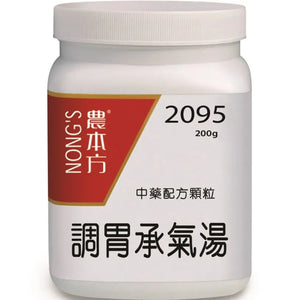
Tiao Wei Cheng Qi Tang: Traditional Chinese Formula for Heat Accumulation and Constipation

Tiao Wei Cheng Qi Tang: Draining Heat, Unblocking the Bowels and Harmonising the Stomach | HJMEDICAL

I. Origins and History

1. Classical Literature

Tiao Wei Cheng Qi Tang originates from the Shanghanlun (Treatise on Cold Damage), authored by the renowned late Eastern Han physician Zhang Zhongjing. This medical classic is regarded as one of the Four Great Classics of Chinese medicine and has exerted a profound influence on the development of TCM clinical practice and theory. Within the Shanghanlun, Tiao Wei Cheng Qi Tang is one of many important formulas and has been widely applied in the treatment of various externally contracted febrile diseases and related conditions.

2. Historical Development

Since the Shanghanlun was written, Tiao Wei Cheng Qi Tang has been esteemed by physicians of successive generations. Practitioners across every era have continuously researched and applied the formula in clinical settings, developing and adapting it in various ways according to practical circumstances — including adjustments to herb dosages, improvements in processing methods, and expansion of its applicable indications. As TCM theory and clinical practice have continued to deepen, the formula's standing in TCM formulary has grown ever more secure. It has become one of the classical formulas for treating Yangming dryness-heat excess patterns, providing an important reference for later physicians managing related conditions.

Tiao Wei Cheng Qi Tang: Draining Heat, Unblocking the Bowels and Harmonising the Stomach | HJMEDICAL

II. Herb Composition (Sovereign, Minister, Assistant, Envoy)

1. Dahuang (Rhubarb Root) — Sovereign Herb

Dahuang is the sovereign herb of Tiao Wei Cheng Qi Tang. Its flavour is bitter and its nature cold; it possesses a strong action of draining downward and attacking accumulation, flushing out the stomach and intestines, and expelling the old to bring in the new. It is the key herb for treating Yangming bowel excess patterns. Dahuang acts directly on the intestines, stimulating peristalsis and increasing the frequency of bowel movements so that dry, hardened stools are expelled from the body. At the same time, Dahuang clears heat and drains fire, and is highly effective for Yangming bowel excess patterns combined with intense heat.

2. Mangxiao (Mirabilite) — Minister Herb

Mangxiao is the minister herb. Its flavour is salty and bitter, its nature cold; it softens hardness and moistens dryness, assisting Dahuang in draining downward and unblocking the bowels. In the intestines, Mangxiao absorbs large quantities of water, softening the intestinal contents so that they are easily expelled, thus reinforcing Dahuang's downward-draining force. Mangxiao also clears heat and drains fire; acting synergistically with Dahuang, it more effectively eliminates Yangming excess heat.

3. Gancao (Licorice Root) — Assistant and Envoy Herb

Gancao serves as both assistant and envoy herb. Its flavour is sweet and its nature neutral; it tonifies the spleen and augments qi, moistens the lungs and stops cough, and harmonises all the herbs. In Tiao Wei Cheng Qi Tang, Gancao on the one hand moderates the harsh purgative force of Dahuang and Mangxiao, rendering the downward-draining action more measured and avoiding damage to the body from excessive purging; on the other hand, it harmonises all the herbs, allowing the medicinal substances in the formula to act in mutual coordination for optimal therapeutic effect.

Tiao Wei Cheng Qi Tang: Draining Heat, Unblocking the Bowels and Harmonising the Stomach | HJMEDICAL

III. Pathomechanism, Actions, and Indications

1. Pathomechanism

The pathomechanism targeted by Tiao Wei Cheng Qi Tang is primarily internal binding of Yangming dryness-heat. The Yangming channel is abundant in both qi and blood; when an externally contracted pathogen enters the interior and transforms into heat, it contests with the waste matter in the intestines, leading to internal binding of dry stools, obstruction of bowel qi, and a range of excess-pattern manifestations. The binding of dryness-heat in the stomach and intestines gives rise to abdominal distension and pain, dry, bound stools, tidal fever, and delirious speech.

2. Actions

Tiao Wei Cheng Qi Tang gently drains heat bind. Through the downward-draining action of Dahuang and Mangxiao, it clears dry stools and excess heat from the intestines, allowing Yangming bowel qi to flow freely and thereby relieving the various symptoms caused by internal binding of dryness-heat. Gancao's harmonising action allows the whole formula, while purging downward, to also protect the upright qi and avoid the adverse effects of excessive purging.

3. Indications

Tiao Wei Cheng Qi Tang primarily treats the Yangming disease pattern of stomach and intestine dryness-heat. Symptoms include constipation, epigastric and abdominal fullness and distension, fever, thirst, vexation, delirious speech, a tongue coating that is a true yellow, and a slippery, rapid pulse. In addition, for certain other conditions arising from stomach-intestine dryness-heat — such as Yangming channel heat patterns and heat reversal patterns — Tiao Wei Cheng Qi Tang may also be used where pattern differentiation is accurate.

Tiao Wei Cheng Qi Tang: Draining Heat, Unblocking the Bowels and Harmonising the Stomach | HJMEDICAL

IV. Formula Analysis

1. Dahuang Draining Downward and Attacking Accumulation

Dahuang is bitter, cold, and descending in nature, reaching directly to the lower burner; it moves without staying. It can rapidly flush out accumulated stagnation from the stomach and intestines, and is the primary purgative herb in the formula. Its downward-draining action is forceful: by stimulating intestinal peristalsis and promoting defecation, it causes dry, hardened stools to be expelled from the body, thereby resolving the Yangming bowel excess pattern.

2. Mangxiao Softening Hardness and Moistening Dryness

Mangxiao is salty and cold; it softens hardness and dissipates binding, and moistens dryness to unblock the bowels. It softens the dry, hardened stools in the intestines while absorbing intestinal water to increase the bulk of the faeces, making them easier to pass. Used together with Dahuang, Mangxiao reinforces the downward-draining, bowel-unblocking action and more effectively clears the dryness-heat evil from the intestines.

3. Gancao Harmonising All Herbs

Gancao is sweet and neutral; it both moderates the harsh purgative force of Dahuang and Mangxiao and harmonises all the herbs, rendering the overall medicinal nature of the formula more measured. While purging downward, Gancao also protects the stomach qi, preventing excessive purging from damaging the spleen and stomach — embodying the TCM formulation principle of "simultaneous attack and supplementation."

4. Synergistic Action of the Three Herbs

Dahuang, Mangxiao, and Gancao work in mutual coordination: Dahuang leads the purgative attack; Mangxiao assists Dahuang in softening hardness and moistening dryness to reinforce the downward-draining force; Gancao harmonises the medicinal properties and protects the stomach qi. Their combined synergistic action achieves the effect of gently draining heat bind, resolving the Yangming bowel excess pattern and clearing and draining the dryness-heat evil.

Tiao Wei Cheng Qi Tang: Draining Heat, Unblocking the Bowels and Harmonising the Stomach | HJMEDICAL

V. Comparison with Related Formulas

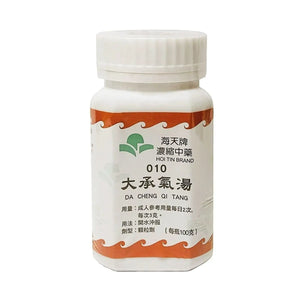
1. Comparison with Dachengqi Tang

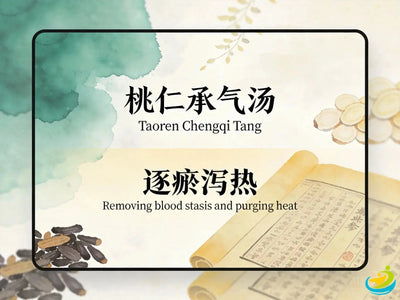
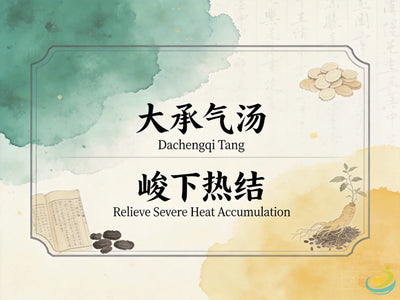
Dachengqi Tang is composed of Dahuang, Houpo (Magnolia Bark), Zhishi (Unripe Bitter Orange), and Mangxiao; its downward-draining force is stronger and it is appropriate for severe Yangming bowel excess patterns presenting with all four signs of focal distension, fullness, dryness, and solidity. Tiao Wei Cheng Qi Tang, by contrast, contains only the three herbs Dahuang, Mangxiao, and Gancao; its downward-draining force is relatively gentle, and it primarily clears and drains dryness-heat, making it appropriate for Yangming bowel excess patterns of moderate severity where dryness and solidity predominate and focal distension and fullness are not pronounced.

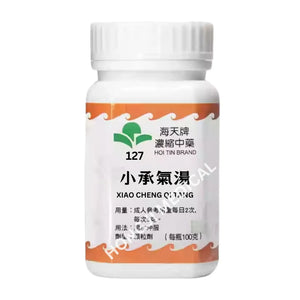
2. Comparison with Xiaochengqi Tang

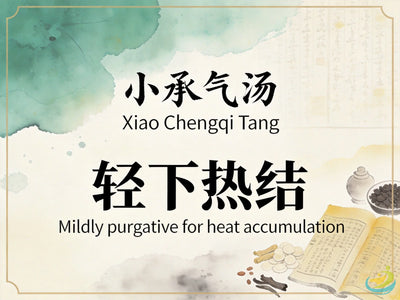
Xiaochengqi Tang is composed of Dahuang, Houpo, and Zhishi; its downward-draining force is slightly stronger than that of Tiao Wei Cheng Qi Tang but still does not match Dachengqi Tang. Xiaochengqi Tang is primarily used for mild Yangming bowel excess patterns where focal distension, fullness, and solidity predominate and the degree of dryness-binding is relatively light. Tiao Wei Cheng Qi Tang focuses on clearing and draining dryness-heat and gently moving the bowels, and is more appropriate where dryness-binding is relatively pronounced while focal distension and fullness are not marked.

3. Differences in Emphasis of Action

Dachengqi Tang forcefully drains heat bind and is the primary treatment for severe Yangming bowel excess patterns. Xiaochengqi Tang mildly drains heat bind and treats mild Yangming bowel excess patterns. Tiao Wei Cheng Qi Tang gently drains heat bind, targeting primarily internal binding of Yangming dryness-heat, with an emphasis on purging downward and clearing heat; it is relatively the most moderate of the three, placing importance on protecting the stomach qi while purging.

Tiao Wei Cheng Qi Tang: Draining Heat, Unblocking the Bowels and Harmonising the Stomach | HJMEDICAL

VI. Clinical Applications

1. Digestive System Conditions

Tiao Wei Cheng Qi Tang has wide applications in digestive system conditions. For acute intestinal obstruction attributable to a Yangming bowel excess pattern — presenting with abdominal pain, abdominal distension, vomiting, and cessation of flatus and defecation — Tiao Wei Cheng Qi Tang may be used to relieve the intestinal obstruction and alleviate symptoms through its downward-draining action. In addition, for functional constipation, particularly dry, bound stools and difficulty defecating caused by stomach-intestine dryness-heat, Tiao Wei Cheng Qi Tang also produces good results. It promotes intestinal peristalsis, increases the frequency of bowel movements, and improves constipation symptoms.

2. Neurological Conditions

In neurological conditions, Tiao Wei Cheng Qi Tang may be used to treat certain disorders of consciousness caused by Yangming bowel excess. Where patients present with high fever, delirious speech, and agitation — and pattern differentiation identifies internal binding of Yangming dryness-heat disturbing the spirit-mind — Tiao Wei Cheng Qi Tang may be applied. By draining downward and clearing the heat bind, Yangming bowel qi flows freely, thereby relieving the neurological symptoms.

3. Other Conditions

Tiao Wei Cheng Qi Tang may also be used for gastrointestinal dysfunction occurring after surgical procedures, such as abdominal distension and constipation. In addition, for cases where residual heat has not been fully cleared following externally contracted febrile disease, with stomach-intestine dryness-heat internally binding, Tiao Wei Cheng Qi Tang can also clear and drain residual heat and regulate the stomach and intestines.

Tiao Wei Cheng Qi Tang: Draining Heat, Unblocking the Bowels and Harmonising the Stomach | HJMEDICAL

VII. Clinical Modifications

1. Add Shigao for Intense Heat

Where the patient's heat signs are pronounced, Shigao (Gypsum) may be added to reinforce the action of clearing heat and draining fire. Shigao is acrid and sweet in flavour and greatly cold in nature; it clears heat and drains fire, and relieves vexation and quenches thirst. Acting synergistically with Dahuang and Mangxiao in Tiao Wei Cheng Qi Tang, it more effectively eliminates Yangming excess heat and relieves symptoms such as high fever and thirst.

2. Add Houpo and Zhishi for Abdominal Distension

When abdominal distension is pronounced, Houpo (Magnolia Bark) and Zhishi (Unripe Bitter Orange) may be added to move qi and dispel distension. Houpo is bitter, acrid, and warm-drying; it moves qi and dries dampness, and disperses accumulation and eliminates fullness. Zhishi is bitter and acrid with a slightly cold nature; it breaks qi and disperses accumulation, and transforms phlegm and eliminates focal distension. Added to Tiao Wei Cheng Qi Tang, these two herbs reinforce the qi-moving and stagnation-guiding action and relieve abdominal distension symptoms.

3. Add Taoren and Chishao for Blood Stasis

Where the patient presents with blood stasis signs — such as fixed abdominal pain that does not move, dark purple tongue body, or stasis macules and petechiae — Taoren (Peach Kernel) and Chishao (Red Peony Root) may be added to activate blood and resolve stasis. Taoren is bitter, sweet, and neutral; it activates blood and dispels stasis, and moistens the intestines to promote bowel movement. Chishao is bitter and slightly cold; it clears heat and cools blood, and scatters stasis to alleviate pain. Combined with Tiao Wei Cheng Qi Tang, these two herbs address blood stasis while simultaneously draining downward and clearing the heat bind.

Tiao Wei Cheng Qi Tang: Draining Heat, Unblocking the Bowels and Harmonising the Stomach | HJMEDICAL

VIII. Dosage and Preparation

1. Traditional Decoction Method

Traditional Decoction and Administration Method for Tiao Wei Cheng Qi Tang

Tiao Wei Cheng Qi Tang is the classical formula for moistening the bowels and gently draining heat bind recorded in the Shanghanlun. This guide details the distinctive classical fire-control technique and administration specifics: decocting Dahuang and Gancao first, straining the dregs, then adding Mangxiao to the strained liquid and heating on an extremely low flame until just barely simmering.

【Prescription Composition and Preparation Materials】
  • Dahuang (Rhubarb Root): four liang — modern reference: 12g
  • Gancao (Licorice Root): two liang — modern reference: 6g (typically Zhigancao, honey-fried, to harmonise stomach qi and moderate the purgative action)
  • Mangxiao (Mirabilite): half sheng — modern reference: 6g (**added after straining — must NOT be added in the initial decoction**)
  • Water: as needed (modern decocting pot: approximately 400–500 ml recommended)
【Classical High-Heat and Low-Heat Fire Control and Step-by-Step Breakdown】
Step 1: Decocting the Two Herbs First and Bringing to a Boil on High Heat First place **Dahuang and Gancao** into the ceramic decocting pot, add an appropriate amount of cold water, and **soak in cold water for 20 minutes**. Apply heat and **first bring the liquid rapidly to a boil on high heat**, allowing the active constituents of Dahuang and Gancao to dissolve quickly into the water.
Step 2: Simmering on Low Heat and Straining the Dregs Completely Once the liquid reaches a rolling boil, **immediately reduce to low heat and simmer gently**, maintaining a just-simmering state to prevent the medicinal properties of Dahuang from being over-volatilised. Decoct until the liquid is reduced to an appropriate volume, then remove from heat. Use a strainer or gauze cloth to **thoroughly filter and remove the herb dregs from the bottom of the pot**, retaining only the pure Dahuang-Gancao decoction liquid.
Step 3: Adding Mangxiao and Heating Briefly on an Extremely Low Flame Pour the strained decoction back into the pot and **add half sheng of Mangxiao (6g)**. Apply an **extremely low flame and heat again briefly until the liquid just barely reaches one or two gentle bubbles** (yi er fei — one or two gentle boils), then remove from heat. This step uses minimal heat to allow the Mangxiao to dissolve completely and blend into the decoction, after which the heat is removed immediately.
Step 4: Taking in Warm Divided Doses to Gently Drain and Harmonise the Stomach This formula's medicinal nature is relatively gentle, designed to "harmonise the stomach." When taking the medicine, do not drink the entire decoction at once; it must be **taken warm in divided doses (fen wen zai fu — divided warm re-administration)**. Adjust the amount taken each time according to the patient's bowel movements and gastrointestinal response after each dose, with smooth passage of stools and resolution of dryness-heat as the endpoint.

2. Modern Concentrated Granules

Modern concentrated granules are produced from Chinese herbs through extraction and concentration processes and are considerably more convenient to take. The dosage of Tiao Wei Cheng Qi Tang in concentrated granule form generally varies according to individual manufacturers' specifications but broadly follows the proportions of the original formula. To use, dissolve in hot water according to the product instructions. Modern concentrated granules retain the active constituents of the Chinese herbs and are easy to store and carry, providing convenience for clinical use.

Tiao Wei Cheng Qi Tang: Draining Heat, Unblocking the Bowels and Harmonising the Stomach | HJMEDICAL

IX. Precautions and Contraindications

1. Stop When the Condition is Resolved

When using Tiao Wei Cheng Qi Tang, care should be taken to stop the formula once the condition has responded, without prolonged administration. Because its downward-draining action is relatively strong, excessive use may result in persistent diarrhoea and damage to the upright qi. Once symptoms have been relieved, the formula should be promptly discontinued to avoid unnecessary harm to the body.

2. Use with Caution During Pregnancy

Pregnant women have a special constitution; as Tiao Wei Cheng Qi Tang's purgative force is relatively strong and may have adverse effects on the foetus, it should be used with caution during pregnancy. If a pregnant woman presents with a Yangming bowel excess pattern or another condition requiring a purgative formula, it should be used only under strict medical supervision, with a careful assessment of risks and benefits before deciding whether to proceed.

3. Contraindicated in Deficiency-Cold Patterns

Tiao Wei Cheng Qi Tang is indicated for Yangming dryness-heat excess patterns. For patients with deficiency-cold patterns — such as spleen-stomach deficiency-cold or yang deficiency with diarrhoea — Tiao Wei Cheng Qi Tang is contraindicated. Its bitter-cold medicinal nature would further damage yang qi and aggravate deficiency-cold symptoms.

Tiao Wei Cheng Qi Tang: Draining Heat, Unblocking the Bowels and Harmonising the Stomach | HJMEDICAL

X. Modern Research

1. Pharmacological Research

Tiao Wei Cheng Qi Tang is the cold-purgative formula among the three Chengqi Tang formulas, primarily treating interior excess patterns and focal distension with dryness and solidity; it clears heat and purges downward, and is appropriate for heat bind constipation patterns such as acute pancreatitis. Zhigancao and other harmonising herbs in the formula are regularly used, and the formula is often clinically modified through additions and subtractions; it produces good results for symptoms such as focal distension and fullness.

Modern research has demonstrated that Tiao Wei Cheng Qi Tang possesses a range of pharmacological actions. The anthraquinone compounds and other constituents in Dahuang produce purgative, antibacterial, and anti-inflammatory effects; Mangxiao promotes intestinal peristalsis, increases intestinal volume, and has certain anti-inflammatory properties; Gancao regulates immune function, reduces inflammation, and protects the gastric mucosa. Through the synergistic action of these herbs, Tiao Wei Cheng Qi Tang exerts its therapeutic effects on multiple aspects including the digestive and immune systems.

2. Clinical Efficacy Observations

In clinical research, Tiao Wei Cheng Qi Tang has demonstrated good results in the treatment of various conditions. In treating digestive system diseases such as functional constipation and intestinal obstruction, it has been shown to effectively improve symptoms and enhance patients' quality of life. It has also demonstrated certain advantages in treating some neurological conditions, providing new evidence and approaches for the clinical application of TCM formulas.

3. Investigation of Mechanisms of Action

Modern research has explored the mechanisms of action of Tiao Wei Cheng Qi Tang from multiple angles. The formula may exert its therapeutic effects through pathways including regulation of the intestinal microbiome, improvement of intestinal motility, and influence on the neuroendocrine system. As research has continued to deepen, understanding of Tiao Wei Cheng Qi Tang's mechanisms of action has become more comprehensive, laying a foundation for further optimising the formula's clinical application and developing new treatment approaches.

Tiao Wei Cheng Qi Tang — Frequently Asked Questions

Q1: What are the actions of Tiao Wei Cheng Qi Tang?

Tiao Wei Cheng Qi Tang drains heat and unblocks the bowels, harmonises the stomach and guides stagnation, and moistens dryness to promote defecation. It is primarily indicated for constipation, abdominal distension, thirst, vexation, and dry, bound stools caused by stomach-intestine accumulation of heat.

Q2: Which modern conditions is Tiao Wei Cheng Qi Tang indicated for?

In modern TCM clinical practice, it is commonly used for individuals whose pattern differentiation falls within the categories of Yangming bowel heat and internal binding of dryness-heat — including functional constipation, acute stomach-intestine heat accumulation, post-operative constipation, and drug-related constipation.

Q3: Is Tiao Wei Cheng Qi Tang suitable for patients with constipation?

For patients presenting with stomach-intestine heat accumulation signs — including dry, bound stools, difficulty defecating, pronounced abdominal distension, dry mouth and thirst, and a red tongue with yellow coating — TCM practitioners commonly apply Tiao Wei Cheng Qi Tang through pattern differentiation as an adjunct regulating formula to promote the recovery of intestinal bowel function.

Q4: Who should not take Tiao Wei Cheng Qi Tang?

Tiao Wei Cheng Qi Tang is generally not suitable for those with spleen-stomach deficiency-cold, qi deficiency constipation, pregnant women, or patients with chronic diarrhoea. Use should be preceded by a pattern differentiation assessment by a qualified TCM practitioner according to the patient's constitution and pattern presentation.


⚠️ This content is for reference only and does not provide medical advice. Consult a healthcare professional for any health concerns.

Login

Forgot your password?

Don't have an account yet?
Create account

Tiao Wei Cheng Qi Tang: Traditional Chinese Formula for Heat Accumulation and Constipation