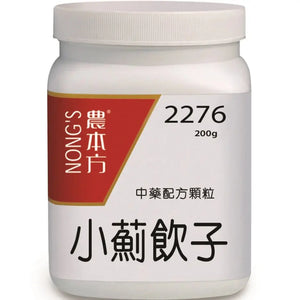
Xiao Ji Yin Zi: Classic TCM Formula for Heat-Induced Hematuria and Painful Urination with Blood
Xiao Ji Yin Zi (小蓟饮子), known in English as Small Thistle Drink, is a classical TCM formula for cooling blood and stopping bleeding in the urinary tract caused by heat. It is particularly indicated for blood in the urine (hematuria), painful urination with blood, and heat-induced bleeding from the lower jiao. In modern clinical practice, Xiao Ji Yin Zi is used for acute heat patterns causing urinary bleeding with burning pain. By powerfully cooling the blood to stop bleeding while promoting urination to clear heat from the lower jiao, it effectively resolves hematuria and painful urination caused by heat.

I. Origins and History
1. Classical Records
Xiao Ji Yin Zi originates from the Jisheng Fang (Formulas for Aid of the Living), authored by the celebrated Song dynasty physician Yan Yonghe. In ancient times, accumulated experience in understanding and treating various conditions continued to grow; Yan Yonghe summarised the wisdom of earlier physicians and, combined with his own clinical practice, created this formula. The Jisheng Fang is a comprehensive medical text providing detailed elaboration on the aetiology, pathomechanism, and treatment methods of numerous conditions; Xiao Ji Yin Zi, as one of its classical formulas, has provided an important reference for later physicians treating related conditions.
2. Historical Evolution
Over time, Xiao Ji Yin Zi continued to develop and become refined through clinical application. While following its basic formula rationale, later physicians made appropriate adjustments and modifications according to differing conditions and individual variation. For example, fine adjustments have been made in aspects such as herb dosage and combination relationships, allowing it to better align with practical clinical needs, and it has consistently played an important therapeutic role throughout this long historical process.

II. Herb Composition (Sovereign, Minister, Assistant, Envoy)
1. Chief Herb — Xiaoji (Cephalanoplos)
Xiaoji is sweet and bitter in flavour and cool in nature, entering the Heart and Liver channels. It has the actions of cooling blood and stopping bleeding, and dispersing stasis and resolving toxicity to disperse abscesses. It is the core herb of Xiao Ji Yin Zi: targeting the bleeding symptoms caused by reckless movement of hot blood, it can effectively cool the blood and stop bleeding, while also providing a degree of dispersing action for carbuncles and sores arising from accumulated heat-toxin. Within the formula, Xiaoji is used in a relatively large dosage, emphasising its primary therapeutic role.
2. Deputy Herb — Shengdihuang (Fresh Rehmannia Root)
Shengdihuang is sweet and bitter in flavour and cold in nature, entering the Heart, Liver, and Kidney channels. It has the actions of clearing heat and cooling blood, and nourishing yin and generating fluids. It can assist Xiaoji in reinforcing the blood-cooling and haemostatic potency, while also nourishing the yin fluids and preventing excessive damage to yin from blood heat. The presence of Shengdihuang allows the entire formula, while clearing heat and cooling blood, to simultaneously attend to the protection of the yin fluids, avoiding the adverse consequence of yin-fluid depletion.
3. Assistant Herbs — Puhuang (Cattail Pollen), Oujie (Lotus Rhizome Node), Huashifen (Talc Powder), Mutong (Akebia Stem), Zhizi (Gardenia Fruit) and Danzhuye (Lophatherum)
- Puhuang is sweet in flavour and neutral in nature, entering the Liver and Pericardium channels. It can stop bleeding, resolve stasis, and unblock painful strangury, helping to reinforce the haemostatic effect while also preventing blood-stasis obstruction.
- Oujie is sweet and astringent in flavour and neutral in nature, entering the Liver, Lung, and Stomach channels. It has the astringing and haemostatic action; acting synergistically with Xiaoji and the others, it reinforces the haemostatic effect.
- Huashifen is sweet and bland in flavour and cold in nature, entering the Bladder, Lung, and Stomach channels. It has the actions of promoting urination to unblock painful strangury, and clearing heat to relieve summer-heat, allowing the pathogenic heat to be expelled via urination and reducing damp-heat in the lower burner.
- Mutong is bitter in flavour and cold in nature, entering the Heart, Small Intestine, and Bladder channels. It can clear heart fire and promote urination, guiding heat downward; acting together with Huashifen, it reinforces the effect of clearing heat, disinhibiting water, and unblocking painful strangury.
- Zhizi is bitter in flavour and cold in nature, entering the Heart, Lung, and Triple Burner channels. It can drain fire and relieve vexation, clear heat and disinhibit dampness, and cool blood and resolve toxicity, assisting in clearing heat and cooling blood, allowing the heat-toxin within the body to be cleared.
- Danzhuye is sweet and bland in flavour and cold in nature, entering the Heart, Stomach, and Small Intestine channels. It can clear heat, relieve vexation, and promote urination, assisting Mutong, Huashifen, and the others in reinforcing the urination-promoting and painful-strangury-unblocking action, allowing the damp-heat pathogen to be rapidly expelled from the body.
4. Envoy Herb — Gancao (Licorice Root)
Gancao is sweet in flavour and neutral in nature, entering the Heart, Lung, Spleen, and Stomach channels. It has the actions of tonifying the spleen and boosting qi, moistening the lungs to relieve cough, clearing heat and resolving toxicity, and harmonising all the herbs. In Xiao Ji Yin Zi, Gancao can both harmonise the nature of all the herbs within the formula, allowing them to work synergistically, and moderate the toxicity and potency of the herbs, protecting the spleen and stomach, so that the entire formula, while attacking the pathogen, does not excessively damage the righteous qi.

III. Pathomechanism, Actions, and Indications
1. Pathomechanism
The pathomechanism targeted by Xiao Ji Yin Zi is primarily lower-burner stasis-heat injuring the blood vessels. Due to externally-contracted heat-toxin pathogen, or internally generated fire-heat within the zang-fu organs, heat pathogen accumulates and binds in the lower burner, scorching the blood vessels, causing blood to escape from the vessels and resulting in bleeding. Simultaneously, internal blood-stasis obstruction affects blood circulation, further aggravating the bleeding symptoms and forming a vicious cycle.
2. Actions
- Cooling blood and stopping bleeding: The formula uses a heavy dosage of Xiaoji to cool blood and stop bleeding, with Shengdihuang clearing heat and cooling blood; the two act synergistically, effectively clearing blood heat from the lower burner and arresting bleeding.
- Disinhibiting water to unblock painful strangury: Herbs such as Huashifen, Mutong, and Danzhuye clear heat, disinhibit water, and unblock painful strangury, allowing the damp-heat pathogen of the lower burner to be expelled via urination, relieving symptoms such as frequent, urgent, painful urination caused by downward pouring of damp-heat.
- Dispersing stasis and resolving toxicity: Xiaoji, Puhuang, and the others can both cool blood and stop bleeding, and disperse stasis and resolve toxicity, providing a degree of therapeutic benefit for local carbuncles and swellings caused by accumulated heat-toxin.
3. Indications
- Bloody strangury and haematuria: manifesting as frequent urination, reddish, astringent, hot, and painful urination, blood in the urine, a red tongue, and a rapid pulse. This is caused by lower-burner stasis-heat scorching the blood vessels, with blood following the urine outward.
- Haematuria from heat binding in the lower burner: manifesting as short, reddish urination with blood, distending pain and bearing-down sensation in the lower abdomen, a red tongue with yellow coating, and a forceful, rapid pulse. This type of haematuria is mostly caused by exuberant lower-burner heat scorching the yin-blood, leading to impeded blood circulation, stasis and heat mutually binding, and injury to the blood vessels giving rise to the condition.
IV. Formula Analysis
1. Combining Cooling Blood to Stop Bleeding with Clearing Heat to Disinhibit Water
Xiao Ji Yin Zi uses the blood-cooling and haemostatic herbs Xiaoji and Shengdihuang as the chief herbs, directly cooling the blood and stopping bleeding to target the pathomechanism of blood-heat haemorrhage. Simultaneously, it is combined with heat-clearing and water-disinhibiting herbs such as Huashifen, Mutong, and Danzhuye, allowing the lower-burner damp-heat pathogen to be expelled via urination. On one hand, clearing heat and disinhibiting water reduces the scorching of the blood vessels by the heat pathogen, addressing the source of bleeding at its root; on the other hand, disinhibiting water assists the expulsion of blood stasis, improving the state of impeded blood circulation, thereby reinforcing the haemostatic effect. This combination method of cooling blood to stop bleeding together with clearing heat to disinhibit water embodies the Chinese medicine principles of treating disease by seeking the root and treating both root and manifestation.
2. Resolving Stasis to Stop Bleeding Without Retaining Stasis
Within the formula, Puhuang can both stop bleeding and resolve stasis, allowing the blood stasis to be dispersed and blood circulation to be unobstructed, thereby achieving the goal of stopping bleeding without retaining stasis. When treating blood disorders, simple use of haemostatic herbs alone may readily lead to internal obstruction by blood stasis, affecting the generation of new blood and the recovery of blood circulation. The presence of Puhuang skilfully resolves this problem, allowing the entire formula, while stopping bleeding, to avoid new pathological changes arising from stagnant blood stasis, ensuring the effectiveness and safety of treatment.
3. Nourishing Yin and Blood to Prevent Damage to the Righteous
Shengdihuang can not only clear heat and cool blood but also has the action of nourishing yin and generating fluids. During the process of clearing heat and cooling blood, the heat pathogen readily damages yin; Shengdihuang's yin-nourishing and blood-tonifying action can supplement the yin fluids and nourish the blood vessels, preventing excessive depletion of yin fluids caused by blood-heat haemorrhage and heat-clearing, water-disinhibiting treatment, thereby maintaining the body's yin-yang balance, ensuring the body's righteous qi remains sufficient, and benefiting recovery from the condition.

V. Comparison with Related Formulas
1. Comparison with Daochi San
- Daochi San is primarily composed of Shengdihuang, Mutong, raw Gancaoshao (Licorice Root Tip), and Zhuye (Bamboo Leaf), with the actions of clearing the heart, disinhibiting water, and nourishing yin. It focuses on clearing heart fire, primarily treating symptoms such as vexing heat in the chest, thirst with a flushed face, mouth and tongue sores, and reddish, astringent urination caused by exuberant heart-channel heat moving downward into the small intestine. Xiao Ji Yin Zi, although also containing herbs such as Mutong and Shengdihuang, places greater emphasis on conditions such as bloody strangury and haematuria caused by lower-burner stasis-heat injuring the blood vessels, with a more prominent action in cooling blood and stopping bleeding.
- In terms of herb composition, Daochi San does not contain herbs such as Puhuang, Oujie, Huashifen, Zhizi, and Danzhuye found in Xiao Ji Yin Zi. The addition of these herbs allows Xiao Ji Yin Zi, on the foundation of clearing heat and cooling blood, to gain the additional actions of dispersing stasis to stop bleeding and disinhibiting water to unblock painful strangury, broadening the formula's scope of treatment, distinguishing it from the action of Daochi San.
2. Comparison with Shihui San
- Shihui San is composed of Daji (Cirsium), Xiaoji, Heye (Lotus Leaf), Cebaiye (Biota Leaf), Maogen (Imperata Rhizome), Qiangen (Madder Root), Shanzhi (Gardenia Fruit), Dahuang (Rhubarb Root), Mudanpi (Tree Peony Bark), and Zonglüpi (Trachycarpus Petiole-bark), with the action of cooling blood and stopping bleeding, primarily indicated for upper-body bleeding patterns from reckless movement of hot blood, such as haemoptysis, haematemesis, and epistaxis. Its herb composition consists mostly of blood-cooling and haemostatic herbs, charred before use, which reinforces the haemostatic action.
- Xiao Ji Yin Zi, by contrast, is primarily used for bloody strangury and haematuria caused by lower-burner stasis-heat; while cooling blood and stopping bleeding, it also emphasises clearing heat to disinhibit water and unblock painful strangury, and dispersing stasis to resolve toxicity. Compared with Shihui San, Xiao Ji Yin Zi's herb composition and indications differ. Shihui San focuses on upper-body bleeding, while Xiao Ji Yin Zi targets lower-burner bleeding; Shihui San focuses primarily on cooling blood and stopping bleeding, while Xiao Ji Yin Zi, on the foundation of stopping bleeding, also attends to the treatment of lower-burner damp-heat and blood stasis.

VI. Clinical Applications
1. Urinary System Disorders
- For frequent, urgent, painful urination caused by acute cystitis, urethritis, and related conditions, accompanied by haematuria, Xiao Ji Yin Zi produces good therapeutic results. These conditions are mostly caused by accumulated lower-burner damp-heat scorching the blood vessels; Xiao Ji Yin Zi's actions of cooling blood, stopping bleeding, clearing heat, disinhibiting water, and unblocking painful strangury can effectively relieve symptoms and promote recovery from the condition.
- When chronic glomerulonephritis presents with haematuria, if the pattern is identified as lower-burner stasis-heat, Xiao Ji Yin Zi with modifications may also be selected for treatment. By adjusting the herb combination within the formula to suit the changing condition, the goals of controlling haematuria and improving renal function can be achieved.
2. Haemorrhagic Disorders
- For thrombocytopenic purpura, if there are manifestations of reckless movement of hot blood and lower-burner stasis-heat — such as cutaneous petechiae and ecchymosis, gum bleeding, and haematuria — Xiao Ji Yin Zi may be used in combination on the foundation of pattern-based treatment. Its actions of cooling blood, stopping bleeding, dispersing stasis, and resolving toxicity help to reduce bleeding symptoms and increase platelet count.
- When allergic purpura presents with haematuria symptoms, if accompanied by manifestations of lower-burner damp-heat — such as short, reddish urination and a red tongue with yellow greasy coating — Xiao Ji Yin Zi may serve as an adjunctive treatment formula. Through clearing heat, disinhibiting dampness, cooling blood, and stopping bleeding, it relieves haematuria symptoms and reduces purpura recurrence.
3. Other Conditions
- For unresolved postpartum lochia in women, accompanied by symptoms such as lower abdominal pain and short, reddish urination, where the pattern is identified as lower-burner stasis-heat, Xiao Ji Yin Zi may also be applied. The herbs within the formula can promote the expulsion of blood stasis, cool blood, and stop bleeding, relieving postpartum discomfort symptoms.
- For sores, swelling, and pain caused by lower-burner damp-heat, accompanied by local bleeding, Xiao Ji Yin Zi can perform the actions of clearing heat, cooling blood, resolving toxicity, reducing swelling, stopping bleeding, and relieving pain, helping promote the healing of sores.

VII. Clinical Modifications
1. If heat exuberance with marked damage to yin is present, Maidong (Ophiopogon Root) and Xuanshen (Figwort Root) may be added to nourish yin and clear heat, reinforcing the yin-nourishing and fluid-generating potency to better relieve symptoms of yin damage from the heat pathogen.
2. If blood stasis is more severe, blood-activating and stasis-resolving herbs such as Taoren (Peach Kernel) and Honghua (Safflower) may be added, reinforcing the effect of dispersing stasis and stopping bleeding, allowing the blood stasis to be more effectively expelled and improving the state of impeded blood circulation.
3. If haematuria is more severe, herbs such as Baimaogen (Imperata Rhizome) and Xianhecao (Hairyvein Agrimonia) may be added to reinforce the haemostatic action, further enhancing the blood-cooling and haemostatic efficacy and reducing the volume of haematuria.
4. If urinary astringent pain is more severe, painful-strangury-unblocking and stone-expelling herbs such as Haijinsha (Lygodium Spore) and Shiwei (Pyrrosia Leaf) may be added, reinforcing the action of clearing heat, disinhibiting water, and unblocking painful strangury, relieving the urinary astringent pain symptoms and making urination more unobstructed.

VIII. Dosage and Preparation (Traditional Method and Modern Concentrated Granules)
1. Traditional Method
The traditional administration of Xiao Ji Yin Zi is by water decoction. The herb decoction pieces are generally soaked for approximately 30 minutes, then decocted with water. The specific dosage is: Xiaoji 15 g, Shengdihuang 12 g, Puhuang 9 g, Oujie 9 g, Huashifen 12 g, Mutong 6 g, Zhizi 9 g, Danzhuye 6 g, and Gancao 6 g. One dose per day, taken in two administrations, once in the morning and once in the evening. Take warm at the time of administration.
Traditional Decoction Method for Xiao Ji Yin Zi
An introduction to the herb ratios, soaking details, and correct decoction and warm-administration method of the traditional Chinese medicine formula Xiao Ji Yin Zi.
- Xiaoji (Cephalanoplos): 15 g
- Shengdihuang (Fresh Rehmannia Root): 12 g
- Puhuang (Cattail Pollen): 9 g
- Oujie (Lotus Rhizome Node): 9 g
- Huashifen (Talc Powder): 12 g
- Mutong (Akebia Stem): 6 g
- Zhizi (Gardenia Fruit): 9 g
- Danzhuye (Lophatherum): 6 g
- Gancao (Licorice Root): 6 g
- Water: appropriate amount (for soaking and decoction)
2. Modern Concentrated Granules
With the development of modern pharmaceutical technology, a corresponding concentrated granule dosage form of Xiao Ji Yin Zi is also available. Administration is more convenient when using modern concentrated granules. Generally, dissolve in boiled water according to the recommended dosage in the product instructions. The specific dosage may vary slightly between products manufactured by different companies, but is generally an equivalent dosage converted from the traditional formula's herb quantities. For example, concentrated granules equivalent to the dosage of each herb in the traditional Xiao Ji Yin Zi, prepared according to the specified ratio, are taken as one dose per day, dissolved in two administrations.

IX. Precautions and Contraindications
1. Precautions for Use
- Xiao Ji Yin Zi is a bitter-cold preparation, which readily damages spleen-stomach yang qi; those with spleen-stomach deficiency-cold should use it with caution. If spleen-stomach function is relatively weak, symptoms such as epigastric discomfort, abdominal pain, and diarrhoea may appear after taking the formula.
- The herbs within the formula are mostly cold in nature; prolonged, heavy administration may lead to internal generation of yin-cold and damage to the body's yang qi. Therefore, the formula should be discontinued once the condition has resolved, and should not be taken in excess or for a prolonged period.
2. Dietary Restrictions
- During the course of taking Xiao Ji Yin Zi, spicy, greasy, and irritating foods — such as chilli peppers, fried foods, and alcohol — should be avoided. These foods readily assist fire and generate heat, aggravating the damp-heat pathogen within the body and affecting the formula's therapeutic effect.
- Raw, cold foods should also be avoided as far as possible, to prevent damage to the spleen-stomach yang qi, which would weaken spleen-stomach transforming and transporting function and be unfavourable for herb absorption and recovery from the condition.
3. Contraindications for Special Populations
- Pregnant women should use Xiao Ji Yin Zi with caution. Certain herbs within the formula have a degree of blood-activating action; although the formula's primary action is cooling blood and stopping bleeding, pregnant women should use it cautiously under medical guidance to ensure fetal safety.
- When administering medication to children, the dosage should be appropriately adjusted according to factors such as age and constitution, with close observation required throughout the course of medication. As children's physiological functions are not yet fully developed, their tolerance to medication is relatively lower, so medication requires particular caution.

X. Modern Research
1. Pharmacological Action Research
- Xiao Ji Yin Zi is a formula for clearing heat, cooling blood, and stopping bleeding, with the function of clearing heat, resolving toxicity, cooling blood, and stopping bleeding, suited to urinary tract infections and haematuria caused by heat binding in the lower burner. The combination within the formula of Shengdihuang, Xiaoji, Shanzhizi (Gardenia Fruit), and Danggui (Angelica Root) embodies the principle of stopping bleeding without retaining stasis, and is commonly used clinically for heat-strangury patterns.
Modern research has demonstrated that Xiaoji within Xiao Ji Yin Zi has haemostatic, anti-inflammatory, and antibacterial actions. Its haemostatic action may be related to promoting platelet aggregation and strengthening coagulation function; its anti-inflammatory action helps to reduce local inflammatory responses, providing a degree of therapeutic benefit for urinary system inflammation; its antibacterial action can inhibit the growth and proliferation of numerous pathogenic bacteria, preventing and treating infectious diseases.
- Shengdihuang has the actions of nourishing yin and tonifying blood, strengthening the heart and promoting urination, and lowering blood glucose. Its yin-nourishing action may be related to regulating hormone levels within the body and protecting cells from oxidative damage; its heart-strengthening and diuretic action helps to improve cardiac function and promote urine excretion; its blood-glucose-lowering action may have a degree of adjunctive therapeutic value for diabetic patients.
- Puhuang can promote blood circulation, inhibit platelet aggregation, and lower blood lipids. Its blood-circulation-promoting action helps to improve blood-stasis symptoms; inhibiting platelet aggregation can prevent thrombus formation; lowering blood lipids has a positive significance for the prevention and treatment of cardiovascular disease.
2. Clinical Application Research
- In clinical practice, an increasing body of research has confirmed the effectiveness of Xiao Ji Yin Zi in treating urinary system disorders and haemorrhagic disorders. For example, in treating haematuria from acute glomerulonephritis, modified Xiao Ji Yin Zi formulas can significantly reduce urinary protein levels and decrease haematuria symptoms, improving clinical efficacy.
- In treating thrombocytopenic purpura, Xiao Ji Yin Zi combined with other treatment methods can increase platelet count, shorten bleeding time, improve patients' clinical symptoms, and reduce disease recurrence rate.
- For urinary system infections, Xiao Ji Yin Zi can relieve symptoms such as frequent, urgent, and painful urination, reduce the white blood cell count in urine, and promote the resolution of inflammation; its therapeutic effect is comparable to certain commonly used antibiotics, with relatively fewer side effects.
3. Dosage Form Improvement Research
- In order to improve the therapeutic efficacy of Xiao Ji Yin Zi and the convenience of patient administration, extensive modern research has been conducted into improving its dosage form. Beyond the concentrated granule form mentioned above, attempts have also been made to produce it as capsules and tablets. These new dosage forms, while maintaining the formula's original therapeutic efficacy, have the advantages of convenient administration, ease of carrying, and accurate dosing, better aligning with modern clinical needs.
- In addition, some research has also explored new routes of administration for Xiao Ji Yin Zi, such as transdermal and rectal administration, in order to further improve the herb's bioavailability, reduce gastrointestinal adverse reactions from oral administration, and provide more options for clinical treatment.
Through the comprehensive introduction to Xiao Ji Yin Zi above, we may gain a deeper understanding of this classical Chinese medicine formula's origins, composition, actions, and application, providing reference for the rational clinical use of this formula, and helping the public gain a more comprehensive understanding of Chinese medicine formulas.

Xiao Ji Yin Zi — Frequently Asked Questions
Q1: What are the therapeutic actions of Xiao Ji Yin Zi?
Xiao Ji Yin Zi has the actions of cooling blood and stopping bleeding, promoting urination and unblocking painful strangury, and clearing heat and draining fire. It is primarily used for haematuria, frequent and urgent urination, burning pain on urination, and short, reddish urination caused by heat binding in the lower burner.
Q2: What modern conditions is Xiao Ji Yin Zi used for?
In modern TCM clinical practice, it is commonly used for haematuria, urinary tract infection (UTI), acute cystitis, urethritis, urinary system inflammation, and certain cases of urinary calculi with haematuria, among individuals whose presentation corresponds to the pattern of lower-burner damp-heat.
Q3: Is Xiao Ji Yin Zi suitable for managing haematuria and urinary tract infections?
For manifestations of lower-burner damp-heat such as haematuria, frequent urination, urgency, painful urination, a burning sensation on urination, and reddish-coloured urine, TCM practitioners commonly apply Xiao Ji Yin Zi through pattern differentiation as adjunctive treatment. However, visible haematuria or recurrent infections should be promptly evaluated by urological examination.
Q4: Who should not take Xiao Ji Yin Zi?
Those with spleen-stomach deficiency-cold, haematuria without a heat pattern, frequent urination from yang deficiency, and pregnant women should generally use Xiao Ji Yin Zi with caution. Those with chronic aversion to cold, clear and copious urination, or recurrent chronic bleeding should first undergo pattern-differentiation assessment by a qualified TCM practitioner.
⚠️ This content is for reference only and does not provide medical advice. Consult a healthcare professional for any health concerns.