Yiwei Tang

I. Origins and History
1. Classical Literature
Yiwei Tang originates from Wenbing Tiaobian (Systematic Differentiation of Warm Diseases), authored by Ye Tianshi, a renowned warm-disease physician of the Qing dynasty. Ye Tianshi made outstanding contributions to the field of wenbing scholarship, and this work stands as a foundational classic of that tradition, systematically expounding the development and progression of warm diseases as well as methods of pattern identification and treatment. Within the Wenbing Tiaobian, Yiwei Tang belongs to the Lower Burner chapter and was formulated to address stomach yin deficiency arising in the later stages of a warm disease.
2. Historical Background and the Development of Wenbing Medicine
Warm diseases were widespread during the Qing dynasty, and the therapeutic approaches of the classical Shang Han Lun (Treatise on Cold Damage) had certain limitations in managing them. Through sustained clinical practice, Ye Tianshi and his contemporaries gradually developed a comprehensive syndrome-differentiation system tailored to warm diseases, giving rise to the flourishing of wenbing medicine. Warm diseases are generally caused by the invasion of warm-heat pathogens, which readily damage yin fluids over the course of the illness. In the latter stages, stomach yin deficiency became a recognised and common presentation. Yiwei Tang emerged precisely against this historical backdrop, providing an effective formula for addressing insufficient stomach yin in the recovery phase of a warm disease.

II. Herb Composition (Sovereign, Minister, Assistant, Envoy)
1. Sovereign Herb: Shashen (Glehnia Root)
Shashen is sweet and slightly bitter in flavour, with a slightly cold nature. It enters the Lung and Stomach channels. Its sweet, moistening quality makes it especially adept at nourishing the yin of the lung and stomach. In Yiwei Tang, Shashen serves as the sovereign herb, powerfully tonifying stomach yin and forming the foundation of the formula's yin-nourishing and stomach-benefiting action. It alleviates symptoms arising from insufficient stomach yin, including a dull burning pain in the stomach region and dryness of the mouth and throat.
2. Minister Herb: Maidong (Ophiopogon Root)
Maidong is sweet and slightly bitter in flavour, with a slightly cold nature. It enters the Heart, Lung, and Stomach channels. Maidong nourishes yin and moistens the lung, benefits the stomach and generates fluids, and clears the heart to relieve vexation. Paired with Shashen, it amplifies the formula's yin-nourishing and stomach-benefiting effect, while also addressing any accompanying irritability. It further moistens the stomach organ, replenishing its fluid reserves so the stomach can receive adequate nourishment.
3. Assistant Herb: Bingtan (Rock Sugar)
Bingtan (Rock Sugar) is sweet in flavour and neutral in nature. It enters the Spleen and Lung channels. Within Yiwei Tang it harmonises the other herbs, while its sweet, moistening nature also assists in nourishing stomach qi, lending a gentleness to the formula's yin-nourishing action and aiding absorption. It also improves the palatability of the decoction, making it more acceptable to patients.
4. Envoy Herb: Xi Shengdi (Fresh Rehmannia Root)
Xi Shengdi is fresh Rehmannia root (Shengdihuang), sweet and bitter in flavour, cold in nature. It enters the Heart, Liver, and Kidney channels. Shengdi clears heat, cools the blood, nourishes yin, and generates fluids. It supports Shashen and Maidong in strengthening the yin-nourishing and heat-clearing action of the formula, guiding the medicinal effect to the affected site and fulfilling the role of envoy herb — enabling the full formula to more effectively nourish stomach yin, clear heat, and restore fluids.

III. Pathomechanism, Actions, and Indications
1. Pathomechanism
In the later stages of a warm disease, the warm-heat pathogen has largely receded, yet residual heat remains and continues to scorch the stomach yin. The stomach belongs to yang earth, which prefers moisture and is averse to dryness. When stomach yin is insufficient, the stomach loses its nourishment, giving rise to a dull burning pain in the epigastrium and hunger without desire to eat. As yin fluids are depleted and fluids can no longer ascend to moisten the upper body, dryness of the mouth and throat results. Internally generated deficiency-heat produces dry and bound stools, a red tongue, and scant coating.
2. Actions
Yiwei Tang nourishes yin and benefits the stomach. By replenishing stomach yin, it moistens the stomach organ, restores normal physiological function, and thereby alleviates the various symptoms arising from insufficient stomach yin.
3. Indications
This formula principally treats stomach yin deficiency pattern, characterised by a dull burning pain in the epigastrium, hunger without desire to eat, dryness of the mouth and throat, dry and bound stools, a red tongue with scant coating, and a fine and rapid pulse. These signs are the hallmark manifestations of stomach yin depletion, all of which Yiwei Tang addresses effectively.

IV. Formula Analysis
1. Herb Pairing for Nourishing Yin and Benefiting the Stomach
Shashen and Maidong are both yin-nourishing and dryness-moistening medicinals. Used together, one replenishes the yin of the lung and stomach while the other restores fluid reserves within the stomach; their synergistic action powerfully tonifies stomach yin and constitutes the core of the formula. Bingtan (Rock Sugar), being sweet and moistening, harmonises the formula and assists Shashen and Maidong in their yin-nourishing function, while also tempering the overall medicinal nature. Xi Shengdi clears heat, cools the blood, nourishes yin, and generates fluids; combined with Shashen and Maidong, it reinforces the yin-nourishing and heat-clearing effect, ensuring that the whole formula nourishes yin without being cloying and clears heat without being excessively cold — together achieving the effect of nourishing yin and benefiting the stomach.
2. Synergistic Action of the Herbs
The four herbs — Shashen, Maidong, Bingtan, and Xi Shengdi — work in mutual coordination. The yin-nourishing effects of Shashen and Maidong are complementary; Bingtan's harmonising quality allows each herb to perform at its best; and Xi Shengdi's heat-clearing and blood-cooling action prevents the warming tendency that might otherwise arise during yin supplementation. Together, the formula is precisely targeted at the pathomechanism of stomach yin deficiency, achieving the aims of nourishing stomach yin and relieving symptoms.

V. Comparison with Related Formulas
1. Comparison with Yangwei Tang
Yangwei Tang typically focuses on regulating qi, harmonising the stomach, and tonifying the spleen, with a composition centred on qi-regulating and spleen-strengthening herbs such as Chenpi (Dried Tangerine Peel) and Houpo (Magnolia Bark). By contrast, Yiwei Tang emphasises nourishing yin and benefiting the stomach, built around yin-nourishing medicinals such as Shashen and Maidong. Yangwei Tang is appropriate for epigastric discomfort due to spleen-stomach qi deficiency and qi stagnation, whereas Yiwei Tang is principally indicated for stomach yin deficiency pattern.
2. Comparison with Yiwei San
Yiwei San differs from Yiwei Tang in both composition and therapeutic emphasis. Yiwei Tang focuses on nourishing yin and moistening dryness, treating the condition of insufficient stomach yin. The specific composition and actions of Yiwei San may vary depending on the source formula; however, in general terms, its targeted yin-nourishing specificity may be less pronounced than that of Yiwei Tang, or it may have distinct strengths in other therapeutic areas.

VI. Clinical Applications
1. Chronic Gastritis
For patients with chronic gastritis who present with symptoms of stomach yin deficiency — such as a dull epigastric pain, dry and bitter mouth, and a red tongue with scant coating — Yiwei Tang may be selected as a treatment. By nourishing stomach yin, it improves the nutritional status of the gastric mucosa, alleviates gastric discomfort, and supports recovery from chronic gastritis.
2. Gastric Ulcer Healing Phase
During the healing phase of a gastric ulcer, where signs of stomach yin deficiency are present — such as a dull burning epigastric pain and gastric gnawing discomfort — Yiwei Tang may be used as an adjunct formula. It supports repair of the damaged gastric mucosa, facilitates healing of the ulcer surface, alleviates gastric discomfort, and improves the patient's quality of life.

VII. Clinical Modifications
1. Pronounced Epigastric Pain
Add Baishao (White Peony Root) and Gancao (Licorice Root) to relax tension and relieve pain. Baishao is sour and bitter in flavour, slightly cold in nature, and enters the Liver and Spleen channels; it nourishes the blood, astringes yin, stops sweating, softens the liver, relieves pain, and calms liver yang. Gancao is sweet in flavour and neutral in nature, entering the Heart, Lung, Spleen, and Stomach channels; it tonifies the spleen and benefits qi, moistens the lung and stops coughing, relaxes tension and relieves pain, and clears heat and resolves toxicity. Paired with Yiwei Tang, they enhance the formula's ability to relax tension and relieve pain.
2. Accompanying Nausea and Vomiting
Add Zhuru (Bamboo Shavings) and Banxia (Pinellia) to descend counterflow and stop vomiting. Zhuru is sweet in flavour and slightly cold in nature, entering the Lung, Stomach, Heart, and Gallbladder channels; it clears heat, transforms phlegm, and relieves nausea and vomiting. Banxia is acrid in flavour and warm in nature, entering the Spleen, Stomach, and Lung channels; it dries dampness and transforms phlegm, descends counterflow to stop vomiting, and disperses focal distension and masses. Together they effectively address the nausea and vomiting arising from stomach yin deficiency accompanied by counterflow of stomach qi.

VIII. Dosage and Preparation
1. Traditional Decoction Method
This outlines the classical decoction procedure for Yiwei Tang, the Qing dynasty formula for nourishing yin and generating fluids. By precisely controlling the concentration ratio of "5 cups reduced to 2 cups," combined with the distinctive "re-decoct the dregs" method, the sweet-cold properties of Shashen, Maidong, and the other herbs are fully extracted, achieving the effects of nourishing yin, benefiting the stomach, generating fluids, and relieving thirst.
- Bei Shashen (North Glehnia Root): 3 qian (chief herb — modern reference dose approx. 9g; nourishes yin, clears lung heat, and benefits the stomach)
- Maidong (Ophiopogon Root): 5 qian (deputy herb — modern reference dose approx. 15g; nourishes yin, generates fluids, and moistens dryness)
- Xi Shengdi (Fresh Rehmannia Root): 5 qian (envoy herb — modern reference dose approx. 15g; clears heat, cools the blood, and nourishes yin)
- Yuzhu (Solomon's Seal Rhizome): 3 qian (assistant herb — typically included in the original formula; modern reference dose approx. 9g; nourishes yin and moistens dryness)
- Bingtan (Rock Sugar): 1 qian (assistant herb — modern reference dose approx. 3g; nourishes the stomach, harmonises the middle, and adjusts the flavour of the decoction)
- Water: classically 5 cups (approx. 1000 ml in modern measure)
2. Modern Concentrated Granules
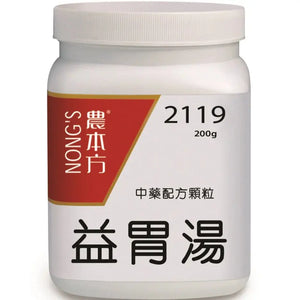
Modern concentrated granules are prepared from traditional Chinese herbs through extraction and concentration processes. They are considerably more convenient to take, requiring only hot water to dissolve. For Yiwei Tang, the dosage is generally adjusted according to the concentration ratio of the granule product; refer to the product instructions for the specific dose. Modern concentrated granules retain the active constituents of the herbs while offering ease of administration, making them well-suited to the demands of contemporary life.

IX. Precautions and Contraindications
1. Dietary Restrictions
While taking Yiwei Tang, spicy, greasy, and irritating foods should be avoided. Such foods readily injure stomach yin and aggravate the condition — for example, chilli peppers and deep-fried foods irritate the gastric mucosa and impede the recovery of stomach yin. Alcohol should also be avoided, as ethanol directly irritates the gastric mucosa and undermines the therapeutic efficacy of the formula.
2. Special Populations
Yiwei Tang should be used with caution in patients with spleen-stomach deficiency-cold. Such patients already have insufficient spleen-stomach yang qi, and as Yiwei Tang is primarily yin-nourishing and stomach-benefiting in nature — with a tendency towards coolness — its use may aggravate spleen-stomach deficiency-cold symptoms, leading to cold epigastric pain, diarrhoea, and other adverse effects. Pregnant women should consult a physician before use, as medications during pregnancy require careful consideration to avoid adverse effects on the foetus.

X. Modern Research
1. Pharmacological Research
Yiwei Tang possesses the ability to benefit the stomach and nourish yin, working through the mechanisms of sweetly-cool stomach nourishment, yin nourishment with heat clearing, and sweetly-cool fluid generation. Its principal indications include Yangming warm disease, heat binding in the bowels, stomach yin damage pattern, stomach yin deficiency, insufficient yin fluids giving rise to poor appetite, anorexia, childhood anorexia, and post-meal epigastric distension, as well as diabetes mellitus. Herbs such as Yuzhu within the formula nourish stomach yin, making it particularly applicable when a warm disease has transformed into heat and damaged the fluids; once stomach yin is restored, all symptoms resolve spontaneously.
Modern research has demonstrated that the constituent herbs of Yiwei Tang — including Shashen and Maidong — possess a broad range of pharmacological activities. Shashen contains multiple active constituents such as polysaccharides and flavonoids that exhibit immune-regulatory and antioxidant effects, helping to strengthen the body's immune defences and protect the gastric mucosa from free radical damage. The steroidal saponins and other components of Maidong display anti-inflammatory and antimicrobial activities, reducing gastric inflammatory responses and promoting repair of gastric tissue.
2. Recent Clinical Research Findings
In the area of clinical research, studies have found that combining Yiwei Tang with Western pharmaceuticals in the treatment of certain gastric conditions — such as Helicobacter pylori-associated gastritis — can improve H. pylori eradication rates and reduce adverse effects associated with the drugs. In addition, Yiwei Tang has shown favourable therapeutic results for stomach yin deficiency symptoms arising after chemotherapy, improving patients' appetite and epigastric discomfort and enhancing their overall quality of life.
Yiwei Tang — Frequently Asked Questions
Q1: What are the actions of Yiwei Tang?
Yiwei Tang nourishes yin and benefits the stomach, generates fluids and moistens dryness, and harmonises the middle to relieve thirst. It is commonly used for symptoms arising from stomach yin deficiency, including dry mouth, reduced appetite, dull gastric pain, and dry and bound stools.
Q2: Which modern conditions is Yiwei Tang indicated for?
In contemporary TCM clinical practice, it is frequently used for individuals with chronic gastritis, dry mouth syndrome, gastro-oesophageal reflux disease, and atrophic gastritis as an adjunct treatment — where the pattern diagnosis is stomach yin deficiency with insufficient yin fluids.
Q3: Is Yiwei Tang suitable for people with chronic dry mouth and gastric discomfort?
For presentations of chronic dry mouth, dry throat, dull burning sensation in the stomach, hunger without desire to eat, and a tendency towards dry stools — where the pattern corresponds to stomach yin deficiency — TCM physicians will commonly prescribe Yiwei Tang as a treatment. However, it cannot replace standard gastroenterological care and diagnosis.
Q4: Who should not take Yiwei Tang?
It is generally unsuitable for patients with spleen-stomach deficiency-cold, cold-damp obstructing the spleen, pronounced diarrhoea, or a yang-deficient constitution. A qualified TCM physician should conduct a full pattern assessment based on the individual's constitution and presenting symptoms before prescribing.
⚠️ This content is for reference only and does not provide medical advice. Consult a healthcare professional for any health concerns.