Yi Guan Jian: Classic TCM Formula for Liver and Kidney Yin Deficiency with Qi Stagnation
Yi Guan Jian (一贯煎), known in English as Linking Decoction, is a classical TCM formula created by Wei Yu-huang for nourishing Liver and Kidney Yin while gently moving Qi to prevent stagnation. It is particularly indicated for hypochondriac pain, chest and abdominal distension, dry mouth and throat, acid reflux, and emotional symptoms such as irritability or depression in patients with Liver and Kidney Yin deficiency. In modern clinical practice, Yi Guan Jian is widely used for chronic liver diseases (hepatitis, cirrhosis), emotional disorders, menopausal symptoms, and any condition where Yin deficiency is complicated by Qi stagnation. By powerfully nourishing Yin and fluids while using a small amount of Qi-moving herb (Chuan Lian Zi) to prevent cloying, it provides effective relief for both physical and emotional symptoms of Yin deficiency with stagnation.

I. Origins and History
1. Source and Background
Yiguan Jian originates from the *Xu Mingyi Leian* (Sequel to Case Records of Famous Physicians, Classified), written by the renowned Qing dynasty physician Wei Zhixiu. Wei Zhixiu was a well-known Qing dynasty physician with deep research and rich clinical experience in Chinese medicine formula studies. The creation of Yiguan Jian was based on prolonged observation and treatment practice summarising conditions such as liver-kidney yin deficiency and liver qi discomfort. Although several treatment methods existed for such conditions in the medical environment of the time, Wei Zhixiu, through continuous exploration, established this distinctive formula, providing a new, effective means for clinical treatment.
2. Transmission and Development
Since its appearance, Yiguan Jian has been widely applied and transmitted in Chinese medicine clinical practice. Physicians throughout history, in the course of applying this formula, continually summarised their experience, further refining and developing it. As Chinese medicine theory continued to be enriched and clinical research deepened, the scope of application for Yiguan Jian gradually expanded — not only playing an important role in treating conditions related to liver-kidney yin deficiency, but also demonstrating distinctive efficacy in certain other conditions of organ yin deficiency with concurrent qi depression, becoming a shining pearl in the treasury of Chinese medicine formulas, valued and esteemed by numerous physicians.

II. Herb Composition and Combination Characteristics (Sovereign, Minister, Assistant, Envoy)
1. Chief Herb: Beishashen
Nature, Flavour, and Channel Affinity: Beishashen (Glehnia Root) is sweet and slightly bitter in flavour, slightly cold in nature, and enters the lung and stomach channels.
Actions: It has the actions of nourishing yin, clearing the lung, benefiting the stomach, and generating fluids. In Yiguan Jian, Beishashen nourishes lung-stomach yin, making it the key herb for nourishing yin and moistening dryness. It can relieve symptoms such as dry cough, dry throat, and thirst caused by lung-stomach yin deficiency, laying the foundation for the formula's action of nourishing yin and clearing heat.
2. Deputy Herb: Maidong
Nature, Flavour, and Channel Affinity: Maidong (Ophiopogon Root) is sweet and slightly bitter in flavour, slightly cold in nature, and enters the heart, lung, and stomach channels.
Actions: It can nourish yin, moisten the lung, benefit the stomach, generate fluids, and clear the heart to relieve vexation. Combined with Beishashen, Maidong strengthens the power to nourish lung-stomach yin fluid, while also clearing the heart and relieving vexation, providing a certain regulatory benefit for symptoms such as vexation and insomnia caused by yin deficiency with internal heat. It further assists Beishashen in exerting its action of nourishing yin, strengthening the formula's overall action of nourishing yin and clearing heat.
3. Assistant Herb: Danggui
Nature, Flavour, and Channel Affinity: Danggui (Angelica Root) is sweet and acrid in flavour, warm in nature, and enters the liver, heart, and spleen channels.
Actions: It has the actions of tonifying and activating blood, regulating menstruation and relieving pain, and moistening the intestines to unblock bowel movements. In Yiguan Jian, although Danggui is warm in nature, when combined with the large contingent of yin-nourishing herbs, it plays the role of nourishing blood and softening the liver. It regulates liver blood, allowing the liver's substance to be nourished and liver qi to move freely, preventing excessive liver qi from overwhelming liver yin, while also assisting the yin-nourishing herbs in better moistening and nourishing the liver's substance, playing a complementary role.
4. Assistant Herb: Shengdihuang
Nature, Flavour, and Channel Affinity: Shengdihuang (Raw Rehmannia Root) is sweet and bitter in flavour, cold in nature, and enters the heart, liver, and kidney channels.
Actions: It has the actions of clearing heat, cooling the blood, nourishing yin, and generating fluids. In Yiguan Jian, Shengdihuang mainly plays the role of nourishing yin, clearing heat, and cooling the blood, strengthening the formula's power to clear heat and drain fire, providing good regulatory effect for liver-kidney yin deficiency with deficiency heat. It works synergistically with the other yin-nourishing herbs to jointly nourish liver-kidney yin and eliminate deficiency heat.
5. Assistant Herb: Gouqizi
Nature, Flavour, and Channel Affinity: Gouqizi (Goji Berry) is sweet in flavour, neutral in nature, and enters the liver and kidney channels.
Actions: It can nourish the liver and kidney, and boost essence to brighten the eyes. Gouqizi focuses on nourishing liver-kidney yin, providing targeted nourishment for the pattern of liver-kidney yin deficiency, allowing the liver and kidney to receive abundant yin-fluid nourishment, helping to restore normal liver-kidney physiological function, and working with the other herbs to strengthen the formula's overall action of nourishing yin, nourishing the liver, and boosting the kidney.
6. Envoy Herb: Chuanlianzi
Nature, Flavour, and Channel Affinity: Chuanlianzi (Sichuan Chinaberry Fruit) is bitter in flavour, cold in nature, and enters the liver, small intestine, and bladder channels.
Actions: It has the actions of soothing the liver, draining heat, moving qi, and relieving pain. In Yiguan Jian, Chuanlianzi plays the key role of soothing the liver and regulating qi. It can vent and drain liver qi, preventing liver qi stagnation from transforming into fire, while also guiding the other herbs into the liver channel, allowing the formula to better exert its action on the liver, playing the role of harmonising the other herbs and guiding them to the channel, allowing nourishing yin and soothing the liver to proceed together without conflict throughout the whole formula.

III. Pathomechanism, Actions, and Indications of Yiguan Jian
1. Pathomechanism
The pathomechanism targeted by Yiguan Jian is mainly liver-kidney yin deficiency with liver qi discomfort. Liver-kidney yin deficiency arises because kidney yin insufficiency cannot nourish liver-wood, causing liver yin to also become deficient; or because liver yin insufficiency, over time, affects kidney yin, ultimately forming the pathological state of combined liver-kidney yin deficiency. Liver qi discomfort is mostly caused by emotional discomfort with liver depression and qi stagnation, or by liver-kidney yin deficiency with the liver losing nourishment, causing liver qi's free-coursing function to become disordered. Liver-kidney yin deficiency is the root, while liver qi discomfort is the branch; the two mutually influence each other, forming a vicious cycle that gives rise to a series of conditions.
2. Actions
Nourishing yin and soothing the liver: The main action of Yiguan Jian is nourishing yin and soothing the liver. By nourishing liver-kidney yin, the liver and kidney receive abundant yin-fluid nourishment, correcting the state of yin deficiency; at the same time, it soothes the liver and regulates qi, allowing liver qi to move freely and smoothly, eliminating signs of qi stagnation. Nourishing yin and soothing the liver complement each other, achieving the goal of regulating the body's yin-yang balance and allowing qi and blood to flow smoothly.
3. Indications
Liver-kidney yin deficiency with liver qi discomfort pattern: Symptoms include pain in the chest, epigastrium, and hypochondriac region, acid regurgitation and a bitter taste, dryness of the throat and mouth, a red tongue with scanty fluid, and a thin, weak or empty, wiry pulse. Pain in the chest, epigastrium, and hypochondriac region is caused by liver qi stagnation with sluggish qi-blood movement, combined with liver-kidney yin deficiency and channel malnourishment; acid regurgitation and a bitter taste mostly arise from liver qi invading the stomach, causing stomach disharmony and stagnation transforming into heat; dryness of the throat and mouth, a red tongue with scanty fluid, and a thin, weak or empty, wiry pulse are all manifestations of liver-kidney yin deficiency. Yiguan Jian provides good therapeutic effect for such conditions, effectively relieving symptoms and improving the body's condition.

IV. Formula Analysis of Yiguan Jian
1. Primarily Nourishing Yin, with Concurrent Soothing of the Liver
The formula uses a generous dose of yin-nourishing herbs such as Beishashen, Maidong, Shengdihuang, and Gouqizi, greatly nourishing liver-kidney yin in large dosage, to tonify the root of liver-kidney yin deficiency. When kidney yin is sufficient, it can nourish liver-wood; when liver yin is nourished, liver qi naturally becomes calm. At the same time, Danggui nourishes blood and softens the liver, assisting the yin-nourishing herbs to moisten and nourish the liver's substance, allowing liver yin-blood to be sufficient and function to become normal. These yin-nourishing herbs combine with one another, forming a powerful yin-nourishing force, improving the pathological state of liver-kidney yin deficiency at the root.
Chuanlianzi soothes the liver, drains heat, moves qi, and relieves pain, serving as the envoy herb to guide the other herbs into the liver channel, soothing the liver and regulating qi, preventing liver qi stagnation from transforming into fire, while also regulating the liver's free-coursing function, allowing liver qi to move freely and smoothly. Combined with the yin-nourishing herbs, one soothing and one nourishing, it both avoids the yin-nourishing herbs being too cloying and obstructing qi, and prevents excessive liver qi from consuming yin fluid, embodying the combination characteristic of nourishing yin and soothing the liver.
2. Tonification Within Movement, Movement Within Tonification
The formula contains both a large contingent of yin-nourishing herbs to tonify liver-kidney yin, and Danggui to tonify and activate blood, and Chuanlianzi to move qi and relieve pain. Danggui tonifies blood to nourish the liver's substance, and activates blood to unblock the vessels, allowing liver blood to be sufficient and flow unobstructed; Chuanlianzi moves qi to soothe liver qi, preventing liver qi stagnation. This combination approach of tonification within movement and movement within tonification allows the formula, while nourishing yin, to avoid qi stagnation and blood stasis caused by tonification, and, while moving qi and soothing the liver, to avoid worsening yin deficiency caused by qi consumption, ensuring the formula's overall efficacy is smoothly exerted, achieving the effect of tonifying without stagnation, and moving without damaging righteous qi.

V. Comparison with Related Formulas
1. Comparison with Liuwei Dihuang Wan
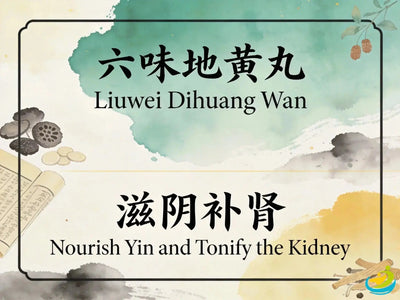
Liuwei Dihuang Wan's main action is nourishing yin and tonifying the kidney, emphasising the nourishment of kidney yin, and is a foundational formula for tonifying kidney yin. Its composition uses Shudihuang, Shanzhuyu, and Shanyao as chief herbs, focusing on tonifying the kidney and filling essence; Fuling, Zexie, and Mudanpi serve as assistant herbs, draining dampness, resolving turbidity, clearing heat, and draining fire. Yiguan Jian, on the other hand, mainly nourishes liver-kidney yin, while also attending to soothing the liver and regulating qi. Its yin-nourishing herbs act relatively more broadly on both the liver and kidney organs, and it includes the liver-soothing herb Chuanlianzi. Liuwei Dihuang Wan is suited to the pattern of simple kidney-yin insufficiency, while Yiguan Jian is more suited to conditions of liver-kidney yin deficiency with concurrent liver qi discomfort; the two differ in pathomechanism and indication.
2. Comparison with Xiaoyao San
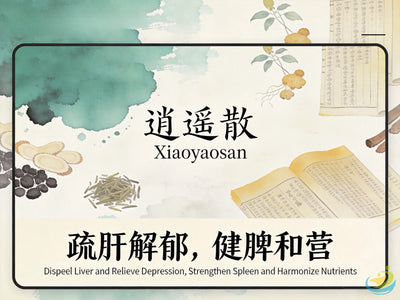
Xiaoyao San's main actions are soothing the liver, resolving depression, nourishing blood, and strengthening the spleen, treating the pattern of liver depression with blood deficiency and spleen weakness. In the formula, Chaihu soothes the liver and resolves depression as the chief herb, Baishao nourishes blood and softens the liver, Danggui nourishes blood and harmonises blood, Baizhu and Fuling strengthen the spleen and eliminate dampness, Bohe disperses liver-depression qi, and wei-processed ginger warms and transports to harmonise the middle. Xiaoyao San emphasises soothing the liver and strengthening the spleen, mainly regulating liver-spleen function; Yiguan Jian mainly nourishes yin and soothes the liver, focusing on nourishing liver-kidney yin and venting liver qi for patterns of yin-blood insufficiency. Xiaoyao San is suited to relatively pronounced liver depression with qi stagnation, accompanied by blood deficiency and spleen weakness; Yiguan Jian is suited to liver-kidney yin deficiency with relatively mild liver qi stagnation transforming into fire; the two differ in action and applicable condition.

VI. Clinical Applications
1. Chronic Hepatitis
For chronic hepatitis patients presenting with symptoms of liver-kidney yin deficiency and liver qi discomfort, such as dull hypochondriac pain, dry mouth and throat, and dizziness, Yiguan Jian may serve as a commonly used formula. Its action of nourishing yin and soothing the liver can nourish liver yin fluid, improve liver function, relieve symptoms of liver depression with qi stagnation, and promote the repair and regeneration of liver cells, holding positive significance for the treatment and recovery of chronic hepatitis.
2. Chronic Gastritis
For chronic gastritis patients presenting with dull epigastric pain, dry mouth with a bitter taste, and epigastric discomfort, accompanied by manifestations of liver qi discomfort such as depressed mood or irritability, together with yin-deficiency signs such as a red tongue with scanty coating, Yiguan Jian may be applied. It can nourish yin and the stomach, while also soothing the liver and regulating qi, regulating the stomach's qi mechanism, relieving epigastric discomfort, and improving the state of the gastric mucosa, helping in the treatment of chronic gastritis.
3. Intercostal Neuralgia
For intercostal neuralgia patients where hypochondriac pain is caused by liver-kidney yin deficiency with liver qi discomfort, with the pain mostly dull or distending in nature, accompanied by symptoms such as dry throat and mouth and vexation, Yiguan Jian may be applied based on pattern differentiation. By nourishing yin and soothing the liver, it nourishes the channels, relieving intercostal nerve pain, improving local qi-blood movement, and reducing the patient's suffering.

VII. Clinical Modifications
1. More Severe Hypochondriac Pain
Chaihu (Bupleurum Root) and Xiangfu (Cyperus Rhizome) may be added to strengthen the action of soothing the liver, regulating qi, and relieving pain. Chaihu can further soothe the liver and resolve depression; Xiangfu excels at moving qi and relieving pain; combined with Chuanlianzi in the original formula, they strengthen the formula's effect of soothing the liver, regulating qi, and relieving pain, more effectively relieving hypochondriac pain symptoms.
2. More Severe Yin Deficiency
Xuanshen (Scrophularia Root) and Shihu (Dendrobium Stem) may be added to strengthen the action of nourishing yin. Xuanshen nourishes yin and drains fire; Shihu benefits the stomach, generates fluids, nourishes yin, and clears heat; together with Beishashen, Maidong, Shengdihuang, and the other yin-nourishing herbs in the formula, they can more effectively nourish liver-kidney yin and improve yin-deficiency symptoms.
3. Insomnia with Excessive Dreaming
Suanzaoren (Sour Jujube Seed) and Baiziren (Arborvitae Seed) may be added to nourish the heart and calm the spirit. Suanzaoren and Baiziren have the action of nourishing the heart and calming the spirit, providing good regulatory benefit for vexation with insomnia and excessive dreaming caused by liver-kidney yin deficiency with liver qi discomfort, calming the patient's heart-spirit and improving sleep quality.

VIII. Dosage and Preparation (Traditional Method and Modern Concentrated Granules)
1. Traditional Method
Beishashen, Maidong, Danggui Shen, Shengdihuang, and Gouqizi, 3 qian each; Chuanlianzi, 1.5 qian. Combine the above herbs with an appropriate amount of water, soak for around 30 minutes, then simmer over a low flame for 30–40 minutes; strain off approximately 200 ml of liquid. One dose per day, taken warm in two divided doses. The traditional decoction method allows the herbs' active constituents to be fully extracted, but is relatively laborious, requiring the patient to prepare their own decoction equipment and master the decoction method.
2. Modern Concentrated Granules
A modern concentrated granule form of Yiguan Jian is also available on the market today. Generally, it is dissolved and taken according to the dosage specified on the product label, typically one dose per day, in two divided doses. Modern concentrated granules are convenient to take and carry, suiting the fast pace of modern life, though the taste and manner of release of the herbal constituents may differ slightly from the traditional decoction.

IX. Precautions and Contraindications
1. Use with Caution in Spleen-Stomach Deficiency-Cold
Most of the herbs in Yiguan Jian are yin-nourishing, heat-clearing substances with a nature leaning toward cold; those with spleen-stomach deficiency-cold may experience an increased burden on the spleen and stomach after taking it, leading to symptoms such as epigastric discomfort, abdominal pain, and diarrhoea. Patients with spleen-stomach deficiency-cold already have insufficient yang qi and relatively weak transportation and transformation function, making it difficult for them to tolerate the stimulation of cold herbs, and should therefore use it with caution.
2. Avoid Spicy and Greasy Foods
While taking Yiguan Jian, spicy and greasy foods should be avoided. Spicy foods readily foster fire and generate heat; greasy foods are difficult to digest and increase the burden on the spleen and stomach, affecting the absorption and efficacy of the herbs. These foods may also interact with the herbs, which is unfavourable for recovery from the condition, and should therefore be strictly avoided.

X. Modern Research
1. Hepatoprotective Action
Yiguan Jian is a classical formula for nourishing yin and soothing the liver, with the actions of nourishing yin and blood, and nourishing water to moisten wood; it mainly treats liver-kidney yin deficiency, liver-qi-stagnation pattern, and chest, epigastric, and hypochondriac pain, hypochondriac pain, acid regurgitation with a bitter taste, and intercostal neuralgia caused by liver qi discomfort, and is suited to chronic hepatitis, chronic gastritis, gastric and duodenal ulcers, liver disease, neurosis, and hernia and abdominal masses. The formula is composed of Gouqizi, Chuanlianzi, and Danggui, among others; when the liver's substance is nourished, retained phlegm-fluid can also be regulated. Patients commonly present with a white, greasy tongue coating and a deep, wiry or empty, wiry pulse, and it is prepared by decoction in water.
Modern research shows that Yiguan Jian has a certain hepatoprotective action. Its action of nourishing yin and soothing the liver helps improve hepatic blood circulation, promote hepatocyte metabolism, and strengthen the liver's detoxification function. Some experimental studies have found that Yiguan Jian can reduce hepatic inflammatory response and lower liver-damage markers, providing a certain protective effect against both chemical liver injury and immune liver injury, providing modern scientific evidence for its application in treating liver disease.
2. Regulating Immune Function
Yiguan Jian also has an action of regulating the body's immune function. Through actions such as nourishing yin and blood, it regulates the body's yin-yang balance and strengthens the body's immunity. Research shows that Yiguan Jian can regulate the activity of immune cells and improve states of immune dysfunction, potentially holding therapeutic value for certain autoimmune diseases, providing new avenues for further expanding the clinical application of Yiguan Jian.
💡 Yiguan Jian — Frequently Asked Questions & Medication Safety (FAQ)
Q1: What are the core actions and mechanism of Yiguan Jian?
Yiguan Jian is precisely combined from six classical herbs — Beishashen, Maidong, Danggui, Shengdihuang, Gouqizi, and Chuanlianzi — with the core actions of nourishing yin, soothing the liver, regulating qi, and relieving pain. Chinese medicine holds that "the liver is a firm organ, whose substance is yin while its function is yang" — the liver requires abundant yin-blood nourishment (its substance being yin) in order to smoothly course the qi mechanism throughout the body (its function being yang). When liver-kidney yin is deficient internally and the channels lose nourishment, liver qi becomes rebellious and stagnant due to dryness and heat. The essence of this formula's combination perfectly embodies the supreme Chinese medicine conditioning wisdom of "nourishing yin to soften the liver, moistening dryness to regulate qi": Shengdihuang is used generously as the chief herb, greatly tonifying true yin in the lower burner; combined with Shashen, Maidong, and Gouqizi, sweet, cooling, and moistening, continuously filling the yin fluid of the liver channel; and Danggui is added to nourish blood, harmonise blood, unblock the channels, and soften the liver. The most ingenious touch of the formula's combination lies in adding, within the large contingent of yin-nourishing, dryness-moistening herbs, a counterbalancing very small amount of the bitter, cold herb Chuanlianzi, to clear and drain liver fire and soothe the liver to regulate qi. The whole formula not only attacks without damaging righteous qi, but also breaks the conventional rule that "regulating qi must use fragrant, drying herbs (such as Xiangfu or Chaihu)," avoiding fragrant, drying herbs further scorching the already-scarce liver yin. HJMEDICAL notes that this formula is an absolute model of using moistening in place of dispersing, and softness overcoming firmness, able to precisely restore the parched, qi-obstructed liver-gallbladder collaterals to full patency.
Q2: What conditions is Yiguan Jian mainly used for in modern medicine?
Modern clinical practice and pharmacological research in hepatic microcirculation and gastrointestinal smooth muscle dynamics show that this formula is widely applied in treating chronic hepatitis, early-stage liver cirrhosis (anti-hepatic-fibrosis), gastroesophageal reflux disease, intercostal neuralgia, chronic atrophic gastritis, gastric ulcers, neurosis, generalised anxiety disorder, and female perimenopausal syndrome. When patients — particularly those under immense work pressure, chronically staying up late and fatigued, or with chronic liver-stomach disease — present with typical manifestations of "liver-kidney yin deficiency with liver qi rebelling," such as recurrent stabbing, distending pain in the chest and hypochondriac region or both flanks, dull, burning pain in the epigastrium, frequent acid reflux and heartburn, a bitter taste with regurgitation of bitter or sour fluid, unusually dry throat, irritability with a tendency to anger, heat in the palms and soles, a dry, red tongue body, and scanty tongue coating or even peeled, bright red tongue with no coating, long-term rational use of this formula can significantly inhibit hepatic stellate cell activation to delay hepatic fibrosis, promote hepatocyte repair, regulate gastrointestinal peristaltic smooth muscle tone, and effectively relieve dull, distending pain caused by somatised emotional distress. Consultation with HJMEDICAL or a qualified physician for pattern-based diagnosis is recommended.
Q3: What are the strict pattern-based contraindications for taking Yiguan Jian?
This formula is rich in a large contingent of sweet, cold, cloying substances such as Dihuang and Maidong, with an extremely rich, moistening nature that can very readily hinder spleen-stomach transportation and transformation instinct; its contraindications are therefore clearly defined. It is absolutely contraindicated in those with spleen-stomach deficiency-cold and exuberant middle-burner dampness (a phlegm-damp constitution presenting with year-round cold, bloated epigastrium and abdomen, markedly reduced appetite, indigestion, pre-dawn diarrhoea or loose, unformed stools, frequent cough with thin, white phlegm, a pale, swollen tongue, and a thick, white, slippery, greasy tongue coating). Careless misuse will cause the cloying herbs to firmly adhere to and envelop the cold-dampness within the body, severely damaging middle-burner stomach qi and obstructing the qi mechanism, triggering severe abdominal distension, stomach upset with vomiting, and profuse loose stools with dehydration. It is also absolutely contraindicated in the early stage of externally contracted wind-cold or wind-heat colds, to prevent trapping the pathogen inside. Important medication safety note: because the Chuanlianzi in the formula carries a trace amount of toxicity and the whole formula is extremely cloying, pregnant women and breastfeeding women should use it cautiously, at a reduced dose, only under the close guidance of a qualified TCM practitioner following strict constitutional assessment. During treatment, smoking, alcohol, spicy foods, raw and cold foods, hard foods, and all rich, greasy, sticky, hard-to-digest foods should be strictly avoided. Those uncertain of their own constitution should seek professional assessment at an HJMEDICAL partner medical institution.
⚠️ This content is for reference only and does not provide medical advice. Consult a healthcare professional for any health concerns.