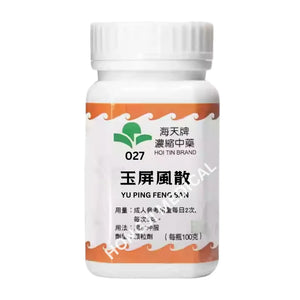
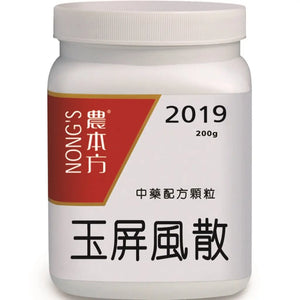
Yu Ping Feng San: The Classic TCM Formula for Recurrent Colds, Spontaneous Sweating and Immune Deficiency
In life, there is a group of people who seem to catch a cold whenever the weather changes slightly. They have frequent fevers, stuffy noses, and runny noses all year round. Cold medicine may help for a while, but the symptoms often return after a little exposure to wind or cold. They sweat easily even when resting, sweat heavily with mild activity, and often feel tired and sensitive to drafts.
Children in this group may suffer from frequent colds and tonsillitis, while older adults often experience repeated respiratory infections and take a long time to recover. Others struggle with allergic rhinitis or chronic hives that flare up whenever they encounter cold air, wind, or dust, greatly affecting their daily lives.
From the perspective of traditional Chinese medicine (TCM), these recurring problems are often linked to weak lung qi and insufficient defensive qi. Defensive qi can be understood as the body's natural protective system that guards the skin and helps keep external pathogens away. When this protective energy is weak, the body becomes more vulnerable to wind and cold, making illnesses easier to catch and harder to shake off. At the same time, the pores cannot close properly, leading to spontaneous sweating and sensitivity to wind.
The formula we will discuss today, Yu Ping Feng San (Jade Screen Powder), is a classic TCM prescription designed to strengthen this natural defense system. Originating from Jiuyuan Fang and supported by nearly 800 years of clinical use, it contains only three herbs, yet its formulation is both simple and remarkably effective. With gentle medicinal properties, it addresses both the underlying cause and the symptoms by replenishing lung qi, strengthening defensive qi, and enhancing the body's resistance to illness.
For centuries, Yu Ping Feng San has been regarded as a trusted remedy for people who easily catch colds, sweat excessively, or have a weak constitution. It remains one of the most commonly used formulas for daily wellness and preventive care.
This article will provide a comprehensive introduction to Yu Ping Feng San, covering its historical background, traditional stories, standard ingredients, therapeutic principles, key benefits, suitable users, precautions, dosage, and common clinical modifications. By understanding how it works, readers can better determine whether this classic formula may be appropriate for themselves and their families, helping to reduce the burden of recurrent colds and spontaneous sweating.
I. Tracing the Origin of Yu Ping Feng San: A Classic Formula for Strengthening the Body's Protective Barrier
The exact origin of Yu Ping Feng San remains a topic of discussion among scholars. Most agree that it first appeared in Jiuyuan Fang, a medical text compiled by Zhang Song during the Southern Song Dynasty in 1213. Although the original work has been lost, the formula was preserved in later medical writings. The earliest surviving text that clearly records the name "Yu Ping Feng San" is Danxi's Heart Method by Zhu Danxi of the Yuan Dynasty.
After centuries of clinical practice, Yu Ping Feng San has earned a lasting reputation as one of the most important formulas for strengthening the body's external defenses and preventing illness. Today, it is available in various forms, including granules, oral liquids, and tablets, and is widely used both in clinical settings and for everyday health maintenance.
The name "Jade Screen Powder" carries a rich meaning. The word "jade" symbolizes something precious, gentle, and reliable, reflecting the mild nature and valuable effects of the formula. The word "screen" refers to the traditional folding screens used in ancient homes to block wind. In the same way, this prescription is believed to create a protective barrier for the body, helping to resist external pathogens and maintain health.
Another interpretation links the name to Saposhnikovia root (Fang Feng), one of the three herbs in the formula. Since Fang Feng helps dispel wind pathogens while Astragalus and Atractylodes strengthen qi and the body's defenses, the name "Yu Ping Feng San" vividly captures its central function: building a stronger protective shield against illness.
1. Core Pathogenesis: Weak Lung Qi, Deficient Defensive Qi, and Reduced Resistance to External Pathogens
The fundamental condition that Yu Ping Feng San addresses is known in TCM as "deficiency of lung qi and defensive qi, with looseness of the body's protective surface."
Traditional Chinese medicine teaches that the lungs govern qi and are closely connected to the skin and body hair. Defensive qi acts like the body's security system, circulating near the surface to warm the muscles, regulate sweating, and protect against external pathogens.
When a person experiences chronic overwork, prolonged illness, aging, or poor digestion that limits the production of qi and blood, this protective system becomes weakened. As a result, the body's natural defenses are compromised, and the pores no longer function properly.
People with this pattern often experience:
-
Frequent colds after slight exposure to wind or cold;
-
Persistent runny noses, coughing, or respiratory infections;
-
Spontaneous sweating during the day, even without physical activity;
-
Fear of wind and sensitivity to cool environments;
-
Ongoing fatigue and low energy levels;
-
Slow recovery after illness.
In simple terms, the body's "protective gate" is no longer firmly closed. External pathogens can enter more easily, while body fluids escape through excessive sweating. The purpose of Yu Ping Feng San is to help rebuild this natural barrier, strengthen resistance, and support long-term wellness.

II. Analyzing Yupingfeng San: The Exquisite Logic of the "Jade Screen"
The composition of Yupingfeng San is a testament to the philosophy of "simple yet not simplistic." Consisting of only three herbs—Astragalus membranaceus, Atractylodes macrocephala, and Saposhnikovia divaricata—it strictly follows the "Monarch, Minister, and Assistant" principle of Traditional Chinese Medicine (TCM). This formula masterfully balances tonification with dispersion, addressing both the root cause and the external symptoms. It is renowned for its mild nature, tonifying the body without causing stagnation and dispelling pathogens without depleting healthy energy. As the "first prescription for supplementing Qi and strengthening the exterior," its logic reflects the profound wisdom of TCM.
1. Standard Composition and Dosage
The efficacy of Yupingfeng San relies heavily on the precise ratio and preparation of its three components:
- Classical Ratio: In the ancient text Jiuyuan Fang, the formula is recorded as a powder using 60g of Honey-fried Astragalus, 60g of Atractylodes, and 30g of Saposhnikovia. This 2:2:1 ratio is considered the core proportion for maximizing the synergy between strengthening the body's defense and expelling wind.
- Modern Decoction Dosage: In contemporary clinical practice, common dosages for a daily decoction are 15–30g of Astragalus, 15–20g of Atractylodes, and 10–15g of Saposhnikovia. These amounts are adjusted based on the patient's constitution and the severity of their symptoms. For patent medicines like granules or oral liquids, adults typically follow the standard instructions, while dosages for children are generally halved.
- Key Preparation Points: It is crucial that the Astragalus is stir-fried with honey, which enhances its ability to replenish Qi and consolidate the exterior. Because the overall properties of the formula are slightly warm, individuals with "Yin deficiency and excessive fire" (marked by dryness and heat) should use it with caution. Furthermore, the dosage of Saposhnikovia must remain smaller than the tonifying herbs to follow the principle of "reinforcing is greater than dispersing," preventing the depletion of healthy Qi.
2. Analysis of Individual Herbal Functions
To understand why this formula is so effective, one must examine the specific role each herb plays within the "Monarch, Minister, and Assistant" framework:
-
The Monarch (Principal): Astragalus membranaceus (Honey-fried) Astragalus is the "commander" of the formula. Sweet and slightly warm, it enters the Spleen and Lung meridians. Known as the "best of all Qi-tonifying herbs," its primary role is to replenish Qi, lift Yang, and consolidate the exterior. By strengthening the Lung and Defensive Qi (Wei Qi), it acts like a "protective guard," fundamentally solving the vulnerability of the body’s surface. Honey-frying focuses its energy on the exterior, reducing the leakage of body fluids (spontaneous sweating) and enhancing the immune response against external pathogens. Modern science confirms that its polysaccharides significantly boost immune function and anti-inflammatory activity.
-
The Minister (Assistant): Atractylodes macrocephala Atractylodes supports the Monarch by focusing on the Spleen and Stomach. In TCM, the Spleen is the "foundation of acquired constitution" and the source of Qi and Blood. By invigorating the Spleen, Atractylodes ensures a steady supply of energy to the Lungs—a logic known as "strengthening the Earth to generate Metal." It also dries dampness, which prevents the internal "muck" that often leads to fatigue and physical heaviness. Its presence ensures that the Qi being supplemented has a solid foundation, making the body’s defense more durable and resilient.
-
The Assistant: Saposhnikovia divaricata Saposhnikovia is the "finishing touch" of the formula. Often called the "moistening agent among wind drugs," it is mild and pungent, allowing it to dispel wind from the body's surface without being too harsh. Its role is twofold: it expels existing wind pathogens (relieving itching or congestion) and prevents the tonifying herbs from "trapping" pathogens inside the body. When paired with Astragalus, a unique synergy occurs: Astragalus strengthens the defense without retaining the enemy, while Saposhnikovia dispels the enemy without harming the body’s guards. This balance of "supplementation and dispersion" is the secret to the formula's success.
3. Summary of the Synergistic Logic
The logic of Yupingfeng San forms a complete system of "Tonifying, Consolidating, and Dispersing."
- Astragalus serves as the core, enhancing the Defensive Qi to resolve the root cause of deficiency.
- Atractylodes acts as the support, building a solid biochemical foundation for Qi and Blood through the Spleen.
- Saposhnikovia functions as the scout, patrolling the exterior to dispel wind and ensuring that tonification does not lead to stagnation.
As the traditional formula song describes: "Yupingfeng San uses Saposhnikovia, and with Astragalus, the effect is mutually reinforcing; Atractylodes invigorates Qi to further strengthen the defense, making it ideal for those with exterior deficiency and sweating." By primarily tonifying Qi and secondarily expelling evil, this formula acts exactly like its name—a "Jade Screen" (Yupingfeng)—guarding the body against the elements and promoting long-term constitutional health.
III. Core Efficacy and Applications of Yupingfeng San
Based on its herbal compatibility, Yupingfeng San focuses on tonifying Qi to strengthen the exterior, expelling wind, and stopping excessive sweating. It is primarily indicated for "deficiency of Lung and Defensive Qi," a state where the body's protective barrier is weakened. Its applications span from traditional remedies to modern clinical use, benefiting children, the elderly, and stressed adults.
1. Traditional Clinical Uses
Originating from ancient texts like Danxi Xinfa, Yupingfeng San remains a cornerstone of TCM for treating imbalances caused by a "loose" exterior defense. Key traditional indications include:
- Spontaneous Sweating: Excessive sweating during the day without physical exertion, often worsening with movement. This is typically accompanied by fatigue, a pale complexion, and a fear of wind, signaling that the body cannot "hold" its fluids.
- Susceptibility to Wind Pathogens: A weak constitution marked by frequent colds or lingering respiratory symptoms (nasal congestion, clear discharge) due to a failure of the Defensive Qi to ward off external illness.
- Wind-Related Ailments: Skin itching or limb soreness caused by wind pathogens invading the body's superficial layers, particularly when the person is already Qi-deficient.
2. Modern Medical Applications
Modern lifestyles—characterized by stress, lack of sleep, and irregular diets—have expanded the use of Yupingfeng San. It is now widely used for sub-health conditioning and chronic issues:
- Respiratory Health: Used for recurrent respiratory infections in children, chronic bronchitis, allergic rhinitis, and asthma remission. It helps enhance immunity and reduces the frequency of attacks.
- Dermatological Conditions: Effective for chronic urticaria (hives), allergic dermatitis, and eczema where symptoms are aggravated by wind or environmental changes.
- Urinary Support: Assists in managing chronic glomerulonephritis and proteinuria. By strengthening the exterior, it helps prevent relapses often triggered by the common cold.
- Sub-health and Recovery: Ideal for those suffering from "burnout" or chronic fatigue. It is also highly effective for postpartum recovery, post-surgical weakness, and elderly care to promote physical restoration and immune resilience.
3. Self-Assessment for Use
To determine if Yupingfeng San is suitable for you, check if you meet three or more of the following criteria:
- Constitution: Do you often feel listless or fatigued, especially after slight activity? Is your tongue pale with a thin white coating?
- Core Symptoms: Do you sweat easily even when resting? Do you catch cold more than six times a year or feel an unusual dread of breezy environments?
- Organ Function: Do you suffer from poor appetite, loose stools, or shortness of breath that worsens with exertion?
- Specific Triggers: Do you have chronic allergies (rhinitis/hives) that flare up when exposed to wind or dust?
- Lifestyle Factors: Do you frequently stay up late, work under high stress, or are you currently recovering from a major illness or childbirth?
IV. Contraindicated Populations and Precautions
While Yupingfeng San is a mild and safe formula, it is not a "one-size-fits-all" remedy. Its core function is to tonify Qi and strengthen the exterior, specifically targeting Lung and Defensive Qi deficiency. Using it for the wrong constitution may not only be ineffective but could potentially worsen existing symptoms.
1. Absolutely Contraindicated Groups
- Internal Damp-Heat: Symptoms include a bitter or sticky taste in the mouth, sticky stools, a yellow greasy tongue coating, and a heavy sensation in the limbs. Since Yupingfeng San is warming, it can exacerbate heat and dampness. Such individuals should focus on clearing heat and dampness instead.
- Allergic Individuals: Anyone with a known sensitivity to Astragalus, Atractylodes, or Saposhnikovia should avoid this formula, as it may cause skin itching, rashes, nausea, or vomiting.
- Excessive Heat Sweating: Profuse sweating accompanied by high fever, restlessness, and a bitter mouth is caused by "excess heat," which is the opposite of the "deficiency sweating" this formula treats. Taking it in this state will likely aggravate the condition.
2. Precautions for Taking the Medicine
- Dietary Restrictions: During the treatment period, strictly avoid raw, cold, greasy, and spicy foods. You should also refrain from alcohol, coffee, and strong tea, as these can damage the Spleen and Stomach and reduce the formula's efficacy. A light diet including yam, lotus seeds, or millet is recommended.
- Lifestyle Habits: Avoid staying up late or overworking, as these habits consume vital Qi. It is important to stay warm and dry off immediately after sweating to prevent "wind pathogens" from invading. Moderate exercise like Tai Chi or brisk walking can help improve Qi circulation.
- Medication Course: This is a regulating formula with a slow onset. It usually requires 2–4 weeks of continuous use to show significant results. For long-term conditioning, it is advised to stop for a break after 1–2 months or consult a doctor to prevent the buildup of internal heat.
- Special Populations: Children, the elderly, and those with very weak constitutions should use a reduced dosage under medical supervision. Pregnant and lactating women must be evaluated by a physician before use.
- Patent Medicine Use: If using granules or oral liquids, follow the package instructions strictly. If symptoms do not improve after two weeks, seek medical advice rather than increasing the dose yourself.
- Drug Compatibility: Avoid taking this alongside heavy tonics (like Ginseng or Pilose Antler) or extremely cold-natured herbs (like Coptis) unless directed. Crucially, stop taking Yupingfeng San during an active cold; wait until the cold has healed before resuming conditioning.
V. Dosage, Administration, and Clinical Modifications
1. Correct Dosage and Usage
- Powder Form: Herbs are ground in a 2:2:1 ratio. Take 6–9g each time, 2–3 times daily with warm water. Taking it 30 minutes after meals helps reduce irritation to the Spleen and Stomach.
- Decoction Form: Use Astragalus (15–30g), Atractylodes (15–20g), and Saposhnikovia (10–15g). Soak in 600ml of water for 30 minutes, bring to a boil, then simmer for 20–30 minutes. Filter and drink the juice in two doses (morning and evening) after meals.
- Dose Adjustments: For severe sweating, increase the Astragalus; for weak digestion, increase the Atractylodes; for frequent colds, slightly increase the Saposhnikovia (ensuring it does not exceed the amount of the other two herbs).
- Patent Medicine (Granules/Liquid): These are convenient for daily use. Adults typically take 5g (one bag) three times daily. Children usually take 2.5g three times daily.
2. Common Clinical Modifications (Professional Guidance Required)
In TCM, formulas are often tailored to the individual. Under a doctor's guidance, Yupingfeng San can be modified as follows:
- For Severe Sweating: Add Floating Wheat (Fu Xiao Mai) or Calcined Oyster (Mu Li) to enhance the "stopping sweat" effect.
- For Frequent Colds and Congestion: Add Cinnamon Twig (Gui Zhi) and Ginger to warm the channels and dispel cold.
- For Weak Spleen and Poor Appetite: Add Chinese Yam (Shan Yao) and Poria (Fu Ling) to strengthen the digestive foundation.
- For Significant Fatigue: Add Codonopsis (Dang Shen) and Honey-fried Licorice to boost overall Qi replenishment.
- For Allergic Rhinitis/Itching: Add Magnolia Flower (Xin Yi) or Cicada Slough (Chan Tui) to dispel wind and open the nasal passages.
- For Postpartum or Post-Surgical Recovery: Add Angelica Sinensis (Dang Gui) and Rehmannia (Di Huang) to nourish both Qi and Blood simultaneously.
VI. Clinical Case References
To better understand the practical effects of Yupingfeng San, consider these two real-world clinical cases. These examples demonstrate how the formula is applied based on individual syndrome differentiation. Note: These cases are for educational purposes and should not be used as a substitute for professional medical advice.
Case 1: Recurrent Respiratory Infections in Children
Patient: Male, 6 years old. History: The child suffered from recurrent colds and tonsillitis for over a year, occurring 1–2 times per month. Symptoms included spontaneous sweating (worsening after activity), fear of wind, fatigue, poor appetite, and a pale complexion. He had used antibiotics frequently with poor long-term results. Diagnosis: Lung and Defensive Qi deficiency with an insecure exterior. Treatment: Yupingfeng Granules (2.5g, 3 times daily) combined with a diet of yam and millet porridge. Strenuous exercise and cold exposure were avoided. Results: After one week, sweating and fear of wind decreased significantly. After one month, the colds stopped and his energy levels returned. Following a two-month consolidation period, his constitution was significantly strengthened. A six-month follow-up showed only one mild cold and no recurrence of tonsillitis.
Case 2: Allergic Rhinitis and Exterior Deficiency in an Adult
Patient: Female, 32 years old. History: A three-year history of allergic rhinitis, flaring up during seasonal changes or exposure to wind. Symptoms included nasal congestion, clear discharge, sneezing, chronic fatigue, and dizziness. She also suffered from spontaneous sweating even while at rest. Diagnosis: Lung and Defensive Qi deficiency invaded by wind pathogens. Treatment: A modified Yupingfeng Decoction including Astragalus (20g), Atractylodes (15g), and Saposhnikovia (10g), supplemented with Magnolia Flower and Xanthium to open the nasal passages. Results: Within seven days, her sweating and fear of wind improved. After one month, the nasal symptoms and dizziness were essentially gone. After a two-month course, her allergic rhinitis had not recurred, and she no longer caught colds easily when exposed to the wind.
VII. Conclusion: A Timeless Shield for Health
As a classic TCM prescription with nearly 800 years of clinical history, Yupingfeng San remains the "benchmark formula" for tonifying Qi and strengthening the body's exterior. Its core advantage lies in its ability to address both the root (Qi deficiency) and the symptoms (wind invasion). By using Astragalus and Atractylodes to build the foundation and Saposhnikovia to patrol the surface, it provides a gentle yet effective regulation of the body's immune barrier.
However, it is vital to remember that Yupingfeng San is specifically designed for "Lung and Defensive Qi deficiency." It is not a universal cure for all types of colds or sweating. Those with internal heat, Yin deficiency, or damp-heat accumulation must avoid it to prevent worsening their condition. Furthermore, as a regulatory remedy, it requires patience and a consistent course of treatment under the guidance of a professional TCM practitioner.
Ultimately, true health requires more than just medicine. To permanently strengthen your "Jade Screen," you must combine herbal support with a healthy lifestyle. Avoiding late nights, eating warming foods that support the Spleen, and engaging in moderate exercise are essential steps. By nurturing your internal energy, you can reach the ideal state described in ancient texts: "When healthy Qi resides within, pathogenic factors cannot invade." We hope this guide helps you use this ancient wisdom to protect the health of yourself and your family.
⚠️ This content is for reference only and does not provide medical advice. Consult a healthcare professional for any health concerns.