Fruits and seedsAstringentSemen Nelumbinis

Lian Zi (Lotus Seed)

蓮子 · Lian Zi

Astringent herb in Traditional Chinese Medicine. Traditional functions: Supplements the spleen, stops diarrhea, promotes the kidney, astringes essence, nourishes heart, calms spirit.

In-Depth Guide

Want to learn more about Lian Zi?

Read our in-depth guide →

Quick Facts

Latin NameSemen Nelumbinis
Chinese Name & Pinyin蓮子 · Lian Zi
Medicinal PartFruits and seeds
Efficacy CategoryAstringent
Botanical OriginThe dried mature seed of Nelumbo nucifera Gaertn.(Nymphaeaceae). The material removed Lian zi xin is called Lian rou.
Nature & FlavourSweet, Astringent; Neutral
Channels EnteredSpleen, Kidney, Heart

What Is Lian Zi?

Lian Zi (Lotus Seed) is a medicinal herb of Traditional Chinese Medicine.

Primarily produced in the Chinese provinces of Hunan, Hubei, Fujian, Jiangsu, Zhejiang, Jiangxi.

Nature & Flavour: Sweet, Astringent; Neutral
Channels Entered: Spleen, Kidney, Heart

Lian Zi: Materia Medica Profile

Identification & Quality Standard

Semen Nelumbinis

Botanical Origin

The dried mature seed of Nelumbo nucifera Gaertn.(Nymphaeaceae). The material removed Lian zi xin is called Lian rou.

Production Regions

Primarily produced in the Chinese provinces of Hunan, Hubei, Fujian, Jiangsu, Zhejiang, Jiangxi.

Quality Requirements

Superior medicinal material is large and full.

Macroscopic Features

Slightly elliptical or sub-spherical, 1.2~1.8cm long, 0.8~1.4cm diameter. Externally pale yellowish-brown to reddish-brown, with thin longitudinal line and relatively wide veins. One end has nipple-like projection at the center, dark brown, often with cracks, slightly indented surroundings. Hard texture, thin seed coat, not easily peeled off. 2 cotyledons, yellowish-white, fat and thick with hollow center, with green core. faint odor; sweet slightly astringent taste; Lian zi xin core tastes bitter.
Traditional TCM Properties

Sweet, Astringent; NeutralSpleenKidneyHeart

Traditional Functions

Supplements the spleen, stops diarrhea, promotes the kidney, astringes essence, nourishes heart, calms spirit. Apply to splenasthenic diarrhea due to spleen deficiency, emissions, leukorrhea, palpitation and insomnia.

How Lian Zi Is Used in TCM

In the Chinese materia medica, Lian Zi is classified among the Astringent herbs. It appears in 3 classical formulas in our library.

Formulas containing Lian Zi are traditionally used for:

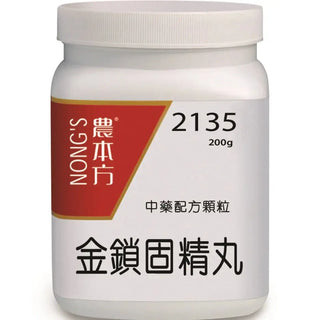
Frequent NocturiaLow LibidoPremature EjaculationDiarrheaPoor AppetiteBloatingSpleen Qi DeficiencyFrequent UrinationDry Mouth & ThroatFatigue & Low Energy

Classical Formulas Containing Lian Zi

Frequently Asked Questions

What is Lian Zi? Are Lian Zi Rou, Lian Zi Xin, Lian Xu and Shi Lian Zi the same?
Official Lian Zi (莲子) is the dried ripe seed of Nelumbo nucifera. The pharmacopoeial name is Nelumbinis Semen. Hunan, Hubei and Fujian are the main sources (Xiang Lian, Jian Lian). Lian Zi Rou is the cotyledon after the coat—and often the plumule—is removed; this is what most decoctions use. Lian Zi Xin is the green plumule: bitter-cold, clears the Heart, a separate drug. Lian Xu is the stamen: secures the Kidney and astringes essence, weak as a tonic. Shi Lian Zi is usually the older shelled or mud-fallen fruit, leaning to clear damp-heat and stop dysentery—not interchangeable by weight with lotus flesh. Write Lian Zi or Lian Zi Rou and crush it; write Lian Zi Xin separately when the Heart must be cleared.
What are the TCM properties and traditional uses of Lian Zi?
According to the Chinese Pharmacopoeia, Lian Zi is sweet, astringent and neutral, enters the Spleen, Kidney and Heart channels, and acts to fortify the Spleen and stop diarrhea, stop discharge, boost the Kidney and astringe essence, and nourish the Heart to calm the spirit. It is used for Spleen-deficiency diarrhea, vaginal discharge, seminal emission, palpitations and insomnia. Sweet-astringent-neutral: tonifying and binding—suited to vacuity that fails to hold, not to focal distention or dry bound stool.
How do raw and dry-fried Lian Zi differ? Must the plumule be removed and the seed crushed?
Raw is neutral leaning cool and more marked to nourish the Heart and calm the spirit. Dry-fried is fragrant, leaning warm, and stronger to fortify the Spleen, stop diarrhea and bind. Decoction should be plumule-removed and crushed or it will not extract; keeping the plumule adds Heart-clearing and a more bitter taste. Food-therapy congee may be simmered whole for a long time. Dual food-and-medicine use still requires edible dry lotus or slices; moldy or worm-eaten lots are unused.
Read the complete guide →

Learn More About Lian Zi

Explore our in-depth article covering the traditional uses, properties, functions, and TCM context of Lian Zi.

Read the Lian Zi Guide →

Medical Disclaimer — This article is provided for educational purposes only and describes traditional Chinese medicine concepts. It is not medical advice, and it is not intended to diagnose, treat, cure or prevent any disease. Always consult a qualified practitioner before using any herb, particularly if you are pregnant, nursing, taking medication or managing a diagnosed condition.

Login

Forgot your password?

Don't have an account yet?
Create account