Fruits and seedsTonifyingOryza Sativa

Jing Mi (Non-glutinous Rice)

粳米 · Jing Mi

Tonifying herb in Traditional Chinese Medicine. Traditional functions: Fortifies the spleen and stomach, generates fluids, and harmonizes the middle.

Read our in-depth guide

In-Depth GuideWant to learn more about Jing Mi?

Quick Facts

Latin NameOryza Sativa
Chinese Name & Pinyin粳米 · Jing Mi
Medicinal PartFruits and seeds
Efficacy CategoryTonifying
Botanical OriginThe polished ripe caryopsis of Oryza sativa L. (Poaceae).
Nature & FlavourSweet; Neutral
Channels EnteredSpleen, Stomach

What Is Jing Mi?

Jing Mi (Non-glutinous Rice) is a medicinal herb of Traditional Chinese Medicine.

Produced throughout China; quality rice from Jiangsu, Zhejiang, Northeast China and Sichuan.

Nature & Flavour: Sweet; Neutral
Channels Entered: Spleen, Stomach

Jing Mi: Materia Medica Profile

Identification & Quality Standard

Oryza Sativa

Botanical Origin

The polished ripe caryopsis of Oryza sativa L. (Poaceae).

Production Regions

Produced throughout China; quality rice from Jiangsu, Zhejiang, Northeast China and Sichuan.

Quality Requirements

Superior material is full, white, fragrant, and free of yellowed or insect-damaged grains.

Macroscopic Features

Elliptical polished grains, white to translucent; hard; bland and slightly sweet.
Traditional TCM Properties

Sweet; NeutralSpleenStomach

Traditional Functions

Fortifies the spleen and stomach, generates fluids, and harmonizes the middle. Apply to spleen-stomach deficiency, thirst, and as an adjunct to nourish the stomach in heat-clearing formulas.

How Jing Mi Is Used in TCM

In the Chinese materia medica, Jing Mi is classified among the Tonifying herbs. It appears in 6 classical formulas in our library.

Formulas containing Jing Mi are traditionally used for:

FeverDry Mouth & ThroatSpontaneous SweatingCoughDry CoughNauseaPoor AppetiteFatigue & Low Energy

Classical Formulas Containing Jing Mi

+2 more

Frequently Asked Questions

What is Jing Mi? Are Nuo Mi, Xian Mi and Yi Yi Ren the same?
Jing Mi (粳米) is the kernel of japonica rice, Oryza sativa subsp. japonica, used as both food and medicine. Nuo Mi is the glutinous variety: sweet-warm, supplements the center, boosts qi, fortifies the Spleen and stops diarrhea, but is sticky and hard to digest. Xian Mi is indica rice: sweet-warm, warms the center and boosts qi, and is drier. Yi Yi Ren is sweet-bland and cool: promotes urination, percolates damp, fortifies the Spleen, eliminates impediment and clears heat to expel pus. The pharmacopoeial name is Coicis Semen. Write Jing Mi. Use caution in damp fullness.
What are the TCM properties and traditional uses of Jing Mi?
Zhonghua Bencao records Jing Mi as sweet and neutral, entering the Spleen, Stomach and Lung channels, and acting to supplement qi, fortify the Spleen, eliminate vexing thirst and stop diarrhea and dysentery. It is used for Spleen-Stomach qi vacuity, poor appetite, fatigue, vexation with thirst, and diarrhea or dysentery. Sweet-neutral and Stomach-protecting, it suits Spleen vacuity with vexing thirst—not damp fullness of the center, or newly harvested rice that stirs qi.
Does Jing Mi need special processing? Can glutinous rice replace it?
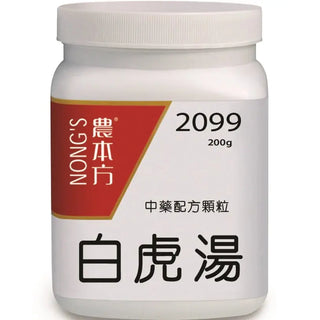
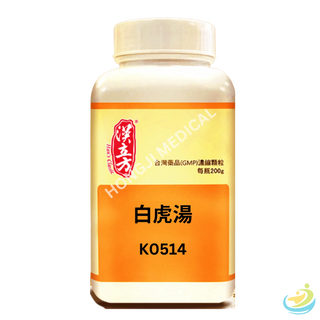
Use it raw in porridge or decoct it with the formula; dry-frying until scorched can fortify the Spleen and stop diarrhea. In Bai Hu Tang and Zhu Ye Shi Gao Tang it is decocted with gypsum until the rice is cooked, to protect Stomach qi. Glutinous rice is warm and sticky; it cannot replace eliminating vexation and stopping thirst by equal weight. Instant porridge is not the rice of the formula.
Read the complete guide →

Learn More About Jing Mi

Explore our in-depth article covering the traditional uses, properties, functions, and TCM context of Jing Mi.

Read the Jing Mi Guide →

Medical Disclaimer — This article is provided for educational purposes only and describes traditional Chinese medicine concepts. It is not medical advice, and it is not intended to diagnose, treat, cure or prevent any disease. Always consult a qualified practitioner before using any herb, particularly if you are pregnant, nursing, taking medication or managing a diagnosed condition.

Login

Forgot your password?

Don't have an account yet?
Create account