What is Mu Li? Are Sheng Mu Li, Duan Mu Li, Long Gu and edible oysters the same?
Official Mu Li (牡蛎) is the shell of Ostrea gigas, O. talienwhanensis or O. rivularis. The pharmacopoeial name is Ostreae Concha. Sheng Mu Li is washed and crushed: better at heavily settling the spirit, submerging Yang and supplementing Yin, and softening hardness to dissipate binds. Duan Mu Li is calcined until brittle: better at astringing and securing, and restraining acid to stop pain. Long Gu is fossilized mammal bone: sweet-astringent-neutral, settles fright, subdues Liver Yang and astringes—classically paired. Edible oysters are the flesh, not shell slices. Do not swap in oyster meat or an equal weight of mother-of-pearl. Write Sheng Mu Li or Duan Mu Li, crush and decoct first.
What are the TCM properties and traditional uses of Mu Li?
According to the Chinese Pharmacopoeia, Mu Li is salty and slightly cold, enters the Liver, Gallbladder and Kidney channels. Raw shell acts to heavily settle the spirit, submerge Yang and supplement Yin, and soften hardness to dissipate binds, for fright palpitations and insomnia, dizziness and tinnitus, scrofula and phlegm nodes, and concretions and glomus. Calcined shell acts to astringe and secure, and restrain acid to stop pain, for spontaneous and night sweating, seminal emission, flooding and spotting and vaginal discharge, and stomach pain with acid swallowing. Salty-cold and heavy—suited to Yin deficiency with Yang hyperactivity and slippage, not to Spleen-Stomach deficient cold or constipation.
How do you choose raw versus calcined Mu Li? Why decoct first?
Fright palpitations, dizziness, scrofula and masses use Sheng Mu Li; sweating, emission, flooding-discharge and acid stomach pain use Duan Mu Li. The shell is hard and yields poorly; the pharmacopoeia requires 9–30 g, crushed and decocted first for about 20–30 minutes before the other herbs. Calcining eases crushing and strengthens restraining acid and securing. Over-calcining to calcium oxide is too irritating—use regulated slices.
What is the usual dosage? Can it be eaten daily as a calcium or calming powder?
The pharmacopoeial internal dose is 9–30 g, decocted first; external use as a powder as appropriate. It is not a daily “calcium calming powder.” Long or large use easily constipates and dulls digestion. Yin deficiency with Yang hyperactivity and slippage need a practitioner to name raw or calcined and first decoction—not a self-made long powder.
What are the contraindications? Can it be used in pregnancy?
Use caution in Spleen-Stomach deficient cold. Slightly cold and heavy, it can worsen a cold epigastrium and loose stool. Avoid if allergic to shellfish. Taking it with tetracyclines or isoniazid can impair absorption. The pharmacopoeia has no explicit pregnancy ban, but softening masses or securing slippage still needs a practitioner to read the pattern. Reduce or stop if constipation or poor appetite appears.
Can Mu Li calm the spirit, submerge Yang, soften hardness, stop sweat and restrain acid?
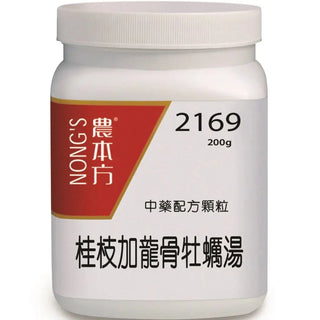
It can help. Heart-Kidney non-interaction with deficient vexation and insomnia joins dragon bone and Cinnamon twig in Gui Zhi Jia Long Gu Mu Li Tang. Liver Yang ascending joins Achyranthes, hematite and tortoise plastron in Zhen Gan Xi Feng Tang. Scrofula joins Scrophularia and Fritillaria in Xiao Luo Wan. Calcined shell joins Astragalus and light wheat to constrain sweat, and cuttlebone to restrain acid. It settles Yang hyperactivity and slippage—not a specific for every insomnia, every thyroid nodule or every hyperacidity. Sudden vertigo, spirit clouding and hematemesis are emergencies.
Can Mu Li be taken daily as a calcium, beauty or nodule-dispersing tea?
Shell calcium carbonate does not replace regulated calcium care or thyroid and GI evaluation. “Oyster-shell powder disperses nodules and beautifies” does not replace imaging follow-up. Submerging Yang and softening hardness, or securing and restraining acid, should name raw or calcined, crushed first decoction, and a dose.
How do you choose among Mu Li, Long Gu, Zhen Zhu Mu, Shi Jue Ming and Hai Piao Xiao?
Raw oyster shell is salty and slightly cold: heavily settles the spirit, submerges Yang and supplements Yin, and softens hardness; calcined it astringes and restrains acid. Dragon bone is sweet-astringent-neutral: settles fright, subdues Liver Yang and astringes—stronger to calm and secure, weaker to soften hardness. Mother-of-pearl is salty-cold: subdues Liver Yang, calms the spirit and brightens the eyes to recede nebula. Abalone shell is salty-cold: subdues Liver Yang and clears the Liver to brighten the eyes. Cuttlebone is salty-astringent-warm: astringes to stop bleeding, constrains essence and discharge, restrains acid and astringes sores. Yang hyperactivity with fright palpitations favors raw Long Gu and Mu Li; sweat, emission and flooding favor calcined pair; red eyes and dizziness favor Shi Jue Ming and Zhen Zhu Mu; acid stomach pain favors calcined Mu Li and Hai Piao Xiao. They may be paired; all are wrong in large heavy-settling doses when deficient cold and constipation are already present.
Which herbs is Mu Li combined with? What are the representative formulas?
Taxation with loss of essence and palpitations joins dragon bone, Cinnamon twig and white peony in Gui Zhi Jia Long Gu Mu Li Tang. Liver Yang transforming into wind joins Achyranthes, hematite, tortoise plastron and white peony in Zhen Gan Xi Feng Tang. Scrofula joins Scrophularia and Zhejiang Fritillaria in Xiao Luo Wan. Write Sheng Mu Li or Duan Mu Li, crush and decoct first.
How do you choose and store Mu Li?
Choose clean shells with a porcelain-white inner face and no rotting-flesh stench. Excess mud, mold spots and lots calcined to a bitter-pungent lime taste are unused. Crush and store sealed and dry. Buy pharmacopoeial Mu Li or Duan Mu Li slices; do not replace them with oyster meat, pearl powder or industrial calcium carbonate.