Roots and rhizomesHeat-clearingRhizoma Anemarrhenae

Zhi Mu (Anemarrhena Rhizome)

A practical guide to Zhi Mu: what it is, how Traditional Chinese Medicine uses it, the classical formulas it appears in, and who should be careful with it.

View Herb Profile →

Last reviewed Oct 13, 2026

Quick Facts

Latin NameRhizoma Anemarrhenae
Chinese Name & Pinyin 知母 · Zhi Mu
Medicinal PartRoots and rhizomes
The herbZhi Mu is the dried rhizome of Anemarrhena asphodeloides. The cut face is yellow-white. Shi Gao and Huang Bai are different official drugs. Common forms: raw and salt-fried.
Nature and channelsBitter, sweet, cold. Enters the Lung, Stomach, and Kidney. Bitterness drains fire. Sweet cold nourishes yin and moistens dryness.
Pharmacopoeia lineClears heat and drains fire. Nourishes yin and moistens dryness. Used for exterior heat disease, high fever and thirst, Lung-heat dry cough, steaming bone and tidal heat, interior-heat wasting-thirst, and dry-stool constipation.
Pattern cuesHigh fever and thirst. Dry cough. Steaming bone and tidal heat. Wasting-thirst. Dry stool.
In this articleZhi Mu versus Shi Gao, Huang Bai, and Sheng Di. Raw versus salt-fried. Why loose stools are a stop sign. Who should skip it.

What Is Zhi Mu?

Zhi Mu (知母; Zhī Mǔ; Latin: Anemarrhenae Rhizoma; English: anemarrhena rhizome) is the dried rhizome of Anemarrhena asphodeloides Bge. In Chinese medicine it is a heat-clearing, fire-draining herb. It is bitter, sweet, and cold, enters the Lung, Stomach, and Kidney channels, and its core actions are to clear heat and drain fire, and to nourish yin and moisten dryness. It is not Shi Gao. Gypsum is acrid, sweet, and greatly cold. It specifically clears blazing qi-aspect heat and does not nourish yin. Zhi Mu is bitter-sweet and cold. It clears and also moistens, which is why the two sit together in Bai Hu Tang. It is not Huang Bai. Phellodendron is bitter-cold and dries dampness, and leans toward lower-burner damp-heat. Zhi Mu more clearly nourishes Kidney and moistens the Lung. In Zhi Bai Di Huang Wan the two work as a pair. Salt-fried Zhi Mu enters the Kidney more cleanly and is used more to drain ministerial fire and recede steaming bone.

It is used most often for three patterns:

  • Blazing heat in the qi aspect — high fever, vexing thirst
  • Lung-heat dry cough / intestinal dryness with constipation
  • Yin deficiency with fire — steaming bone, tidal heat, interior-heat wasting-thirst

It is usually used raw or salt-fried. The usual decoction dose is 6–12 g. A cold weak spleen and loose stools are contraindications. Bitter, sweet, cold, and moistening, it is not a daily “fever root” or “yin tea.” Thirst with no heat, and middle-cold diarrhea, get worse if more clearing is added.

When qi-aspect heat is blazing, or Kidney yin is insufficient and deficient fire flames up, thirst, steaming bone, and dry cough are common. Zhi Mu is bitter-cold clearing and sweet-cold moistening. It clears and moistens, which is why it appears in Bai Hu Tang and Zhi Bai Di Huang Wan. It is more cold-moistening than it is supporting. An abdomen that likes warmth, loose stools, and a greasy coating get worse if more cooling is added.

Zhi Mu is not a catch-all cooling or yin herb. In middle-cold diarrhea or phlegm-damp obstruction, using it alone can injure the stomach and generate dampness. Raw or salt-fried should be decided by a licensed Chinese medicine practitioner after pattern diagnosis.

Zhi Mu Anemarrhena Rhizome

Zhi Mu: Materia Medica Profile

Identification & Quality Standard

Rhizoma Anemarrhenae

Botanical Origin

The dried rhizome of Anemarrhena asphodeloides Bge.(Liliaceae)

Production Regions

Primarily produced in the Chinese provinces of Shanxi, Henan, Gansu, Shaanxi, Inner Mongolia.

Quality Requirements

Superior medicinal material has hard texture, fat and large strip, yellowish-white fractured surface.

Macroscopic Features

Long strip-like, slightly curved, slightly flat, occasionally has branches, 3~15cm long, 0.8~1.5cm diameter, one end has pale yellow remnants of stem and leaf. Externally yellowish-brown to brown, upper side has one indented groove, densely arranged ring nodes, with dense remnants of yellowish-brown remnants of leaf base on nodes, growing upward from two sides of rhizome; lower side is bulging and slightly wrinkled, with indented or raised spotted root scars. Hard texture, easily broken, yellowish-white fractured surface. faint odor, slightly sweet, slightly bitter taste, sticky when chewed.

Origin and Quality Identification

  • Prime Locations: Historically, roots grown in places like Hebei province are highly regarded for their quality.
  • How to Spot Good Quality: A premium Zhi Mu (Anemarrhena Rhizome) root is long, slightly curved, and has yellow-brown wrinkled skin. When broken, the inside should be yellow-white. It has a slightly bitter taste and a unique, somewhat sticky or mucilaginous texture.
  • Processed vs. Fake: Raw Zhi Mu (Anemarrhena Rhizome) is darker, while the salt-fried version is crispier with slight scorch marks. Be careful to distinguish it from look-alikes like Tu Zhi Mu, which is much harder, darker inside, and lacks that signature bitter, sticky feel.

Traditional Properties & Historical Lineage

Nature, Flavour & Channel Tropism

Bitter, Sweet; ColdLungStomachKidney

1. Historical Records

  • Shen Nong Ben Cao Jing: Early records note its use for treating excessive thirst, reducing swelling, and tonifying the body.
  • Ming Yi Bie Lu: Mentioned its ability to clear lingering fever, night sweats, and internal heat.
  • Ben Cao Gang Mu: Highlighted its specific power to "nourish Yin and descend fire," making it great for reducing lung heat and nourishing kidney water.
  • Note: These are ancient experiential summaries, not modern medical clinical guidelines.

2. Evolution of Medicinal Understanding

  • Different Focuses: Throughout history, some TCM doctors loved it for clearing severe, acute heat in the Lungs and Stomach (like high fevers). Others prized it for treating "empty heat" caused by Kidney Yin deficiency (like hot flashes and night sweats).
  • Not a Cure-All: While versatile for heat conditions, it’s not for everyone. For example, people with a "cold and weak" digestive system should avoid using it alone, as its cold nature can easily upset a weak stomach.

Zhi Mu Anemarrhena Rhizome

Core Efficacies & Traditional Applications

Traditional Functions

Clears heat, drains fire, engenders fluid, moistens dryness. Apply to exterior heat diseases, high fever and polydipsia, lung heat with cough, stomach heat and diabetes, dryness of lung and cough, constipation due to dry intestines, bone steaming and hot flashes.

1. Primary Focus: Clearing Deficiency Heat

  • Traditional Function: Zhi Mu (Anemarrhena Rhizome) is highly valued for clearing "deficiency heat" caused by Yin deficiency while simultaneously nourishing Kidney Yin.
  • Target Symptoms: It is commonly used for symptoms like hot flashes, night sweats (sweating while asleep that stops upon waking), warm palms and soles, restlessness, insomnia, dry mouth, and a red tongue with little coating.
  • Common Pairings: Often paired with Huang Bo (Phellodendron Bark) to better clear "empty fire" in the kidneys, or with Di Huang (Rehmannia Root) to strongly enhance the Yin-nourishing effect.
  • When to Avoid: Do not use this herb if you have a "cold" constitution, weak digestion, or frequent loose stools. Its cold nature can worsen internal coldness.

2. Secondary Focus: Clearing Excess Heat in Lungs and Stomach

  • Traditional Function: It clears "excess heat" in the lungs and stomach caused by external heat pathogens or intense internal fire.
  • Target Symptoms: Ideal for high fever, restlessness, coughing with yellow phlegm, dry mouth, bitter taste, swollen gums, and constipation.
  • Common Pairings: Frequently combined with strong heat-clearing herbs like Shi Gao (Gypsum) or Zhi Zi (Gardenia Fruit). A famous classical formula for this is Bai Hu Tang (White Tiger Decoction), which effectively clears intense lung and stomach heat.
  • When to Avoid: Avoid using it if you suffer from chronic diarrhea or stomach coldness, as the bitter-cold nature of the herb can easily upset a weak stomach.

3. Common Herb Pairings: Synergistic Duos

  • A classic and powerful pairing is Zhi Mu (Anemarrhena Rhizome) and Huang Bo (Phellodendron Bark).
  • Why it works: Both herbs clear heat from the kidneys, but they do it differently. Zhi Mu focuses on moistening dryness and nourishing Yin, while Huang Bo directly clears out the fire. Together, they create a balanced synergy that is perfect for hot flashes, night sweats, and internal heat. Note that this pairing requires a practitioner's guidance, as both herbs are cold and unsuitable for weak digestive systems.

Zhi Mu Anemarrhena Rhizome

Modern Research

Modern research offers useful context, but Traditional Chinese Medicine prescribes on whole-pattern diagnosis rather than isolated compounds.

(Note: Modern research on this herb is still in early stages, and the following points are based on preliminary laboratory studies rather than confirmed human clinical trials.)

1. Key Chemical Components

  • The plant contains steroidal saponins, flavonoids, polysaccharides, and trace amounts of organic acids.
  • In test tubes and animal models, some of these compounds show antioxidant properties and the ability to regulate metabolic functions related to heat and inflammation.

2. Modern Pharmacological Focus

  • Current scientific interest is largely focused on isolating its active components (especially the saponins) to understand how they might interact with inflammatory markers in the body.

3. Limitations of Modern Research

  • Lab vs. Real Life: A successful result in a test tube or an animal does not guarantee the same effect or safety in humans.
  • Extracts vs. Whole Herbs: Modern studies often use highly purified, concentrated chemical extracts. This is very different from drinking a traditional, water-brewed herbal tea.
  • The Synergy of TCM: In traditional practice, herbs are usually combined in formulas where hundreds of compounds work together. Judging the herb based solely on one isolated chemical component does not capture the full picture of how it works in a traditional setting.

Zhi Mu Anemarrhena Rhizome

Comparing Similar Herbs

1. Shared Traits with Similar Herbs

Zhi Mu (Anemarrhena Rhizome) and Huang Bo (Phellodendron Bark) share several commonalities:

  • Both are used to clear heat pathogens from the body.
  • Both are effective for syndromes caused by Yin deficiency or damp-heat (like hot flashes, night sweats, or urinary issues).
  • Both require caution regarding dosage and constitution, especially for those with weak or cold stomachs.

2. Core Differences

  • Nature and Property: Zhi Mu is cold, sweet, and bitter, with a "moistening" nature. It clears heat without drying out the body. Huang Bo is strictly cold and bitter, with a "drying" nature, making it better for clearing heat but weak at nourishing Yin.
  • Action Focus: Zhi Mu excels at nourishing Yin and moistening dryness across the lungs, stomach, and kidneys. Huang Bo is an expert at clearing damp-heat and fire specifically in the lower body (lower jiao).
  • Target Symptoms: Use Zhi Mu if you have signs of Yin deficiency and dryness (dry mouth, dry throat, hot flashes). Use Huang Bo if you have signs of damp-heat (yellow/sticky tongue coating, dark urine, or lower body inflammation). If a purely Yin-deficient person uses Huang Bo, it might worsen their dryness.
  • Clinical Applications: Zhi Mu is often found in Yin-nourishing formulas like Zhi Bo Di Huang Wan (Zhibo Dihuang Pill). Huang Bo is typically used in damp-heat clearing formulas like Er Miao San (Two Marvel Powder) or Long Dan Xie Gan Tang (Gentiana Decoction to Drain the Liver).

3. A One-Sentence Summary

Zhi Mu (Anemarrhena Rhizome) focuses on nourishing Yin and moistening dryness while clearing heat, whereas Huang Bo (Phellodendron Bark) focuses strictly on clearing damp-heat and fire in the lower body.

Zhi Mu Anemarrhena Rhizome

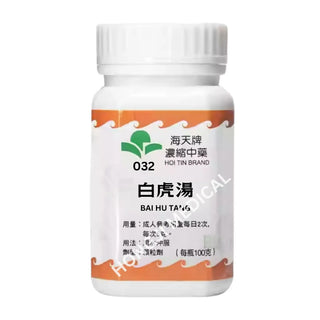
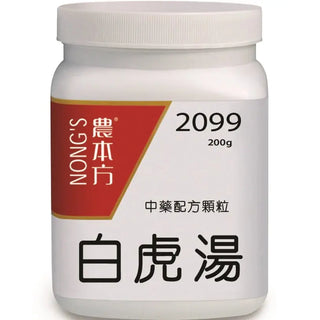
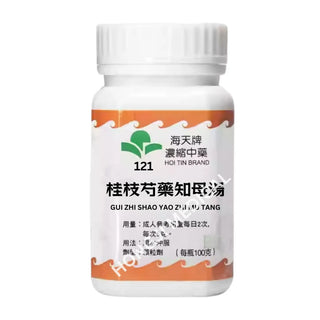
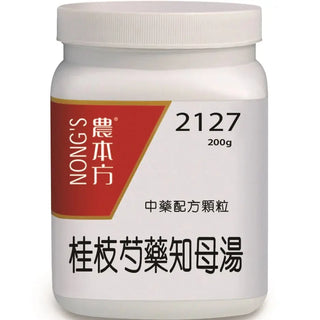
Classical Formulas Containing Zhi Mu

+8 more

Formulas vs. Single Herbs

  • Synergy is Key: A formula is a balanced team. The healing power comes from how the herbs interact, so a single herb cannot simply replicate a full formula's effects.
  • Holistic Balance: The exact dosage and combination in a formula affect the entire body. Never try to mix or alter these formulas at home based on internet articles.

Diet & Daily Home Use

1. Home Herbal Teas and Meals

  • Zhi Mu and Mai Dong Tea:
    • Ingredients: 3g Zhi Mu (Anemarrhena Rhizome), 5g Mai Dong (Ophiopogon Tuber), 2g Chrysanthemum.
    • Method: Brew the ingredients with boiling water in a cup. Let it steep for 5-10 minutes before drinking. You can refill with hot water until the flavor fades.
    • Best For: People who stay up late or eat too much spicy food, leading to a dry throat, dry mouth, or mildly warm palms and soles. Great for summer or dry seasons.
    • Avoid If: You have a weak/cold stomach, frequent diarrhea, or are pregnant/nursing.
    • Frequency: Drink 2-3 times a week. Do not consume it daily for long periods to prevent a build-up of "cold" energy in the body.

2. Preparation Differences

  • Raw vs. Salt-Fried: Raw Zhi Mu has a stronger cold nature, making it better for acute lung and stomach heat. Salt-fried Zhi Mu is milder and specifically targets the kidney meridian to better nourish Yin and reduce internal fire.
  • Brewing: It does not require special pre-boiling. Simply soak the herbs in cold water for 30 minutes, bring to a boil, and simmer on low heat for 20-25 minutes.

3. Dosage and Usage Cycles

  • Dosage: Clinical doses range from 6-12g. For home wellness and teas, keep the dose small (around 3-5g).
  • Duration: Use for 1-2 weeks and adjust based on how you feel. Stop once your symptoms improve. Do not use it continuously for long periods.
Zhi Mu Anemarrhena Rhizome

Contraindications & Safety Warnings

1. Who Should Avoid It

  • Weak Digestion: People who are always cold, have a weak stomach, or suffer from chronic loose stools should avoid this herb, as its cold nature will worsen these issues.
  • Vulnerable Populations: Pregnant and nursing women must use it with caution to avoid affecting the baby. Children and the elderly should only use it under a doctor's guidance.
  • Underlying Conditions: Those with compromised liver or kidney function should consult a doctor before use.
  • Allergies: Avoid if you are allergic to plants in the lily family.

2. Medication Interactions and Dietary Notes

  • Drug Interactions: Zhi Mu may interact with blood thinners, blood pressure medications, blood sugar drugs, and sedatives. For example, it might amplify the effects of blood pressure or blood sugar meds, causing them to drop too low. Always consult your doctor if you are on prescription medications.
  • Diet: Avoid combining herbs with prescription drugs without professional guidance to prevent unwanted interactions.

3. Adverse Reactions and Overdose

  • Side Effects: Taking too much can irritate the digestive tract, leading to stomach pain, nausea, and diarrhea due to its cold properties.
  • Emergency Response: If you experience severe discomfort, allergic reactions (rashes, itching), persistent vomiting, or breathing difficulties, stop use immediately and seek emergency medical attention.

Frequently Asked Questions About Zhi Mu

What is Zhi Mu? Are Yan Zhi Mu, Shi Gao and Huang Bai the same?
Official Zhi Mu (知母) is the dried rhizome of Anemarrhena asphodeloides. The pharmacopoeial name is Anemarrhenae Rhizoma. Lots with leaf-base remnants are Mao Zhi Mu; peeled stock is Zhi Mu Rou. Yan Zhi Mu is salt-fried and directed to the Kidney to enrich Yin and downbear fire. Shi Gao is acrid-sweet and very cold: clears heat, drains fire, eliminates vexation and stops thirst—a mineral. Huang Bai is bitter-cold: clears heat, dries damp, drains fire, resolves toxin and abates vacuity heat—lower-burner damp-heat. Write Zhi Mu or Yan Zhi Mu. It is not kitchen “Zhi Mu tea.” Forbid in Spleen vacuity with loose stool.
What are the TCM properties and traditional uses of Zhi Mu?
According to the Chinese Pharmacopoeia, Zhi Mu is bitter, sweet and cold, enters the Lung, Stomach and Kidney channels, and acts to clear heat and drain fire, enrich Yin and moisten dryness. It is used for externally contracted heat disease with high fever and vexing thirst, Lung-heat dry cough, steaming bone tidal heat, internal-heat wasting-thirst and intestinal dryness constipation. Bitter-sweet-cold and moistening, it suits excess heat and Yin-vacuity dryness-heat—not Spleen-Stomach deficient cold with loose diarrhea.
How do you choose raw versus salt-fried Zhi Mu?
Clearing heat, draining fire, high fever with vexing thirst and Lung-heat dry cough more often use raw Zhi Mu. Steaming bone tidal heat, vacuity fire flaming upward and entering the Kidney more often use Yan Zhi Mu. Do not take it long as a single-herb “sugar-lowering Yin tea” in large amounts.
What is the usual dosage? Can it be drunk daily as a fire-clearing Yin tea?
The pharmacopoeial decoction dose is 6–12 g. It is not a four-season “Zhi Mu fire tea.” Spleen-cold loose stool only grows more draining with cold. High fever, wasting-thirst and steaming bone need a practitioner to name raw or salt-fried and a short course; it does not replace antipyretic and glycemic assessment.
What are the contraindications? Can it be used in pregnancy?
Forbid in Spleen-Stomach deficient cold and loose diarrhea. Pregnancy with exuberant heat damaging fluid may be assessed by a practitioner for a short course; do not self-use without heat or dryness. Stop if cold abdomen and loose stool appear. Tell the practitioner if you use hypoglycemics.
Can Zhi Mu clear heat, generate fluid and abate steaming bone?
It can help Lung-Stomach excess heat and Yin-vacuity dryness-heat. High fever with vexing thirst joins gypsum, licorice and rice in Bai Hu Tang. Yin vacuity with flaming fire joins Phellodendron and prepared rehmannia in Zhi Bai Di Huang Wan. Lung-heat dry cough joins Fritillaria. It clears heat, drains fire, enriches Yin and moistens dryness—not a specific for every fever, every thirst or every diabetes. High fever with convulsions and severe dehydration are emergencies.
Can Zhi Mu be drunk daily as a fire-lowering, sugar-lowering or intestine-moistening tea?
Excess-heat vexing thirst and Yin-vacuity steaming bone may enter a short formula; Spleen-cold loose stool only grows more draining as it moistens. “Zhi Mu lowers sugar and clears fire” does not replace endocrine and infection assessment. Clearing heat, draining fire, enriching Yin and moistening dryness should name Zhi Mu 6–12 g.
How do you choose among Zhi Mu, Shi Gao, Huang Bai, Mai Dong and Di Gu Pi?
Anemarrhena is bitter-sweet-cold and moistening: clears heat, drains fire, enriches Yin and moistens dryness—Lung-Stomach-Kidney, clearing while moistening. Gypsum is acrid-sweet and very cold: clears heat, drains fire, eliminates vexation and stops thirst—strong at qi-aspect excess heat, without enriching Yin. Phellodendron is bitter-cold: clears heat, dries damp, drains fire, resolves toxin and abates vacuity heat—lower-burner damp-heat and ministerial fire. Ophiopogon is sweet, slightly bitter and slightly cold: nourishes Yin, generates fluid, moistens the Lung and clears the Heart. Lycium root bark is sweet-cold: cools Blood, eliminates steaming and clears the Lung to downbear fire. Qi-aspect great heat favors gypsum with Zhi Mu (Bai Hu Tang); vacuity fire and ministerial fire favor Huang Bai with Zhi Mu (Zhi Bai); Lung-Stomach Yin damage favors Mai Dong; steaming bone with sweat favors Di Gu Pi. They may be paired; Spleen vacuity loose stool forbids large Zhi Mu, gypsum and Huang Bai.
Which herbs is Zhi Mu combined with? What are the representative formulas?
Qi-aspect heat exuberance joins gypsum, licorice and rice in Bai Hu Tang. Yin vacuity with flaming fire joins Phellodendron, prepared rehmannia and Cornus in Zhi Bai Di Huang Wan. Lung-heat dry cough joins Chuan Bei or Zhe Bei. Write raw or Yan Zhi Mu 6–12 g.
How do you choose and store Zhi Mu?
Choose plump moist rhizomes with a yellow-white cross-section, a slightly sweet slightly bitter taste and a sticky chew. Hollow, moldy, moth-eaten lots with excess hair-like remnants are discarded. Store airy and dry against damp. Buy pharmacopoeial Zhi Mu; do not use it if the Spleen is vacuous with loose stool; do not replace clearing heat, draining fire, enriching Yin and moistening dryness with gypsum or an unidentified rhizome by equal weight.

Medical Disclaimer — This article is provided for educational purposes only and describes traditional Chinese medicine concepts. It is not medical advice, and it is not intended to diagnose, treat, cure or prevent any disease. Always consult a qualified practitioner before using any herb, particularly if you are pregnant, nursing, taking medication or managing a diagnosed condition.

More Chinese Herbs

Login

Forgot your password?

Don't have an account yet?
Create account

Zhi Mu (Anemarrhena Rhizome): Clear Heat, Drain Fire, and Nourish Yin