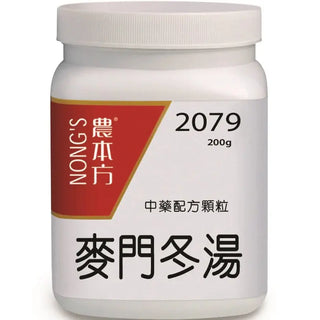
What is Mai Dong? Are Mai Men Dong, Shan Mai Dong and Tian Dong the same?
The pharmacopoeial name is Mai Dong (麦冬); prescriptions often write “Mai Men Dong.” It is the dried tuberous root of Ophiopogon japonicus. The pharmacopoeial name is Ophiopogonis Radix. Shan Mai Dong is Liriope root, a separate monograph with similar actions but a different botanical source. Tian Dong is Asparagus root: sweet-bitter-cold, enriches yin, moistens dryness, clears the Lung and generates fluids, enters Lung and Kidney, and is more cold-moistening. Do not replace it with ornamental mondo-grass fibrous roots or Tian Dong by equal weight. Classical texts mention removing the core; today the raw root is usually used whole.
What are the TCM properties and traditional uses of Mai Dong?
According to the Chinese Pharmacopoeia, Mai Dong is sweet, slightly bitter and slightly cold, enters the Heart, Lung and Stomach channels, and acts to enrich yin and generate fluids, moisten the Lung and clear the Heart. It is used for Lung-dryness dry cough, yin-vacuity taxation cough, throat impediment and sore throat, fluid-damage thirst, internal-heat wasting-thirst, vexation and insomnia, and intestinal dryness with constipation. Sweet-moistening and slightly cold, it suits Lung-Stomach-Heart yin damage and dryness-heat—not Spleen-Stomach vacuity-cold diarrhea, phlegm-damp cough or early wind-cold.
Does Mai Dong need the core removed or a special decoction method? How is the fresh root used?
Wash, moisten through, flatten and dry; add to a normal decoction. The old saying that leaving the core causes vexation is not followed in most modern practice. Fresh Mai Dong clears heat and generates fluids more clearly; the dose may be slightly larger or the juice used; pharmacies mainly stock the dried root. Neither first-boil nor late addition is required.
What is the usual dosage? Can it be steeped daily as a Lung-moistening tea?
The pharmacopoeial decoction dose is 6–12 g. It is not a four-season unlimited “Mai Dong Lung tea.” Yin-damage thirst and dry cough may briefly join Glehnia and Polygonatum odoratum. Spleen vacuity with loose stool and phlegm with greasy tongue only grow more stagnant as it moistens. Diabetics adding rock sugar must count the sugar.
What are the contraindications? Can it be used in pregnancy?
Use caution or avoid in Spleen-Stomach vacuity-cold diarrhea, phlegm-damp cough and early wind-cold. Sweet-cold moistening can linger damp and encumber the Spleen. Pregnancy is not a classical prohibition, but middle-cold loose stool should not take large daily teas. Long high doses may reduce appetite and loosen the stool. Stop if cold epigastrium and diarrhea appear.
Can Mai Dong moisten the Lung, generate fluids, clear the Heart and moisten the intestines?
It can help Lung-Stomach yin damage. Coughing saliva joins Pinellia, Ginseng, rice, Jujube and Licorice in Mai Men Dong Tang. Dual qi-yin vacuity joins Ginseng and Schisandra in Sheng Mai San. Dryness damaging Lung and Stomach joins Glehnia, Polygonatum odoratum and Mulberry leaf in Sha Shen Mai Dong Tang. It enriches Lung-Stomach-Heart yin—not a specific for every cough, every thirst or every insomnia. Coughing blood, high fever and wasting-thirst need medical care.
Can Mai Dong be drunk daily as a beauty, blood-sugar or Heart-clearing tea?
Yin damage with dryness-heat may enter a short tea; phlegm-damp middle cold only grows more stagnant. “Mai Dong beautifies and lowers sugar” does not replace dermatologic and endocrine assessment. Patent Sheng Mai Yin also needs pattern differentiation—dual qi-yin vacuity only, not excess common cold. Enriching yin and generating fluids should name Mai Dong 6–12 g.
How do you choose among Mai Dong, Tian Dong, Bei Sha Shen, Yu Zhu and Bai He?
Ophiopogon is sweet, slightly bitter and slightly cold: enriches yin, generates fluids, moistens the Lung and clears the Heart—also enters Heart and Stomach. Asparagus is sweet-bitter-cold: enriches yin, moistens dryness, clears the Lung and generates fluids, enters Lung and Kidney, more cold-moistening. Glehnia is sweet, slightly bitter and slightly cold: enriches yin, clears the Lung, boosts the Stomach and generates fluids—Lung-Stomach dry cough. Polygonatum odoratum is sweet and slightly cold: enriches yin, moistens dryness and generates fluids to stop thirst—supplements without cloying. Lily bulb is sweet and slightly cold: enriches yin, moistens the Lung, clears the Heart and calms the spirit—vacuity vexation and fright palpitations. Lung-Stomach yin damage with Heart vexation favors Mai Dong; Kidney-yin dryness-heat favors Tian Dong; pure Lung dryness favors Bei Sha Shen. They may be paired; vacuity-cold phlegm-damp forbids pure moistening in all of them.
Which herbs is Mai Dong combined with? What are the representative formulas?
Lung-Stomach yin vacuity with rebellious qi and coughing saliva joins Pinellia, Ginseng, rice, Jujube and Licorice in Mai Men Dong Tang. Dual qi-yin damage joins Ginseng and Schisandra in Sheng Mai San (Sheng Mai Yin). Dryness damaging Lung and Stomach joins Glehnia, Polygonatum odoratum, Mulberry leaf and Trichosanthes root in Sha Shen Mai Dong Tang. Write Mai Dong or Mai Men Dong 6–12 g; do not mix Shan Mai Dong or Tian Dong without distinguishing them.
How do you choose and store Mai Dong?
Choose spindle-shaped roots slightly pointed at both ends, pale yellow, pliable and translucent, with a fine stele and a sweet, slightly bitter taste. Lots with leftover fibrous roots, hollow or moth-eaten pieces, or overly hard blackened roots are discarded. Store cool and dry against damp. Buy pharmacopoeial Mai Dong; do not replace enriching yin, generating fluids, moistening the Lung and clearing the Heart with Shan Mai Dong or Tian Dong by equal weight.