Roots and rhizomesDampness-drainingRhizoma Alismatis

Ze Xie (Alisma Rhizome)

A practical guide to Ze Xie: what it is, how Traditional Chinese Medicine uses it, the classical formulas it appears in, and who should be careful with it.

View Herb Profile →

Last reviewed Oct 13, 2026

Quick Facts

Latin NameRhizoma Alismatis
Chinese Name & Pinyin 澤瀉 · Ze Xie
Medicinal PartRoots and rhizomes
The herbZe Xie is the dried tuber of Alisma orientale. Fu Ling, Zhu Ling, and Che Qian Zi are different official drugs. Common forms: raw and salt-fried.
Nature and channelsSweet, cold. Enters the Kidney and Bladder. Sweet blandness drains dampness. Cold drains heat.
Pharmacopoeia linePromotes urination and drains dampness. Drains heat. Transforms turbidity and reduces lipid. Used for inhibited urine, edema and fullness, diarrhea with scant urine, phlegm-rheum dizziness, hot painful strangury, and hyperlipidemia.
Pattern cuesEdema and scant urine. Phlegm-rheum dizziness. Hot painful strangury. Greasy coating.
In this articleZe Xie versus Fu Ling, Zhu Ling, and Che Qian Zi. Raw versus salt-fried. What “drain” means in Liu Wei Di Huang Wan. Why there must be dampness. Who should skip it.

What Is Ze Xie?

Ze Xie (泽泻; Zé Xiè; Latin: Alismatis Rhizoma; English: alisma rhizome / Asian water plantain) is the dried tuber of Alisma orientale (Sam.) Juz. In Chinese medicine it is a dampness-draining herb. It is sweet and cold, enters the Kidney and Bladder channels, and its core actions are to promote urination and drain dampness, drain heat, and transform turbidity and reduce lipid. In Liu Wei Di Huang Wan, Ze Xie is one of the “three draining” herbs: it drains Kidney turbidity and checks the cloying of Shu Di Huang. It is not Fu Ling. Poria is sweet, bland, and neutral; it also strengthens the spleen and calms the Heart. Ze Xie is sweet-cold. It promotes urine more specifically and can drain ministerial fire. It is not Che Qian Zi. Plantago seed more clearly clears the Liver, brightens the eyes, and clears the Lung. Salt-fried Ze Xie enters the Kidney more cleanly and is used more to drain heat and promote urine. The pharmacopoeia line “transform turbidity and reduce lipid” is a traditional extension. It is not a claim that the herb replaces a lipid-lowering drug.

It is used most often for three patterns:

  • Water-damp gathering internally — inhibited urine, edema and fullness, diarrhea with scant urine
  • Phlegm-rheum dizziness
  • Damp-heat pouring down — hot painful strangury

It is usually used raw or salt-fried. The usual decoction dose is 6–10 g. Kidney deficiency with essence slip, yin deficiency with no damp-heat, and long clear urine are a poor match. Sweet-cold and draining, it is not a daily “water-tuber tea.” Drain when there is no dampness, and Kidney yin is injured.

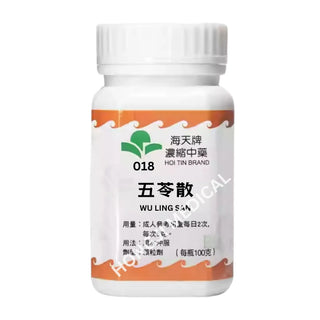
When water-damp collects, or phlegm-rheum clouds above, edema, scant urine, and dizziness are common. Ze Xie is sweet-cold and draining. It promotes urine and clears, which is why it appears in Wu Ling San and Liu Wei Di Huang Wan. It drains more than it holds. Dry mouth, dry bound stool, sore loins, and night sweats with no dampness get drier if more drainage is added.

Ze Xie is not a catch-all diuretic or lipid herb. In yin deficiency with no dampness, or when the Kidney gate will not hold, using it alone can injure yin. Raw or salt-fried should be decided by a licensed Chinese medicine practitioner after pattern diagnosis.

Ze Xie Alisma Rhizome

Ze Xie: Materia Medica Profile

Identification & Quality Standard

Rhizoma Alismatis

Botanical Origin

The dried tuberous rhizome of Alisma orientalis (Sam.) Juzep.(Alismataceae)

Production Regions

Primarily produced in the Chinese provinces of Fujian, Sichuan.

Quality Requirements

Superior medicinal material is large, yellowish-white, smooth, with full and powdery texture.

Macroscopic Features

Tuberous rhizome is sub-spherical, oval or oval round shape, 2~7cm long, 2~6cm diameter. Externally yellowish-white or pale yellowish-brown, with irregular horizontal shallow ring grooves and numerous tiny raised rootlet scars, sometimes the base has verrucous sprout scars. Firm texture, yellowish-white fractured surface, powdery, with numerous thin holes. faint odor, slightly bitter taste.

Sourcing and Quality Identification

Historically, the most premium Ze Xie (Alisma Rhizome) comes from specific regions:

  • Jian Ze Xie: Sourced from Fujian province.
  • Chuan Ze Xie: Sourced from Sichuan province.

How to spot good quality:

  • Raw Herb: Look for round tubers with a yellowish-white surface, irregular shallow rings, and a solid, starchy interior. It should have a mild scent and a slightly bitter taste.
  • Bran-fried Herb: The surface becomes pale yellow with occasional scorched spots. The scent is even milder and non-irritating.
  • Note: Beware of lighter, darker-colored substitute roots from different plant families, which lack the proper medicinal scent.

Traditional Properties & Historical Lineage

Nature, Flavour & Channel Tropism

Sweet, Bland; ColdKidneyBladder

1. Historical Records

Ze Xie (Alisma Rhizome) has a highly respected history in TCM literature:

  • Shen Nong Ben Cao Jing (The Divine Farmer's Materia Medica) listed it as a top-tier herb, noting its ability to ease damp-related joint pain, relieve water retention, and support the body's overall balance.
  • Ming Yi Bie Lu (Miscellaneous Records of Famous Physicians) added that it helps clear fluid blockages in the bladder and lower body.
  • Ben Cao Gang Mu (Compendium of Materia Medica) summarized its power to seep out damp-heat, move stagnant fluids, and ease digestion issues like diarrhea.

2. Evolution of TCM Understanding

While some ancient texts mentioned that Ze Xie (Alisma Rhizome) could "tonify" or strengthen the body, modern TCM clarifies this. The herb does not directly nourish blood or energy. Instead, by flushing out heavy, sluggish "dampness," it clears the way for the body's natural energy (Qi) to flow freely, which feels restorative.

  • Best For: "Excess" conditions characterized by damp-heat settling in the lower body (like difficult urination or edema).
  • Caution: Because it is cold and draining, people with a cold, weak constitution or severe dehydration should use it with caution to avoid further depleting their body's fluids or warmth.

Ze Xie Alisma Rhizome

Core Efficacies & Traditional Applications

Traditional Functions

Promotes urination, percolates dampness, drains heat, frees strangury. Apply to difficulty in urination, difficulty and pain while urinating induced by pyretic stranguria, edema and tumescence, diarrhea, dizziness induced by phlegm and retained fluid and emissions. Leaves: consumptive disease, cough, infrequent lactation, swellings and sores.

1. Primary Focus: Clearing Lower Jiao Water and Dampness

  • Traditional Function: Ze Xie (Alisma Rhizome) excels at clearing fluid retention in the "lower jiao" (lower burner), helping the body flush out stagnant water and dampness through the kidneys and bladder.
  • Target Symptoms: It is primarily used for urinary difficulty, edema (swelling), heavy limbs, a thick and greasy tongue coating, or dampness in the groin area.
  • Common Pairings: It is often paired with Zhu Ling (Polyporus) or Fu Ling (Poria) to boost its water-draining power, or with Bai Zhu (Atractylodes Rhizome) and Gui Zhi (Cassia Twig) to harmonize the stomach and help the body process fluids better.
  • When to Avoid: If you have a "cold-deficient" constitution or lack body fluids (experiencing dry mouth, dry stools, or scanty urine), avoid using this herb on your own. Its draining nature can worsen coldness or further deplete your hydration.

2. Secondary Focus: Clearing Lower Jiao Damp-Heat

  • Traditional Function: It also helps vent "damp-heat" trapped in the lower body, relieving discomfort caused by this specific imbalance.
  • Target Symptoms: Useful for dark or scanty urine, painful or burning urination, thick yellow discharge, damp and itchy skin conditions, or swollen, red, and painful joints in the lower limbs.
  • Common Pairings: For damp-heat, it is typically combined with cooling herbs like Huang Bo (Phellodendron Bark) and Che Qian Zi (Plantain Seed). To address the root cause in the digestive system, it might be paired with Yi Yi Ren (Coix Seed) or Cang Zhu (Atractylodes Rhizome).
  • When to Avoid: People with a cold, weak spleen and stomach (often experiencing chronic loose stools) should not self-prescribe this, as it can further damage the digestive system's warmth.

3. Common Herb Pairings: Synergistic Duos

  • A classic and highly effective pairing is Ze Xie (Alisma Rhizome) and Bai Zhu (Atractylodes Rhizome).
  • Why it works: Ze Xie directly flushes out stagnant water, while Bai Zhu strengthens the spleen's ability to process fluids. Together, they clear existing dampness and prevent new dampness from forming. This duo is excellent for edema and loose stools caused by a weak spleen, but it must be prescribed by a professional based on your specific constitution.

Ze Xie Alisma Rhizome

Modern Research

Modern research offers useful context, but Traditional Chinese Medicine prescribes on whole-pattern diagnosis rather than isolated compounds.

1. Key Chemical Compounds

Modern laboratory analysis shows that the primary active compounds in Ze Xie (Alisma Rhizome) include triterpenes, sesquiterpenes, and flavonoids, with triterpenes being the most significant.

2. Modern Pharmacological Focus

While TCM focuses on "dampness," modern research generally explores the herb's potential effects on:

  • Water Metabolism: Animal studies suggest its extracts may help promote urine excretion.
  • Inflammation: Some lab tests show potential in regulating certain inflammatory markers.

3. Research Limitations

It is important to view modern research through a cautious lens:

  • Lab vs. Human: Results from animal or test-tube studies do not automatically guarantee the same results in humans.
  • Whole Herb vs. Extracts: Daily TCM practice uses the whole brewed herb, which contains a complex mix of compounds acting together. This is very different from isolated, highly concentrated chemical extracts used in a lab.
  • No Self-Treatment: These studies are exploratory. A single lab finding does not define the herb's full clinical safety or effectiveness. Always consult a qualified practitioner rather than using this herb as a standalone medical treatment.

Ze Xie Alisma Rhizome

Comparing Similar Herbs

1. Shared Traits with Similar Herbs

Ze Xie (Alisma Rhizome) and Zhu Ling (Polyporus) share common ground:

  • Both are primarily used to drain water and leach out dampness.
  • Both treat urinary difficulty and edema caused by fluid retention.
  • Both require careful dosage control to avoid exhausting the body's vital energy (Qi).

2. Core Differences

  • Nature and Flavor: Ze Xie is sweet, bland, and cold, making it better for clearing heat. Zhu Ling is sweet, bland, and neutral, lacking any strong hot or cold bias.
  • Action Focus: Ze Xie specializes in flushing out water while actively clearing "damp-heat." Zhu Ling is a pure "water-drainer," focusing solely on promoting urination without the cooling effect.
  • Target Symptoms: Choose Ze Xie if fluid retention is mixed with heat signs (like dark urine or a yellow, greasy tongue). Choose Zhu Ling for pure fluid retention without obvious heat (like clear, copious urine or a white, greasy tongue).
  • Contraindications: Both should be avoided by those with severe fluid depletion or cold-deficiency, though Zhu Ling is slightly gentler because of its neutral nature.

3. A One-Sentence Summary

Ze Xie (Alisma Rhizome) drains water while cooling damp-heat, whereas Zhu Ling (Polyporus) is a neutral specialist for purely draining water and dampness.

Ze Xie Alisma Rhizome

Classical Formulas Containing Ze Xie

+8 more

Formulas vs. Single Herbs

  • Synergy is Key: A formula is a balanced team. The healing power comes from how the herbs interact, so a single herb cannot simply replicate a full formula's effects.
  • Holistic Balance: The exact dosage and combination in a formula affect the entire body. Never try to mix or alter these formulas at home based on internet articles.

Diet & Daily Home Use

1. Home Herbal Teas and Meals

  • Ze Xie and Winter Melon Tea:
    • Ingredients: 5g Ze Xie (Alisma Rhizome), 10g winter melon peel, 3g Fu Ling (Poria).
    • Method: Wash all ingredients, boil in water for 15 minutes over low heat, strain, and drink as tea.
    • Best For: Summer dampness causing a heavy head, swollen legs, a thick tongue coating, and low urine output.
    • Avoid If: You have a cold constitution, frequent cold hands/feet, or chronic loose stools.
    • Reminder: Limit this to 1-2 times a week. Ze Xie is a clinical medicinal herb, not a daily grocery item. Never use it long-term.

2. Preparation Differences

  • Raw vs. Bran-fried: Raw Ze Xie is cold and focuses on clearing lower body damp-heat. Bran-fried Ze Xie has a reduced coldness and is better suited for strengthening the spleen while draining water.
  • Brewing: It does not require special pre-cooking. Simply boil it directly with your other ingredients.
  • Note: Do not substitute clinical doses with dietary doses; they are formulated differently for safety.

3. Dosage and Usage Cycles

  • Dosage: Clinical prescriptions usually range from 6-10g. For home food therapy, the dose is much smaller, strictly around 3-5g.
  • Duration: Continuous, daily use is strictly prohibited, as it can damage your body's vital Qi. Special populations (elderly, pregnant, weak constitutions) must seek professional advice before any use.
Ze Xie Alisma Rhizome

Contraindications & Safety Warnings

1. Who Should Avoid It

  • Cold-Deficiency: If you are prone to feeling cold, have icy hands and feet, or experience loose stools, avoid this herb as it will make you colder.
  • Vulnerable Populations: Pregnant and nursing women must avoid it to protect fetal and infant health. Children and the elderly should use it with extreme caution due to their sensitive organ functions.
  • Liver/Kidney Issues: Those with compromised liver or kidney function must only use this under strict medical supervision to avoid overburdening their organs.
  • Allergies: Do not use if you are allergic to plants in the Alismataceae family.

2. Medication Interactions and Dietary Notes

  • Drug Interactions: Ze Xie can interact with blood thinners, blood pressure medications, diabetes drugs, and sedatives, potentially altering their effects or how fast they metabolize. Always consult your doctor if you are on prescription meds.
  • Diet: While there are no universal "toxic" food pairings, always follow your practitioner's dietary advice when taking herbal formulas to ensure maximum safety and efficacy.

3. Adverse Reactions and Overdose

  • Side Effects: Improper use or overdose can cause dry mouth, dizziness, worsened diarrhea, or excessive urination.
  • Emergency Response: If you experience severe allergic reactions (hives, itching), continuous vomiting, breathing difficulties, confusion, or a rapid worsening of symptoms, stop using the herb immediately and seek emergency medical care.

Frequently Asked Questions About Ze Xie

What is Ze Xie? Are Yan Ze Xie, Fu Ling and Che Qian Zi the same?
Official Ze Xie (泽泻) is the dried tuber of Alisma orientale or Alisma plantago-aquatica. The pharmacopoeial name is Alismatis Rhizoma. Fujian Jian Ze Xie is well regarded. Yan Ze Xie is salt-fried, slightly salty, directed to the Kidney to drain heat. Fu Ling is sweet-bland-neutral: drains damp, strengthens the Spleen and calms the Heart—a sclerotium, not a tuber. Che Qian Zi is sweet-cold: clears heat, promotes urination, percolates damp, frees strangury, brightens the eyes and dispels phlegm. Write Ze Xie or Yan Ze Xie. Kitchen “Alisma tea” is not the pharmacopoeial 6–10 g in decoction.
What are the TCM properties and traditional uses of Ze Xie?
According to the Chinese Pharmacopoeia, Ze Xie is sweet, bland and cold, enters the Kidney and Bladder channels, and acts to promote urination and percolate damp, drain heat, and transform turbidity to lower lipids. It is used for difficult urination, edema with distention, diarrhea with scant urine, phlegm-rheum dizziness, hot strangury with painful dribbling, and hyperlipidemia. Sweet-bland-cold, it suits water-damp and lower-burner damp-heat—not long use in Kidney vacuity with seminal slip without damp-heat, or Spleen-Stomach deficient cold.
How do you choose raw versus salt-fried Ze Xie?
Promoting urination, percolating damp and phlegm-rheum dizziness more often use raw Ze Xie; draining vacuity fire of the Kidney channel and entering the lower burner more often use Yan Ze Xie. Bran-frying is also seen and leans toward percolating damp. Do not take it long as a single-herb “lipid-slimming tea” in large amounts.
What is the usual dosage? Can it be drunk daily as a damp-draining lipid tea?
The pharmacopoeial decoction dose is 6–10 g. It is not a four-season “Ze Xie lipid tea.” Vacuity without damp and seminal slip only drain further. Edema, dizziness and lipids need a practitioner to name raw or salt-fried and a short course; it does not replace lipid-drug assessment.
What are the contraindications? Can it be used in pregnancy?
Forbid in Kidney vacuity with seminal slip and no damp-heat. Use caution in Spleen-Stomach deficient cold with loose stool. Pregnancy needs a practitioner. Stop if dry mouth, diarrhea or dry skin appear. Tell the practitioner if you use diuretics, antihypertensives or hypoglycemics.
Can Ze Xie promote urination, drain heat and stop dizziness?
It can help water-damp accumulation. Accumulated water with difficult urination joins Poria, Polyporus, Atractylodes and Cinnamon Twig in Wu Ling San. Phlegm-rheum dizziness joins Atractylodes in Ze Xie Tang. Hot strangury joins Plantago seed and talc. Sweet-bland, it percolates and drains heat—not a specific for every edema, every dizziness or every high lipid level. Acute kidney failure and intracranial vertigo are emergencies.
Can Ze Xie be drunk daily as a slimming, lipid-lowering or damp-draining tea?
Water-damp edema and phlegm-rheum dizziness may enter a short formula; Kidney vacuity with seminal slip and Spleen cold only empty further. “Ze Xie lowers lipids and slims” does not replace metabolic and urologic assessment; the pharmacopoeial heading “transform turbidity and lower lipids” is a traditional-modern indication, not a single-herb specific. Promoting urination, percolating damp and draining heat should name Ze Xie 6–10 g.
How do you choose among Ze Xie, Fu Ling, Zhu Ling, Che Qian Zi and Bai Zhu?
Alisma is sweet-bland-cold: promotes urination, percolates damp, drains heat and transforms turbidity to lower lipids—Kidney-Bladder, stronger diuresis plus clearing the lower burner. Poria is sweet-bland-neutral: drains damp, strengthens the Spleen and calms the Heart—neither cold nor hot. Polyporus is sweet-bland-neutral: drains damp—strong diuresis without tonification. Plantago seed is sweet-cold: clears heat, promotes urination, percolates damp, frees strangury and brightens the eyes. Atractylodes is bitter-sweet-warm: strengthens Spleen qi, dries damp and promotes urination—tonifies the Spleen to govern water. Accumulated water favors Ze Xie with Fu Ling and Zhu Ling (Wu Ling San); dizziness favors Ze Xie with Bai Zhu (Ze Xie Tang); hot strangury favors Che Qian Zi. They may be paired; Kidney vacuity with seminal slip and no damp-heat forbids pure percolation.
Which herbs is Ze Xie combined with? What are the representative formulas?
Accumulated water with difficult urination joins Poria, Polyporus, Atractylodes and Cinnamon Twig in Wu Ling San. Phlegm-rheum dizziness joins Atractylodes in Ze Xie Tang. In Liu Wei Di Huang Wan it pairs with prepared rehmannia and Cornus to drain Kidney turbidity. Write raw or Yan Ze Xie 6–10 g.
How do you choose and store Ze Xie?
Choose large firm tubers with a yellow-white powdery cross-section, many fine pores, few rootlets, a faint odor and a slightly bitter taste; Jian Ze Xie is preferred. Hollow, moldy, moth-eaten and starch-adulterated lots are discarded. Store dry against moths. Buy pharmacopoeial Ze Xie; do not replace promoting urination, percolating damp and draining heat with an unidentified tuber by equal weight.

Medical Disclaimer — This article is provided for educational purposes only and describes traditional Chinese medicine concepts. It is not medical advice, and it is not intended to diagnose, treat, cure or prevent any disease. Always consult a qualified practitioner before using any herb, particularly if you are pregnant, nursing, taking medication or managing a diagnosed condition.

More Chinese Herbs

Login

Forgot your password?

Don't have an account yet?
Create account

Ze Xie (Alisma Rhizome): Drain Dampness, Discharge Heat, and Transform Turbidity