Urinary & Renal CareFrequent Urination

Frequent Urination: A TCM Perspective on Patterns and Traditional Approaches

Explore how Traditional Chinese Medicine traditionally understands frequent urination through different patterns, associated symptoms, and classical formulas.

Explore the Frequent Urination Condition Profile →

Last reviewed Sep 16, 2026

Quick Facts

Health Topic Urinary & Renal Care
Chinese Name 尿頻
Synonyms Urinating often·Frequent pee·Increased urinary frequency·Passing urine often·Polyuria-like frequency
Description Increased need to urinate more often than usual.
Related TCM Patterns Summer Heat·Heart Fire·Damp-Heat·Dampness
+2 more Blood Stasis·Kidney Yang Deficiency
Related Classical Formulas Wu Ling San·Zhu Ling Tang·Yin Chen Wu Ling San·Suo Quan Wan
+11 more Liu Yi San·Wu Pi Yin·Xiao Ji Yin Zi·Jin Gui Shen Qi Wan·Dao Chi San·Ba Zheng San·Ji Sheng Shen Qi Wan·Bi Xie Fen Qing Yin·Bi Xie Shen Shi Tang·Qing Xin Lian Zi Yin·Wu Lin San

What Is Frequent Urination?

Frequent urination is needing to pass urine far more often than usual—by day, by night, or both—with or without urgency, burning, dribbling, or a sense that the bladder never empties.

Western medicine may look at a urine infection, overactive bladder, prostate enlargement, blood sugar, pregnancy, or diuretics. In Traditional Chinese Medicine, this is 尿频: the Bladder loses restraint, because Heat disturbs it, or Kidney and Spleen Qi can no longer hold fluids.

TCM does not treat every extra trip to the toilet the same way. The same frequency may come from:

  • Bladder damp-heat — urgency, burning, dark or cloudy urine; a heavy lower belly
  • Kidney yang deficiency — frequent clear urine; night rising; cold limbs
  • Kidney yin deficiency — frequent small amounts; yellow urine; dry mouth at night
  • Spleen qi deficiency — dribbling; fatigue; worse after strain
  • Liver Qi stagnation — frequency that rises with tension; rib-side tightness
  • Lung Qi failing to spread water — frequency after a cold, with a weak cough

Care starts with syndrome differentiation, then daytime fluids without evening flooding, less alcohol and iced drinks, a warm abdomen in a deficiency-cold pattern, and not holding urine for long hours.

Seek medical review promptly if frequency comes with fever, flank pain, blood in the urine, inability to void, pregnancy, marked thirst with weight loss, or pelvic pain and fever.

Frequent Urination

When to See a Doctor

While traditional approaches offer valuable perspectives, certain symptoms call for prompt medical evaluation. Please consult a qualified healthcare professional if any of the following apply.

1. Signals of Underlying Diseases

Frequent urination can sometimes mask serious, underlying health issues.

  • Prostate and Tumor Risks: If an older man experiences frequent urination with increasing difficulty starting a stream, it could signal an enlarged prostate. It is critical to get a Western medical checkup (like a PSA test or ultrasound) to rule out prostate issues or urinary tumors.
  • Immune and Systemic Dangers: Chronic nighttime urination ruins your sleep quality. Over time, this severe exhaustion weakens your immune system, making you vulnerable to infections. If left ignored, frequent urination caused by severe conditions (like undetected diabetes) will progressively worsen and can become life-threatening.
  • Pregnancy Note: Frequent urination in pregnant women is normal due to the growing uterus pressing on the bladder. However, if it is accompanied by burning or pain, it signals a UTI and requires immediate, pregnancy-safe medical treatment.

2. Differentiating This Condition from Others

To treat the problem correctly, you must know exactly what you are dealing with. Do not blindly take herbs without understanding your specific condition.

  • Frequent Urination vs. Polyuria: Frequent urination means you go to the bathroom often, but the volume is small. Polyuria means you pass massive volumes of urine (over 2.5 liters a day). Massive volume combined with extreme thirst and weight loss is a massive red flag for Diabetes or Diabetes Insipidus, requiring immediate blood sugar tests.
  • Frequent Urination vs. Incontinence: Frequent urination means you feel the urge and actively go to the toilet. Incontinence means you lose control. If urine leaks when you cough, laugh, or sneeze, it is Stress Incontinence (common in women after childbirth). If you have such a sudden, intense urge that you can't make it to the bathroom in time, it is Urge Incontinence (often linked to Overactive Bladder).

Traditional Chinese Medicine educational content on HJMEDICAL should not be used to delay appropriate medical evaluation.

Traditional Framework

Frequent Urination in Traditional Chinese Medicine: Core Understanding and Root Causes

1. The Western Medical View of Frequent Urination

From a Western medical perspective, frequent urination is a symptom often linked to localized structural or pathological issues. Common triggers include:

  • Urinary Tract Infections (UTIs): Bacteria irritate the bladder lining, increasing sensitivity.
  • Overactive Bladder (OAB): Unstable contractions of the bladder muscle cause frequent urges.
  • Prostate Issues: Conditions like an enlarged prostate can compress the urethra and disrupt normal urination. Western treatments typically target these specific causes with antibiotics or targeted medications.

2. The TCM View of "Imbalance" in Frequent Urination

Traditional Chinese Medicine (TCM) views frequent urination not just as a bladder issue, but as a sign of systemic imbalance and organ dysfunction.

  • The Kidneys: In TCM, the Kidneys govern water metabolism and control the body's "gates." If Kidney Qi is weak, it cannot properly hold or concentrate urine.
  • The Bladder: Acting as a reservoir, the bladder relies on proper "Qi transformation" to store and release urine. If this energy stalls, urination becomes abnormal.
  • The Spleen and Stomach: As the digestive hub, a weak Spleen fails to process fluids correctly. This can cause fluid to accumulate as "dampness" that sinks into the bladder, triggering frequent urges.
Frequent Urination

3. Three Major Root Causes of Frequent Urination

Invasion of External Pathogens

Environmental factors—such as wind, cold, or dampness—can invade the body and disrupt bladder function.

  • Damp-Heat: Common in hot, humid summers, this pathogen can sink into the lower body, irritating the bladder and causing frequent, painful urination.
  • Cold: Exposure to severe cold can damage Kidney Yang, chilling the body and reducing its ability to control urine flow.

Internal Factors

Your daily habits and emotional state play a massive role in urinary health:

  • Diet: Overeating spicy, greasy, or rich foods, as well as excessive alcohol, breeds internal "Damp-Heat" that sinks to the bladder.
  • Emotions: Chronic stress, anxiety, or depression can cause Liver Qi to stagnate. This stagnant energy turns into "fire" that disturbs the urinary system.
  • Exhaustion: Overwork and chronic illness slowly drain your vital energy. When Kidney Qi is exhausted, the body literally loses the strength to "hold in" urine.

Pathological Byproducts

When the body's internal systems slow down, they create metabolic waste that blocks normal function:

  • Phlegm and Fluid Retention: Poor water metabolism creates "sludge" that hinders bladder function.
  • Blood Stasis: Poor circulation in the lower body disrupts normal organ activity.
  • Physical Blockages: Like Western medicine, TCM recognizes that stones in the urinary tract physically damage and irritate the bladder lining, causing urgency.

Pattern Differentiation

Common TCM Patterns Associated With Frequent Urination

TCM traditionally considers this presentation in relation to the underlying pattern rather than treating every case the same way.

Pattern Typical Features Classical Formula
Summer Heat暑熱證
  • Fever or a strong sense of heat after exposure to hot weather, heavy sweating, thirst, and fatigue or heaviness of the body.
  • There may be irritability, scanty dark urine, and a preference for cool drinks.
  • Symptoms often start in high summer.
  • Tongue red with a dry yellow coating; pulse rapid and possibly soft or large.
Liu Yi San
Heart Fire心火證
  • Restlessness, insomnia with vivid dreams, a red tip of the tongue, and sores on the tongue or mouth in stronger cases.
  • There may be a bitter or dry mouth, dark scanty urine, and a sense of heat in the chest.
  • The person feels agitated rather than merely tired.
  • Tongue red at the tip; pulse rapid, possibly forceful.
Dao Chi San
Damp-Heat濕熱證
  • A heavy body with a sense of heat, sticky or bitter taste in the mouth, scanty dark urine, and discomfort that worsens in hot humid weather.
  • There may be greasy skin, sticky stools, or yellowish discharge.
  • Thirst is present but drinking may not feel satisfying.
  • Tongue red with a yellow greasy coating; pulse slippery and rapid.
Zhu Ling Tang
Dampness濕阻證
  • A heavy, sluggish body feeling, abdominal fullness, sticky sensation in the mouth, and reduced appetite.
  • Stools may be sticky or incomplete, and the person often feels worse in humid weather.
  • There can be oedema of the limbs or a greasy facial sheen.
  • Tongue with a thick greasy white coating; pulse soft or slippery.
Wu Ling San
Blood Stasis血瘀證
  • Fixed, stabbing or piercing pain that does not move freely, often worse at night or with pressure.
  • The complexion may look darker or purplish, and in women the menstrual flow can be dark with clots.
  • Lips or nails may appear dusky.
  • Tongue dark or with purple spots or congested veins under the tongue; pulse choppy or wiry and hesitant.
Tao He Cheng Qi Tang
Kidney Yang Deficiency腎陽虛證
  • Cold lower back and knees, cold limbs, clear copious urine or frequent nocturia, and reduced sexual drive or premature ejaculation.
  • Energy is low, especially in the morning or in cold weather, and stools may be loose.
  • The face can look pale and slightly puffy.
  • Tongue pale and swollen with a white coating; pulse deep and weak, especially in the chi position.
Sang Piao Xiao San

Why Can One Condition Have Different TCM Patterns?

Primary Presentation Frequent Urination (尿頻)
Summer HeatLiu Yi San
Heart FireDao Chi San
Damp-HeatZhu Ling Tang
DampnessWu Ling San
Blood StasisTao He Cheng Qi Tang
Kidney Yang DeficiencySang Piao Xiao San

Pattern differentiation is the foundation of TCM. The same presentation can correspond to different patterns, and the traditionally associated formula differs accordingly.

Treatment Principle

Root and Branch: How TCM Approaches Frequent Urination

1. Treating the Branch (Immediate Symptom Relief)

When treating the "branch," the goal is to quickly relieve the uncomfortable symptoms of frequent urination.

  • For Damp-Heat in the bladder, clearing heat and promoting urination is key. TCM often uses herbal sitz baths with herbs like Ku Shen (Flavescent Sophora) and Huang Bo (Amur Cork Tree Bark) to deliver relief directly to the area, easing burning and urgency.
  • Over-the-counter TCM patent medicines can also help clear heat. If you have severe pain or an acute bacterial infection, it is perfectly fine and often necessary to use Western antibiotics to quickly control the inflammation before focusing on deeper healing.

2. Treating the Root (Balancing the Organs)

Treating the "root" means fixing the underlying organ weakness to prevent the problem from coming back.

  • For Kidney Qi Deficiency, you must nourish the Kidneys. You can eat Kidney-boosting foods like walnuts, black sesame, and goji berries daily. Long-term use of formulas like Jin Gui Shen Qi Wan (Golden Cabinet Kidney Qi Pill) gently warms Kidney Yang and helps the body "hold onto" fluids.
  • For Spleen Qi Sinking, the focus is on lifting your core energy. Moxibustion on acupoints like Zu San Li and Bai Hui can stimulate your Yang energy. Getting proper rest and moderate exercise is also crucial to rebuild your digestive strength and stop the heavy, downward pressure in your abdomen.
Frequent Urination

3. Common Herbs and Classic Formulas

Herbs for Nourishing the Kidneys

These herbs are essential for fixing the frequent, clear urination caused by weak Kidney energy.

  • Shan Zhu Yu (Cornelian Cherry): A sour herb that gently warms the Kidneys and acts as an astringent to "lock in" fluids.
  • Yi Zhi Ren (Sharpleaf Galangal Fruit): Warms the Spleen and Kidneys to stop frequent urination and nighttime leaks.
  • Sang Piao Shao (Mantis Egg Case): A classic TCM ingredient for securing Kidney essence and treating frequent urination. These are often combined in the classic formula Jin Gui Shen Qi Wan (Golden Cabinet Kidney Qi Pill) to synergistically warm and secure the urinary system.

Herbs for Clearing Damp-Heat

When frequent urination feels hot, urgent, and painful, these cooling herbs flush out the system.

  • Che Qian Zi (Plantain Seed): Excellent at clearing heat from the bladder and promoting smooth urination.
  • Hua Shi (Talcum): Powerfully clears summer heat and drains dampness through the urine.
  • Qu Mai (Dianthus): Unblocks the urinary tract and is especially helpful if there is blood in the urine. These herbs are key players in the famous formula Ba Zheng San (Eight-Herb Rectification Powder), designed to quickly resolve acute bladder Damp-Heat.

Herbs for Boosting Spleen Qi

Used when your core energy is too weak to hold fluids in place.

  • Huang Qi (Astragalus): The ultimate herb for boosting Spleen and Lung Qi, known for its ability to "lift" sinking energy.
  • Ren Shen (Ginseng): A powerful tonic that restores vital energy and strengthens the digestive system.
  • Bai Zhu (Atractylodes Rhizome): Dries excess dampness and strengthens the Spleen. Together, these form the backbone of Bu Zhong Yi Qi Tang (Tonify the Middle and Augment the Qi Decoction), which lifts sinking energy to cure fatigue and frequent urination.
Frequent Urination

4. Classical Herbs and Formulas for Frequent Urination

Historic herbal combinations recorded in the classical medical texts.

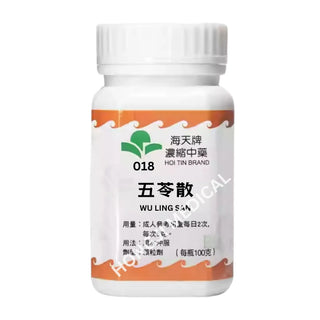
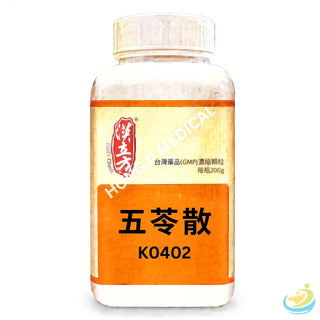
Wu Ling San

五苓散 (Wǔ Líng Sǎn)

Classic formula for water-amassment (Tai Yang Xu Shui) and internal Dampness with impaired Bladder Qi transformation. Presents with urinary difficulty, edema, thirst with vomiting after drinking, and possible exterior signs.

View Formula ProfileRead Complete Guide →

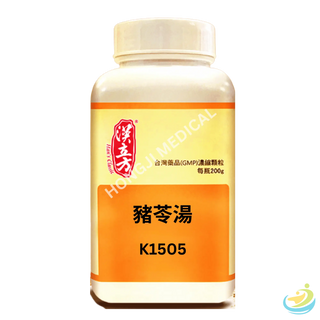
Zhu Ling Tang

豬苓湯 (Zhū Líng Tāng)

Shang Han Lun formula for water retention with Heat and Yin injury, presenting with urinary difficulty, thirst, and possible fever or restlessness. Differs from Wu Ling San by adding Yin-nourishing and Heat-clearing actions.

View Formula ProfileRead Complete Guide →

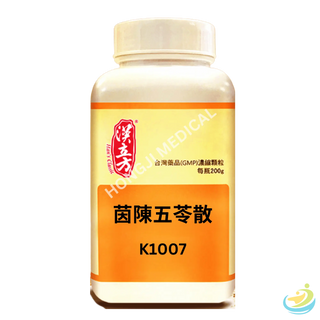
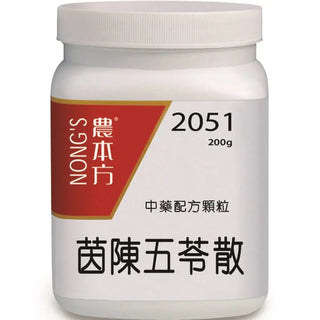
Yin Chen Wu Ling San

茵陳五苓散 (Yīn Chén Wǔ Líng Sǎn)

Combination of Yin Chen Hao with Wu Ling San. Used for damp-type (Yin) jaundice with fluid retention, thirst and scanty urine, often against a background of Spleen weakness.

View Formula ProfileRead Complete Guide →

Suo Quan Wan

縮泉丸 (Suō Quán Wán)

A classical astringent formula for Bladder cold with insecurity of Kidney Qi, presenting with frequent clear urination or enuresis, a pale tongue and a deep weak pulse.

View Formula ProfileRead Complete Guide →

Liu Yi San

六一散 (Liù Yī Sàn)

A simple classical powder of talcum and licorice (6:1) for summer-heat with dampness, presenting with fever, thirst, irritability and scanty urine in hot weather.

View Formula ProfileRead Complete Guide →

Wu Pi Yin

五皮飲 (Wǔ Pí Yǐn)

A classical five-peel formula for skin oedema (Pi Shui) with abdominal distension and scanty urine, using peels to drain damp from the exterior and Middle without heavy tonification.

View Formula ProfileRead Complete Guide →

Show 9 more classical formulas

Xiao Ji Yin Zi

小薊飲子 (Xiǎo Jì Yǐn Zǐ)

A classical formula for Blood-heat urinary bleeding (Xue Lin), with painful urination, blood in the urine and heat signs in the Lower Jiao.

View Formula ProfileRead Complete Guide →

Jin Gui Shen Qi Wan

金匱腎氣丸 (Jīn Guì Shèn Qì Wán)

The foundational Kidney Yang tonic from the Jin Gui Yao Lue. Built on Liu Wei Di Huang Wan with Gui Zhi and Fu Zi, it addresses Kidney Yang deficiency with cold limbs, frequent urination, oedema and lumbar weakness.

View Formula ProfileRead Complete Guide →
Dao Chi San

導赤散 (Dǎo Chì Sàn)

A classical formula for Heart fire transmitting to the Small Intestine, with irritability, mouth sores, dark scanty urine and a red tongue tip.

View Formula ProfileRead Complete Guide →

Ba Zheng San

八正散 (Bā Zhèng Sàn)

A classical formula for damp-heat lin syndrome with frequent, urgent, painful urination, dark urine, dry mouth and a yellow greasy tongue coating.

View Formula ProfileRead Complete Guide →
Ji Sheng Shen Qi Wan

濟生腎氣丸 (Jì Shēng Shèn Qì Wán)

A classical modification of Jin Gui Shen Qi Wan with Niu Xi and Che Qian Zi for Kidney Yang deficiency oedema with heavy urinary difficulty and lumbar pain.

View Formula ProfileRead Complete Guide →

Bi Xie Fen Qing Yin

萆薢分清飲 (Bì Xiè Fēn Qīng Yǐn)

A classical formula for cloudy urine and frequent urination from lower-jiao cold-damp with Kidney deficiency.

View Formula ProfileRead Complete Guide →
Qing Xin Lian Zi Yin

清心蓮子飲 (Qīng Xīn Lián Zǐ Yǐn)

A heart-clearing, damp-draining formula for strangury and seminal emission from heart fire and qi deficiency.

View Formula ProfileRead Complete Guide →
Daily Support

Home Support Care for Frequent Urination

1. Acupressure for Daily Care

To help manage frequent urination, you can gently massage specific acupoints at home. Apply moderate pressure until you feel a mild, dull ache, holding or massaging each point for a few minutes daily.

  • Guan Yuan: Located on the lower abdomen, about four finger-widths below the belly button. Gently massaging or applying moxibustion here is excellent for warming Kidney energy and improving the body's ability to retain fluids.
  • Shen Shu: Found on your lower back, about 1.5 inches outward from the bottom of the second lumbar vertebra. Gently tapping or rubbing this area helps regulate Kidney function and strengthens your lower body.
  • San Yin Jiao: Located on the inner side of your lower leg, about three finger-widths above the ankle bone. Massaging this point helps strengthen the Spleen, nourish the Kidneys, and clear damp-heat.
  • Yin Ling Quan: Found on the inner lower leg, just below the knee joint in the natural depression. This point is highly effective for resolving internal dampness and relieving bladder heat.
  • Bai Hui: Located at the very top center of your head. Gentle massage here helps "lift" sinking energy, making it especially useful for frequent urination caused by Spleen Qi deficiency.
  • Zu San Li: Found on the outer lower leg, four finger-widths below the kneecap. As a master point for digestion, massaging it boosts your overall core energy and strengthens the Spleen.
Frequent Urination

2. Food as Medicine (Dietary Therapy)

Recipes for Nourishing the Kidneys

For frequent, clear urination caused by weak Kidney energy, try these nourishing and astringent recipes:

    • Walnut and Chestnut Porridge: Boil 30g of walnuts, 50g of chestnuts, and 100g of rice into a porridge. Walnuts and chestnuts are excellent for warming the Kidneys and strengthening the lower body.
    • Gordon Euryale and Lotus Seed Soup: Simmer 30g of Qian Shi (Gordon Euryale Seed) and 30g of Lian Zi (Lotus Seed) with a little sugar. Both ingredients act as natural astringents to "lock in" Kidney essence and calm the mind.

Recipes for Clearing Damp-Heat

If you experience urgent, hot, or painful urination, focus on cooling and draining foods:

    • Winter Melon Soup: Simply boil 500g of fresh winter melon into a soup with a pinch of salt. Winter melon is highly effective at clearing heat and promoting smooth urination.
    • Purslane Porridge: Boil 100g of fresh purslane and 100g of rice. Purslane naturally clears heat and detoxifies the bladder, making it a great dietary remedy for damp-heat.

Recipes for Boosting Spleen Qi

If your frequent urination is linked to a heavy feeling in the abdomen and chronic fatigue, these recipes will help lift your core energy:

    • Astragalus and Codonopsis Chicken Soup: Stew a small chicken with 30g of Huang Qi (Astragalus) and 30g of Dang Shen (Codonopsis). This deeply nourishing soup strengthens the Spleen and lifts sinking energy.
    • Yam and Red Date Porridge: Boil 100g of Shan Yao (Chinese Yam), 20 red dates, and 100g of rice. This porridge is easy to digest, boosts core energy, and supports healthy Kidney function.
Frequent Urination

Prevention

Preventive Care for Frequent Urination

Maintaining good daily habits is essential for preventing and managing frequent urination. Keeping warm is a top priority, especially protecting your lower back and lower abdomen from cold drafts. Cold environmental factors can easily damage your Kidney Yang, worsening urinary issues. Always dress appropriately for the season and avoid sitting directly in front of air conditioners or fans during the summer.

Moderate daily exercise is just as important to keep your body's energy flowing smoothly. Gentle, consistent activities like brisk walking, light jogging, Tai Chi, or Ba Duan Jin (Eight Section Brocade) are highly recommended. These exercises improve blood circulation, boost your immune system, and strengthen your core organs without exhausting your vital energy.

Frequently Asked Questions About Frequent Urination

How does Traditional Chinese Medicine understand frequent urination?
In TCM, frequent urination (尿频) is related to the Bladder losing its ability to store urine, often because the Kidney fails to consolidate, or because Damp-Heat disturbs the Lower Burner. The Kidney governs water and stores Essence; the Bladder stores and excretes urine. Deficiency, Heat, or constraint can all increase urinary frequency.
What are the common TCM patterns of frequent urination?
Frequent patterns include Kidney Qi or Yang deficiency (clear frequent urine, worse at night, low-back weakness), Damp-Heat in the Bladder (urgency, burning, dark urine), Lung-Spleen Qi deficiency (frequency with fatigue and weak voice), and Liver Qi constraint affecting the Lower Burner. Accurate pattern differentiation determines the treatment approach.
How does TCM regulate frequent urination?
The main principles are to tonify and consolidate Kidney Qi, clear Damp-Heat, or strengthen Lung and Spleen Qi according to the pattern. Formulas such as modifications of Suo Quan Wan, Ba Zheng San or Bu Zhong Yi Qi Tang may be considered. Astringent methods are not used while Damp-Heat is still active. Internal treatment should be guided by a qualified TCM practitioner.
What dietary advice does TCM give for frequent urination?
Reduce caffeine, alcohol, very spicy foods and excess cold drinks if they irritate the Bladder. For deficiency patterns, prefer warm, regular meals; for Damp-Heat, choose lighter foods and adequate but not excessive fluids. Specific choices should match the individual’s pattern under professional guidance.
What daily lifestyle measures help with frequent urination?
Keep the lower abdomen and lower back warm, avoid holding urine for too long or going too frequently out of habit, and reduce evening fluids if night frequency is high. Manage constipation and emotional tension. Gentle pelvic-floor awareness may help some people, but should not replace medical assessment.
Can acupuncture help frequent urination?
Yes, as a supportive method. Acupuncture can strengthen Kidney Qi, regulate the Bladder and clear Damp-Heat. Points such as Guan Yuan (CV4), Zhong Ji (CV3) and San Yin Jiao (SP6) may be selected according to the pattern. Treatment should be performed under professional supervision.
How long does TCM regulation for frequent urination usually take?
Mild Damp-Heat frequency may ease within 1–2 weeks. Kidney-deficiency or nocturnal frequency often requires several weeks to a few months. Duration depends on the pattern, fluid habits and whether infection or metabolic disease is present.
Who should be cautious with TCM treatments for frequent urination?
Children, pregnant women, men with prostate symptoms, and people with diabetes or recurrent urinary infections require careful assessment. Astringent herbs must not be used in the acute Heat stage. Always consult a qualified TCM practitioner.
When should one seek further medical evaluation for frequent urination?
Seek evaluation for burning urination, fever, blood in urine, sudden thirst and large urine volume, difficulty starting urination, incontinence, or pregnancy-related frequency. TCM regulation is complementary and cannot replace necessary tests for infection, diabetes or prostate and bladder disease.
Does treatment of frequent urination require professional pattern differentiation?
Yes. Effective TCM regulation depends on accurate pattern differentiation (Kidney deficiency versus Damp-Heat, Qi deficiency versus Liver constraint). Using astringents during Damp-Heat may trap pathogens. Self-diagnosis and self-medication are not recommended. Consultation with a qualified TCM practitioner is essential after serious causes are considered.

Related Conditions

Explore the Complete Frequent Urination Condition Profile

Go deeper into the associated patterns, the classical formulas traditionally linked to each of them, and the products available.

Explore the Frequent Urination Condition Profile →

Medical Disclaimer — Traditional Chinese Medicine educational content on HJMEDICAL should not be used to delay appropriate medical evaluation. This article is provided for educational purposes only and describes traditional Chinese medicine concepts. It is not medical advice, and it is not intended to diagnose, treat, cure or prevent any disease. Always consult a qualified healthcare professional before starting any herbal formula, particularly if you are pregnant, nursing, taking medication or managing a diagnosed condition.

More Conditions & Care

Login

Forgot your password?

Don't have an account yet?
Create account

Frequent Urination: Syndrome Differentiation and Daily Care