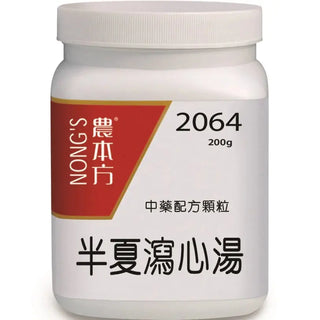
Ban Xia (半夏; Bàn Xià; Latin: Pinelliae Rhizoma; English: Pinellia rhizome) is the dried tuber of Pinellia ternata (Thunb.) Breit. In Chinese medicine it is a phlegm-resolving herb. It is acrid and warm, toxic in the raw state, enters the Spleen, Stomach, and Lung channels, and its core actions are to dry dampness and resolve phlegm, direct rebellious qi downward and stop vomiting, and dissipate clumps and focal distention. For internal use, only processed pieces should be used. Raw Ban Xia should not be taken on one’s own.
It is used most often for three patterns:
-
Damp-phlegm in the Lung — cough with copious sticky white sputum, chest tightness
-
Stomach qi rebelling upward — nausea, vomiting, reflux, focal fullness below the heart
-
Phlegm and qi knotted — plum-pit qi, phlegm nodules, dizziness and headache
Qing Ban Xia (alum-processed) is better for drying damp-phlegm. Jiang Ban Xia (ginger-processed) is better for stopping vomiting.
Fa Ban Xia (licorice-lime processed) is milder and better for harmonizing the stomach. The usual decoction dose is 3–9 g. Do not combine it with Aconitum products (Chuan Wu, Cao Wu, Fu Zi, including prepared forms). It is a poor fit used alone in yin-deficiency dry cough, thirst from fluid damage, or bleeding.
In humid cities such as Hong Kong, damp-phlegm is common: morning sputum, post-meal nausea, a lump-in-the-throat feeling, heavy head in wet weather. Ban Xia works on the middle burner. That is why it appears in Er Chen Tang, Ban Xia Xie Xin Tang, Xiao Ban Xia Tang, and Ban Xia Hou Po Tang. It is not a food-medicine dessert. Do not brew it as a daily “phlegm tea.”
Ban Xia is not a catch-all for cough or nausea. In dry phlegm, yin-deficiency dry cough, or stomach heat with thirst, using it alone or in large amounts can further dry fluids. Which processed form to use should be decided by a licensed Chinese medicine practitioner after pattern diagnosis.