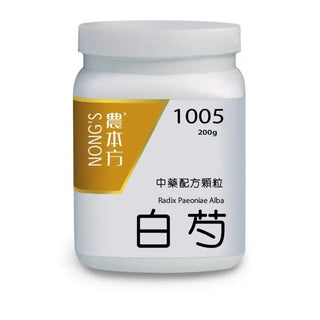
Roots and rhizomesTonifyingRadix Paeoniae Alba

Bai Shao (White Peony Root)

白芍 · Bai Shao

Tonifying herb in Traditional Chinese Medicine. Traditional functions: Nourishes the blood, regulates menstruation, calms the liver, relieves pain, astringes yin, stops sweating.

Read our in-depth guide

In-Depth GuideWant to learn more about Bai Shao?

Quick Facts

Latin NameRadix Paeoniae Alba
Chinese Name & Pinyin白芍 · Bai Shao
Medicinal PartRoots and rhizomes
Efficacy CategoryTonifying
Botanical OriginThe dried root of Paeonia lactiflora Pall. (Ranunculaceae).
Nature & FlavourBitter, Sour; Slightly cold
Channels EnteredLiver, Spleen

What Is Bai Shao?

Bai Shao (White Peony Root) is a medicinal herb of Traditional Chinese Medicine.

Primarily produced in Chinese provinces of Anhui, Sichuan, Zhejiang.

Nature & Flavour: Bitter, Sour; Slightly cold
Channels Entered: Liver, Spleen

Bai Shao: Materia Medica Profile

Identification & Quality Standard

Radix Paeoniae Alba

Botanical Origin

The dried root of Paeonia lactiflora Pall. (Ranunculaceae).

Production Regions

Primarily produced in Chinese provinces of Anhui, Sichuan, Zhejiang.

Quality Requirements

Superior medicinal material is thick and long, even, straight, and firm, with a white and powdery fractured surface and lean external surface.

Macroscopic Features

Root is cylindrical, evenly thick and straight, 10~20cm long, 1~1.8cm diameter. Externally pale reddish-brown or pink white; flat or with obvious longitudinal wrinkles and rootlet scars; brown scars at the position of remained cork; occasionally presents with horizontal lenticels. Firm and heavy texture, hardly broken. Fractured surface is grayish-white or with slightly brown; xylem is radial chrysanthemum-like, with obvious layers of rings. Faint odor; taste slightly bitter and sour.
Traditional TCM Properties

Bitter, Sour; Slightly coldLiverSpleen

Traditional Functions

Nourishes the blood, regulates menstruation, calms the liver, relieves pain, astringes yin, stops sweating. Apply to thoracic, abdominal and costal pains, abdominal pain due to dysentery, spontaneous perspiration and night sweat, fever with yin deficiency, irregular menstrual periods, metrorrhagia and metrostaxis, leukorrhea.

How Bai Shao Is Used in TCM

In the Chinese materia medica, Bai Shao is classified among the Tonifying herbs. It appears in 55 classical formulas in our library.

Formulas containing Bai Shao are traditionally used for:

Muscular StiffnessAbdominal PainJoint DiscomfortPoor AppetiteFatigue & Low EnergySpontaneous SweatingFeverCold LimbsNasal CongestionNeck PainInsomniaAnxiety Restlessness

Classical Formulas Containing Bai Shao

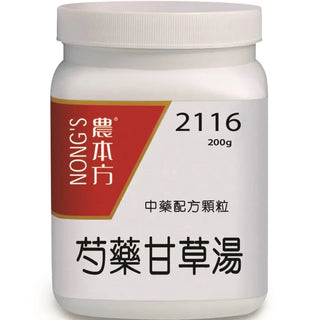
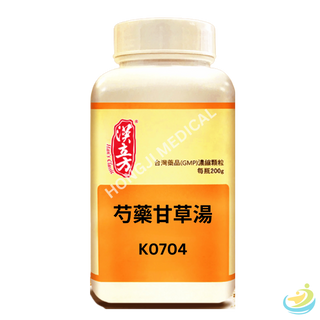
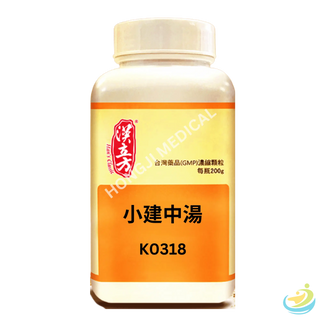
+8 more

Frequently Asked Questions

What is Bai Shao, and is it the same as peony flowers or Chi Shao?
Bai Shao (白芍) is the dried root of cultivated peony, Paeonia lactiflora Pall. The pharmacopoeial name is Paeoniae Radix Alba. After harvest it is boiled, peeled and dried. Ornamental peony flowers are not the medicinal. Chi Shao (red peony root) may be the same species or Paeonia veitchii, usually unpeeled and sun-dried. Classically, white supplements and astringes; red scatters and drains. They are not interchangeable. Hangzhou Bai Shao is a well-known commercial grade.
What are the TCM properties and traditional uses of Bai Shao?
According to the Chinese Pharmacopoeia, Bai Shao is bitter, sour and slightly cold, enters the Liver and Spleen channels, and acts to nourish Blood and regulate menses, astringe Yin and stop sweating, soften the Liver and relieve pain, and calm Liver Yang. It is used for sallow Blood deficiency, irregular menses, spontaneous or night sweating, flank or abdominal pain, cramping of the limbs, headache and dizziness. It both nourishes Liver Blood and restrains a constrained Liver.
How does Bai Shao differ from Chi Shao?
Bai Shao tonifies and holds: it nourishes Blood, astringes Yin, softens the Liver and calms Yang, for deficiency and Liver-Spleen disharmony. Chi Shao clears and moves: it cools Blood and dispels stasis, for Blood-heat, stasis, red eyes, rashes, bleeding from heat, trauma and sores. Bai Shao is peeled and pale; Chi Shao keeps the bark and looks reddish-brown. A prescription for “Chi Bai Shao” usually means both herbs, not one.
Read the complete guide →

Learn More About Bai Shao

Explore our in-depth article covering the traditional uses, properties, functions, and TCM context of Bai Shao.

Read the Bai Shao Guide →

Medical Disclaimer — This article is provided for educational purposes only and describes traditional Chinese medicine concepts. It is not medical advice, and it is not intended to diagnose, treat, cure or prevent any disease. Always consult a qualified practitioner before using any herb, particularly if you are pregnant, nursing, taking medication or managing a diagnosed condition.

Login

Forgot your password?

Don't have an account yet?
Create account